Andesite


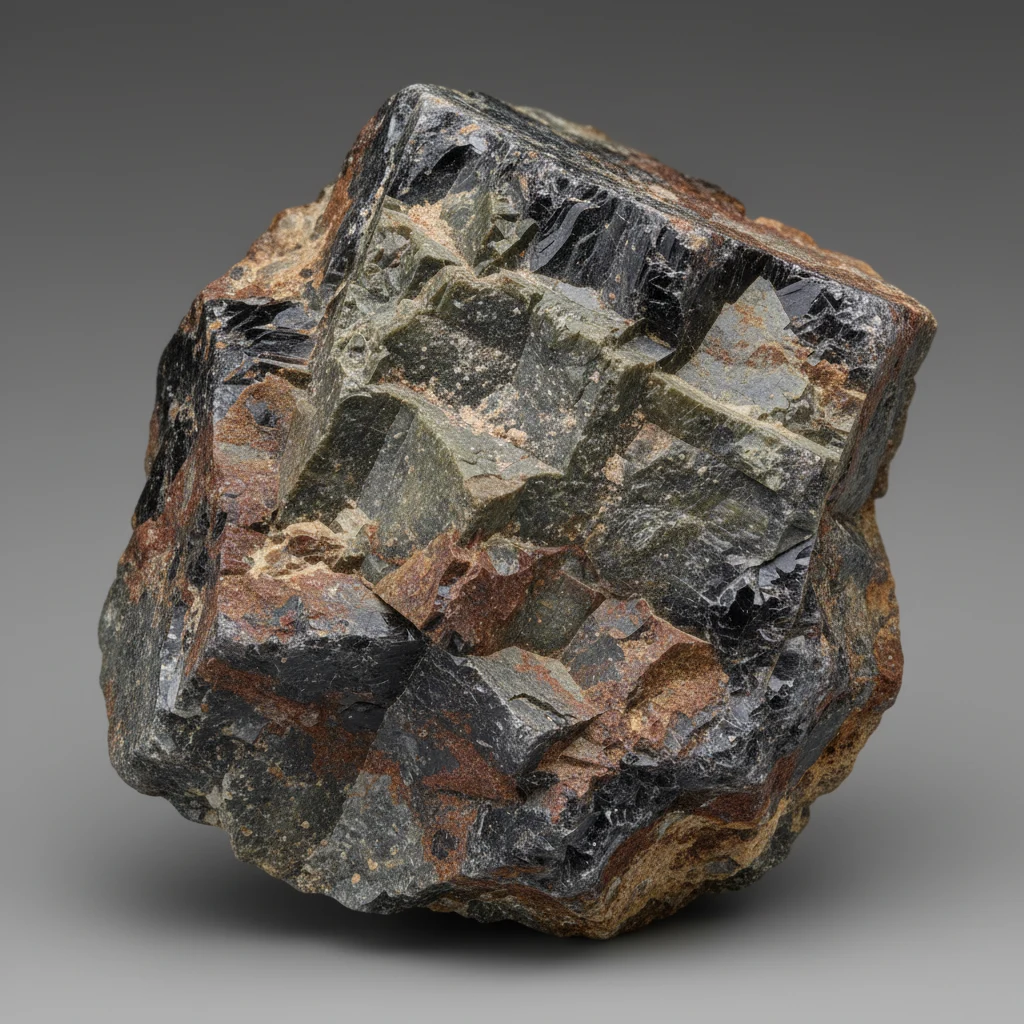
Quick answer: Andesite is an intermediate volcanic rock that commonly appears gray, brownish gray, or greenish gray with a fine-grained to porphyritic texture. It is often recognized by visible plagioclase crystals set in a darker volcanic groundmass, but it can be confused with basalt, diorite, and other gray igneous rocks.
AI Rock ID can help narrow an andesite identification by comparing color, texture, crystal size, and visible mineral patterns from a clear photo. RockIdentifier.io provides reference information for andesite and related rocks so users can compare visual clues before labeling a specimen.
Good fit
- Collectors who want a common volcanic rock with visible texture variation
- Students comparing extrusive igneous rocks in a geology set
- People identifying gray field stones with small white plagioclase crystals
- Landscape or educational displays where durability and natural texture matter
Not a good fit
- Anyone seeking a transparent or faceted gemstone
- Collectors who need rare mineral specimens with high market value
- Situations where exact rock chemistry is required without lab testing
- Indoor display areas where volcanic dust or rough edges may be an issue
Most commonly confused with
- Basalt: Basalt is usually darker, denser-looking, and more mafic, while andesite is typically medium gray and intermediate in composition.
- Diorite: Diorite is intrusive and usually coarse-grained throughout, while andesite is extrusive and commonly fine-grained or porphyritic.
- Rhyolite: Rhyolite is more silica-rich and often lighter colored, sometimes with flow banding or glassy textures.
- Porphyry: Porphyry describes a texture with larger crystals in a fine groundmass, so some andesite specimens are andesite porphyry rather than a separate rock type.
Andesite vs. Common Lookalikes
| Rock | Typical Color | Texture | Key Difference |
|---|---|---|---|
| Andesite | Medium gray to brownish gray | Fine-grained or porphyritic | Intermediate volcanic rock with common plagioclase phenocrysts |
| Basalt | Dark gray to black | Fine-grained, sometimes vesicular | Usually darker and more mafic than andesite |
| Diorite | Salt-and-pepper gray | Coarse-grained | Intrusive equivalent with larger visible crystals throughout |
| Rhyolite | Light gray, pink, tan, or reddish | Fine-grained, banded, or glassy | More silica-rich and often lighter than andesite |
| Tuff | Variable gray, tan, or reddish | Ashy or fragmental | Formed from volcanic ash rather than solid lava flow |
AI identification confidence
AI identification of andesite is usually moderate when the photo clearly shows gray color, fine groundmass, and scattered plagioclase crystals. Confidence drops when the specimen is weathered, wet, polished, covered with lichen, or photographed without scale and natural lighting.
When AI gets it wrong
- Dark, fine-grained andesite may be labeled as basalt because both can look gray-black in photos.
- Coarse or broken surfaces may be confused with diorite if crystal size is difficult to judge.
- Weathered andesite can look tan or rusty, leading to confusion with tuff or sedimentary rock.
- Polished decorative stone may hide natural texture and make volcanic rock identification less reliable.
Final recommendation
For casual identification, compare andesite with basalt, diorite, rhyolite, and tuff using color, grain size, and volcanic texture. For scientific or construction use, confirm the rock with petrographic analysis or geochemical testing rather than relying on appearance alone.
How to Photograph Andesite for Identification
Use natural light and photograph a fresh broken surface rather than only a weathered exterior. Include a coin, ruler, or hand lens for scale so grain size and crystal shape can be judged. A close-up image of any white or light gray plagioclase crystals can improve visual comparison.
Buying Andesite Specimens
Andesite is common, so most small specimens are purchased for education, labeling, or regional geology rather than rarity. A useful specimen should have a clear source location, a stable surface, and visible volcanic texture. Be cautious with vague labels such as “volcanic stone” if the seller does not provide locality or distinguishing features.
Field Clues for Andesite
Andesite is commonly associated with volcanic arcs, lava flows, domes, and stratovolcano deposits. In hand sample, it often feels dense and hard, with a dull to slightly rough surface. Small rectangular plagioclase crystals in a darker groundmass are one of the most helpful field clues.
What Is Andesite?
Andesite is a common intermediate volcanic igneous rock, compositionally between basalt and dacite. In the hand it is usually a compact gray, greenish gray, reddish brown, or nearly black rock, often with small white to light-gray plagioclase feldspar crystals set in a darker, fine-grained groundmass.
Collectors often meet andesite as “andesite rock” or “porphyritic andesite.” It is not a single mineral, so it has no fixed formula or crystal system; it is a rock made of plagioclase feldspar with pyroxene, amphibole, biotite, magnetite, volcanic glass, or minor quartz. Its Mohs hardness is variable, commonly about 5.5–6.5, and dense pieces feel tough and practical rather than gemmy.
Origin & History
The name andesite comes from the Andes Mountains of South America, where this volcanic rock is abundant in arc settings. The name became important in 19th-century petrology as geologists recognized andesite as a characteristic lava of subduction-zone volcanoes.
For a labeled specimen, the locality matters more than rarity: a plain gray andesite from a famous volcano can be more meaningful than an anonymous cobble. Collector labels and locality notes can be checked against references such as mindat.org, especially when a specimen is sold as coming from a named volcanic complex, stratovolcano, lava flow, dome, dike, sill, or ash-flow deposit.
Where Is Andesite Found?
Andesite is widespread in continental volcanic arcs and island arcs, especially above subduction zones. Notable settings include the Andes Mountains of South America, the Cascade Range of the United States, Mount St. Helens in Washington, Lassen Volcanic National Park in California, the Krakatau volcanic complex in Indonesia, the Japanese island arc, and the Taupo Volcanic Zone of New Zealand.
Formation
Andesite forms when intermediate magma erupts at or near Earth’s surface and cools relatively quickly. It is commonly produced in subduction-zone environments by partial melting, magma mixing, fractional crystallization, and assimilation of crustal material.
The hand-sample texture records that cooling history. Slower cooling before eruption can grow larger plagioclase, amphibole, pyroxene, or biotite crystals; rapid final cooling locks those crystals into a fine-grained groundmass. That is why many pieces feel dark and tight overall but show scattered pale feldspar phenocrysts when turned in good light.
How to Identify Andesite
Identify andesite by its fine-grained volcanic texture, medium-gray to dark-gray color range, and frequent pale plagioclase crystals in a darker groundmass. Fresh breaks may look dull, earthy, or slightly vitreous, while individual feldspar crystals can look glassy or pearly.
Useful field checks include a hand lens, steel nail, magnet, streak plate, and cautious dilute acid spot test. Andesite is usually harder than a steel nail in feldspar-rich areas, opaque, white to light gray in streak if tested, and generally non-magnetic to weakly magnetic. It normally does not fizz in acid unless altered or calcite-filled, and it is usually less dense and less uniformly black than basalt.
Properties of Andesite
Physical Properties
| Crystal System | Not applicable as a rock; constituent minerals commonly include triclinic plagioclase and monoclinic or orthorhombic pyroxene/amphibole |
| Hardness (Mohs) | Variable, commonly about 5.5–6.5 on Mohs depending on mineral content and alteration (Moderately hard) |
| Density | Approximately 2.5–2.8 g/cm³ |
| Luster | Dull, earthy, or slightly vitreous |
| Diaphaneity | Opaque |
| Fracture | Uneven to subconchoidal; may break blocky or splintery depending on texture |
| Streak | White to light gray, though rocks are not usually tested by streak |
| Magnetism | Usually non-magnetic to weakly magnetic; magnetite-bearing pieces may attract a strong magnet slightly |
| Colors | gray, dark gray, greenish gray, brown, reddish brown, black, tan when weathered |
Chemical Properties
| Classification | Intermediate silicate igneous rock |
| Formula | No fixed formula; typically about 52–63 wt.% SiO2 with plagioclase feldspar plus pyroxene, amphibole, biotite, magnetite, and minor quartz or glass |
| Elements | O, Si, Al, Ca, Na, Fe, Mg, K, Ti |
| Common Impurities | magnetite, ilmenite, apatite, zircon, chlorite, epidote, calcite, clay minerals, zeolites, iron oxides |
Optical Properties
| Refractive Index | Not a single value; constituent minerals commonly range roughly from 1.52 for feldspar to 1.70+ for pyroxene/amphibole |
| Birefringence | Variable by mineral; not diagnostic for hand-sample andesite |
| Pleochroism | Variable; amphibole and biotite grains may be pleochroic in thin section |
| Optical Character | Aggregate of multiple minerals; not applicable as a single optical mineral |
Andesite Health & Safety
Intact andesite is generally safe to handle. The main hazard is inhaling rock dust during cutting, grinding, drilling, or tumbling, because andesite can contain silica-bearing minerals and fine respirable dust.
Andesite Value & Price
Price Range
Rough/Tumbled: Common rough pieces are often inexpensive, about $1–10 per small specimen; labeled volcanic or locality specimens may sell for $5–30+, and large decorative or educational samples vary by size and provenance.
Cut/Polished:
Value depends on clear volcanic texture, attractive porphyritic crystals, vesicles or flow banding, freshness, educational labeling, and a notable volcano or locality. Andesite is not normally valued as a gemstone.
Durability
Good for study specimens and landscaping, variable for polished use — Scratch resistance: Moderate to good because feldspar-rich andesite is harder than many common household materials, but softer altered zones can scratch more easily., Toughness: Variable; dense andesite is fairly tough, while vesicular, weathered, or altered material may chip or crumble.
Generally stable under normal indoor conditions. Prolonged outdoor weathering may oxidize iron-bearing minerals and alter feldspar or volcanic glass to clay, chlorite, epidote, calcite, or zeolites.
How to Care for Andesite
Use & Storage
Store as a labeled hand specimen in a dry box, tray, or display shelf. Keep fragile vesicular or altered pieces separated from harder specimens that may abrade them.
Cleaning
Rinse with water and gently scrub with a soft brush. Mild soap is acceptable. Avoid strong acids unless you are intentionally testing a tiny area, because altered minerals or calcite-filled veins may react.
Cleanse & Charge
For non-scientific or spiritual use, cleanse by rinsing briefly, wiping dry, or placing near quartz or in moonlight. Avoid saltwater for porous or altered pieces.
Placement
Good for geology teaching kits, volcanic rock displays, desk specimens, and outdoor rock gardens if the sample is dense and unweathered.
Caution
Do not assume every dark volcanic-looking rock is andesite; basalt, dacite, rhyolite, slag, and concrete can look similar. Avoid breathing dust from cutting or tumbling.
Works Well With
Andesite Meaning & Healing Properties
In modern crystal-healing traditions, andesite is used as a grounding stone linked with resilience, volcanic transformation, steady progress, and practical focus. These meanings are cultural and spiritual beliefs, not scientifically proven effects, but the rock’s weight and weathered volcanic character make it easy to understand why people associate it with endurance.
Spiritually minded collectors often place andesite with the Root chakra and connect it with Capricorn, Scorpio, Earth, Fire, Earth, and Mars symbolism. For care, rinse briefly, scrub gently with a soft brush, and dry it well; avoid saltwater for porous or altered pieces, and never breathe dust from cutting, grinding, drilling, or tumbling.
Identify Andesite from a photo
Compare Andesite traits, care tips, value clues, and common lookalikes with a clear photo.
Common mistakes
- Calling every dark volcanic rock basalt without checking whether the color is medium gray and intermediate-looking.
- Assuming all porphyritic rocks are andesite, even though basalt, rhyolite, and other igneous rocks can also be porphyritic.
- Using exterior color alone, because weathering can turn andesite tan, brown, reddish, or greenish.
- Mistaking vesicular volcanic rock for andesite without considering basaltic scoria or other lava types.
- Expecting andesite to show large crystals everywhere, even though much of the rock may be fine-grained.