Basalt


Quick answer: Basalt is usually a dark gray to black volcanic rock with a fine-grained texture, formed when mafic lava cools quickly at or near the surface. It is not a single mineral crystal, so identification depends on texture, density, color, and associated minerals rather than crystal shape.
AI Rock ID can help screen basalt by comparing visible traits such as color, grain size, vesicles, and overall texture from a photo. RockIdentifier.io can be used as a starting point for identification, but field context and simple physical tests improve confidence.
Good fit
- Collectors who want a common volcanic rock for comparison or study
- Beginners learning to identify fine-grained igneous rocks
- Educational kits focused on volcanoes, lava flows, or oceanic crust
- Decorative use where a dark, natural stone appearance is desired
Not a good fit
- Anyone looking for a transparent or faceted gemstone
- Collectors who need rare mineral specimens with distinct crystal faces
- Projects requiring a lightweight stone, since basalt can be relatively dense
- Identification based only on color, because several rocks can look black or dark gray
Why people search for this
People often search for basalt to confirm whether a dark, heavy rock is volcanic or to distinguish it from slag, obsidian, and other black stones. Basalt is also commonly researched because it is widespread in lava flows, road aggregate, and oceanic crust.
Most commonly confused with
- Obsidian: Obsidian is volcanic glass with a glassy luster and conchoidal fracture, while basalt is usually fine-grained and dull to slightly lustrous.
- Gabbro: Gabbro has a similar mafic composition but cools slowly underground, so its mineral grains are visibly larger than basalt's.
- Andesite: Andesite is typically intermediate in composition and may be lighter gray than basalt, though field context is often needed.
- Scoria: Scoria is highly vesicular and lightweight compared with most solid basalt, though it can form from basaltic lava.
Basalt Lookalike Comparison
| Material | Typical Texture | Key Difference |
|---|---|---|
| Basalt | Fine-grained, dark, sometimes vesicular | Natural mafic volcanic rock with small or invisible crystals |
| Obsidian | Glassy, smooth, sharp fracture | Volcanic glass rather than a crystalline rock |
| Gabbro | Coarse-grained, dark speckled | Same general composition but cooled slowly underground |
| Scoria | Very bubbly, porous, often reddish or black | Usually much more vesicular and lighter in weight |
| Slag | Glassy or bubbly, sometimes metallic | Human-made industrial material |
AI identification confidence
AI identification of basalt is often moderate when the photo clearly shows a dark, fine-grained volcanic texture or vesicles. Confidence drops when the specimen is wet, polished, covered in weathering rind, or photographed without scale and lighting control.
When AI gets it wrong
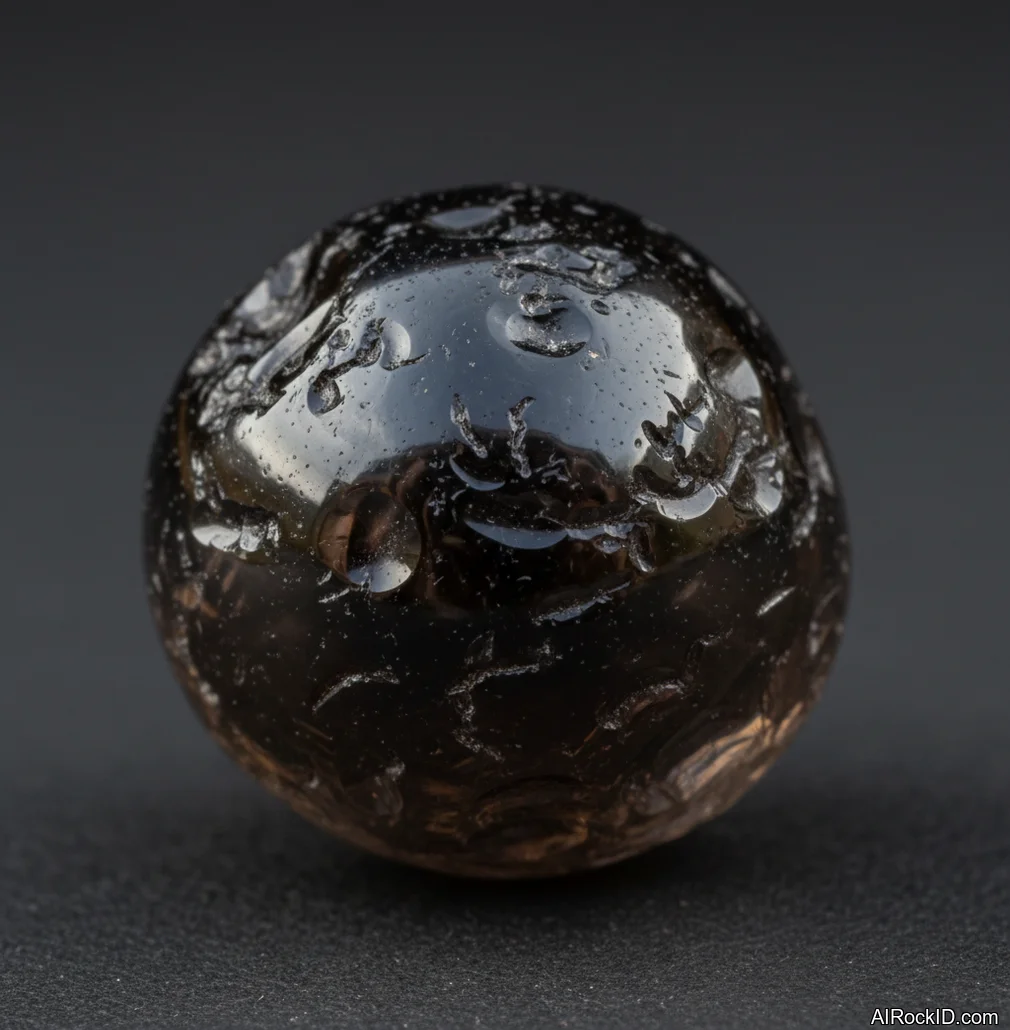
- A wet or polished surface may make basalt look like obsidian or another black stone.
- A close-up photo without scale can hide grain size, which is important for separating basalt from gabbro.
- Weathered basalt may appear brown, reddish, or gray instead of black.
- Industrial slag can mimic vesicular basalt in photos, especially when field context is missing.
Final recommendation
For identification, combine photo-based screening with a scratch test, density impression, texture check, and location context. If the rock may be slag, ore, or construction material, avoid relying on color alone.
How to Check Basalt Authenticity
Authentic basalt should show a natural volcanic texture, usually fine-grained and dark gray to black, with possible small vesicles or mineral specks. Be cautious of material with metallic residue, iridescent glass, or melted-looking surfaces, which may indicate industrial slag. A known collection location, quarry source, or geological label adds confidence.
Buying Basalt Specimens
Basalt is common, so most small specimens are bought for education, decor, or geological interest rather than rarity. Useful listings should state the locality, whether the piece is natural or polished, and whether vesicles, phenocrysts, or inclusions are present. High prices are usually tied to size, finish, provenance, or unusual features rather than basalt itself.
Field Clues for Basalt
Basalt is often found in lava flows, volcanic fields, dikes, and areas with dark igneous bedrock. Fresh broken surfaces are commonly darker than weathered outer surfaces. Vesicles, columnar jointing, and association with other volcanic rocks can support a basalt identification.
What Is Basalt?
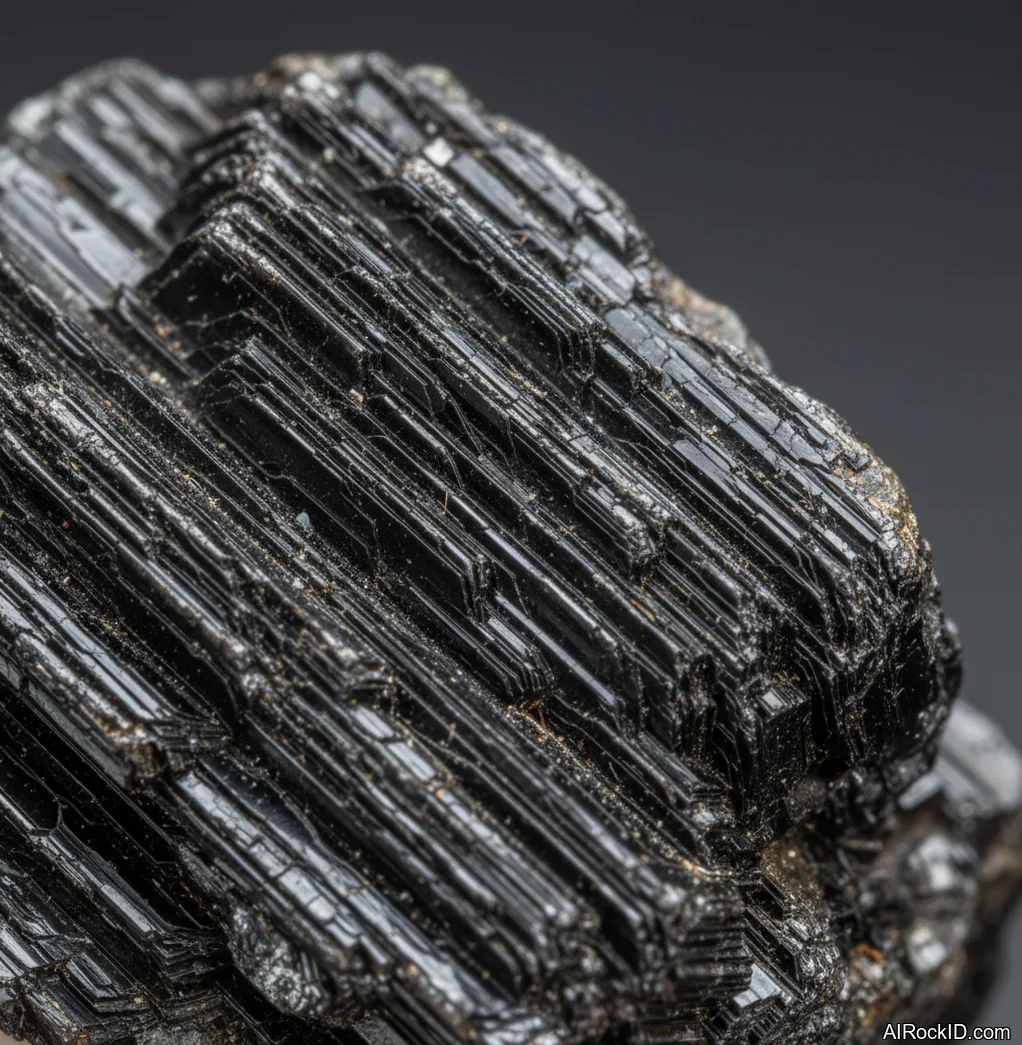
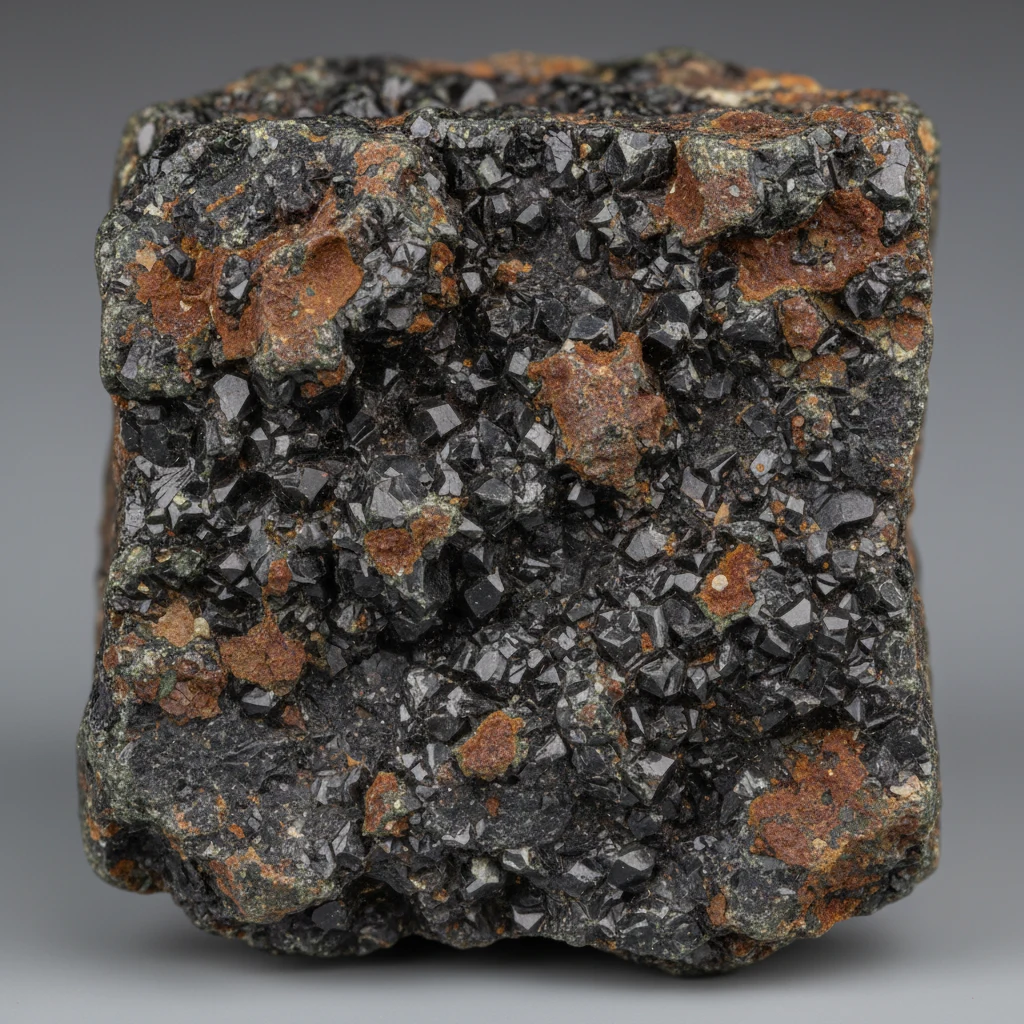
Basalt is a dark, fine-grained mafic extrusive igneous rock, often sold or described as lava rock, trap rock, or mafic volcanic rock. In the hand it usually feels dense, matte to slightly glassy on a fresh break, and heavier than many pale crustal rocks. Its typical colors are black, charcoal gray, dark gray, or greenish black, with weathered surfaces shifting brown, reddish brown, or rusty from iron oxidation.
For collectors, basalt is valued less as a gem and more as a record of volcanic process. It is the most abundant volcanic rock on Earth and forms much of the oceanic crust, lava flows, volcanic islands, flood-basalt provinces, and columnar-jointed cliffs. Look closely for tiny white plagioclase laths, green olivine specks, black pyroxene, vesicles, or mineral-filled cavities.
Origin & History
The name basalt comes from Latin basaltes, historically connected with Greek basanites, meaning a very hard stone. That old description still fits the field impression: a tough, dark rock that breaks irregularly and has long been useful as building stone, paving, grinding stone, and sculpture material.
In modern geology, basalt is a key rock for reading volcanoes, ocean-floor formation, mantle melting, and even planetary crusts on the Moon and Mars. A locality label matters because a plain black hand specimen from Hawaii, Iceland, the Deccan Traps, or the Columbia River Basalt Group carries different geologic context. For broader volcanic-rock background and educational context, collectors commonly consult USGS resources.
Where Is Basalt Found?
Basalt is found worldwide wherever mafic lava has erupted, especially at mid-ocean ridges, ocean islands, continental rifts, volcanic arcs, and large igneous provinces. It is reported from the United States, Iceland, India, Brazil, Ethiopia, Italy, Japan, Indonesia, Russia, China, Mexico, Australia, and New Zealand, and it is also widespread on the Moon and Mars.
Formation
Basalt forms when partial melting of the upper mantle produces mafic magma that rises and erupts at the surface or on the seafloor. Because the lava cools quickly, most basalt develops a fine-grained or glassy groundmass rather than large, easily visible crystals. Earlier-formed plagioclase, pyroxene, or olivine may still appear as small phenocrysts in the dark matrix.
Gas escaping from cooling lava can leave rounded holes called vesicles, giving some basalt a pitted, lightweight feel. Later mineral-rich fluids may fill those cavities with zeolites, calcite, chalcedony, agate, or quartz, producing amygdaloidal basalt. Dense basalt is generally tough and durable, while vesicular or weathered basalt can chip more easily along bubbles, joints, or altered zones.
How to Identify Basalt
Identify basalt by its dark color, fine-grained texture, moderate to high weight in the hand, and commonly weak to moderate magnetism from magnetite or titanomagnetite. Fresh surfaces are usually dull, earthy, subvitreous, or slightly vitreous; weathered surfaces tend to be rough and matte. Its hardness is approximately 5–6 on the Mohs scale, though weathering and mineral mix can change the feel at the edge.
Basalt is not a single mineral and has no fixed chemical formula. It is mainly plagioclase feldspar plus pyroxene, with possible olivine, magnetite, ilmenite, volcanic glass, and alteration minerals. Unlike obsidian, it is stony rather than glassy; unlike granite, it lacks large visible quartz and feldspar crystals. Be careful with lookalikes such as slag, scoria, diabase, dark limestone, and obsidian.
Properties of Basalt
Physical Properties
| Crystal System | Not applicable as a rock; constituent minerals commonly include triclinic plagioclase, monoclinic/orthorhombic pyroxene, orthorhombic olivine, and isometric magnetite |
| Hardness (Mohs) | Approximately 5–6 on the Mohs scale, varying with mineral content and weathering (Moderately hard) |
| Density | Typically about 2.8–3.0 g/cm³; vesicular basalt may be lower |
| Luster | Dull, earthy, subvitreous to slightly vitreous on fresh fracture |
| Diaphaneity | Opaque |
| Fracture | Uneven, irregular, splintery to subconchoidal; may break along joints or vesicular zones |
| Streak | Gray to light gray; streak is not a primary diagnostic property for rocks |
| Magnetism | Usually weakly to moderately magnetic because of magnetite or titanomagnetite |
| Colors | Black, Dark gray, Charcoal gray, Greenish black, Brown, Reddish brown |
Chemical Properties
| Classification | Mafic extrusive igneous rock, typically 45–52 wt% SiO2 and relatively rich in iron, magnesium, and calcium |
| Formula | No fixed chemical formula; mainly plagioclase feldspar + pyroxene ± olivine, magnetite, ilmenite, volcanic glass, and alteration minerals |
| Elements | O, Si, Al, Fe, Mg, Ca, Na, K, Ti |
| Common Impurities | Olivine phenocrysts, Magnetite, Ilmenite, Volcanic glass, Zeolites, Calcite, Chalcedony, Iron oxides from weathering |
Optical Properties
| Refractive Index | Not applicable to basalt as a rock; constituent minerals vary, with plagioclase about 1.53–1.59 and pyroxene commonly about 1.66–1.75 |
| Birefringence | Not applicable as a whole rock; low to moderate in constituent silicate minerals |
| Pleochroism | Not applicable as a whole rock; pyroxene may show weak pleochroism in thin section |
| Optical Character | Aggregate of multiple minerals; studied petrographically in thin section rather than by a single optical character |
Basalt Health & Safety
Basalt is not considered toxic for normal handling, but cutting, grinding, drilling, or crushing it can create irritating mineral dust. Respirable rock dust may contain silicate particles and trace crystalline silica depending on the sample and should not be inhaled.
Basalt Value & Price
Price Range
Rough/Tumbled: Common rough basalt is usually inexpensive, often under $1–$5 per pound when sold as landscaping stone; attractive specimens, vesicular pieces, columnar fragments, or locality-labeled samples may sell for about $5–$50 or more depending on size and provenance.
Cut/Polished:
Value depends on specimen size, freshness, locality, columnar jointing, vesicles, included olivine, amygdules filled with agate or zeolite minerals, scientific interest, and display quality. Ordinary basalt is abundant and has low gem value.
Durability
Good for display and construction use — Scratch resistance: Moderate to good; harder than calcite and many soft rocks, but can be scratched by quartz or hardened steel depending on composition., Toughness: Generally tough and durable when dense; vesicular or weathered basalt can be more fragile.
Stable under normal indoor conditions. Weathered or porous basalt may absorb water and can shed grains; iron-bearing surfaces may develop rusty staining outdoors.
How to Care for Basalt
Use & Storage
Store basalt as a sturdy display rock, teaching specimen, landscaping stone, or collection sample. Keep labeled locality specimens separate to preserve provenance.
Cleaning
Rinse with water and scrub gently with a soft brush. Mild soap is usually safe. Avoid harsh acids, which can attack secondary minerals such as calcite or zeolites in cavities.
Cleanse & Charge
For metaphysical use, cleanse by rinsing briefly, smoke cleansing, sound, or placing on dry earth. Avoid prolonged soaking if the piece is porous, rusty, or contains delicate cavity minerals.
Placement
Dense basalt works well on shelves, desks, outdoor gardens, and educational displays. Place fragile vesicular or amygdaloidal pieces where cavities will not be chipped.
Caution
Do not assume all black volcanic-looking rocks are basalt; slag, obsidian, scoria, diabase, and dark limestone can look similar. Avoid inhaling dust from sawing or tumbling.
Works Well With
Basalt Meaning & Healing Properties
In crystal-healing traditions, basalt is used as a grounding stone associated with steadiness, resilience, endurance, protection, and connection to Earth energy. This is a cultural and spiritual use, not a medical claim. Its volcanic origin makes it popular with people who like stones that feel plain, heavy, dark, and elemental rather than flashy.
Basalt is commonly linked with the Root chakra, the Earth and Fire elements, and the planets Earth and Mars. Zodiac associations include Aries, Capricorn, and Scorpio. For metaphysical layouts or display, it is often paired with black tourmaline, hematite, smoky quartz, labradorite, or obsidian. Clean it gently with water and a soft brush, but avoid harsh acids and prolonged soaking of porous, rusty, or cavity-rich pieces.
Identify Basalt from a photo
Compare Basalt traits, care tips, value clues, and common lookalikes with a clear photo.
Common mistakes
- Identifying every black rock as basalt without checking texture or origin.
- Confusing polished basalt with obsidian because both can appear dark and smooth.
- Assuming bubbles always mean basalt, even though slag and scoria can also be bubbly.
- Using color alone instead of grain size, density, fracture, and field setting.
- Calling basalt a mineral or crystal when it is a rock made of multiple minerals.