Black Diamond


Quick answer: Black diamond is an opaque to translucent diamond variety with a black to dark gray appearance, usually colored by graphite, sulfide, or other mineral inclusions. It has diamond’s Mohs hardness of 10, but treated, composite, and simulant stones are common in jewelry listings.
AI Rock ID can help screen a suspected black diamond by comparing visible traits such as color, luster, shape, and surface texture from a photo. RockIdentifier.io provides crystal and mineral references that can support visual checks, but gemological testing is needed for confident diamond authentication.
Good fit
- Collectors who want an opaque diamond variety with a dark, neutral color
- Jewelry buyers who like black stones but still want diamond-level hardness
- People comparing natural, treated, and lab-grown black diamond options
- Users who want a quick visual screen before seeking gemological testing
Not a good fit
- Buyers who need a stone verified only by appearance or a seller photo
- Anyone expecting a bright, transparent diamond sparkle from an opaque black gem
- People avoiding treated stones unless origin and treatment are clearly disclosed
- Users who need a low-cost black stone and do not specifically need diamond
Most commonly confused with
- Black Spinel: Black spinel is singly refractive and hard, but it is softer than diamond and usually shows a different luster and density.
- Black Sapphire: Black sapphire is corundum with Mohs hardness 9, while black diamond is carbon with Mohs hardness 10.
- Onyx: Onyx is a chalcedony variety with much lower hardness and a waxy to vitreous luster rather than diamond’s adamantine to dull luster.
- Hematite: Hematite is metallic to submetallic, much denser in appearance, and leaves a reddish brown streak.
Black Diamond vs Common Black Gem Lookalikes
| Material | Typical Hardness | Key ID Clue | Common Use |
|---|---|---|---|
| Black diamond | Mohs 10 | Very high hardness; often opaque with dark inclusions | Fine jewelry, collector gems |
| Black spinel | Mohs 7.5-8 | Bright polish, no diamond-level hardness | Rings, earrings, accent stones |
| Black sapphire | Mohs 9 | Corundum; may show blue-black or green-black tones under strong light | Durable jewelry |
| Onyx | Mohs 6.5-7 | Chalcedony; smoother waxy look and lower hardness | Beads, cabochons, carvings |
| Hematite | Mohs 5-6.5 | Metallic luster and reddish brown streak | Beads, carvings, specimens |
AI identification confidence
AI identification confidence for black diamond is usually moderate to low from photos alone because many opaque black gems look similar when polished. Confidence improves when images include scale, multiple angles, untreated surfaces if available, and context such as setting, weight, and seller documentation.
When AI gets it wrong
- A polished black spinel, black sapphire, onyx, or black moissanite is photographed in jewelry without scale or testing data.
- The stone has been irradiated, fracture-filled, coated, or otherwise treated, making visual origin clues unreliable.
- Lighting makes a dark gray or blue-black gem appear uniformly black.
- A composite, imitation, or glass-filled material is sold with incomplete disclosure.
Final recommendation
For buying, treat the word “black diamond” as a claim that needs support from a reputable seller, clear treatment disclosure, and preferably a gemological report for higher-value stones. Visual tools can narrow possibilities, but hardness, thermal conductivity, magnification, and professional testing are the practical ways to separate diamond from lookalikes.
Natural, Treated, and Lab-Grown Black Diamond
Black diamonds in the trade may be natural-color, treated natural diamond, or lab-grown diamond. Many black diamonds used in jewelry are treated to create or even out the black color, commonly by irradiation or high-temperature processes. Natural-color black diamonds are less common and should be described with careful documentation when value depends on origin.
Authentication Tips for Buyers
Ask whether the stone is natural, treated, lab-grown, or a simulant, and request that the answer appear on the invoice. For significant purchases, look for a report from a recognized gemological laboratory rather than relying only on a store label. Be cautious with vague terms such as “black diamond-like,” “diamond accent look,” or “carbon stone,” because they may not indicate actual diamond.
Photo Clues That Help Identification
Useful photos show the stone in daylight, under direct light, from the side, and next to a scale or known object. Close-up images can reveal surface polish, chips, inclusions, and whether the stone looks coated or assembled. A single dark, low-resolution image is usually not enough to distinguish black diamond from other black gems.
What Is Black Diamond?
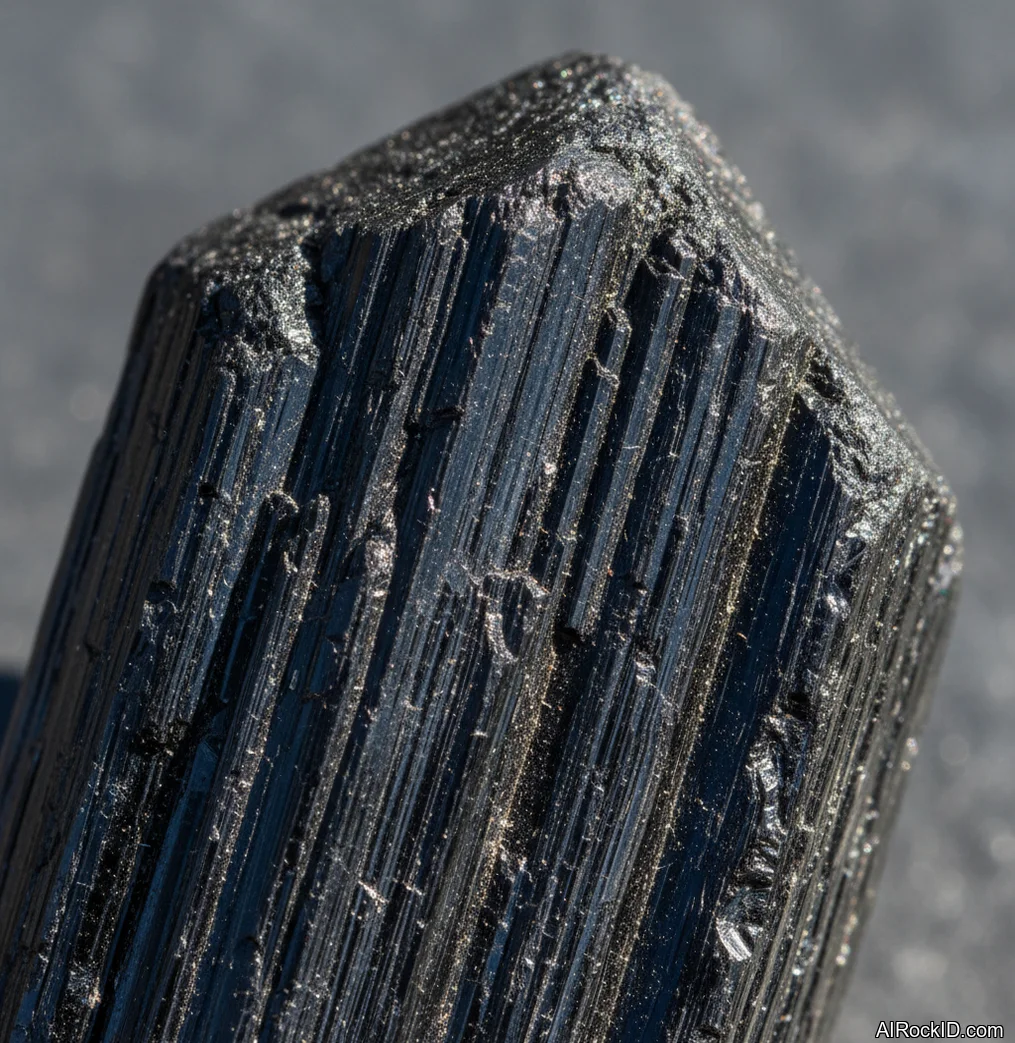
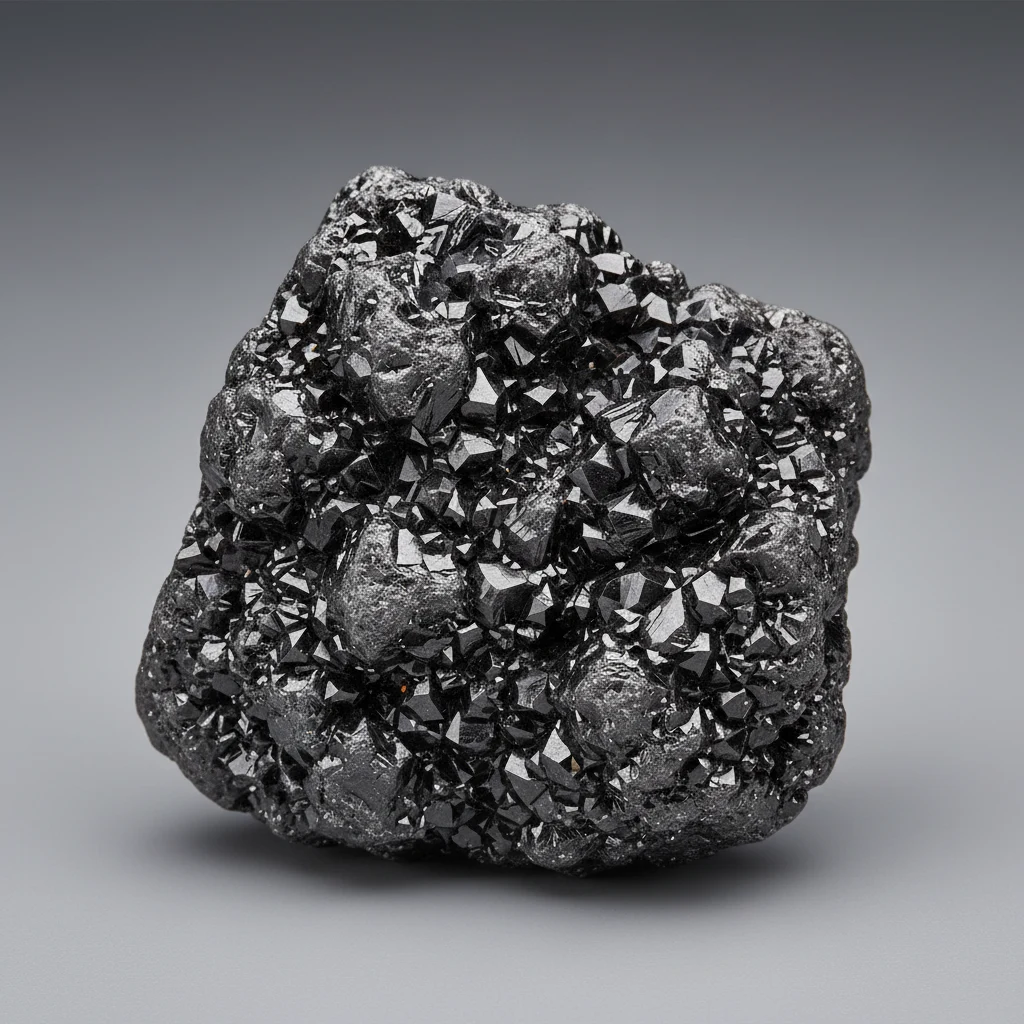
Black Diamond is a rare, opaque black variety of diamond, valued for its severe dark color, Mohs 10 hardness, and precious-gem status. In the hand, it reads less like a sparkling colorless diamond and more like a dense, dark point of carbon: black to dark gray, compact, and visually weighty, with a vitreous to sometimes dull luster.
Mineralogically, Black Diamond is diamond, a native element with the formula C. It belongs to the cubic crystal system, is non-magnetic, has a white streak, conchoidal fracture, and a density of 3.52 g/cm3. Collectors prize it for rarity, durability, and the unusual speckled character often visible under magnification.
Origin & History
The name Black Diamond refers to diamonds that appear dark because of inclusions or structural defects. They were first described in the 19th century, and that history still shapes how collectors approach them: not as ordinary black stones, but as diamond material whose internal character creates the color.
A good specimen has a distinctly opaque black presence rather than a transparent gem look. For locality-style mineral checking, collectors often compare diamond records with mindat.org. In practice, the term is used for rare black diamond material with the same carbon basis as regular diamond, but with a much darker visual identity.
Where Is Black Diamond Found?
Black Diamond is found in Brazil, the Central African Republic, and Australia, with notable localities including Jagersfontein in South Africa, Gorbea in Tanzania, and Ethiopia. The material is most commonly recovered from alluvial deposits and volcanic pipes, so specimens may enter collections as rough pieces or as cut stones.
Formation
Black Diamond forms under extreme pressure and temperature conditions deep within the Earth's mantle. It is believed to come from the same carbon source as regular diamond, but its dark appearance is tied to inclusions or structural defects rather than a separate mineral species.
That origin explains the contrast between its simple chemistry and dramatic look. The formula is C, yet the stone can appear deep black, dark gray, vitreous, dull, speckled, and opaque. Its cubic structure, isotropic optical character, refractive index of 2.42, and lack of birefringence or pleochroism all fit diamond while the body color remains strongly black.
How to Identify Black Diamond
Identify Black Diamond by its deep black to dark gray color, opaque diaphaneity, and diamond-level hardness of 10 on the Mohs scale. Its luster may be vitreous to dull, and the streak is white. It is non-magnetic, has conchoidal fracture, and belongs to the cubic crystal system.
Under magnification, authentic Black Diamonds often show a distinctive internal appearance with various specks. That speckled look is a useful collector clue because the dark color is associated with inclusions or structural defects. Avoid judging only by surface color; combine visual inspection with structure, luster, opacity, and the known diamond properties.
Properties of Black Diamond
Physical Properties
| Crystal System | Cubic |
| Hardness (Mohs) | 10 (Very Hard (7.5-10)) |
| Density | 3.52 g/cm3 |
| Luster | Vitreous |
| Diaphaneity | Opaque |
| Fracture | Conchoidal |
| Streak | White |
| Magnetism | Non-magnetic |
| Colors | Black, Dark Gray |
Chemical Properties
| Classification | Native element |
| Formula | C |
| Elements | C |
| Common Impurities | N, B |
Optical Properties
| Refractive Index | 2.42 |
| Birefringence | None |
| Pleochroism | None |
| Optical Character | Isotropic |
Black Diamond Health & Safety
There are no significant health risks associated with handling black diamonds.
Black Diamond Value & Price
Price Range
Rough/Tumbled: $50 - $150 per specimen
Cut/Polished: $300 - $1,500 per carat
Price is affected by size, clarity, and origin.
Durability
Very Durable — Scratch resistance: Excellent, Toughness: Excellent
They are chemically stable and resistant to most environmental conditions.
How to Care for Black Diamond
Use & Storage
Store in a soft pouch or a jewelry box to prevent scratches.
Cleaning
Clean with warm soapy water and a soft brush. Avoid harsh chemicals.
Cleanse & Charge
Leave under moonlight overnight for cleansing.
Placement
Keep away from direct sunlight to prevent fading.
Caution
Avoid exposing to extreme temperatures.
Works Well With
Black Diamond Meaning & Healing Properties
In crystal healing, Black Diamond is used as a stone of protection, strength, and power. Its energy is commonly associated with the Root Chakra, where practitioners use it for grounding, courage, confidence, transformation, and inner peace. The feel is steady and compact: a dark anchor rather than a bright amplifier.
Black Diamond is linked with Aries and Capricorn, Saturn, and the Earth element. It is considered safe to handle and safe in water, with no significant health risks associated with handling. Clean it with warm soapy water and a soft brush, avoid harsh chemicals and extreme temperatures, and cleanse it by leaving it under moonlight overnight.
Identify Black Diamond from a photo
Compare Black Diamond traits, care tips, value clues, and common lookalikes with a clear photo.
Common mistakes
- Assuming every opaque black gem in a ring is black diamond.
- Confusing diamond hardness with overall toughness; diamonds can still chip along cleavage directions.
- Buying a black diamond without asking whether the color is natural or treated.
- Relying on a thermal diamond tester alone, since some simulants and mounted stones can complicate readings.
- Using streak tests or scratch tests on finished jewelry, which can damage the stone or setting.
- Equating very low price with a bargain instead of checking for simulants, treatments, or disclosure issues.