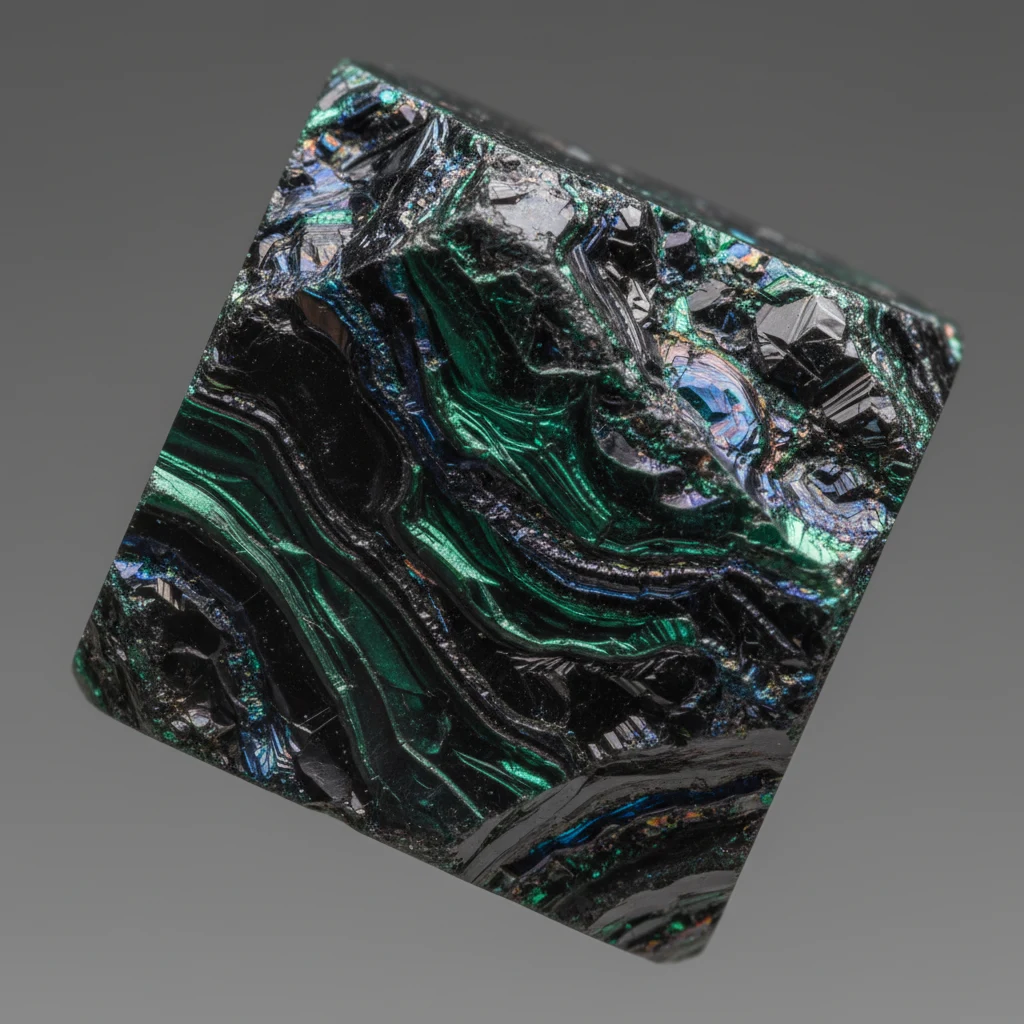
Black Pearl


Quick answer: Black pearl is an organic gem made of nacre, valued for its dark body color and iridescent overtones. Natural-color black pearls are uncommon, so buyers often compare origin, treatment disclosure, luster, surface quality, and nacre thickness before purchase.
AI Rock ID can help screen a black pearl photo by looking for nacre-like luster, roundness, drill-hole clues, and common imitation patterns. RockIdentifier.io should be used as a visual aid, not a substitute for gemological testing or a seller’s treatment disclosure.
Good fit
- Buyers comparing Tahitian, freshwater, dyed, and imitation pearls
- Jewelry owners who want a soft organic gem for occasional wear
- Collectors interested in nacre, orient, and surface characteristics
- People who prefer dark iridescent gems with subtle color shifts
Not a good fit
- Rings or bracelets expected to handle daily abrasion
- Ultrasonic or steam cleaning routines
- Situations where treatment origin must be guaranteed without documentation
- Storage in dry heat, direct sun, or airtight plastic for long periods
Most commonly confused with
- Dyed Freshwater Pearl: Can be very dark but often shows concentrated dye near drill holes or surface pits.
- Tahitian Pearl: A natural-color black-lipped oyster pearl, commonly with green, blue, aubergine, or peacock overtones.
- Glass Pearl Imitation: Usually feels smoother and more uniform, with a coated surface rather than layered nacre.
- Hematite: Metallic gray to black mineral that is much harder-feeling and heavier, without pearly orient.
Black Pearl Lookalike Comparison
| Material | Typical Clue | Key Difference |
|---|---|---|
| Natural-color black pearl | Dark body with layered iridescent orient | Color comes from nacre and oyster type, not surface dye |
| Dyed pearl | Dark color may gather at drill holes or blemishes | Color is treatment-related and should be disclosed |
| Glass imitation pearl | Very uniform surface and color | Coating may chip and lacks true nacre layering |
| Hematite bead | Metallic gray-black and noticeably heavy | Mineral luster, not pearly luster |
| Black shell bead | May show shell banding or carved layers | Made from shell material rather than a whole pearl |
AI identification confidence
AI photo identification for black pearl is moderate because round dark beads, dyed pearls, coated glass, and shell beads can look similar in images. Confidence improves with sharp close-ups of luster, drill holes, surface texture, scale, and multiple lighting angles.
When AI gets it wrong
- A glass imitation has a convincing pearlescent coating in a low-resolution photo
- A dyed pearl is photographed without showing drill holes or surface pits
- Strong reflections hide nacre texture and surface blemishes
- A black mineral bead is rounded and polished like a pearl
Final recommendation
For purchasing, prioritize clear disclosure of pearl type, treatment status, size, luster, surface grade, and matching quality. For higher-value strands or single pearls, request documentation from a reputable pearl or gem laboratory.
How to Check Black Pearl Authenticity
Examine the drill hole, surface, and luster under soft light. Real nacre usually shows subtle depth and slight natural variation, while coated imitations can appear overly uniform or reveal a separate coating at chips. A professional pearl report is the most reliable option when value, natural color, or treatment status matters.
Natural Color vs. Dyed Black Pearl
Natural-color black pearls are most associated with black-lipped oysters, especially Tahitian pearls. Dyed pearls can still be attractive jewelry materials, but their price and labeling should reflect treatment. Concentrated dark color around drill holes, pits, or surface cracks can be a clue that dye was used.
What to Ask Before Buying Black Pearl
Ask whether the pearl is natural-color, dyed, irradiated, cultured, freshwater, saltwater, or imitation. Request details on size, shape, luster, surface quality, nacre thickness, matching, and return policy. For expensive pieces, ask for an independent report that identifies the pearl type and any detectable treatment.
What Is Black Pearl?
Black Pearl is a lustrous organic gem made of nacre, formed inside oysters and valued for its dark body color and iridescent surface. In hand, a good specimen feels smooth, cool, and quietly reflective rather than glassy; its appeal comes from pearly luster, opaque depth, and shifting overtones that may flash green, blue, or purple.
Collectors treat Black Pearl differently from hard minerals because its Mohs hardness is only 2.5-4.5 and its scratch resistance is fair. It is non-magnetic, amorphous, and chemically classed as nacre with the formula CaCO3. Store it in soft cloth, keep it away from strong chemicals, and judge it by size, color, luster, and surface quality.
Origin & History
The name Black Pearl comes directly from its dark color and strong luster. It has been valued for centuries, especially in jewelry, where a single pearl can look formal, oceanic, and richly understated without needing facets or cutting to show its surface glow.
As an organic gem, Black Pearl sits outside the feel of crystalline cabinet minerals; its beauty is grown in layers rather than cleaved from rock. For locality and gem-reference cross-checking, collectors often compare notes with resources such as mindat.org, while still relying on close inspection of luster, surface texture, and color variation when evaluating a specimen.
Where Is Black Pearl Found?
Black Pearls are most commonly associated with tropical and subtropical waters. Reported countries include France, Japan, and Australia, with notable localities including Tahiti in French Polynesia, Borneo in Indonesia, and the Cook Islands.
Formation
Black Pearls form inside certain oysters as a defense response. When an irritant is enclosed, the oyster builds layers of nacre around it over time, creating the smooth, rounded organic gem surface that gives pearl its distinctive tactile polish and pearly sheen.
That layered nacre is why Black Pearl looks deep rather than simply black-painted. Its chemical composition is CaCO3, with listed elements calcium, carbon, and oxygen, and possible impurities including iron and manganese. The result is an amorphous, opaque gem with no birefringence or pleochroism, but with enough surface play to show green, blue, or purple overtones.
How to Identify Black Pearl
Identify Black Pearl first by its smooth, shiny surface, high pearly luster, and dark color. Most examples appear black, but the best visual clue is the overtone: tilt it slowly and look for green, blue, or purple flashes moving across the rounded surface.
A Black Pearl is opaque, non-magnetic, and amorphous, with a white streak and a listed density of 2.5-3.0 g/cm3. Because it is soft at Mohs 2.5-4.5, avoid scratch testing on finished pieces. Instead, inspect for natural variations in color and surface texture, and be cautious of harsh chemicals or rough storage that can damage the surface.
Properties of Black Pearl
Physical Properties
| Crystal System | Amorphous |
| Hardness (Mohs) | 2.5-4.5 (Very Soft (1-2)) |
| Density | 2.5-3.0 g/cm3 |
| Luster | Pearly |
| Diaphaneity | Opaque |
| Fracture | Conchoidal |
| Streak | White |
| Magnetism | Non-magnetic |
| Colors | Black, Green, Blue |
Chemical Properties
| Classification | Nacre |
| Formula | CaCO3 |
| Elements | Ca, C, O |
| Common Impurities | Fe, Mn |
Optical Properties
| Refractive Index | 1.53-1.68 |
| Birefringence | None |
| Pleochroism | None |
| Optical Character | Isotropic |
Black Pearl Health & Safety
Generally considered safe to handle and use.
Black Pearl Value & Price
Price Range
Rough/Tumbled: $50 - $200 per specimen
Cut/Polished: $100 - $500 per carat
Price is influenced by size, color, and surface quality.
Durability
Moderate — Scratch resistance: Fair, Toughness: Good
Black Pearls are sensitive to chemicals and should be stored carefully.
How to Care for Black Pearl
Use & Storage
Store in a soft cloth to prevent scratches.
Cleaning
Clean with a soft cloth and mild soap. Avoid harsh chemicals.
Cleanse & Charge
Cleanse with water or by placing in sunlight briefly.
Placement
Place away from direct sunlight to prevent fading.
Caution
Avoid exposing to strong chemicals.
Works Well With
Black Pearl Meaning & Healing Properties
In crystal-healing traditions, Black Pearl is believed to support emotional healing, balance, protection, calm, empowerment, intuition, compassion, and transformation. It is associated with the Heart and Throat chakras, the zodiac signs Cancer and Scorpio, the Moon, and the Water element.
Use it as a quiet companion stone rather than a hard-wearing pocket mineral: hold it during reflection, place it away from direct sunlight, or pair it with Rose Quartz, Amethyst, or Clear Quartz. These meanings are cultural and spiritual associations only; Black Pearl is not a substitute for medical treatment.
Identify Black Pearl from a photo
Compare Black Pearl traits, care tips, value clues, and common lookalikes with a clear photo.
Common mistakes
- Assuming every black pearl is a Tahitian pearl
- Treating a dyed pearl as less real without checking how the seller discloses it
- Using the tooth test aggressively, which can scratch or contaminate a pearl
- Judging value by darkness alone instead of luster, surface, shape, size, and matching
- Cleaning pearls with ultrasonic machines, steam, vinegar, or abrasive cloths
- Storing pearls in very dry conditions that can dehydrate nacre over time