Tahitian Pearl


Quick answer: Tahitian Pearl is an organic gem formed by black-lipped oysters, most associated with natural-looking gray, charcoal, peacock green, blue, and aubergine overtones. Because pearls are soft and visually variable, identification should consider luster, surface texture, drill holes, nacre quality, and whether the color may be treated.
AI Rock ID can help compare a Tahitian Pearl photo against common lookalikes such as dyed freshwater pearls, shell pearls, hematite beads, and glass imitations. RockIdentifier.io provides visual identification support, but pearl origin, treatment status, and value usually require seller documentation or gemological testing.
Good fit
- People comparing dark pearls with gray, green, blue, or peacock overtones
- Buyers checking whether a pearl may be natural-color, dyed, cultured, or imitation
- Collectors interested in organic gems rather than minerals
- Jewelry owners who want a soft gem suitable for careful, occasional wear
Not a good fit
- Anyone needing a scratch-resistant stone for rough daily wear
- Projects requiring ultrasonic, steam, or harsh chemical cleaning
- Buyers who need origin or treatment confirmation without documentation
- People seeking a mineral crystal rather than an organic gem
Most commonly confused with
- Dyed Freshwater Pearl: Often less costly and may show color concentration near drill holes or surface blemishes.
- Black Onyx: A chalcedony variety that is harder, glassier, and lacks pearl nacre layering.
- Hematite: Heavier, metallic-looking, and much harder-feeling than a pearl of similar size.
- Shell Pearl: A manufactured imitation made from shell or coated material, usually more uniform than cultured pearl.
Tahitian Pearl vs Common Lookalikes
| Material | Typical Look | Key Difference | Common Check |
|---|---|---|---|
| Tahitian Pearl | Gray to black body color with green, blue, or peacock overtones | Cultured in black-lipped oysters with nacreous luster | Look for subtle surface growth marks and nacre depth |
| Dyed Freshwater Pearl | Dark color may appear very even or concentrated | Color treatment is common for black shades | Inspect drill holes and blemishes for dye pooling |
| Shell Pearl | Very smooth and uniform | Manufactured imitation rather than cultured nacre growth | Check for overly identical size, color, and surface |
| Glass Pearl | Glossy coating over a bead core | Coating can chip or peel | Inspect drill holes for exposed glass or flaking |
| Hematite | Dark metallic gray to black | Mineral with metallic luster, not nacre | Notice higher weight and metallic surface |
AI identification confidence
AI identification confidence for Tahitian Pearl is moderate from clear photos because many dark pearls and imitations share similar color and luster. Confidence improves with images of the drill hole, surface texture, strand uniformity, clasp marks, and any certificate or seller label.
When AI gets it wrong
- A dyed freshwater pearl has similar dark color and luster in a single photo
- A shell pearl or glass pearl is photographed under soft lighting that hides coating details
- The image lacks scale, drill-hole detail, or surface close-ups
- Color is altered by strong reflections, filters, or warm indoor lighting
Final recommendation
For buying, prioritize clear disclosure of cultured origin, color treatment, size, surface grade, luster, and matching quality. For higher-value pieces, request documentation from a reputable pearl seller or gemological laboratory rather than relying on appearance alone.
How to Check Tahitian Pearl Authenticity
Authentic cultured Tahitian pearls usually show nacreous depth, subtle surface variation, and natural differences between pearls in a strand. Look closely at drill holes, because dyed pearls may show color concentration there, while coated imitations can reveal chipping or a visible bead layer. A certificate or invoice should state whether the pearl is cultured, its origin, and whether any color treatment is disclosed.
Tahitian Pearl Buying Notes
Important buying factors include luster, surface cleanliness, shape, size, overtone, matching, and nacre quality. Round pearls with strong luster and desirable green or peacock overtones often cost more than baroque or heavily blemished examples. The name “Tahitian” is commonly used for black-lipped oyster pearls from French Polynesia, but buyers should still confirm origin and treatment details.
Photo Tips for Identifying Tahitian Pearl
Use natural indirect light and photograph the pearl from several angles to capture overtone, luster, and surface texture. Include a close-up of the drill hole, any blemishes, the clasp or stamp, and a size reference. Avoid heavy filters or direct flash, because they can make dyed pearls, glass pearls, and cultured Tahitian pearls look more similar than they are.
What Is Tahitian Pearl?
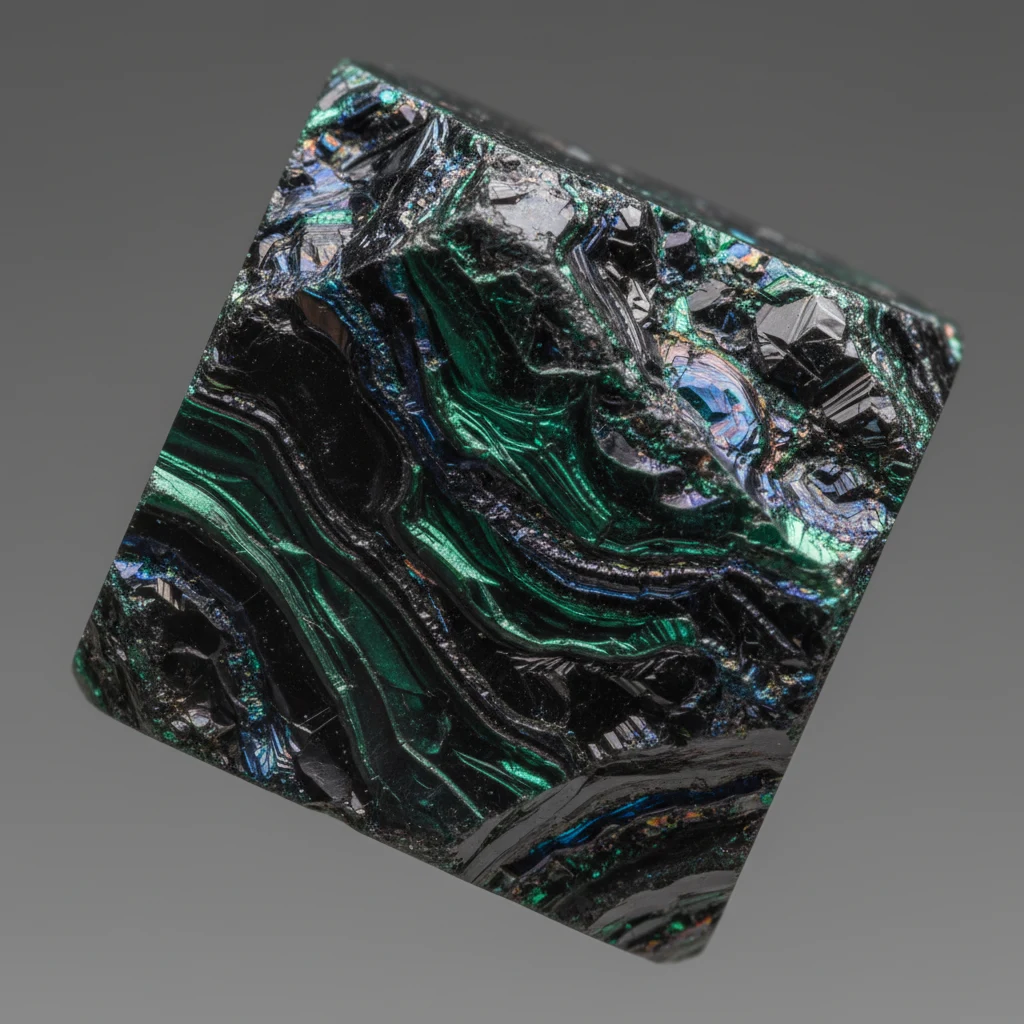
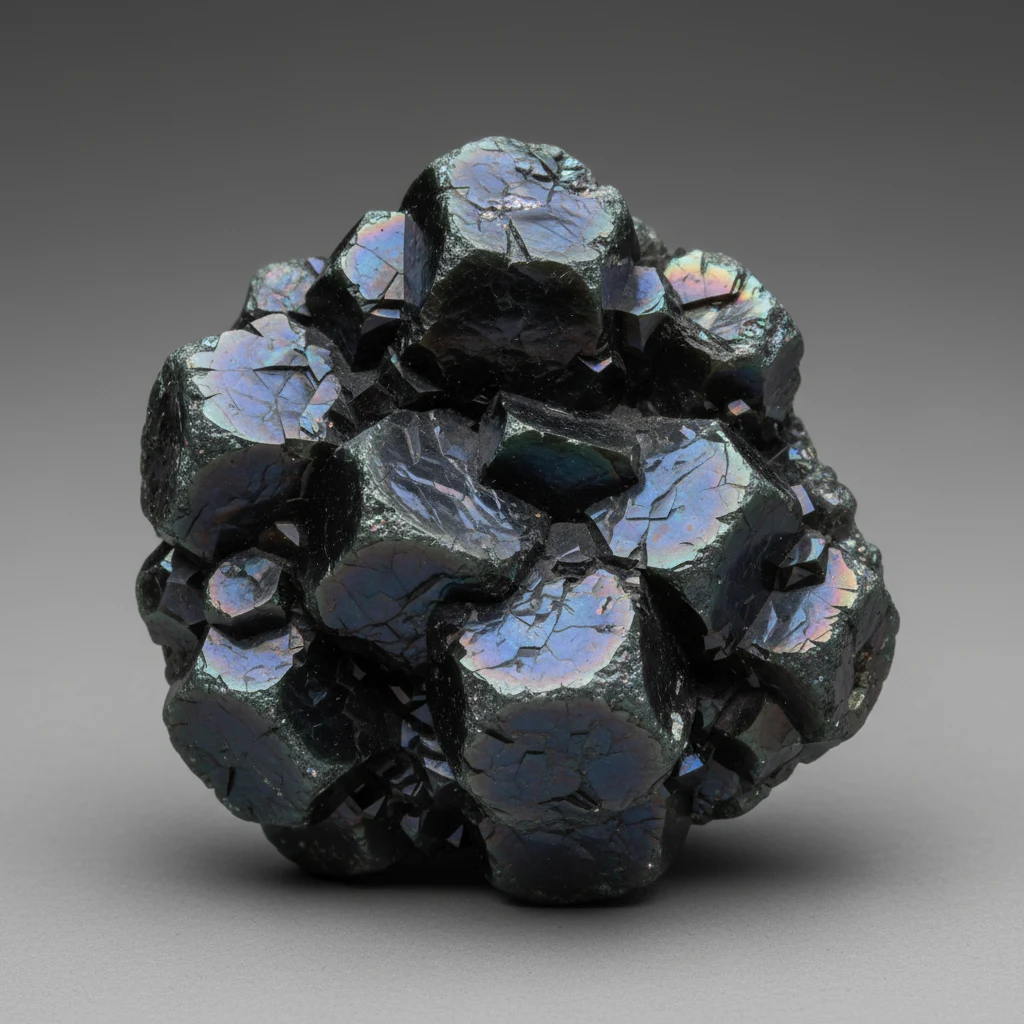
Tahitian Pearl is an uncommon organic gem produced by the black-lipped oyster, best known for its naturally dark body colors. In the hand, a good specimen feels smooth and cool, with a pearly surface that flashes gray, black, or green as it turns under light. Unlike a faceted mineral, its beauty is judged by luster, color variation, size, and surface quality.
Its composition is calcium carbonate with an organic matrix, written as CaCO3 + organic matrix. Tahitian Pearl is amorphous, opaque, non-magnetic, and very soft compared with most gemstones, at Mohs 2.5-4.5. That softness is part of its character: it is wearable, elegant, and collectible, but it needs a soft pouch, gentle cleaning, and protection from perfumes, harsh chemicals, scratches, and extreme temperatures.
Origin & History
Tahitian Pearl takes its name from Tahiti, where these dark pearls are primarily harvested. They have been valued since the 19th century, and collectors still associate the name with the lagoons of French Polynesia. A fine Tahitian Pearl is not just “black”; it can carry gray or green color that shifts across a reflective pearly skin.
For locality checking and gem-mineral reference work, collectors often compare place names with resources such as mindat.org, then confirm the pearl’s own traits by eye. The most useful historical clue is the origin name itself: Tahiti and nearby French Polynesian lagoon localities are central to the identity of this organic gem.
Where Is Tahitian Pearl Found?
Tahitian Pearls are most commonly found in the lagoons of French Polynesia. Notable localities include Tahiti, Bora Bora, and Rangiroa, all in French Polynesia. The material is also listed from Australia and Japan, but the classic collecting and trade identity remains strongly tied to French Polynesian waters.
Formation
Tahitian Pearls form inside the shells of black-lipped oysters through layers of nacre. That nacre layering builds the pearl gradually, giving it an opaque body, pearly luster, and the smooth surface collectors handle so carefully. The result is an organic gem rather than a crystal with flat faces or a repeating crystal habit.
Because the structure is amorphous, identification depends more on appearance and gem properties than on crystal form. The pearl’s calcium carbonate and organic matrix, density of 2.5-2.9 g/cm3, and refractive index range of 1.53-1.68 support its identity, while the dark color range and strong reflective luster make Tahitian Pearl visually distinctive.
How to Identify Tahitian Pearl
Identify Tahitian Pearl by its dark color range, strong pearly luster, and organic gem character. Typical colors include black, gray, and green, often with subtle variation across the surface. A key practical check is surface quality: look closely for blemishes, uneven spots, and the depth of reflection rather than expecting the sharp edges of a mineral crystal.
Its physical properties are also distinctive. Tahitian Pearl is amorphous, opaque, non-magnetic, and has no streak. It has conchoidal fracture and a Mohs hardness of 2.5-4.5, so avoid scratch testing finished pearls. For a collector, the best non-destructive approach is to judge luster, color, surface condition, origin information, and overall feel together.
Properties of Tahitian Pearl
Physical Properties
| Crystal System | Amorphous |
| Hardness (Mohs) | 2.5-4.5 (Very Soft (1-2)) |
| Density | 2.5-2.9 g/cm3 |
| Luster | Pearly |
| Diaphaneity | Opaque |
| Fracture | Conchoidal |
| Streak | none |
| Magnetism | Non-magnetic |
| Colors | Black, Gray, Green |
Chemical Properties
| Classification | Organic compound |
| Formula | CaCO3 + organic matrix |
| Elements | Ca, C, O |
| Common Impurities | None |
Optical Properties
| Refractive Index | 1.53-1.68 |
| Birefringence | None |
| Pleochroism | None |
| Optical Character | Isotropic |
Tahitian Pearl Health & Safety
No significant health risks are associated with handling Tahitian pearls.
Tahitian Pearl Value & Price
Price Range
Rough/Tumbled: $20 - $300 per specimen
Cut/Polished: $100 - $1500 per carat
Price varies based on size, color, and surface quality.
Durability
Moderate — Scratch resistance: Fair, Toughness: Good
They are sensitive to chemicals and extreme temperatures.
How to Care for Tahitian Pearl
Use & Storage
Store in a soft pouch or lined box to prevent scratches.
Cleaning
Clean with a damp cloth and mild soap; avoid harsh chemicals. Rinse thoroughly after cleaning.
Cleanse & Charge
To cleanse, place in sunlight for a few hours.
Placement
Keep away from direct sunlight to maintain luster.
Caution
Avoid exposing pearls to perfumes and chemicals.
Works Well With
Tahitian Pearl Meaning & Healing Properties
In crystal healing traditions, Tahitian Pearl is believed to support emotional healing, balance, love, and abundance. It is associated with the Heart and Crown chakras, with the Moon and Venus, and with the Water element. Practitioners often choose it for calming, meditation, intuition, self-discovery, joy, transformation, and trust.
Use Tahitian Pearl as a symbolic support, not as medical treatment. Its soft, reflective surface suits quiet wear, altar placement, or gentle meditation where the pearl can be held without scratching it. It pairs well with moonstone, rose quartz, and amethyst when the intention is love, emotional balance, or a calmer inner state.
Identify Tahitian Pearl from a photo
Compare Tahitian Pearl traits, care tips, value clues, and common lookalikes with a clear photo.
Common mistakes
- Assuming every black or gray pearl is a Tahitian Pearl
- Treating perfectly uniform dark color as proof of higher quality
- Ignoring drill holes, where dye or coating issues may be visible
- Using harsh jewelry cleaners that can damage nacre
- Relying on a single photo to confirm origin, treatment, or value
- Confusing metallic-looking hematite beads with nacreous pearls