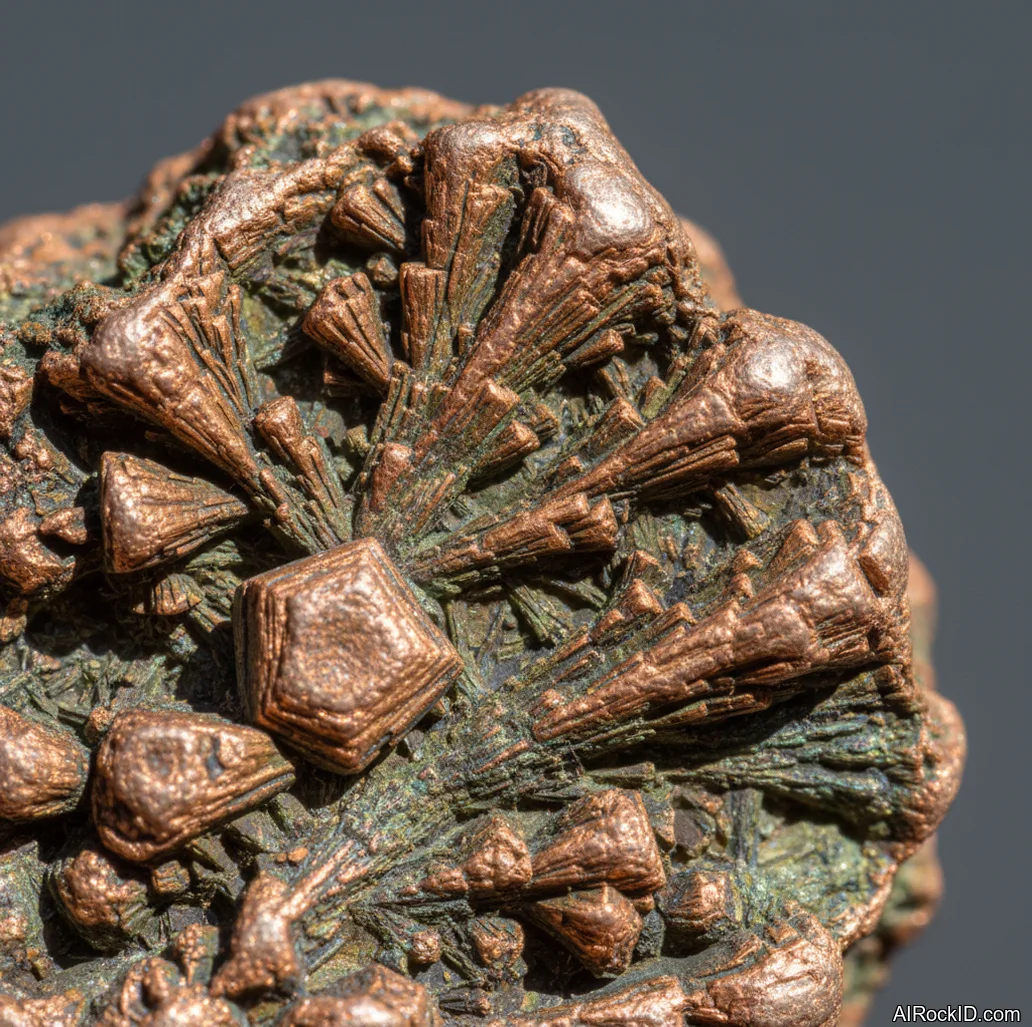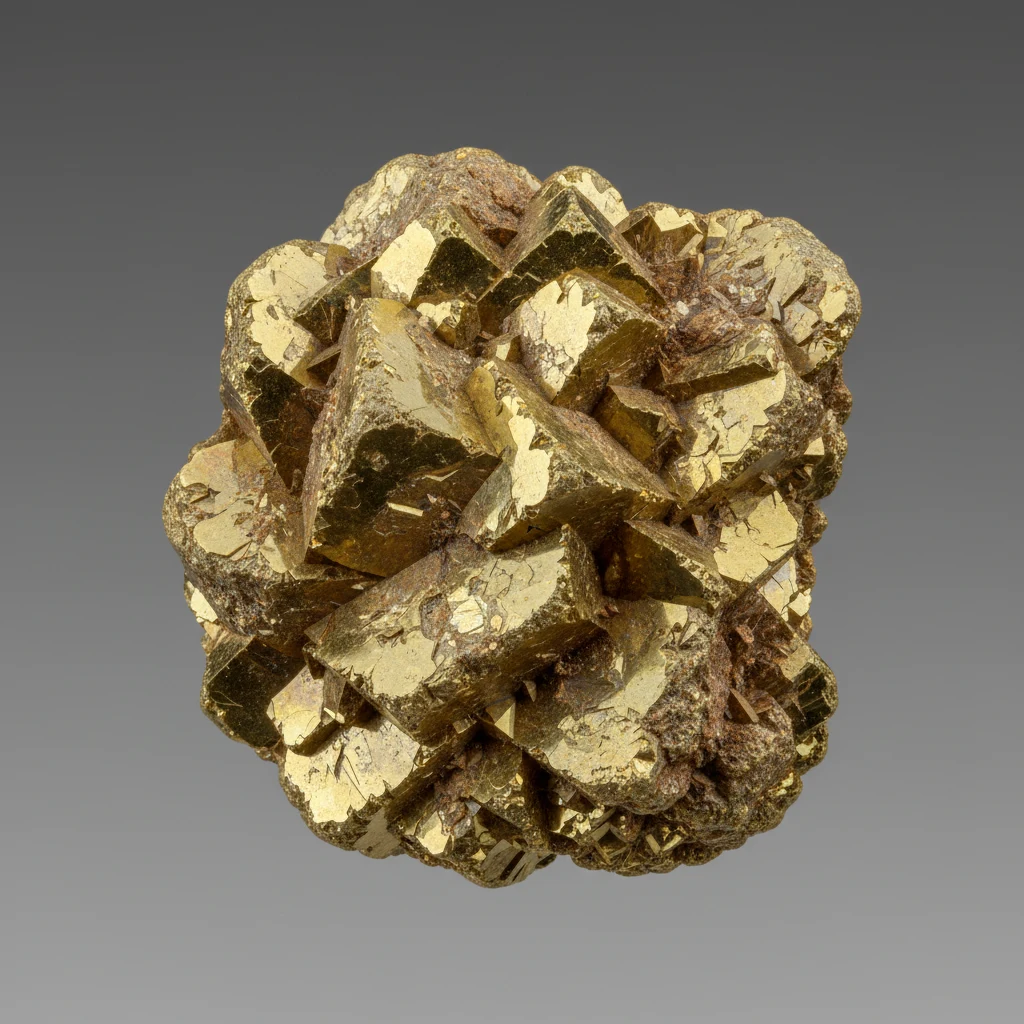
Brass


Quick answer: Brass is a yellow to golden copper-zinc alloy, not a naturally formed crystal or mineral species. It is often submitted for identification because its metallic luster, color, and tarnish can resemble gold, pyrite, chalcopyrite, or bronze.
AI Rock ID can help screen brass by checking visible clues such as yellow-gold color, metallic luster, tarnish pattern, and the absence of crystal faces. RockIdentifier.io can support a preliminary ID, but metal composition tests are needed when exact alloy content or value matters.
Good fit
- Identifying yellow-gold metal objects, fragments, or fittings
- Comparing a non-magnetic metallic sample with gold-colored minerals
- Learning the difference between alloys and natural crystals
- Checking whether a decorative object may be brass, bronze, or plated metal
Not a good fit
- Confirming exact copper-zinc percentage without laboratory testing
- Separating solid brass from brass-plated steel using photos alone
- Determining antique value, maker, or historical origin
- Using as a substitute for professional metal, jewelry, or scrap appraisal
Most commonly confused with
- Gold: Gold is denser, softer, and does not tarnish the same way; brass is a copper-zinc alloy with a yellower or duller tone.
- Pyrite: Pyrite is a natural iron sulfide mineral that often forms cubic crystals, while brass is manufactured metal.
- Chalcopyrite: Chalcopyrite commonly shows iridescent tarnish and a darker brassy color, while brass is an alloy and may show machining marks.
- Bronze: Bronze is mainly copper and tin, usually warmer brown-gold than many brasses, which are copper and zinc.
Brass vs. Common Lookalikes
| Material | Key Clue | Magnet Response | Typical Origin |
|---|---|---|---|
| Brass | Yellow-gold metal, may tarnish brown or green | Usually non-magnetic | Manufactured copper-zinc alloy |
| Gold | Rich yellow color, very high density, soft | Non-magnetic | Native metal or refined metal |
| Pyrite | Cubic crystals or granular masses, brittle | Usually weak to non-magnetic | Natural sulfide mineral |
| Chalcopyrite | Brassy yellow with possible rainbow tarnish | Usually non-magnetic | Natural copper iron sulfide mineral |
| Brass-Plated Steel | Gold coating may wear at edges | Often magnetic | Steel object with brass-colored plating |
AI identification confidence
AI identification confidence is usually moderate for brass when the object shows a smooth metallic surface, yellow-gold color, tarnish, and man-made shape. Confidence drops when the image lacks scale, shows only a small fragment, or cannot distinguish solid brass from plating.
When AI gets it wrong
- Gold-colored minerals may be labeled brass if crystal form, streak, or matrix is not visible.
- Brass-plated steel can be mistaken for solid brass if magnet testing is not included.
- Polished bronze, gilded objects, and some copper alloys can appear similar in photos.
- Strong warm lighting can make silver-colored or copper-colored metals look more brass-like.
Final recommendation
Use visual identification for an initial brass check, then confirm with simple observations such as magnet response, edge wear, density impression, and tarnish color. For resale, scrap, antique, or jewelry decisions, use a qualified metal test or appraisal rather than relying on appearance alone.
How to Tell Solid Brass from Brass Plating
Solid brass usually has a consistent yellow-gold color through worn edges, scratches, and drilled areas. Brass-plated objects may reveal gray steel, reddish copper, or another base metal where the coating has worn away. A magnet is useful because many brass-plated steel items are magnetic, while most common brasses are not.
Buying Brass Specimens and Decorative Pieces
When buying brass, check whether the item is described as solid brass, brass-plated, bronze, or gold-toned metal. Photos of edges, bases, screw holes, and worn high points can help show whether the color continues below the surface. Weight can be a clue, but it should not be used alone because item shape and hollow construction affect how heavy brass feels.
Field Tests That Help Separate Brass from Minerals
Brass is malleable compared with brittle brassy minerals such as pyrite and chalcopyrite. A natural mineral may show crystal faces, cleavage, matrix rock, or a colored streak, while brass commonly shows casting, rolling, machining, or tool marks. Destructive tests should be avoided on antiques, jewelry, or collectible objects.
What Is Brass?
Brass is a common copper-zinc alloy, best recognized by its bright yellow to golden color and clean metallic luster. In hand, it feels dense for its size, with a listed density of 8.4 g/cm3, and it presents as an opaque, yellow-gold to brown metal rather than a transparent crystal.
For collectors, brass is valued less for rarity and more for its familiar industrial beauty: warm color, workable durability, and a surface that can be polished back to shine. Its Mohs hardness is 3-4, giving it fair scratch resistance, good toughness, and a stable body that may tarnish over time.
Origin & History
The name Brass comes from the Old English word “bræs,” and the material has been used since ancient times. It is not presented here as a naturally grown crystal habit, but as an alloy made primarily of copper and zinc, with the simple listed formula CuZn.
In a collector’s tray, brass often sits at the boundary between mineral study, metalworking, and cultural object. For terminology and broader mineral reference context, mindat.org is a useful plain-text reference, while the key facts for this entry are its copper-zinc composition, amorphous structure, and historic use.
Where Is Brass Found?
Brass is commonly found in industrial areas and metalworking locations rather than in classic crystal pockets. The provided localities include Pennsylvania, USA; Shandong, China; and Bavaria, Germany, with the broader country list covering the USA, China, and Germany.
Formation
Brass forms when copper and zinc are melted and mixed together in specific ratios. That process gives the material its yellow-gold body color and metallic shine, while common listed impurities can include lead and iron.
Structurally, brass is described as amorphous in the provided data, with isotropic optical character, no birefringence, and no pleochroism. It is an opaque metal alloy, not a gem that is judged by refractive sparkle; its appeal is the direct flash of polished metal and the warm tone of CuZn.
How to Identify Brass
Identify brass first by its bright yellow to golden color, metallic luster, opaque appearance, and yellow streak. A simple field check is magnetism: brass is listed as non-magnetic, so a magnet should not attract it.
Handle it like a dense metal rather than a glassy gem. It may show yellow, gold, or brown colors, has a conchoidal fracture, and sits at Mohs 3-4, so it can take wear but is not highly scratch resistant. Tarnish over time is normal, especially if stored with moisture.
Properties of Brass
Physical Properties
| Crystal System | Amorphous |
| Hardness (Mohs) | 3-4 (Medium (4-6)) |
| Density | 8.4 g/cm3 |
| Luster | Metallic |
| Diaphaneity | Opaque |
| Fracture | Conchoidal |
| Streak | yellow |
| Magnetism | Non-magnetic |
| Colors | Yellow, Gold, Brown |
Chemical Properties
| Classification | Metal alloy |
| Formula | CuZn |
| Elements | Cu, Zn |
| Common Impurities | Pb, Fe |
Optical Properties
| Refractive Index | Not applicable |
| Birefringence | None |
| Pleochroism | None |
| Optical Character | Isotropic |
Brass Health & Safety
Brass is generally safe to handle.
Brass Value & Price
Price Range
Rough/Tumbled: $2 - $10 per specimen
Cut/Polished:
Price varies based on copper and zinc content and market demand.
Durability
Durable — Scratch resistance: Fair, Toughness: Good
Brass is stable but can tarnish over time.
How to Care for Brass
Use & Storage
Store in a dry place to prevent tarnishing.
Cleaning
Clean with a mild soap and water solution. Polish with a soft cloth to restore shine.
Cleanse & Charge
Expose to sunlight for a few hours.
Placement
Keep away from moisture to maintain appearance.
Caution
Avoid prolonged exposure to acidic substances.
Works Well With
Brass Meaning & Healing Properties
In crystal-healing practice, brass is associated with communication, confidence, and creativity. It is linked with the Throat chakra, Taurus and Leo, the planet Venus, and the Earth and Fire elements; these meanings are cultural associations and are not a substitute for medical treatment.
Care is straightforward: store brass in a dry place, keep it away from moisture to maintain appearance, and avoid prolonged exposure to acidic substances. Clean it with mild soap and water, polish with a soft cloth, and, for energetic cleansing, expose it to sunlight for a few hours.
Identify Brass from a photo
Compare Brass traits, care tips, value clues, and common lookalikes with a clear photo.
Common mistakes
- Calling brass a crystal or mineral instead of a manufactured alloy.
- Assuming every non-magnetic yellow metal is gold.
- Using color alone to separate brass from bronze or brass-plated steel.
- Ignoring worn edges where plating may reveal a different base metal.
- Cleaning an antique brass object aggressively before checking its age or finish.
- Treating an AI photo result as proof of metal composition or market value.