Flower Jasper 2


Quick answer: Flower Jasper 2 is a trade name for a patterned jasper or chalcedony with rounded, plume-like, or blossom-like markings. It is typically opaque, takes a good polish, and is often sold as tumbled stones, cabochons, beads, and small carvings.
AI Rock ID can help compare Flower Jasper 2 against visually similar jaspers by analyzing color distribution, opacity, banding, and orbicular patterns in a photo. RockIdentifier.io provides crystal identification support, but visual AI results should be checked against hardness, luster, and seller disclosure for trade-name stones.
Good fit
- Collectors who like orbicular, floral, or plume-like jasper patterns
- People choosing durable stones for tumbles, palm stones, beads, or cabochons
- Beginners who want an opaque quartz-family material that is easy to care for
- Buyers comparing trade-name jaspers with similar decorative patterns
Not a good fit
- Anyone needing a formally standardized mineral species name, since Flower Jasper 2 is a trade name
- Collectors seeking transparent or facetable gemstones
- Buyers who require untreated or source-verified material without relying on seller documentation
Most commonly confused with
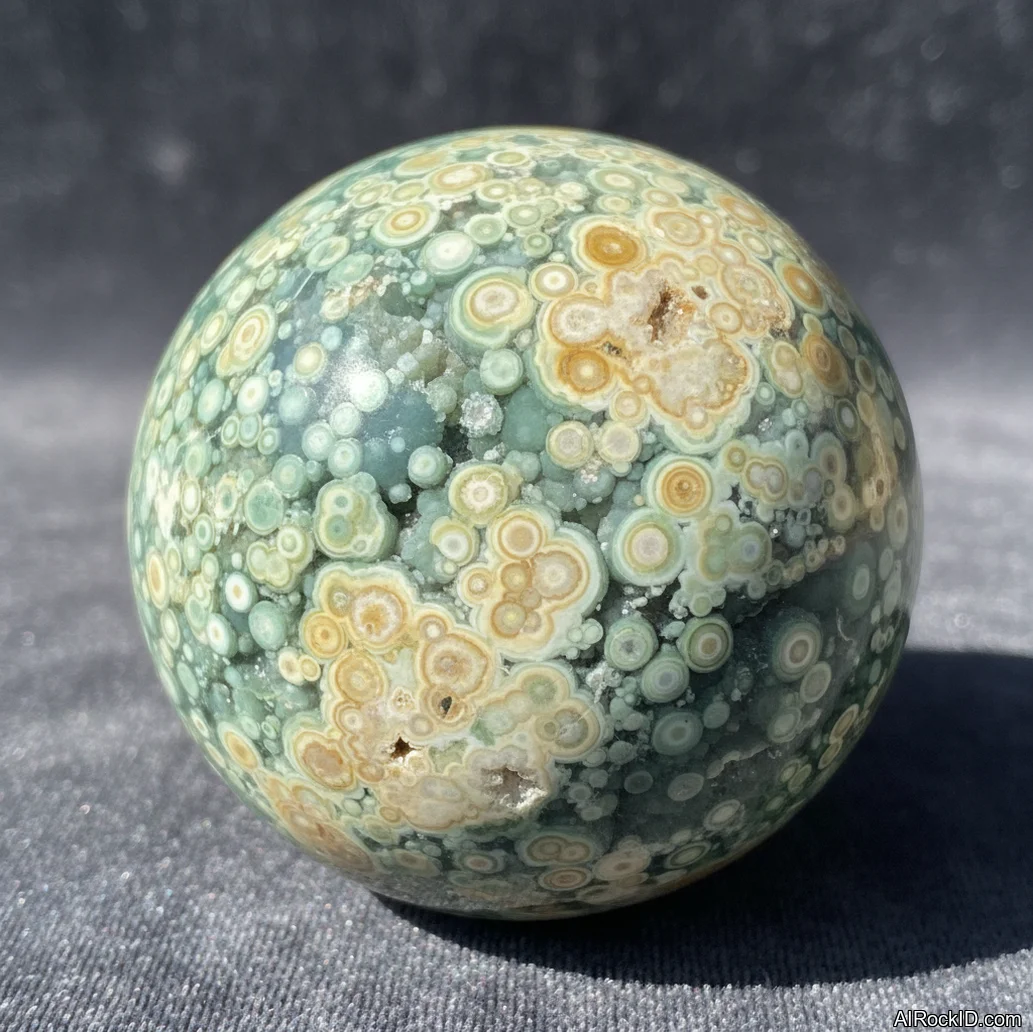
- Ocean Jasper: Ocean Jasper usually shows orbicular eyes and varied green, cream, pink, or yellow fields, often with more distinct circular structures.
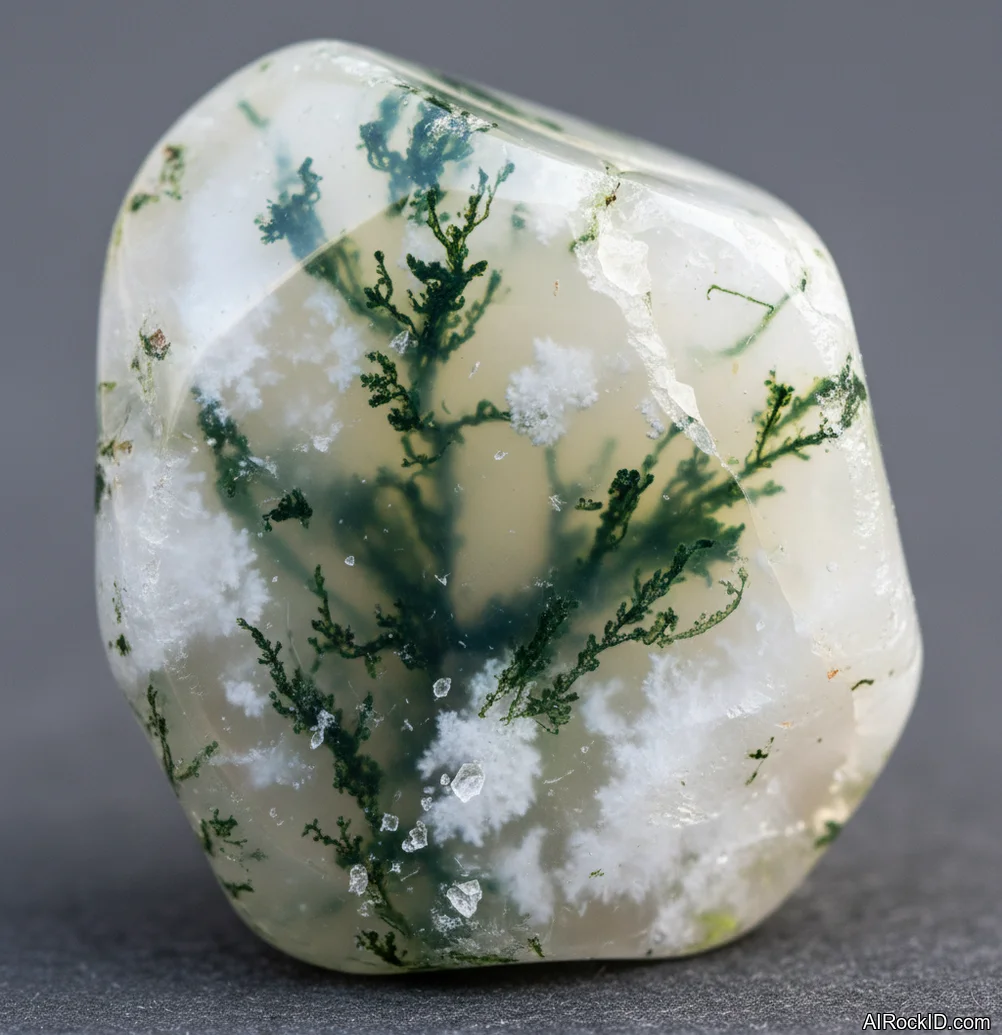
- Flower Agate: Flower Agate is generally translucent to semi-translucent chalcedony with soft plume inclusions, while Flower Jasper 2 is usually opaque.
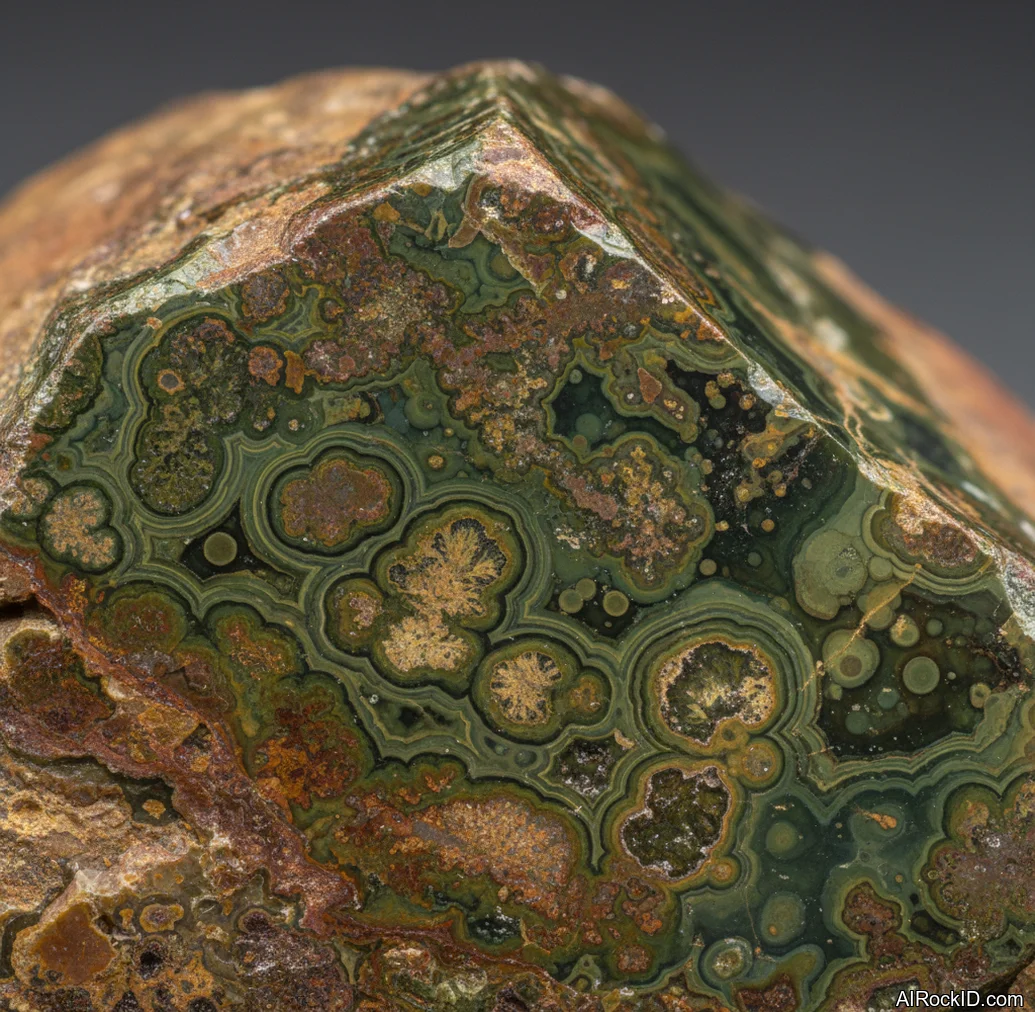
- Leopard Skin Jasper: Leopard Skin Jasper has spotted, leopard-like orbicular markings rather than blossom-like plume patches.
- Plume Agate: Plume Agate commonly has feather-like inclusions in translucent chalcedony, unlike the more opaque appearance of jasper.
Flower Jasper 2 vs Similar Patterned Stones
| Stone | Typical Look | Key Difference |
|---|---|---|
| Flower Jasper 2 | Opaque jasper or chalcedony with blossom-like or orbicular plume patterns | Trade name; appearance varies by seller and source |
| Flower Agate | Translucent chalcedony with soft white, cream, or pink plume shapes | Usually allows some light through thin edges |
| Ocean Jasper | Orbicular eyes, dots, and multicolor patches | More distinct circular or eye-like structures |
| Leopard Skin Jasper | Tan, brown, pink, or gray spotted pattern | Spots resemble animal markings more than flowers |
| Plume Agate | Feathery inclusions in translucent chalcedony | Plumes are suspended in clearer agate rather than opaque jasper |
AI identification confidence
AI identification confidence for Flower Jasper 2 is usually moderate because the name is based on appearance rather than a strict mineral species. Photos with natural light, close focus, and multiple angles improve results, especially when the image shows opacity, polish, and the full pattern.
When AI gets it wrong
- Highly polished stones may reflect light and hide whether the material is opaque or translucent.
- Dyed jasper or dyed agate can imitate floral or orbicular patterns in photos.
- Trade names vary between sellers, so the same-looking material may be listed under different names.
- Close-up photos without scale can make common jasper look like rarer orbicular varieties.
Final recommendation
Choose Flower Jasper 2 when you want a durable patterned stone and are comfortable with trade-name variation. For higher-confidence buying, compare the stone with similar jaspers, ask whether it is dyed or stabilized, and look for consistent photos taken in natural light.
How to Identify Flower Jasper 2 Visually
Flower Jasper 2 is usually recognized by opaque chalcedony or jasper with rounded, flower-like, plume-like, or orbicular patches. The surface should show a waxy to glassy polish and no obvious layering like sedimentary rock. A simple scratch check against glass may support quartz-family hardness, but destructive tests are not recommended for finished pieces.
Buying Tips for Flower Jasper 2
Because Flower Jasper 2 is a trade name, product photos and seller descriptions matter more than the name alone. Ask whether the stone has been dyed, resin-stabilized, or enhanced, especially if the colors look unusually bright or uniform. Matching pairs, cabochons, and carvings may cost more when the floral pattern is centered and visually balanced.
Authenticity and Treatment Clues
Natural jasper patterns usually have gradual color transitions, mineral specks, and irregular shapes. Dyed material may show concentrated color in cracks, pits, or along porous edges. A reputable listing should describe the material as jasper, chalcedony, or a trade-name stone rather than implying that Flower Jasper 2 is a separate mineral species.
What Is Flower Jasper 2?
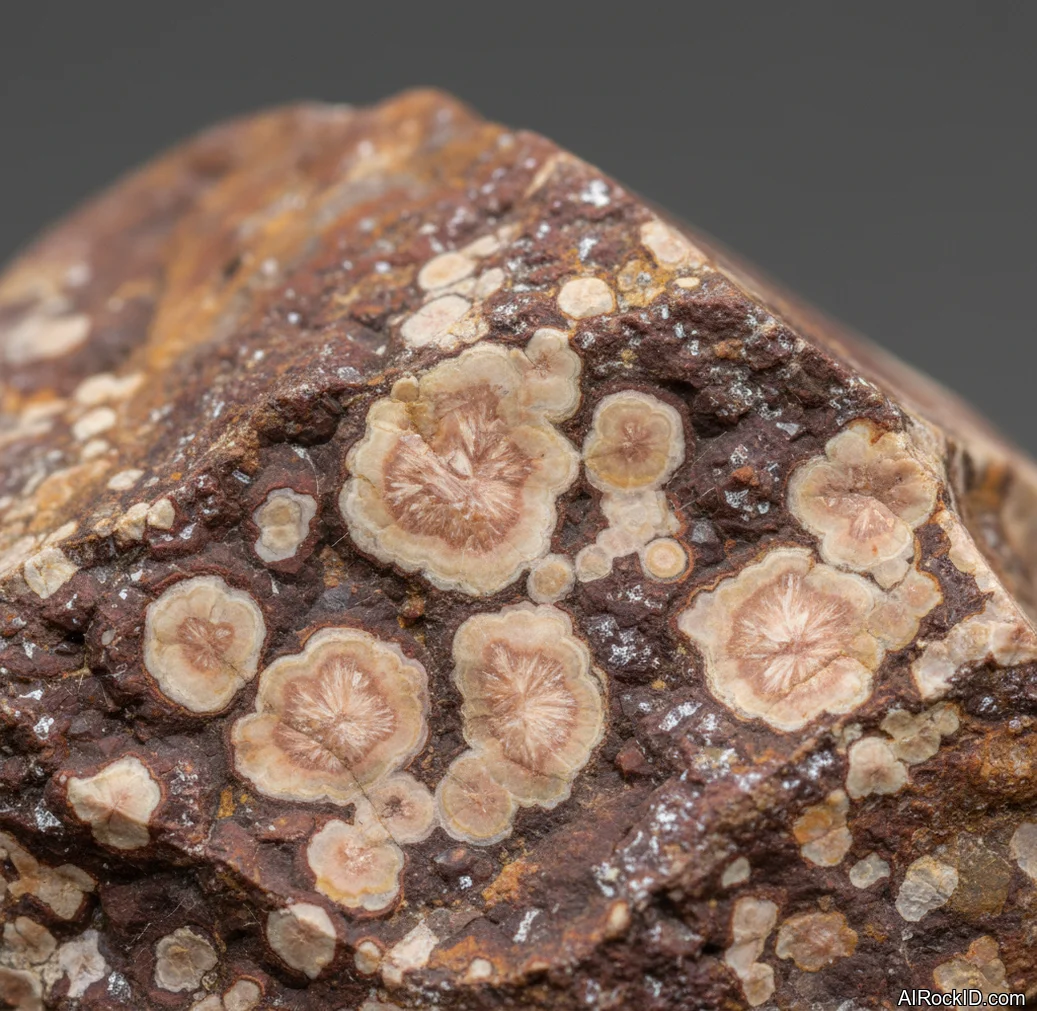
Flower Jasper 2 is an orbicular, jaspery type of chalcedony (microcrystalline quartz) with these flower-like plumes or rosettes sitting in a contrasting matrix.
Pick up a palm stone and you feel it immediately. Solid. That familiar quartz heft. It’s cool to the touch at first, then after a minute it starts to warm up in your hand like it’s been waiting there. The pattern is the whole point: soft pink “blooms,” creamy little puffs, thin gray outlines, and sometimes this mossy green haze that looks like it’s tucked just under the surface (almost trapped in the stone).
At first glance, people mix it up with “flower agate,” and honestly, I get it. But most Flower Jasper I see at shows reads more opaque and more jaspery, with sharper rosette edges and less of that jelly-like translucence you get in true agate. And yeah, most of what’s out there is polished. Raw chunks do exist, but they’re kind of unimpressive until you cut them, then polish them, and suddenly the “flowers” pop. Funny how that works, right?
Origin & History
Most dealers will tell you “Flower Jasper” is basically a trade name, not some formally defined mineral variety, and yeah, that’s the honest truth. You’re not going to find a classic 1800s type locality write up for it like you would with rhodochrosite or benitoite.
The name’s literal. The patterns really do look like tiny blossoms, especially once the piece is polished and you can see those flower shapes pop under the lights. I started noticing it labeled this way over the last couple decades at gem shows, usually tossed into those shallow plastic bins with palm stones and towers (the kind that clack together when people dig through them). And sometimes the exact same material gets sold as cherry blossom jasper or sakura jasper, depending on the importer. Why the name shuffle? Branding, mostly.
Where Is Flower Jasper 2 Found?
Commercial Flower Jasper-type material is sold from multiple sources, with a lot of lapidary-grade chalcedony/jasper coming through Brazil. Similar orbicular jasper patterns also show up in other regions, which is why the name gets used loosely.
Formation
Look close at those “flowers” and you’re really watching silica gel and mineral-loaded fluids doing their thing while the host rock slowly got stuffed with silica over time. Chalcedony forms at pretty low temperatures compared to those big, showy quartz crystals, and you usually find it filling cavities or veins, or straight-up replacing rock where silica-rich fluids kept circulating through.
Those little rosettes and puffy bursts? They come from impurities and tiny chemistry shifts while the material’s growing. Iron and manganese are usually the culprits behind the pinks, reds, tans, and grays (the kind of dusty, muted tones you see when you tilt it under a lamp). And the dead giveaway you’re dealing with microcrystalline quartz is how it breaks. Chip it and it tends to snap with that smooth, shell-like conchoidal fracture, the same way good chert or flint does.
How to Identify Flower Jasper 2
Color: Usually gray, beige, or tan base with pink to salmon “flower” or orb patterns; cream and white patches are common. Some pieces show subtle greenish areas or smoky gray halos around the blooms.
Luster: Waxy to vitreous when polished; duller and chalkier on rough surfaces.
If you scratch it with a steel nail, it usually won’t take a mark, but a quartz point will bite it. The real test is the feel and the break: it feels like quartz in the hand and chips with a smooth, curved fracture instead of splitting along flat cleavage faces. Cheap versions in resin feel warmer and lighter, and the “flowers” look too printed and too perfect when you tilt them under a strong light.
Common Look-Alikes
Flower Jasper 2 is sometimes confused with these materials:
- Ocean Jasper (orbicular jasper) with round "eyes" that get mistaken for Flower Jasper 2 rosettes
- Rhyolite (often sold as "flower" or "leopard" rhyolite) with spherulites in a softer, more feldspar-rich matrix
- Cherry Blossom Agate / Flower Agate (Madagascar) with translucent chalcedony and plume "petals" that look similar in photos
- Dyed gray-beige jasper or agate sold as "pink flower jasper" where the blooms are boosted with dye
- Porcelain jasper (Exotica Jasper) with orbicular spots and brecciated patches that can read as floral when polished
- Patterned glass or resin "palm stones" with printed/rolled rosettes that mimic the flower puffs
Market Cautions & Treatments
When AI Can Get This Wrong
At first glance, phone pics of Flower Jasper 2 get mis-tagged as Ocean Jasper or Madagascar Flower Agate because all three can throw rosettes or orbs into a contrasting matrix. AI struggles most when the stone’s wet or heavily polished, since the shine hides the micro-grainy jasper look and makes everything read like translucent agate. The real test is simple: a steel pin won’t bite, it should scratch glass cleanly, and under a loupe the "flowers" look like tight chalcedony plumes rather than the clearer, jelly-like body you see in true flower agate.
Properties of Flower Jasper 2
Physical Properties
| Crystal System | Trigonal |
| Hardness (Mohs) | 6.5-7 (Hard (6-7.5)) |
| Density | 2.58-2.65 g/cm3 |
| Luster | Waxy |
| Diaphaneity | Opaque |
| Fracture | Conchoidal |
| Streak | White |
| Magnetism | Non-magnetic |
| Colors | gray, beige, tan, cream, white, pink, salmon, reddish-brown, greenish-gray |
Chemical Properties
| Classification | Silicates |
| Formula | SiO2 |
| Elements | Si, O |
| Common Impurities | Fe, Mn, Al, Ca |
Optical Properties
| Refractive Index | 1.530-1.540 |
| Birefringence | None |
| Pleochroism | None |
| Optical Character | Uniaxial |
Flower Jasper 2 Health & Safety
It’s safe to handle, and it’s generally fine around water for short stretches. The real day-to-day concern? Silica dust. If you grind or cut it, you can kick up a super-fine powder that’s easy to inhale (and you’ll feel it in your throat).
Safety Tips
If you’re shaping or sanding it, keep it wet, crack a window or run a fan for ventilation, and wear a proper respirator that’s actually rated for fine silica dust.
Flower Jasper 2 Value & Price
Price Range
Rough/Tumbled: $5 - $60 per piece
Cut/Polished: $1 - $8 per carat
Price usually follows the pattern first, then the polish and size. Those high-contrast “blooms” that still look sharp from about arm’s length, the kind that pop even under a shop light, move fast. But the muddy, low-contrast pieces? They tend to sit.
Durability
Durable — Scratch resistance: Good, Toughness: Good
It’s basically quartz, so it holds up well in normal wear, but a hard drop can still chip an edge or bruise a polish.
How to Care for Flower Jasper 2
Use & Storage
Store it like you’d store any polished quartz stone: separate from softer stuff so it doesn’t scratch them up. If it’s a tower or sphere, keep it somewhere it can’t roll off a shelf.
Cleaning
1) Rinse with lukewarm water. 2) Use a drop of mild soap and a soft brush for skin oils. 3) Rinse well and dry with a soft cloth.
Cleanse & Charge
If you do energetic cleansing, stick to low-drama methods like running water, smoke, or leaving it on a windowsill for indirect light. But don’t bake it in full sun for days just to “charge” it, because some dyed stones in mixed lots can fade and you don’t always know what you’ve got.
Placement
On a desk it reads as calm, patterned stone instead of flashy crystal, which I like for workspaces. In a bowl with other jaspers it blends nicely, but next to clear quartz it looks more earthy and matte.
Caution
Skip harsh cleaners and those ultrasonic machines. They can slowly take the shine down a notch, and I’ve even seen them leave hairline fractures you only notice when the light hits just right. And if your piece already has cracks or little pits, don’t leave it soaking for ages. Gunk will work its way into those spots and then you’re stuck with the annoying part, trying to scrub it back out with a brush (and still missing bits).
Works Well With
Flower Jasper 2 Meaning & Healing Properties
Next to the loud, sparkly stones, Flower Jasper is the quiet one. It doesn’t flash at you. People who reach for it usually want something that feels steady on the table, not a rock that yells for attention. In my own stash, it’s one of the few jaspers I’ll actually keep as a palm stone, because the pattern gives your eyes a place to park when your brain’s running hot (you know that feeling).
If you’re using it in a metaphysical way, most folks stick it in the “grounding and soothing” bucket, with a gentle nudge toward patience and emotional steadiness. I’m not going to tell you it fixes anything medical. But honestly? When you rub a polished jasper while you’re thinking, with that smooth, cool surface warming up in your hand, it’s hard not to slow down a little. That’s probably why people carry them in the first place.
But there’s a snag in the market. A lot of sellers blur the line between Flower Jasper and flower agate, and the vibe people expect can be pretty different. Flower agate tends to be more translucent and dreamy. Flower Jasper tends to be more opaque and earthy. So if you’re buying online, ask for a backlit photo. That one picture saves arguments.
Common mistakes
- Assuming Flower Jasper 2 is a formal mineral species rather than a commercial name for patterned jasper or chalcedony.
- Identifying every flower-like pattern as Flower Jasper 2 without checking opacity and translucency.
- Confusing translucent Flower Agate with opaque Flower Jasper 2 in online photos.
- Treating bright color as proof of rarity without considering dye or photo saturation.
- Buying from a single close-up image without scale, back view, or natural-light photos.
Identify Flower Jasper 2 from a photo
Compare Flower Jasper 2 traits, care tips, value clues, and common lookalikes with a clear photo.