Flower Jasper


Quick answer: Flower Jasper is a decorative jasper variety recognized by rounded, blossom-like patterns in pink, cream, tan, gray, or muted red tones. It is usually opaque, takes a good polish, and is best identified by its orbicular or floral pattern rather than by a single diagnostic color.
AI Rock ID can help screen a Flower Jasper photo by comparing visible color, pattern, luster, and opacity against similar stones. RockIdentifier.io should be used as an identification aid, with final confirmation based on hardness, texture, and seller disclosure when buying specimens or jewelry.
Good fit
- Collectors who like opaque patterned quartz varieties
- Jewelry buyers looking for a durable stone for pendants, beads, or cabochons
- Beginners learning to distinguish jasper patterns by color and structure
- People comparing floral or orbicular stones before purchase
Not a good fit
- Anyone needing a transparent or faceted gemstone look
- Buyers who require a formally recognized mineral species name rather than a trade name
- Collectors seeking rare locality-confirmed specimens without documentation
Why people search for this
People often search for Flower Jasper to check whether a patterned pink or cream stone is natural jasper, a dyed material, or a lookalike. The name is also used in trade, so photos and seller descriptions may vary.
Most commonly confused with
- Ocean Jasper: Ocean Jasper often has orbicular patterns too, but it is commonly linked to Madagascar material and may show green, white, yellow, or multicolored spherical structures.
- Rhodochrosite: Rhodochrosite is usually softer and may show pink-and-white banding rather than opaque jasper texture.
- Unakite: Unakite typically combines salmon-pink feldspar with green epidote, not flower-like jasper orbicules.
- Crazy Lace Agate: Crazy Lace Agate has winding lace-like bands and may be more translucent at thin edges, unlike most opaque Flower Jasper.
Flower Jasper vs. Similar Patterned Stones
| Stone | Typical Look | Key Difference | Mohs Hardness |
|---|---|---|---|
| Flower Jasper | Opaque pink, cream, gray, or tan floral orbicules | Trade name for patterned jasper with blossom-like spots | 6.5-7 |
| Ocean Jasper | Orbicular circles in varied colors | Often more multicolored and locality-associated | 6.5-7 |
| Rhodochrosite | Pink bands or swirls | Softer carbonate mineral; reacts with acid in testing settings | 3.5-4 |
| Unakite | Green and salmon-pink mottling | Granite-related mix of epidote and feldspar, not jasper | 6-7 |
| Crazy Lace Agate | Curving lace-like bands | Banded agate pattern rather than floral orbicules | 6.5-7 |
AI identification confidence
AI identification confidence for Flower Jasper is usually moderate when the photo clearly shows opaque floral or orbicular patterns. Confidence drops when the stone is tumbled, highly polished, color-enhanced, or photographed under warm lighting that changes pink and cream tones.
When AI gets it wrong
- The photo shows only one close-up area and not the full pattern distribution.
- The stone has been dyed, sealed, or heavily polished, making natural color harder to judge.
- A similar orbicular stone, such as Ocean Jasper, is shown without locality or seller information.
- Lighting makes gray, tan, or cream areas appear pinker than they are.
Final recommendation
For buying Flower Jasper, prioritize stones with natural-looking, irregular patterning and clear seller photos taken in neutral light. If a specimen is described as rare, locality-specific, or untreated, ask for supporting details before paying a premium.
How to Check Flower Jasper Before Buying
Look for opaque quartz texture, a smooth polish, and irregular flower-like spots rather than printed-looking repetition. Natural pieces commonly show variation in color and pattern from one area to another. Very bright pink, purple, or neon colors may suggest dyeing or color treatment.
Natural Pattern vs. Dyed Appearance
Natural Flower Jasper usually has muted earth tones and soft transitions between cream, pink, gray, tan, or red areas. Dyed material may show concentrated color in cracks, pits, or along grain boundaries. A white cloth rub test is not definitive, but visible color bleeding is a warning sign.
Photo Tips for Identifying Flower Jasper
Photograph Flower Jasper in daylight or neutral indoor light on a plain background. Include one full-stone image, one close-up of the pattern, and one edge view if the piece is translucent or thin. Avoid strong filters, wet surfaces, and warm yellow lighting because they can change the apparent color.
What Is Flower Jasper?
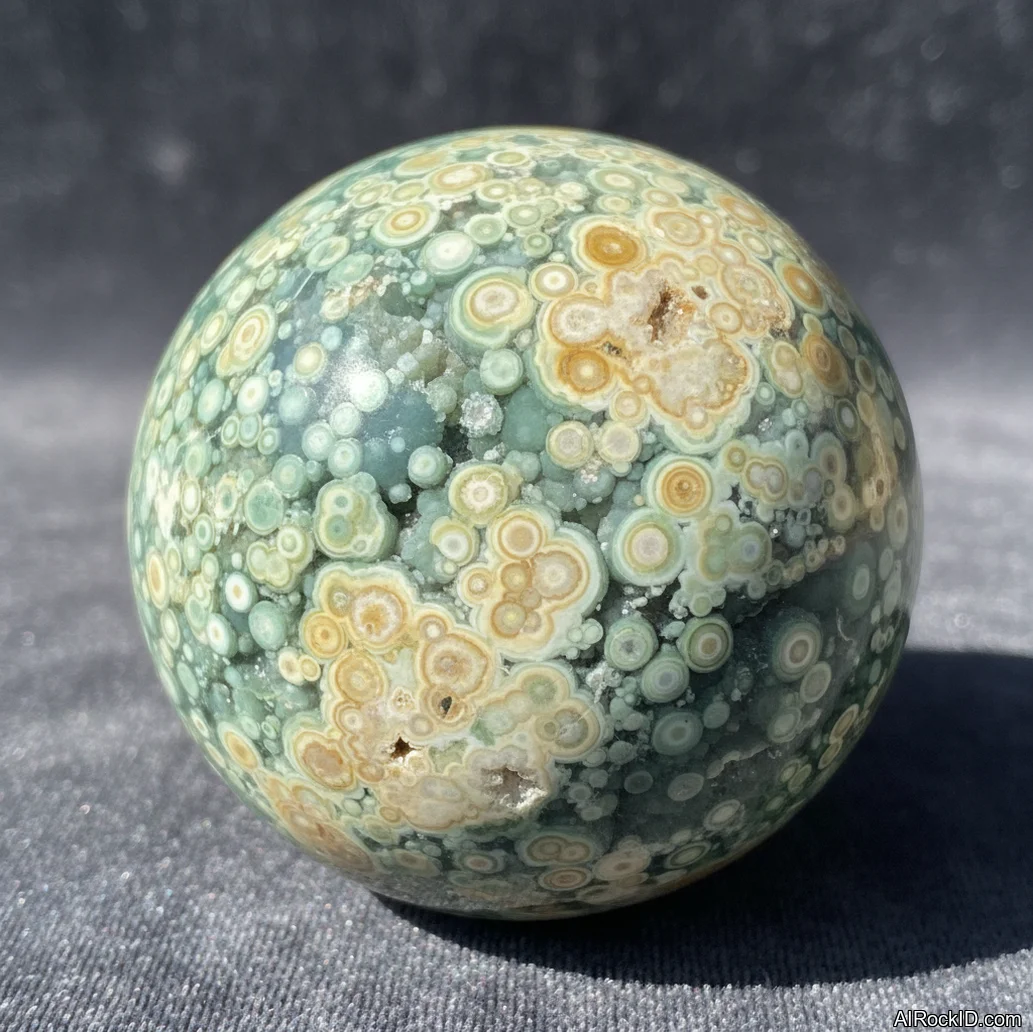
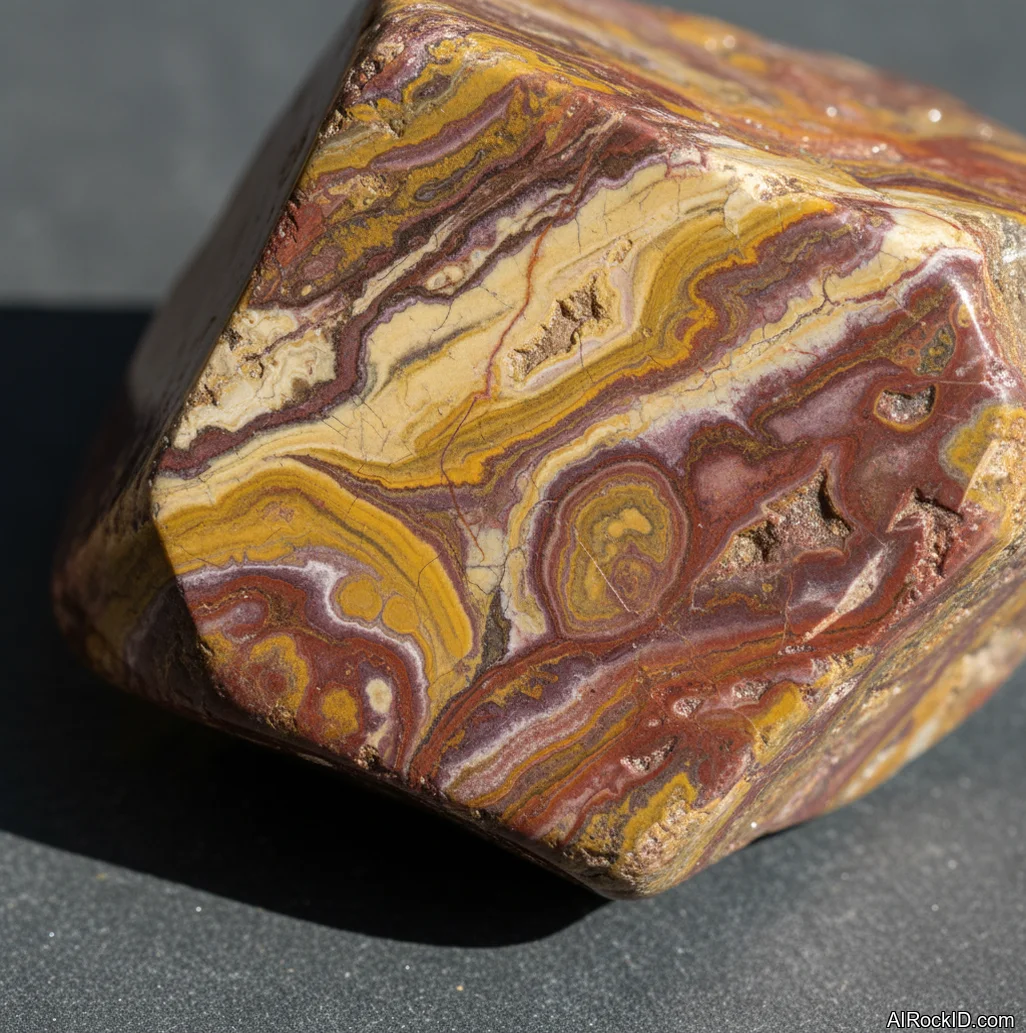
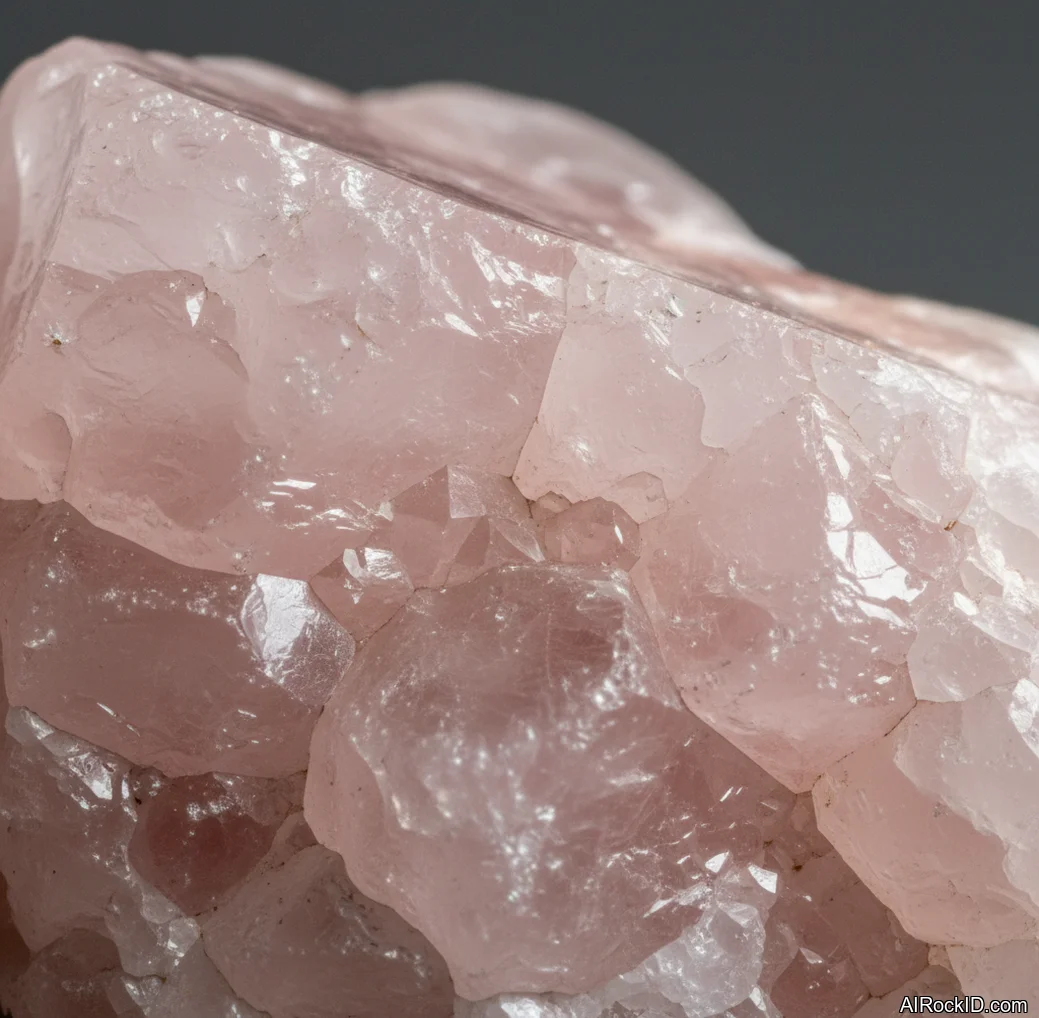
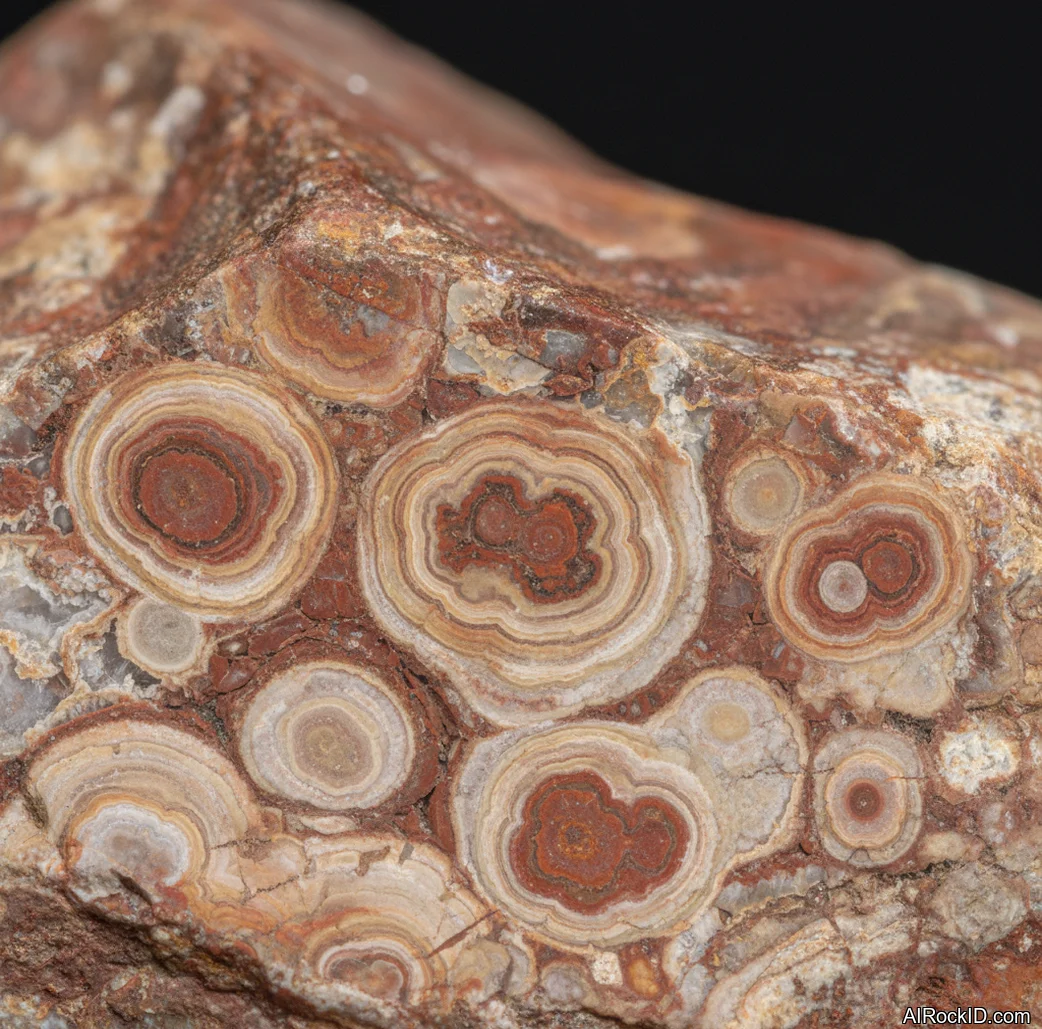
Flower Jasper is a patterned jasper, meaning microcrystalline quartz (chalcedony), and you can spot it by those flower-like orbicules and petal-shaped plumes sitting in a fine-grained silica matrix.
Grab a polished palm stone and it hits you fast. It stays cool in your hand. And the surface has that slick, greasy-waxy feel jaspers get when somebody’s taken the time to really polish it up (you can feel it kind of “grab” and then glide under your thumb). The pattern is the whole reason people want it. Some pieces read like soft pink blossoms drifting in gray fog, but others swing cream and tan, with little ring marks that look like tiny bullseyes when you tilt them toward the light.
Most of what’s out there is tumbled, carved, or cut into cabochons, because that’s where the look pops. Big rough chunks exist. But the really nice “garden full of flowers” pattern usually shows best on a wide, flat polished face, not on a bumpy raw surface. And yeah, sellers sometimes slap “flower jasper” on a few different orbicular jaspers, so two stones with the same label can end up looking weirdly different. Who hasn’t seen that happen?
Origin & History
“Jasper” is an old word. It traces back through Old French *jaspre* and the Latin *iaspidem*, and it was used for spotted stones way before anyone was doing modern mineral ID.
“Flower Jasper,” though, is a newer trade name. It came out of the look of the material, not because it’s some formal species name that one scientist “described” on a certain date.
And honestly, the name stuck in the trade because you can get it in one second. I’ve stood at shows and watched people lean over a tray, point at the orbicules, and go, “Those look like blossoms,” and yeah, that’s basically it.
Historically, jaspers in general got used for seals, beads, and small carvings since they’ll take a clean polish and they don’t crumble the way softer rocks do.
Where Is Flower Jasper Found?
Flower-patterned jasper and orbicular jasper material shows up in multiple countries, with a lot of trade stock coming through big lapidary networks rather than one famous single mine.
Formation
Look close at those “flowers” and you’re basically watching silica do slow, picky chemistry. Jasper is microcrystalline quartz, which means you don’t get big, showy crystals. You get this tight mesh of tiny quartz fibers instead, the kind that feels almost waxy when it’s polished and has that smooth, hard drag under your fingertip.
The flower and orbicule patterns usually come from rhythmic silica being laid down in pulses, with the impurities changing as it goes. Sometimes it starts around little seed points, like fragments, bubbles, or earlier mineral grains. And once that cycle gets going, you can end up with those round, petal-like rings that look almost too deliberate to be natural.
Compared to a clean quartz point, jasper forms where silica-rich fluids are moving through cracks, volcanic ash, or sediment and then hardening. The neat part is the pattern can be a snapshot of shifting conditions. One phase it’s laying down a pale band, and the next it’s pulling in iron or manganese so you get a darker rim. But it all finishes as the same thing: tough, fine-grained quartz.
How to Identify Flower Jasper
Color: Most Flower Jasper runs gray to beige with pink, salmon, cream, or tan orbicules that read like little blossoms or rosettes. Some pieces have brown or black outlines around the “flowers,” especially when iron staining is stronger.
Luster: Waxy to dull in rough pieces, and waxy to vitreous on a good polish.
Pick up a piece and feel the temperature. Real jasper stays cool longer than glassy resin fakes, and it feels denser than it looks. If you scratch it with a steel nail, it shouldn’t take a mark easily, but it will scratch glass because it’s quartz-based. The problem with photos online is saturation: in hand, the pinks are often softer and more natural than the neon stuff you sometimes see in listings.
Common Look-Alikes
Flower Jasper is sometimes confused with these materials:
- Ocean Jasper (orbicular jasper with round "eyes" that can read like flowers in photos)
- Cherry Blossom Jasper / Sakura Jasper (market name for pink-beige orbicular jasper and rhyolite mixes sold in the same shapes)
- Leopard Skin Jasper (spotty orbicules, usually higher-contrast and more dotty than plumy "petals")
- Porcelain Jasper (Exotica Jasper) (busy cream/gray/pink patterns that mimic floral plumes when polished)
- Dyed jasper/chalcedony sold as "Flower Jasper" (pink dye pushed into fractures and pits to fake stronger blooms)
- Painted or molded glass "jasper" palm stones (swirly flower-like blobs with a too-perfect, repeated pattern)
Market Cautions & Treatments
When AI Can Get This Wrong
At first glance, phone cameras and AI love to call Flower Jasper "Ocean Jasper" because both have orbicules and soft pastels, and the polish glare wipes out the fine feathery edges that make the "petals" look real. The real test is physical: it should stay cool in your hand, take a clean scratch test around 6.5 to 7 (it’ll mark glass), and under a loupe you’ll see microcrystalline texture instead of the smooth, bubble-prone look you get with glass.
Properties of Flower Jasper
Physical Properties
| Crystal System | Trigonal |
| Hardness (Mohs) | 6.5-7 (Hard (6-7.5)) |
| Density | 2.58-2.64 |
| Luster | Waxy |
| Diaphaneity | Opaque |
| Fracture | Conchoidal |
| Streak | White |
| Magnetism | Non-magnetic |
| Colors | Gray, Beige, Cream, Pink, Salmon, Tan, Brown, Black |
Chemical Properties
| Classification | Silicates |
| Formula | SiO2 |
| Elements | Si, O |
| Common Impurities | Fe, Mn, Al, Ca |
Optical Properties
| Refractive Index | 1.530-1.543 |
| Birefringence | 0.009 |
| Pleochroism | None |
| Optical Character | Uniaxial |
Flower Jasper Health & Safety
Flower Jasper is usually fine to pick up, carry around, or set on a shelf. Thing is, like any silica-heavy stone, the only real issue is the dust if you’re cutting it or grinding it (that super-fine grit that hangs in the air and ends up on your fingers).
Safety Tips
If you’re doing lapidary work, don’t just dry-grind and hope for the best. Run water on the wheel so the dust turns into slurry, keep some real ventilation going, and wear a proper respirator. Silica dust gets insanely fine, and you really don’t want to be breathing it in.
Flower Jasper Value & Price
Price Range
Rough/Tumbled: $5 - $60 per piece
Cut/Polished: $0.50 - $6 per carat
Price mostly tracks how crisp the pattern is and how “floral” it looks when you’re staring at a broad face. If the polish comes out clean, the piece is big, and the orbicules stay tight and sharply outlined (not fuzzy or smeared), the price climbs in a hurry.
Durability
Durable — Scratch resistance: Good, Toughness: Good
It’s stable microcrystalline quartz, but polished surfaces can dull if you let it rattle around with harder stones or grit.
How to Care for Flower Jasper
Use & Storage
Keep it in a pouch or a divided box if it’s polished, because quartz-on-quartz rubbing will haze a shine over time. I toss my palm stones in soft bags when I’m packing for a show.
Cleaning
1) Rinse with lukewarm water and a drop of mild soap. 2) Use a soft toothbrush to get into pits or vugs. 3) Rinse well and dry with a microfiber cloth.
Cleanse & Charge
Running water is fine, and so is a quick wipe with a damp cloth if you don’t want to soak it. For a low-effort reset, set it on a piece of clear quartz or selenite for a few hours.
Placement
On a desk or nightstand it reads really nicely because the pattern pulls your eye in without being loud. If you’ve got direct sun blasting through a window, I’d rotate it now and then so one side doesn’t hog all the UV for years.
Caution
Skip harsh cleaners and ultrasonic machines, especially if the stone has those tiny pinhole pits on the surface that love to hold onto gunk (you’ll never fully rinse it out). And don’t grind or drill dry. Silica dust gets in the air fast, and it’s a real lung hazard.
Works Well With
Flower Jasper Meaning & Healing Properties
Flower Jasper looks kind of “cute” at first, sure. But once you actually carry one, you notice that classic jasper weight. It’s heavy in the pocket, and the surface has that dry, grippy feel, not slick like glass. A lot of people grab patterned jaspers as everyday grounding stones for exactly that reason. They’re calm to look at, and they feel like something you’d scoop up off a riverbank.
In crystal-healing circles, Flower Jasper usually gets linked to gentle emotional support and easing stress, mostly because those soft flower-like patterns read as safe and comforting. I keep that in the personal-practice lane, not the medical lane. If you’re anxious, holding a stone can give your hands something to do and buy you a quiet minute. But it’s not a substitute for real help.
But here’s the collector truth: not every piece lands the same. Some slabs are just muddy gray with a few faint dots, and they don’t give off that “flower garden” look people expect from the nicer photos. Then you find a good one and it’s obvious. The pattern’s so clear you end up tilting it around under the light, like, wait, is that another little blossom tucked in the matrix?
Common mistakes
- Assuming every pink patterned jasper is Flower Jasper without checking the pattern style
- Confusing trade names with formal mineral species names
- Paying extra for vague rarity claims without locality or treatment information
- Identifying a stone from color alone instead of opacity, hardness, and pattern
- Overlooking dye indicators such as intense color in cracks or pits
Identify Flower Jasper from a photo
Compare Flower Jasper traits, care tips, value clues, and common lookalikes with a clear photo.