Almandine Garnet


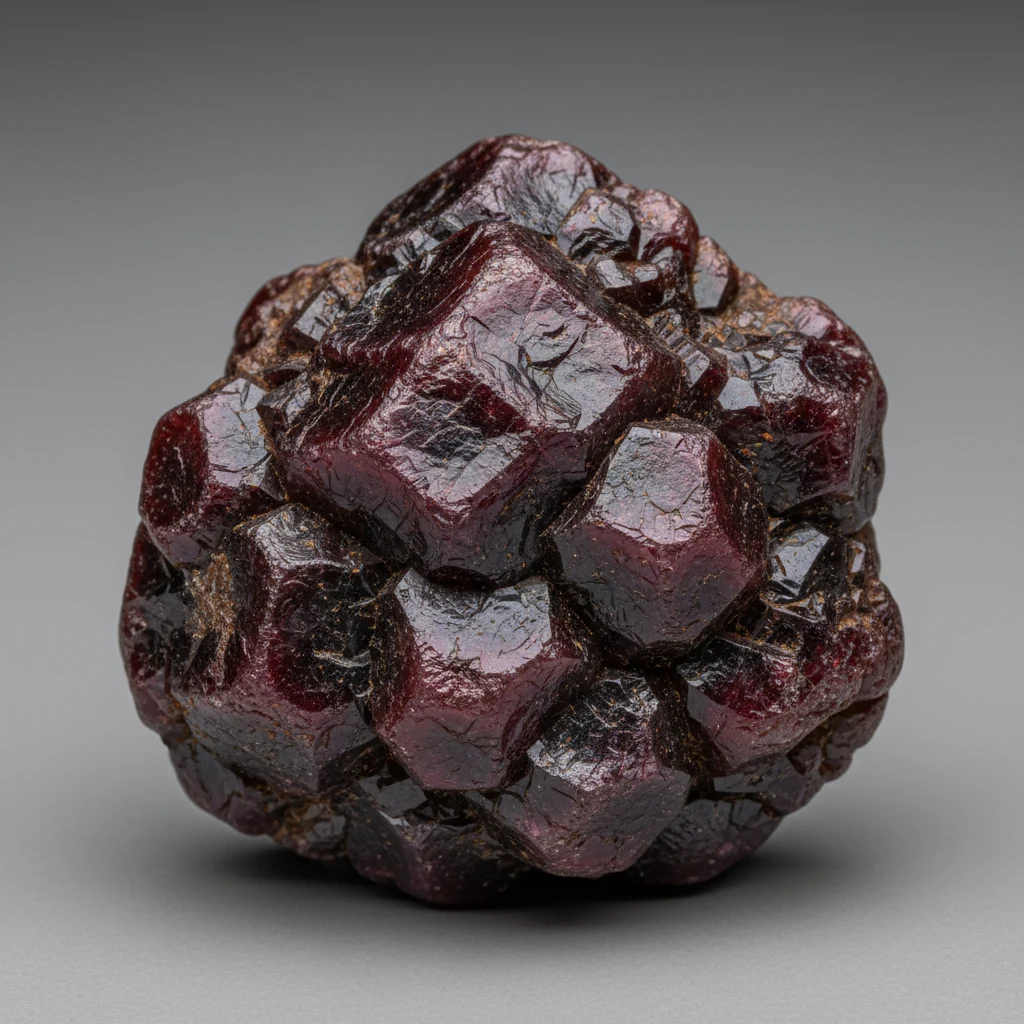
Quick answer: Almandine Garnet is a deep red to reddish brown iron-aluminum garnet commonly found in metamorphic rocks and gem gravels. It is often identified by its high hardness, glassy luster, dense feel, and dark red color that may appear nearly black in thick pieces.
AI Rock ID can help screen Almandine Garnet by comparing color, luster, crystal habit, and surface clues from a clear photo. RockIdentifier.io provides visual identification support, but confirmation may require hardness, density, refractive index, or local geology.
Good fit
- Collectors who want a common natural garnet species with classic deep red color
- Beginners learning to separate garnet from glass, spinel, ruby, and dark tourmaline
- Jewelry buyers comparing durable red gemstones for rings, pendants, or antique pieces
- Rockhounds identifying garnet in schist, gneiss, mica-rich rocks, or stream placers
Not a good fit
- Anyone expecting a consistently bright red gemstone, since many almandines are very dark
- Buyers who need a species-level ID from color alone
- Collectors seeking a rare garnet variety, because almandine is widespread
- Use in situations where unverified healing claims are being treated as medical advice
Most commonly confused with
- Pyrope Garnet: Pyrope is magnesium-rich and can look similar, but many pyropes are more purplish red and less iron-rich than almandine.
- Rhodolite Garnet: Rhodolite is a pyrope-almandine garnet blend, usually showing pinkish purple to raspberry tones rather than dark brownish red.
- Ruby: Ruby is corundum with higher hardness, different crystal form, and strong red fluorescence in many specimens.
- Spinel: Red spinel may resemble garnet, but it has different refractive properties and typically lacks garnet’s dodecahedral crystal habit.
Almandine Garnet vs. Common Red Lookalikes
| Material | Typical Clue | Key Difference |
|---|---|---|
| Almandine Garnet | Dark red to reddish brown, dense, glassy | Common in schist, gneiss, and placer deposits |
| Pyrope Garnet | Red to purplish red | Magnesium-rich garnet, often less brown than almandine |
| Rhodolite Garnet | Pinkish purple to raspberry red | Pyrope-almandine mixture with lighter purple tones |
| Ruby | Red corundum, often fluorescent | Harder than garnet and has different crystal structure |
| Red Glass | Uniform color, possible bubbles | Man-made or imitation material with lower hardness |
AI identification confidence
AI photo identification is often moderately reliable for Almandine Garnet when the specimen shows red-brown color, garnet crystal shape, glassy luster, and a metamorphic matrix. Confidence drops for cut stones, very dark pieces, polished beads, or photos without scale and lighting control.
When AI gets it wrong
- A faceted red stone is photographed without optical data, making garnet, ruby, spinel, and glass hard to separate.
- The stone is so dark that its red color only appears under strong light.
- A polished bead lacks crystal faces, matrix, inclusions, or locality information.
- Lighting, filters, or background color make a brown, purple, or black mineral appear red.
Final recommendation
For buying Almandine Garnet, look for clear disclosure of natural, treated, synthetic, or imitation status and request basic gemological details for faceted stones. For field identification, combine visual clues with hardness, density, crystal habit, and the rock type where the specimen was found.
How to Check Almandine Garnet Authenticity
Authentic Almandine Garnet is typically hard, dense, and glassy, with a color range from deep red to reddish brown. In rough form, it may show rounded dodecahedral crystals or occur as grains in mica schist and gneiss. In jewelry, a jeweler or gem lab can separate garnet from ruby, spinel, glass, and synthetic materials using refractive index, specific gravity, and magnification.
Buying Tips for Almandine Garnet
Color, transparency, cut quality, size, and origin can affect the desirability of Almandine Garnet. Very dark stones may look black in normal lighting, so view faceted gems under daylight-equivalent light before purchase. Ask whether the stone is natural garnet, a garnet blend such as rhodolite, or an imitation such as glass.
Where Almandine Garnet Is Commonly Found
Almandine Garnet is common in metamorphic rocks such as schist and gneiss, especially where aluminum-rich sediments were altered by heat and pressure. It can also weather out of host rock and accumulate in stream gravels, beach sands, and placer deposits. Local geology is a useful clue because garnet in a mica-rich metamorphic matrix is more likely to be natural almandine than a loose red imitation.
What Is Almandine Garnet?
Almandine Garnet is the iron-aluminum species of the garnet group, best known as the most widespread garnet rockhounds encounter. In the hand it often feels dense for its size, with dark red, brownish red, purplish red, or nearly black crystals that may only reveal their red glow along thin edges in strong light.
Collectors see almandine as both a gemstone and a field mineral. Transparent pieces can be faceted into red gems, while common crystals appear as rounded dodecahedral grains in mica schist, gneiss, amphibolite, and heavy-mineral sands. Its Mohs hardness of 7-7.5 and lack of true cleavage make it durable, but a sharp knock can still fracture or chip it.
Origin & History
The name almandine is historically linked to Alabanda, an ancient city in Asia Minor known as a cutting and trading center for red garnets. That background fits the material well: a good almandine crystal has the compact weight, glassy-to-resinous surface, and wine-red depth that made garnet useful as a gem since antiquity.
Almandine also has a practical industrial history because garnet’s hardness and toughness make it useful as an abrasive and in waterjet cutting. For locality checking and specimen comparisons, mindat.org is a useful plain-reference source to consult alongside labels, especially when separating common opaque garnet crystals from better gem or matrix material.
Where Is Almandine Garnet Found?
Almandine Garnet is found worldwide, especially in regionally metamorphosed rocks. Reported countries include India, Sri Lanka, Brazil, the United States, Austria, the Czech Republic, Norway, Sweden, Madagascar, Tanzania, and Australia, with material ranging from opaque schist-hosted crystals to transparent alluvial gem stones.
Formation
Almandine forms mainly during medium- to high-grade regional metamorphism of aluminum-rich sedimentary rocks. That setting produces garnet-bearing schist and gneiss, where crystals can sit like dark red knots among mica, quartz, feldspar, or related metamorphic minerals.
It can also occur in amphibolite, granulite, eclogite, and some pegmatites. Because almandine is hard and dense, weathering can free it from host rock and concentrate rounded grains in stream and beach placers. Those placer grains may look dull at first, but cleaning or polishing often brings back the vitreous to resinous garnet luster.
How to Identify Almandine Garnet
Identify Almandine Garnet by its hard, dense feel, dark red to brownish red color, white streak, and lack of true cleavage. Crystals commonly show dodecahedral or trapezohedral form, though many field pieces are rounded grains in schist, gneiss, amphibolite, or placer concentrate.
A practical test is to look for the red glow at thin edges or under strong light, especially in stones that appear nearly black in thick pieces. Almandine has Mohs hardness about 7-7.5, so it scratches glass and only scratches quartz with difficulty. It is heavier than quartz or feldspar, usually weakly magnetic to non-magnetic, and is isotropic under a polariscope.
Properties of Almandine Garnet
Physical Properties
| Crystal System | Isometric |
| Hardness (Mohs) | 7-7.5 (Hard) |
| Density | About 4.05-4.32 g/cm³ |
| Luster | Vitreous to resinous |
| Diaphaneity | Transparent to opaque |
| Fracture | Subconchoidal to uneven |
| Streak | White |
| Magnetism | Usually weakly magnetic to non-magnetic; iron-rich grains may show a weak response to a strong magnet |
| Colors | deep red, brownish red, purplish red, reddish brown, blackish red, nearly black |
Chemical Properties
| Classification | Nesosilicate, garnet group |
| Formula | Fe3Al2(SiO4)3 |
| Elements | iron, aluminum, silicon, oxygen |
| Common Impurities | magnesium, manganese, calcium, titanium, chromium |
Optical Properties
| Refractive Index | About 1.78-1.83 |
| Birefringence | None; isotropic, though strain may cause anomalous effects |
| Pleochroism | None |
| Optical Character | Isotropic, singly refractive |
Almandine Garnet Health & Safety
Almandine garnet is not considered toxic for normal handling. The main hazard is inhaling fine dust during cutting, grinding, polishing, or abrasive use.
Almandine Garnet Value & Price
Price Range
Rough/Tumbled: Common rough crystals are often about $1-$20 per piece; better formed matrix specimens may range from $20-$200+ depending on size, crystal quality, and locality.
Cut/Polished: $5-$50 per carat for many commercial red almandines; fine, clean, attractive stones or unusual localities can be higher.
Value depends on transparency, color, size, cutting quality, freedom from fractures, crystal form, and locality. Bright red to purplish red transparent stones are more desirable than very dark, opaque, or heavily included material. Sharp, well-formed crystals on matrix can have strong collector value even when not gem quality.
Durability
Good — Scratch resistance: Good scratch resistance with Mohs hardness 7-7.5, suitable for many jewelry uses if protected from hard knocks., Toughness: Fair to good; garnet lacks cleavage but can fracture if struck sharply.
Stable under normal light and household conditions. Avoid sudden temperature shock, harsh chemicals, and ultrasonic cleaning for fractured, included, or filled stones.
How to Care for Almandine Garnet
Use & Storage
Store separately from softer stones because almandine can scratch many minerals and gemstones. Use a padded box or pouch to prevent chips and abrasion.
Cleaning
Clean with warm water, mild soap, and a soft brush. Rinse well and dry with a soft cloth.
Cleanse & Charge
For metaphysical use, cleanse with running water briefly, smoke, sound, or moonlight. Avoid saltwater for jewelry settings and avoid prolonged soaking of fractured specimens.
Placement
Display away from edges where a heavy crystal could fall and chip. In jewelry, use protective settings for rings worn daily.
Caution
Avoid hard impacts, rapid temperature changes, and harsh chemical cleaners. Ultrasonic cleaners are risky for included or fractured stones.
Works Well With
Almandine Garnet Meaning & Healing Properties
In crystal-healing traditions, Almandine Garnet is associated with grounding, vitality, courage, protection, commitment, stability, and passion. These meanings are cultural and spiritual beliefs rather than medical claims, but many collectors like the stone for its heavy, anchored feel and deep iron-red color.
It is commonly linked with the Root and Sacral chakras, the zodiac signs Capricorn, Aquarius, and Leo, and the planets Mars and Pluto. For metaphysical care, it may be briefly cleansed with running water, smoke, sound, or moonlight. Avoid saltwater for jewelry settings and avoid prolonged soaking of fractured specimens.
Identify Almandine Garnet from a photo
Compare Almandine Garnet traits, care tips, value clues, and common lookalikes with a clear photo.
Common mistakes
- Identifying every dark red garnet as almandine without considering pyrope, rhodolite, or mixed garnet compositions.
- Assuming a red faceted stone is garnet when it could be ruby, spinel, glass, or another gem.
- Relying only on color, even though almandine can appear red, brownish red, purplish red, or nearly black.
- Ignoring locality and host rock, which can provide important context for rough garnet identification.
- Using scratch tests on finished jewelry, which can damage a stone or setting.