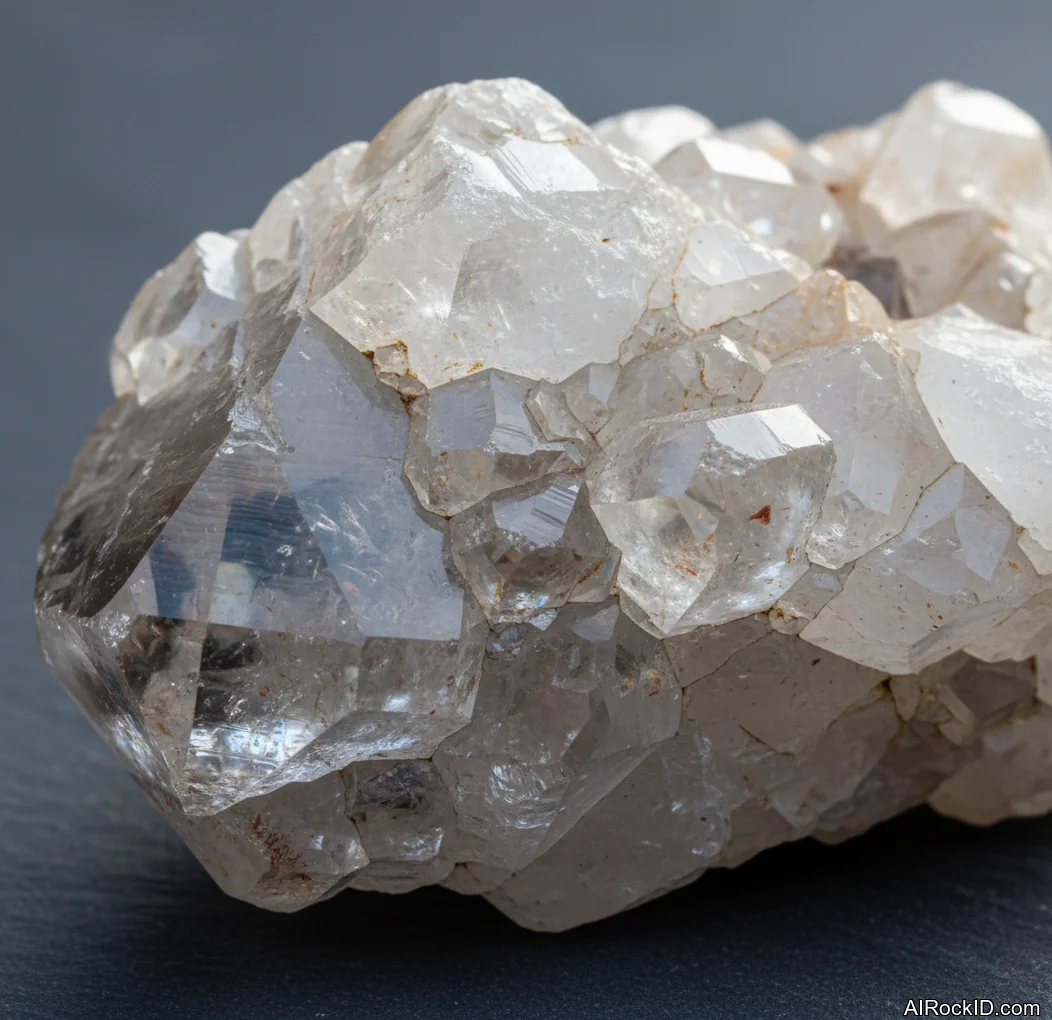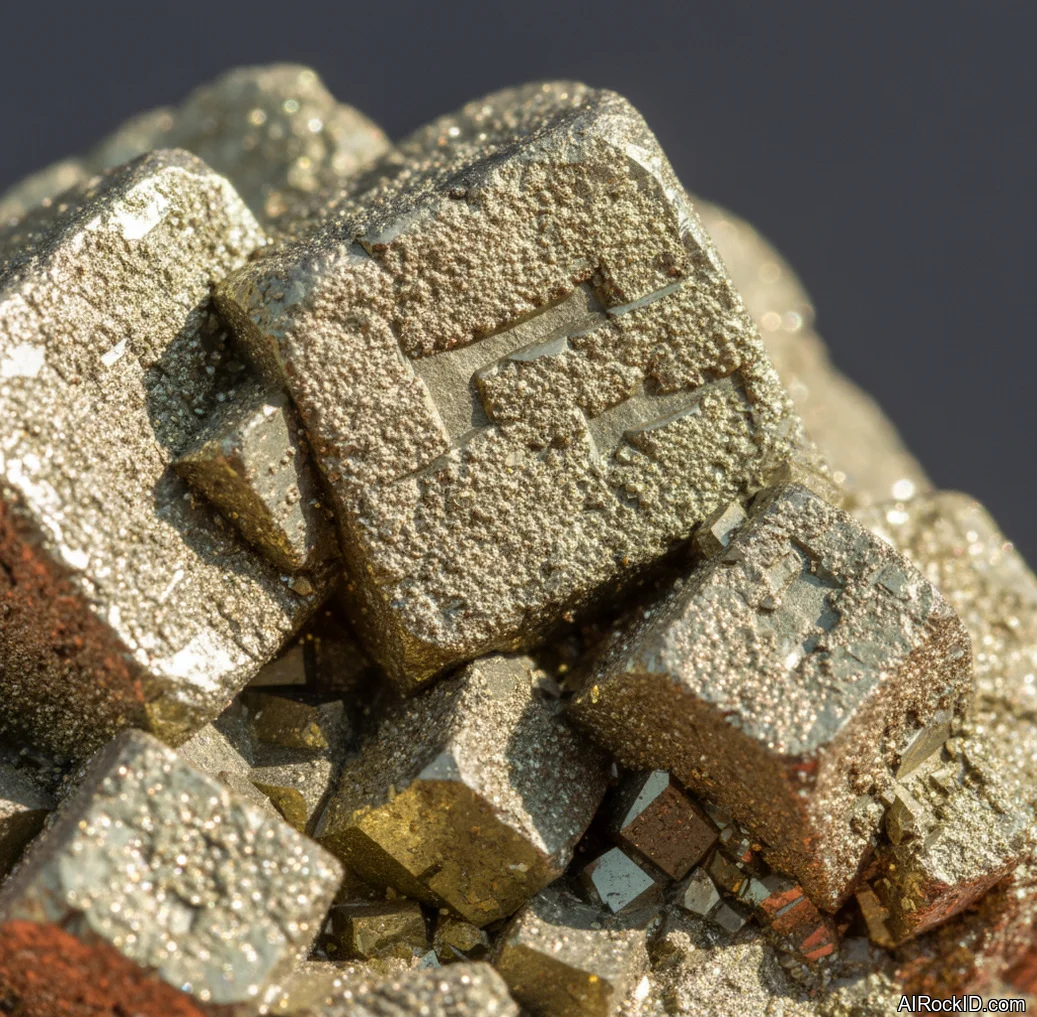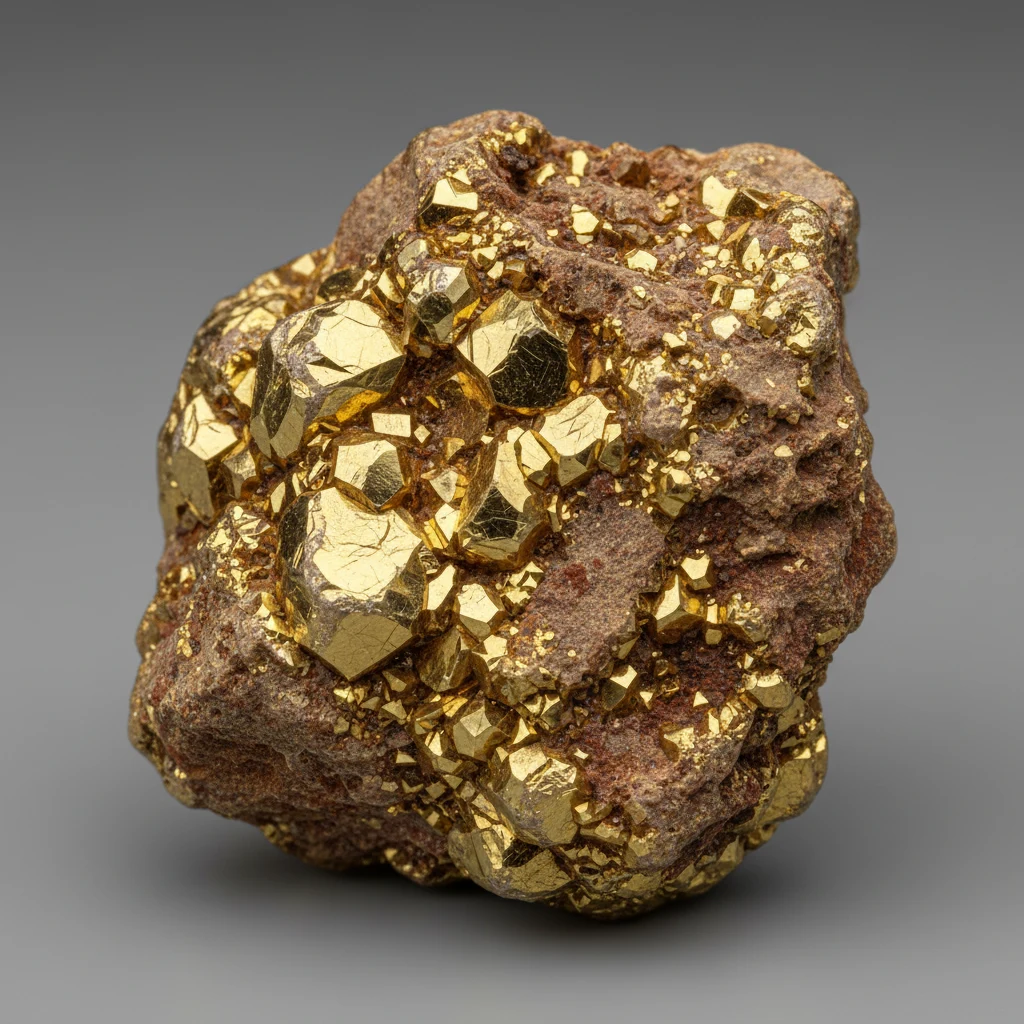
Gold Ore


Quick answer: Gold ore is rock that contains enough gold to be economically interesting, often appearing as metallic yellow grains, flakes, veins, or disseminated particles in quartz or sulfide-rich host rock. Visual identification can be difficult because pyrite, chalcopyrite, mica, and iron-stained quartz can look similar in photos.
AI Rock ID can help compare a suspected gold ore specimen against common lookalikes using visual features such as color, luster, crystal habit, and host-rock context. RockIdentifier.io provides educational identification support, but suspected valuable ore should be verified with physical testing or a qualified assay.
Good fit
- Collectors who want a natural ore specimen rather than refined native gold
- Learners comparing metallic minerals in quartz or sulfide-bearing rock
- Rockhounds documenting finds from historic mining areas where collecting is permitted
- Buyers who want a display specimen with visible gold or gold-bearing context
Not a good fit
- Anyone expecting visual inspection alone to prove gold content
- Children or pets if the specimen sheds dust or contains sulfide minerals
- Use in elixirs, powders, or direct skin application
- Buyers seeking investment-grade gold without assay documentation
Most commonly confused with
- Pyrite: Pyrite is brass-yellow, brittle, and commonly forms cubic crystals; gold is softer, more malleable, and has a richer yellow color.
- Chalcopyrite: Chalcopyrite is more brassy to iridescent and usually harder than gold, with a greenish-black streak.
- Mica: Mica appears as shiny flakes but is platy and flexible, while gold is dense and malleable.
- Iron-Stained Quartz: Iron staining can create yellow-brown patches on quartz, but it lacks the metallic, dense, malleable character of gold.
Gold Ore vs Common Lookalikes
| Material | Typical Look | Key Difference | Simple Check |
|---|---|---|---|
| Gold ore | Metallic yellow grains or veins in rock | Gold is soft, dense, and malleable | May flatten rather than crumble under pressure |
| Pyrite | Brassy cubes or granular masses | Brittle and often forms sharp crystal faces | Crushes or breaks instead of flattening |
| Chalcopyrite | Brassy yellow with possible tarnish | Softer than pyrite but less malleable than gold | Produces greenish-black streak |
| Mica | Glittery sheets or flakes | Very thin, platy, and lightweight | Flakes split into flexible sheets |
| Iron-stained quartz | Yellow to brown patches on quartz | Color is staining, not metallic gold | No metallic grains or malleability |
AI identification confidence
AI identification confidence for gold ore is usually moderate to low from photos alone because many yellow metallic minerals and stains resemble gold. Confidence improves when images include close-ups, natural light, scale, host rock, streak results, and multiple angles.
When AI gets it wrong
- Bright pyrite or chalcopyrite is photographed in warm lighting and appears more golden than it is.
- Small mica flakes in quartz create sparkle that resembles visible gold.
- Iron oxide staining is mistaken for metallic yellow mineralization.
- A polished or wet surface hides texture, brittleness, or crystal habit.
Final recommendation
Treat visual identification of gold ore as preliminary, especially when money, mining claims, or resale value is involved. For reliable confirmation, use nondestructive observations first and follow up with specific gravity testing, streak testing where appropriate, or a professional assay.
How to Check Gold Ore Authenticity
Authentic gold ore is best confirmed by a combination of visual inspection, density observations, and assay results rather than color alone. Reputable sellers should describe whether visible gold is present, whether the piece has been assayed, and whether the host rock is quartz, sulfide-rich ore, or another matrix. A certificate or assay report is more meaningful than a claim such as “gold-bearing” when the gold is not visible.
What to Ask Before Buying Gold Ore
Ask whether the specimen contains visible native gold or only possible microscopic gold. Request clear photos in natural light, close-ups of metallic areas, specimen weight, locality information, and any assay documentation. If the price is based on gold content, the seller should provide evidence beyond appearance.
Ethical and Legal Collecting Notes
Gold-bearing material may come from active claims, private land, protected sites, or historic mine dumps with access restrictions. Collect only where removal is legal and safe, and avoid entering abandoned mines because unstable ground, bad air, and hidden shafts can be serious hazards. Local regulations can differ by state, park, forest, or claim status.
What Is Gold Ore?
Gold Ore is rock that contains enough gold to make extraction economically viable. In hand, the first impression is usually the metallic yellow to bright yellow flash of visible gold, often set against darker brown or pale vein material. It is classified as a native element mineral, with gold represented by the formula Au.
Collector-grade Gold Ore is valued for both its metal content and its immediate visual impact. It has a metallic luster, golden yellow streak, opaque appearance, uneven fracture, and a measured hardness of 2.5-3 on the Mohs scale. Its high density, listed at 15.6-19.3 g/cm3, gives good specimens a noticeably weighty feel for their size.
Origin & History
The term Gold Ore has been used since ancient times because gold itself has been valued for thousands of years. For a collector, the phrase is practical rather than poetic: it means the rock carries enough gold to matter, whether as a mining material, a display specimen, or a cultural object tied to wealth and status.
Gold Ore is best understood through its gold content, its native element classification, and its long human history. A reference such as mindat.org can be used alongside specimen notes when checking the mineral classification of native gold, Au. In the cabinet, a good Gold Ore piece carries that same old appeal: dense, bright, metallic, and unmistakably associated with prosperity.
Where Is Gold Ore Found?
Gold Ore is commonly found in quartz veins and alluvial deposits. Important producing countries listed for this material include South Africa, Australia, and the United States, where gold-bearing rock and sediment have supplied both mining operations and collectible specimens.
Formation
Gold Ore forms through hydrothermal processes and through the concentration of gold in sedimentary deposits. In hydrothermal settings, gold-bearing fluids can move through fractures and deposit gold with associated minerals, producing the quartz-vein style many collectors recognize immediately.
Sedimentary concentration creates another important ore setting, especially where durable gold is gathered into alluvial deposits. The result is not just a pretty yellow mineral, but rock or sediment enriched enough to be economically meaningful. This formation history is why Gold Ore may be encountered as vein material, dense metallic specks, or gold-bearing deposit material.
How to Identify Gold Ore
Gold Ore is identified by its metallic yellow to bright yellow color, metallic luster, and golden yellow streak. A practical first check is visual: look for visible gold in the specimen, especially where yellow metallic areas stand out against quartz, brown material, or other associated minerals.
A streak test can support identification by showing a golden yellow streak. Gold Ore is non-magnetic, opaque, and has an uneven fracture, with hardness reported at 2.5-3. Its density range of 15.6-19.3 g/cm3 can also make a gold-rich specimen feel heavy in the hand compared with many ordinary rocks of similar size.
Properties of Gold Ore
Physical Properties
| Crystal System | Cubic |
| Hardness (Mohs) | 2.5-3 (Very Soft (1-2)) |
| Density | 15.6-19.3 g/cm3 |
| Luster | Metallic |
| Diaphaneity | Opaque |
| Fracture | Uneven |
| Streak | Golden yellow |
| Magnetism | Non-magnetic |
| Colors | Yellow, Golden, Brown |
Chemical Properties
| Classification | Native element |
| Formula | Au |
| Elements | Au |
| Common Impurities | Ag, Cu |
Optical Properties
| Refractive Index | None |
| Birefringence | None |
| Pleochroism | None |
| Optical Character | Isotropic |
Gold Ore Health & Safety
Gold ore poses minimal health risks when handled properly.
Gold Ore Value & Price
Price Range
Rough/Tumbled: $50 - $200 per specimen
Cut/Polished:
Price is influenced by purity, size, and market demand.
Durability
Moderate — Scratch resistance: Good, Toughness: Fair
Gold ore is stable under normal conditions but can be affected by acids.
How to Care for Gold Ore
Use & Storage
Store in a dry place to avoid tarnishing.
Cleaning
Clean with a soft cloth and mild soap solution. Avoid harsh chemicals.
Cleanse & Charge
Can be cleansed by rinsing in water and placing in sunlight.
Placement
Place in a location that receives natural light.
Caution
Avoid exposure to strong acids.
Works Well With
Gold Ore Meaning & Healing Properties
In crystal healing traditions, Gold Ore is believed to promote wealth, prosperity, energy, confidence, joy, protection, courage, insight, growth, and transformation. Practitioners often choose it when they want a specimen that feels physically grounded yet symbolically bright, with the Sun, Fire element, and abundance themes all reinforcing its energetic reputation.
Gold Ore is associated with the Solar Plexus and Crown chakras and linked with Leo and Taurus. It can be placed where it receives natural light, cleansed by rinsing in water, and charged in sunlight. For care, clean it with a soft cloth and mild soap solution, store it dry, and avoid harsh chemicals or strong acids.
Identify Gold Ore from a photo
Compare Gold Ore traits, care tips, value clues, and common lookalikes with a clear photo.
Common mistakes
- Assuming every shiny yellow mineral in quartz is gold
- Using color alone instead of checking luster, streak, density, and malleability
- Ignoring locality and host-rock context when evaluating a specimen
- Paying gold-content prices for unassayed material
- Cleaning ore aggressively and removing fragile visible grains or diagnostic surface features
- Handling sulfide-rich ore dust without basic precautions