Golden Tiger's Eye


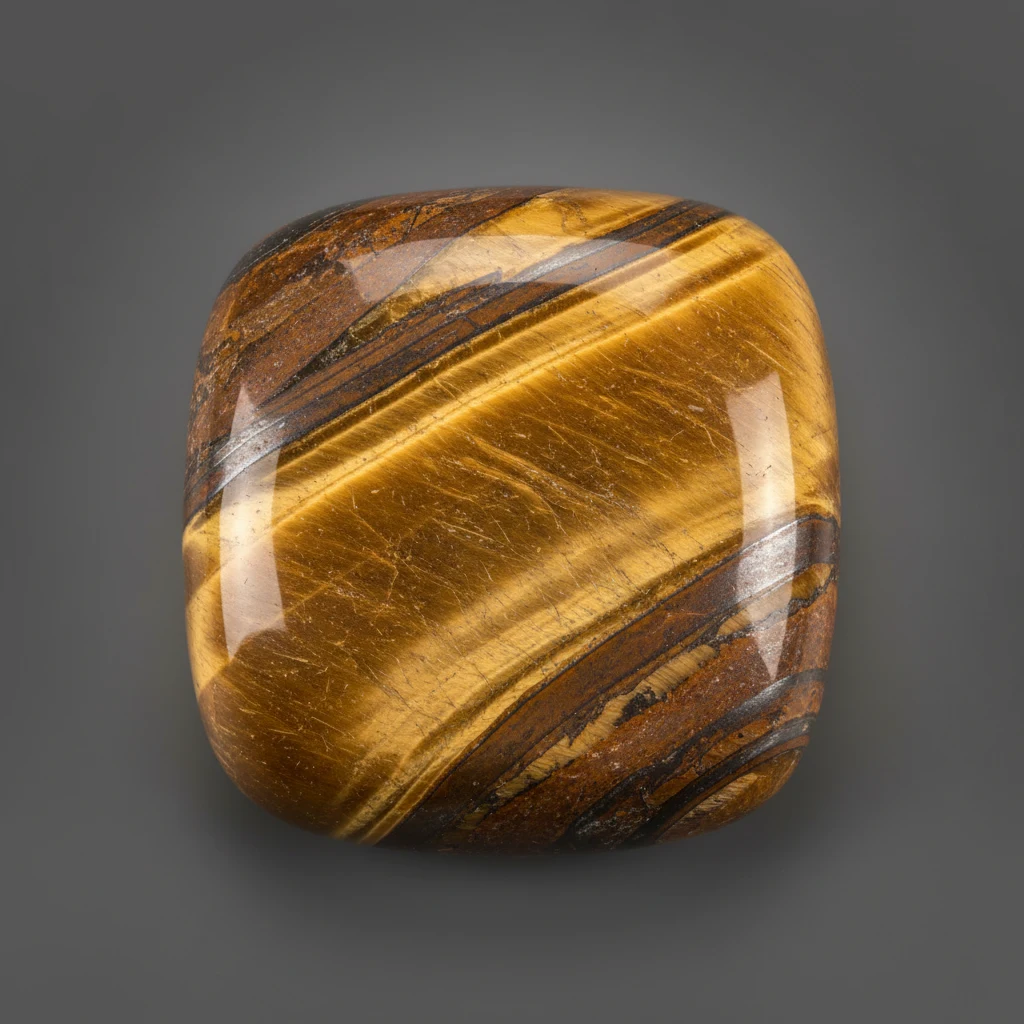
Quick answer: Golden Tiger's Eye is a golden-brown, chatoyant variety of quartz commonly cut into beads, cabochons, and tumbled stones. Its moving band of light is the key visual clue, while unusually bright colors, glassy coatings, or very low prices can signal dyeing, coating, or imitation.
AI Rock ID can help screen a Golden Tiger's Eye photo by checking for chatoyancy, color banding, and surface texture. RockIdentifier.io provides crystal identification support, but final confirmation is strongest when visual results are paired with hardness, weight, and seller disclosure.
Good fit
- Collectors who want an affordable chatoyant quartz variety
- Jewelry buyers looking for a durable stone for beads, pendants, or cabochons
- Beginners practicing identification of optical effects such as cat's-eye shimmer
- People who prefer warm golden-brown stones with natural banding
Not a good fit
- Buyers who want a rare or high-investment gemstone
- Anyone expecting every bead to show a sharp, centered eye
- Collectors who require untreated material without asking for seller confirmation
- People looking for a transparent faceted gemstone appearance
Most commonly confused with
- Hawk's Eye: Hawk's Eye is typically blue-gray to blue-green, while Golden Tiger's Eye shows yellow, gold, and brown tones.
- Tiger Iron: Tiger Iron contains Tiger's Eye with red jasper and metallic hematite, giving it stronger red and silver-gray banding.
- Cat's Eye Glass: Cat's eye glass may show an overly uniform bright band and mold-like shapes, unlike the fibrous, uneven banding of natural Tiger's Eye.
- Brown Agate: Brown agate may be banded but usually lacks the silky moving light effect seen in Tiger's Eye.
Golden Tiger's Eye Lookalikes
| Material | Typical Appearance | Key Difference |
|---|---|---|
| Golden Tiger's Eye | Golden-brown bands with silky chatoyancy | Moving light band follows the fibrous structure |
| Hawk's Eye | Blue-gray to blue-green chatoyant bands | Cooler color range than golden Tiger's Eye |
| Tiger Iron | Gold, red, and metallic gray bands | Includes jasper and hematite with Tiger's Eye |
| Cat's Eye Glass | Uniform bright eye in many colors | Often too even, glossy, or molded-looking |
| Brown Agate | Brown or tan banding | Banded but usually not chatoyant |
AI identification confidence
AI identification confidence is usually moderate to high for clear photos of polished Golden Tiger's Eye because the golden-brown color and chatoyancy are distinctive. Confidence drops when the stone is rough, poorly lit, dyed, coated, or photographed without showing the moving light effect.
When AI gets it wrong
- The photo is taken straight on and does not show the shifting chatoyant band.
- A dyed or heat-treated piece has colors that resemble another stone.
- Glass cat's-eye beads are photographed with strong reflections that mimic natural chatoyancy.
- The specimen is mixed material such as Tiger Iron, where multiple minerals appear in one piece.
Final recommendation
Choose Golden Tiger's Eye with a clear silky sheen, natural-looking golden to brown banding, and no obvious surface coating. For online purchases, ask for photos from multiple angles and confirmation of any dyeing, heating, or stabilization.
How to Check Authenticity Before Buying
Authentic Golden Tiger's Eye should show a shifting band of light when rotated under a single light source. Look for fibrous, slightly uneven banding rather than a perfectly centered synthetic-looking stripe. In beads, inspect drill holes and cracks for concentrated dye, coating residue, or unusually bright color.
Best Photos for Identification
Use natural daylight or one small lamp and photograph the stone from several angles. A short video is often more useful than a single image because chatoyancy is a movement-based optical effect. Include close-ups of banding, drill holes, chips, and any unpolished areas if present.
Common Treatments and Imitations
Golden Tiger's Eye is commonly sold in natural golden-brown tones, but some material may be dyed, heated, or coated to create stronger colors. Red, blue, green, or very uniform bright pieces should be treated as possibly altered unless the seller states otherwise. Cat's eye glass is a common imitation in inexpensive beads and novelty items.
What Is Golden Tiger's Eye?
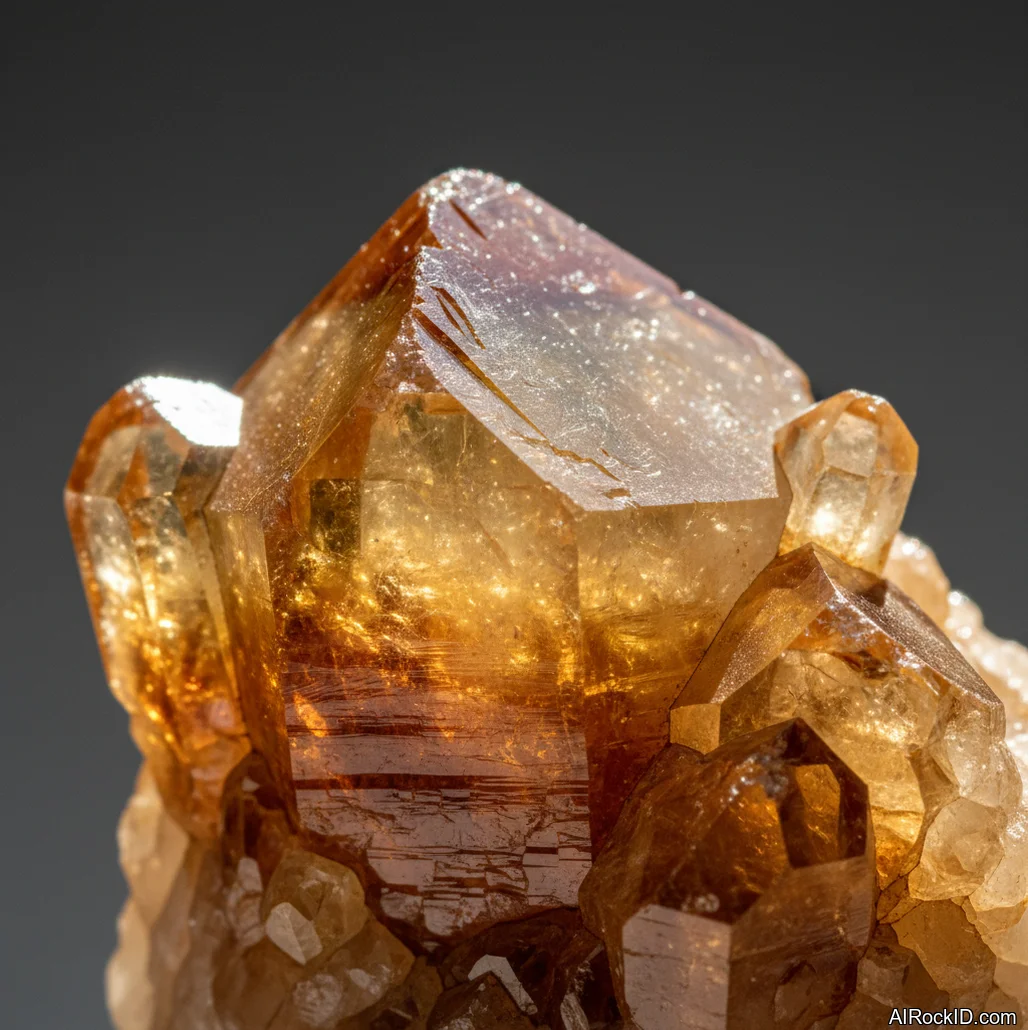
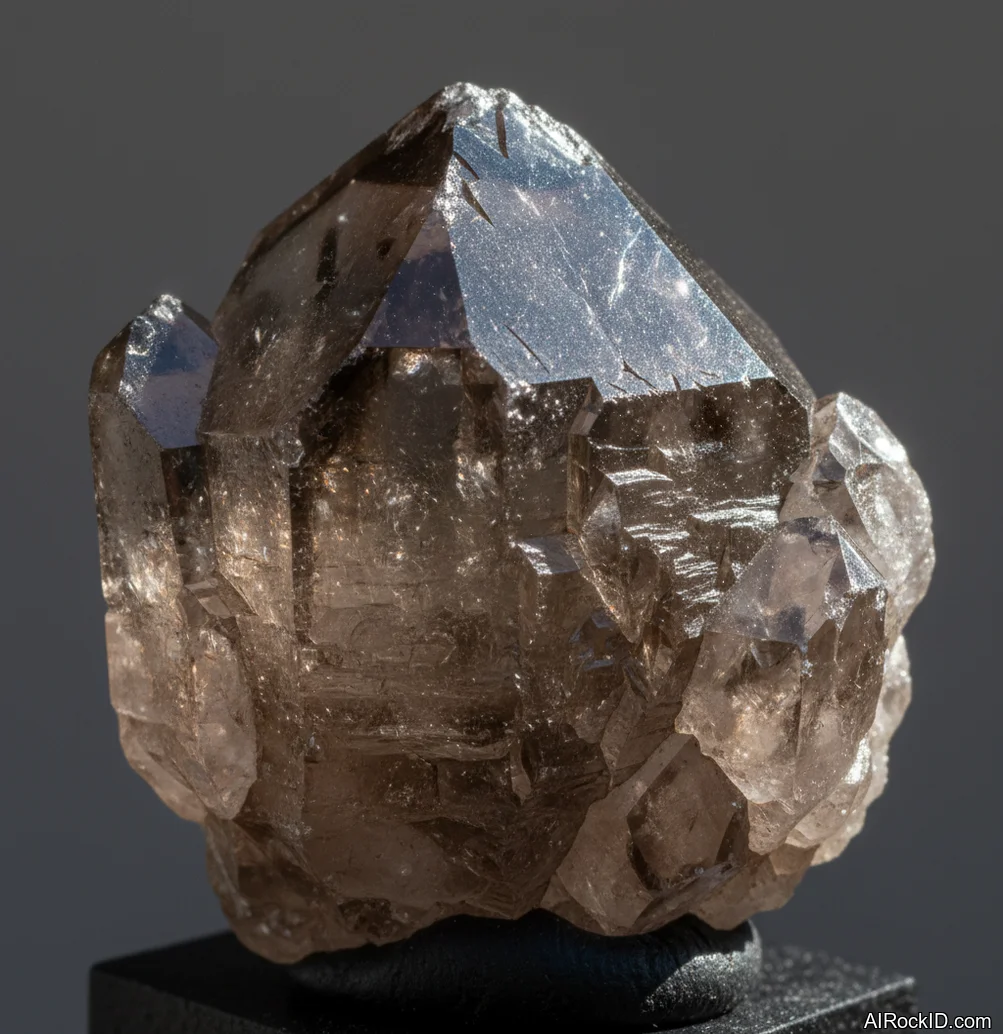
Golden Tiger's Eye is a common, semi-precious variety of quartz known for its golden-brown color and moving cat's-eye sheen. In the hand, a good piece feels smooth and dense, with a silky flash that slides across the surface as the stone is turned.
Mineralogically, it is quartz with the formula SiO2, classed as a tectosilicate. It has a Mohs hardness of 7, a density of 2.65 g/cm3, translucent diaphaneity, white streak, vitreous luster, and typical gold, brown, and yellow coloring.
Origin & History
Golden Tiger's Eye gets its name from its resemblance to a tiger's eye, especially the narrow golden flash that seems to open and close under light. The material was first described in the late 19th century, and its name still fits the way collectors judge it: by color, clarity, and the strength of the chatoyancy.
As a quartz variety, it is commonly associated with regions rich in quartz. When checking specimen labels or locality claims, collectors can compare locality-style records with mindat.org, then match the stone itself to the expected golden to brown color and silky to vitreous surface.
Where Is Golden Tiger's Eye Found?
Golden Tiger's Eye is commonly found in South Africa, Australia, and India. Notable localities listed for the material include Gauteng in South Africa, Western Australia, and Karnataka in India.
Formation
Golden Tiger's Eye forms from the alteration of crocidolite fibers that are replaced by silica. That replacement produces the fibrous visual structure responsible for the stone's famous chatoyancy, the silky line of light that moves like a narrow beam across a polished face.
Its chemistry is quartz, SiO2, with iron listed among common impurities. In cut stones, the effect is easiest to see on smoothly polished surfaces, where the golden-brown bands and silky luster reveal how the internal fibers direct reflected light.
How to Identify Golden Tiger's Eye
Identify Golden Tiger's Eye by its golden to brown color, silky to vitreous luster, and characteristic chatoyancy. A polished piece should show a bright band that shifts when you rock the stone under a light, while the surface often has the smooth feel collectors expect from well-finished quartz.
Useful checks include its Mohs hardness of 7, white streak, translucent body, non-magnetic response, and conchoidal fracture. Its crystal system is hexagonal, refractive index is 1.54 to 1.55, and it has no birefringence or pleochroism listed.
Properties of Golden Tiger's Eye
Physical Properties
| Crystal System | Hexagonal |
| Hardness (Mohs) | 7 (Hard (6-7.5)) |
| Density | 2.65 g/cm3 |
| Luster | Vitreous |
| Diaphaneity | Translucent |
| Fracture | Conchoidal |
| Streak | White |
| Magnetism | Non-magnetic |
| Colors | Gold, Brown, Yellow |
Chemical Properties
| Classification | Tectosilicate |
| Formula | SiO2 |
| Elements | Si, O |
| Common Impurities | Fe |
Optical Properties
| Refractive Index | 1.54 - 1.55 |
| Birefringence | None |
| Pleochroism | None |
| Optical Character | Uniaxial |
Golden Tiger's Eye Health & Safety
It poses no significant health risks.
Golden Tiger's Eye Value & Price
Price Range
Rough/Tumbled: $10 - $50 per specimen
Cut/Polished: $5 - $20 per carat
Price is affected by color intensity and clarity.
Durability
Durable — Scratch resistance: Excellent, Toughness: Good
It is stable and suitable for everyday wear.
How to Care for Golden Tiger's Eye
Use & Storage
Store in a soft pouch or box to avoid scratches.
Cleaning
Clean with warm soapy water and a soft cloth. Avoid harsh chemicals.
Cleanse & Charge
To cleanse, place under running water or in sunlight.
Placement
Best placed in areas where you seek grounding and stability.
Caution
Avoid exposing to extreme heat or chemicals.
Works Well With
Golden Tiger's Eye Meaning & Healing Properties
In crystal practice, Golden Tiger's Eye is believed to support protection, grounding, confidence, clarity, emotional healing, meditation, stress relief, joy, nurturing, and insight. It is associated with the Solar Plexus and Root chakras, the zodiac signs Leo and Capricorn, the Sun, and the Earth element.
Practitioners often place it where grounding and stability are desired, or carry it as a steady-feeling pocket stone. These uses are cultural and spiritual, not a replacement for medical treatment; physically, the stone is stable, durable, safe to handle, and suitable for everyday wear.
Identify Golden Tiger's Eye from a photo
Compare Golden Tiger's Eye traits, care tips, value clues, and common lookalikes with a clear photo.
Common mistakes
- Assuming every brown banded stone is Tiger's Eye without checking for chatoyancy.
- Confusing Tiger Iron with Golden Tiger's Eye because both can contain golden bands.
- Mistaking cat's eye glass beads for natural Tiger's Eye when the eye looks too uniform.
- Overvaluing common tumbled stones or beads because they have a strong shine.
- Ignoring dye concentration around cracks, pits, or drill holes.
- Using only color for identification instead of checking luster, band movement, and structure.