Goldstone


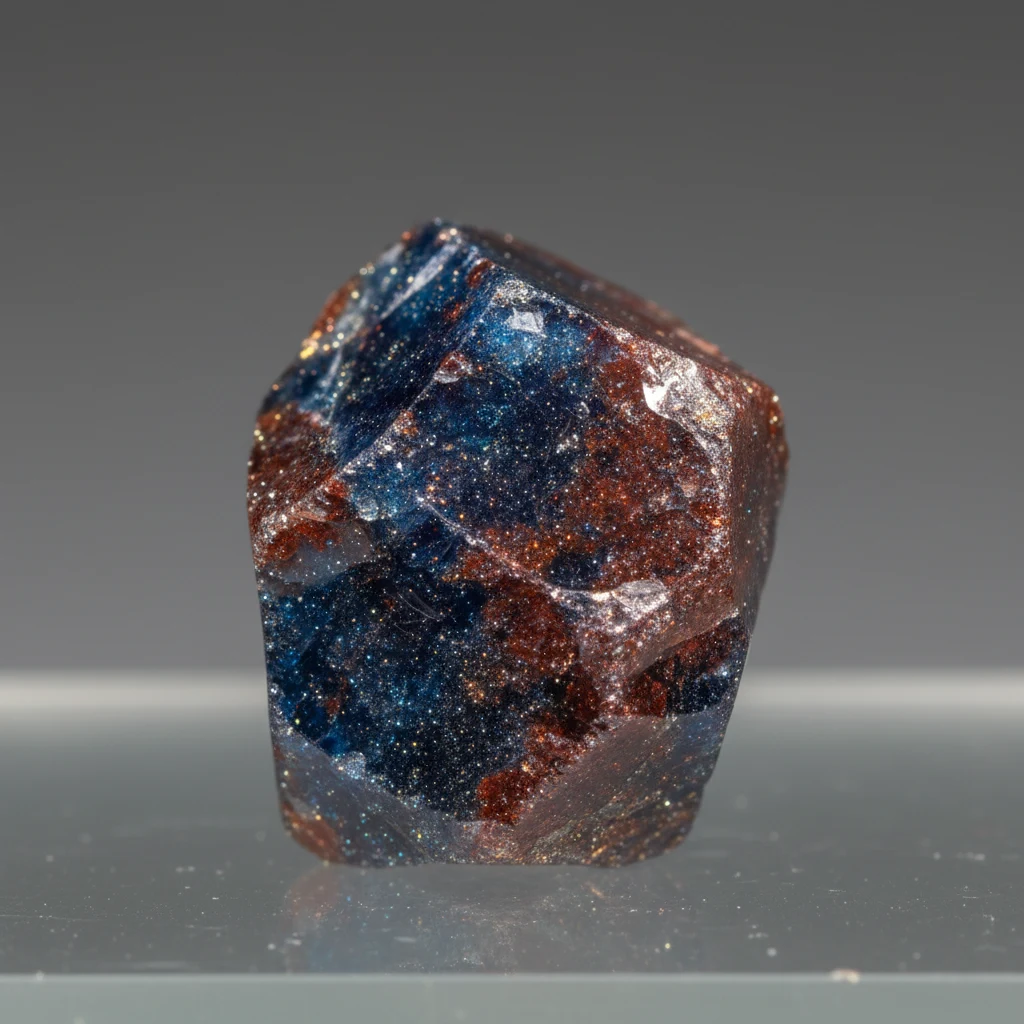
Quick answer: Goldstone is a man-made glittering glass, not a naturally formed crystal. It is commonly identified by its smooth glassy body, uniform sparkle, and coppery brown, blue, green, or purple color varieties.
AI Rock ID can help screen Goldstone by checking its glassy texture, metallic-looking inclusions, and overall color pattern from a photo. RockIdentifier.io treats Goldstone as a synthetic material, so identification should consider both appearance and known manufacturing features.
Good fit
- Collectors who want an affordable glittering display stone
- Jewelry buyers who prefer a smooth, polished, glassy material
- Beginners learning the difference between natural crystals and synthetic glass
- People looking for consistent color and sparkle across beads or cabochons
Not a good fit
- Collectors seeking only naturally formed minerals
- Situations where high scratch resistance is required
- Buyers who want every piece to have unique natural inclusions
- Anyone expecting a rare gemstone rather than decorative glass
Most commonly confused with
- Sunstone: Sunstone is a natural feldspar with aventurescence, while Goldstone is synthetic glass with metallic inclusions.
- Aventurine: Aventurine is quartz or feldspar with natural-looking shimmer, while Goldstone usually has a more uniform glitter effect.
- Blue Sandstone: Blue sandstone is a trade name often used for blue Goldstone rather than a natural sandstone.
- Obsidian: Obsidian is natural volcanic glass, while Goldstone is manufactured glass with added reflective particles.
Goldstone vs. Common Lookalikes
| Material | Natural or Synthetic | Key Visual Clue | Typical Difference |
|---|---|---|---|
| Goldstone | Synthetic glass | Dense, even metallic sparkle | Glassy body with copper or other reflective inclusions |
| Sunstone | Natural mineral | Patchy aventurescence | Feldspar cleavage and more varied internal shimmer |
| Aventurine | Natural mineral | Softer, speckled sparkle | Usually green and less mirror-like than Goldstone |
| Obsidian | Natural volcanic glass | Glassy surface without uniform glitter | May show flow bands, sheen, or snowflake patterns |
| Hematite | Natural mineral | Metallic gray to black surface | Heavier feel and reddish-brown streak |
AI identification confidence
AI identification of Goldstone is often moderate to high when photos clearly show its glassy surface and uniform metallic sparkle. Confidence may drop when the item is heavily dyed, photographed under strong glare, or labeled with trade names such as blue sandstone.
When AI gets it wrong
- A close-up photo shows only glitter and not the glassy body of the piece
- Blue Goldstone is mislabeled as natural blue sandstone
- Sunstone or aventurine has strong aventurescence that resembles metallic inclusions
- Low light or high glare hides the difference between mineral luster and glass luster
Final recommendation
Choose Goldstone if you want a synthetic decorative glass with consistent sparkle and predictable color. Choose sunstone, aventurine, or obsidian instead if natural formation is an important part of the specimen’s appeal.
Goldstone Buying and Authenticity Tips
Goldstone should be sold as synthetic glass rather than as a rare natural crystal. Brown Goldstone usually contains copper-colored reflective particles, while blue and other colors may use different metallic or mineral additives. A trustworthy listing should describe the material as man-made, artificial, or synthetic.
Trade Names Used for Goldstone
Blue Goldstone is often sold under the trade name blue sandstone, even though it is not a natural sandstone. Green, purple, and brown varieties may also appear under color-based trade names. Trade names are common in jewelry listings, but they can make the material sound more natural than it is.
Photo Clues for Identifying Goldstone
Goldstone often shows a smooth glass surface, rounded polish, and many tiny reflective points that look evenly distributed. Natural stones with shimmer usually have more irregular flakes, veils, bands, or crystal textures. A photo taken in indirect light can make the glassy base easier to see than a photo taken under a bright flash.
What Is Goldstone?
Goldstone is a man-made glittering glass, not a natural mineral. In the hand it feels smooth and glassy, with a vitreous shine and a dense, starry sparkle caused by metallic inclusions suspended in the glass. Most pieces are blue or brown, with gold flashes that give the material its name.
Collectors value Goldstone for its reliable sparkle, accessible price, and easy recognition. It is an amorphous synthetic gemstone with a Mohs hardness of 5-6, colorless streak, conchoidal fracture, and opaque appearance. Because it is common and widely produced, the best pieces are chosen for strong color, clean polish, and an even glitter effect.
Origin & History
Goldstone was first created in the 17th century by Italian glassmakers, possibly in Venice. Its name comes from the golden appearance produced by the glittering metallic inclusions, especially in the familiar brown material. The historic association with Italian glasswork is a key part of its collector appeal.
Unlike natural mineral entries a collector might compare on mindat.org, Goldstone is best understood as crafted glass rather than a mined crystal. That distinction matters at the bench: it should be labeled as a synthetic gemstone or glass, even when it is cut, tumbled, or sold beside natural stones.
Where Is Goldstone Found?
Goldstone is found most commonly in glass workshops and factories, because it is produced rather than mined. Important production and trade associations include Murano, Italy; California, USA; and Jaipur, India. Country listings commonly include Italy, the USA, and India.
Formation
Goldstone forms when glass is melted and metal salts are added to create the glittering effect. As a synthetic product, it does not grow in veins, pockets, or crystal cavities. Its structure is amorphous, so it lacks the ordered crystal system seen in natural crystalline minerals.
The finished material is a silicate glass described as SiO2 with metal inclusions, with listed elements including silicon, oxygen, and copper. Its optical character is isotropic, with no birefringence or pleochroism, which fits its glassy nature and helps explain the even, internal sparkle seen from many angles.
How to Identify Goldstone
Identify Goldstone by its smooth glass surface, vitreous luster, and unmistakable glitter. Blue and brown are the typical body colors, often lit by gold-looking metallic sparkle. It is opaque, non-magnetic, and leaves a colorless streak; broken edges may show conchoidal fracture like other glass.
Goldstone is sometimes mistaken for natural stones such as aventurine, so the sparkle pattern is worth studying closely. A good specimen has a dense, evenly distributed flash beneath the polished surface rather than scattered mica-like flecks. Its amorphous structure, refractive index around 1.5, and synthetic origin separate it from natural crystal varieties.
Properties of Goldstone
Physical Properties
| Crystal System | Amorphous |
| Hardness (Mohs) | 5-6 (Medium (4-6)) |
| Density | 2.5-3.0 g/cm3 |
| Luster | Vitreous |
| Diaphaneity | Opaque |
| Fracture | Conchoidal |
| Streak | Colorless |
| Magnetism | Non-magnetic |
| Colors | Blue, Brown, Gold |
Chemical Properties
| Classification | Silicate |
| Formula | SiO2 with metal inclusions |
| Elements | Si, O, Cu |
| Common Impurities |
Optical Properties
| Refractive Index | 1.5 |
| Birefringence | None |
| Pleochroism | None |
| Optical Character | Isotropic |
Goldstone Health & Safety
Goldstone poses no significant health risks.
Goldstone Value & Price
Price Range
Rough/Tumbled: $5 - $20 per specimen
Cut/Polished: $10 - $30 per carat
Price is affected by size, color, and quality of the glitter effect.
Durability
Moderate — Scratch resistance: Good, Toughness: Fair
Goldstone is relatively stable and does not easily break.
How to Care for Goldstone
Use & Storage
Store in a soft pouch or box to avoid scratches.
Cleaning
Clean with a soft cloth and mild soap. Avoid harsh chemicals.
Cleanse & Charge
To cleanse, rinse under running water or place in sunlight.
Placement
Place in a cool, dry location away from direct sunlight.
Caution
Avoid exposing Goldstone to extreme heat.
Works Well With
Goldstone Meaning & Healing Properties
In crystal healing traditions, Goldstone is believed to promote ambition, drive, confidence, and emotional healing. Practitioners often connect it with the Solar Plexus and Root chakras, giving it a grounded but active feel. Its cultural qualities include ambition, healing, and stability.
Goldstone is also associated with Sagittarius and Leo, the Sun, and the elements Fire and Earth. For everyday use, it is safe to handle and safe in water, but care is still practical: clean it with a soft cloth and mild soap, store it in a soft pouch or box, and avoid harsh chemicals or extreme heat.
Identify Goldstone from a photo
Compare Goldstone traits, care tips, value clues, and common lookalikes with a clear photo.
Common mistakes
- Calling Goldstone a naturally occurring crystal instead of synthetic glass
- Assuming blue sandstone is a natural sandstone when it is commonly blue Goldstone
- Confusing uniform glitter with natural mineral aventurescence
- Using high price as proof of natural origin
- Expecting Goldstone to have the same durability as harder quartz gemstones