Iron Ore


Quick answer: Iron ore is a natural rock or mineral material rich enough in iron-bearing minerals to be of interest for collection, study, or industrial use. It is commonly opaque, heavy for its size, and may show metallic gray, black, reddish brown, or earthy red surfaces depending on whether hematite, magnetite, goethite, or other iron minerals dominate.
AI Rock ID can help screen an iron ore specimen by comparing visual traits such as color, luster, streak, texture, and magnetism-related clues from photos. RockIdentifier.io can be used as a reference starting point, but field tests such as streak, magnet response, density, and local geology are important for confirmation.
Good fit
- Collectors who want dense, opaque metallic or earthy mineral specimens
- Students comparing hematite, magnetite, goethite, and limonite-rich rocks
- Rockhounds interested in mining districts, banded iron formations, or weathered iron deposits
- People who want specimens with simple at-home identification tests such as streak and magnet response
Not a good fit
- Anyone wanting a transparent or facetable gemstone
- Jewelry wearers seeking a lightweight, durable daily-wear stone
- Collectors who need a clean specimen that will not shed dust, rust, or red-brown residue
- Children or pets without supervision, especially around sharp, dusty, or heavy pieces
Why people search for this
People often search for iron ore to identify heavy black, gray, or rusty rocks found near old mines, rail beds, beaches, or exposed red soils. Searches also commonly focus on whether a specimen is magnetic and how to tell ore from slag, hematite, or ordinary iron-stained stone.
Most commonly confused with
- Hematite: Hematite is a specific iron oxide mineral with a red to reddish brown streak; iron ore may be mostly hematite or a mixture of iron-bearing minerals.
- Magnetite: Magnetite is strongly magnetic and has a black streak; not all iron ore is strongly magnetic.
- Pyrite: Pyrite is brassy yellow with a greenish black to brownish black streak, while most iron ore is gray, black, or rusty red-brown.
- Basalt: Basalt can be dark and dense but usually lacks the strong red-brown streak or metallic iron oxide surfaces typical of many iron ores.
Iron Ore Lookalike Comparison
| Material | Typical Clue | Key Difference |
|---|---|---|
| Iron ore | Heavy, opaque, metallic to earthy, often red-brown or black | May contain mixed iron minerals and can show red-brown streak or magnetism |
| Hematite | Steel-gray to red-brown with red streak | Single mineral; common major component of iron ore |
| Magnetite | Black, dense, strongly magnetic | Usually has black streak and a stronger magnet response than many ores |
| Pyrite | Brassy metallic cubes or grains | Yellow metallic color and different streak separate it from iron oxides |
| Slag | Glassy, bubbly, or vesicular texture | Man-made texture is more diagnostic than weight alone |
AI identification confidence
AI identification of iron ore is usually moderate when photos show color, texture, luster, and a clear streak test result. Confidence drops when the specimen is weathered, coated with soil, photographed under warm lighting, or shown without scale and multiple angles.
When AI gets it wrong
- A dark volcanic rock is identified as iron ore because it is dense-looking and black.
- Industrial slag is mistaken for ore when bubbly or glassy textures are not visible in the photo.
- Hematite, magnetite, and goethite are labeled broadly as iron ore without enough mineral-specific evidence.
- A rusty surface coating makes a non-ore rock appear iron-rich.
Final recommendation
Use multiple observations before labeling a specimen as iron ore: streak, magnet response, heft, texture, and the geologic setting are more reliable together than color alone. For buying, choose specimens with clear locality information and an honest description of whether the piece is hematite-rich, magnetite-rich, goethite-rich, or a mixed iron ore rock.
How to Check Iron Ore Authenticity
A practical authenticity check starts with a streak plate, a magnet, and a close look at texture. Hematite-rich ore usually leaves a red to reddish brown streak, while magnetite-rich ore commonly responds strongly to a magnet and leaves a black streak. Natural ore can be massive, granular, banded, or earthy, but perfectly smooth glassy bubbles may suggest industrial slag rather than a natural specimen.
Buying Iron Ore Specimens
Iron ore specimens are usually valued more for mineral content, locality, texture, and educational interest than for gem use. Look for labels that name the dominant iron mineral when possible, such as hematite, magnetite, goethite, or limonite-rich material. A reputable listing should disclose whether the piece is natural, cut, polished, weathered, or collected from a mine dump.
Field Clues for Iron-Rich Rocks
Iron-rich rocks often feel heavy for their size, show rusty staining, and may darken surrounding soil or leave red-brown dust. A hand magnet can quickly separate strongly magnetic magnetite-rich material from nonmagnetic or weakly magnetic iron oxides. Local context matters because iron ore is more likely near known iron formations, old mining areas, red beds, or heavily weathered iron-rich zones.
What Is Iron Ore?
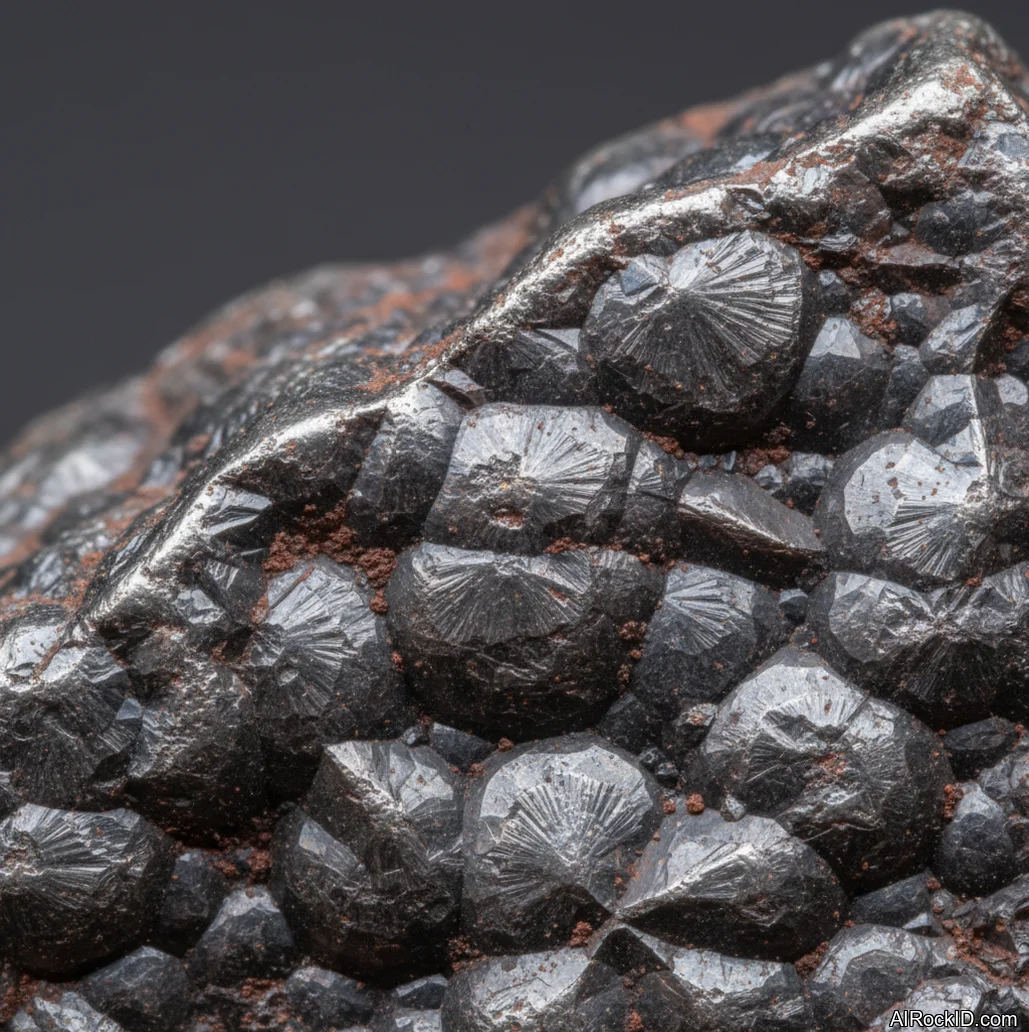
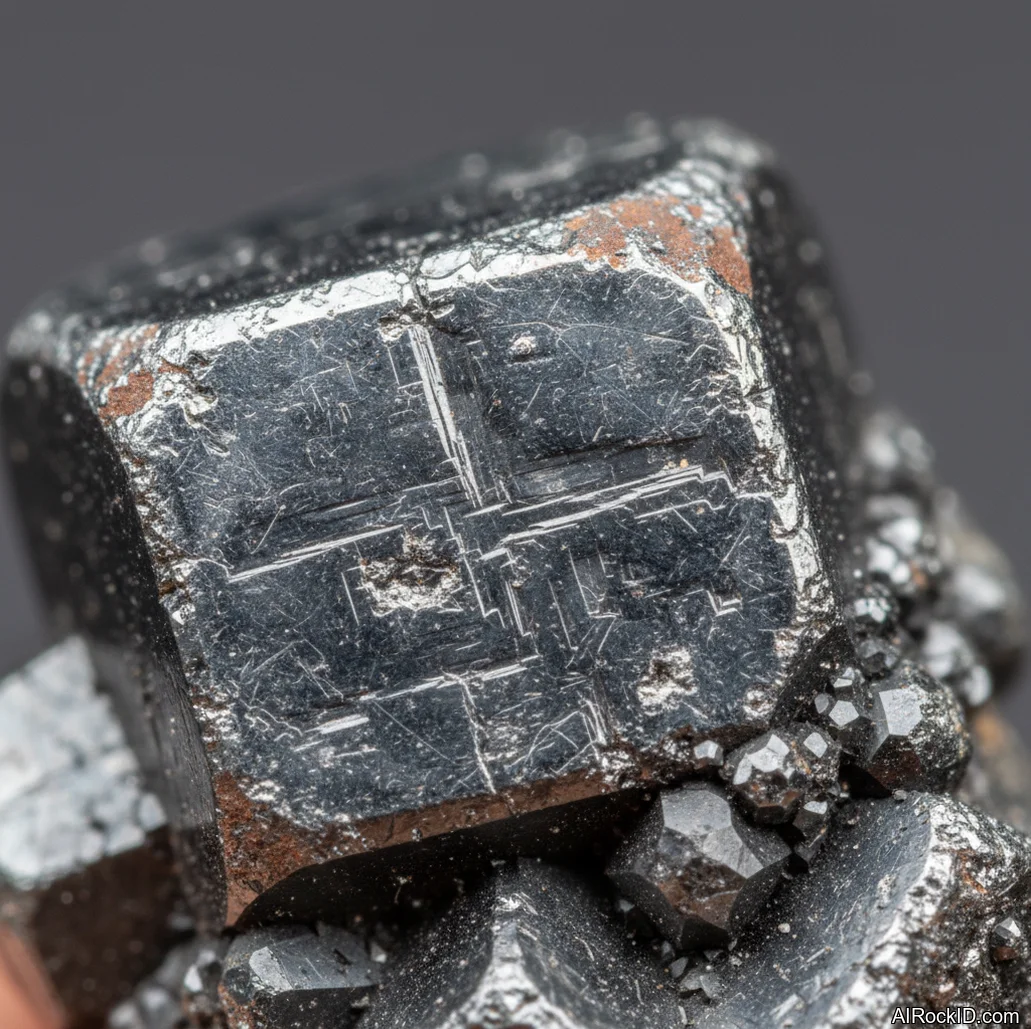
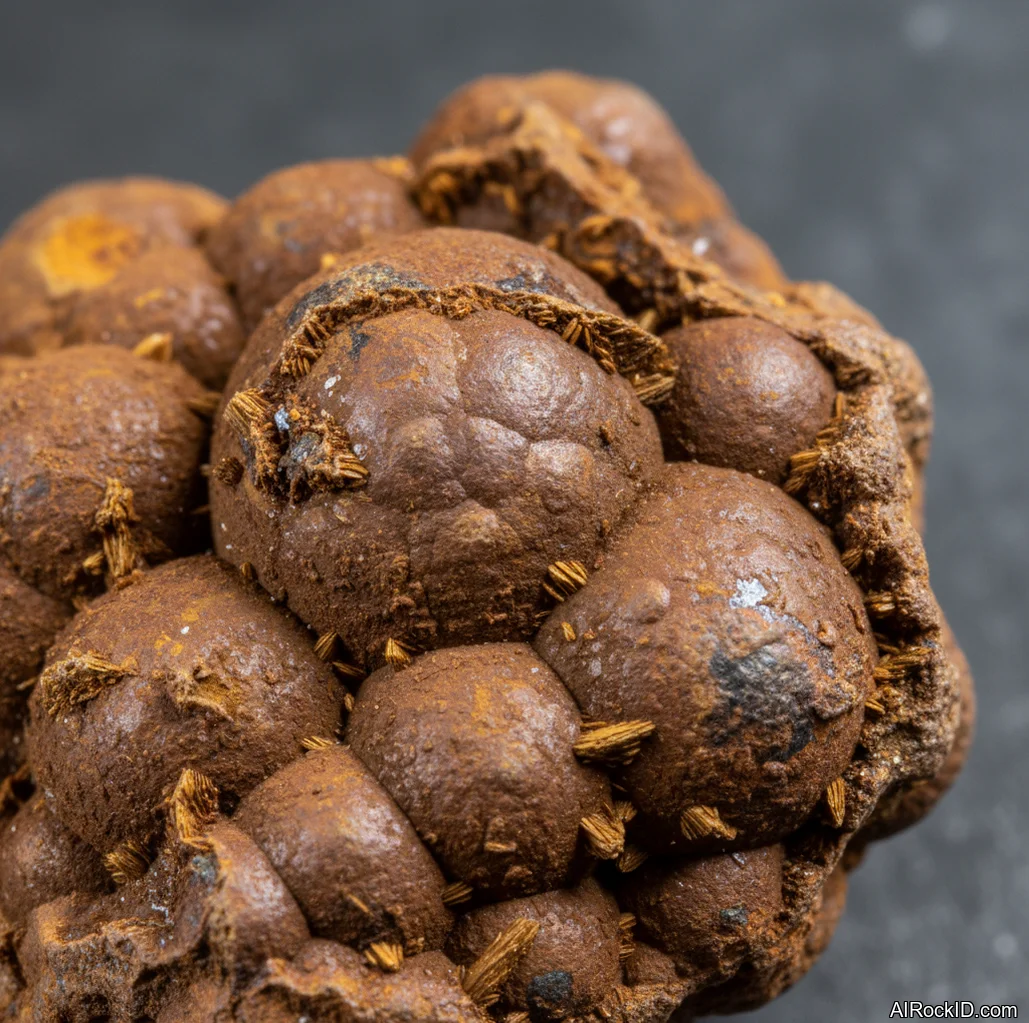
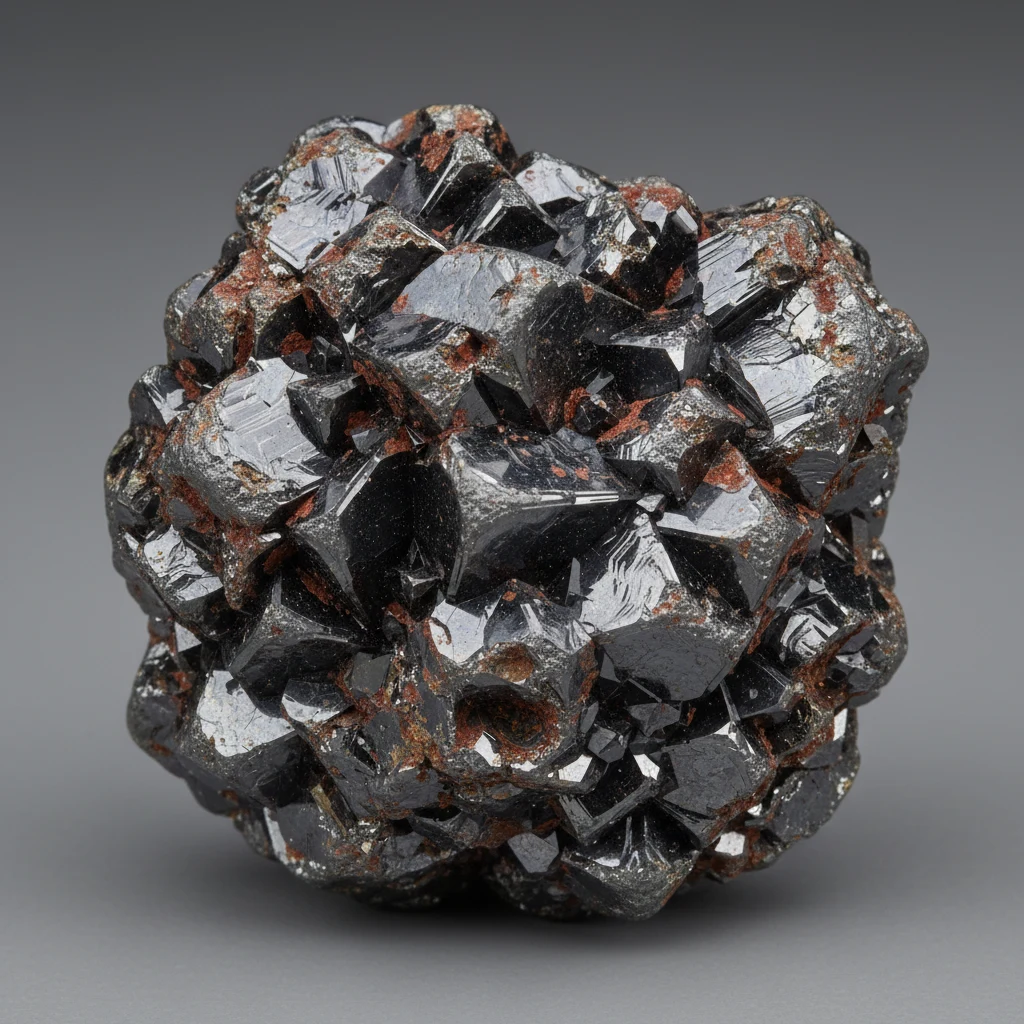
Iron Ore is a naturally occurring rock made of iron minerals from which iron can be extracted. In hand, it usually feels dense and workmanlike rather than gemmy: opaque, dark gray to black or red-brown, often with a metallic sheen that catches light on fresh surfaces. The name covers important iron-bearing materials such as hematite, magnetite, and limonite.
Collectors value Iron Ore less for rarity and more for weight, texture, magnetism, streak, and industrial significance. It is classed as very common, with a medium Mohs hardness of 5.5 to 6.5, good scratch resistance, and good toughness. Chemically, the listed iron oxides include Fe2O3 for hematite and Fe3O4 for magnetite, with Fe and O as the key elements.
Origin & History
The term Iron Ore refers to any mineral material from which iron is extracted, and it has been described since ancient times. For a field collector, that broad name matters: a specimen labeled “iron ore” may be hematite-rich, magnetite-rich, limonite-bearing, or a mixed iron-oxide rock rather than a single display mineral.
In collections, Iron Ore often carries scientific and cultural value because it connects raw geology with practical metal extraction. When checking labels, compare the visible traits—metallic luster, red to brown streak, and magnetism—with mineral references such as mindat.org, especially when separating hematite, magnetite, and limonite names.
Where Is Iron Ore Found?
Iron Ore is found in many regions around the world and is especially noted from Australia, Brazil, and China. Important listed localities include Pilbara in Australia, Carajás in Brazil, and Hubei in China. Because it is very common, the collector’s question is usually not whether Iron Ore exists, but what type, purity, and texture a piece shows.
Formation
Iron Ore forms through the weathering and oxidation of iron-rich rocks and minerals. In practical terms, that process can leave a specimen with earthy red-brown tones, dark metallic patches, or black magnetic material depending on the iron minerals present. The result is usually opaque and visually heavy, with surfaces that look more industrial than ornamental.
The listed chemical classification is oxide, with common impurities including SiO2 and Al2O3. Under normal conditions Iron Ore is stable, but it should still be stored dry and away from moisture. Dust from handling or breaking material can irritate the respiratory system, so use a mask whenever iron ore dust is present.
How to Identify Iron Ore
Identify Iron Ore by its color, opacity, metallic luster, streak, and magnetism. Typical colors are gray, black, red, and brown, and the streak is red to brown. Magnetite-bearing ore may respond to a magnet, while hematite-bearing ore is often recognized by its reddish color and red-brown streak.
The listed physical profile includes an isometric crystal system, Mohs hardness of 5.5 to 6.5, density from 2.5 to 7.5 g/cm3, conchoidal fracture, metallic luster, and opaque diaphaneity. Optical notes are simple: refractive index is not applicable, birefringence and pleochroism are none, and optical character is isotropic.
Properties of Iron Ore
Physical Properties
| Crystal System | Isometric |
| Hardness (Mohs) | 5.5 - 6.5 (Medium) |
| Density | 2.5 - 7.5 g/cm3 |
| Luster | Metallic |
| Diaphaneity | Opaque |
| Fracture | Conchoidal |
| Streak | Red to brown |
| Magnetism | Magnetic |
| Colors | Gray, Black, Red |
Chemical Properties
| Classification | Oxide |
| Formula | Fe2O3 (Hematite), Fe3O4 (Magnetite) |
| Elements | Fe, O |
| Common Impurities | SiO2, Al2O3 |
Optical Properties
| Refractive Index | Not applicable |
| Birefringence | None |
| Pleochroism | None |
| Optical Character | Isotropic |
Iron Ore Health & Safety
Dust from iron ore can be a respiratory irritant.
Iron Ore Value & Price
Price Range
Rough/Tumbled: $50 - $150 per ton
Cut/Polished:
Price is affected by purity, demand, and location of extraction.
Durability
Durable — Scratch resistance: Good, Toughness: Good
Iron ore is stable under normal conditions.
How to Care for Iron Ore
Use & Storage
Store in a dry place away from moisture.
Cleaning
Clean with a damp cloth to remove dirt. Avoid using harsh chemicals.
Cleanse & Charge
Place in sunlight for a few hours to recharge.
Placement
Keep in a stable environment away from extreme temperatures.
Caution
Avoid ingesting any dust or particles.
Works Well With
Iron Ore Meaning & Healing Properties
In crystal-healing use, Iron Ore is associated with strength, grounding, protection, stability, resilience, confidence, focus, and transformation. Its Root chakra link fits the feel of the material: heavy, opaque, and earthbound in the hand. These meanings are traditional and personal, not a substitute for medical treatment.
For care, clean Iron Ore with a damp cloth and avoid harsh chemicals. It is generally safe in water, but storage is best in a dry place away from moisture and extreme temperatures. For energetic practice, it may be placed in sunlight for a few hours, and it pairs well with quartz, amethyst, and citrine.
Identify Iron Ore from a photo
Compare Iron Ore traits, care tips, value clues, and common lookalikes with a clear photo.
Common mistakes
- Relying on rust color alone, since many ordinary rocks can be stained by iron oxides.
- Assuming every magnetic rock is iron ore, even though some basalts and man-made materials can attract a magnet.
- Calling every heavy black rock magnetite without checking streak and magnet strength.
- Confusing industrial slag with natural ore when bubbles, glassy surfaces, or melted textures are present.
- Cleaning specimens aggressively, which can remove diagnostic coatings or create misleading fresh surfaces.
- Using a single photo for identification without scale, streak, magnet test, or locality context.