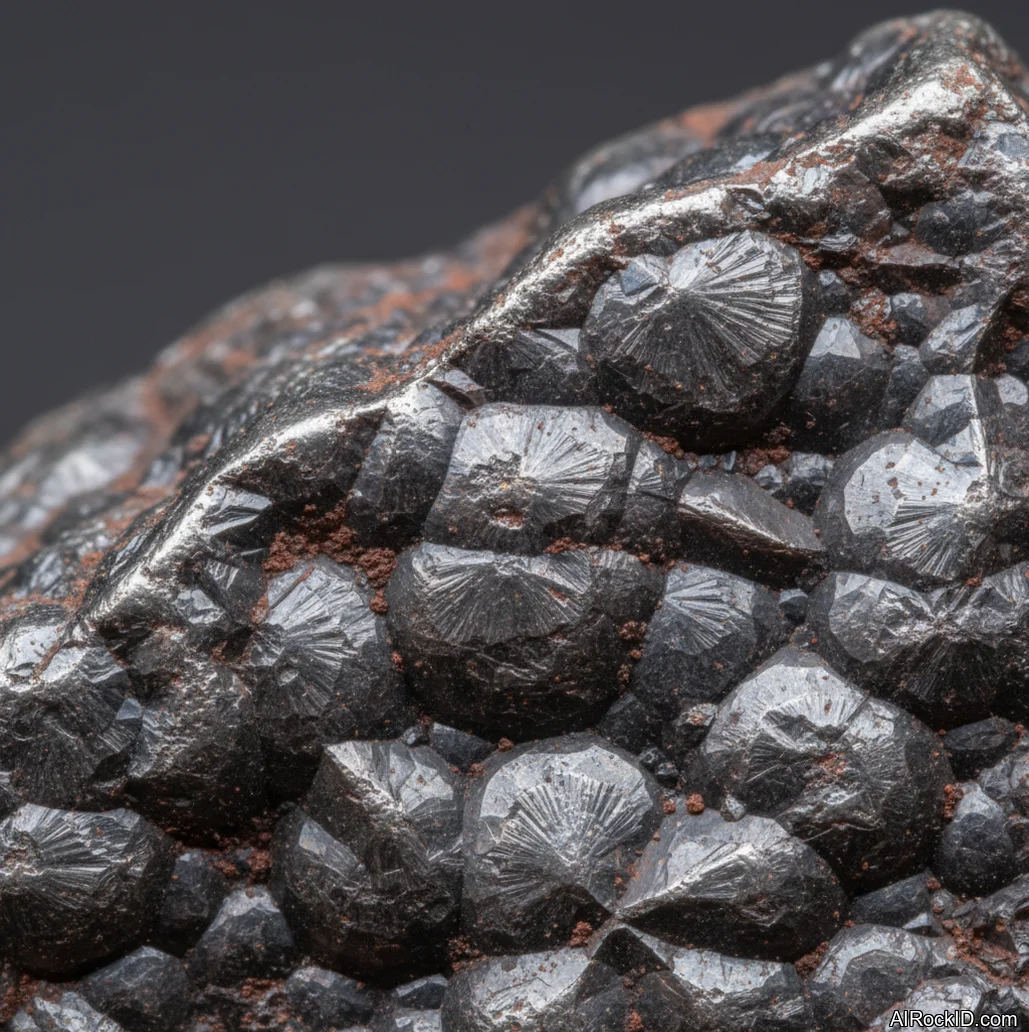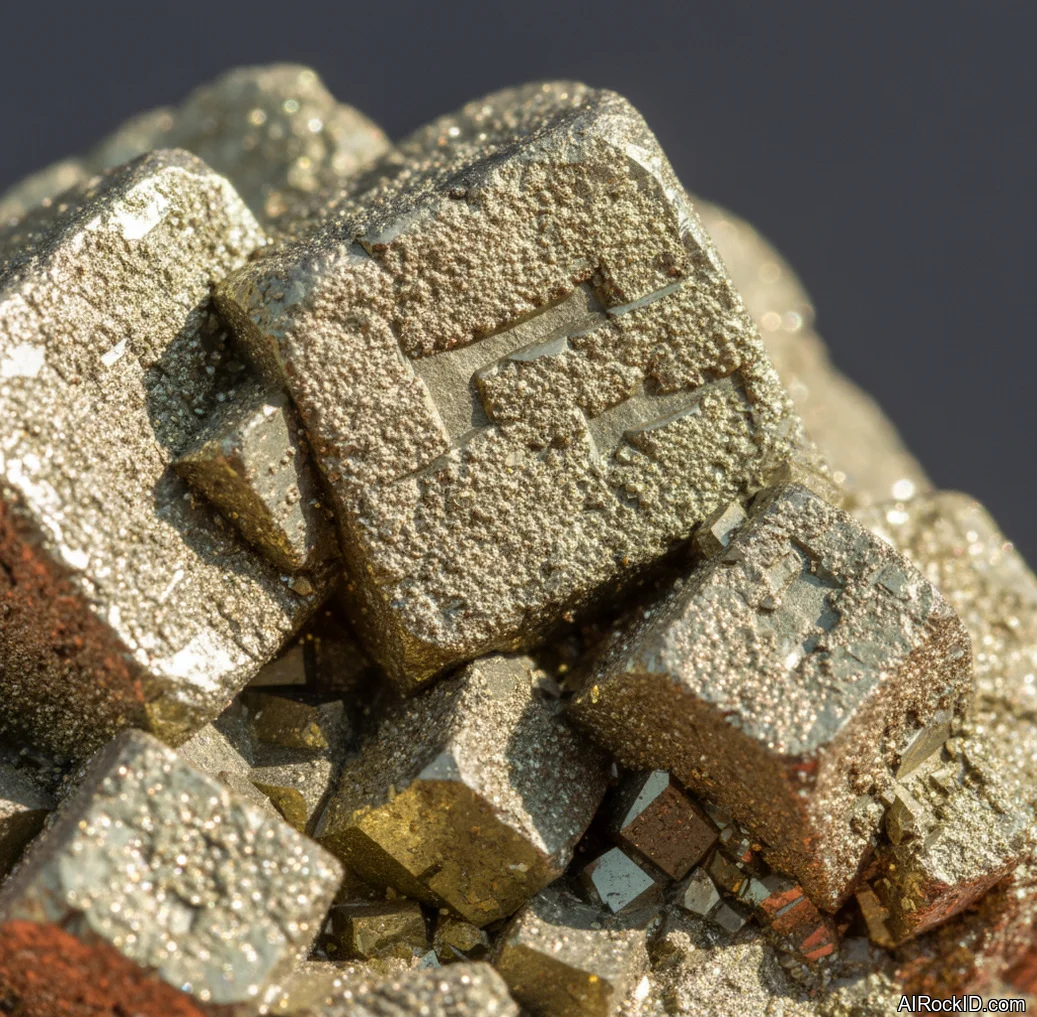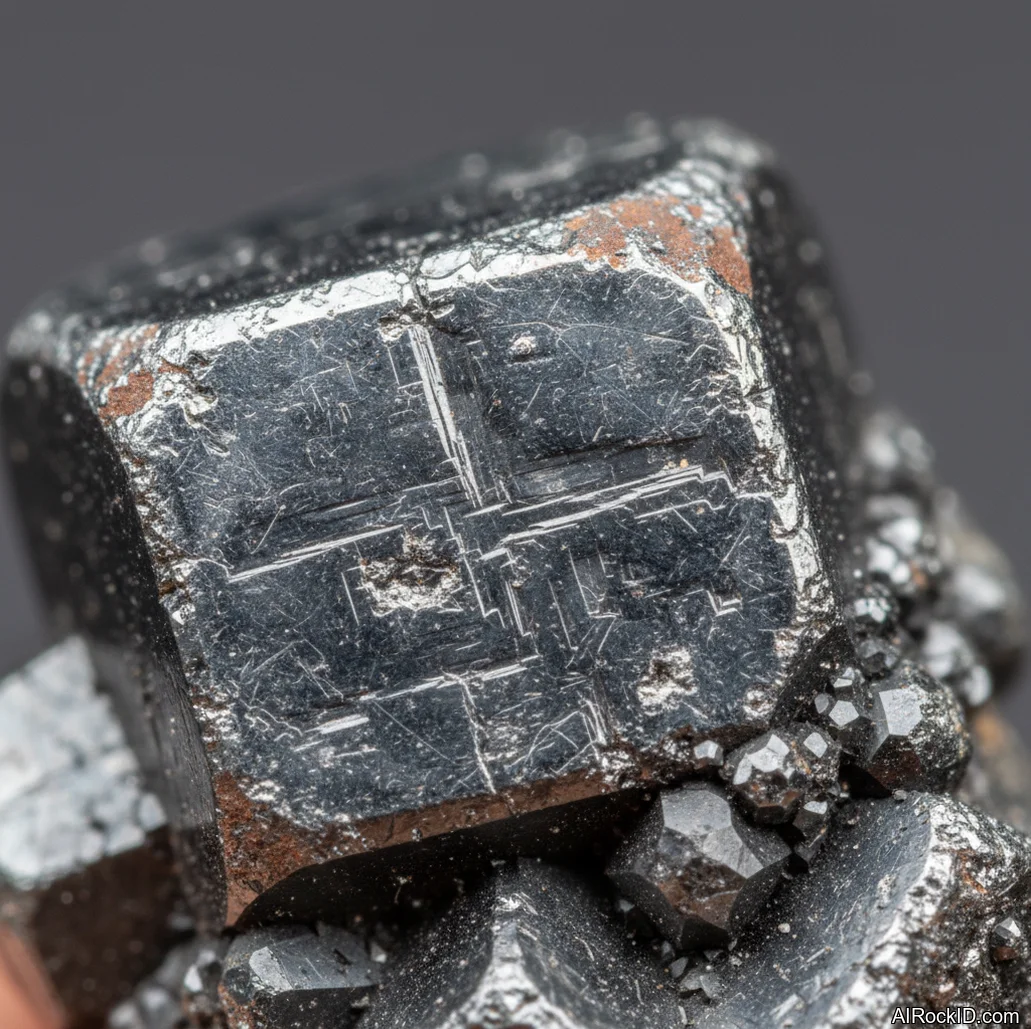
Magnetite


Quick answer: Magnetite is a naturally magnetic iron oxide mineral with a black to dark gray color, metallic to submetallic luster, and black streak. Its strong attraction to a magnet is one of the most useful clues for separating it from many other dark metallic minerals.
AI Rock ID can help screen a suspected magnetite specimen by comparing visible traits such as color, luster, crystal form, streak, and magnetic response. RockIdentifier.io provides educational identification support, but final confirmation may still require hands-on tests such as streak, hardness, and magnetism.
Good fit
- Collectors who want a naturally magnetic mineral specimen
- Students learning simple mineral identification tests
- People comparing black metallic minerals by streak and magnetism
- Collectors interested in iron ore minerals and octahedral crystal forms
Not a good fit
- Jewelry that needs a bright, transparent, or faceted gemstone appearance
- Situations where rust staining or iron residue would be a problem
- Collections stored near items sensitive to magnets
- Anyone seeking a lightweight specimen, since magnetite is relatively dense
Most commonly confused with
- Hematite: Hematite usually has a red-brown streak and is weakly magnetic or nonmagnetic unless altered or treated.
- Ilmenite: Ilmenite is black and metallic but is typically less strongly magnetic than magnetite.
- Chromite: Chromite is dark and metallic to submetallic but usually shows little to no magnetic attraction.
- Pyrite: Pyrite is brassy yellow rather than black and is not strongly attracted to a magnet.
Magnetite vs Similar Dark Metallic Minerals
| Mineral | Key ID Clue | Typical Streak | Magnet Response |
|---|---|---|---|
| Magnetite | Black, dense iron oxide; often octahedral or massive | Black | Strong |
| Hematite | Metallic or earthy iron oxide; may look black or steel gray | Red-brown | Weak to none |
| Ilmenite | Black titanium-iron oxide, often massive or granular | Black to brownish black | Weak to moderate |
| Chromite | Dark chromium oxide, commonly granular or massive | Brown | None to weak |
| Pyrite | Brassy metallic sulfide with cubic crystals | Greenish black to brownish black | None |
AI identification confidence
AI identification confidence for magnetite is often higher when the photo is paired with user-observed magnetism, black streak, metallic luster, and high density. Image-only results can be less reliable because several dark opaque minerals look similar without streak, hardness, and magnet tests.
When AI gets it wrong
- A black metallic mineral is photographed without any streak or magnetism information.
- Hematite, ilmenite, chromite, or industrial slag has a similar dark, shiny surface.
- Lighting makes a dark mineral appear brassy, silvery, or glassy.
- A specimen is a mixed rock containing magnetite grains rather than a pure magnetite crystal.
Final recommendation
Choose magnetite when strong natural magnetism, black streak, and iron-ore mineral character are the main traits you want to document. For buying or collecting, prioritize specimens with clear locality information, stable surfaces, and magnetism that matches the seller’s description.
How to Check Magnetite Authenticity
A simple magnet test is useful, but it should not be the only test because some altered, treated, or mixed materials can show magnetic behavior. Genuine magnetite normally has a black streak, metallic to submetallic luster, high density, and hardness around 5.5–6.5. Be cautious with pieces sold as lodestone if they do not noticeably attract small iron objects, since lodestone is magnetized magnetite rather than just any magnetite specimen.
Buying Magnetite Specimens
When buying magnetite, look for clear photos in natural light, a stated locality, and notes about whether the piece is massive, crystalline, or naturally magnetized lodestone. Octahedral crystals, sharp crystal groups, and documented localities may command more interest than ordinary massive material. Avoid specimens with unexplained coatings, loose black powder, or vague claims that cannot be checked with basic mineral tests.
Magnetite in Rocks and Sand
Magnetite can occur as visible crystals, massive ore, or small black grains in igneous and metamorphic rocks. It is also common in some black sands, where a magnet can pull out magnetite-rich grains from nonmagnetic minerals. Grain-size magnetite may not show dramatic crystal shape, so streak, magnetism, and geologic context are especially useful.
What Is Magnetite?
Magnetite is a naturally magnetic iron oxide mineral with the formula Fe3O4. Grab a decent chunk and the first thing that hits you is the weight. It sits heavy in your palm in a way quartz just doesn’t, and the surface can be slick where it’s naturally polished, or gritty where it breaks up into granular bits.
At a quick glance, it’s basically just black. But tip it under a lamp and there’s that steel-gray flash, like the face of a worn hammer or an old tool head that’s been used for years. And in those little flats at shows, magnetite’s the piece that’ll quietly snag paper clips right through a bag, then someone jerks their hand back because they honestly didn’t see it coming.
Most dealers seem to have it in two main looks: chunky, massive pieces that feel like a dumbbell for their size, and sharp octahedral crystals that look like tiny black pyramids stuck together. The octahedrons are the fun ones, no question. They catch the light right on the edges, and they’re what I hand to somebody when I want them to actually feel what “metallic luster” means (not just read the words on a card).
Origin & History
“Magnetite” gets its name from Magnesia, a region in Greece that also handed down a bunch of other magnet-related words. People were fiddling with naturally magnetic stones way before mineralogists came along and stuck neat labels on everything, and “lodestone” was the old catch-all term for magnetite that’s strongly magnetized.
Magnetite, as a mineral species, was described back in the early days of modern mineralogy, and it shows up in the classic ore books because it’s one of the major iron ores. And if you’ve ever had a gold pan in your hands and watched the black-sand concentrate snap into a skinny line when you bring a magnet close, you’ve seen magnetite do its little party trick.
Where Is Magnetite Found?
It turns up worldwide in igneous and metamorphic rocks, plus in placer “black sands” along rivers and beaches where heavy minerals collect.
Formation
Thing is, in igneous settings, the raw material usually shows up when iron-rich magma cools and the oxygen conditions are just right for Fe3O4 to crystallize. You’ll spot it as little disseminated grains in basalt and gabbro. And sometimes it turns up as bigger masses tied to layered intrusions.
But it doesn’t stop there. It can also pop up in skarns, where hot fluids coming off intrusions react with limestone or dolomite and dump iron oxides as they go.
Compared to a lot of shiny metallic minerals, magnetite’s a tough survivor at the surface. Weathering can chew the host rock into crumbs, yet those magnetite grains hang on and end up concentrating as black sand in streams. So what’s the quick reality check? Grab a strong magnet and give it a minute. Sweep it near a pan of sediment and you’ll pull out a dark, heavy streak that’s mostly magnetite, with a bit of other iron stuff mixed in (you can feel the extra weight in the pan when it starts to collect).
How to Identify Magnetite
Color: Most magnetite looks black to iron-black, sometimes with a steel-gray sheen on fresh faces. In bright sun it can read as dark gray rather than true pitch black.
Luster: Metallic luster, often with sharp reflective flashes on crystal edges.
Pick up a piece and check the heft. Magnetite feels heavier than it looks, and it stays cool in your hand like a chunk of metal. The real test is magnetism: a strong specimen will grab a small steel paper clip, and even weak pieces will tug on a neodymium magnet. If you scratch it on unglazed porcelain, the streak is black, which helps separate it from hematite’s red-brown streak.
Common Look-Alikes
Magnetite is sometimes confused with these materials:
- Hematite (especially polished hematite sold as “magnetic hematite”)
- Ilmenite (black, heavy oxide with a duller look and weak magnet response)
- Franklinite (black spinel-group ore mineral, often mixed with magnetite in ore chunks)
- Pyrrhotite (bronze-black, magnetic, but usually shows a warmer brownish tint and tarnish)
- Black slag glass / furnace clinker (industrial glassy chunks sold as “magnetic stone” sometimes with metal bits)
Market Cautions & Treatments
When AI Can Get This Wrong
In photos, AI mixes magnetite up with hematite and plain black slag all the time because they all read as “shiny black rock.” The real test is magnet behavior plus heft: magnetite feels oddly heavy for its size and will pull a paperclip without needing a hidden magnet stuck on the back. If you can do one more check, a streak on unglazed tile helps, magnetite goes black while hematite trends red-brown even when it looks black in the listing photos.
Properties of Magnetite
Physical Properties
| Crystal System | Cubic |
| Hardness (Mohs) | 5.5-6.5 (Medium (4-6)) |
| Density | 5.15-5.18 g/cm3 |
| Luster | Metallic |
| Diaphaneity | Opaque |
| Fracture | Uneven |
| Streak | black |
| Magnetism | Magnetic |
| Colors | black, iron-black, steel-gray |
Chemical Properties
| Classification | Oxides |
| Formula | Fe3O4 |
| Elements | Fe, O |
| Common Impurities | Ti, Mg, Mn, Al |
Optical Properties
| Refractive Index | 2.42 |
| Birefringence | None |
| Pleochroism | None |
| Optical Character | Isotropic |
Magnetite Health & Safety
Handling is usually safe, and a quick splash of water isn’t a big deal. The real headache? If the piece is strongly magnetic, it can jump onto a magnet or a steel surface fast, and that hard snap can chip the edges.
Safety Tips
Don’t grind or sand this stuff unless you’ve got real dust control in place, because that fine powder gets everywhere (and you’ll feel it in your nose fast). And keep strong specimens away from electronics, magnetic strips, and pacemakers since they can mess with them.
Magnetite Value & Price
Price Range
Rough/Tumbled: $3 - $60 per piece
Price mostly comes down to the crystal shape and how it’s presented. Clean octahedral crystals, especially when they’re sitting on a contrasting matrix and you can actually feel that strong natural magnetism tug at a paperclip, will run higher than the usual massive chunks or the gritty black-sand stuff.
Durability
Durable — Scratch resistance: Good, Toughness: Good
It’s pretty stable in normal indoor conditions, but polished surfaces can scuff and the magnetized pieces love to collect metal dust if you store them near tools.
How to Care for Magnetite
Use & Storage
Store it in a small box or bag so it doesn’t slam into other minerals. And keep it away from iron filings, loose staples, and your toolbox unless you enjoy cleaning fuzz off it.
Cleaning
1) Rinse quickly in water to remove grit. 2) Scrub gently with a soft toothbrush and a drop of mild soap. 3) Rinse and dry fully right away so water spots don’t dull a polished face.
Cleanse & Charge
If you do energy-style care, simple options are smoke cleansing or setting it on a dry bed of salt nearby, not buried. I don’t leave magnetite in sun as a “rule,” but I also don’t bother since it doesn’t really need it.
Placement
On a desk it’s a great fidget stone because it’s heavy and satisfying. But don’t park it next to your credit cards or hard drives if it’s strongly magnetic.
Caution
Strong magnetite can really pinch your skin if it snaps onto a magnet or a steel surface (it happens fast, and you feel that sharp little bite). And it can mess with magnetic media and some medical devices, so you can’t just treat it like a harmless rock.
Works Well With
Magnetite Meaning & Healing Properties
Look at how magnetite gets used in the crystal scene and you’ll hear the same two words over and over: “pull” and “alignment.” That tracks, honestly, just from how the stuff behaves in your hand. You can feel that little yank when it snaps toward a magnet, so people turn that into a story about habits, attention, and staying on track. I’m talking metaphor here, not a medical claim.
On a stressful day, grabbing a palm-sized chunk can be grounding in a plain, practical way. It’s cold. It’s heavy. It feels real. I’ve watched customers in the shop roll it around while they talk, like a worry stone with attitude (because it keeps trying to kiss anything metal nearby). But the same magnetism that feels “centering” can get irritating fast. It picks up those tiny steel hairs and shavings from bags, shelves, display stands, even the little bits that live in the corners of a tray, and then you’re stuck for five minutes picking gray fuzz off the surface with your fingernail. Fun, right?
And if you like pairing stones, magnetite tends to sit nicely next to other dark, dense pieces people reach for when they want focus and steadiness. I like it with smoky quartz when I want that quiet, no-nonsense vibe on the table while I’m sorting flats. But, thing is, none of this replaces actual medical care. It’s a tool for ritual and mindset. That’s it. That’s where it belongs.
Common mistakes
- Assuming every black magnetic stone is pure magnetite.
- Confusing hematite with magnetite without checking the streak color.
- Calling all magnetite lodestone, even when the specimen is not naturally magnetized.
- Using only color for identification, since many opaque minerals are black or dark gray.
- Placing loose magnetite powder or grains near electronics, cards, or delicate surfaces without containment.
- Ignoring density, since magnetite should feel relatively heavy for its size.
Identify Magnetite from a photo
Compare Magnetite traits, care tips, value clues, and common lookalikes with a clear photo.