Kimberlite


Quick answer: Kimberlite is a rare volcanic rock best known as the main source rock for many natural diamonds. It is usually dark gray, greenish, bluish, or yellow-brown and may look crumbly, altered, or brecciated rather than glassy or gem-like.
AI Rock ID can help compare a suspected kimberlite specimen with visually similar volcanic and ultramafic rocks using color, texture, and visible minerals. RockIdentifier.io should be used as a visual screening tool, while diamond-source confirmation usually requires geologic context and laboratory testing.
Good fit
- Collectors interested in unusual volcanic rocks and diamond geology
- Educational displays about mantle-derived rocks and volcanic pipes
- Specimens with visible breccia texture, altered olivine, or mantle xenolith fragments
- Geology students comparing kimberlite with basalt, lamproite, and peridotite
Not a good fit
- Buyers expecting visible diamonds in most hand samples
- Jewelry use, because kimberlite is usually soft, altered, and not durable
- Identification based only on color, since many dark rocks can look similar
- Anyone needing proof of diamond potential without lab or field evidence
Why people search for this
People often search for kimberlite because it is closely associated with diamond exploration. Many searches come from finding an unusual dark or greenish rock and wondering whether it could indicate diamonds.
Most commonly confused with
- Basalt: Basalt is a common dark volcanic rock that is usually more uniform and does not typically contain mantle xenoliths or classic kimberlite pipe textures.
- Lamproite: Lamproite can also host diamonds, but it has different mineral chemistry and is generally less widespread than kimberlite as a diamond host.
- Peridotite: Peridotite is a mantle rock rich in olivine, while kimberlite is a volcanic rock that may carry peridotite fragments upward.
- Serpentinite: Serpentinite can be green and soft from altered olivine-rich rocks, but it is not the same pipe-forming volcanic rock as kimberlite.
Kimberlite vs Similar Dark Rocks
| Feature | Kimberlite | Common Lookalikes |
|---|---|---|
| Typical setting | Pipe, dike, or diatreme related to deep volcanic eruptions | Basalt flows, altered ultramafic bodies, or general volcanic breccias |
| Texture | Often brecciated, crumbly, altered, or fragment-rich | May be massive, layered, glassy, or uniformly fine-grained |
| Key clue | May contain mantle xenoliths, altered olivine, phlogopite, or indicator minerals | Usually lacks the full kimberlite indicator mineral suite |
| Diamond link | Some bodies carry diamonds, but many do not | Most lookalikes are not diamond source rocks |
| Confirmation | Requires petrography, mineral chemistry, or geologic mapping | Visual ID alone is often unreliable |
AI identification confidence
AI identification of kimberlite from a photo is usually moderate to low because texture, weathering, and dark coloration overlap with many volcanic and ultramafic rocks. Confidence improves when the image includes fresh broken surfaces, scale, multiple angles, locality information, and close-ups of visible minerals or rock fragments.
When AI gets it wrong
- Weathered basalt may be labeled as kimberlite because both can appear dark, fine-grained, and volcanic.
- Serpentinite or altered peridotite may be confused with kimberlite when green, soft, or olivine-rich textures are visible.
- Concrete, slag, or construction aggregate can resemble brecciated volcanic rock in close-up photos.
- A single hand-sample image cannot confirm whether a rock came from a kimberlite pipe or has diamond potential.
Final recommendation
Treat kimberlite identifications as preliminary unless supported by field location, indicator minerals, or laboratory analysis. For buying or collecting, choose specimens with documented provenance rather than claims based only on color or the word “diamond.”
How to Check Kimberlite Authenticity
Authentic kimberlite is usually verified through a combination of geologic setting, mineralogy, and laboratory testing rather than appearance alone. Useful evidence includes a known pipe or dike locality, thin-section petrography, and indicator minerals such as garnet, chromite, ilmenite, or chrome diopside. A seller should be able to provide locality details and avoid implying that every kimberlite specimen contains diamonds.
Does Kimberlite Always Contain Diamonds?
Kimberlite does not always contain diamonds. Some kimberlite bodies are barren, and even diamond-bearing pipes usually contain diamonds in very small concentrations. A hand sample without visible crystals cannot be assumed to contain diamond, especially without professional testing.
Buying Kimberlite Specimens
When buying kimberlite, look for clear provenance, honest labeling, and photos showing both fresh and weathered surfaces. Specimens sold as “diamond-bearing” should include credible documentation, because visual inspection cannot prove diamond content. Display pieces are commonly valued more for geology and rarity than for any recoverable gem material.
What Is Kimberlite?
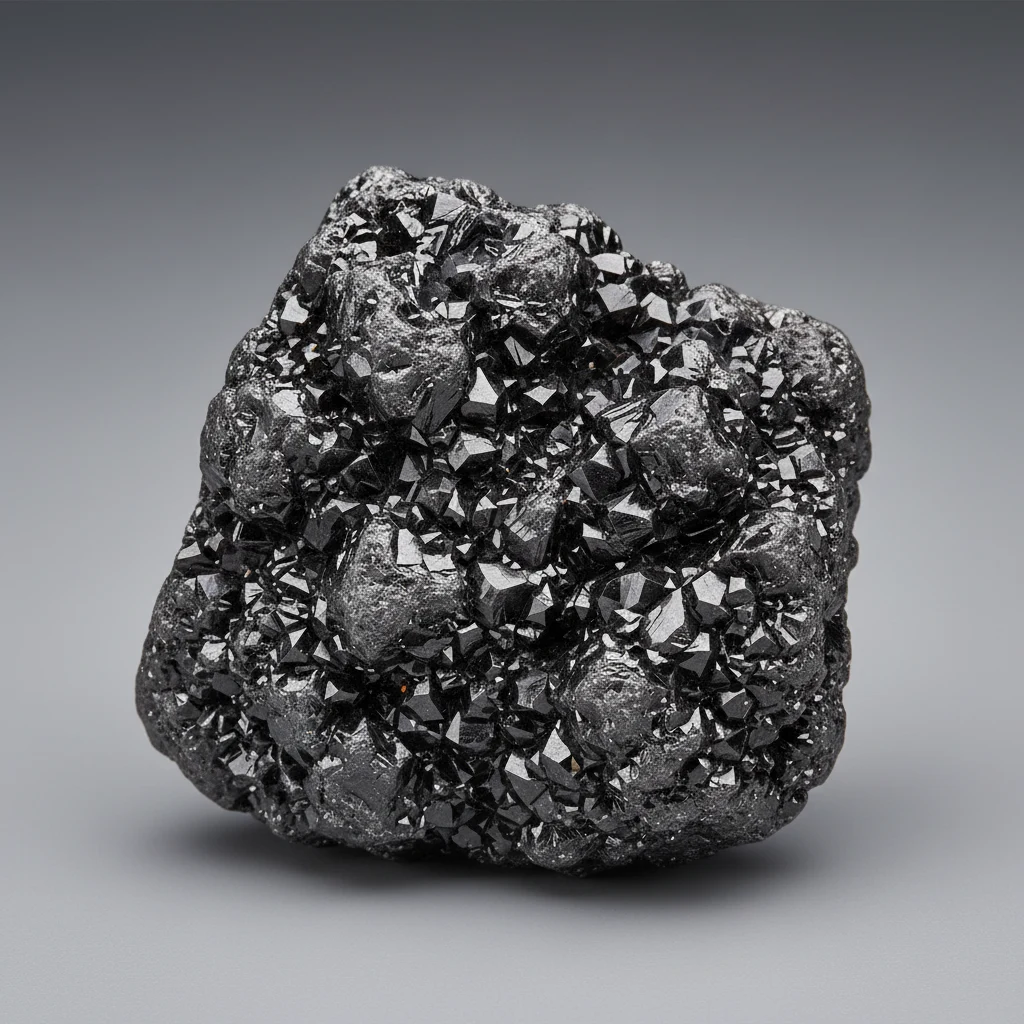
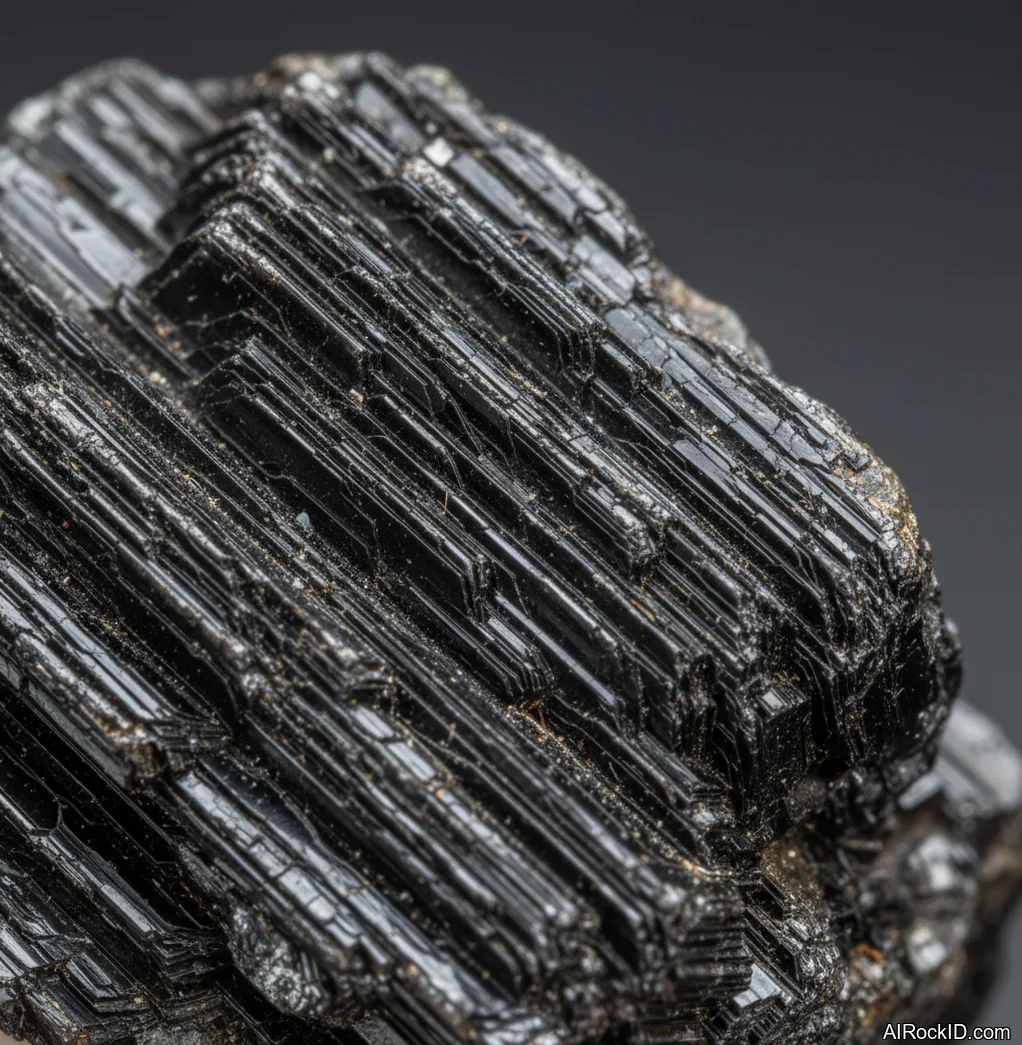
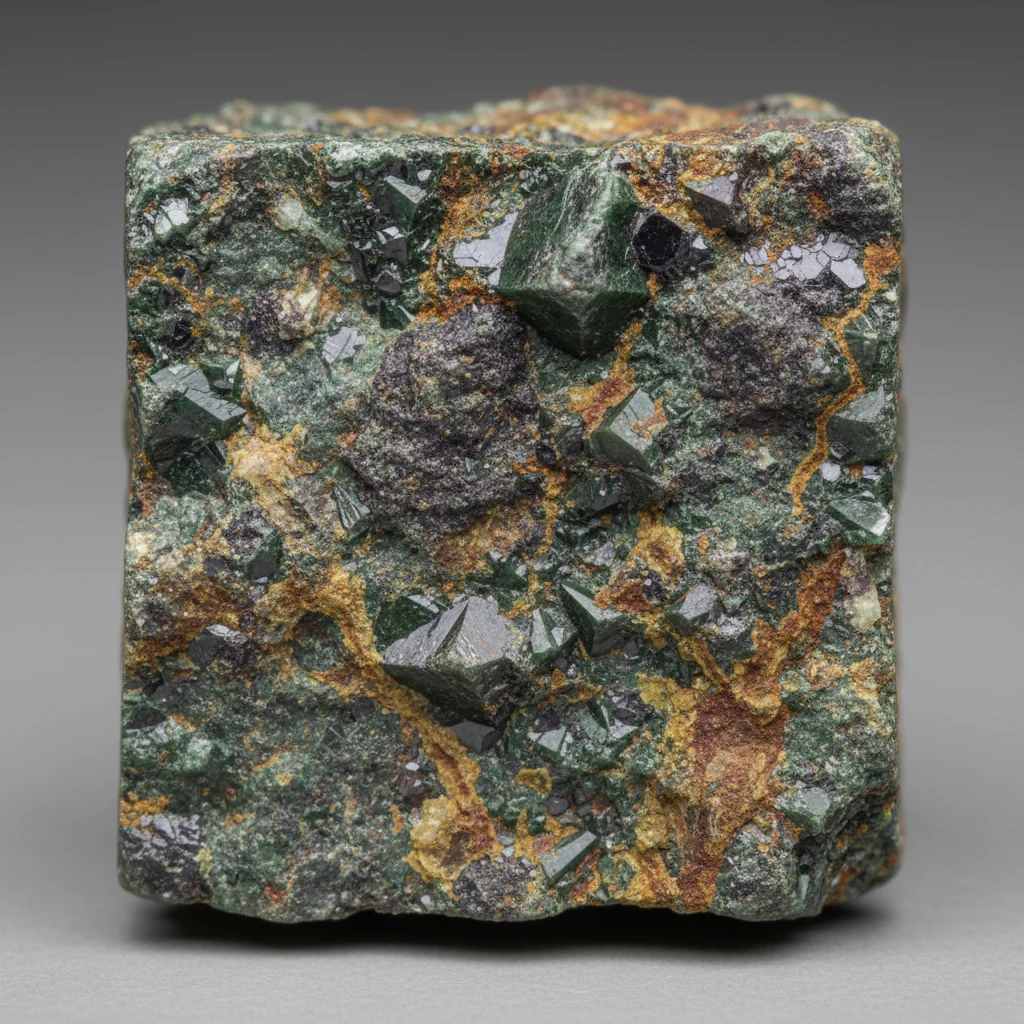
Kimberlite is an uncommon ultramafic, volatile-rich volcanic rock best known as the main host rock for primary diamond deposits. In the hand it is usually not a showy gem material; it feels more like a dense, altered field rock, often dark greenish gray, bluish green, dark gray, or blackish when fresh. Weathered pieces may turn yellow-brown, ocher, brown, and crumbly, the material historically called yellow ground.
Unlike a single mineral, kimberlite is a mixed rock with variable properties. Its Mohs hardness commonly falls around 3-6 depending on alteration and mineral content, and its density is about 2.5-3.3 g/cm³. Collectors value it less for polish or sparkle and more for geological story: a rapid mantle-sourced magma that can carry older diamonds upward as xenocrysts.
Origin & History
Kimberlite is named after Kimberley in the Northern Cape of South Africa, where diamond-bearing pipes became famous during the late 19th-century diamond rush. The rock name was introduced in 1887 by the American geologist Henry Carvill Lewis for the diamond-bearing volcanic rock of the Kimberley mines. A labeled Kimberley specimen carries strong historical appeal, even when no diamond is visible.
For collectors, the important caution is that diamonds made kimberlite famous, but most kimberlites are not economic diamond deposits. Provenance matters: a small dark pipe rock from a documented mine can be far more meaningful than an unlabeled greenish ultramafic fragment. Locality names and mine associations are commonly checked against references such as mindat.org when building a serious specimen label.
Where Is Kimberlite Found?
Kimberlite is found mainly on old, stable continental cratons and craton margins. Important occurrences and diamond districts are known from South Africa, Botswana, Lesotho, Zimbabwe, Angola, the Democratic Republic of the Congo, Tanzania, Russia, Canada, the United States, Australia, Brazil, India, Finland, and Sweden. Economic diamond-bearing kimberlites are much rarer than kimberlite occurrences in general.
Formation
Kimberlite forms from low-volume, volatile-rich ultramafic magma generated deep in the mantle, commonly at depths greater than about 150 km. The magma rises rapidly through the lithosphere and may erupt explosively, producing carrot-shaped diatreme pipes. Those pipes can contain volcaniclastic kimberlite, coherent kimberlite, mantle xenoliths, and crustal fragments.
The key collector point is that kimberlite usually does not form diamonds itself. Most diamonds are older mantle minerals that the magma transported upward as xenocrysts during rapid ascent. That is why a kimberlite specimen can be scientifically important even without visible gems, and why professional petrography, geochemistry, and indicator-mineral testing are normally needed before any diamond claim is credible.
How to Identify Kimberlite
Kimberlite identification is based on texture, mineral assemblage, and geologic setting, not one simple scratch or color test. In the hand, look for a porphyritic ultramafic rock with abundant rounded olivine grains or serpentinized olivine pseudomorphs set in a finer matrix. Fresh material may be dark bluish green to greenish gray, while weathered yellow ground can be soft, earthy, yellow-brown, and clay-rich.
Useful clues include carbonate alteration, serpentine, phlogopite mica flakes, magnetite, perovskite, apatite, and possible heavy indicator minerals such as pyrope garnet, chromite, ilmenite, and chrome diopside. Luster is usually dull, earthy, or greasy, with pearly to vitreous flashes from phlogopite and dull or waxy carbonate-rich patches. Diamond presence cannot be confirmed by appearance alone.
Properties of Kimberlite
Physical Properties
| Crystal System | Not applicable; kimberlite is a rock composed of multiple minerals |
| Hardness (Mohs) | Variable, commonly about 3-6 on the Mohs scale depending on alteration and mineral content (Variable) |
| Density | Approximately 2.5-3.3 g/cm³, varying with serpentinization, carbonate content, and heavy minerals |
| Luster | Dull to earthy, locally greasy or micaceous |
| Diaphaneity | Opaque |
| Fracture | Irregular, earthy, crumbly, or brecciated; coherent varieties may break unevenly |
| Streak | Not diagnostic; powdered material is commonly gray, greenish gray, or yellow-brown when weathered |
| Magnetism | Variable; may be weakly to moderately magnetic where magnetite or ilmenite is present |
| Colors | dark green, greenish gray, bluish green, dark gray, blackish, yellow-brown, ocher, brown |
Chemical Properties
| Classification | Ultramafic, volatile-rich, potassic volcanic rock |
| Formula | Not applicable; rock mixture commonly containing olivine/serpentine, carbonate minerals, phlogopite, spinel-group minerals, perovskite, apatite, and other accessories |
| Elements | O, Si, Mg, Fe, Ca, K, Al, Ti, Cr, Ni, C, H, P |
| Common Impurities | serpentine alteration, calcite, dolomite, phlogopite, magnetite, ilmenite, chromite, pyrope garnet, chrome diopside, perovskite, apatite, mantle xenolith fragments |
Optical Properties
| Refractive Index | Not applicable as a rock; constituent minerals vary |
| Birefringence | Not applicable as a rock; olivine, serpentine, carbonate, mica, and other minerals have different values |
| Pleochroism | Not applicable to the rock overall; phlogopite and some indicator minerals may be pleochroic in thin section |
| Optical Character | Aggregate; determined petrographically from individual minerals |
Kimberlite Health & Safety
Kimberlite is generally safe to handle, but dust from cutting, crushing, or sanding any rock should not be inhaled. Some kimberlites contain nickel- and chromium-bearing minerals or fine alteration products, so powdered material should be treated with caution.
Kimberlite Value & Price
Price Range
Rough/Tumbled: Small non-diamond-bearing rough specimens commonly sell for about $5-$50; verified locality specimens or pieces with visible indicator minerals may sell for $50-$300 or more. Diamond-bearing ore specimens from famous mines can command higher prices depending on documentation and legality.
Cut/Polished:
Value depends on verified locality, association with a famous diamond mine, freshness of material, visible olivine/phlogopite/indicator minerals, scientific documentation, specimen size, and legal provenance. Kimberlite itself is usually not valuable as a lapidary material; its economic importance is as a potential diamond host.
Durability
Variable and often poor for display handling — Scratch resistance: Variable; altered kimberlite may scratch easily, while fresh pieces with olivine and harder silicates are more resistant., Toughness: Generally low to moderate; many specimens are brecciated, altered, or crumbly.
Fresh coherent kimberlite can be reasonably stable if kept dry, but weathered yellow ground may break down into clay-rich fragments. Avoid soaking friable specimens and protect them from repeated wetting and drying.
How to Care for Kimberlite
Use & Storage
Store in a dry box or on a stable shelf, especially if the specimen is weathered or crumbly. Keep labels with locality information, because provenance is important for kimberlite specimens.
Cleaning
Clean gently with a soft dry brush. For coherent specimens, a brief wipe with a slightly damp cloth is usually safe, but avoid soaking friable yellow ground or clay-rich material.
Cleanse & Charge
If used in a metaphysical collection, cleanse with smoke, sound, or dry methods rather than water. Place near grounding stones if desired.
Placement
Best displayed as a geological specimen with a label explaining its diamond-bearing association. Keep away from high-traffic areas if the sample sheds grains or dust.
Caution
Do not assume a kimberlite specimen contains diamonds. Avoid breaking, crushing, or acid testing valuable or documented samples without expert guidance.
Works Well With
Kimberlite Meaning & Healing Properties
In modern crystal-healing traditions, kimberlite is associated with deep Earth energy, grounding, transformation, endurance, inner strength, and hidden potential. These meanings come from its role as a mantle-derived rock that can transport diamonds, but they are cultural and spiritual interpretations, not scientifically verified effects. Many collectors use it as a symbolic stone rather than a decorative gem.
Kimberlite is linked with the Root and Earth Star chakras, Capricorn and Scorpio, the planets Earth and Pluto, and the elements Earth and Fire. If used in a metaphysical collection, cleanse it with smoke, sound, or dry methods rather than water, especially if the specimen is friable yellow ground. Keep it dry, labeled, and away from repeated wetting and drying.
Identify Kimberlite from a photo
Compare Kimberlite traits, care tips, value clues, and common lookalikes with a clear photo.
Common mistakes
- Assuming any dark volcanic rock found near old mining areas is kimberlite.
- Believing that kimberlite automatically contains visible or valuable diamonds.
- Identifying kimberlite from color alone without considering texture, minerals, and locality.
- Confusing altered green ultramafic rocks with kimberlite pipes.
- Buying “diamond kimberlite” specimens without provenance or testing information.
- Using a scratch test or magnet test as a final identification method for kimberlite.