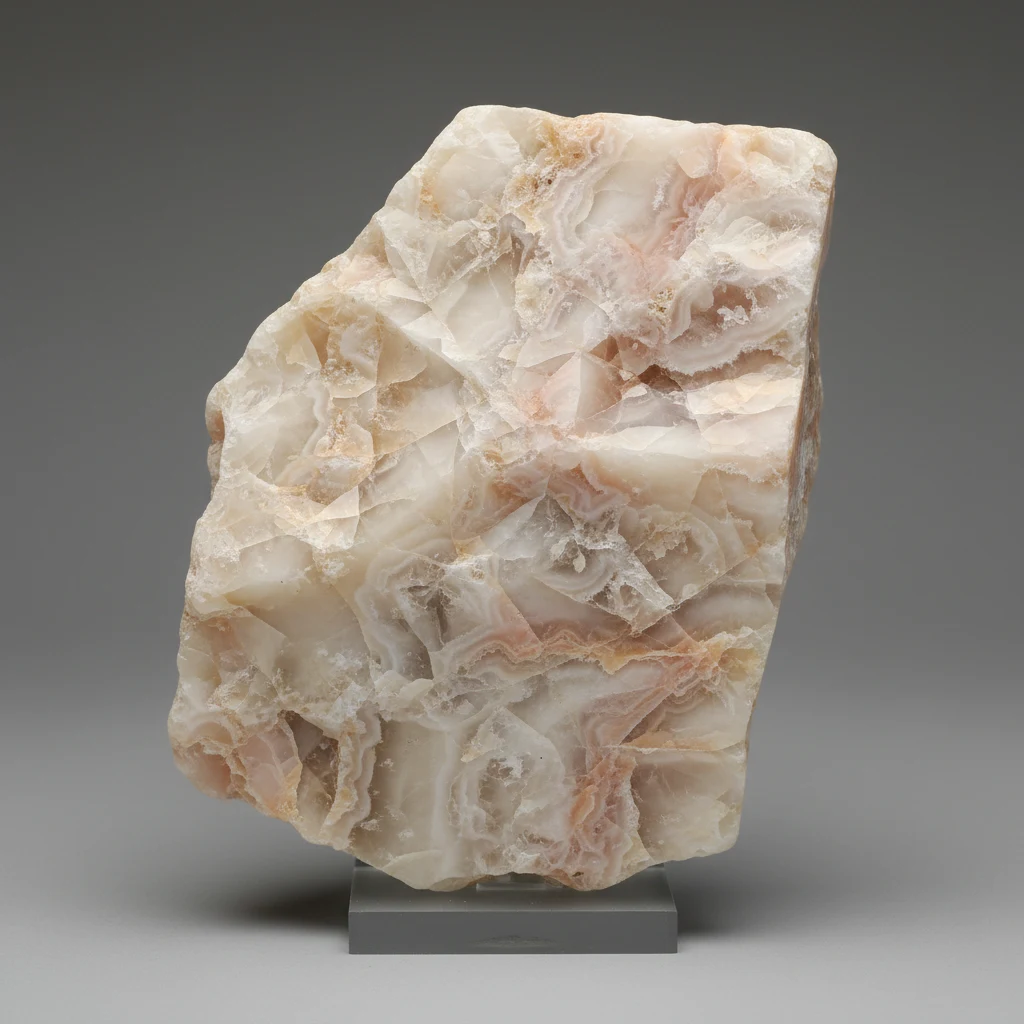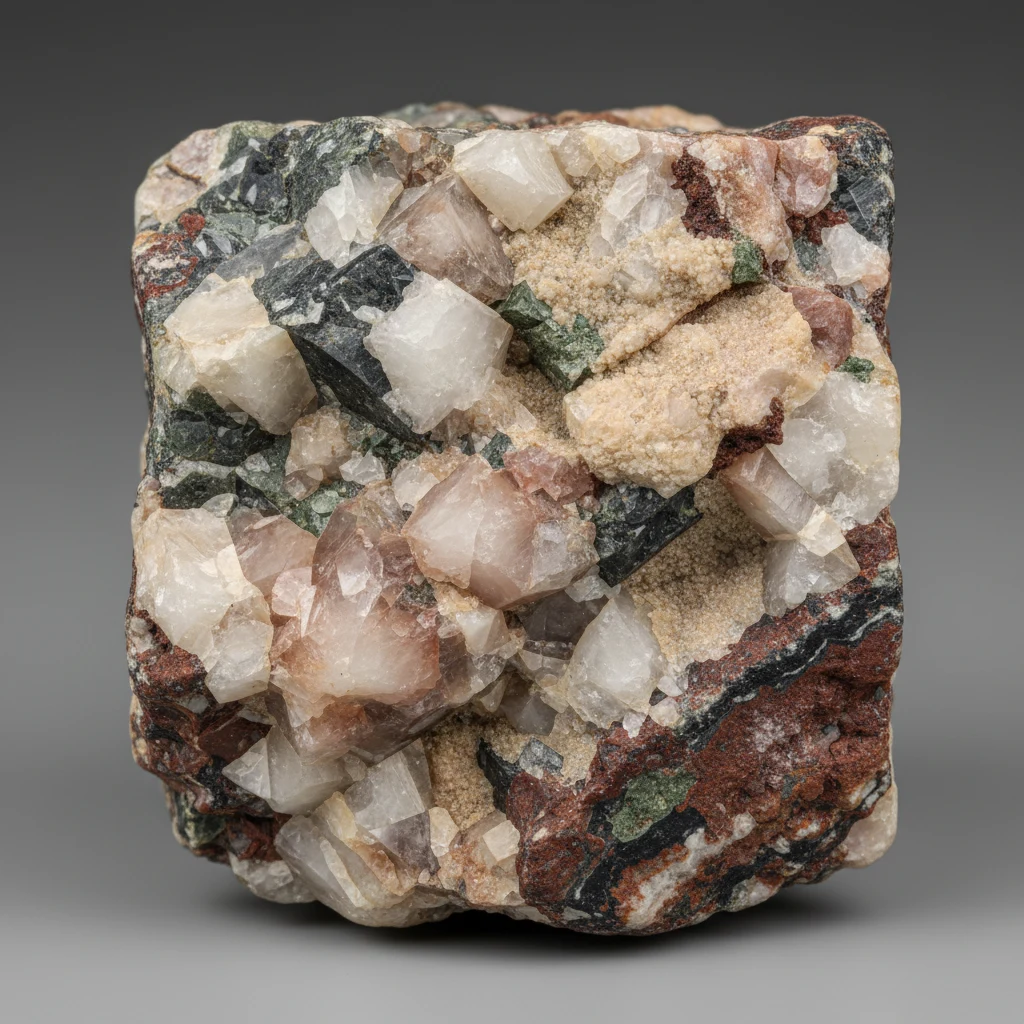
Quartzite


Quick answer: Quartzite is a hard, quartz-rich metamorphic rock formed when sandstone is altered by heat and pressure. It is commonly identified by its glass-scratching hardness, sugary or fused-grain texture, and lack of strong reaction to dilute acid unless carbonate minerals are present.
AI Rock ID can help compare a quartzite photo against visually similar rocks by checking texture, grain fusion, color, and surface luster. RockIdentifier.io provides quartzite identification support, but hardness testing and close inspection are still useful for separating quartzite from sandstone, marble, and vein quartz.
Good fit
- Collectors who want a durable quartz-rich rock with many color varieties
- Students learning the difference between sedimentary sandstone and metamorphic quartzite
- Landscape and building-stone identification where hardness and grain fusion matter
- People comparing natural countertop stones labeled quartzite, marble, or quartz
Not a good fit
- Anyone expecting a single diagnostic color, since quartzite can be white, gray, pink, red, green, or tan
- Collectors who need transparent crystal points rather than a massive metamorphic rock
- Situations where identification is based only on color or surface polish
- Acid-sensitive testing areas where a scratch or acid test would damage a finished surface
Most commonly confused with
- Sandstone: Sandstone usually shows separate sand grains and may crumble or shed grains, while quartzite has grains fused together by metamorphism.
- Marble: Marble is softer and reacts with dilute acid because it is calcite- or dolomite-rich, while quartzite is mainly quartz.
- Milky Quartz: Milky quartz is a mineral variety with massive quartz texture, while quartzite is a metamorphic rock made from recrystallized quartz sand.
- Chert: Chert is usually finer grained with a waxy to dull luster and conchoidal fracture, while quartzite often has a granular, sugary surface.
Quartzite vs Common Lookalikes
| Material | Key clue | Typical test result | Main difference |
|---|---|---|---|
| Quartzite | Fused sugary quartz grains | Scratches glass | Natural metamorphic rock |
| Sandstone | Visible loose or layered sand grains | May shed grains when rubbed | Sedimentary, not fully recrystallized |
| Marble | Smooth crystalline calcite texture | Often fizzes with dilute acid | Softer carbonate rock |
| Milky Quartz | Massive white quartz without sand texture | Scratches glass | Single mineral, not a rock made from grains |
| Engineered Quartz | Uniform manufactured patterning | Resin may be present | Man-made surface material |
AI identification confidence
AI identification of quartzite is usually moderate from clear close-up photos because quartzite overlaps visually with sandstone, chert, marble, and massive quartz. Confidence improves when images show a fresh broken surface, grain texture, scale, and any simple hardness or acid-test observations.
When AI gets it wrong
- Polished slabs can hide the fused-grain texture that separates quartzite from marble or engineered quartz.
- Weathered quartzite may look like ordinary sandstone if the surface is stained or roughened.
- White quartzite can be mistaken for milky quartz when no grain boundaries are visible.
- Colorful impurities such as iron oxides, mica, or chlorite can make quartzite resemble unrelated rocks.
Final recommendation
For a practical quartzite identification, combine visual texture with a glass scratch test and, when safe, an acid check to rule out marble or limestone. Avoid relying on trade names alone, especially for polished slabs sold as quartzite.
How to Check Quartzite Authenticity
Authentic quartzite should be hard enough to scratch ordinary glass and should not show loose sand grains rubbing away from the surface. A fresh broken edge often reveals interlocking or fused quartz grains rather than rounded grains held by cement. For finished slabs, ask whether the material is natural quartzite, marble sold under a trade name, or engineered quartz, because these materials can look similar after polishing.
Field ID Tips for Quartzite
Use a hand lens to look for a sugary texture made of quartz grains that appear welded together. Quartzite commonly breaks across grains rather than around individual grains, which helps separate it from less metamorphosed sandstone. White, gray, and pink pieces are common, but color alone is not a reliable identification feature.
Buying Notes for Quartzite Slabs and Specimens
When buying quartzite as a countertop stone, confirm that the seller distinguishes natural quartzite from soft marble and resin-bound engineered quartz. A labeled rock specimen should ideally include locality information, especially when color or layering is unusual. Minor iron staining, mica flecks, or banding can be natural and do not automatically mean the stone is fake.
What Is Quartzite?
Quartzite is a very hard, quartz-rich metamorphic rock formed when quartz sandstone recrystallizes under heat and pressure. In the hand, a fresh break often feels dense, sharp, and slightly sugary rather than crumbly. Most true quartzite is built from interlocking quartz grains, so it commonly breaks through the grains instead of around them.
Collectors value quartzite less as a rare gemstone and more as a durable teaching rock, building stone, and attractive polished material. Its usual colors include white, gray, cream, tan, pink, red, and brown, with green, black, or bluish tones possible when accessory minerals are present. Iron oxides, mica, feldspar, clay minerals, hematite, graphite, and tourmaline can influence its color and texture.
Origin & History
The name quartzite comes from quartz, the dominant mineral, plus the rock-forming suffix “-ite.” In strict metamorphic petrology, true quartzite means a recrystallized quartz-rich sandstone with interlocking quartz grains. The term has also been used more loosely in older or commercial stone-trade settings for very hard quartz sandstone.
That naming difference matters when you are buying a slab, labeling a field specimen, or teaching a rock set. True metamorphic quartzite is typically harder and more fused than ordinary sandstone, and it behaves differently from marble or dolomitic stone. For locality-style cross-checking and specimen context, mindat.org is a useful plain-text reference alongside direct field observation.
Where Is Quartzite Found?
Quartzite is common and occurs worldwide wherever quartz-rich sandstones have been buried, compressed, and metamorphosed. Reported countries include the United States, Canada, Brazil, India, Norway, the United Kingdom, Switzerland, South Africa, and Australia. It is especially expected in ancient mountain belts, Precambrian shields, and high-grade metamorphic terrains.
Formation
Quartzite forms when quartz-rich sandstone or quartz arenite is changed by regional or contact metamorphism. Heat, pressure, and silica-rich fluids recrystallize the original sand grains into a tight mosaic of quartz crystals. This process removes much of the original pore space and gives quartzite its dense, weather-resistant feel.
The practical result is a rock that does not shed sand like ordinary sandstone. On a broken edge, true quartzite may show uneven, splintery, granular, or conchoidal fracture, with the break cutting across quartz grains. Because quartz is chemically stable at Earth-surface conditions and the grains are locked together, quartzite resists weathering well.
How to Identify Quartzite
Identify quartzite first by hardness and grain behavior. A quartz-rich piece typically scratches glass, is not easily scratched by a steel knife, and has Mohs hardness about 6.5-7, usually near 7. Look closely at a broken edge: true quartzite commonly fractures through fused quartz grains rather than around loose sand grains.
Fresh surfaces can look vitreous, sugary, or granular, while weathered faces may appear dull, rough, or sandy. Quartzite usually leaves a white streak, is opaque to translucent on thin edges, and has density around 2.6-2.7 g/cm³. It does not fizz with dilute hydrochloric acid like calcite-rich marble, though safe handling is still important because cutting or grinding can release respirable crystalline silica dust.
Properties of Quartzite
Physical Properties
| Crystal System | Rock; composed mainly of trigonal quartz |
| Hardness (Mohs) | 6.5-7 on Mohs, typically about 7 for quartz-rich material (Very hard) |
| Density | Approximately 2.6-2.7 g/cm³ |
| Luster | Vitreous to dull or sugary-granular |
| Diaphaneity | Opaque to translucent on thin edges |
| Fracture | Uneven, splintery, granular, or conchoidal; true quartzite commonly fractures through quartz grains |
| Streak | White |
| Magnetism | Non-magnetic, except where iron-rich accessory minerals are present |
| Colors | White, Gray, Cream, Tan, Pink, Red, Brown, Green, Black |
Chemical Properties
| Classification | Silica-rich metamorphic rock dominated by quartz |
| Formula | Dominantly SiO2 |
| Elements | Silicon, Oxygen |
| Common Impurities | Iron oxides, Mica, Feldspar, Clay minerals, Hematite, Graphite, Tourmaline |
Optical Properties
| Refractive Index | Quartz component approximately nω 1.544, nε 1.553 |
| Birefringence | Quartz component approximately 0.009 |
| Pleochroism | None for pure quartz; accessory minerals may show pleochroism in thin section |
| Optical Character | Quartz is uniaxial positive; quartzite as a rock is an aggregate |
Quartzite Health & Safety
Solid quartzite is safe to handle, but cutting, grinding, drilling, or sandblasting can release respirable crystalline silica dust, which is a serious lung hazard if inhaled repeatedly or in high concentration.
Quartzite Value & Price
Price Range
Rough/Tumbled: Common field specimens are often inexpensive, roughly $1-$20 depending on size, color, locality, and polish; decorative slabs and building stone are priced by grade and fabrication rather than specimen rarity.
Cut/Polished:
Value depends on color, patterning, polish quality, durability, size, quarry source, and whether the piece has an interesting locality or educational value. Pure white, pink, red, or attractively banded quartzite may be more desirable for decorative use.
Durability
Excellent — Scratch resistance: High; quartzite is much harder than calcite, marble, and most common steel tools, and it readily scratches glass., Toughness: Generally tough and resistant because of interlocking quartz grains, though it can chip along fractures or foliation if present.
Stable under normal indoor and outdoor conditions. It resists weathering well, but prolonged abrasion, freeze-thaw cycling in cracks, or cutting and grinding can damage it.
How to Care for Quartzite
Use & Storage
Store specimens separately from softer minerals because quartzite can scratch them. For polished pieces or slabs, use padding to prevent edge chipping.
Cleaning
Clean with water, mild soap, and a soft brush. Avoid harsh abrasives on polished surfaces. Quartzite is generally acid-resistant compared with marble, but avoid unnecessary chemical exposure if the rock contains accessory minerals or sealants.
Cleanse & Charge
For non-scientific spiritual use, quartzite is commonly rinsed briefly, placed in sunlight or moonlight, or kept with quartz-family stones. Avoid saltwater if the specimen has cracks, coatings, or metal-rich inclusions.
Placement
Suitable for display, landscaping, building stone, countertops, and educational rock collections. Its hardness and weather resistance make it practical for high-wear settings when properly fabricated.
Caution
Do not confuse commercial 'soft quartzite' or some trade-name stones with true metamorphic quartzite. Some stone sold as quartzite may be sandstone, marble, or dolomitic stone and can behave very differently.
Works Well With
Quartzite Meaning & Healing Properties
In modern crystal-healing use, quartzite is associated with endurance, grounding, clarity, resilience, and steady transformation. These meanings come from cultural and spiritual traditions, not verified scientific effects. The symbolism fits the rock’s story: loose quartz sand becomes a tougher interlocking mass through metamorphism.
Practitioners often connect quartzite with the Root and Crown chakras, the Earth element, and the zodiac signs Capricorn and Taurus. For non-scientific cleansing, it is commonly rinsed briefly, placed in sunlight or moonlight, or kept with quartz-family stones. Avoid saltwater if the specimen has cracks, coatings, or metal-rich inclusions.
Identify Quartzite from a photo
Compare Quartzite traits, care tips, value clues, and common lookalikes with a clear photo.
Common mistakes
- Identifying quartzite by color alone instead of hardness and texture
- Assuming every stone sold as “quartzite” in the slab trade is geologically quartzite
- Confusing quartzite with sandstone without checking whether grains are fused
- Using an acid test on a polished surface without considering possible damage
- Mistaking massive milky quartz for quartzite when no original sand-grain texture is present