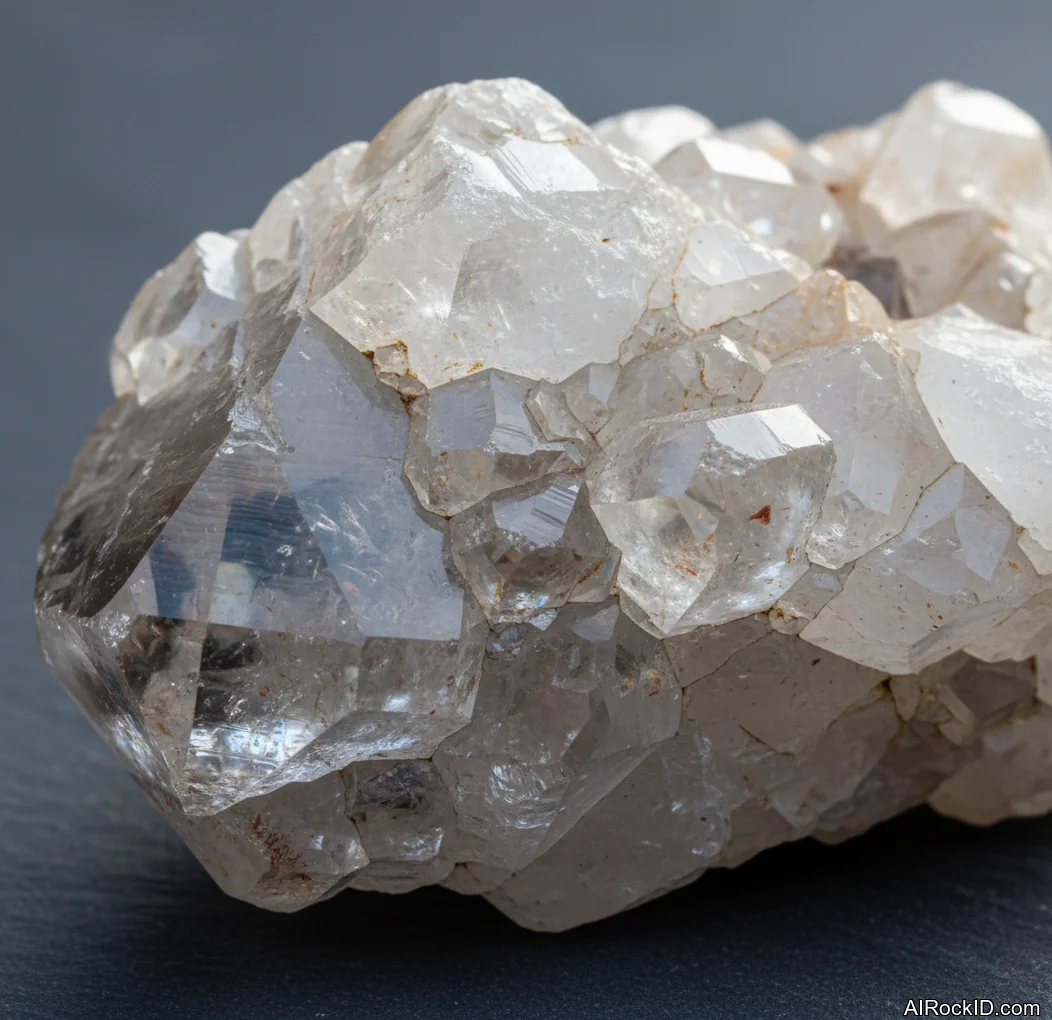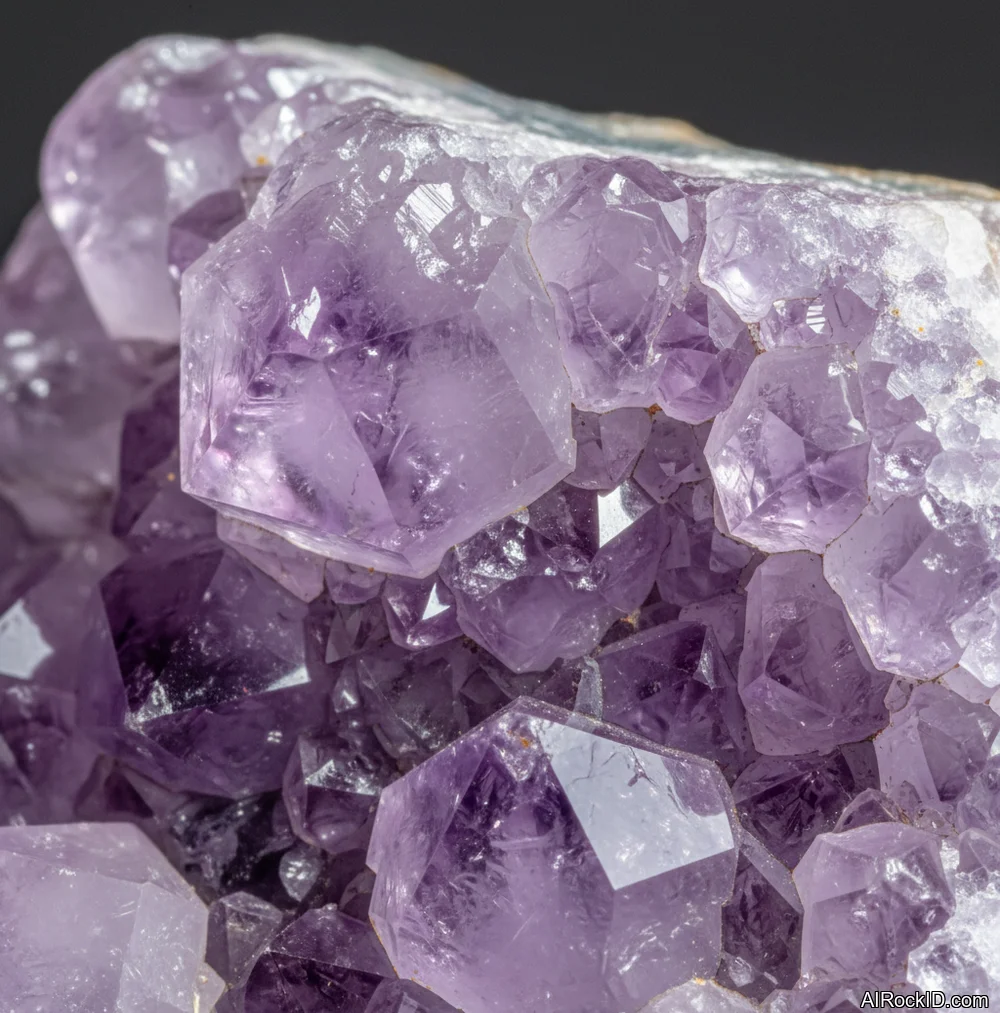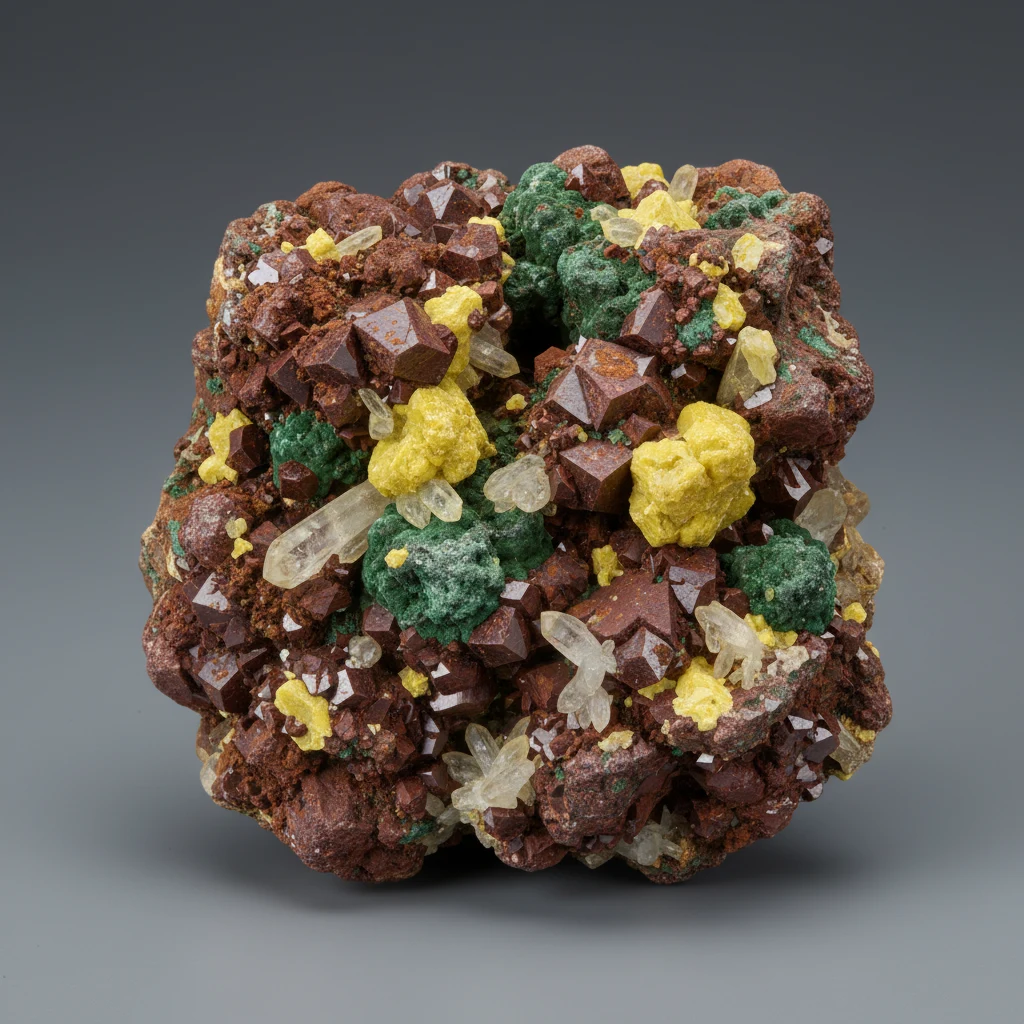
Mixed Mineral Specimens


Quick answer: Mixed Mineral Specimens are pieces that contain two or more visible minerals in the same rock, vein, or matrix. Identification is usually more reliable when each visible component is examined separately for color, luster, hardness, cleavage, and crystal habit.
AI Rock ID can help estimate the likely minerals present in a mixed specimen from clear photos of each distinct area. RockIdentifier.io supports comparison-based identification, but mixed pieces may still require hardness testing, streak testing, or expert review for confirmation.
Good fit
- Collectors who enjoy specimens with multiple colors, textures, or crystal habits
- Beginners learning to compare minerals within the same rock matrix
- People documenting field finds, vein material, or mine-run specimens
- Display collections where visual variety is more important than single-species purity
Not a good fit
- Buyers who need a precisely labeled, single-mineral specimen
- Testing situations where one mineral’s hardness or streak must represent the whole piece
- Jewelry use unless the softest or most fragile mineral in the specimen is suitable
- Collectors seeking uniform color, clarity, or crystal form
Most commonly confused with
- Quartz: Quartz may be one component in a mixed specimen, but a mixed piece can also include feldspar, calcite, mica, sulfides, or other minerals.
- Calcite: Calcite is softer and reacts with dilute acid, while many mixed specimens contain minerals with different hardness and reactions.
- Granite: Granite is a named igneous rock made mostly of quartz, feldspar, and mica, while mixed mineral specimens may come from many rock types or veins.
- Pegmatite: Pegmatite is a coarse-grained igneous rock that often hosts mixed minerals, but not every mixed specimen is pegmatitic.
Mixed Specimen vs. Common Lookalikes
| Material | Typical clue | Identification caution |
|---|---|---|
| Mixed Mineral Specimen | Several colors, textures, or crystal habits in one piece | Each mineral area may have a different hardness or streak |
| Quartz-rich rock | Glassy gray, white, or clear quartz dominates | Accessory minerals may be mistaken for separate crystals of high value |
| Granite | Interlocking grains of quartz, feldspar, and mica | Usually a rock type rather than a collectible mineral species label |
| Pegmatite | Very coarse crystals, often quartz and feldspar | May contain rare minerals, but visual ID alone is often insufficient |
| Dyed or coated specimen | Color appears concentrated in cracks, pores, or surface films | Artificial treatment can obscure the natural mineral mix |
AI identification confidence
AI identification confidence for Mixed Mineral Specimens is usually moderate because one photo may show several minerals with different properties. Confidence improves when the user photographs each visible mineral area separately and includes scale, close-ups, natural light, and any hardness or streak observations.
When AI gets it wrong
- A polished surface hides grain boundaries, cleavage, or natural crystal faces
- A bright coating, dye, or iron staining changes the apparent color of the minerals
- The specimen contains small accessory minerals that are not visible in the photo
- The image shows only the most colorful area instead of the full rock or matrix
Final recommendation
Treat a Mixed Mineral Specimen as a multi-part identification rather than a single mineral name. For buying or cataloging, prefer labels that list the main visible minerals, locality, and any known treatments or stabilization.
How to Check Authenticity Before Buying
A reliable mixed specimen listing should identify the main minerals when known, state the locality, and disclose dyes, coatings, repairs, or stabilizers. Be cautious with vague labels such as “rare crystal mix” if the piece has unusually bright colors, uniform surface shine, or no locality information. Natural mixed specimens often show irregular transitions between minerals, while artificial color may collect in cracks, pits, or porous zones.
How to Photograph Mixed Mineral Specimens for Identification
Use daylight or neutral lighting and take one full-specimen photo plus close-ups of each distinct color or texture. Include a ruler or coin for scale and photograph any crystal faces, cleavage surfaces, metallic grains, or matrix contact zones. If safe, add simple observations such as whether a steel nail scratches a specific area or whether the area leaves a colored streak.
Labeling Mixed Specimens in a Collection
A practical label can use the format “quartz with calcite on matrix” or “mixed sulfides in host rock” when the exact full mineral list is uncertain. Locality, mine name, and date acquired are often more useful than an overly specific mineral name that has not been verified. If some components are uncertain, mark them as “possible” or “unconfirmed” rather than presenting them as final identifications.
What Is Mixed Mineral Specimens?
Mixed Mineral Specimens are single pieces or collected specimens that contain various minerals together. In hand, they are valued less as one uniform crystal and more as a small geological scene: patches of brown, green, or yellow, shifting textures, and surfaces that may move from glassy to dull across the same specimen.
Collectors should expect variation. Hardness can range from Mohs 3 to 7, density from 2.5 to 3.5 g/cm3, and the crystal system varies because the minerals present vary. Most are common, moderately durable, non-magnetic, and generally safe to handle under normal collecting and display conditions.
Origin & History
Mixed Mineral Specimens are named for their nature: several minerals found together in one piece. The term describes a collection of minerals occurring together and was first recognized in the 19th century, reflecting the collector’s habit of preserving an association rather than separating each mineral component.
For a field collector, the label matters because the specimen’s identity is tied to both mineral variety and locality. Locality records such as those on mindat.org can help compare names like Mineral Park, Arizona, Ametista do Sul, Brazil, and Wushan, China when documenting a mixed piece.
Where Is Mixed Mineral Specimens Found?
Mixed Mineral Specimens are found in mineral-rich regions around the world. The supplied localities include the USA, Brazil, and China, with notable examples from Mineral Park, Arizona, USA; Ametista do Sul, Brazil; and Wushan, China.
Formation
Mixed Mineral Specimens form when geological processes bring different minerals together in the same piece. The provided formation settings are hydrothermal veins and sedimentary deposits, both of which can produce specimens with contrasting textures, colors, and luster across one hand sample.
In practical terms, look for natural boundaries and textural changes rather than expecting a single repeated crystal face. A specimen may show vitreous areas beside dull ones, uneven fracture surfaces, and variable streak because the piece is a mineral association rather than a single-species crystal.
How to Identify Mixed Mineral Specimens
Identify Mixed Mineral Specimens by looking for multiple mineral characteristics in one piece. Color is the first clue: these specimens can display several colors, including brown, green, and yellow, with luster ranging from vitreous to dull and diaphaneity from opaque to translucent.
Use a hand lens and inspect separate zones instead of treating the whole piece as one uniform mineral. Check texture, fracture, streak variation, hardness differences within the Mohs 3-7 range, and any distinct mineral-looking areas; the crystal system, refractive index, and other optical properties vary with the minerals present.
Properties of Mixed Mineral Specimens
Physical Properties
| Crystal System | Varies |
| Hardness (Mohs) | 3-7 (Medium to Hard) |
| Density | 2.5-3.5 g/cm3 |
| Luster | Vitreous to Dull |
| Diaphaneity | Opaque to Translucent |
| Fracture | Uneven |
| Streak | Varies |
| Magnetism | Non-magnetic |
| Colors | Brown, Green, Yellow |
Chemical Properties
| Classification | N/A |
| Formula | N/A |
| Elements | Si, O, Fe, Al |
| Common Impurities | Mn, Ca |
Optical Properties
| Refractive Index | Varies |
| Birefringence | None |
| Pleochroism | None |
| Optical Character | N/A |
Mixed Mineral Specimens Health & Safety
Generally safe to handle and use.
Mixed Mineral Specimens Value & Price
Price Range
Rough/Tumbled: $10 - $100 per specimen
Cut/Polished:
Price depends on mineral variety and overall aesthetics.
Durability
Moderate — Scratch resistance: Fair, Toughness: Fair
Most specimens are stable under normal conditions.
How to Care for Mixed Mineral Specimens
Use & Storage
Store in a dry, cool place away from direct sunlight.
Cleaning
Use a soft brush to remove dust. Clean with mild soap and water if necessary.
Cleanse & Charge
Place under sunlight or moonlight to cleanse.
Placement
Display in a secure area to avoid damage.
Caution
Avoid exposure to harsh chemicals.
Works Well With
Mixed Mineral Specimens Meaning & Healing Properties
In crystal healing traditions, Mixed Mineral Specimens are used for balance, energy, and stability. Their appeal comes from the same mixed character collectors enjoy: one piece can feel grounding in its denser, earthier areas while also offering visual movement through contrasting colors and textures.
They are associated with the Root and Heart chakras, Taurus and Gemini, the planets Earth and Venus, and the elements Earth and Air. These meanings are belief-based and not a substitute for medical treatment; for care, keep specimens in a dry, cool place, avoid harsh chemicals, and clean dust with a soft brush.
Identify Mixed Mineral Specimens from a photo
Compare Mixed Mineral Specimens traits, care tips, value clues, and common lookalikes with a clear photo.
Common mistakes
- Assuming the entire specimen has the same Mohs hardness as the most visible mineral
- Using color alone to identify every mineral in the piece
- Calling any multi-colored rock a rare mineral without checking common matrix minerals
- Ignoring treatments such as dye, oiling, glue, resin, or surface coating
- Testing acid, scratch hardness, or cleaning chemicals on the whole specimen instead of a small inconspicuous area
- Listing a mixed specimen under a single mineral name when multiple visible minerals are present