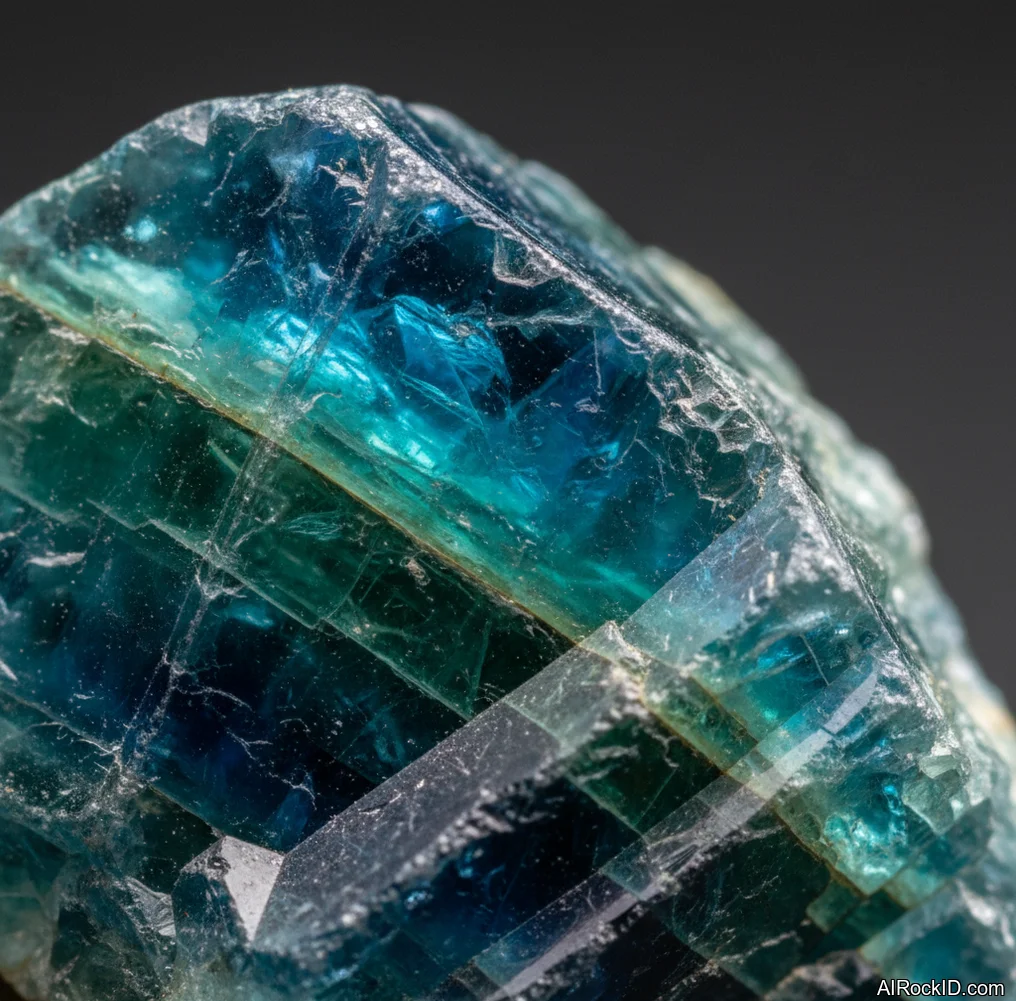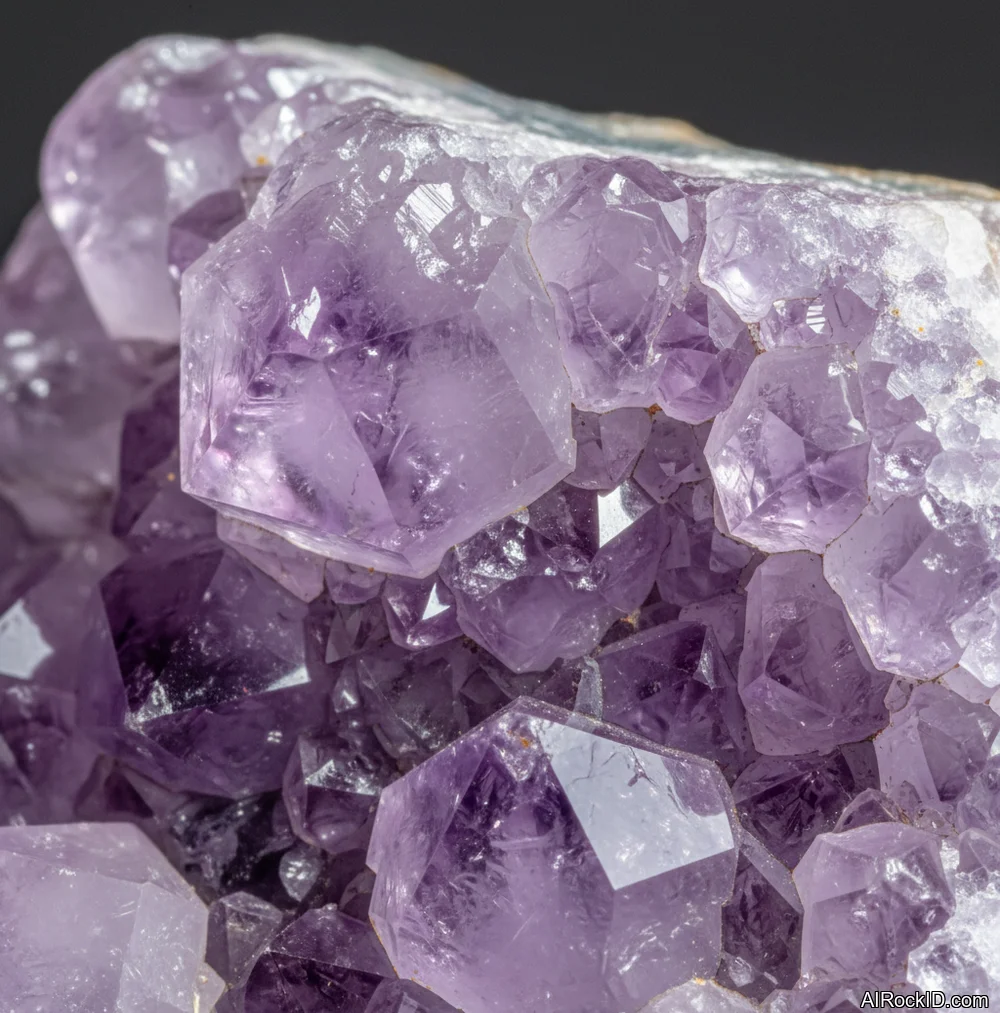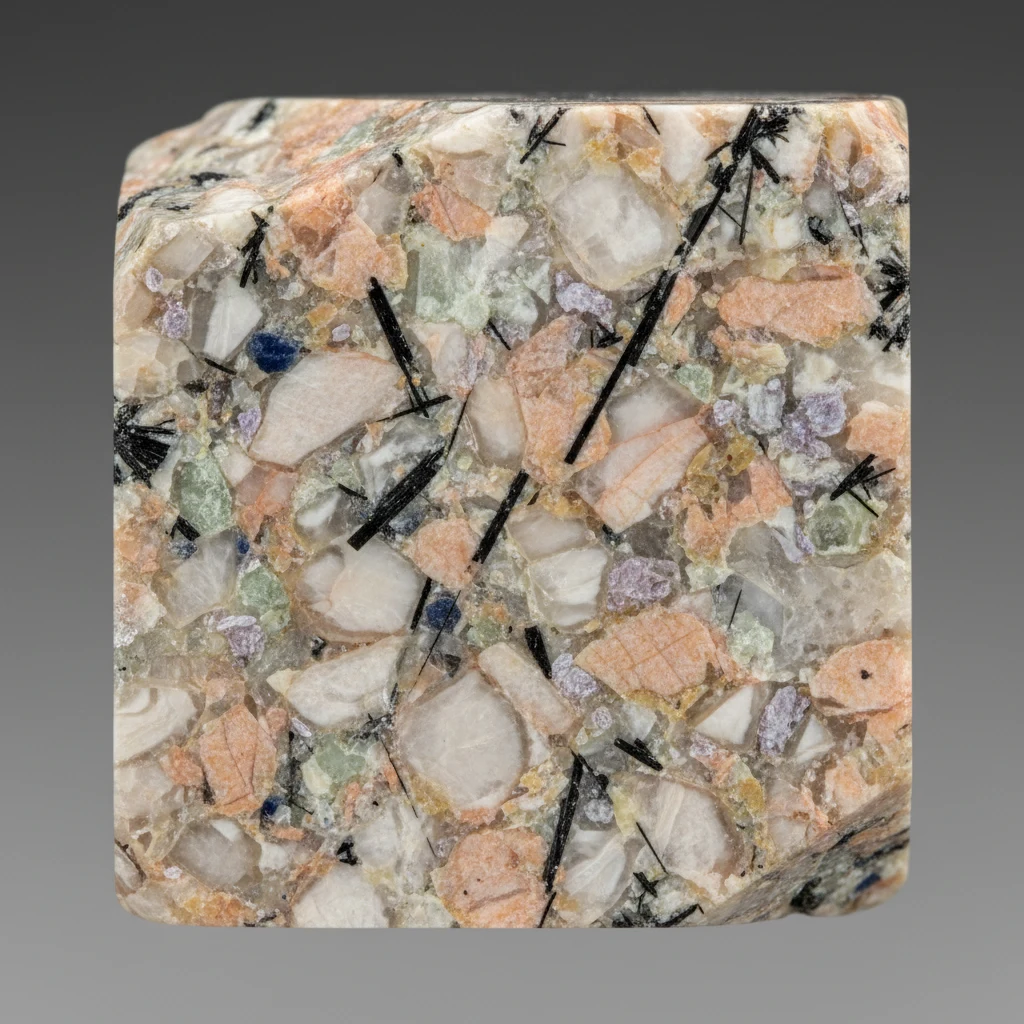
Pegmatite


Quick answer: Pegmatite is a very coarse-grained igneous rock best recognized by its unusually large interlocking crystals, commonly quartz, feldspar, and mica. It can also host collectible minerals such as tourmaline, beryl, spodumene, and garnet, depending on the locality.
AI Rock ID can help screen a pegmatite photo by looking for coarse crystal texture, quartz-feldspar-mica mixtures, and visible mineral boundaries. RockIdentifier.io can be used as a supporting reference, but locality, hardness tests, and close inspection are still important for separating pegmatite from similar rocks.
Good fit
- Collectors who like rocks with visible large crystals
- Beginners learning to recognize quartz, feldspar, and mica together
- Lapidary or display collectors seeking coarse igneous textures
- People interested in gem-bearing host rocks
- Geology students studying intrusive igneous rocks
Not a good fit
- Buyers expecting every pegmatite to contain gem-quality crystals
- Collectors who need a single-mineral specimen rather than a mixed rock
- Jewelry use unless the specimen has been cut, stabilized, or selected for durability
- Anyone relying only on color for identification
Most commonly confused with
- Granite: Granite usually has smaller, more even grains, while pegmatite has exceptionally large crystals.
- Quartz: Quartz is a single mineral; pegmatite is a rock made from multiple minerals, often including quartz.
- Feldspar: Feldspar may be a major component of pegmatite, but pegmatite also contains other minerals in a coarse igneous texture.
- Mica: Mica forms thin shiny sheets, whereas pegmatite is the whole coarse rock that may contain mica books.
Pegmatite vs. Common Lookalikes
| Material | Typical Texture | Key ID Clue | Common Confusion |
|---|---|---|---|
| Pegmatite | Very coarse interlocking crystals | Large quartz, feldspar, and mica grains in one rock | Mistaken for granite or mixed mineral specimens |
| Granite | Medium to coarse, more even grains | Crystals are usually smaller and more uniform | May look similar when coarse-grained |
| Gneiss | Banded or foliated | Minerals are arranged in layers or streaks | Light and dark bands can resemble mixed pegmatite minerals |
| Quartz vein rock | Massive or glassy quartz-rich material | Mostly quartz with few or no feldspar and mica grains | Can occur near pegmatites |
| Aplite | Fine-grained igneous rock | Much smaller crystals than pegmatite | May occur with pegmatite in the same intrusion |
AI identification confidence
AI identification of pegmatite is usually moderate when the photo clearly shows very large crystals of different minerals in the same rock. Confidence drops when the image is close-up, weathered, polished, or missing scale.
When AI gets it wrong
- A close-up photo shows only one mineral, such as quartz or feldspar, instead of the whole rock texture.
- The specimen is polished, cut, or tumbled, hiding natural grain boundaries.
- Weathering stains feldspar or mica and changes the apparent color.
- A granite or gneiss sample has coarse grains but lacks the unusually large pegmatitic texture.
Final recommendation
Choose pegmatite specimens based on visible mineral variety, stable structure, and clear provenance rather than assuming gem content. For buying, ask whether notable crystals are natural in the matrix, repaired, glued, dyed, or added separately.
How to Check Pegmatite Authenticity When Buying
Authentic pegmatite should show natural interlocking mineral boundaries rather than loose crystals glued onto a base. Look for consistent matrix texture around quartz, feldspar, mica, or accessory minerals, and ask for locality information when the specimen is sold as tourmaline-bearing, beryl-bearing, or lithium-rich pegmatite.
Pegmatite in Gem and Mineral Collecting
Pegmatite is important because many gem minerals form in pegmatitic environments, including tourmaline, aquamarine, kunzite, topaz, and garnet. A pegmatite hand sample does not automatically contain valuable gems, so visible crystal quality, species identification, and condition matter more than the rock name alone.
Field Clues for Recognizing Pegmatite
Pegmatite often appears as dikes, veins, or irregular bodies cutting through other rocks. In the field, a hand lens and scale object help confirm that the crystals are unusually large and that multiple minerals occur together rather than as a single quartz vein.
What Is Pegmatite?
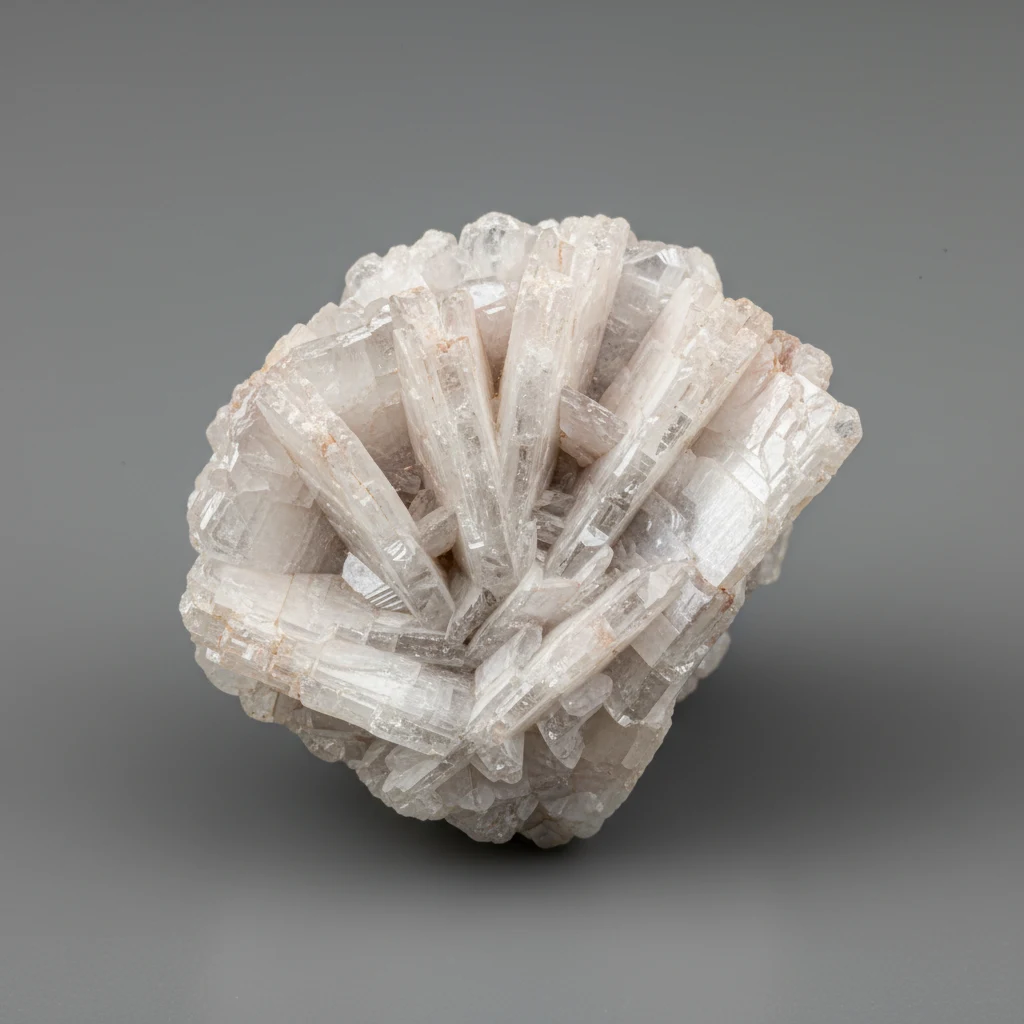
Pegmatite is an extremely coarse-grained igneous rock, most often a granitic rock made mainly of quartz, feldspar, and mica. In the hand, it feels like granite enlarged: blocky pale feldspar, glassy quartz, and shiny mica plates are visible without magnification, often with crystals well over 1 cm across.
Collectors value pegmatite because it can host accessory minerals such as tourmaline, beryl, spodumene, apatite, garnet, topaz, lepidolite, cassiterite, and columbite-tantalite. It is not a single mineral with one formula or crystal system; it is a texture-defined rock, so each specimen should be read grain by grain.
Origin & History
The name pegmatite comes from the Greek word “pegma,” meaning something joined or bound together, a good description of its intergrown crystal texture. A fresh piece can look like a mineral drawer compressed into one rock, with quartz, feldspar, mica, and accessory crystals locked together in coarse patches.
Pegmatites have long mattered to collectors and industry because they can produce large, well-formed crystals and useful mineral resources. They are major sources of feldspar, mica, lithium minerals such as spodumene and lepidolite, beryllium minerals such as beryl, tantalum-niobium minerals, and gemstones including aquamarine, morganite, tourmaline, and topaz; mindat.org is a useful reference for checking recorded pegmatite localities and species.
Where Is Pegmatite Found?
Pegmatite is found worldwide, especially in and around granitic intrusions, metamorphic terranes, and ancient continental crust. Well-known countries include the United States, Brazil, Madagascar, Pakistan, Afghanistan, Canada, Namibia, Russia, Mozambique, and Australia.
Formation
Pegmatite forms during the final stages of crystallization of granitic magma or from related volatile-rich fluids. As the leftover melt becomes enriched in water, fluorine, boron, lithium, phosphorus, and other incompatible elements, its viscosity drops and ions can move more freely.
That chemical setting allows unusually rapid growth of very large crystals, which is why pegmatite can look oversized compared with ordinary granite. Many bodies occur as dikes, lenses, pods, or irregular masses cutting older rocks, and some develop pockets or cavities lined with well-formed crystals.
How to Identify Pegmatite
Identify pegmatite by its very coarse interlocking crystals, usually much larger than the grains in ordinary granite. Look for blocky feldspar in white, cream, gray, pink, or salmon tones, glassy gray to clear quartz, and shiny mica books that catch light along cleavage sheets.
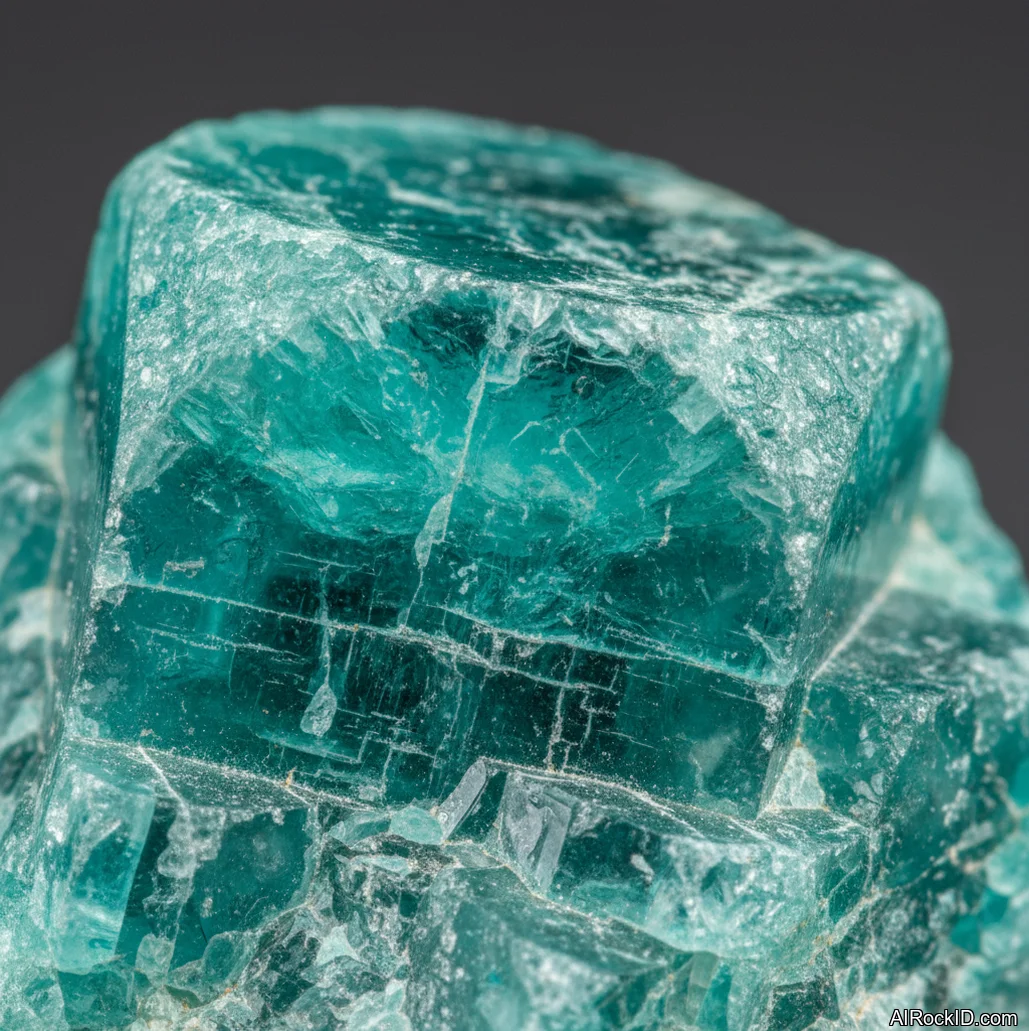
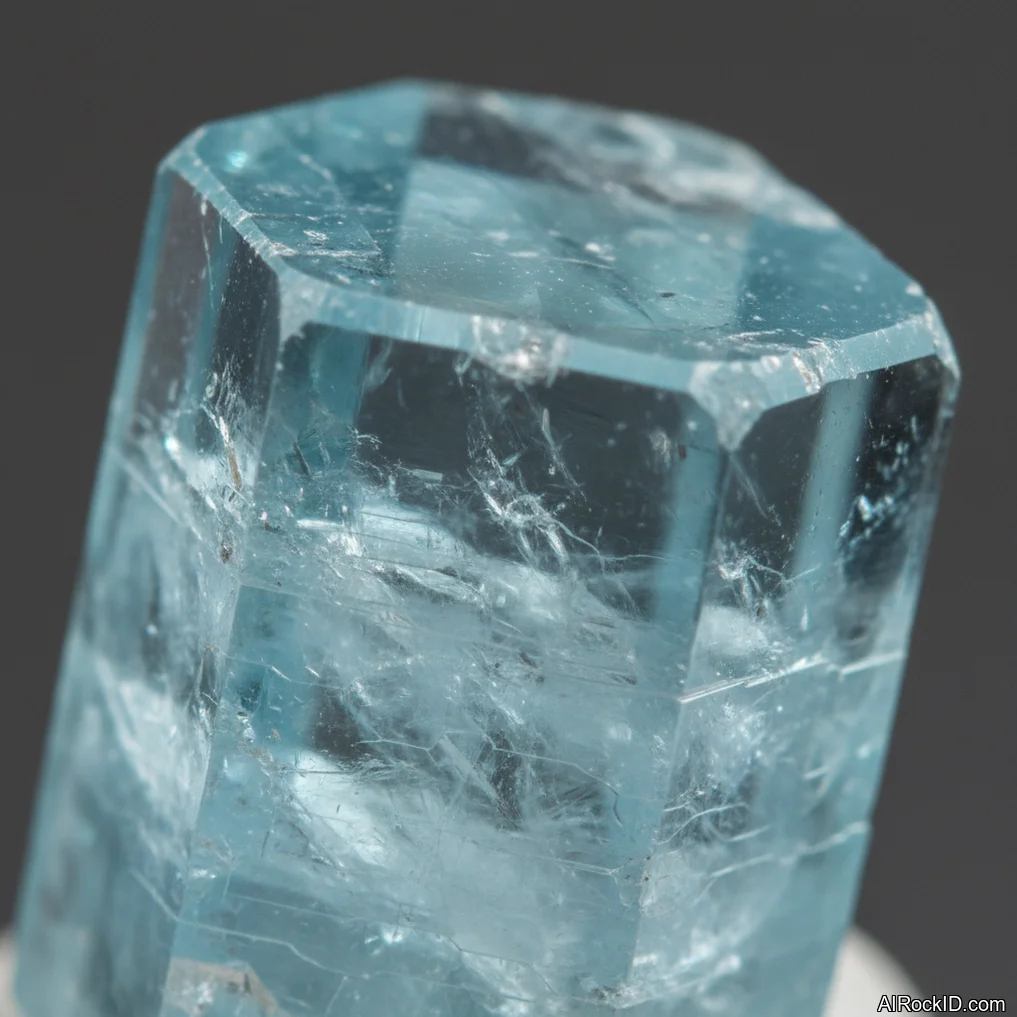
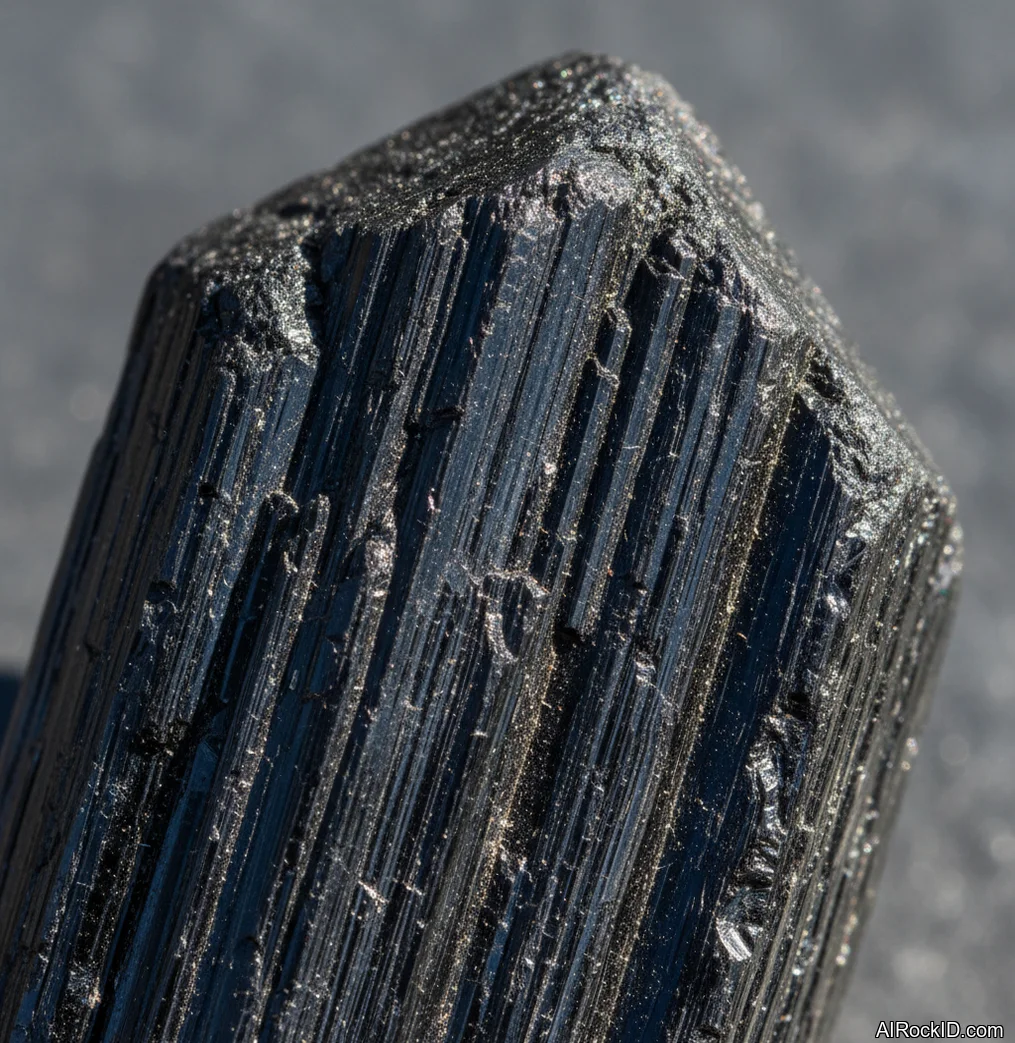
Accessory minerals give many pegmatites their collector appeal: black tourmaline or mica, green or blue beryl, purple lepidolite, green apatite, red garnet, and other bright grains may appear in the rock. Hardness is variable, but quartz-feldspar-rich pegmatite is typically about Mohs 6-7, while mica-rich or altered areas can scratch, flake, or crumble more easily.
Properties of Pegmatite
Physical Properties
| Crystal System | Not applicable as a rock; constituent minerals commonly include trigonal quartz, triclinic or monoclinic feldspar, monoclinic mica, and other systems |
| Hardness (Mohs) | Variable; typically about 6-7 for quartz-feldspar-rich pegmatite, softer where mica or clay alteration is abundant (Moderately hard to hard) |
| Density | Typically about 2.55-2.75 g/cm³ for granitic pegmatite; higher if rich in heavy accessory minerals |
| Luster | Variable, commonly vitreous to pearly |
| Diaphaneity | Opaque as a rock; individual crystals may be translucent to transparent |
| Fracture | Uneven to irregular as a rock; individual quartz may show conchoidal fracture and feldspar may break along cleavage |
| Streak | Variable by mineral; overall rock powder is usually white to pale gray |
| Magnetism | Usually non-magnetic; may show weak magnetism if magnetite or other iron minerals are present |
| Colors | white, cream, gray, pink, salmon, tan, black, green, blue, purple |
Chemical Properties
| Classification | Silicate-dominated igneous rock, most commonly felsic and granitic |
| Formula | Variable mixture; commonly dominated by SiO2, KAlSi3O8, NaAlSi3O8, CaAl2Si2O8, and mica minerals, with possible Li-, Be-, B-, P-, F-, Nb-, Ta-, and Sn-bearing accessories |
| Elements | oxygen, silicon, aluminum, potassium, sodium, calcium, hydrogen, iron, magnesium, lithium, beryllium, boron, phosphorus, fluorine, tantalum, niobium, tin |
| Common Impurities | iron oxides, manganese oxides, clay alteration, tourmaline, garnet, apatite, beryl, spodumene, lepidolite, cassiterite, columbite-tantalite |
Optical Properties
| Refractive Index | Not applicable to the rock as a whole; common minerals include quartz about 1.544-1.553 and feldspar roughly 1.52-1.57 |
| Birefringence | Not applicable as an aggregate; varies by constituent mineral |
| Pleochroism | Not applicable as a rock; may be present in minerals such as tourmaline, biotite, and some beryl varieties |
| Optical Character | Aggregate of multiple minerals; optical character depends on individual grains |
Pegmatite Health & Safety
Fresh pegmatite is generally safe to handle, but cutting, grinding, or drilling can produce respirable silica dust from quartz and feldspar. Some rare-element pegmatites may contain accessory minerals with elements such as beryllium, uranium, thorium, arsenic, or lead, so unknown specimens should not be powdered or used for elixirs.
Pegmatite Value & Price
Price Range
Rough/Tumbled: Common pegmatite field pieces are often inexpensive, roughly under $1-$5 per pound where legally collected. Attractive hand specimens with large feldspar, quartz, mica, tourmaline, beryl, or lithium minerals may range from about $10 to several hundred dollars, while exceptional gem-pocket specimens can be far more valuable.
Cut/Polished:
Value depends on crystal size, freshness, contrast, presence of collectible accessory minerals, gem quality, pocket formation, locality, rarity of included species, and whether the specimen is a simple rock sample or a display-quality mineral specimen.
Durability
Generally durable but variable — Scratch resistance: Quartz- and feldspar-rich pegmatite resists scratching fairly well, but mica-rich or altered areas can scratch, flake, or crumble more easily., Toughness: Variable; coarse crystals and cleavage in feldspar and mica can make some pieces prone to splitting or chipping.
Most fresh granitic pegmatite is stable in normal indoor conditions. Weathered feldspar may alter to clay, mica may peel, and specimens containing soluble or reactive accessory minerals require more caution.
How to Care for Pegmatite
Use & Storage
Store pegmatite specimens on stable shelves with padding if they contain protruding crystals. Keep friable, mica-rich, or pocket specimens in boxes or display cases to prevent chipping and dust buildup.
Cleaning
Clean sturdy quartz-feldspar pegmatite with water, a soft brush, and mild soap. Avoid harsh acids unless the mineral content is known, because acids or chemical cleaners may damage feldspar, mica, carbonates, phosphates, or rare accessory minerals.
Cleanse & Charge
For non-scientific spiritual use, pegmatite can be gently rinsed if stable, placed near clear quartz, or set in indirect moonlight. Avoid prolonged soaking if the specimen contains soft, flaky, altered, or unknown minerals.
Placement
Display pegmatite where its coarse crystal texture can be seen clearly. Keep large or heavy pieces on secure surfaces, and keep delicate pocket specimens away from vibration and high-traffic areas.
Caution
Do not tumble or aggressively scrub specimens that contain mica books, tourmaline sprays, beryl crystals, or fragile cavities. Do not assume all minerals in pegmatite are water-safe or acid-safe.
Works Well With
Pegmatite Meaning & Healing Properties
In modern crystal-healing traditions, pegmatite is used as a symbolic stone of growth, discovery, patience, integration, and hidden potential. The association comes naturally from the rock itself: one specimen may hold quartz, feldspar, mica, tourmaline, beryl, or lithium minerals together in one coarse, evolving mass.
These healing meanings are cultural and spiritual interpretations, not scientifically proven medical effects. For non-scientific spiritual work, pegmatite is commonly linked with the Root, Third Eye, and Crown chakras, with Earth energy, and with Virgo, Capricorn, and Aquarius.
Identify Pegmatite from a photo
Compare Pegmatite traits, care tips, value clues, and common lookalikes with a clear photo.
Common mistakes
- Calling any coarse granite pegmatite without checking for unusually large crystal size.
- Assuming every pegmatite contains gem-quality tourmaline, beryl, or spodumene.
- Identifying pegmatite from color alone instead of texture and mineral mix.
- Confusing a single quartz mass with pegmatite when feldspar and mica are absent.
- Overlooking repairs, glue, or added crystals on decorative specimens.
- Using one small close-up photo without scale for identification.