Mystic Topaz


Quick answer: Mystic Topaz is natural Topaz that has been cut and then coated with a thin metallic film, usually titanium-based, to create its rainbow surface effect. It is a Mohs 8 gem, but the decorative coating can be more vulnerable to scratches, abrasion, and harsh cleaning than the Topaz underneath.
AI Rock ID can help screen a Mystic Topaz photo by checking visible color zoning, luster, cut style, and likely lookalikes. RockIdentifier.io can provide a quick visual identification starting point, but lab testing or a qualified gemologist is best for confirming treated Topaz versus coated glass or other imitations.
Good fit
- People who want a bright rainbow gemstone for occasional or careful everyday jewelry
- Buyers who understand that the color effect is treatment-created, not natural body color
- Collectors comparing treated Topaz with other coated or iridescent gems
- Rings, pendants, and earrings that can be protected from abrasion and harsh chemicals
Not a good fit
- Anyone seeking an untreated natural-color gemstone
- Jewelry that will be exposed to frequent impact, sanding, or rough wear
- Ultrasonic or steam-cleaning routines, which may damage the coating
- Buyers who want a gem whose rainbow color continues throughout the entire stone
Most commonly confused with
- Rainbow Quartz: Rainbow Quartz often has a similar surface coating but is Mohs 7 and may show quartz crystal habits rather than Topaz gem cutting.
- Opal: Opal shows internal play-of-color in many specimens, while Mystic Topaz has a metallic surface interference effect.
- Coated Glass: Coated glass can mimic the rainbow look but is softer, less dense, and usually less valuable than treated Topaz.
- Ametrine: Ametrine has natural purple and yellow quartz color zones, not a titanium rainbow coating.
Mystic Topaz Lookalike Comparison
| Material | Color Effect | Key Difference | Mohs Hardness |
|---|---|---|---|
| Mystic Topaz | Rainbow metallic coating | Treated Topaz; coating is mainly on the surface | 8 |
| Rainbow Quartz | Coated or internal rainbow effects | Quartz base is softer and usually less dense | 7 |
| Opal | Play-of-color in the stone | Color flashes come from internal structure, not metallic coating | 5.5-6.5 |
| Coated Glass | Applied iridescent surface | Lower hardness and no natural crystal gem identity | About 5-6 |
| Titanium Aura Quartz | Strong metallic coating | Quartz base rather than Topaz | 7 |
AI identification confidence
AI photo identification for Mystic Topaz is usually moderate because the rainbow coating is visually distinctive but shared by several coated gems and glass imitations. Confidence improves with sharp photos in neutral light, multiple angles, and details such as weight, setting marks, hardness-safe context, and seller treatment disclosure.
When AI gets it wrong
- A coated glass stone has the same rainbow surface effect as Mystic Topaz in a photo.
- Strong lighting or filters create rainbow reflections on a clear or pale gemstone.
- The image shows only the face-up color and not the pavilion, girdle, wear marks, or setting.
- The stone is another coated material, such as Titanium Aura Quartz or Rainbow Quartz.
Final recommendation
Choose Mystic Topaz when the desired look is a rainbow-coated Topaz and the seller clearly discloses the treatment. For higher-value purchases, request documentation that identifies the material as Topaz and notes the coating or treatment status.
How to Check Mystic Topaz Authenticity
Authentic Mystic Topaz should be represented as treated Topaz, not as a naturally rainbow-colored Topaz. A seller should be willing to state that the color comes from a surface coating and, for more expensive pieces, provide a gem report or invoice description that names Topaz and discloses treatment. Unusually low prices, vague labels such as “rainbow stone,” or no treatment disclosure can indicate coated glass or another substitute.
What the Coating Means for Wear
The Topaz base is durable, but the Mystic Topaz color effect depends on a very thin surface coating. Scratches, polishing, resizing heat, harsh chemicals, and abrasive jewelry storage can affect the rainbow appearance. Protective settings and separate storage help reduce coating wear.
Photo Tips for Identifying Mystic Topaz
Photograph Mystic Topaz in indirect daylight or another neutral light source to avoid false rainbow glare. Include face-up, side, and back views, because coatings can appear stronger on some facets than others. Close-up images of worn facet edges may reveal whether the rainbow layer is scratched, chipped, or uneven.
What Is Mystic Topaz?
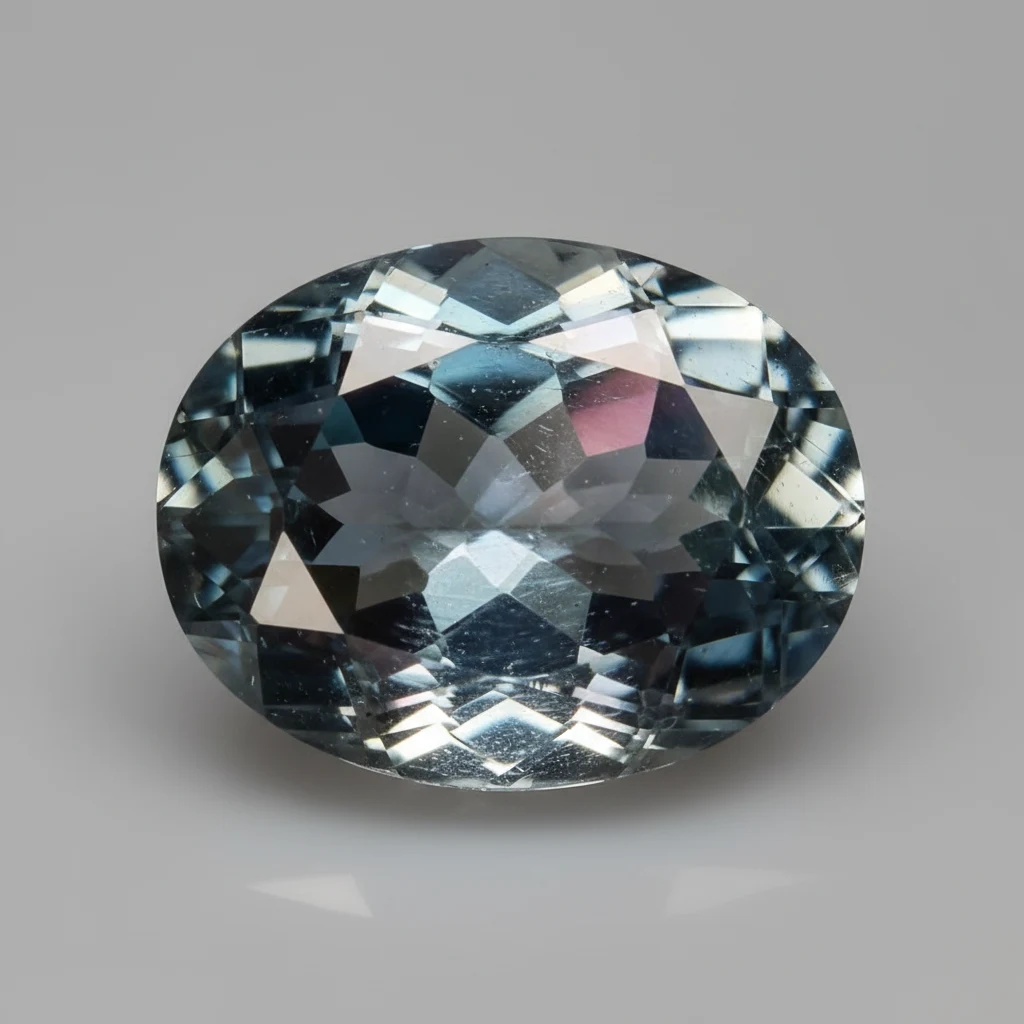
Mystic Topaz is a treated form of natural Topaz known for its vivid rainbow effect. The color comes from a thin layer of titanium applied to Topaz, giving the stone flashes of blue, green, and pink across a transparent body. In the hand, a good piece looks bright and glassy, with a vitreous luster that makes the surface feel lively under direct light.
Mineralogically, Mystic Topaz belongs to the Topaz variety and is classified as a silicate with the formula Al2SiO4(F,OH)2. It has a Mohs hardness of 8, excellent scratch resistance, good toughness, a white streak, conchoidal fracture, and a density of 3.49 g/cm3. It is non-magnetic and commonly valued as a semi-precious gemstone for colorful jewelry.
Origin & History
The story of Mystic Topaz begins with Topaz itself: the name “Topaz” is derived from the Sanskrit word “tapas,” meaning fire. Topaz has been known since ancient times, with records dating back to around 2000 BC. Mystic Topaz is the modern, treated expression of that older mineral, prized because the titanium layer turns a clear gemstone into a shifting, multicolor display.
For collectors, the important distinction is that Mystic Topaz is not a separate mineral species; it is natural Topaz enhanced by treatment. When checking labels or comparing mineral background information, mindat.org is a useful reference point for Topaz context. In practical buying, the best specimens are judged by size, clarity, and the intensity of the blue-green-pink color play.
Where Is Mystic Topaz Found?
Mystic Topaz is associated with natural Topaz sources in Brazil, Russia, and Nigeria. Brazil is especially important, and the material is commonly found there, where it is often mined. Notable locality names tied to this gem include Minas Gerais in Brazil, the Ural Mountains in Russia, and Kogi State in Nigeria.
Formation
Mystic Topaz begins as Topaz that forms through crystallization in igneous rocks. Its natural mineral structure is orthorhombic, and its chemistry is a silicate composition of aluminum, silicon, oxygen, fluorine, and hydroxyl components. The rainbow appearance is not the original body color; it is produced later through a treatment process.
That treatment applies a thin titanium layer, creating the shimmering blue, green, and pink effect seen in finished Mystic Topaz. This means the stone combines natural Topaz durability with an enhanced surface appearance. Under normal conditions it is stable, but harsh chemicals can damage it, so collectors and jewelers should treat the colorful surface with care.
How to Identify Mystic Topaz
Mystic Topaz is identified by its rainbow color play, transparent body, and vitreous luster. The most typical flashes include blue, green, and pink, often moving across the stone as it is turned. It should feel like a hard, crisp gem rather than a soft decorative stone, and its glassy face is one of the first field clues.
A practical identification check is hardness: Mystic Topaz is Mohs 8 and should scratch glass. It has a white streak, conchoidal fracture, orthorhombic crystal system, refractive index of 1.61–1.63, strong pleochroism, biaxial optical character, and no listed birefringence. Because the color is treatment-related, identification should consider both Topaz properties and the distinctive titanium rainbow surface.
Properties of Mystic Topaz
Physical Properties
| Crystal System | Orthorhombic |
| Hardness (Mohs) | 8 (Very Hard (7.5-10)) |
| Density | 3.49 g/cm3 |
| Luster | Vitreous |
| Diaphaneity | Transparent |
| Fracture | Conchoidal |
| Streak | White |
| Magnetism | Non-magnetic |
| Colors | Blue, Green, Pink |
Chemical Properties
| Classification | Silicate |
| Formula | Al2SiO4(F,OH)2 |
| Elements | Al, Si, O, F |
| Common Impurities | Fe, Ti |
Optical Properties
| Refractive Index | 1.61 - 1.63 |
| Birefringence | None |
| Pleochroism | Strong |
| Optical Character | Biaxial |
Mystic Topaz Health & Safety
Mystic Topaz poses no significant health risks.
Mystic Topaz Value & Price
Price Range
Rough/Tumbled: $10 - $50 per specimen
Cut/Polished: $20 - $150 per carat
Price is influenced by size, color intensity, and clarity.
Durability
Durable — Scratch resistance: Excellent, Toughness: Good
It is stable under normal conditions but can be damaged by harsh chemicals.
How to Care for Mystic Topaz
Use & Storage
Store in a soft pouch or jewelry box to avoid scratches.
Cleaning
Clean with warm soapy water and a soft cloth. Avoid ultrasonic cleaners.
Cleanse & Charge
Place under moonlight or use sage for cleansing.
Placement
It is often used in jewelry worn on the body.
Caution
Avoid exposing it to harsh chemicals.
Works Well With
Mystic Topaz Meaning & Healing Properties
In crystal healing traditions, Mystic Topaz is believed to support joy, creativity, protection, intuition, clarity, insight, transformation, emotional healing, abundance, and meditation. Its bright, shifting surface gives it an energetic personality: collectors often choose it when they want a stone that feels optimistic, expressive, and mentally vivid.
Mystic Topaz is associated with the Throat and Third Eye chakras, the zodiac signs Sagittarius and Pisces, the planet Jupiter, and the elements Fire and Air. It is often worn on the body as jewelry. These meanings are cultural and spiritual uses only; Mystic Topaz is not a substitute for medical treatment.
Identify Mystic Topaz from a photo
Compare Mystic Topaz traits, care tips, value clues, and common lookalikes with a clear photo.
Common mistakes
- Calling Mystic Topaz a naturally rainbow-colored Topaz instead of a treated gemstone.
- Assuming Mohs 8 hardness means the surface coating cannot be scratched or worn.
- Using ultrasonic, steam, or abrasive cleaners on a coated stone.
- Judging authenticity from color alone, since coated glass and coated quartz can look similar.
- Paying untreated-gem prices for a stone that should be disclosed as treated.
- Storing Mystic Topaz loose with harder gems that can abrade the coating.