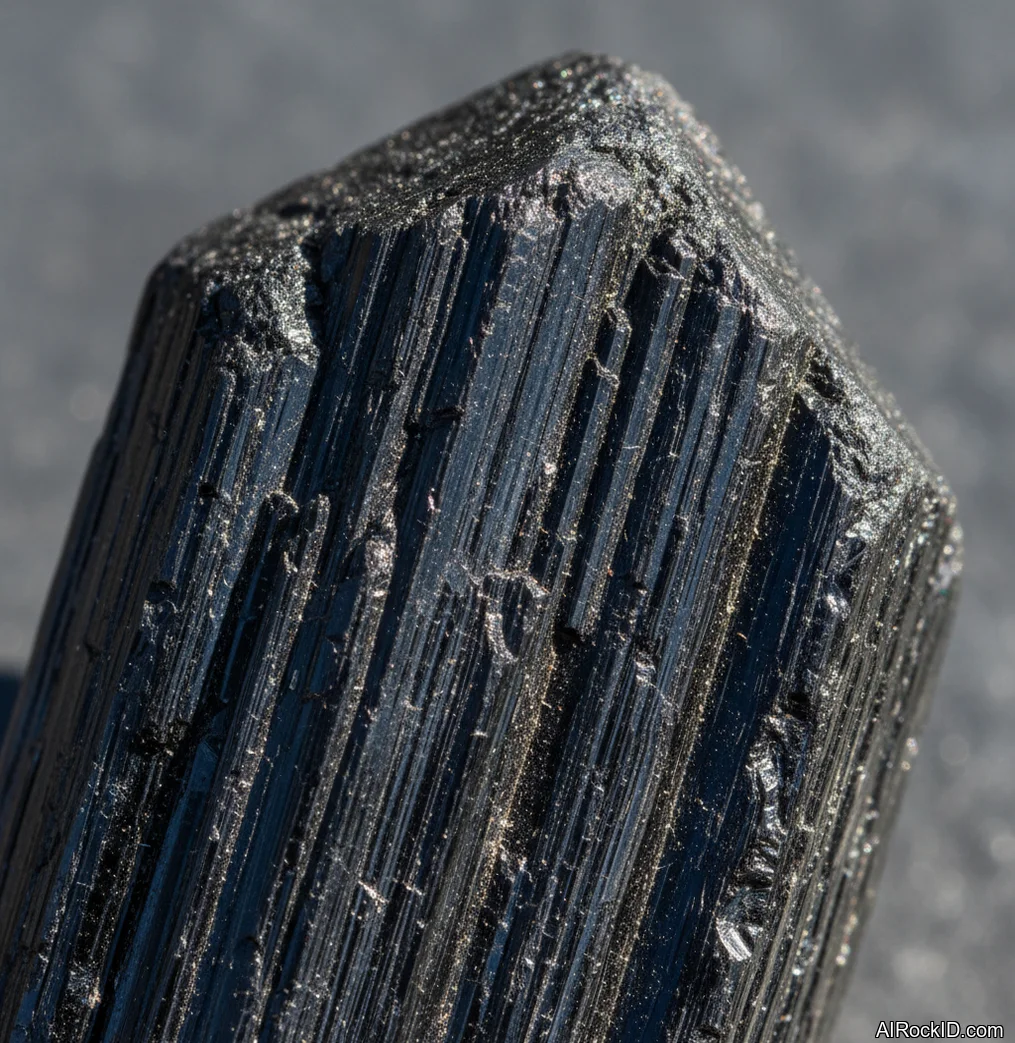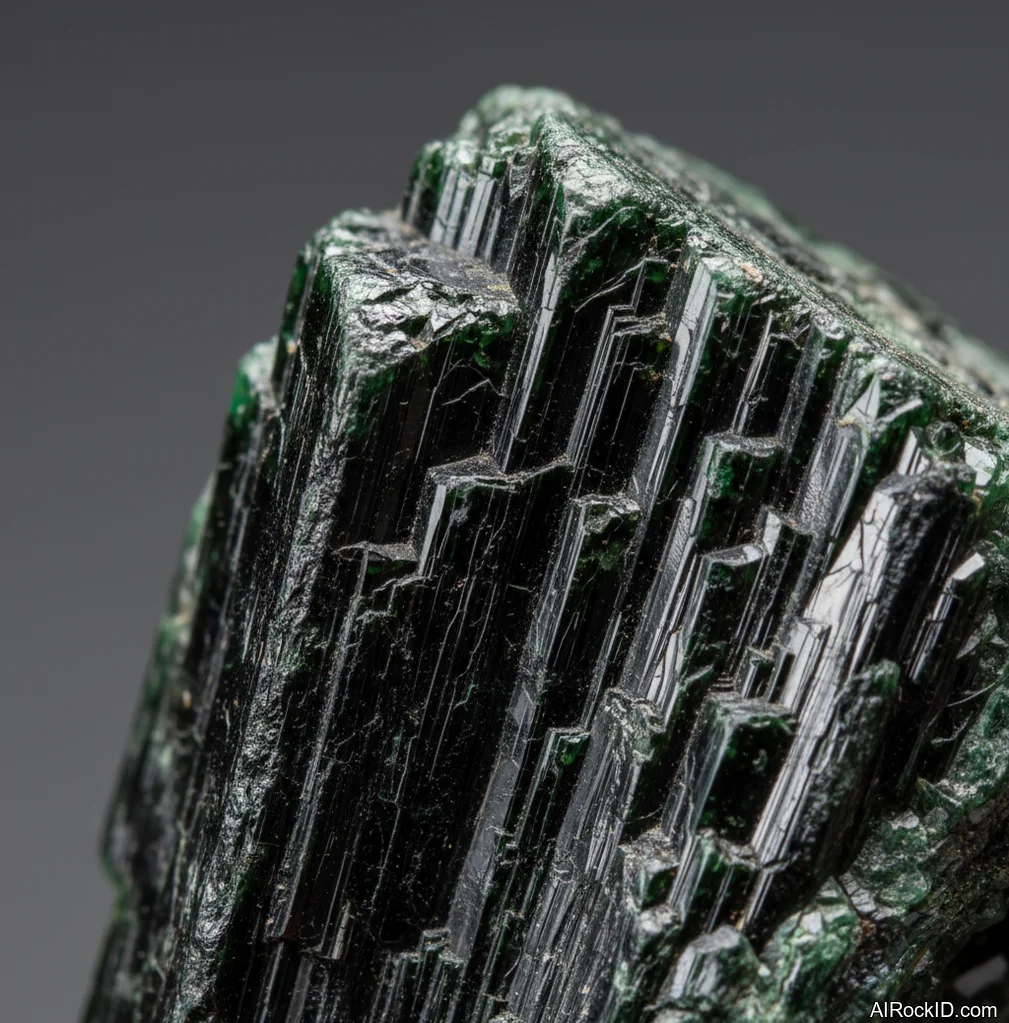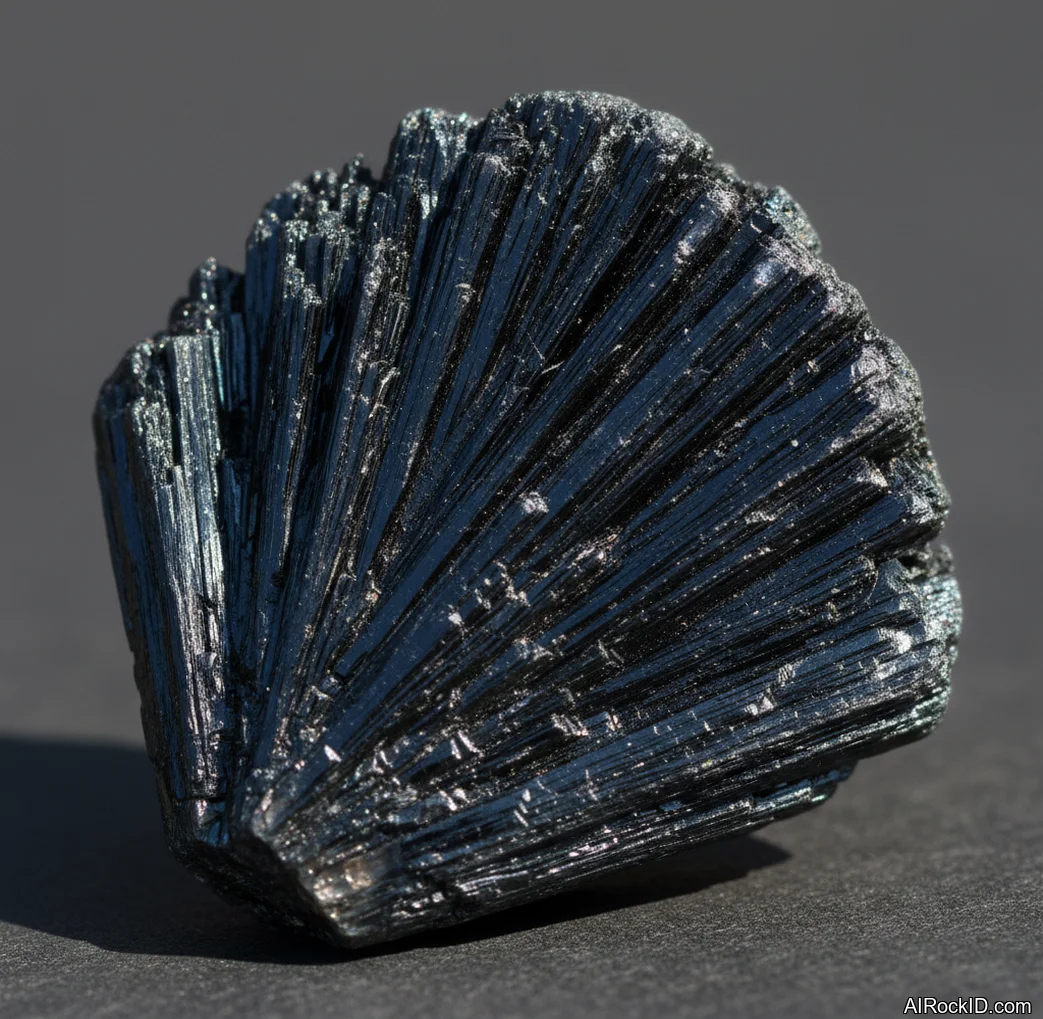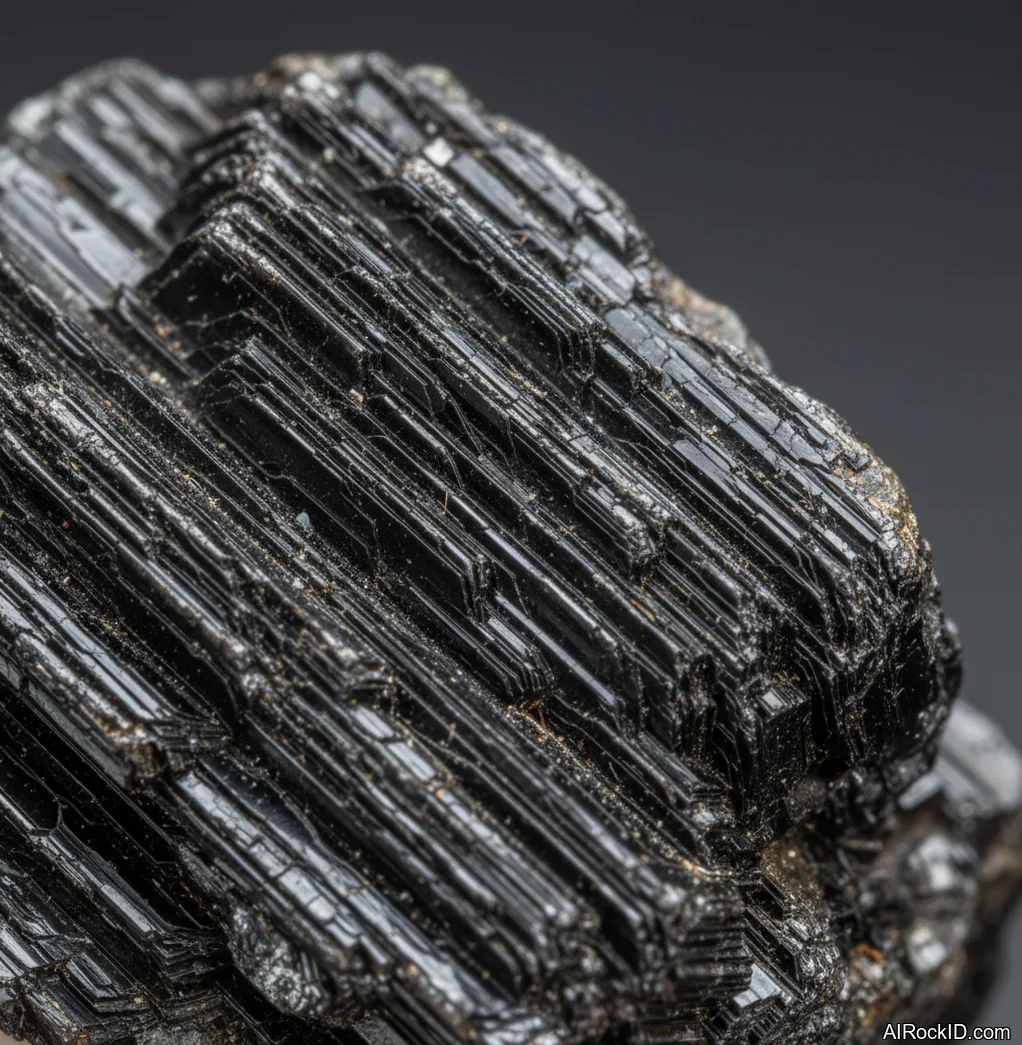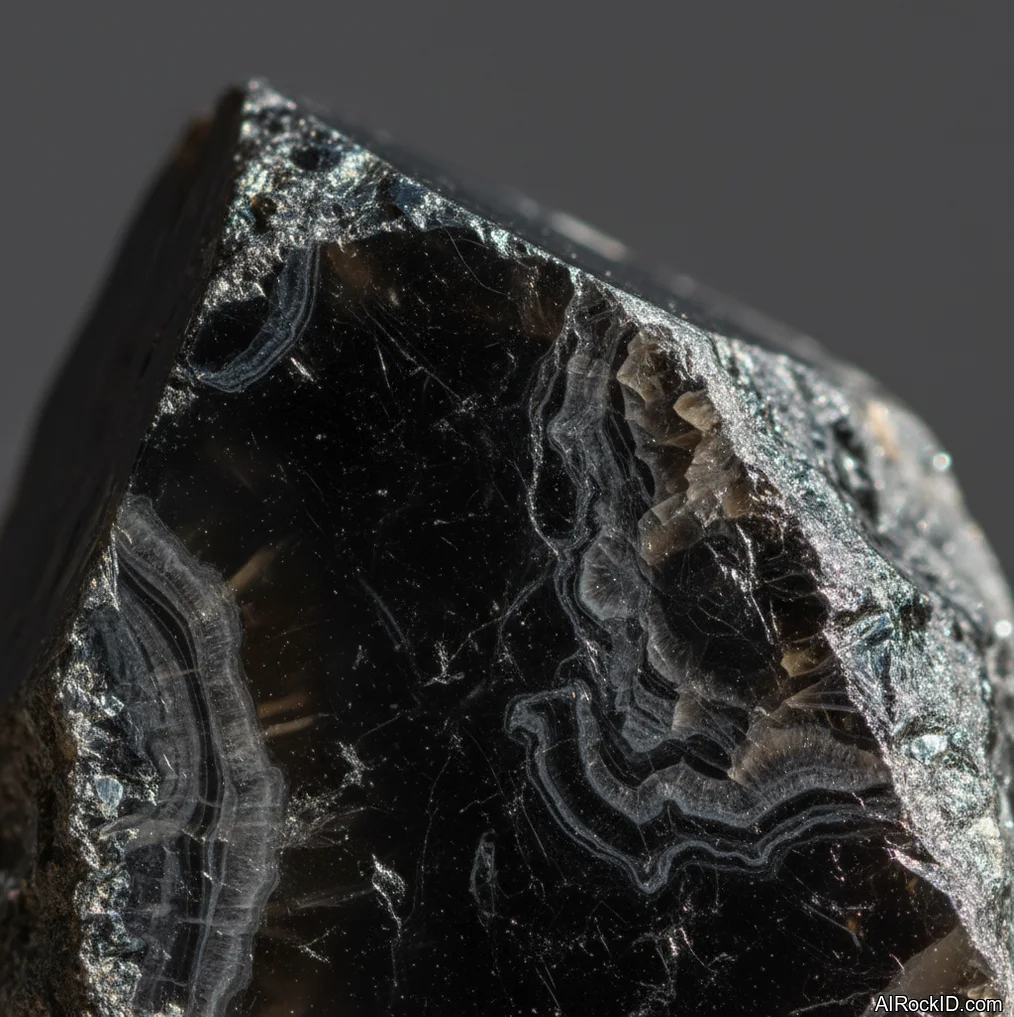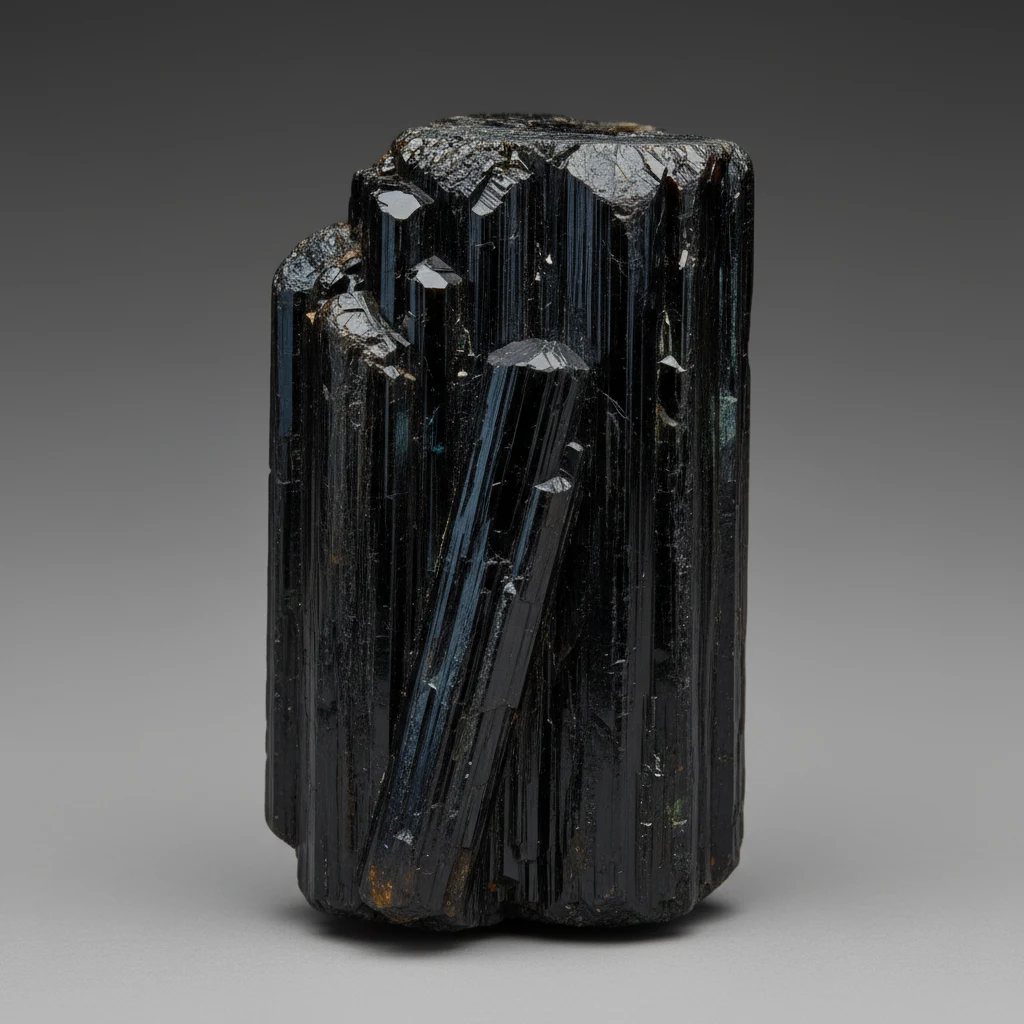
Schorl (Black Tourmaline Crystal Form)


Quick answer: Schorl is the black, iron-rich member of the tourmaline group, commonly recognized by its opaque black color, vertical striations, and trigonal crystal habit. It has a Mohs hardness of about 7 to 7.5, making it durable for specimens and many jewelry uses when protected from sharp impacts.
AI Rock ID can help compare a suspected schorl specimen with common black lookalikes using visible traits such as luster, crystal habit, and surface striations. RockIdentifier.io provides crystal identification support, but final confirmation may require hardness testing, streak, specific gravity, or expert review.
Good fit
- Collectors who want a common black tourmaline specimen with strong crystal form
- Beginners learning to identify striated prismatic crystals
- Jewelry buyers seeking a durable black mineral with natural texture
- People comparing black crystals used in grounding traditions
- Specimen buyers who prefer opaque, iron-rich tourmaline over polished substitutes
Not a good fit
- Anyone expecting a transparent black gemstone
- Buyers who need a perfectly smooth surface without natural pits or terminations
- Uses that involve repeated sharp blows or crushing pressure
- People relying on crystals as a substitute for medical or safety protection
Why people search for this
People often search for schorl to confirm whether a black crystal is genuine black tourmaline or a lookalike such as obsidian, hornblende, or smoky quartz. Search interest also comes from its use in mineral collecting, jewelry, and grounding traditions.
Most commonly confused with
- Obsidian: Obsidian is volcanic glass with a glassy surface and conchoidal fracture, while schorl commonly shows lengthwise striations and prismatic crystal form.
- Smoky Quartz: Smoky quartz is usually translucent brown to gray and has hexagonal quartz habit, unlike opaque black schorl.
- Hornblende: Hornblende is typically softer and has amphibole cleavage angles, while schorl has tourmaline’s striated trigonal prisms.
- Onyx: Black onyx is a chalcedony variety often polished smooth and may show banding, while schorl is a tourmaline mineral with prismatic structure.
Schorl vs Common Black Lookalikes
| Feature | Schorl | Common Lookalike |
|---|---|---|
| Crystal form | Striated prismatic crystals, often triangular in cross-section | Obsidian is glassy and lacks crystal faces |
| Transparency | Usually opaque black | Smoky quartz is commonly translucent brown-gray |
| Streak clue | Generally pale to colorless streak | Hematite gives a reddish-brown streak |
| Surface texture | Natural grooves or lengthwise striations are common | Polished onyx is usually smooth and banded |
| Breakage | Uneven to subconchoidal fracture; no obvious cleavage | Hornblende shows distinct cleavage |
AI identification confidence
AI identification confidence is usually higher when schorl shows clear vertical striations, prismatic habit, and opaque black color in well-lit photos. Confidence drops for tumbled stones, broken fragments, heavily polished pieces, or black minerals photographed without scale or multiple angles.
When AI gets it wrong
- A polished black stone may hide the striations needed to distinguish schorl from onyx or obsidian.
- Very dark smoky quartz can appear black in low light, especially in single-angle photos.
- Hornblende and other black amphiboles can look similar in rough matrix specimens.
- Coatings, dye, or oiling can change luster and make surface features harder to interpret.
Final recommendation
Choose schorl when the specimen shows natural black color, lengthwise striations, and a tourmaline-like prismatic habit. For higher-value pieces, ask for clear photos of the terminations, sides, and matrix, and avoid listings that rely only on trade names without mineral identification.
How to Check Schorl Authenticity
Authentic schorl commonly has a nonmetallic luster, opaque black color, and fine lengthwise grooves on crystal faces. Natural pieces may have chips, uneven terminations, or attached matrix, while molded glass imitations often show bubbles, overly uniform surfaces, or rounded seams. A hardness check can help because schorl should scratch glass, but testing should be done carefully on an inconspicuous area.
Buying Tips for Schorl Specimens
When buying schorl, look for photos taken from several angles so the prism shape, striations, and termination can be evaluated. Specimens with intact terminations, attractive matrix, or well-defined crystal clusters usually command higher prices than broken fragments. Be cautious with listings labeled only as “black crystal” or “protection stone” without naming tourmaline or schorl.
Schorl in Matrix
Schorl commonly occurs with quartz, feldspar, mica, and pegmatite minerals, so matrix material can be a useful identification clue. Black prismatic crystals embedded in pale quartz or feldspar are typical of many tourmaline-bearing pegmatites. Matrix does not prove identity by itself, but it can support identification when combined with crystal habit and hardness.
What Is Schorl (Black Tourmaline Crystal Form)?
Schorl is the mineralogical name for the common black tourmaline crystal form. It is an iron-rich tourmaline group mineral, a complex sodium iron aluminum borosilicate with the ideal formula NaFe2+3Al6(Si6O18)(BO3)3(OH)3(OH). In the hand, good schorl feels dense, hard, and angular, with black prismatic crystals that often show strong lengthwise striations.
Collectors value schorl for its bold contrast against quartz, albite, feldspar, mica, and other pegmatite minerals. Most pieces are opaque jet black to brownish black, though very thin edges or splinters may show dark brown, bluish, greenish, or smoky tones under strong backlighting. Its Mohs hardness of 7-7.5 makes it scratch-resistant, but the crystals remain brittle and chipped terminations are common on handled specimens.
Origin & History
The name schorl comes from old European mining terminology, especially the German word Schörl. It was used for dark tourmaline-like minerals found with tin ores and granitic rocks before the broader name tourmaline became common in European mineralogy. Historically, schorl was closely associated with Saxony, the Erzgebirge region of Germany, and nearby Central European mining districts.
On old labels, schorl may appear as black tourmaline, schorlite, or sodium iron tourmaline. A practical collector reference for checking current species names and locality wording is mindat.org. When a specimen carries a German, Czech, or pegmatite-district label, the old mining context matters because schorl commonly occurs in granites, pegmatites, and tin-bearing veins.
Where Is Schorl (Black Tourmaline Crystal Form) Found?
Schorl is found worldwide in suitable boron-rich geological environments and is considered the most abundant tourmaline species. Important producing countries include Brazil, the United States, Namibia, Madagascar, Pakistan, Afghanistan, Germany, the Czech Republic, Italy, Russia, and Sri Lanka. Large collector crystals are especially well known from Brazil, Namibia, Pakistan, Afghanistan, Madagascar, and the United States.
Formation
Schorl forms when boron-rich fluids interact with aluminum- and iron-bearing rocks. The most common setting is the late stage of granitic magma crystallization, where residual fluids concentrate boron and help grow tourmaline in pegmatites, greisens, and quartz veins. In the field, that often means black prisms set into pale feldspar, quartz, albite, or mica-rich rock.
It can also form during regional or contact metamorphism wherever boron is available. Crystals may appear as isolated prisms, radiating sprays, acicular aggregates, or massive columnar material. The best collector pieces preserve sharp, vertically striated faces and clean terminations; rougher pieces may still show the same black color, hard feel, and fibrous-to-columnar growth pattern.
How to Identify Schorl (Black Tourmaline Crystal Form)
Identify schorl by looking for opaque black prismatic crystals with strong vertical striations and a trigonal, rounded-triangular, or somewhat three-sided cross-section. Fresh crystal faces are vitreous to sub-vitreous, while broken surfaces may look resinous and weathered faces can be dull. Despite its dark color, schorl gives a white streak and lacks metallic luster.
A practical field clue is hardness: schorl is Mohs 7-7.5 and can scratch glass. It has poor to indistinct cleavage and usually breaks with uneven to subconchoidal fracture, so battered crystals chip rather than split neatly. Compared with black amphibole, schorl usually shows stronger lengthwise striations, less obvious cleavage, and the characteristic three-sided tourmaline habit.
Properties of Schorl (Black Tourmaline Crystal Form)
Physical Properties
| Crystal System | Trigonal |
| Hardness (Mohs) | 7-7.5 Mohs (Hard) |
| Density | About 3.0-3.3 g/cm³, commonly near 3.18 g/cm³ |
| Luster | Vitreous to sub-vitreous, sometimes resinous on fractures |
| Diaphaneity | Opaque, rarely translucent in very thin splinters or edges |
| Fracture | Uneven to subconchoidal; brittle; cleavage poor to indistinct |
| Streak | White |
| Magnetism | Generally non-magnetic to weakly attracted only by a strong magnet because of iron content |
| Colors | Black, Brownish black, Bluish black, Dark greenish black |
Chemical Properties
| Classification | Complex borosilicate; cyclosilicate; tourmaline supergroup |
| Formula | NaFe2+3Al6(Si6O18)(BO3)3(OH)3(OH) |
| Elements | Sodium, Iron, Aluminum, Silicon, Boron, Oxygen, Hydrogen |
| Common Impurities | Magnesium, Manganese, Titanium, Lithium, Calcium, Fluorine, Ferric iron |
Optical Properties
| Refractive Index | Approximately nω 1.660-1.698 and nε 1.635-1.675 |
| Birefringence | About 0.018-0.040 |
| Pleochroism | Strong in transparent thin sections, commonly from very dark brown, blue, or greenish tones to paler brown or yellowish tones |
| Optical Character | Uniaxial negative |
Schorl (Black Tourmaline Crystal Form) Health & Safety
Schorl is generally safe to handle as a mineral specimen and is not considered toxic in normal use. The main practical hazard is inhaling fine mineral dust produced by cutting, grinding, drilling, or polishing.
Schorl (Black Tourmaline Crystal Form) Value & Price
Price Range
Rough/Tumbled: Small common rough pieces often sell for about $1-$10; attractive terminated crystals commonly range from $10-$100; large, lustrous, undamaged, well-terminated specimens from famous localities can sell for hundreds of dollars or more.
Cut/Polished:
Value depends on crystal size, termination quality, luster, sharpness of striations, damage, matrix association, locality, and overall display aesthetics. Schorl is abundant, so ordinary broken or massive material is inexpensive, while large pristine crystals on quartz, albite, or pegmatite matrix are more collectible.
Durability
Good — Scratch resistance: High for a mineral specimen because of Mohs hardness 7-7.5; it can scratch glass and resists ordinary abrasion., Toughness: Fair to good, but crystals are brittle and terminations can chip or break if dropped.
Stable under normal indoor conditions. Prolonged rough handling can break striated crystals, and sudden temperature shock may damage specimens with internal fractures or matrix attachments.
How to Care for Schorl (Black Tourmaline Crystal Form)
Use & Storage
Store separately from softer minerals because schorl can scratch them. Wrap terminated crystals or matrix specimens to protect points and edges from chipping.
Cleaning
Clean with lukewarm water, mild soap, and a soft brush. Avoid harsh mechanical cleaning on delicate terminations or friable matrix. Dry thoroughly after washing.
Cleanse & Charge
For metaphysical users, schorl is commonly cleansed with smoke, sound, moonlight, or brief rinsing in clean water. Avoid saltwater soaks for matrix specimens because associated minerals may be more sensitive than the schorl itself.
Placement
Display away from edges where heavy crystals could fall. It is suitable for desks, shelves, mineral cabinets, and protective display boxes.
Caution
Although chemically stable, schorl is brittle. Do not drop it, use it as a hammer stone, or expose included or matrix specimens to sudden temperature changes.
Works Well With
Schorl (Black Tourmaline Crystal Form) Meaning & Healing Properties
In modern crystal-healing traditions, schorl or black tourmaline is used as a grounding and protective stone. These meanings are cultural and spiritual beliefs, not scientifically verified medical effects. Practitioners often choose it for root-chakra work because its dark, heavy-looking crystals are associated with steadiness, resilience, focus, and shielding from negativity.
For handling and display, schorl is a durable but brittle mineral specimen. It is stable under normal indoor conditions and can be cleaned with lukewarm water, mild soap, and a soft brush, then dried thoroughly. Store it away from softer minerals because it can scratch them, and wrap terminated crystals or matrix pieces so the sharp points and edges do not chip.
Identify Schorl (Black Tourmaline Crystal Form) from a photo
Compare Schorl (Black Tourmaline Crystal Form) traits, care tips, value clues, and common lookalikes with a clear photo.
Common mistakes
- Assuming every opaque black polished stone is schorl or black tourmaline
- Identifying schorl by color alone without checking striations, habit, or hardness
- Confusing glassy obsidian with schorl because both can look jet black
- Expecting all natural schorl crystals to have perfect terminations
- Using metaphysical labels as proof of mineral identity
- Ignoring reddish-brown streak, which can indicate hematite rather than schorl