Shell Coral


Quick answer: Shell Coral is an organic calcium carbonate material valued for its shell-like patterns and soft pink, red, cream, or white colors. It is softer than many jewelry stones, so identification should consider surface texture, dye, and possible confusion with shell, coral, or imitation materials.
AI Rock ID can help screen Shell Coral by comparing visible color, banding, texture, and shape against similar organic gem materials. RockIdentifier.io provides identification support, but final confirmation may require basic gem tests or a qualified gemologist when value, treatment, or legality matters.
Good fit
- Collectors who like organic gems with shell-like growth patterns
- Jewelry wearers who prefer soft, warm pink, red, cream, or white tones
- Beginners comparing coral, shell, and calcium carbonate materials
- Decorative uses where low hardness is not a major concern
Not a good fit
- Rings or bracelets that will receive frequent impact or abrasion
- Buyers who need a highly scratch-resistant gemstone
- Situations where coral sourcing, treatment, or trade restrictions cannot be verified
- Ultrasonic or steam cleaning routines
Most commonly confused with
- Coral: Natural coral may show organic growth structures, while Shell Coral often has more shell-like banding or layered forms.
- Mother of Pearl: Mother of Pearl usually has a nacreous iridescent sheen, while Shell Coral is typically more matte to waxy.
- Conch Shell: Conch shell can show flame-like pink structure, while Shell Coral may have more coral-like or shell-lamellar texture.
- Dyed Howlite: Dyed howlite is a mineral imitation and often shows gray veining rather than organic shell growth.
Shell Coral vs. Common Lookalikes
| Material | Typical look | Key clue | Hardness |
|---|---|---|---|
| Shell Coral | Pink, red, white, or cream with shell-like layers | Organic calcium carbonate texture | Mohs 3-4 |
| Mother of Pearl | White, cream, or gray with iridescence | Nacreous rainbow sheen | Mohs 2.5-4.5 |
| Natural Coral | Red, pink, orange, white, or black branches or cabochons | Coral growth structure may be visible | Mohs 3-4 |
| Dyed Howlite | Bright red or pink with gray webbing | Mineral veining, not shell layers | Mohs 3-3.5 |
| Plastic Imitation | Uniform color or molded pattern | Very light, may have seams or bubbles | Varies |
AI identification confidence
AI identification confidence for Shell Coral is usually moderate from clear photos because several organic calcium carbonate materials share similar colors and textures. Confidence improves with close-up images of growth layers, surface luster, drilled holes, backs, and any visible dye concentration.
When AI gets it wrong
- Photos are overexposed, making pink, red, and white tones look washed out.
- The piece is polished into a bead or cabochon with little visible natural structure.
- Dyed shell, dyed howlite, or plastic has been made to imitate coral color.
- Only one image is provided and scale, weight, and surface texture are unclear.
Final recommendation
Choose Shell Coral when you want an organic-looking material with soft color and visible shell-like structure, and use it in settings protected from abrasion. Ask sellers about dye, stabilization, source, and trade compliance before buying higher-priced pieces.
How to Check Shell Coral Before Buying
Look for natural-looking layered texture, uneven organic patterning, and color that does not concentrate only in cracks or drill holes. Ask whether the piece is natural color, dyed, stabilized, reconstructed, or assembled from shell material. For jewelry, check that beads, cabochons, and carvings are free of chips because Shell Coral is relatively soft.
Dye and Treatment Clues
Dyed Shell Coral may show stronger color inside cracks, pits, drill holes, or along porous areas. A very uniform bright red or pink color can be natural in some materials, but it is also common in dyed shell and coral imitations. Avoid destructive home tests on finished jewelry; visual inspection and seller disclosure are safer first steps.
Ethical and Legal Buying Notes
Coral and coral-like materials can raise sourcing and trade concerns, especially when labels are vague. Buyers should request accurate material names and country-of-origin details when available. Documentation is especially important for antique, high-value, or international purchases.
What Is Shell Coral?
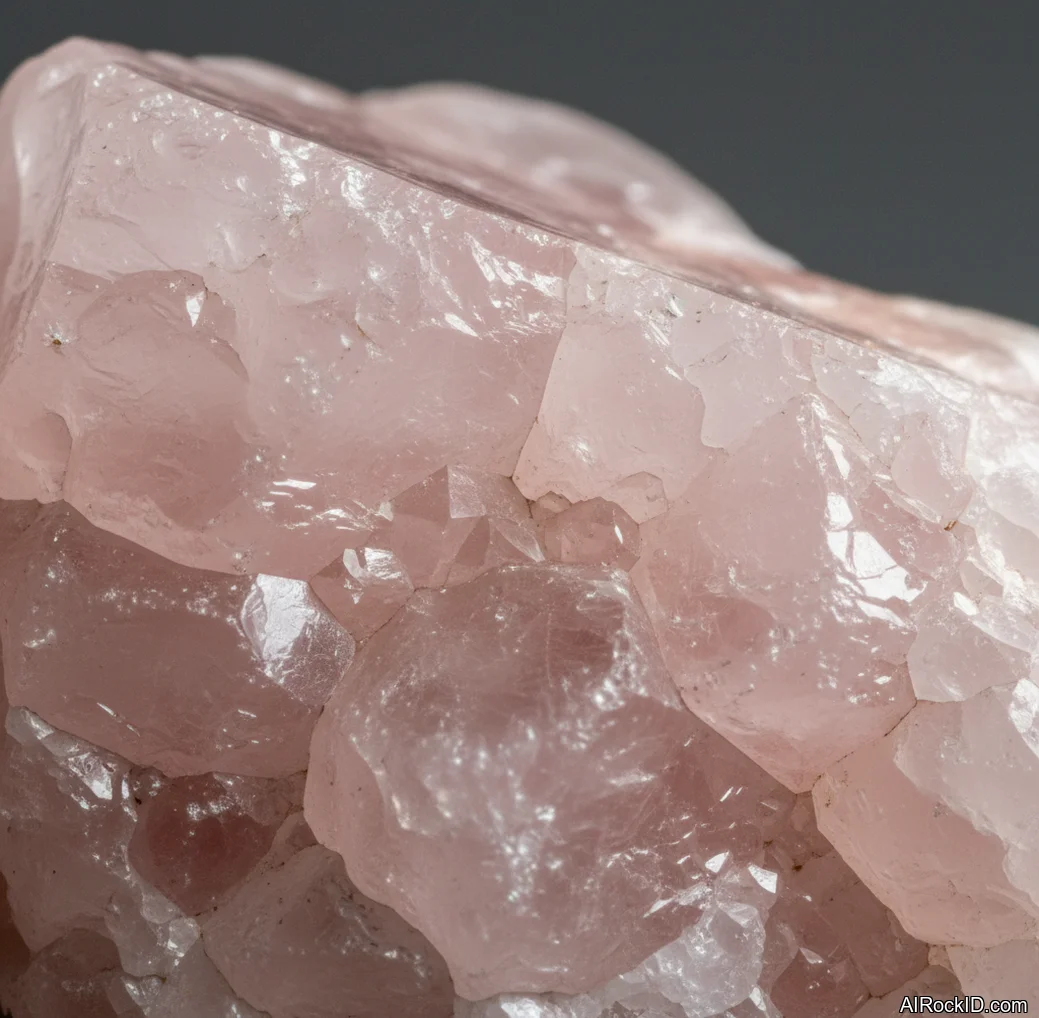
Shell Coral is a common organic gem variety of coral, valued for its shell-like appearance and soft marine character. In the hand, it is not glassy or crystalline-looking; it reads as opaque, gently waxy, and textured, with pink, red, or white tones that suit beads, cabochons, small carvings, and decorative pieces.
As a carbonate material with the formula CaCO3, Shell Coral sits at Mohs 3-4, so it feels more delicate than many everyday gemstones. Its density is listed at 2.5 g/cm3, its streak is white, and it is non-magnetic. Collectors usually approach it as a beautiful organic specimen rather than a hard-wearing ring stone.
Origin & History
Shell Coral gets its name from its resemblance to shells, and it has been used since ancient times. That history is easy to understand when you handle a piece: the surface can look weathered, porous, and sea-shaped, with a natural decorative quality that needs little explanation.
For collectors, old labels matter because Shell Coral may be tied to ocean regions rather than a single mine. When recording a specimen, keep the stated locality intact and compare naming conventions with a locality reference such as mindat.org, especially for pieces labeled from Italy, Japan, or the USA.
Where Is Shell Coral Found?
Shell Coral is commonly found in warm, shallow ocean waters. The supplied localities include the Mediterranean Sea in Italy, the Pacific Ocean in Japan, and California in the USA, giving it a distinctly marine collecting context rather than a typical hard-rock mine setting.
Formation
Shell Coral forms through the accumulation of calcium carbonate by coral polyps. Over thousands of years, that CaCO3 material builds into the shell-like coral form collectors recognize, producing an organic gem rather than a mineral crystal with flat faces and a repeated crystal habit.
Its crystal system is amorphous, so identification is based more on texture, color, luster, and structure than on crystal shape. The waxy to dull surface, porous body, and branching patterns are part of the formation story: they preserve the look of coral growth rather than the geometry of a faceted mineral.
How to Identify Shell Coral
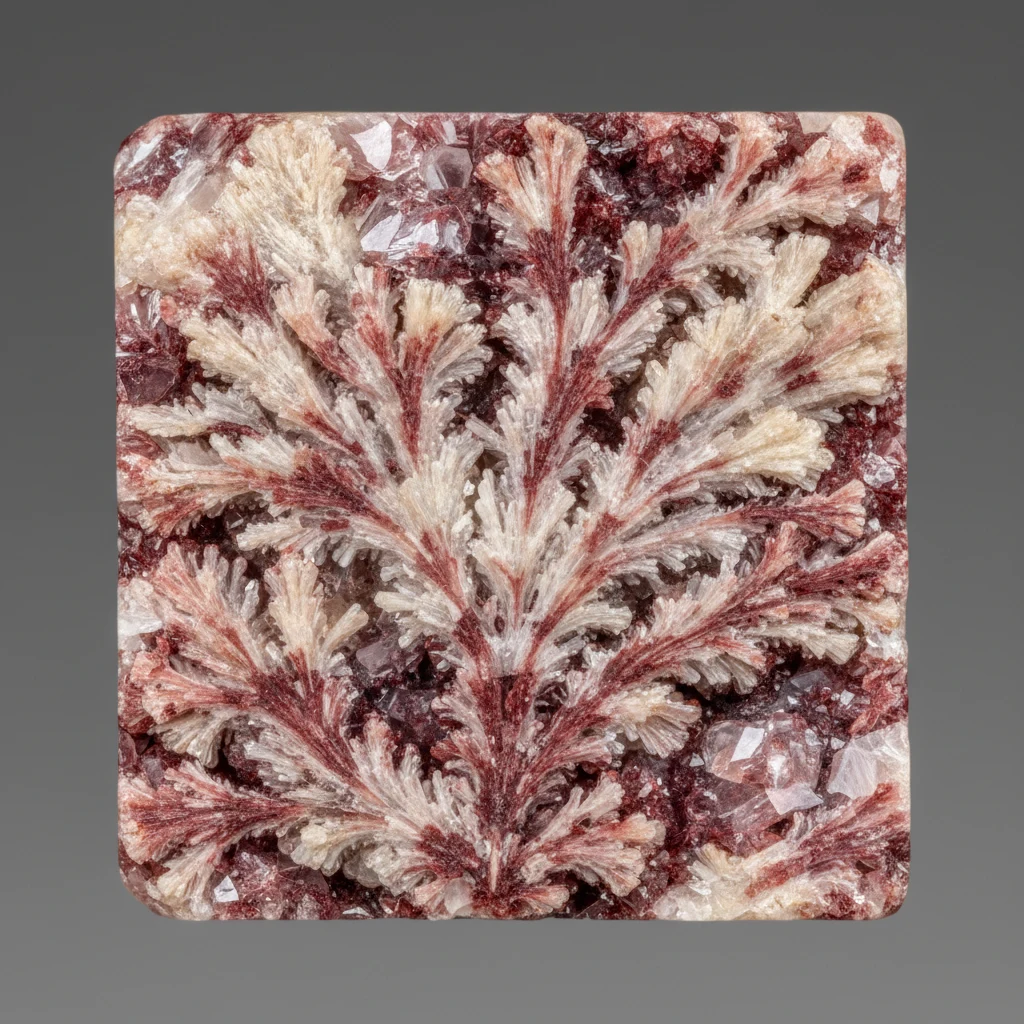
Identify Shell Coral by its pink, red, or white color, opaque body, waxy luster, and porous coral texture. A good specimen often shows distinctive branching patterns, and the surface can feel organic and slightly muted rather than slick, bright, or transparent.
Physical checks support the visual clues: Shell Coral is amorphous, non-magnetic, has a white streak, and measures Mohs 3-4. It has conchoidal fracture, a refractive index listed as 1.5, no birefringence, no pleochroism, and an isotropic optical character.
Properties of Shell Coral
Physical Properties
| Crystal System | Amorphous |
| Hardness (Mohs) | 3-4 (Soft (2-4)) |
| Density | 2.5 g/cm3 |
| Luster | Waxy |
| Diaphaneity | Opaque |
| Fracture | Conchoidal |
| Streak | White |
| Magnetism | Non-magnetic |
| Colors | Pink, Red, White |
Chemical Properties
| Classification | Carbonate |
| Formula | CaCO3 |
| Elements | Ca, C, O |
| Common Impurities |
Optical Properties
| Refractive Index | 1.5 |
| Birefringence | None |
| Pleochroism | None |
| Optical Character | Isotropic |
Shell Coral Health & Safety
No significant health risks are associated with Shell Coral.
Shell Coral Value & Price
Price Range
Rough/Tumbled: $5 - $20 per specimen
Cut/Polished: $10 - $50 per carat
Price is affected by color, size, and craftsmanship.
Durability
Moderate — Scratch resistance: Fair, Toughness: Good
Shell Coral is sensitive to chemicals and should be handled carefully.
How to Care for Shell Coral
Use & Storage
Store in a cool, dry place away from direct sunlight.
Cleaning
Clean with a soft cloth and mild soap solution. Avoid harsh chemicals.
Cleanse & Charge
Cleanse with water or by placing it in sunlight for a few hours.
Placement
Place in areas where you want to promote relaxation.
Caution
Avoid exposing it to high heat or chemicals.
Works Well With
Shell Coral Meaning & Healing Properties
Shell Coral is used in crystal healing traditions for emotional healing, calming, creativity, meditation, inner peace, stress relief, trust, and growth. Its cultural associations are watery and lunar, with links to the Moon, the Water element, the Sacral Chakra, and the Root Chakra.
Practically, it is best treated gently: store it in a cool, dry place away from direct sunlight, clean it with a soft cloth and mild soap solution, and avoid harsh chemicals or high heat. It is safe to handle and safe in water, but healing use is not a substitute for medical treatment.
Identify Shell Coral from a photo
Compare Shell Coral traits, care tips, value clues, and common lookalikes with a clear photo.
Common mistakes
- Assuming every red or pink organic gem is natural coral.
- Confusing nacreous Mother of Pearl with Shell Coral because both come from calcium carbonate shell materials.
- Judging authenticity by color alone instead of checking texture, luster, and growth pattern.
- Using vinegar, acid, or scratch tests on finished jewelry and damaging the surface.
- Ignoring dye disclosure when comparing prices between similar-looking pieces.