Thulite


Quick answer: Thulite is identified mainly by its pink to reddish-pink color, granular to massive habit, and moderate hardness of about Mohs 6–6.5. Because several pink stones look similar, confirmation often depends on texture, hardness, and the presence of zoisite-related mineral context.
AI Rock ID can help compare a thulite photo against visually similar pink minerals by evaluating color, texture, luster, and pattern. RockIdentifier.io provides crystal identification support, but close lookalikes may still require hardness testing or expert verification.
Good fit
- Collectors who want a pink silicate mineral with a distinctive Norwegian association
- Beginners comparing pink stones by hardness, texture, and opacity
- Jewelry buyers looking for opaque cabochons or beads rather than transparent gems
- Crystal owners who prefer stones that are durable enough for careful everyday handling
Not a good fit
- Anyone needing a water-safe stone for soaking or elixirs
- Buyers expecting a transparent pink gemstone
- People who need a scratch-proof material for heavy-use rings
- Collectors seeking a rare faceted gemstone rather than a decorative massive mineral
Most commonly confused with
- Rhodonite: Rhodonite is often pink with black manganese oxide veining, while thulite is usually more granular and zoisite-based.
- Rhodocrosite: Rhodochrosite is a carbonate mineral, commonly banded and softer, with strong reaction potential to acids.
- Pink Opal: Pink opal has a waxy to porcelain-like look and lower hardness than thulite.
- Unakite: Unakite mixes pink feldspar with green epidote, unlike the more consistently pink thulite.
Thulite vs. Similar Pink Stones
| Stone | Typical Appearance | Key Difference | Mohs Hardness |
|---|---|---|---|
| Thulite | Opaque pink to reddish-pink, granular or massive | Manganese-rich zoisite variety | 6–6.5 |
| Rhodonite | Pink with possible black veining | Manganese silicate, often shows dark oxide veins | 5.5–6.5 |
| Rhodochrosite | Pink to red, often banded | Carbonate mineral, generally softer and more acid-sensitive | 3.5–4 |
| Pink Opal | Soft pink, waxy or porcelain-like | Hydrated silica with lower hardness | 5–6 |
| Unakite | Pink and green mottled rock | Rock mixture of feldspar, epidote, and quartz | 6–7 |
AI identification confidence
AI identification confidence for thulite is moderate when the specimen is opaque pink, granular, and photographed in natural light with a scale reference. Confidence decreases when the stone is polished, uniformly dyed, heavily edited, or shown without views of texture and matrix.
When AI gets it wrong
- Polished beads and cabochons can hide the granular texture that helps separate thulite from pink opal or rhodonite.
- Strong red or saturated pink lighting can make pale stones appear more like thulite than they are.
- Dyed quartzite, marble, or low-cost beads may be misread if only color is visible.
- Photos without scale, hardness context, or multiple angles can lead to confusion with other pink minerals.
Final recommendation
For buying thulite, prioritize sellers who state the source, treatment status, and whether the material is natural thulite rather than dyed stone. For identification, use visual comparison first, then check hardness and texture when the item can be safely tested.
How to Spot Authentic Thulite
Authentic thulite is usually opaque to slightly translucent at thin edges and commonly shows a granular or uneven pink pattern rather than a perfectly uniform color. Natural pieces may include white, gray, or greenish host material. Very bright, even pink beads should be checked for dye or mislabeling, especially if the price is unusually low.
Photo Tips for Thulite Identification
Photograph thulite in indirect daylight on a neutral background to avoid exaggerating pink or red tones. Include close-up texture, a side view, and a size reference such as a ruler. If the specimen is rough, show any matrix or broken surface because those details can help separate thulite from dyed stones and other pink minerals.
Buying Notes for Thulite Jewelry
Thulite is suitable for pendants, earrings, beads, and carefully worn cabochon jewelry. Rings and bracelets can show wear over time because thulite is not as hard as quartz or sapphire. Ask whether the item is stabilized, dyed, or natural, and avoid pieces with surface-reaching cracks if they will be worn often.
What Is Thulite?
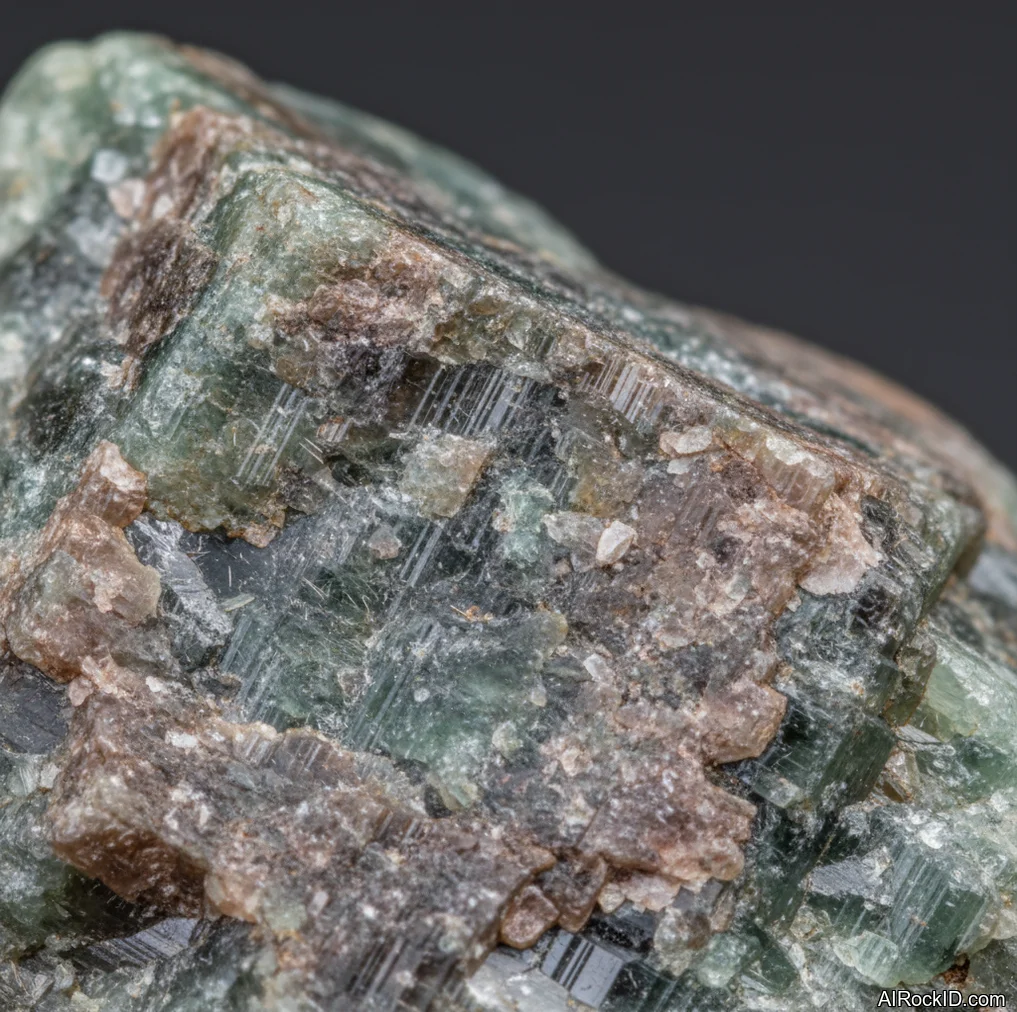
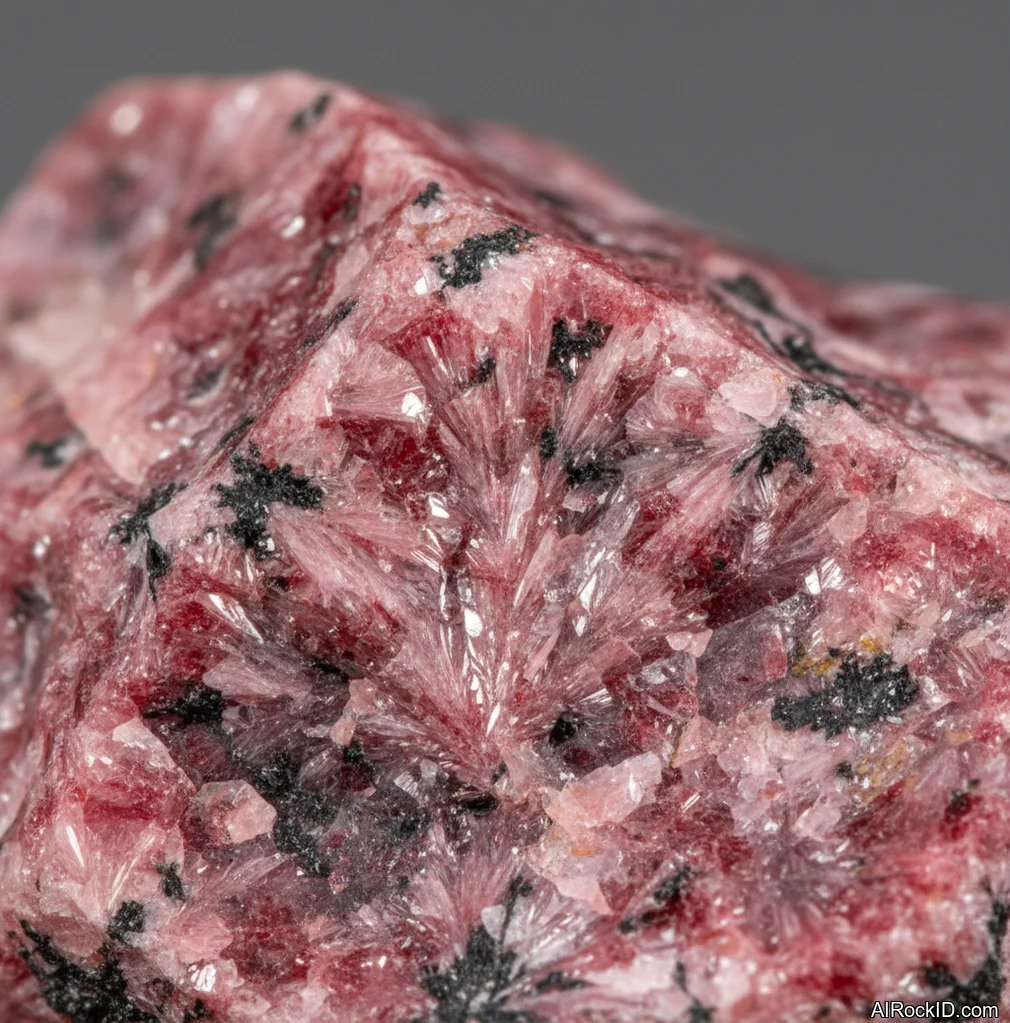
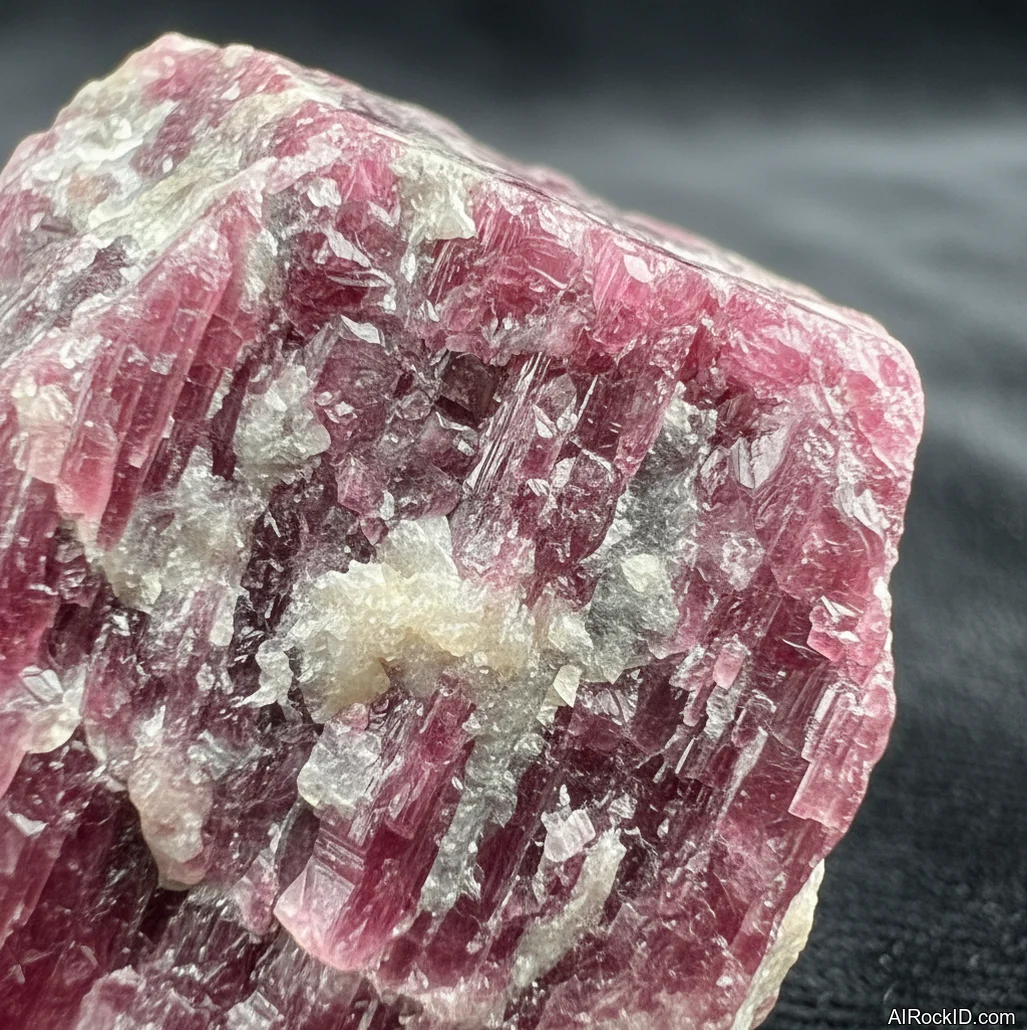
Thulite is a pink to rose-red, manganese-bearing variety of the mineral zoisite. Once you’ve had a few pieces in your hands, you start spotting that familiar look right away: warm pink, chalky white streaks, and those peppery dark spots, like someone tapped a pencil over the surface.
Grab a tumbled thulite and it doesn’t have that slick, glassy feel quartz gets. It’s denser-feeling in a different way, more solid and a little waxy under your fingers, and the polish usually comes out satin-like instead of mirror-bright, unless there’s a lot of quartz mixed in. Thing is, most of what’s sold is thulite in quartz, or thulite with calcite, so the pink shows up in patches and veins, not as one clean, even sheet of color.
People mix it up with rhodonite at first because, sure, both are pink and both can have dark markings. But thulite usually looks softer, more salmony, and the black tends to be tiny specks or smudges instead of those bold, inky veins rhodonite can get. And if you’re used to rhodonite’s heft, thulite can come off a bit lighter and more “rocky” in texture. Why does that matter? It’s one of those little tells you notice once you’ve compared them side by side.
Origin & History
Norway’s where the name really starts. Thulite got its first proper description in 1820 from Hans Morten Thrane Esmark, a Norwegian mineralogist, and he picked the name as a nod to “Thule,” the old classical label for far-northern lands.
And here’s the collector trivia that’s actually useful: the early stuff was linked to the Telemark area, and a lot of the classic thulite color people have in their heads still comes out of Norwegian deposits. It’s been used as a decorative stone in Norway for ages, so now and then you’ll run into older carvings and cabochons with that unmistakable “Nordic pink with white” look, the kind you can almost feel as a smooth, slightly waxy polish when you turn it in your hand.
Where Is Thulite Found?
Classic thulite is strongly associated with Norway, but it also turns up in metamorphic terrains in places like the USA and Australia. In the market, you’ll see a lot of pink material sold as thulite that’s actually thulite mixed with quartz or calcite.
Formation
Most of what you see with thulite starts out as rough, busted pieces from metamorphic zones. It forms when zoisite grows during regional metamorphism, and manganese sneaks into the chemistry, kicking the color over into pinks and those rose-red tones. So yeah, you’re looking at a metamorphic mineral that basically hit the jackpot with the right trace element.
If you’ve ever snapped a piece and stared at that fresh break (the kind that looks a little sugary and dull until the light hits it), you can tell it’s rarely one solid, even blob. Thulite likes company. Quartz and calcite, plus other gangue minerals, slice through it, which is why so much of it shows up mottled or veined. Sure, clean chunks with even color do exist, but that’s not what most dealers are actually sliding around in their trays.
How to Identify Thulite
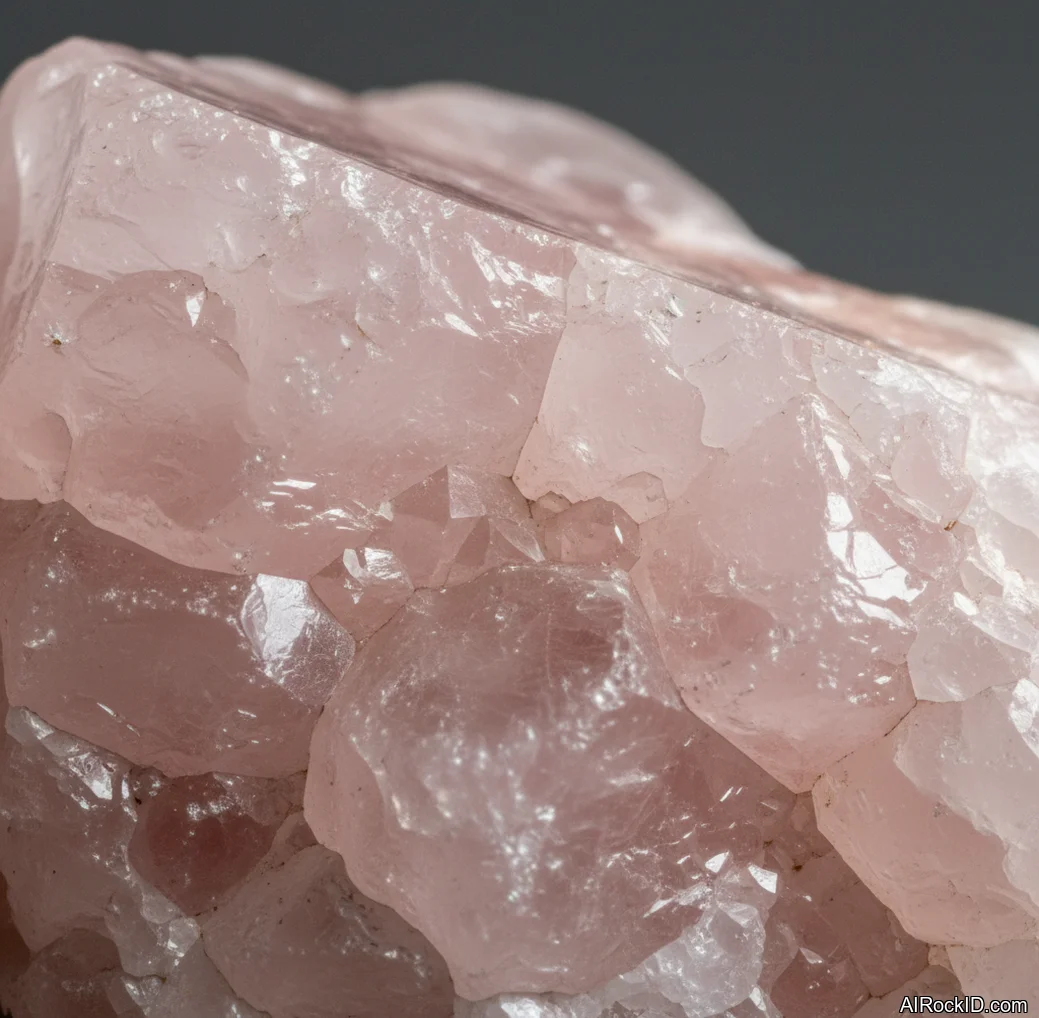
Color: Pink, salmon-pink, or rose-red, often with white quartz or calcite streaks and occasional dark speckling. Color is usually patchy rather than perfectly even.
Luster: Vitreous to pearly on fresh surfaces, often looking more waxy or satiny when polished in common lapidary material.
If you scratch it with a steel nail, it usually resists better than softer pink stones like calcite, but it won’t feel as bulletproof as quartz. The real test is side-by-side: put it next to rhodonite and you’ll see thulite’s pink tends to be lighter and more “salmon,” and the black markings are often less vein-like. Pick up a few pieces at a show and run your thumb over the polish. Thulite commonly has a slightly softer, satiny shine, especially when it’s mixed with quartz and the surface takes polish unevenly. And if a seller calls it “pink jasper,” ask to see the raw side. Jasper usually looks more uniform and micro-grainy, while thulite often shows that zoisite chunkiness with mixed minerals.
Common Look-Alikes
Thulite is sometimes confused with these materials:
- Rhodonite
- Pink calcite (often dyed)
- Pink aventurine
- Dyed quartz
- Pink opal
- Glass imitation
Market Cautions & Treatments
When AI Can Get This Wrong
AI photo tools mix up thulite and rhodonite a lot, since both have hot pink tones and dark spots. Thulite's surface looks waxy, not glassy, and it'll scratch glass but not steel. In-hand, the weight and that chalky-to-waxy texture help sort it out fast.
Properties of Thulite
Physical Properties
| Crystal System | Orthorhombic |
| Hardness (Mohs) | 6-6.5 (Hard (6-7.5)) |
| Density | 3.10-3.38 g/cm3 |
| Luster | Vitreous |
| Diaphaneity | Translucent to opaque |
| Fracture | Uneven |
| Streak | White |
| Magnetism | Non-magnetic |
| Colors | Pink, Salmon pink, Rose, Reddish pink, White (matrix), Black (specks/inclusions) |
Chemical Properties
| Classification | Silicates |
| Formula | Ca2Al3(SiO4)(Si2O7)O(OH) |
| Elements | Ca, Al, Si, O, H |
| Common Impurities | Mn, Fe |
Optical Properties
| Refractive Index | 1.691-1.706 |
| Birefringence | 0.010-0.015 |
| Pleochroism | Weak |
| Optical Character | Biaxial |
Thulite Health & Safety
Thulite’s usually safe to handle and keep on a shelf. Just treat it like any other lapidary stone. And if you’re grinding or cutting it, don’t breathe the dust (that fine, chalky stuff that hangs in the air).
Safety Tips
If you’re sawing or sanding, keep a little water going, put on a real respirator (not just a dusty paper mask), and wipe up the wet slurry when you’re done instead of sweeping up dry dust.
Thulite Value & Price
Price Range
Rough/Tumbled: $5 - $60 per piece
Cut/Polished: $5 - $25 per carat
Thing is, the price swings mostly come down to color saturation. It’s basically about how much clean pink you’re getting versus how much of it is just white quartz or calcite mixed in. Bigger rough that’s evenly colored and actually suitable for carving will cost more. But in the shop, most retail pieces are still pretty affordable.
Durability
Moderate — Scratch resistance: Good, Toughness: Fair
It’s stable in normal household conditions, but it can chip on sharp edges and doesn’t love being knocked around loose in a pocket with harder stones.
How to Care for Thulite
Use & Storage
Store thulite separately from quartz points and other harder stuff, because it’ll pick up scratches and little edge chips. A small pouch or a compartment box works fine.
Cleaning
1) Rinse with lukewarm water. 2) Use a mild soap and a soft toothbrush to get into pits and along white quartz seams. 3) Rinse again and pat dry; don’t cook it under a hot lamp to speed-dry.
Cleanse & Charge
For non-woo cleaning, running water and a quick wipe are enough. If you do energetic cleansing, people typically use smoke, sound, or a short rest on selenite because it’s simple and low risk.
Placement
On a desk or nightstand it looks great under warm light, since the pink reads softer and less chalky. If it’s a polished piece with a lot of quartz, rotate it until the white streaks look intentional instead of like cracks.
Caution
Skip harsh cleaners and don’t run super long ultrasonic sessions, especially if the piece has calcite or any open seams you can catch with a fingernail. And don’t toss it in a bag where it can clink and rattle against harder stones.
Works Well With
Thulite Meaning & Healing Properties
Compared to a lot of pink stones, thulite feels less like a soft blanket and more like a little pep talk. That’s the best way I can say it after keeping a palm stone in my pocket for a couple weeks and noticing the exact moments my fingers went hunting for it. It still sits in the love-and-heart lane, sure. But it’s got a brisker, more get-up-and-go feel than rose quartz.
Look, if you stare at thulite up close, it’s usually not one perfect wash of pink. You’ll catch breaks in the color, thin white seams, tiny freckles. Mine even has this chalky-looking streak that shows up when the light hits it from the side (you can feel it with your thumb too, just a little). That unevenness is part of why people link it with speaking up and getting unstuck emotionally. And in my own little pile, it’s the one I reach for when I need to have a hard conversation without turning it into A Whole Thing. You know?
But keep your feet on the ground with the claims. Thulite isn’t medicine, and it won’t fix anxiety or depression on its own. If you like using crystals as a reminder or a focus object, thulite works best when you pair it with practical action, like journaling, therapy homework, making the call you’ve been dodging, or even just writing down what you’re actually afraid to say.
Common mistakes
- Identifying any opaque pink stone as thulite based on color alone
- Confusing rhodochrosite banding with thulite’s granular texture
- Assuming all Norwegian pink stones are thulite without mineral confirmation
- Using acid or harsh chemical tests on finished jewelry or polished pieces
- Overlooking dye in very uniform bright-pink beads
- Expecting thulite to have the same durability as harder pink gemstones
Identify Thulite from a photo
Compare Thulite traits, care tips, value clues, and common lookalikes with a clear photo.