Rhodonite


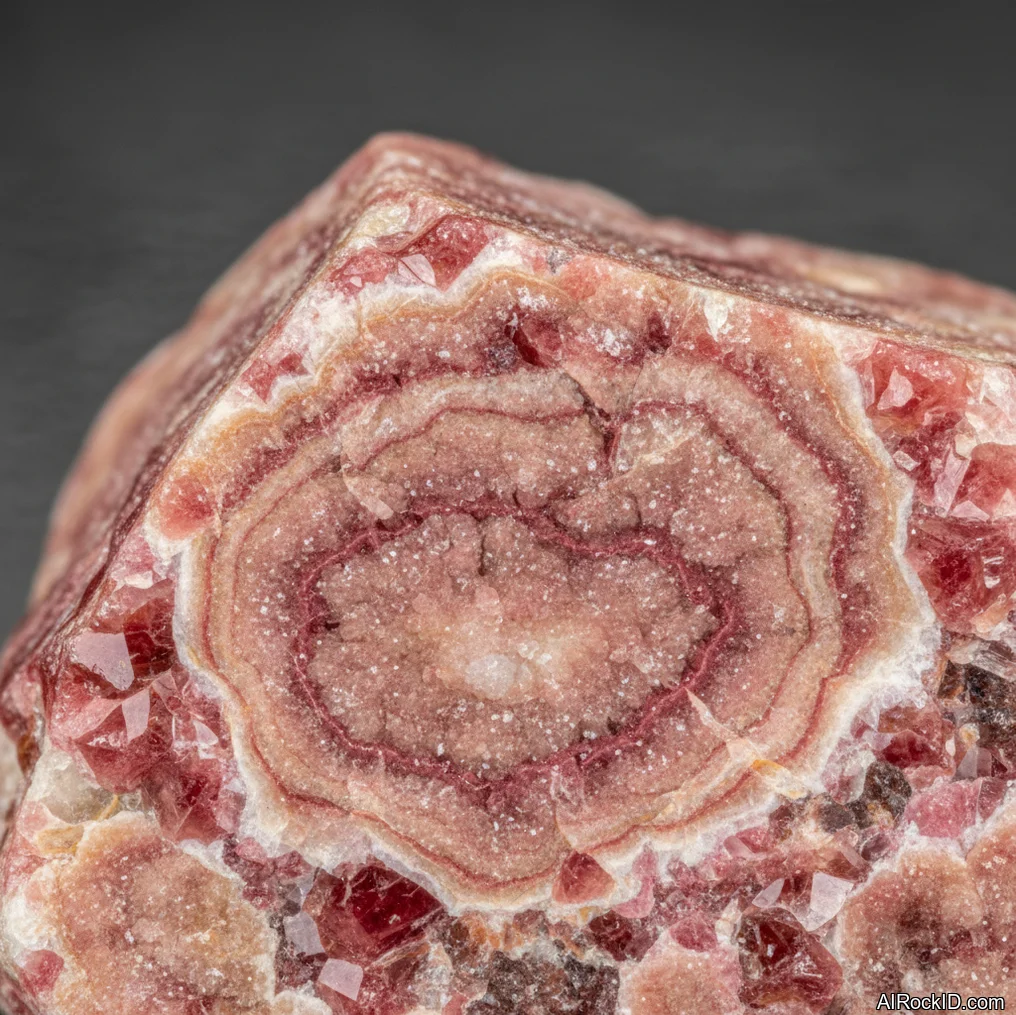
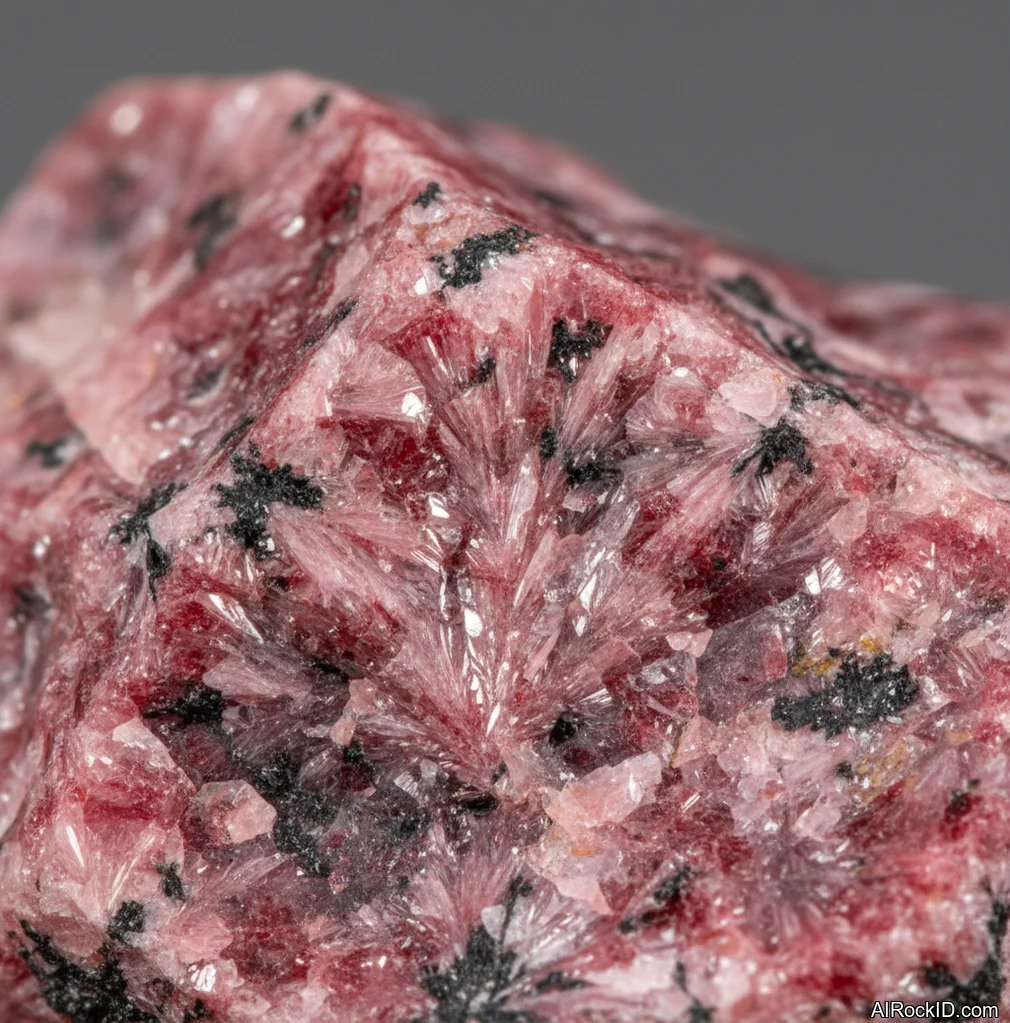
Quick answer: Rhodonite is commonly identified by its rosy pink to red-pink color with dark gray or black manganese-oxide veins or patches. It is often polished into cabochons, beads, carvings, and decorative objects, and it can be confused with rhodochrosite, thulite, and dyed stones.
AI Rock ID can help compare rhodonite against similar pink minerals by analyzing color, veining, luster, and visible texture from a photo. RockIdentifier.io provides reference information that can be used alongside physical checks such as hardness, streak, and inspection for dye or surface coatings.
Good fit
- Collectors who want a recognizable pink stone with natural dark veining
- Jewelry buyers looking for cabochons, beads, or pendants rather than high-wear ring stones
- Beginners learning to distinguish pink manganese minerals
- People interested in lapidary material for carvings, palm stones, or decorative pieces
Not a good fit
- Situations requiring a very hard gemstone for daily impact or abrasion
- Buyers who want a transparent faceted gem appearance
- Specimens that will be exposed often to acids, harsh cleaners, or ultrasonic cleaning
- Anyone needing a mineral identification based on color alone
Most commonly confused with
- Rhodochrosite: Usually shows pink and white banding, reacts to acid more readily, and is softer than rhodonite.
- Thulite: Often has a more speckled pink look and lacks the strong black manganese-oxide veining typical of many rhodonite pieces.
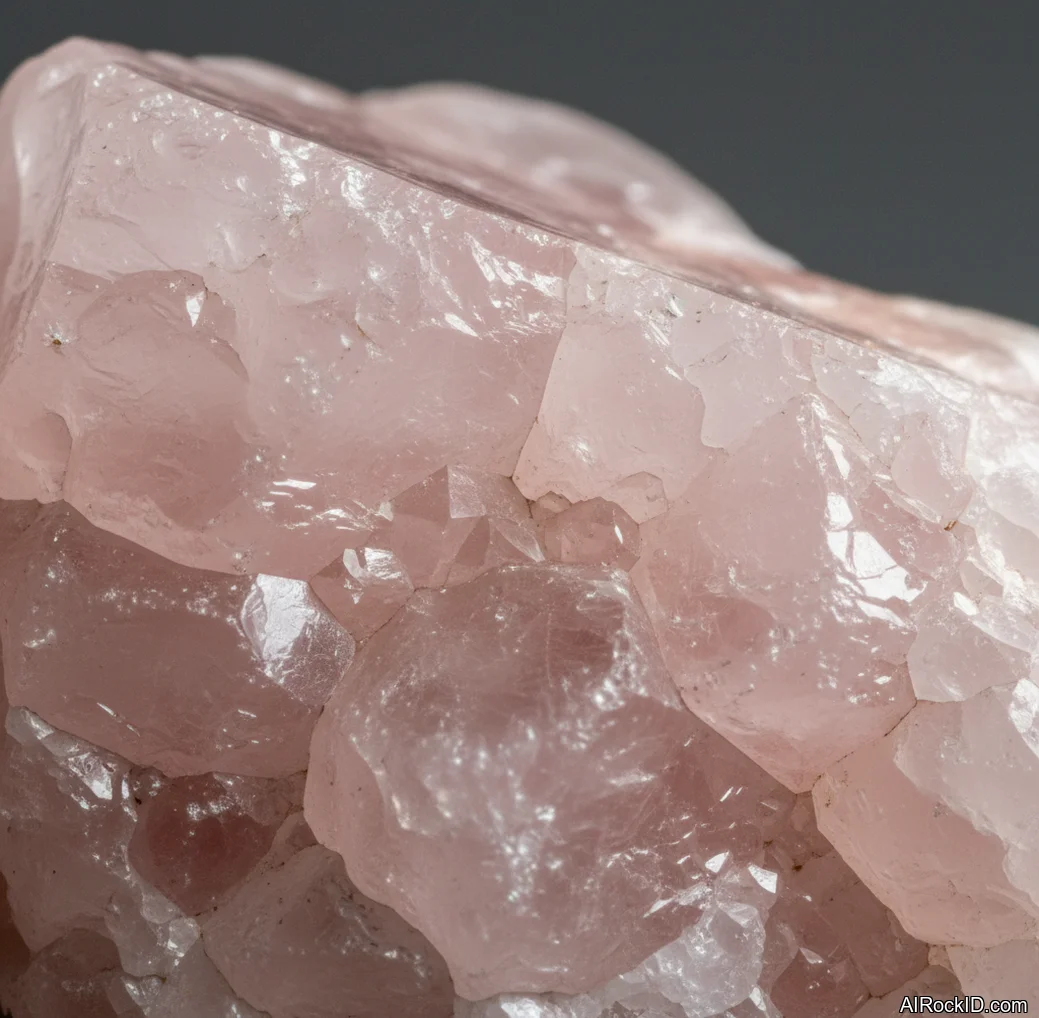
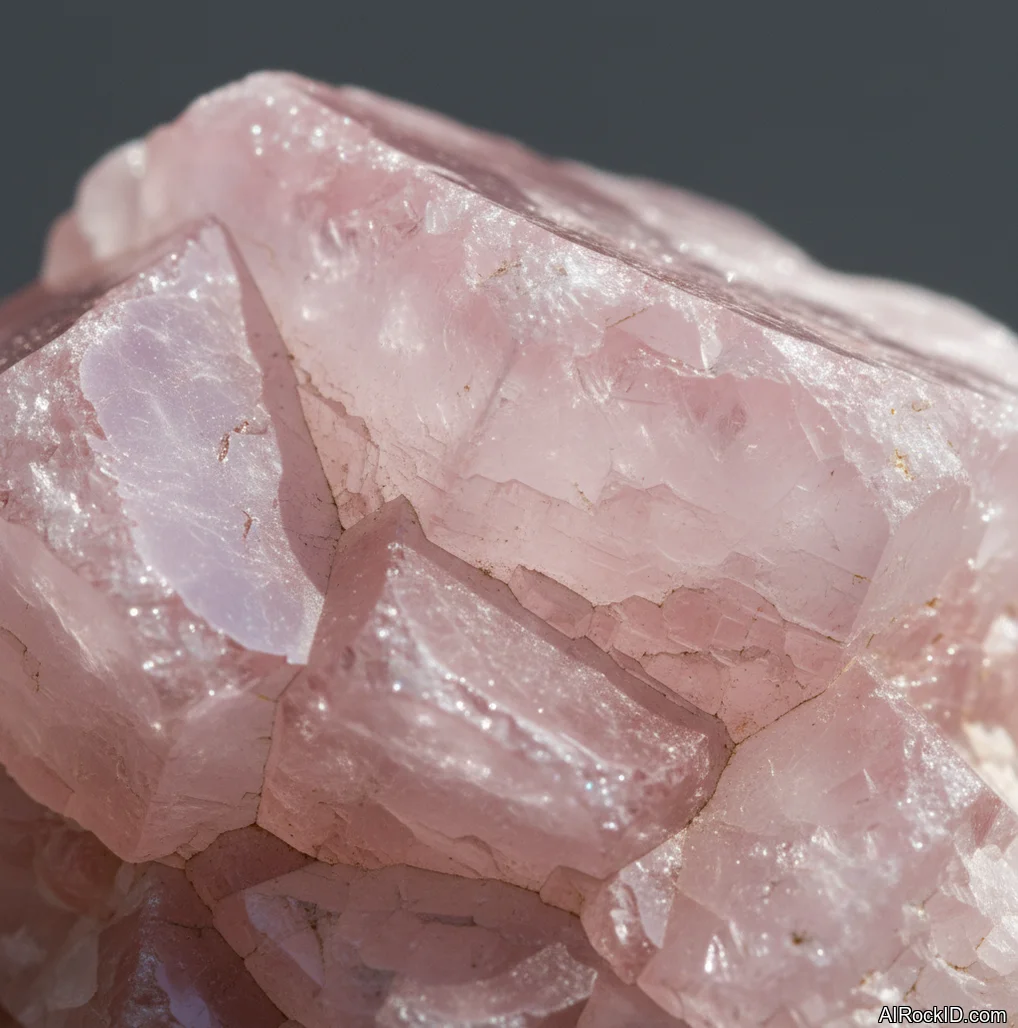
- Rose Quartz: Typically translucent to cloudy pink quartz without black vein networks and has greater hardness.
- Pink Opal: Usually has a softer, waxier appearance and does not show rhodonite’s manganese-oxide veining pattern.
Rhodonite vs. Similar Pink Stones
| Stone | Typical appearance | Key distinction | Mohs hardness |
|---|---|---|---|
| Rhodonite | Pink to red-pink with black or dark gray veining | Manganese silicate with common oxide veining | 5.5-6.5 |
| Rhodochrosite | Pink with white bands or swirls | Carbonate mineral; softer and acid-sensitive | 3.5-4 |
| Rose Quartz | Pale to medium cloudy pink | Quartz; lacks black manganese veining | 7 |
| Thulite | Pink, mottled, or granular | Zoisite variety; often more speckled than veined | 6-6.5 |
| Dyed Howlite | Bright or uneven pink with gray matrix | Color may concentrate in pores or fractures | 3.5 |
AI identification confidence
AI identification of rhodonite is usually strongest when the photo shows both the pink body color and the dark manganese-oxide veining in natural light. Confidence is lower for uniformly pink, heavily polished, dyed, or cropped specimens where texture and matrix are not visible.
When AI gets it wrong
- A close-up photo hides the overall veining pattern or stone shape.
- The specimen is dyed, coated, or color-enhanced, making it resemble natural rhodonite.
- Lighting makes rose quartz, rhodochrosite, or thulite appear closer in color to rhodonite.
- A polished bead or cabochon has no visible matrix, fracture pattern, or diagnostic surface detail.
Final recommendation
For buying rhodonite, look for natural-looking pink color, clear but not overly uniform dark veining, and seller disclosure about any dye or stabilization. For identification, combine visual comparison with hardness, density, and reaction-free cleaning habits rather than relying on color alone.
How to Spot Natural vs. Dyed Rhodonite
Natural rhodonite commonly shows irregular pink areas with dark manganese-oxide veins, patches, or networks rather than perfectly even color. Dyed material may show unusually intense pink concentrated in cracks, pits, drill holes, or along bead edges. A white cloth dampened with water should not pick up color from a properly stable stone, but this check is not a substitute for lab testing.
Buying Tips for Rhodonite Jewelry
Rhodonite is better suited to earrings, pendants, brooches, and beads than to rings exposed to constant knocks. In jewelry, inspect polish quality, cracks, drill-hole damage, and whether the setting protects corners or thin edges. Ask whether the stone is natural, stabilized, dyed, or assembled if the color looks unusually uniform or vivid.
Photo Tips for Rhodonite Identification
Use daylight or neutral indoor lighting and include one full-stone image plus one close-up of the surface. A size reference, an unedited color view, and photos of both polished and broken or unpolished areas can improve identification accuracy. Avoid heavy filters, wet surfaces, or colored backgrounds because they can change the apparent shade of pink.
What Is Rhodonite?
Rhodonite is a pink to red manganese silicate mineral in the pyroxenoid group, and it’s usually streaked with black manganese-oxide veins.
Hold a palm stone for a second. You can feel the weight right away, kind of medium-heavy for something that size, not light and airy like some quartz. The classic piece is bubblegum pink with black, branchy lines running through it, like someone dripped ink into tiny cracks and it just spread. And if it’s been polished properly, the pink parts go nice and glassy, while the black seams stay a bit duller to the touch (almost chalky compared to the shine).
People mix it up with rhodochrosite all the time. But rhodochrosite usually has bands and a softer, candy-ish look, while rhodonite comes off chunkier, with that broken-and-healed style veining. Thing is, a lot of what you see for sale is tumbled material, so you won’t always get clean crystal faces or an obvious structure. Still, a good slab of rhodonite? Hard to miss. That pink-and-black contrast reads from across the room.
Origin & History
Russia gets a lot of the early credit here. Rhodonite was described as a mineral species in the early 1800s, and the name comes from the Greek “rhodon,” meaning rose, which fits the pink color. It was formally described in 1819 by Christoph Friedrich Jasche.
And then there’s the older decorative-stone angle collectors keep bumping into. Big Russian chunks were carved into vases, columns, and those ornate desk sets in the 18th and 19th centuries, which is why you still hear “Russian rhodonite” getting pushed at shows. Some of it really is gorgeous (that deep pink with the black veining is hard to forget once you’ve held a polished piece). But a lot of modern “Russian” labels are basically just a sales nudge, so I always ask for locality if I’m paying extra.
Where Is Rhodonite Found?
Rhodonite shows up in manganese-rich metamorphic settings worldwide, with well-known material from Russia’s Urals, Broken Hill (Australia), and classic Franklin, New Jersey pieces.
Formation
Most of the rhodonite you’ll ever handle started out as manganese-heavy sediments, then got cooked and squeezed during metamorphism. You’ve got manganese in the mix, you’ve got silica, and if the temperature and pressure land in the right zone, rhodonite grows right alongside spessartine, bustamite, tephroite, and a grab bag of manganese oxides.
Look, that black veining isn’t random decoration. It’s basically the stone’s later weathering story written right across the pink. Those dark seams are usually manganese oxides that worked their way into cracks and along grain boundaries. I’ve cracked open rough where the inside is a cleaner, brighter pink, but the outside is louder with black because it sat at the surface longer and had more time to oxidize (you can almost feel the difference in that duller rind when you run a thumb over it). So yeah, a fresh break can look brighter than the weathered skin. Why? The outside’s been aging in the open.
How to Identify Rhodonite
Color: Typically medium pink to rose-red, often with black manganese-oxide veining or patchy dark zones. Some pieces lean brownish-pink or grayish if they’re more altered.
Luster: Vitreous to pearly on good surfaces; more dull where it’s massive and weathered.
If you scratch it with a steel nail, a lot of pieces will mark or at least feel like they’re right on the edge, since it sits around Mohs 5.5 to 6.5. The real test in hand is the look of the black: in natural rhodonite it tends to run as veinlets and fractures, not as evenly speckled dye. And if you’ve handled a lot of tumbles, you’ll notice rhodonite often has tiny undercut pits along the black seams where the oxide is softer and polishes back.
Common Look-Alikes
Rhodonite is sometimes confused with these materials:
- Thulite (pink zoisite), often sold as "pink rhodonite" in tumbles
- Pink opal (Peruvian pink opal), especially when it has gray or brown matrix
- Rhodocrosite (banded or massive), confused when rhodonite has little to no black veining
- Pink feldspar (orthoclase or microcline), polished pieces can mimic the same soft pink body color
- Dyed howlite or dyed magnesite sold as "rhodonite" (dye grabs cracks and pits)
- Pink glass or resin composites with painted-on black "veins"
Market Cautions & Treatments
When AI Can Get This Wrong
In photos, AI mixes rhodonite up with thulite and pink opal all the time because the camera just sees "soft pink with dark bits" and ignores the manganese-oxide vein pattern. The real test is a quick hardness check and a loupe: rhodonite (5.5-6.5) won’t take a clean scratch from a copper coin, but it also won’t reliably scratch glass like quartz, and the black veins should look like natural oxide branching instead of painted lines or dye sitting in pits.
Properties of Rhodonite
Physical Properties
| Crystal System | Triclinic |
| Hardness (Mohs) | 5.5-6.5 (Medium (4-6)) |
| Density | 3.40-3.73 g/cm3 |
| Luster | Vitreous |
| Diaphaneity | Translucent to opaque |
| Fracture | Uneven |
| Streak | White |
| Magnetism | Non-magnetic |
| Colors | Pink, Rose, Red, Brownish pink, Grayish pink, Black (veining) |
Chemical Properties
| Classification | Silicates (inosilicate, pyroxenoid) |
| Formula | MnSiO3 |
| Elements | Mn, Si, O |
| Common Impurities | Fe, Mg, Ca, Zn |
Optical Properties
| Refractive Index | 1.710-1.750 |
| Birefringence | 0.020-0.025 |
| Pleochroism | Weak |
| Optical Character | Biaxial |
Rhodonite Health & Safety
Handling it and putting it on display is pretty low risk. But when you start cutting or grinding it, treat the dust like you would any other silica-bearing rock dust. Wet it down with water so it doesn’t go airborne, keep good ventilation running (you can literally see the haze hang in the air if you don’t), and wear a proper respirator while you’re shaping it.
Safety Tips
Wet-cut or wet-sand so you’re not kicking up a cloud of dust, and wash your hands once you’re done working rough. And don’t dry-grind it on a bench unless you’ve got extraction running.
Rhodonite Value & Price
Price Range
Rough/Tumbled: $5 - $60 per piece
Cut/Polished: $2 - $20 per carat
Price jumps around for two main reasons: color and what the black veining turns into after a polish. Clean, saturated pink always runs higher, and if the dark lines tighten up and look sharp once it’s glossy (instead of going muddy), the tag goes up too. Big chunks of rough that are actually crack-free are way harder to come by than little tumbles you can scoop up by the handful, so the price climbs quick.
Durability
Moderate — Scratch resistance: Fair, Toughness: Fair
It’s generally stable in normal home conditions, but the softer manganese-oxide veins can undercut and chip if it takes a knock.
How to Care for Rhodonite
Use & Storage
Store it so harder stones don’t rub it up, especially quartz points that will leave scratches. I keep rhodonite tumbles in a separate pouch because the black seams can catch and chip on sharp edges.
Cleaning
1) Rinse with lukewarm water and a drop of mild soap. 2) Use a soft toothbrush to clean along the black veins and any pits. 3) Rinse well and dry with a soft cloth; skip ultrasonic cleaners.
Cleanse & Charge
For a simple reset, rinse quickly in water and let it dry fully. If you use smoke or sound cleansing, both are gentle options that won’t mess with the polish.
Placement
Looks best where side light hits it, because the pink will flash and the black lines pop. Keep it out of constant abrasion zones like a pocket with keys.
Caution
Skip harsh acids and the really aggressive polishing stuff at home. And don’t count on every piece of rhodonite taking a mirror finish, because those oxide veins can undercut and leave little pits where the surface drops out. If you’re wearing it as jewelry, handle it like a softer stone. So take it off before workouts, and definitely before cleaning. Why risk it?
Works Well With
Rhodonite Meaning & Healing Properties
In the metaphysical world, people talk about rhodonite like it’s an “emotional first-aid kit” stone. It’s usually linked to compassion, forgiveness, plus that moment when anger spikes and you’re trying not to blow up. I’ve seen folks in a crystal shop go straight for it when they want something that feels warm and steady, not floaty. And yeah, that matches how it sits in your palm. That dusty pink with the black veining looks like softness with guardrails.
But I’m picky about how people sell the idea. Rhodonite isn’t medical care. It won’t replace therapy, sleep, or having an actual plan for stress. What it can do, for some people, is work like a physical reminder. You feel the cool, slick polish (that slightly waxy smoothness you get on a well-tumbled piece), you notice the sharp color contrast, and it nudges you to slow down before you say the thing you’ll regret. I’ve carried a rhodonite worry stone on long drives, and just the thumb-rubbing habit can knock your breathing down a notch. Small thing. Still real.
So if you’re using it on purpose, I’d pair it with something grounding when life’s messy. The issue with rhodonite-only routines is that people expect it to “fix the feeling” while they keep poking the bruise. Put it on your desk, take the hint, and do the unglamorous stuff too. Drink water. Send the hard text. Take the walk. Maybe eat something that isn’t just coffee (you know?).
Common mistakes
- Identifying every pink stone with black lines as rhodonite without checking hardness or texture.
- Confusing rhodonite with rhodochrosite because both are manganese-rich pink minerals.
- Assuming very bright, uniform pink beads are untreated natural rhodonite.
- Using acid or harsh cleaners to test a finished stone, which can damage similar minerals and jewelry settings.
- Expecting all rhodonite to have the same color pattern; some pieces are more mottled, massive, or dark than others.
Identify Rhodonite from a photo
Compare Rhodonite traits, care tips, value clues, and common lookalikes with a clear photo.