Zoisite


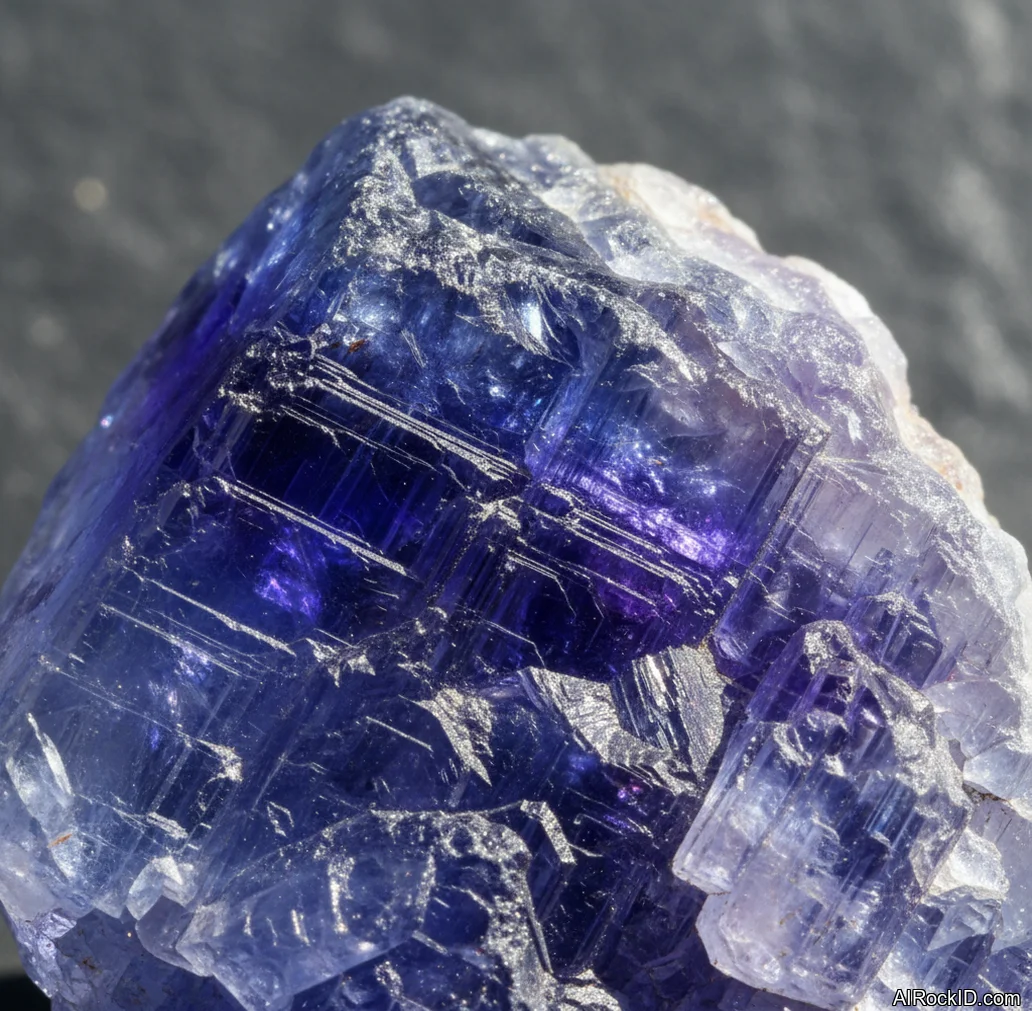
Quick answer: Zoisite is a calcium aluminum silicate mineral best known for its green massive form, pink thulite, and blue-to-violet tanzanite variety. It can resemble several other minerals, so color, crystal habit, hardness, and locality are useful clues for identification.
AI Rock ID can help compare a zoisite photo against lookalike minerals by evaluating color, texture, crystal form, and visible inclusions. RockIdentifier.io provides crystal reference information that can support visual identification, but lab testing may be needed for valuable tanzanite or uncertain specimens.
Good fit
- Collectors who want one mineral species with several distinct color varieties
- Beginners comparing green, pink, or blue stones with similar-looking minerals
- Jewelry buyers checking whether a blue stone is tanzanite, sapphire, iolite, or glass
- Specimen collectors interested in Tanzanian, Norwegian, Austrian, or Pakistani material
Not a good fit
- Situations requiring a gem identity confirmation without testing
- Rings or daily-wear jewelry where impact resistance is the main priority
- Anyone expecting color alone to prove a stone is tanzanite or thulite
Most commonly confused with
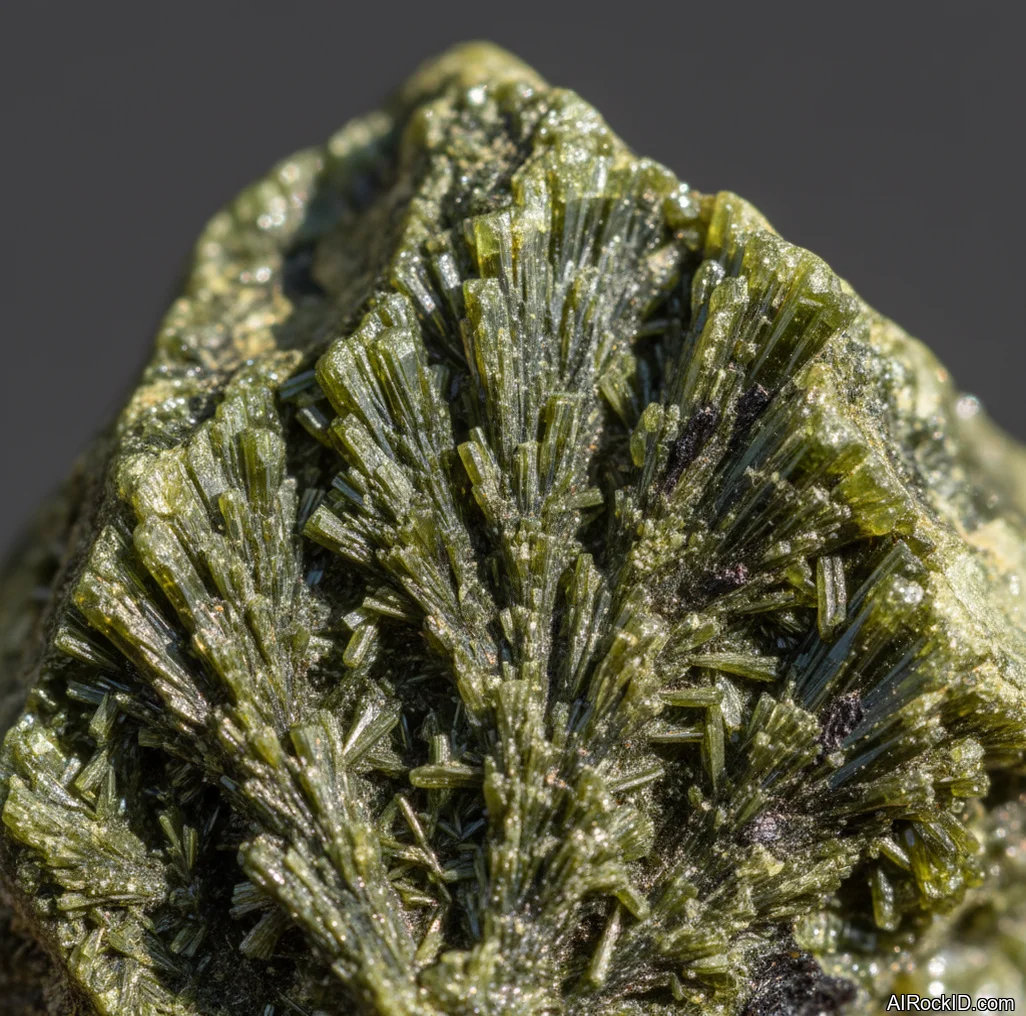
- Epidote: Epidote is commonly pistachio green and often has a more resinous look; zoisite may occur in granular masses or prismatic crystals and can show different variety colors.
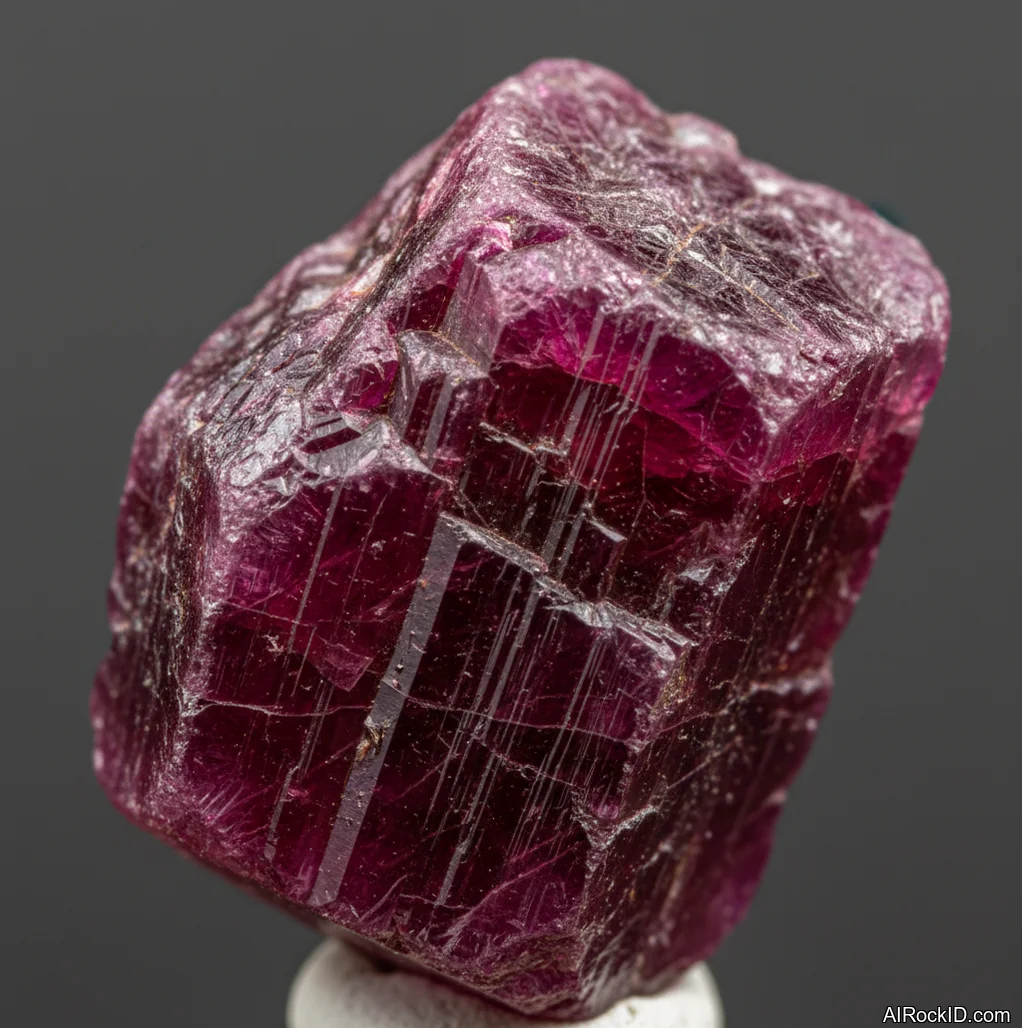
- Ruby in Zoisite: Ruby in zoisite is a rock-like material containing red corundum crystals in green zoisite, not pure zoisite alone.
- Sapphire: Blue sapphire is harder at Mohs 9 and has different optical properties; tanzanite is a blue-violet zoisite variety with lower hardness.
- Iolite: Iolite can show blue-violet pleochroism like tanzanite, but it has a different chemistry, lower refractive index, and often a grayer tone.
Zoisite Lookalike Comparison
| Stone | Key visual clue | Practical difference |
|---|---|---|
| Zoisite | Green, pink, gray, or blue-violet; may be massive or prismatic | Mohs 6–7; includes thulite and tanzanite varieties |
| Epidote | Pistachio to dark green, often elongated or granular | Related silicate but usually more yellow-green and commonly resinous |
| Sapphire | Blue corundum with strong luster and high durability | Much harder at Mohs 9; does not scratch as easily as tanzanite |
| Iolite | Blue to violet-gray with strong directional color change | Often darker or grayer than tanzanite; different gem constants |
| Glass imitation | Very uniform color, bubbles, or molded surface features | Lacks natural crystal inclusions and gemological properties |
AI identification confidence
Photo-based identification of zoisite is usually moderate when the specimen shows distinctive pink thulite, green zoisite, or blue-violet tanzanite color with clear texture. Confidence is lower for polished stones, faceted gems, and mixed rocks because many minerals and imitations can share similar colors.
When AI gets it wrong
- A polished cabochon hides crystal habit, cleavage, and matrix clues
- Lighting shifts blue-violet tanzanite toward sapphire-like blue or iolite-like gray
- Green zoisite is photographed without scale and resembles epidote, serpentine, or jade-like material
- A composite stone, dyed material, or glass imitation has a natural-looking color
Final recommendation
Use zoisite identification clues together rather than relying on color alone, especially for tanzanite and other valuable blue stones. For purchases with significant value, request disclosure of treatments, origin claims, and gemological testing when appropriate.
How to Check Zoisite Authenticity
Authenticity checks should start with the seller’s description, variety name, and any disclosed treatments. Tanzanite is commonly heat treated to improve blue-violet color, so heat treatment is not automatically a sign of imitation. Natural inclusions, pleochroism, hardness, refractive index, and specific gravity can help separate zoisite from glass, iolite, sapphire, and dyed materials. High-value tanzanite should be evaluated by a qualified gemologist or accompanied by a reputable report.
Zoisite Varieties and Trade Names
Tanzanite is the blue to violet gem variety of zoisite and is strongly associated with Tanzania. Thulite is the pink to reddish variety, often used for cabochons, beads, and carvings. Green zoisite may occur as massive material, prismatic crystals, or as the green host in ruby-in-zoisite specimens. Trade names can vary, so a variety name should be checked against the stone’s color, locality, and mineral content.
Zoisite Buying Notes
For faceted tanzanite, color, clarity, cut, carat weight, and treatment disclosure are major buying factors. For thulite and green zoisite, even color, attractive patterning, and durability of the polish are usually more important than transparency. Be cautious with vague labels such as “natural blue crystal” or “African sapphire” when the listing is actually tanzanite or an imitation. Photos taken in multiple lighting conditions are helpful because zoisite varieties can look different under daylight, indoor light, and camera saturation.
What Is Zoisite?
Zoisite is a calcium aluminum sorosilicate mineral in the epidote group, with the formula Ca2Al3(SiO4)3(OH).
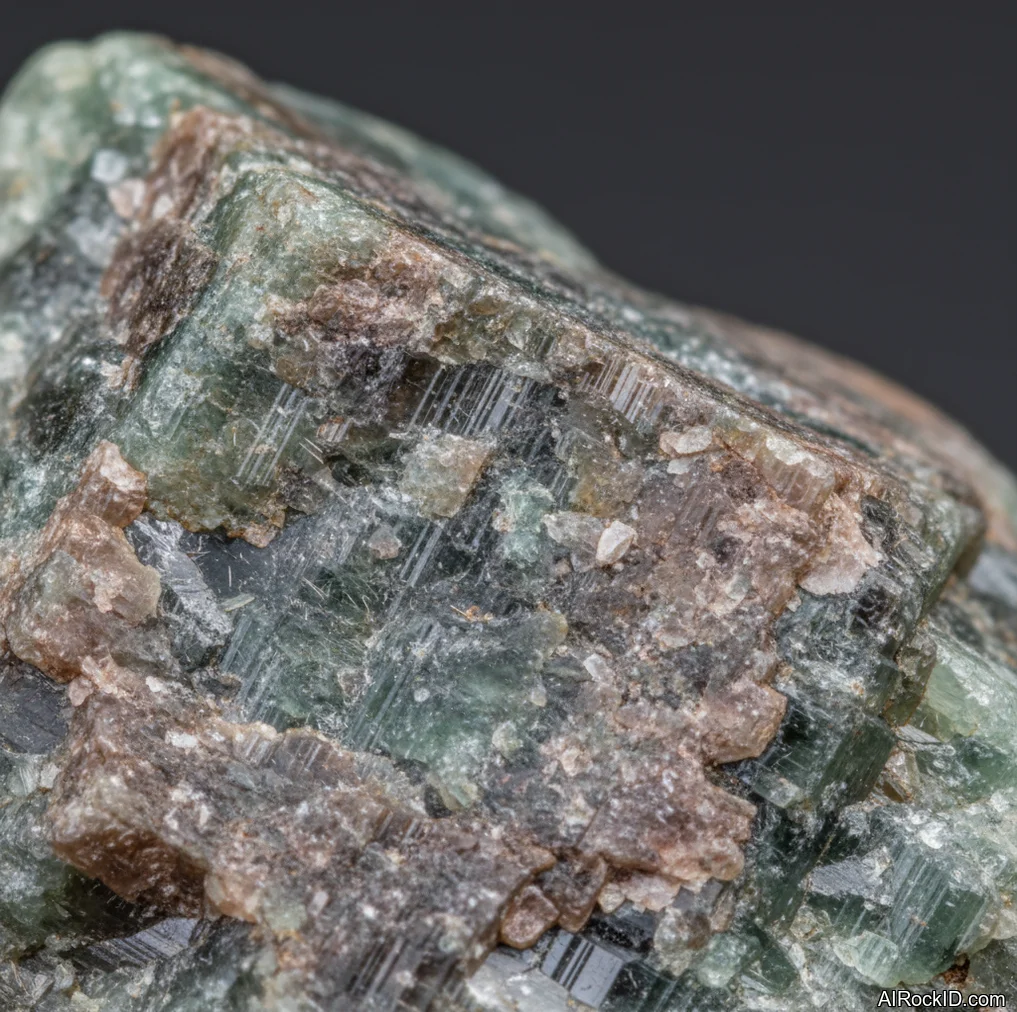
Grab a chunk of green zoisite and you feel it right away. It isn’t greasy like serpentine. It also doesn’t have that glassy-slick quartz feel. It’s got this dry, grippy “yep, this is a rock” texture, and when you’ve got a fresh break you’ll see flat cleavage faces that catch the light and then vanish again as you turn it under a shop lamp (the kind that makes everything look harsher than it is).
People confuse it with epidote or prehnite all the time, especially in that pistachio-to-olive range. But once you’ve actually handled a few pieces, it’s different. Zoisite tends to look blockier, with cleaner edges. And if it’s anyolite, the ruby stands out hard, like someone pressed little cranberry bits into green dough. Nice looking, sure, but it’s not always dainty. Some chunks shrug off a knock. Others, though? Tap the wrong corner and it’ll decide to split along cleavage like it was just waiting for an excuse.
Origin & History
In 1805, Abraham Gottlob Werner described zoisite as a brand-new mineral species. The first pieces people were passing around came out of the Saualpe area in Carinthia, Austria.
The name tips its hat to Baron Sigmund Zois, a Slovenian Austrian nobleman who collected minerals and, honestly, bankrolled European mineralogy in those early days. And yeah, that makes sense. Most collectors I’ve met have at least one zoisite or clinozoisite tucked into a tray, usually in one of those little square boxes with the foam that catches on your fingertips, because it’s a classic species with an actual paper trail behind it.
Where Is Zoisite Found?
Good zoisite shows up in metamorphic belts worldwide, but the names people recognize come from Austria (classic), Tanzania (tanzanite), and East Africa for ruby-in-zoisite.
Formation
Most zoisite shows up in regional metamorphism, when calcium-rich rocks get cooked and squeezed deep underground and there’s enough aluminum and silica in the mix to build sorosilicates. Think metamorphosed limestones or those impure, calcareous sediments that got hauled down into higher-grade conditions and came back out changed.
Look closely at a matrix chunk and you’ll often catch it hanging out with quartz, amphiboles, feldspar, and sometimes garnet. In the field it’s usually the kind of thing you notice as chunky pale-to-green masses, or as prismatic crystals sitting in schists and gneisses (the ones that break with that gritty, uneven snap when you tap them).
And when the gem variety is tanzanite, you’re basically staring at a pretty exact metamorphic setup plus trace elements, plus the dumb luck of crystals growing clean enough to cut. That’s the whole trick, really.
How to Identify Zoisite
Color: Most common zoisite is green to gray-green, sometimes brownish, and it can also be pink (thulite) or blue to violet-blue in the tanzanite variety. Color zoning happens, so don’t expect perfect uniformity in natural pieces.
Luster: Vitreous on fresh faces, and it can look slightly pearly along cleavage surfaces.
If you scratch it with a steel nail, it usually resists, but a quartz point will bite it. That quick hardness check saves you from confusing it with softer green lookalikes. Pick up a broken bit and tilt it under a single light source. Those cleavage planes can flash like little mirrors, and you’ll see the flash vanish when you rotate just a few degrees. And if you’re handling anyolite, run a fingertip over the red ruby spots. They feel harder and a touch “sharper” at the edges than the zoisite host.
Common Look-Alikes
Zoisite is sometimes confused with these materials:
- Epidote (especially pistachio-green massive epidote)
- Serpentine (green massive material sold as “jade”)
- Nephrite jade (dark green tough massive pieces)
- Green grossular garnet / hydrogrossular (massive “Transvaal jade” type material)
- Dyed quartzite or dyed chalcedony sold as “green zoisite”
- Green glass or slag glass sold as “zoisite” cabochons
Market Cautions & Treatments
When AI Can Get This Wrong
Phone ID apps mix green zoisite up with epidote and serpentine all the time because a flat, mossy green photo hides the cleavage and grain. The real test is in-hand: zoisite often shows clean, planar cleavage faces on a fresh break and a dry, grippy feel, while serpentine feels waxy and epidote usually looks more fibrous or splintery. If you scratch it with a steel nail and it barely marks but it will still scratch glass, you’re in the right hardness zone for zoisite instead of softer serpentine.
Properties of Zoisite
Physical Properties
| Crystal System | Orthorhombic |
| Hardness (Mohs) | 6-7 (Hard (6-7.5)) |
| Density | 3.10-3.38 g/cm3 |
| Luster | Vitreous |
| Diaphaneity | Transparent to translucent |
| Fracture | Uneven |
| Streak | White |
| Magnetism | Non-magnetic |
| Colors | Green, Gray-green, Yellow-green, Brown, Pink, Blue, Violet-blue |
Chemical Properties
| Classification | Silicates (sorosilicate) |
| Formula | Ca2Al3(SiO4)3(OH) |
| Elements | Ca, Al, Si, O, H |
| Common Impurities | V, Cr, Fe, Mn, Ti |
Optical Properties
| Refractive Index | 1.691-1.700 |
| Birefringence | 0.008-0.013 |
| Pleochroism | Strong |
| Optical Character | Biaxial |
Zoisite Health & Safety
Zoisite’s usually safe to handle and keep out on a shelf or in a case. But if you’re cutting or grinding it, treat it like any other stone in the shop: the dust gets fine and chalky, clings to your fingers and the bench top, so use normal lapidary dust precautions.
Safety Tips
If you’re doing any shaping or polishing, put on a real respirator (not just a paper mask), and keep things wet so the dust doesn’t end up floating everywhere.
Zoisite Value & Price
Price Range
Rough/Tumbled: $10 - $250 per specimen
Cut/Polished: $80 - $1,000+ per carat (tanzanite only)
Prices can jump around a lot depending on what you’re looking at and how nice the stone is. Most green zoisite won’t wreck your budget. But once you get into clean, blue tanzanite color, bigger carat weight, and a solid cut, it gets expensive in a hurry. Real-money expensive.
Durability
Moderate — Scratch resistance: Good, Toughness: Fair
Zoisite is stable in normal conditions, but its cleavage means it can chip if it gets knocked around.
How to Care for Zoisite
Use & Storage
Store zoisite away from harder stones like quartz and topaz so it doesn’t get scuffed in a mixed bowl. If it’s a sharp crystal, wrap it so the edges don’t tap against anything.
Cleaning
1) Rinse briefly in lukewarm water with a drop of mild soap. 2) Use a soft brush on crevices, especially around matrix. 3) Rinse again and pat dry; don’t blast it with a hot hair dryer.
Cleanse & Charge
For a gentle reset, I stick mine on a windowsill for indirect light or set it on a piece of selenite. Skip harsh salt soaks if the specimen has cracks or a crumbly matrix.
Placement
On a shelf, angle it so the cleavage faces catch a lamp. For anyolite, a neutral background helps the ruby spots read as red instead of muddy.
Caution
Skip ultrasonic or steam cleaners, especially if it’s tanzanite or anything with fractures. And don’t just drop it loose in your pocket next to your keys. Cleavage planes and sharp corners? They’ll chip or snap fast (keys always win).
Works Well With
Zoisite Meaning & Healing Properties
Compared to a lot of “feel-good” stones, zoisite feels weirdly practical the second you pick it up. It’s steady. Not flashy. When I’m sorting flats at a show and my brain is toast, I’ll leave a palm-sized piece of green zoisite right on the table and keep reaching for it without thinking. It’s cool to the touch, that smooth-stone cool you feel in your fingertips. No fuss.
In the crystal world, people link zoisite with growth, recovery, and getting your momentum back after you’ve been stuck. If that’s how you’re using it, don’t overthink it. Hold it for a minute before you journal. Or just set it by your workspace so you see it and start one small task instead of spiraling. But it isn’t medicine. And it’s not a substitute for actual help when you need it.
And here’s the collector reality check. A lot of what gets marketed as zoisite is really “ruby in zoisite,” and that combo changes the whole vibe people assign to it. The green host reads calmer; the ruby spots feel more like “go.” I’ve handled plenty of anyolite that was dyed or stabilized, though, and those pieces feel warmer and kind of plastic-y in your hand compared to a clean, cool, natural chunk. Trust your hands as much as your eyes. Why not?
Common mistakes
- Identifying every blue-violet gemstone as tanzanite without checking hardness or optical properties
- Assuming heat-treated tanzanite is fake; heat treatment is common and should be disclosed
- Confusing ruby-in-zoisite with pure zoisite or with ruby in fuchsite
- Using color alone to separate green zoisite from epidote, serpentine, or jade-like stones
- Buying expensive tanzanite from photos only without a return policy or gemological documentation
Identify Zoisite from a photo
Compare Zoisite traits, care tips, value clues, and common lookalikes with a clear photo.