Banded Iron Formation


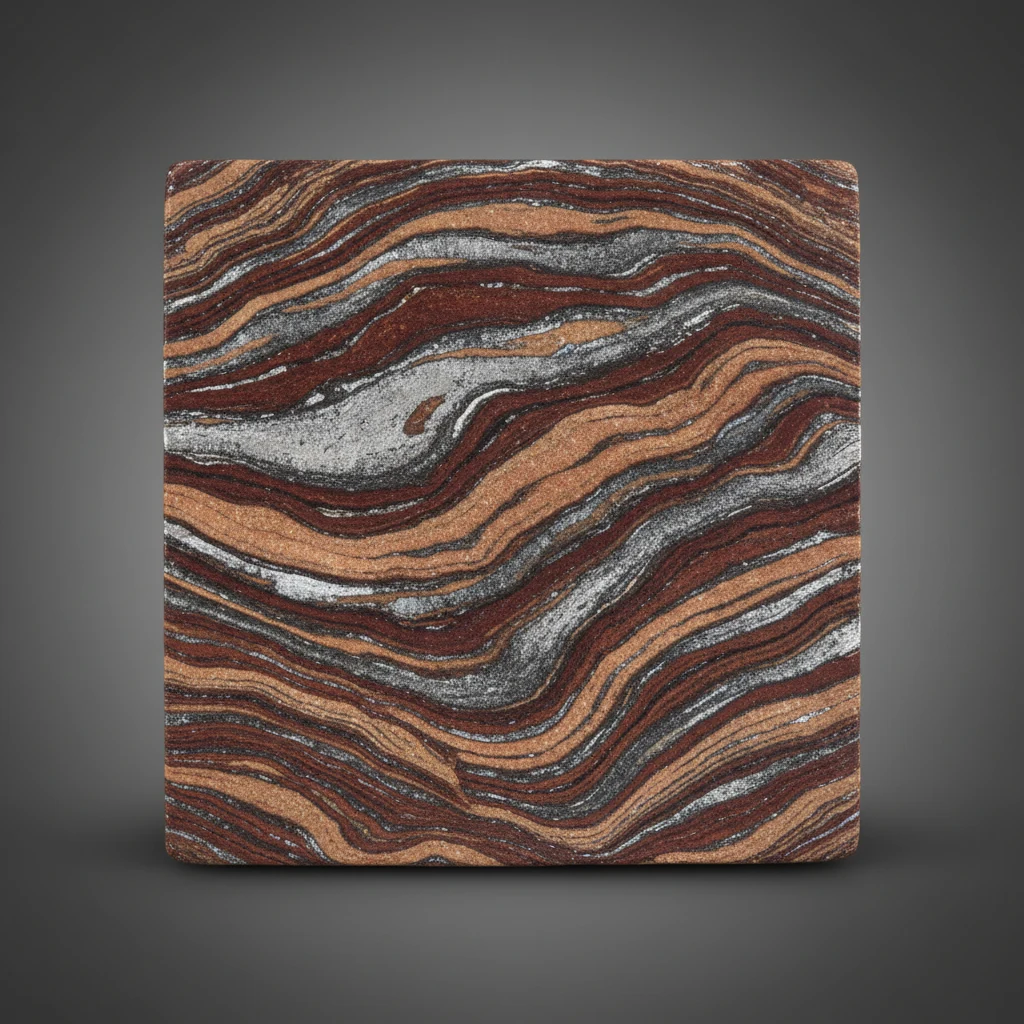
Quick answer: Banded Iron Formation is an ancient sedimentary rock made of alternating iron-rich minerals and silica-rich layers, often showing red, gray, black, silver, or jasper-like bands. It is commonly collected as a display stone, lapidary material, or educational specimen because its layering records early Earth ocean chemistry.
AI Rock ID can help screen a banded specimen by comparing visible layering, color contrast, and surface texture against known rock types. RockIdentifier.io provides identification support, but a confident call may still require hardness testing, streak observation, or geologic context.
Good fit
- Collectors who like visibly banded rocks with strong contrast
- Lapidary users looking for durable cabochon or display material
- Students and educators studying Precambrian geology and iron-rich sediments
- Buyers who prefer specimens with natural patterns rather than transparent crystals
Not a good fit
- Anyone seeking a single-mineral crystal with consistent hardness and cleavage
- Collectors who want bright fluorescence or high transparency
- Buyers who need lightweight jewelry stones, since some pieces can be dense
- People who prefer uniform color over layered geological patterns
Most commonly confused with
- Jasper: Jasper is silica-rich and often opaque, but it usually lacks the repeated iron-and-silica layering typical of Banded Iron Formation.
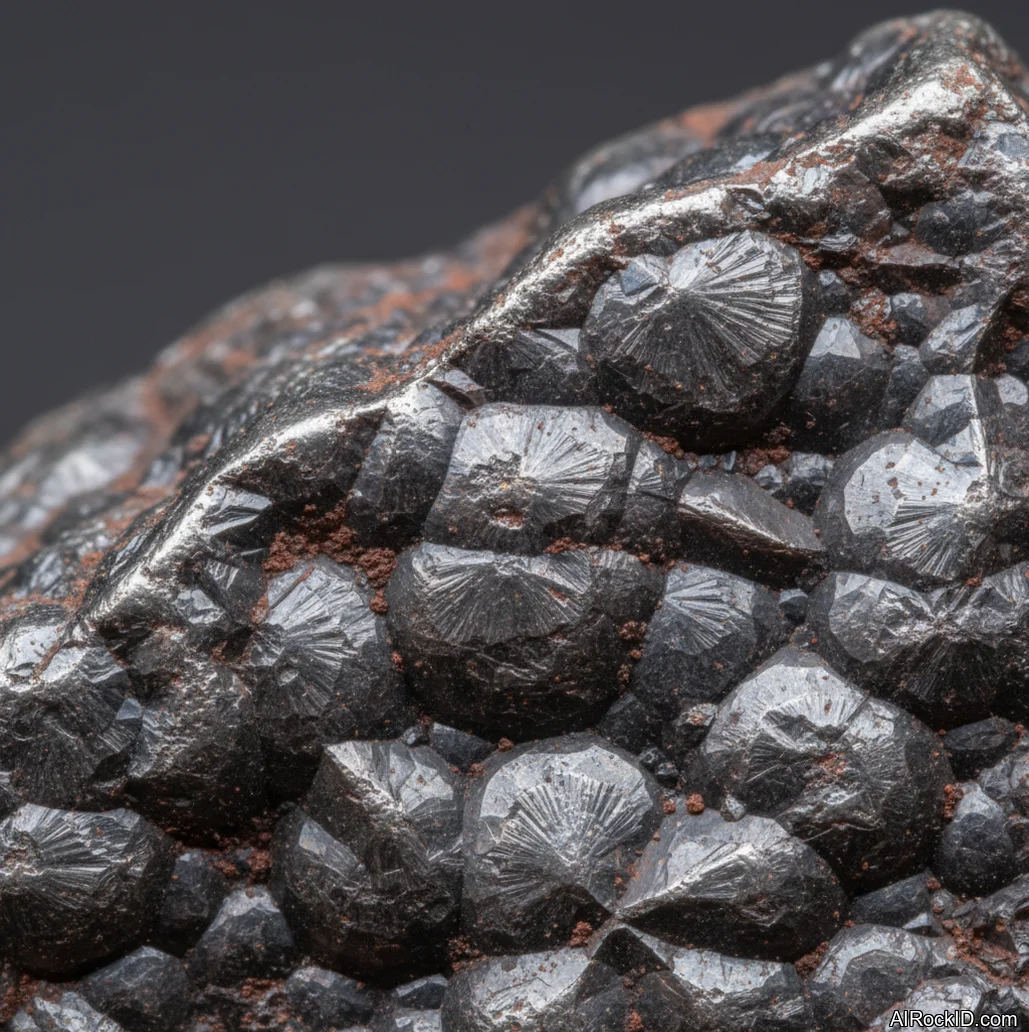
- Hematite: Hematite may appear metallic gray or red-brown, but it is a mineral rather than a layered sedimentary rock.
- Tiger Iron: Tiger Iron is a lapidary rock that can include tiger's eye, hematite, and jasper-like bands, often with golden chatoyant layers not typical of most Banded Iron Formation.
- Magnetite: Magnetite can occur in Banded Iron Formation, but pure magnetite is typically black, strongly magnetic, and not distinctly silica-banded.
Banded Iron Formation vs Similar Materials
| Material | Typical appearance | Key identification clue | Common issue |
|---|---|---|---|
| Banded Iron Formation | Alternating red, gray, black, or silica-rich bands | Layered sedimentary rock with iron-rich and chert-like bands | Can vary widely by locality |
| Jasper | Opaque red, yellow, brown, or multicolor silica | Usually more massive or patchy than rhythmically layered | Banded varieties may be mislabeled |
| Hematite | Metallic gray to earthy red-brown | Red-brown streak and high density | Polished pieces may resemble dark BIF bands |
| Tiger Iron | Red, black, and golden-brown bands | Often includes chatoyant tiger's eye layers | Sometimes sold broadly as BIF |
| Agate | Fine curved or concentric bands, sometimes translucent | Waxy luster and translucency at thin edges | Opaque agates can look similar in photos |
AI identification confidence
AI identification confidence is usually moderate when a photo clearly shows repeated opaque bands in red, gray, black, or silica-rich tones. Confidence drops when the specimen is highly polished, cropped too closely, or photographed without scale, streak, hardness, or magnetism information.
When AI gets it wrong
- A polished slab shows attractive banding but no visible grain, weight, or streak information
- The image is confused with jasper, agate, or tiger iron because color bands dominate the photo
- Lighting makes hematite-rich bands look more metallic or more black than they are in person
- A small tumbled stone lacks enough surface area to show true sedimentary layering
Final recommendation
Choose Banded Iron Formation if you want a natural layered rock with geological context, visible contrast, and good durability for display or lapidary use. For authenticity, favor sellers who provide locality information, untreated status when known, and clear photos of multiple surfaces.
How to Identify Banded Iron Formation Before Buying
Look for repeated, natural layers of iron-rich material and silica-rich chert rather than painted, dyed, or surface-only color. Many authentic pieces are dense for their size and may include red-brown hematite tones, dark magnetite-rich bands, or gray silica bands. A seller should be able to provide clear photos, approximate size, and ideally the source region or formation name.
Natural Patterns, Treatments, and Labels
Most Banded Iron Formation specimens are sold as natural rough, slabs, cabochons, or polished display pieces, but polishing can intensify contrast and make different rocks look similar in photos. Some listings use broad trade names such as jasper, ironstone, or tiger iron, so the label alone is not proof of identity. Be cautious with unusually bright colors, perfectly uniform banding, or listings that do not show the edges and back of the stone.
Best Uses for Banded Iron Formation Specimens
Banded Iron Formation is well suited for display slabs, educational collections, bookends, paperweights, and cabochons. It is less common as delicate faceted jewelry because it is opaque, compositionally mixed, and may contain bands with different hardness. In decorative use, the strongest visual appeal usually comes from broad faces that show the layering clearly.
What Is Banded Iron Formation?
Banded Iron Formation is a sedimentary rock made of alternating layers of iron-rich minerals and silica. In the hand, it is usually opaque, reddish-brown to gray, and visibly striped, with bands that can look like stacked pages of iron oxide and chert.
Collectors value Banded Iron Formation for its strong geological character rather than gemlike sparkle. Its luster is dull to slightly metallic, its streak is red-brown, and its Mohs hardness range of 4-7 means different bands may feel and wear differently across the same specimen.
Origin & History
The name Banded Iron Formation comes directly from its appearance: a rock built from bands, rich in iron, formed as a sedimentary deposit. It was first described in the late 19th century, and the descriptive name remains useful because a good specimen announces itself visually.
On a specimen label, locality matters because price and interest are influenced by where the piece was collected and by its quality. For locality checking and comparison, collectors commonly cross-check labels with references such as mindat.org, especially when working with classic basin material.
Where Is Banded Iron Formation Found?
Banded Iron Formation is commonly found in ancient sedimentary basins. Listed countries include Australia, Canada, and Brazil, with notable localities including the Hamersley Basin in Australia, Iron Mountain in Michigan, USA, and the Lake Superior region, USA.
Formation
Banded Iron Formations form through the precipitation of iron and silica in shallow marine environments, often in the presence of oxygen. The visible bands record alternating layers of iron oxides and chert, giving the rock its striped, layered texture.
In practice, that formation history is what makes the rock so easy to read in the hand: red-brown iron-rich bands sit beside gray silica-rich bands. A plain geological reference point for sedimentary processes and iron deposits is USGS, useful when comparing BIF to other iron-bearing rocks.
How to Identify Banded Iron Formation
Identify Banded Iron Formation by its distinct banding of iron oxides and chert. Typical colors are reddish-brown, brown, red, and gray, and the rock is opaque with a dull to slightly metallic surface rather than a glassy gem luster.
Useful field clues include a red-brown streak, weak magnetism, conchoidal fracture, and a layered texture. Its density is listed as 2.5-3.5 g/cm3, and its hardness may range from Mohs 4 to 7, so test gently and avoid assuming every band will resist scratches the same way.
Properties of Banded Iron Formation
Physical Properties
| Crystal System | Amorphous |
| Hardness (Mohs) | 4-7 (Medium) |
| Density | 2.5-3.5 g/cm3 |
| Luster | Dull |
| Diaphaneity | Opaque |
| Fracture | Conchoidal |
| Streak | Red-brown |
| Magnetism | Weakly Magnetic |
| Colors | red, brown, gray |
Chemical Properties
| Classification | Sedimentary |
| Formula | Fe2O3·nSiO2 |
| Elements | Fe, Si, O |
| Common Impurities | Mn |
Optical Properties
| Refractive Index | Not applicable |
| Birefringence | None |
| Pleochroism | None |
| Optical Character | Isotropic |
Banded Iron Formation Health & Safety
Banded Iron Formation poses no significant health risks.
Banded Iron Formation Value & Price
Price Range
Rough/Tumbled: $10 - $50 per specimen
Cut/Polished:
Price is influenced by locality and quality of the specimen.
Durability
Moderate — Scratch resistance: Fair, Toughness: Good
Relatively stable but can weather with harsh conditions.
How to Care for Banded Iron Formation
Use & Storage
Store in a dry place to avoid moisture.
Cleaning
Wipe with a damp cloth to remove dust. Avoid harsh chemicals.
Cleanse & Charge
Cleanse using water or by placing in sunlight.
Placement
Display in a stable environment away from direct sunlight.
Caution
Handle with care to avoid chipping.
Works Well With
Banded Iron Formation Meaning & Healing Properties
In crystal healing traditions, Banded Iron Formation is used as a grounding and stability stone. Its weighty, layered look fits that symbolism well: iron-rich bands suggest strength, while the steady striping gives the piece a calm, anchored presence in meditation or display.
It is associated with the Root chakra, the Earth element, Mars, Aquarius, and Capricorn. Traditional meanings include grounding, emotional healing, stability, protection, inner peace, self-discovery, confidence, transformation, and knowledge, but these uses are spiritual supports and not a substitute for medical treatment.
Identify Banded Iron Formation from a photo
Compare Banded Iron Formation traits, care tips, value clues, and common lookalikes with a clear photo.
Common mistakes
- Assuming every red-and-black banded stone is Banded Iron Formation
- Relying only on a polished front face without checking the sides or back
- Confusing tiger iron with Banded Iron Formation when golden chatoyancy is present
- Expecting a single Mohs hardness value even though the rock contains multiple minerals
- Using the name hematite for the entire rock instead of for one possible iron-rich component
- Buying without scale photos, since small tumbled pieces can hide important texture