Gabbro


Quick answer: Gabbro is a coarse-grained, dark intrusive igneous rock made mainly of calcium-rich plagioclase and pyroxene. It is often confused with basalt, diorite, and dark granite, but its coarse texture and mafic mineral content help separate it from lookalikes.
AI Rock ID can help compare a gabbro specimen against visually similar igneous rocks by checking texture, color balance, and visible mineral grains. RockIdentifier.io provides identification support, but dense dark rocks may still require streak, hardness, magnetism, or geologic context for higher confidence.
Good fit
- Collectors who want a common example of coarse-grained mafic igneous rock
- Geology students comparing intrusive and extrusive rock textures
- Lapidary users seeking a tough, dark decorative stone
- Anyone identifying dark rocks with visible interlocking crystals
Not a good fit
- Buyers looking for a transparent or faceted gemstone
- Collectors who need a rare mineral specimen rather than a common rock type
- Situations where exact composition must be verified without lab testing
Most commonly confused with
- Basalt: Basalt is fine-grained or glassy, while gabbro has visible coarse crystals formed underground.
- Diorite: Diorite usually has more intermediate composition and a salt-and-pepper appearance compared with darker mafic gabbro.
- Granite: Granite is generally lighter and quartz-rich, while gabbro is darker and lacks abundant quartz.
- Dolerite: Dolerite has medium-sized grains and commonly occurs in dikes or sills, between basalt and gabbro in texture.
Gabbro vs. Similar Dark Rocks
| Feature | Gabbro | Basalt | Diorite |
|---|---|---|---|
| Grain size | Coarse, visible crystals | Fine-grained to glassy | Coarse, visible crystals |
| Typical color | Dark gray to black | Dark gray to black | Black and white salt-and-pepper |
| Main minerals | Plagioclase, pyroxene, olivine | Plagioclase, pyroxene, olivine | Plagioclase, amphibole, biotite |
| Formation | Intrusive, slow cooling | Extrusive, fast cooling | Intrusive, slow cooling |
| Quartz content | Usually little to none | Usually little to none | Low to minor |
AI identification confidence
AI identification of gabbro is usually moderate when the photo clearly shows coarse, dark, interlocking mineral grains. Confidence is lower for wet, polished, weathered, or very fine-grained samples because basalt, dolerite, and dark diorite can look similar in images.
When AI gets it wrong
- A polished surface hides natural grain boundaries and makes different dark rocks look alike
- The photo lacks scale, making coarse gabbro and medium-grained dolerite difficult to separate
- Weathering, soil coating, or varnish changes the visible color and texture
- The specimen is a decorative trade stone sold under a non-geologic name
Final recommendation
For identification, focus on visible grain size, dark mafic minerals, and the absence of abundant quartz rather than color alone. For buying, ask whether the stone is being sold as geologic gabbro, a decorative trade name, or a polished material with uncertain source labeling.
How to Identify Gabbro in Photos
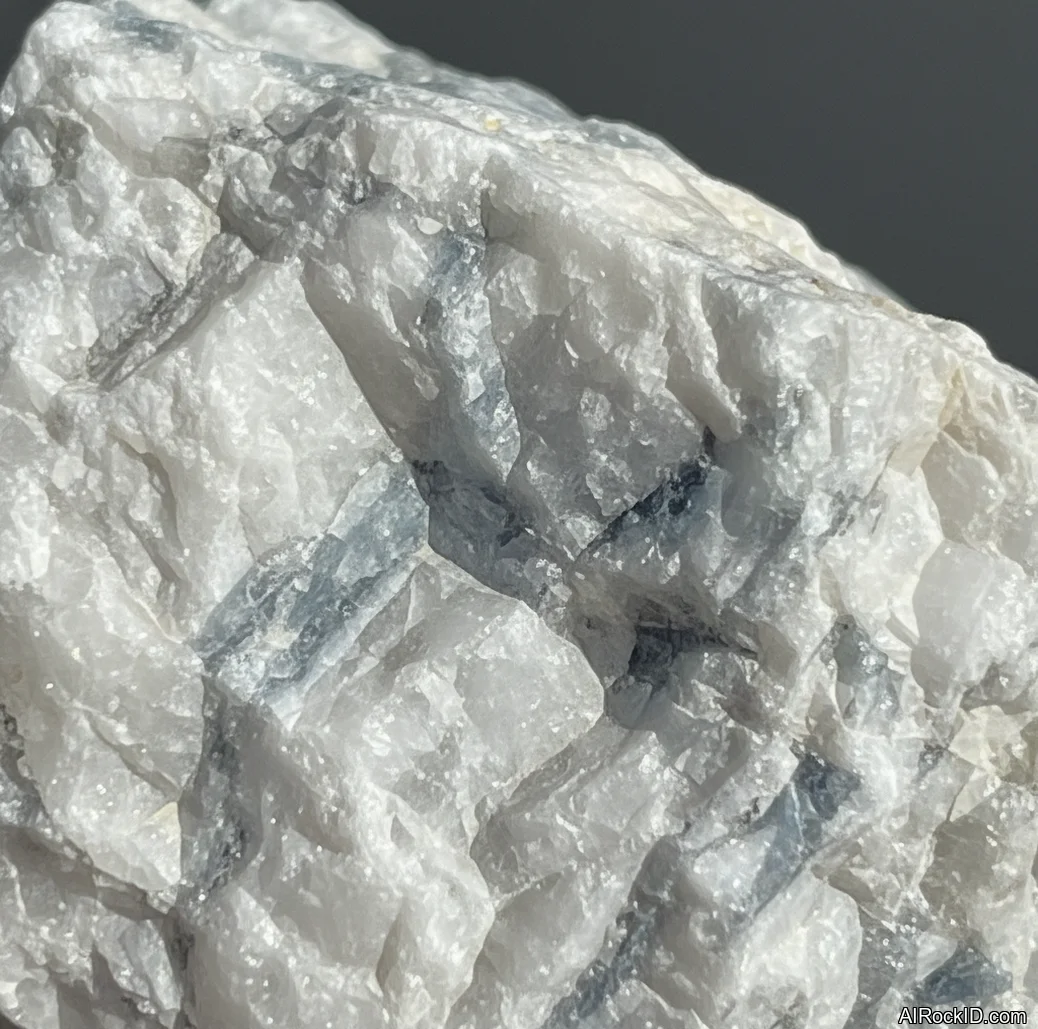
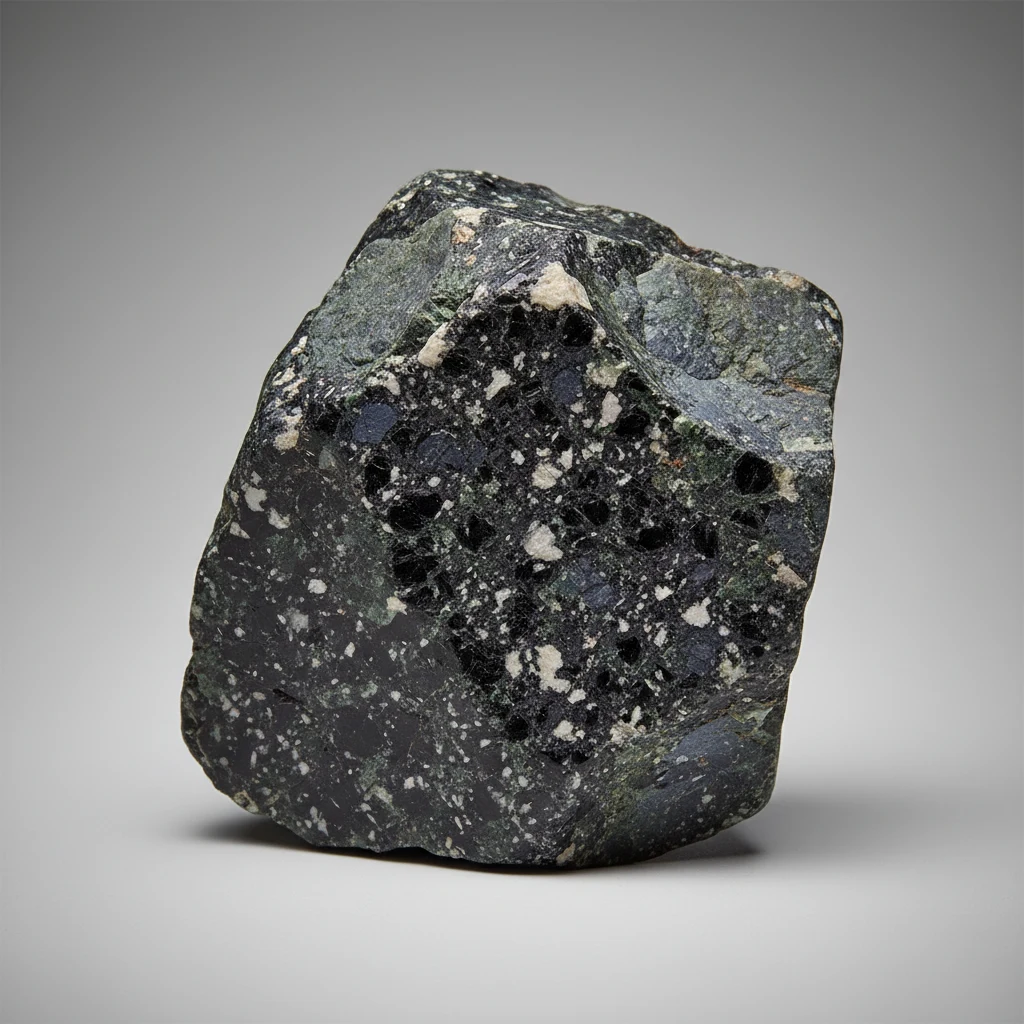
A useful gabbro photo should show a fresh, dry surface with visible black to dark green pyroxene and pale to gray plagioclase grains. Include a coin, ruler, or fingertip for scale because grain size is one of the main clues separating gabbro from basalt and dolerite. Photos taken in direct glare or after wetting the rock can reduce identification accuracy.
Buying Gabbro Specimens
Gabbro is common and is usually valued as a teaching specimen, decorative stone, or lapidary material rather than as a rare gemstone. When buying, look for clear labeling, visible coarse texture, and disclosure of any polishing, dyeing, or trade-name use. Large decorative pieces may be priced more by size, finish, and workmanship than by mineral rarity.
Authenticity and Trade Names
Some polished dark stones sold with metaphysical or decorative names may be gabbro, basalt, dolerite, or related mafic rocks. Authenticity is best checked by texture, mineral grains, and source information rather than by a name on a label. If an item is sold as a rare crystal but appears to be a common dark igneous rock, request composition details or avoid paying gemstone-level prices.
What Is Gabbro?
Gabbro is a dark, coarse-grained mafic intrusive igneous rock, not a single mineral. In the hand it feels dense and solid, with visible interlocking crystals rather than a smooth, fine basalt-like surface. Its main minerals are calcium-rich plagioclase feldspar and pyroxene, commonly joined by olivine, amphibole, magnetite, or ilmenite in smaller amounts.
Collectors often meet gabbro as a black to dark green specimen, a teaching rock, a polished decorative stone, or a material sold in the stone trade as “black granite.” The key point is texture: gabbro is the plutonic equivalent of basalt, meaning it has mafic chemistry but cooled slowly underground. That slow cooling gives it the speckled, crystalline look that makes a fresh broken face useful for identification.
Origin & History
The name gabbro comes from Gabbro, a locality in Tuscany, Italy, and entered geological usage in the early 19th century. On an old specimen label, that origin matters: it ties a very common rock type to a real place name, not just to its dark color or commercial stone use.
In modern petrology, gabbro refers to a family of coarse-grained mafic rocks dominated by plagioclase and clinopyroxene. Related varieties include norite, troctolite, and olivine gabbro, depending on which mafic minerals are most important. For locality checking and label wording, mindat.org is a standard reference collectors commonly consult.
Where Is Gabbro Found?
Gabbro is common and occurs worldwide in major mafic igneous settings. Reported countries include Italy, the United States, Canada, Norway, the United Kingdom, South Africa, India, Oman, Russia, and Australia. It is especially expected in layered mafic intrusions, ophiolite complexes, deep oceanic crust, rift-related intrusions, and the lower parts of basaltic magma chambers.
Formation
Gabbro forms when mafic magma cools slowly beneath Earth’s surface. That slow underground cooling lets plagioclase and pyroxene grow into visible, interlocking crystals, so a hand specimen usually looks granular instead of glassy or fine-grained. It commonly crystallizes in magma chambers beneath volcanoes, at the base of oceanic crust, and within layered intrusions.
In layered intrusions, early-formed minerals may settle or accumulate, producing different gabbroic textures and mineral proportions. Later alteration can change some pyroxene or olivine into amphibole, chlorite, serpentine, or other secondary minerals. That is why two pieces both called gabbro may feel equally dense but show different green, black, gray, or mottled surfaces.
How to Identify Gabbro
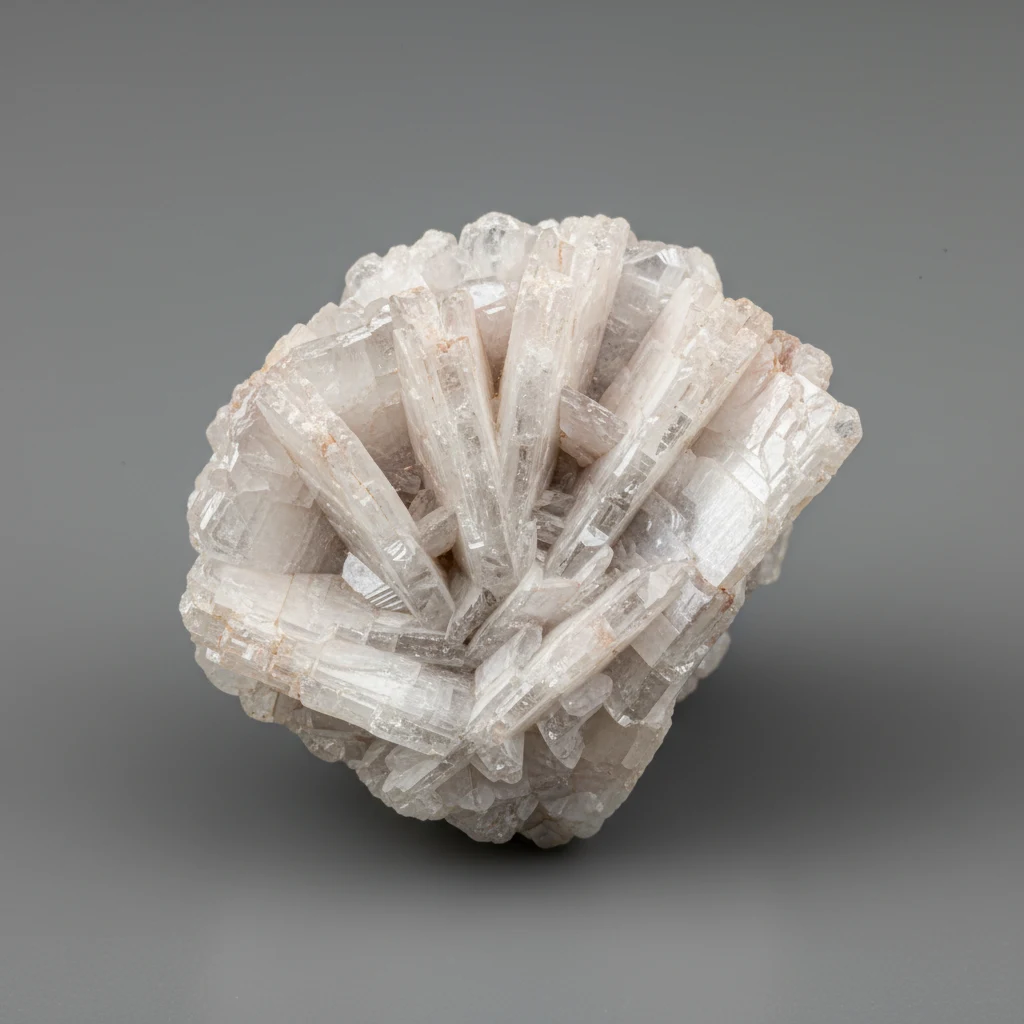
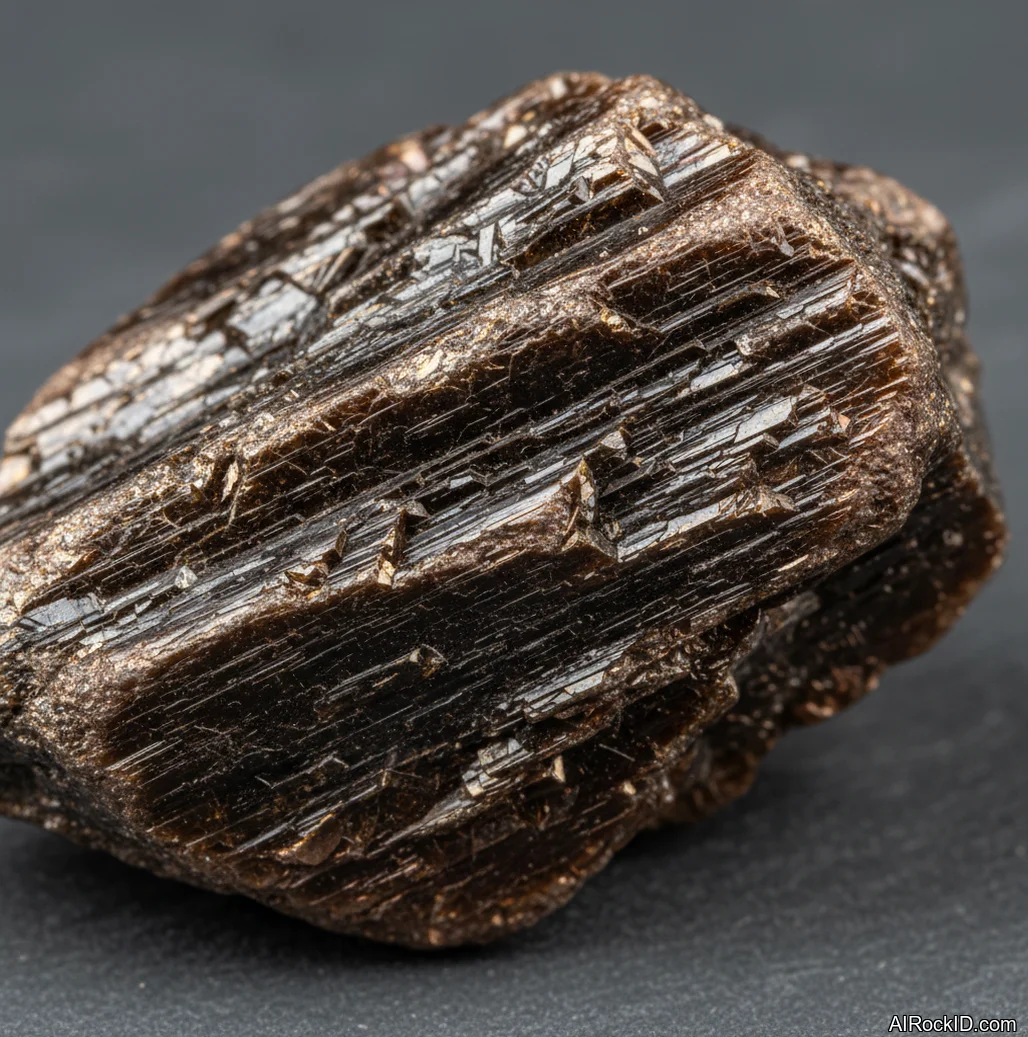
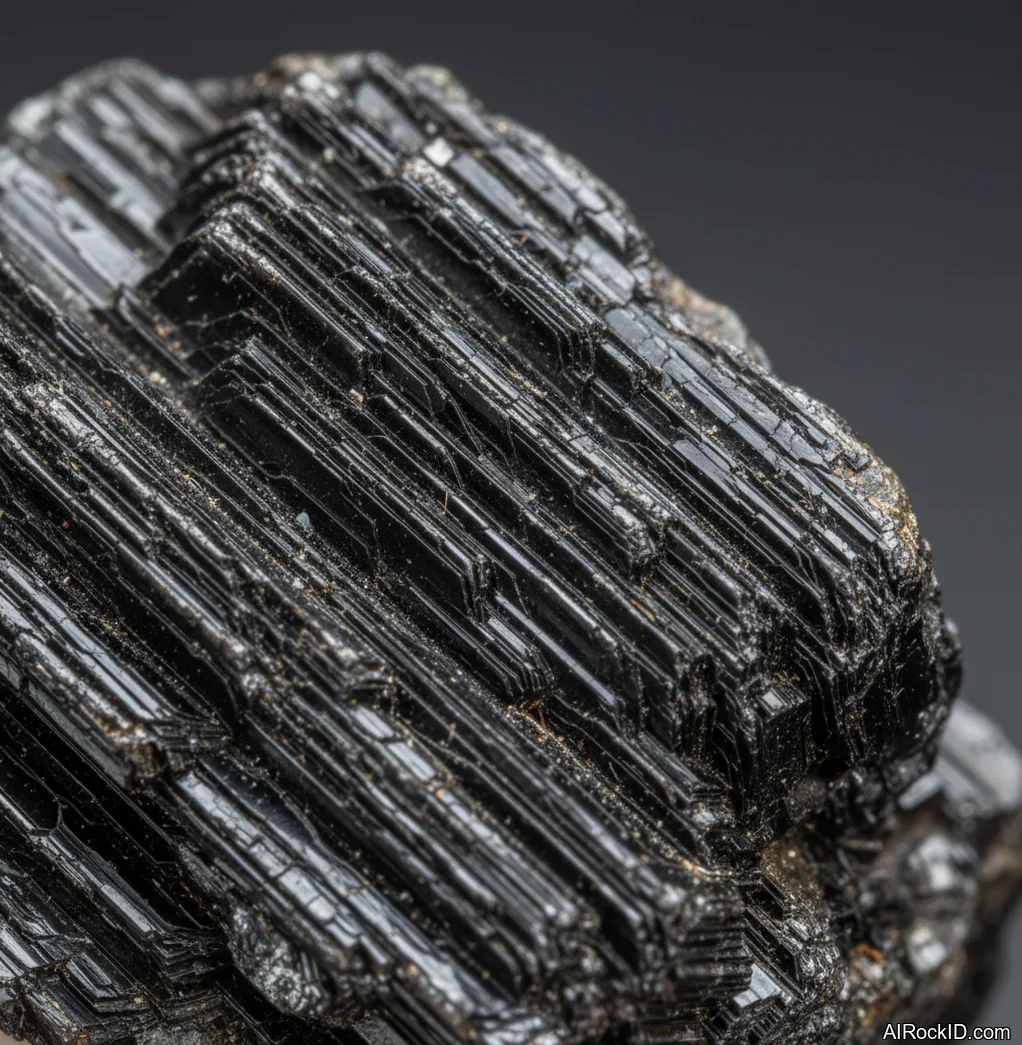
Identify gabbro by looking for a dark, dense rock with visible coarse crystals. Typical colors are black, dark gray, greenish black, dark green, gray-black, or mottled black and white. A hand lens often shows blocky pale plagioclase grains mixed with darker green-black pyroxene; fresh surfaces may look dull to slightly vitreous, with local submetallic flashes from oxide minerals.
Gabbro differs from basalt by its visible crystals, from diorite by being darker and richer in pyroxene, and from granite by lacking abundant quartz and potassium feldspar. Its Mohs hardness is about 5.5-6.5, and its density is commonly near 3.0 g/cm³. Most pieces are non-magnetic to weakly magnetic, though magnetite- or ilmenite-rich gabbro may attract a magnet.
Properties of Gabbro
Physical Properties
| Crystal System | Rock; aggregate of minerals, chiefly triclinic plagioclase and monoclinic or orthorhombic pyroxene |
| Hardness (Mohs) | 5.5-6.5 (Moderately hard to hard) |
| Density | 2.7-3.3 g/cm³, commonly about 3.0 g/cm³ |
| Luster | Dull, vitreous on some mineral faces, locally submetallic where oxides are present |
| Diaphaneity | Opaque |
| Fracture | Uneven to granular; breaks across an interlocking crystalline texture |
| Streak | Not diagnostic as a rock; powdered material is generally gray to pale gray |
| Magnetism | Usually non-magnetic to weakly magnetic; magnetite- or ilmenite-rich varieties may attract a magnet |
| Colors | black, dark gray, greenish black, dark green, gray-black, mottled black and white |
Chemical Properties
| Classification | Mafic intrusive igneous silicate rock |
| Formula | Rock mixture: chiefly Ca-rich plagioclase feldspar + clinopyroxene ± orthopyroxene ± olivine ± amphibole ± Fe-Ti oxides |
| Elements | oxygen, silicon, aluminum, calcium, magnesium, iron, sodium, titanium |
| Common Impurities | magnetite, ilmenite, chromite, apatite, sulfide minerals, chlorite, serpentine, biotite |
Optical Properties
| Refractive Index | Not applicable to the rock as a whole; constituent minerals commonly range from about 1.56 for plagioclase to 1.70+ for pyroxene |
| Birefringence | Variable by mineral grain; plagioclase is low and pyroxene is moderate in thin section |
| Pleochroism | Not applicable to the rock as a whole; pyroxene and amphibole grains may show weak to strong pleochroism |
| Optical Character | Aggregate; individual minerals may be biaxial positive or biaxial negative |
Gabbro Health & Safety
Solid gabbro is generally safe to handle. The main risk is inhaling rock dust from cutting, grinding, drilling, or polishing, because silicate mineral dust can irritate the lungs and may contain respirable crystalline silica or fine iron-titanium oxide particles depending on composition.
Gabbro Value & Price
Price Range
Rough/Tumbled: Common rough gabbro is inexpensive, often a few dollars for hand specimens and sold commercially as crushed stone, aggregate, dimension stone, or decorative landscaping rock; polished or locality-specific specimens may range roughly from $5-50 depending on size and finish.
Cut/Polished:
Value depends on locality, grain size, freshness, polish quality, unusual mineral content such as visible olivine or sulfides, educational labeling, and whether it comes from a famous layered intrusion or ophiolite.
Durability
Durable — Scratch resistance: Good for a rock; most major minerals are around Mohs 5.5-6.5, though feldspar and altered zones can scratch more easily than quartz-rich rocks., Toughness: Generally tough and compact because of its interlocking crystalline texture, but weathered or altered gabbro can become crumbly along mineral boundaries.
Stable under normal indoor conditions and commonly used as construction stone. Prolonged outdoor weathering may dull surfaces, and iron-bearing minerals may oxidize to brown staining.
How to Care for Gabbro
Use & Storage
Store as a sturdy display specimen, teaching sample, paperweight, landscaping stone, or polished decorative stone. Keep labeled specimens separate from softer minerals to avoid abrasion.
Cleaning
Rinse with water and scrub gently with a soft brush. Mild soap is acceptable. Avoid harsh acids, which can attack altered minerals, carbonate-filled fractures, or sulfide-bearing areas.
Cleanse & Charge
For metaphysical use, cleanse by rinsing briefly, wiping dry, smoke cleansing, sound, or placing on a dry selenite plate. Charging in sunlight is usually safe, though prolonged weather exposure may dull polished surfaces.
Placement
Place on a stable shelf, desk, geology display tray, or outdoor rock garden. Use felt pads under polished pieces to protect furniture.
Caution
Do not assume all dark coarse rocks are gabbro; diorite, basalt, amphibolite, dolerite, and dark granite can look similar. Avoid breathing dust from lapidary work, and test weakly magnetic specimens away from electronics if they contain abundant magnetite.
Works Well With
Gabbro Meaning & Healing Properties
In crystal healing traditions, gabbro is used as a grounding stone associated with stability, endurance, resilience, practical focus, and deep Earth energy. These meanings are cultural and spiritual rather than scientifically verified, but the stone’s weight and dark, compact texture make it a natural choice for people who like grounding objects on a desk, altar, or meditation shelf.
Gabbro is linked with the root chakra, the zodiac signs Capricorn and Scorpio, the planets Earth and Saturn, and the elements Earth and Fire. For care, rinse briefly with water, scrub gently with a soft brush, and use mild soap if needed. Avoid harsh acids, protect polished surfaces from prolonged weathering, and never breathe dust from cutting, grinding, drilling, or polishing.
Identify Gabbro from a photo
Compare Gabbro traits, care tips, value clues, and common lookalikes with a clear photo.
Common mistakes
- Identifying any black rock as gabbro without checking grain size
- Confusing fine-grained basalt with coarse-grained gabbro
- Assuming polished trade stones have precise geologic labeling
- Using color alone instead of mineral content and texture
- Expecting gabbro to show crystal faces like a single mineral specimen