Chabazite


Quick answer: Chabazite is a zeolite mineral best recognized by small rhombohedral crystals, pale colors, vitreous to pearly luster, and common association with basalt cavities. It can resemble calcite, quartz, or other zeolites, so crystal shape, hardness, cleavage, and acid reaction are useful for identification.
AI Rock ID can help compare a chabazite specimen against similar zeolites and common lookalikes using visible crystal form, color, and matrix clues. RockIdentifier.io provides educational crystal information to support, not replace, hands-on mineral testing or expert confirmation.
Good fit
- Collectors interested in zeolite minerals from basalt cavities
- Specimens showing distinct rhombohedral or pseudo-cubic crystal forms
- Study pieces for comparing zeolites, calcite, and quartz
- Display specimens kept away from heavy handling and abrasion
Not a good fit
- Jewelry that needs high durability for daily wear
- Specimens exposed to acids or harsh cleaning chemicals
- Identification based on color alone
- Buyers seeking a rare gemstone rather than a mineral specimen
Most commonly confused with
- Calcite: Calcite commonly fizzes in dilute acid and has perfect rhombohedral cleavage, while chabazite is a zeolite and does not show the same strong acid reaction.
- Quartz: Quartz is harder, lacks cleavage, and usually forms hexagonal prisms rather than chabazite's small rhombohedral zeolite crystals.
- Analcime: Analcime often forms trapezohedral crystals and is typically slightly harder-looking and more equant than chabazite.
- Heulandite: Heulandite usually forms tabular or platy crystals with a pearly luster, unlike the more rhombohedral habit typical of chabazite.
Chabazite vs. Common Lookalikes
| Mineral | Typical crystal habit | Useful ID clue | Hardness |
|---|---|---|---|
| Chabazite | Rhombohedral to pseudo-cubic | Zeolite in basalt cavities; weak to no acid fizz | 4–5 |
| Calcite | Rhombohedral or scalenohedral | Fizzes in dilute acid; perfect cleavage | 3 |
| Quartz | Hexagonal prisms or masses | Scratches glass; no cleavage | 7 |
| Analcime | Trapezohedral, equant | Common zeolite lookalike with different crystal faces | 5–5.5 |
| Heulandite | Tabular or platy | Pearly cleavage faces and flattened crystals | 3.5–4 |
AI identification confidence
AI identification confidence for chabazite is usually moderate when clear rhombohedral crystals and matrix context are visible. Confidence drops when crystals are tiny, colorless, coated, broken, or mixed with other zeolites.
When AI gets it wrong
- Small colorless crystals on basalt may be labeled as quartz, calcite, analcime, or a generic zeolite.
- Photos without scale can make chabazite crystals appear more like quartz or calcite.
- Weathered or iron-stained specimens may obscure the crystal habit needed for identification.
- Mixed zeolite specimens can contain chabazite with stilbite, heulandite, or analcime on the same matrix.
Final recommendation
Choose chabazite specimens with well-formed crystals, clear matrix information, and seller-provided locality data. For uncertain pieces, combine visual inspection with simple tests such as hardness, cleavage observation, and acid reaction comparison.
How to Buy Chabazite Specimens
Look for specimens labeled with a locality, matrix description, and clear photos from multiple angles. Well-formed rhombohedral crystals on natural matrix are usually easier to verify than loose, damaged, or heavily coated pieces. Avoid listings that identify chabazite only by pale color, because many zeolites and calcite can appear similar.
Authenticity Checks for Chabazite
Authentic chabazite is usually sold as a mineral specimen rather than a faceted gem or polished bead. Check for natural crystal faces, association with volcanic cavities, and consistency between the label and the visible matrix. A strong acid fizz suggests calcite may be present or that the specimen may be misidentified.
Chabazite Locality Clues
Chabazite is commonly found in cavities and fractures of volcanic rocks, especially basalt. Notable occurrences include zeolite-rich localities in India, Iceland, Italy, Canada, and parts of the United States. Locality information can help distinguish chabazite from similar zeolite species found in the same environments.
What Is Chabazite?
Chabazite is a zeolite mineral, meaning it’s a hydrated aluminosilicate that most often grows as blocky rhombohedral crystals tucked into volcanic cavities.
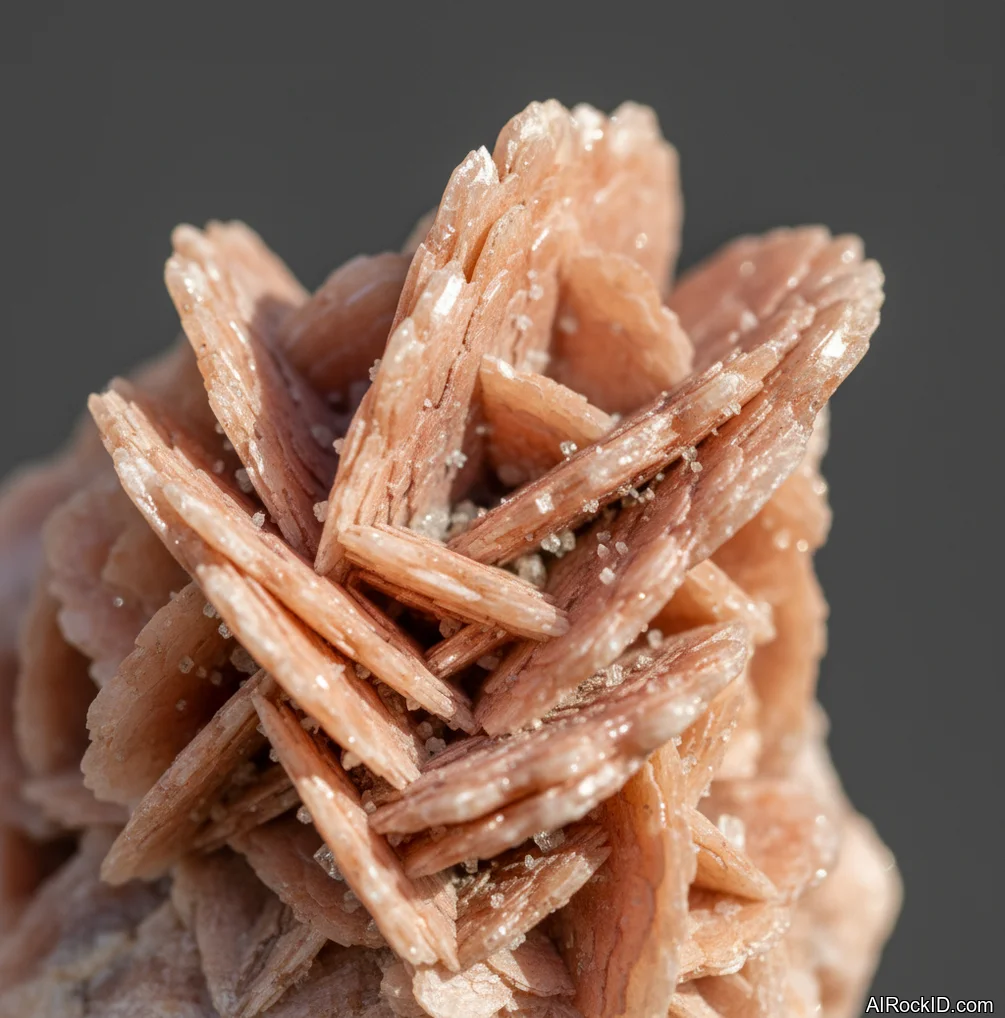
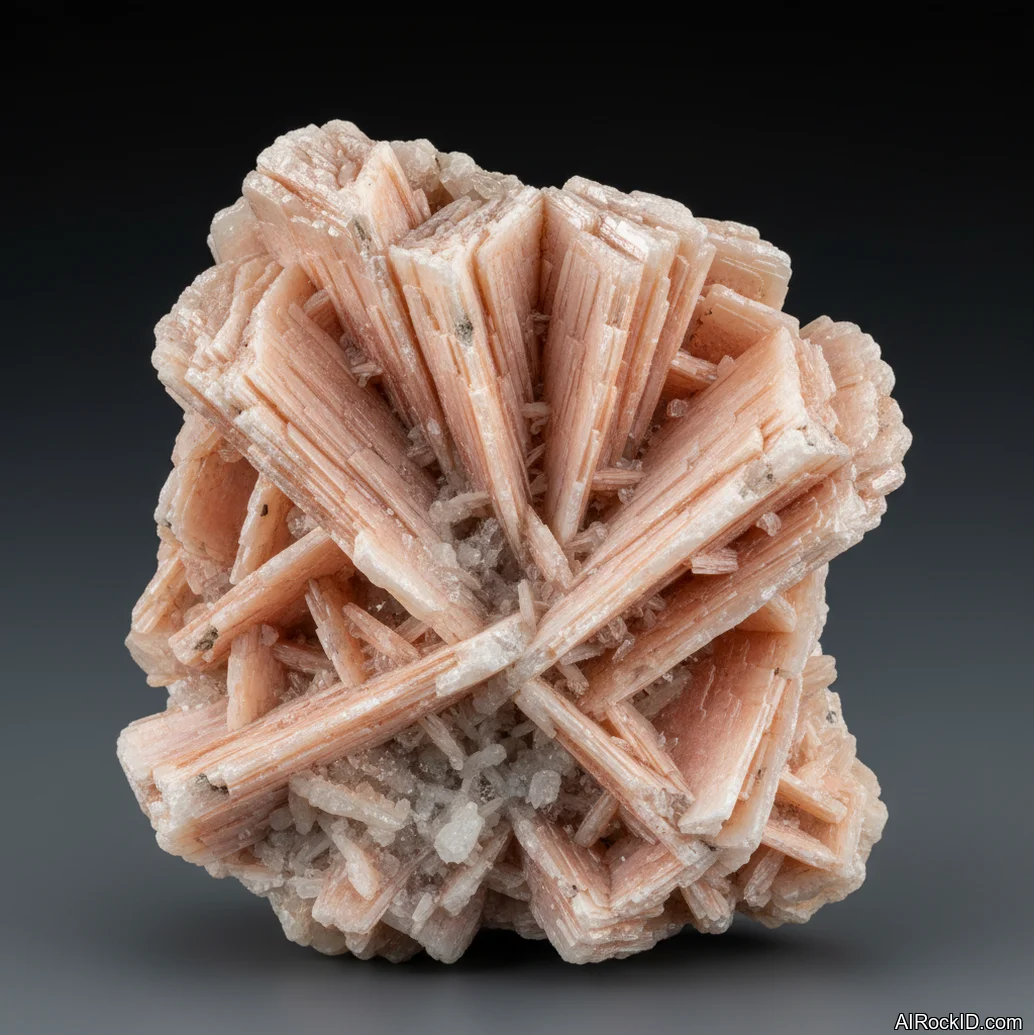
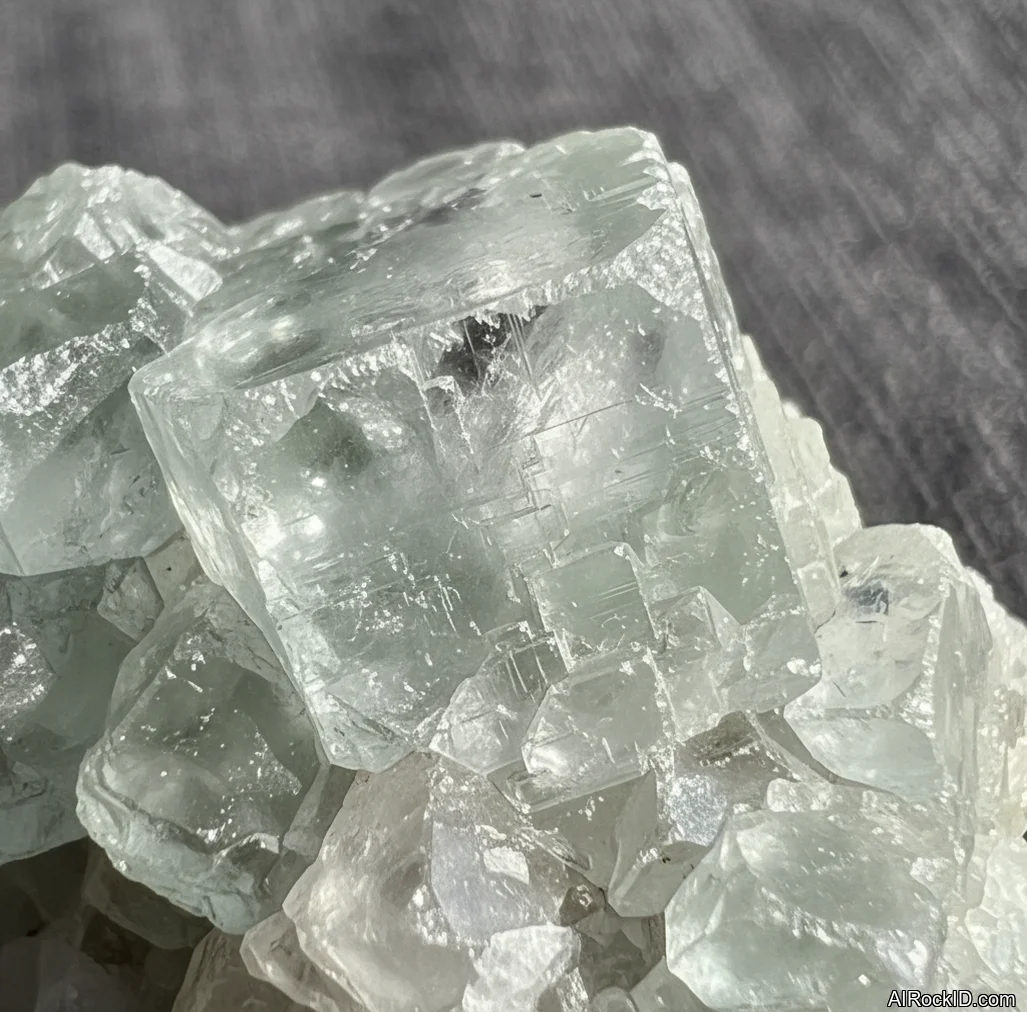
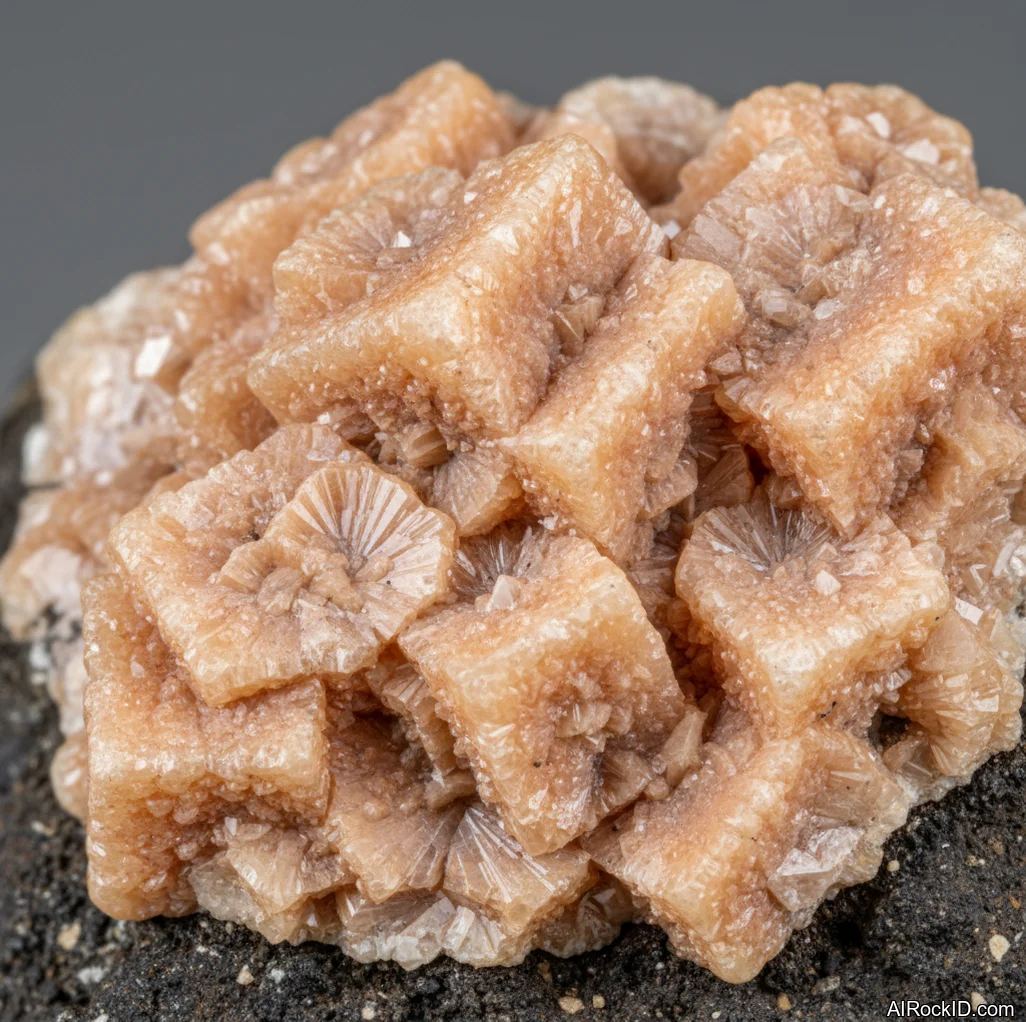
Grab a decent cabinet specimen and, honestly, the first thing that hits you is how weirdly light it feels in your hand for something that size. That’s the zeolite deal. And the crystal shapes are so tidy they look almost like little sugar cubes from a couple feet away, but tip the piece under a lamp and you’ll catch those quick pinprick flashes off the flat faces.
People confuse it with calcite all the time because, yeah, both can throw rhomb shapes. But chabazite doesn’t have that “perfect cleavage” vibe calcite has, and it won’t fizz in acid. Instead it tends to look crisp, kind of glassy-to-pearly, sitting on basalt, and you usually see it as drusy little clusters, not one big chunk that wants to split cleanly.
Origin & History
Rome, early 1700s. That’s the starting point for the name. Chabazite got its first description in 1703, when Luigi Ferdinando Marsigli was working with material pulled from the volcanic rocks around the city (the kind that leaves your fingers a little dusty after you handle it).
The word itself comes from Greek, usually translated as “hailstone.” And yeah, that checks out the first time you see a little pocket lined with pale, blocky crystals, like someone shook them out of a salt shaker. Later on, researchers folded it into the zeolite family once they figured out how these minerals act with heat and water, and how their structures can trap ions and swap them out.
Where Is Chabazite Found?
It shows up in basalt cavities and related volcanic rocks worldwide, with classic Alpine finds and plenty of material from big basalt provinces.
Formation
Most chabazite you run into forms after the lava’s already cooled enough to be solid. Hot, mineral-loaded fluids push through the cooling basalt, and as they go they start coating vesicles and little fractures with zeolites.
Chabazite usually shows up a bit late to the party. So a lot of the time it’s sitting on top of minerals that were there first, like stilbite, heulandite, calcite, or sometimes just straight basalt with no “base layer” at all.
If you’ve got a nice vuggy piece in your hand and you tilt it under a light, you can sometimes literally read the order things happened. First there’s a thin, chalky-looking skin of earlier white zeolite. Then you’ll see the chabazite rhombs sprinkled over it (those little blocky shapes that catch the light when you roll the specimen). And then, if you’re unlucky, there’s a late dusting of calcite that kind of mutes the sparkle and makes the surfaces look a touch duller. That happens.
And yeah, dealers sell “chabazite” that’s actually a mix of zeolites. In the field and at shows, that label gets tossed around pretty loosely. Who hasn’t seen that once or twice?
How to Identify Chabazite
Color: Most chabazite is colorless to white, but collectors also see peach, salmon, tan, and light yellow, especially on basalt matrix. Darker orange-brown tones usually mean iron staining on the crystal faces.
Luster: The luster is usually vitreous, sometimes edging pearly on crowded crystal faces.
Pick up the piece and feel the heft. Chabazite tends to feel surprisingly light compared to calcite or quartz of the same size. If you scratch it with a steel nail, it’ll mark more easily than quartz but it won’t feel chalky like some soft carbonates. And the real test is a tiny drop of dilute acid on an inconspicuous spot: calcite fizzes fast, chabazite doesn’t.
Common Look-Alikes
Chabazite is sometimes confused with these materials:
- Calcite (especially white rhombohedral calcite in vugs)
- Apophyllite (colorless/white crystals on basalt, often sold from India)
- Heulandite / Clinoptilolite (other zeolites with similar pale colors and cavity growth)
- Quartz (milky or colorless drusy that reads as “sparkly white” in photos)
- Dyed zeolite clusters sold as “aura” or bright pastel chabazite
- Glass or resin “druse” fakes glued into drilled cavities on basalt
Market Cautions & Treatments
When AI Can Get This Wrong
At first glance in photos, AI mixes chabazite up with calcite rhombs and apophyllite because all three can look like clean, blocky, pale crystals sitting in a dark volcanic cavity. The real test is a quick hardness and acid check: chabazite won’t fizz like calcite in weak acid, and it won’t have that glassy, high-luster apophyllite look when you tilt it under a lamp. If you’ve got the specimen in hand, the low “puffy” weight and the tidy rhombohedral habit usually snap it into place.
Properties of Chabazite
Physical Properties
| Crystal System | Trigonal |
| Hardness (Mohs) | 4-5 (Medium (4-6)) |
| Density | 2.05-2.15 g/cm3 |
| Luster | Vitreous |
| Diaphaneity | Transparent to translucent |
| Fracture | Uneven |
| Streak | white |
| Magnetism | Non-magnetic |
| Colors | colorless, white, cream, yellow, tan, peach, salmon, reddish-brown |
Chemical Properties
| Classification | Silicates |
| Formula | CaAl2Si4O12·6H2O |
| Elements | Ca, Al, Si, O, H |
| Common Impurities | Na, K, Fe, Mg, Sr, Ba |
Optical Properties
| Refractive Index | 1.48-1.49 |
| Birefringence | 0.010 |
| Pleochroism | None |
| Optical Character | Uniaxial |
Chabazite Health & Safety
Chabazite is usually safe to pick up and keep on a shelf. But like any mineral, if you’re grinding, trimming, or scrubbing it hard enough to kick up powder (that fine, chalky dust you can see on your fingertips), don’t breathe it in.
Safety Tips
If you’re using tools, throw on a basic dust mask, then rinse the specimen afterward so the fine grit doesn’t cling to the surfaces (it gets everywhere, especially in tiny pits).
Chabazite Value & Price
Price Range
Rough/Tumbled: $10 - $300 per specimen
Price usually follows the obvious stuff: how sharp the crystal edges are, how good the color is, and whether the rhombs look clean and glassy in the light or more frosted, maybe with that rusty iron staining in the cracks. And yeah, locality counts, too, especially with those classic Alpine specimens or the big, well-separated crystals sitting on a dark matrix.
Durability
Nondurable — Scratch resistance: Fair, Toughness: Fair
It’s stable on a shelf, but the crystals chip easily and the edges don’t love being knocked around in a box.
How to Care for Chabazite
Use & Storage
Store it in a tray or a box where the crystals can’t bang into harder minerals. I wrap chabazite like I wrap apophyllite, snug but not tight.
Cleaning
1) Rinse gently with lukewarm water to remove loose dust. 2) Use a soft brush or a makeup brush around the crystal faces, light pressure only. 3) Pat dry and air-dry fully before putting it back in a closed container.
Cleanse & Charge
If you do energy-style cleansing, stick to smoke, sound, or a short rinse and dry. Don’t leave it soaking for long just because it’s a zeolite.
Placement
A stable shelf is best, especially somewhere it won’t get bumped. Side lighting makes the rhomb faces flash, so a desk lamp at a low angle works great.
Caution
Skip ultrasonic cleaners, skip harsh acids, and don’t just toss it in a pocket next to quartz. The corners are the first thing to go. They chip, and once you spot a chip, you’ll notice it every single time you pick it up.
Works Well With
Chabazite Meaning & Healing Properties
In metaphysical shop talk, chabazite usually gets lumped in with the other zeolites as a “clearing” or “reset” stone. And honestly, I get it. A clean little cluster has this airy, open feeling in your palm, and the geometry is so neat and repetitive that your brain kind of snaps into a calmer, more orderly mode without you trying.
Pick up a chabazite plate and you’ll probably notice something right away: it doesn’t warm up quickly in your hand. It stays a bit cool and dry, almost chalky to the touch in that mineral way, and that sensation alone can steady you if you’re feeling twitchy. I’ve had one sitting on my workbench for years, mostly because just seeing it reminds me to slow down before I start messing with delicate specimens (especially the ones that love to chip if you breathe on them wrong).
But look, I’m going to be straight with you. If you’re expecting some dramatic, instant “charge,” chabazite usually isn’t that kind of stone. It’s subtle. More of a quiet background piece for meditation, journaling, or a tidy desk setup, not some big emotional sledgehammer. And none of this is medical care. It’s just the way collectors and crystal people describe the vibe of a mineral.
Common mistakes
- Identifying chabazite by color alone, even though it can be white, colorless, pinkish, yellowish, or reddish.
- Assuming every rhombohedral crystal is calcite without checking acid reaction and geologic setting.
- Confusing mixed zeolite specimens with a single mineral species.
- Using polished appearance as proof of identity, even though chabazite is most often collected as natural crystals on matrix.
- Cleaning delicate crystal clusters with acids or aggressive tools that can damage associated minerals.
- Ignoring locality data, which is often important for zeolite identification.
Identify Chabazite from a photo
Compare Chabazite traits, care tips, value clues, and common lookalikes with a clear photo.