Black Onyx and Freshwater Pearl


Quick answer: Black Onyx and Freshwater Pearl is a jewelry pairing that combines black chalcedony onyx with organic freshwater pearl. The two materials differ strongly in hardness, surface luster, and care needs, so identification should consider both the stone beads and the pearl components.
AI Rock ID can help screen whether the black component visually matches onyx, dyed chalcedony, obsidian, or another dark material. RockIdentifier.io can support photo-based identification, but pearl authenticity and treatments often require close inspection or a jeweler’s assessment.
Good fit
- Jewelry buyers comparing black-and-white bead strands, bracelets, or earrings
- Collectors who want a contrast between mineral chalcedony and organic pearl
- People checking whether a black bead is onyx, dyed agate, glass, or obsidian
- Owners who need to separate onyx care needs from pearl care needs
Not a good fit
- Situations requiring a single Mohs hardness or one uniform care method
- High-abrasion wear where soft pearls may be scratched easily
- Buyers who want untreated, fully natural materials without verifying dyeing or pearl treatments
Most commonly confused with
- Dyed Agate: Dyed agate can look very similar to black onyx because both are chalcedony, but dye may concentrate in bands, cracks, or drill holes.
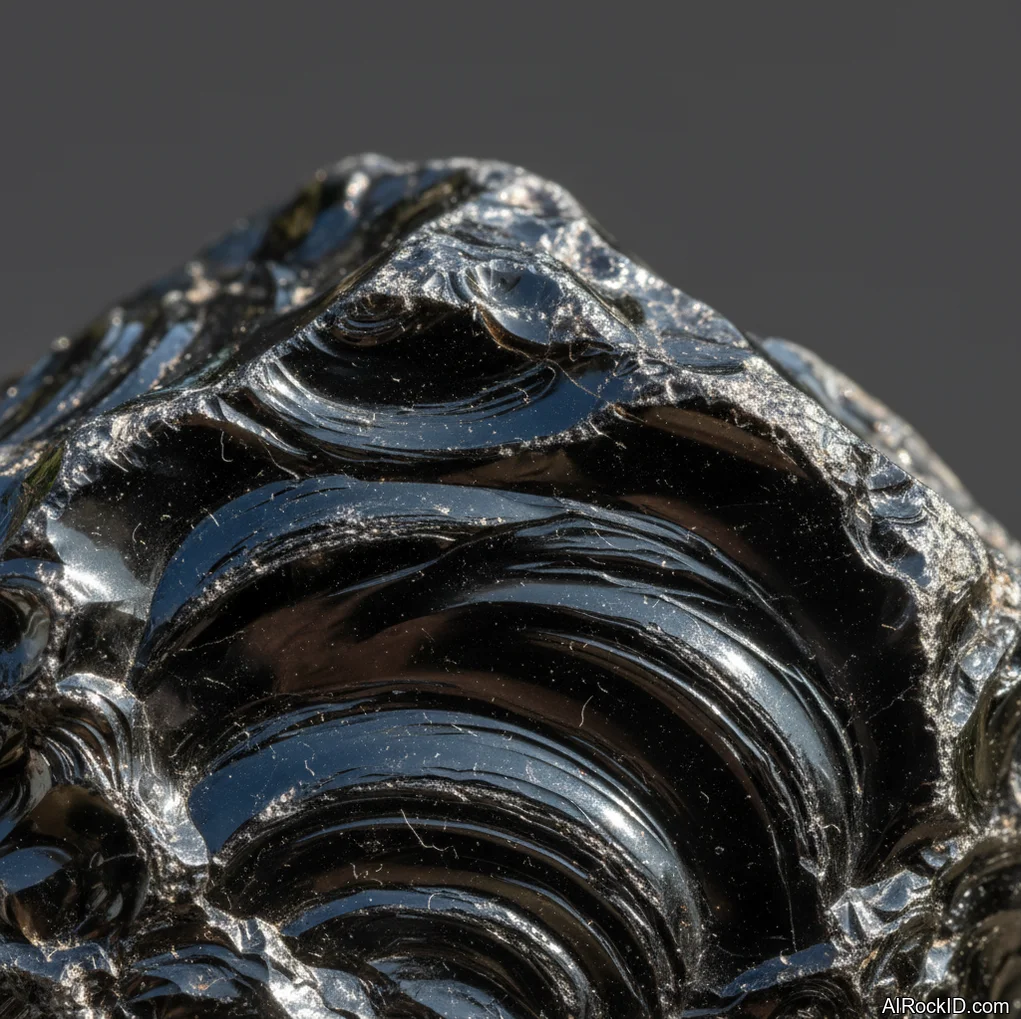
- Obsidian: Obsidian is volcanic glass and may show a glassier fracture or sharper luster than waxy chalcedony onyx.
- Black Glass: Black glass is often very uniform, may contain bubbles, and lacks the chalcedony texture of onyx.
- Shell Pearl: Shell pearls are manufactured from shell material and coatings, while freshwater pearls are organic nacre grown in mollusks.
Black Onyx and Pearl Lookalikes
| Material | Typical Clue | Key Difference |
|---|---|---|
| Black onyx | Waxy to vitreous black chalcedony | Harder than pearl and usually more scratch resistant |
| Dyed agate | Black color may collect in bands or drill holes | Often sold as onyx, but color may be dye-enhanced |
| Obsidian | Glassy surface and conchoidal fracture | Volcanic glass, not chalcedony |
| Freshwater pearl | Soft nacreous luster with subtle surface variation | Organic gem, much softer than onyx |
| Imitation pearl | Very uniform coating or visible peeling | Manufactured lookalike rather than nacre-grown pearl |
AI identification confidence
Photo identification is usually more reliable for the black onyx portion than for confirming freshwater pearl authenticity. AI confidence may decrease when beads are polished, uniformly black, strongly reflective, or photographed under artificial lighting.
When AI gets it wrong
- A polished black bead may be labeled as onyx even when it is dyed agate, glass, or obsidian.
- Pearl coatings can hide whether a bead is freshwater pearl, shell pearl, glass, or plastic.
- Strong reflections on black stones can obscure banding, bubbles, fractures, and surface texture.
- Small jewelry photos may not show drill holes, luster differences, or signs of dye concentration.
Final recommendation
For buying, ask whether the black stones are natural black chalcedony, dyed chalcedony, or another material, and ask whether the pearls are freshwater cultured pearls or imitations. For valuable or heirloom jewelry, a jeweler or gemologist can provide a more reliable assessment than appearance alone.
How to Check Authenticity Before Buying
Review the seller’s description for clear terms such as black onyx, dyed agate, freshwater cultured pearl, shell pearl, or imitation pearl. Inspect drill holes for dye concentration on black beads and coating wear on pearl-like beads. Uniform color is not proof of quality, because both black chalcedony and imitation pearls can be treated or manufactured to look consistent.
Photo Tips for Identification
Use diffuse daylight and take separate close-up photos of the black beads, pearl beads, drill holes, clasp, and any damaged areas. Include a scale reference and avoid heavy filters or flash glare. Multiple angles help distinguish waxy chalcedony, glassy obsidian, and coated imitation pearl surfaces.
Durability in Mixed-Material Jewelry
Black onyx is much harder than freshwater pearl, so the pearl is usually the more vulnerable part of the pairing. Pearls can be scratched by harder beads, damaged by acids, and dulled by cosmetics or harsh cleaners. Knotted stringing or small spacer beads can reduce rubbing between onyx and pearl surfaces.
What Is Black Onyx and Freshwater Pearl?
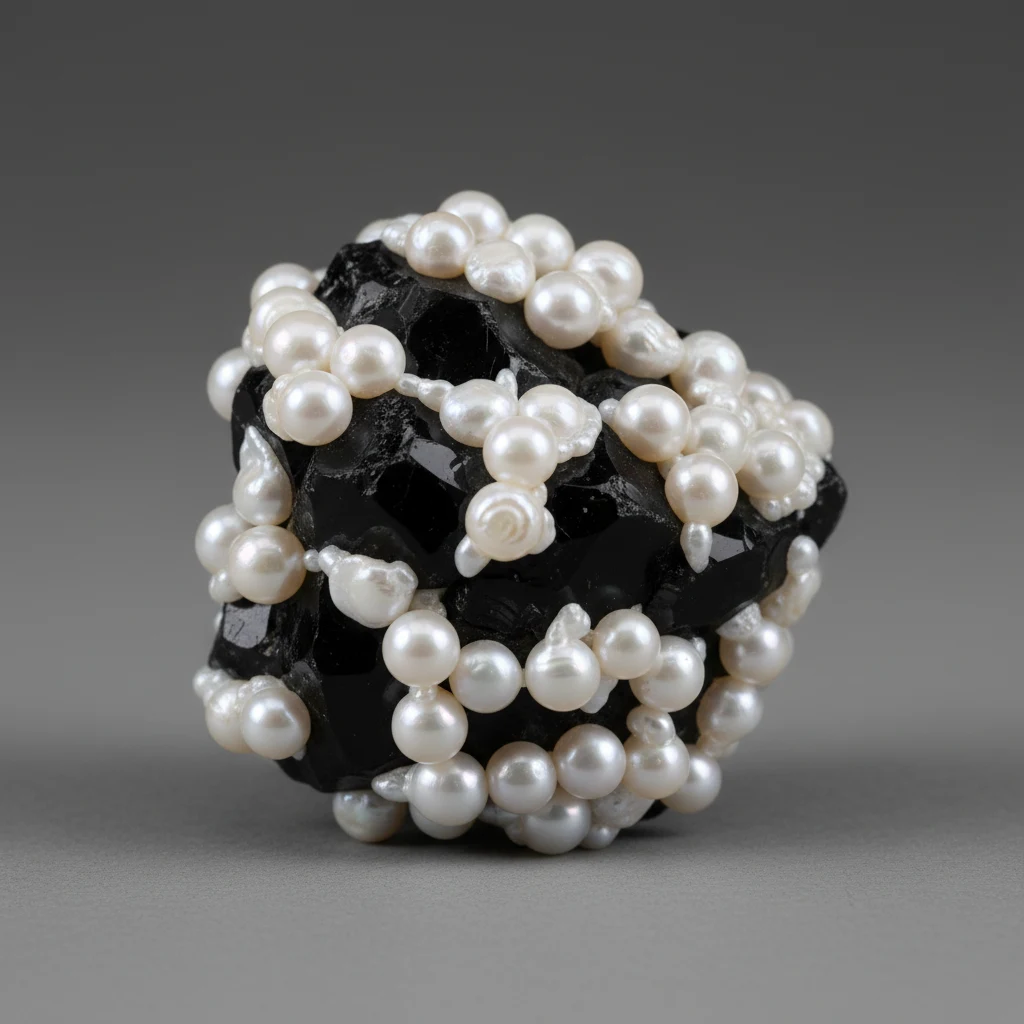
Black Onyx and Freshwater Pearl is a jewelry-friendly pairing of deep black chalcedony and organic pearl. In the hand, the contrast is immediate: onyx gives a smooth, opaque black surface with vitreous shine, while freshwater pearl brings a softer, pearly luster and a cooler, gently irregular feel.
This combination is common, but visually strong. The listed mineral side is a silicate, with onyx described as SiO2, while the pearl component is an organic gem with CaCO3. Collectors usually judge the pair by clean black color, pleasing pearl luster, size, shape, and overall finish.
Origin & History
The name “onyx” comes from the Greek word for “fingernail,” a reference to the layered look associated with the material. Freshwater pearls have been known since ancient times, giving this black-and-white pairing both a mineral identity and an organic gem tradition.
In practical collecting terms, the appeal is not rarity but contrast and wearability. Black onyx reads as protective and grounded in cultural use, while freshwater pearl is associated with purity and emotional balance. For mineral name cross-checking, mindat.org is a useful plain-text reference for onyx-related mineral information.
Where Is Black Onyx and Freshwater Pearl Found?
Black Onyx and Freshwater Pearl comes from more than one source type because the two materials form differently. Black onyx is commonly found in volcanic rock formations, while freshwater pearls are produced in freshwater mussels, so the finished pairing may bring together a mineral material and a mollusk-grown organic gem.
Formation
Black onyx forms through volcanic activity as silica deposits, giving it the chalcedony identity behind its dense black appearance. Its listed physical properties include a hexagonal crystal system, Mohs hardness of 6.5-7, density of 2.65 g/cm3, white streak, conchoidal fracture, vitreous luster, and opaque diaphaneity.
Freshwater pearls form when an irritant causes a mollusk to secrete layers of nacre. That nacre build-up is what creates the soft pearly luster collectors expect. Together, the pair combines Earth-like silica deposition with Water-linked organic growth, matching the cultural elements listed for the stone combination: Earth and Water.
How to Identify Black Onyx and Freshwater Pearl
Identify Black Onyx and Freshwater Pearl by looking for two different surfaces working together: solid black onyx and softly lustrous pearl. The onyx should show uniform black color and a smooth texture, with an opaque body and a vitreous shine rather than a transparent or glassy interior.
For the pearls, expect a cool feel to the touch and slight imperfections rather than a perfectly identical surface. The listed refractive index is 1.54-1.55 for onyx and 1.65-1.68 for pearls. The material is non-magnetic, has a white streak, and is described as having no pleochroism.
Properties of Black Onyx and Freshwater Pearl
Physical Properties
| Crystal System | Hexagonal |
| Hardness (Mohs) | 6.5-7 (Medium) |
| Density | 2.65 g/cm3 |
| Luster | Vitreous |
| Diaphaneity | Opaque |
| Fracture | Conchoidal |
| Streak | White |
| Magnetism | Non-magnetic |
| Colors | Black, White |
Chemical Properties
| Classification | Silicate |
| Formula | SiO2 for onyx; CaCO3 for pearls |
| Elements | Si, O, Ca, C |
| Common Impurities | Fe |
Optical Properties
| Refractive Index | 1.54-1.55 for onyx; 1.65-1.68 for pearls |
| Birefringence | None |
| Pleochroism | None |
| Optical Character | Isotropic |
Black Onyx and Freshwater Pearl Health & Safety
No significant health risks are associated with these stones.
Black Onyx and Freshwater Pearl Value & Price
Price Range
Rough/Tumbled: $10 - $50 per specimen
Cut/Polished: $30 - $150 per carat
Price is affected by quality, size, and shape.
Durability
Moderate — Scratch resistance: Good, Toughness: Fair
Both onyx and freshwater pearls are generally stable under normal conditions.
How to Care for Black Onyx and Freshwater Pearl
Use & Storage
Store separately to avoid scratches.
Cleaning
Clean with a soft cloth and mild soap. Avoid harsh chemicals.
Cleanse & Charge
Use running water or place in sunlight for cleansing.
Placement
Keep away from direct sunlight to prevent fading.
Caution
Avoid exposure to extreme temperatures.
Works Well With
Black Onyx and Freshwater Pearl Meaning & Healing Properties
In crystal-healing use, Black Onyx and Freshwater Pearl is chosen for protection, balance, and purity. Black onyx is believed to provide protection and support during difficult times, while freshwater pearl is thought to promote purity and emotional balance. The pairing is often used when someone wants grounding without losing softness.
Its listed chakra associations are Root and Heart, with Leo and Cancer as zodiac links. Cultural tags include protection, emotional healing, meditation, self-discovery, calming, love, grounding, intuition, transformation, and inner peace. For care, store it separately, clean with a soft cloth and mild soap, and avoid harsh chemicals or extreme temperatures.
Identify Black Onyx and Freshwater Pearl from a photo
Compare Black Onyx and Freshwater Pearl traits, care tips, value clues, and common lookalikes with a clear photo.
Common mistakes
- Assuming every black bead sold as onyx is untreated natural black onyx
- Using one cleaning method for both onyx and freshwater pearl
- Judging pearl authenticity only by roundness or color uniformity
- Ignoring drill holes, where dye, coating wear, and bead construction are often easier to see
- Using vinegar, ultrasonic cleaners, or harsh chemicals on pearl-containing jewelry
- Assuming a photo can confirm freshwater pearl origin without physical inspection