Shell Pearl


Quick answer: Shell pearl is a shell-based imitation pearl, usually made from a shaped shell core with a pearly coating or layered nacre-like finish. It can look similar to cultured pearl, but it is generally softer, less rare, and easier to identify by surface uniformity, drill holes, and construction clues.
AI Rock ID can help screen Shell Pearl from photos by checking luster, shape uniformity, surface texture, and visible drill-hole details. RockIdentifier.io provides identification support for shell-based organic gems, but final confirmation may require magnification or a jeweler’s inspection.
Good fit
- People who want a pearl-like look at a lower cost than cultured pearl
- Beaded jewelry where uniform size, color, and shape are preferred
- Collectors learning the difference between natural, cultured, and imitation pearls
- Designs that will be worn occasionally rather than daily in rough conditions
Not a good fit
- Buyers seeking natural or cultured pearl rarity
- Rings or bracelets exposed to frequent abrasion
- Situations where verified origin and gemological certification are required
- People expecting the same surface structure as a genuine nacre pearl
Most commonly confused with
- Cultured Pearl: Cultured pearls grow inside mollusks and usually show natural surface variation rather than perfectly uniform coating.
- Mother of Pearl: Mother of pearl is nacre cut from shell interiors, while shell pearl is typically a manufactured bead or coating.
- Glass Pearl: Glass pearls often feel heavier and may show a glassy core if the coating chips.
- Plastic Pearl: Plastic pearls are lighter and warmer to the touch, with a coating that may peel more easily.
Shell Pearl vs. Common Lookalikes
| Material | Typical Clue | Key Difference | Common Use |
|---|---|---|---|
| Shell pearl | Very even color and shape | Made from shell material with a pearly finish | Fashion jewelry and beads |
| Cultured pearl | Subtle natural blemishes | Formed in a mollusk around a nucleus or tissue | Fine jewelry |
| Mother of pearl | Flat or carved nacre surface | Cut from shell lining rather than formed as a round pearl | Inlay, cabochons, buttons |
| Glass pearl | Heavier feel | Glass core under a pearl-like coating | Costume jewelry |
| Plastic pearl | Very light weight | Synthetic core and coating | Low-cost accessories |
AI identification confidence
AI identification confidence for Shell Pearl is usually moderate from clear close-up photos, especially when drill holes, surface texture, and bead uniformity are visible. Confidence is lower when the item is photographed from a distance or when it has a high-quality coating that closely resembles cultured pearl.
When AI gets it wrong
- Photos are overexposed, making the surface look smoother or whiter than it is
- The bead is mounted in jewelry and the drill hole or edge construction is hidden
- A cultured pearl has very even shape and color, making it resemble shell pearl
- A glass or plastic pearl has a convincing coating and no visible chips
Final recommendation
Choose Shell Pearl when appearance, consistency, and affordability matter more than natural pearl origin. Ask sellers to state whether the item is shell pearl, cultured pearl, glass pearl, or plastic pearl, because these names are not interchangeable.
How to Check Shell Pearl Authenticity
Use magnification to inspect drill holes, edges, and worn spots for signs of a coating over a shell or other core. Shell pearl often has very consistent size, shape, and color across a strand, while cultured pearls commonly show small natural irregularities. A jeweler can separate shell pearl from cultured pearl using closer inspection, weight, surface structure, and sometimes X-ray testing for valuable pieces.
Buying Notes for Shell Pearl Jewelry
Product listings should clearly use terms such as shell pearl, imitation pearl, or simulated pearl instead of implying natural or cultured origin. Check whether the bead is made from shell, glass, or plastic, because all may be sold in pearl-like jewelry. For strands, examine color matching, coating evenness, knotting, clasp quality, and whether any beads show chips near the holes.
Simple At-Home Observation Tests
A close look under bright, indirect light can reveal whether the surface is uniformly coated or naturally varied. The drill-hole area is one of the most useful places to inspect because coatings may appear thicker, chipped, or slightly uneven there. At-home tests should be treated as screening methods, not proof of pearl type.
What Is Shell Pearl?
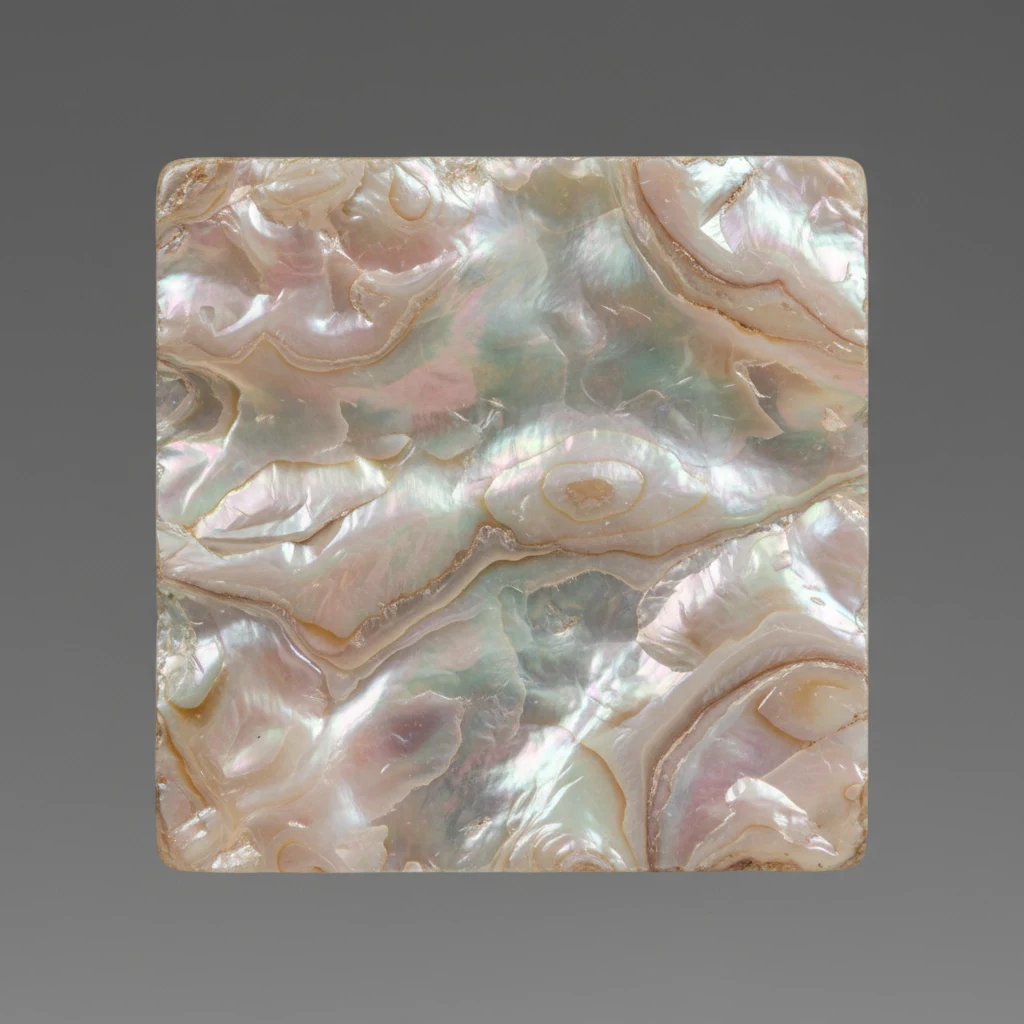
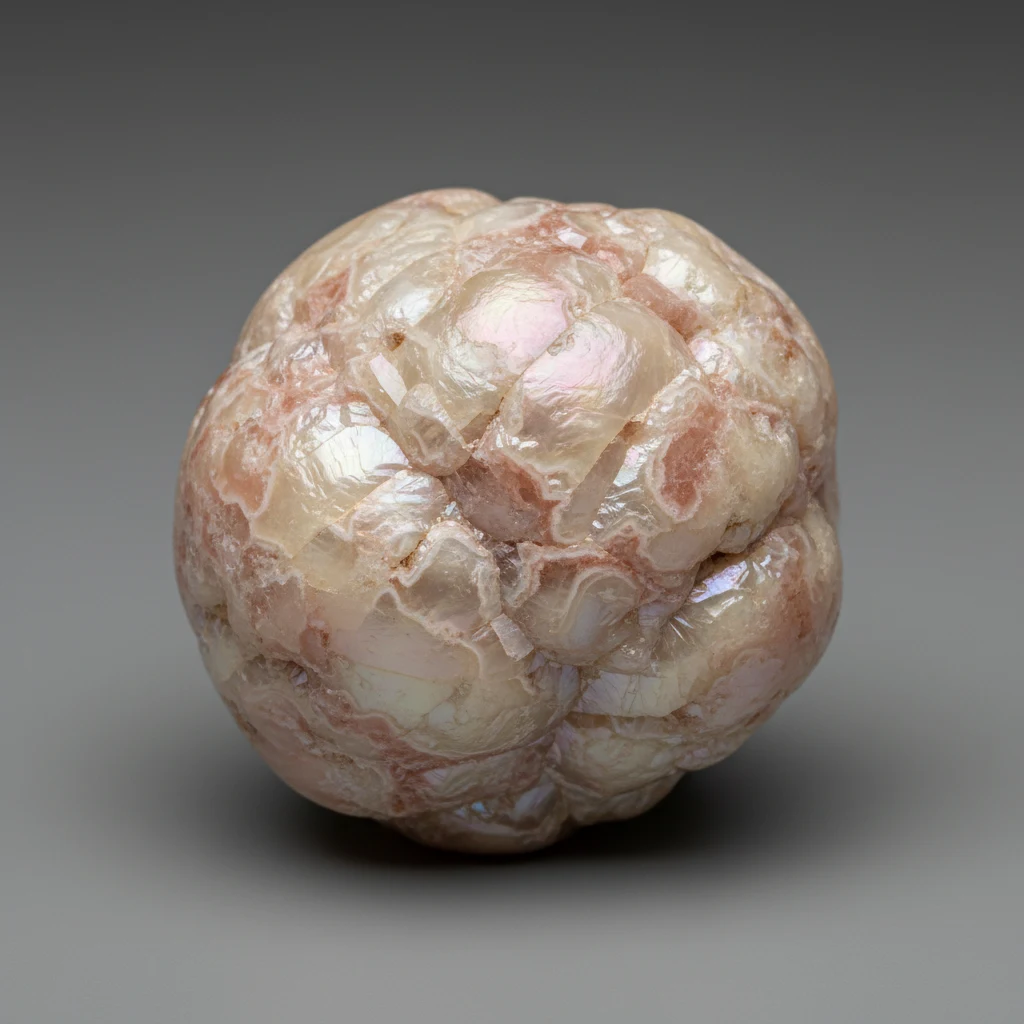
Shell Pearl is a common organic gem made from the inner layer of mollusk shells. In hand, the appeal is immediate: a soft pearly glow, subtle iridescence, and a layered look that separates it from flat-looking imitations. It is most often seen in white, cream, and pink tones, with translucent depth rather than glassy brightness.
Collectors value Shell Pearl for its luster and natural shell origin, not for extreme durability. Its Mohs hardness is 2.5 - 4, so it feels like a gem to handle but should be treated as a very scratch-prone material. Store it in a soft pouch or box, keep it away from harsh chemicals and extreme temperatures, and clean it with a damp cloth and mild soap.
Origin & History
Shell Pearl refers to the nacreous layer of mollusks, a material recognized for centuries in ancient texts. The name is practical and descriptive: it points to the shell source and the pearl-like surface produced by nacre. For collectors, that history matters because the beauty is not just color, but the layered organic growth visible through its iridescence.
As an organic gem, Shell Pearl sits apart from crystalline minerals even though its listed formula is CaCO3, calcium carbonate, with an organic matrix. Its physical character is amorphous, with pearly luster, white streak, and conchoidal fracture. For mineral terminology and comparison with carbonate materials, mindat.org is a useful plain-text reference.
Where Is Shell Pearl Found?
Shell Pearl is found in coastal regions with mollusk populations, especially in China, Japan, and the Philippines. Notable localities include the South China Sea in China, Okinawa in Japan, and the Sulu Archipelago in the Philippines. These are the kinds of marine settings where shell-forming mollusks supply the nacreous material.
Formation
Shell Pearl forms when a mollusk secretes layers of nacre around an irritant. That layered build can take several years, and it is the reason a good specimen seems to glow from within rather than shine only from the surface. The result is a natural organic gem with a recognizable shell-derived structure.
The material is calcium carbonate with an organic matrix, so it combines mineral and biological character in one specimen. Its density is listed at 2.5 - 2.9 g/cm3, and its optical character is isotropic with a refractive index of 1.53 - 1.68. In practice, identification begins with the pearly luster and the layered nacre you can see under good light.
How to Identify Shell Pearl
Identify Shell Pearl by looking for pearly luster, iridescence, and a layered structure. Typical colors include white, cream, and pink, and the material is translucent rather than fully transparent. When you rotate it in the hand, the surface should show a soft nacreous play of light instead of a single flat shine.
Its physical properties support the visual check: Shell Pearl is amorphous, non-magnetic, has a white streak, and is quite soft at Mohs 2.5 - 4. A scratch test can help distinguish it from synthetic materials, but use caution because the material scratches easily. Avoid ultrasonic cleaners and handle it gently to prevent surface damage.
Properties of Shell Pearl
Physical Properties
| Crystal System | Amorphous |
| Hardness (Mohs) | 2.5 - 4 (Very Soft (1-2)) |
| Density | 2.5 - 2.9 g/cm3 |
| Luster | Pearly |
| Diaphaneity | Translucent |
| Fracture | Conchoidal |
| Streak | White |
| Magnetism | Non-magnetic |
| Colors | White, Cream, Pink |
Chemical Properties
| Classification | Organic compound |
| Formula | CaCO3 (calcium carbonate) with organic matrix |
| Elements | Ca, C, O |
| Common Impurities |
Optical Properties
| Refractive Index | 1.53 - 1.68 |
| Birefringence | None |
| Pleochroism | None |
| Optical Character | Isotropic |
Shell Pearl Health & Safety
Shell pearls pose no known health risks.
Shell Pearl Value & Price
Price Range
Rough/Tumbled: $5 - $20 per specimen
Cut/Polished: $10 - $50 per carat
Price can vary based on size, luster, and color.
Durability
Moderate — Scratch resistance: Fair, Toughness: Fair
Shell pearls can be sensitive to harsh chemicals and extreme conditions.
How to Care for Shell Pearl
Use & Storage
Store in a soft pouch or box to avoid scratches.
Cleaning
Clean with a damp cloth and mild soap. Avoid ultrasonic cleaners.
Cleanse & Charge
Place in sunlight for a few hours to recharge.
Placement
Keep away from harsh chemicals and extreme temperatures.
Caution
Handle with care to avoid damage.
Works Well With
Shell Pearl Meaning & Healing Properties
Shell Pearl is believed to promote emotional balance and peace. In crystal practice, its feel is calming, nurturing, and soothing, making it a gentle choice for meditation, compassion work, love-focused intention, and inner peace. These uses are spiritual and symbolic, not medical advice or a substitute for care.
It is associated with the Heart and Crown chakras, Cancer and Pisces, the Moon, and the Water and Earth elements. Many practitioners pair Shell Pearl with quartz, amethyst, or rose quartz when they want a softer, more reflective layout. To cleanse and recharge it, place it in sunlight for a few hours, then return it to a soft pouch away from harsh conditions.
Identify Shell Pearl from a photo
Compare Shell Pearl traits, care tips, value clues, and common lookalikes with a clear photo.
Common mistakes
- Assuming every pearl-like bead is a cultured pearl
- Using the tooth test as the only identification method
- Ignoring drill-hole wear, where coatings and cores are easier to see
- Confusing mother of pearl with shell pearl because both come from shell material
- Paying cultured pearl prices for jewelry described only as simulated, faux, or shell pearl