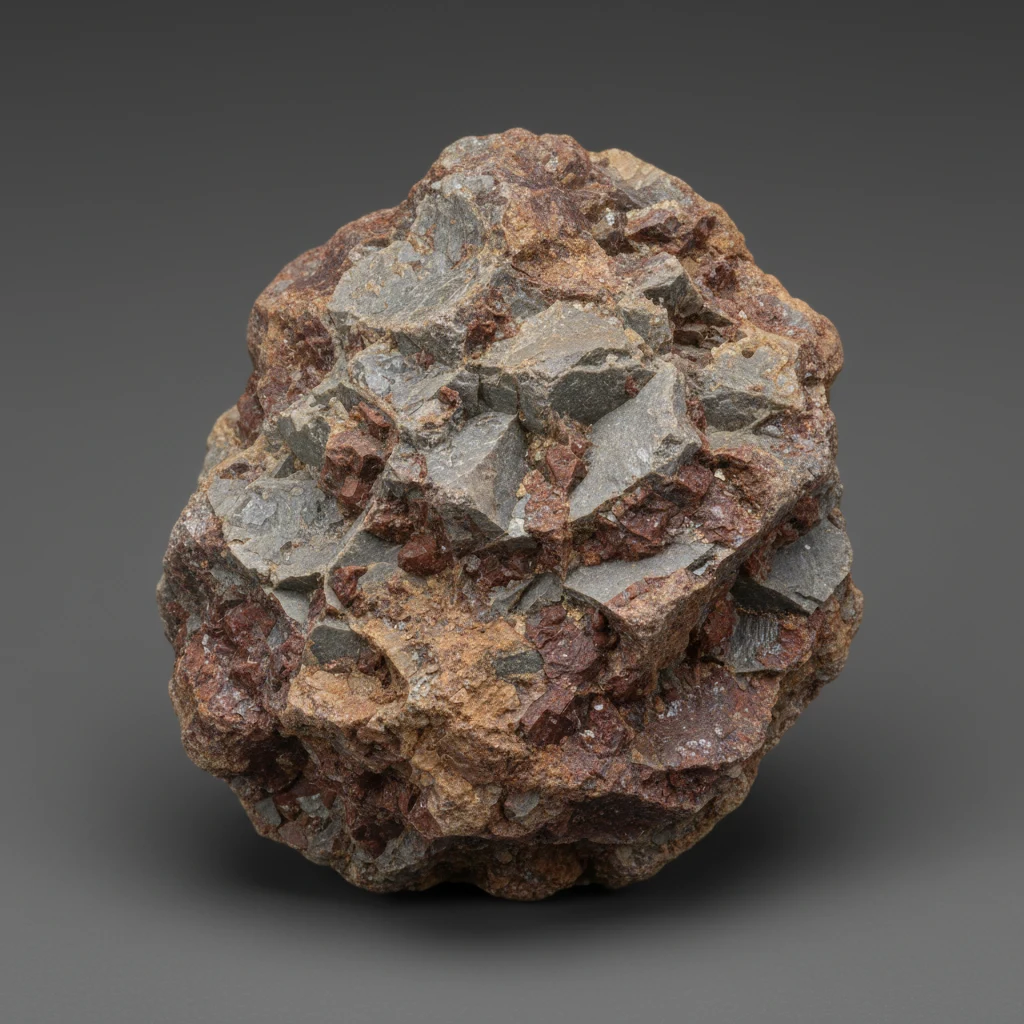
Claystone


Quick answer: Claystone is a very fine-grained sedimentary rock made mostly of compacted clay minerals. It is usually dull to earthy in luster, relatively soft, and best identified by its grain size, texture, and sedimentary context rather than by crystal form.
AI Rock ID can help compare a claystone photo with visually similar fine-grained rocks such as shale, mudstone, and siltstone. RockIdentifier.io provides visual identification support, but close matches should be checked against hardness, layering, and whether the sample breaks into thin sheets.
Good fit
- Learners comparing fine-grained sedimentary rocks
- Collectors who want a common field example of compacted clay-rich rock
- Classroom kits focused on sedimentary textures and grain size
- People identifying dull, earthy rocks found in layered deposits
Not a good fit
- Jewelry use, because claystone is soft and not durable
- Collectors seeking transparent or faceted crystals
- Outdoor display in wet areas, because some clay-rich rocks can weaken or crumble
- Identification based only on color, since claystone occurs in many earthy colors
Most commonly confused with
- Shale: Shale is usually fissile and splits into thin sheets, while claystone is generally more massive and blocky.
- Mudstone: Mudstone is a broader fine-grained rock category that may include both clay and silt, while claystone is dominated by clay-size particles.
- Siltstone: Siltstone feels slightly gritty and contains larger silt-size grains, while claystone feels smoother and finer.
- Limestone: Limestone commonly reacts with dilute acid because it contains calcite, while claystone typically does not show a strong fizz.
Claystone vs Similar Fine-Grained Rocks
| Feature | Claystone | Common Lookalike |
|---|---|---|
| Splitting habit | Usually massive or blocky | Shale splits into thin sheets |
| Grain feel | Very smooth, clay-size particles | Siltstone may feel slightly gritty |
| Composition clue | Clay minerals dominate | Limestone is mainly calcite |
| Acid reaction | Usually weak or none | Limestone often fizzes with dilute acid |
| Durability | Soft and may weather easily | Quartzite is much harder and more resistant |
AI identification confidence
AI identification confidence for claystone is usually moderate because many fine-grained sedimentary rocks look similar in photos. Confidence improves when the image shows fresh broken surfaces, layering, scale, and whether the sample splits into sheets.
When AI gets it wrong
- A photo shows only color, with no texture or broken surface visible
- The sample is wet, dusty, or weathered, which can hide grain size and luster
- The rock has thin bedding that makes claystone resemble shale
- No hardness, acid reaction, or field location information is provided
Final recommendation
Use visual identification as a first step, then confirm claystone by checking fine grain size, soft hardness, earthy luster, and non-fissile breakage. For buying or labeling specimens, prefer pieces with clear locality information and avoid listings that present claystone as a durable gem material.
Claystone Buying and Authenticity Tips
Claystone is common, so most specimens are valued for educational use, locality, or sedimentary features rather than rarity. Authentic claystone should look fine-grained and earthy, not glassy, crystalline, or highly polished like a gem. Be cautious with listings that use vague trade names or claim unusual durability, because claystone is normally soft and can mark or crumble more easily than many decorative stones.
Field Clues for Identifying Claystone
Claystone commonly occurs in sedimentary layers formed from quiet-water deposits such as lakes, floodplains, lagoons, or deep marine settings. A fresh surface is often smoother than siltstone and does not show the obvious sand grains found in sandstone. If the rock breaks into thin plates, shale may be a better identification than claystone.
Simple Checks Before Labeling a Specimen
Try a gentle scratch test with a fingernail or copper coin, since claystone is typically soft compared with quartz-rich rocks. Look for a dull, earthy surface and very fine texture rather than visible crystals. A small acid test can help separate claystone from limestone, but testing should be done carefully on an inconspicuous spot.
What Is Claystone?
Claystone is a common fine-grained sedimentary rock made primarily of clay minerals. In the hand, it feels soft, compact, and earthy rather than glassy or crystalline, with a texture that can often be shaped or marked more easily than harder rocks. It is classified as a rock, not a gemstone, and its practical identity comes from grain size and clay-rich composition.
Most claystone specimens appear gray, brown, or red, with an opaque body and dull to earthy luster. Its Mohs hardness is 2-3, so scratch resistance is poor and gentle handling matters. Collectors value it less for sparkle and more for sedimentary texture, basin history, and the quiet, grounded look of a fine clay-rich rock.
Origin & History
The name claystone directly describes what the rock is: a stone dominated by clay-sized material and clay minerals. The term entered geological literature in the 19th century, where it was used for rocks defined by their fine texture and composition rather than by visible crystals or gem clarity.
For a collector, that plain name is useful because it points to the specimen’s feel before anything else. A claystone piece is typically earthy, opaque, and subdued, not flashy. When comparing geological names or locality records, mindat.org is a practical reference point for checking how rock and mineral terms are used.
Where Is Claystone Found?
Claystone is commonly found in sedimentary basins. Reported countries include the USA, China, and India, with notable localities listed from Kansas, USA; Shandong, China; and Madhya Pradesh, India. These settings fit the rock’s identity as a compacted, fine-grained sedimentary material.
Formation
Claystone forms when clay-sized particles are compacted over time. That slow squeezing gives the rock its dense, fine-grained character and soft, earthy feel. It may also form through alteration of volcanic ash, producing a clay-rich rock without the visible crystal faces collectors expect from many minerals.
The finished material is amorphous in the provided physical description, with earthy fracture, light gray streak, and non-magnetic behavior. Its chemistry varies, often including SiO2 and Al2O3, with listed elements Si, O, and Al; common impurities may include Fe and Ca.
How to Identify Claystone
Identify claystone by its soft, fine-grained texture, dull earthy luster, and common gray, brown, or red color. It is opaque, non-magnetic, and usually lacks the sparkle or cleavage cues that make some minerals easy to spot. In the hand, it should feel compact and earthy rather than gritty or glassy.
A careful scratch test can help confirm its softness, since claystone is only Mohs 2-3. Its streak is light gray, fracture is earthy, and density is listed as 1.5-2.5 g/cm3. Handle test pieces gently, because its scratch resistance is poor and moisture exposure can cause disintegration over time.
Properties of Claystone
Physical Properties
| Crystal System | Amorphous |
| Hardness (Mohs) | 2-3 (Very Soft (1-2)) |
| Density | 1.5-2.5 g/cm3 |
| Luster | Earthy |
| Diaphaneity | Opaque |
| Fracture | Earthy |
| Streak | Light gray |
| Magnetism | Non-magnetic |
| Colors | Gray, Brown, Red |
Chemical Properties
| Classification | Tectosilicate |
| Formula | Varies, often includes SiO2 and Al2O3 |
| Elements | Si, O, Al |
| Common Impurities | Fe, Ca |
Optical Properties
| Refractive Index | N/A |
| Birefringence | None |
| Pleochroism | None |
| Optical Character | Isotropic |
Claystone Health & Safety
Claystone poses minimal health risks.
Claystone Value & Price
Price Range
Rough/Tumbled: $1 - $10 per specimen
Cut/Polished:
Price varies based on location and quality.
Durability
Nondurable — Scratch resistance: Poor, Toughness: Fair
It can disintegrate when exposed to moisture.
How to Care for Claystone
Use & Storage
Store in a cool, dry place away from direct sunlight.
Cleaning
Clean with a damp cloth. Avoid harsh chemicals to prevent damage.
Cleanse & Charge
Place under moonlight for cleansing.
Placement
Display in areas that resonate with grounding energy.
Caution
Handle gently due to its softness.
Works Well With
Claystone Meaning & Healing Properties
Claystone is believed to support grounding, stability, and emotional healing. In meditation practice, its appeal is tactile and simple: a soft, earthy stone that feels connected to the Earth element rather than bright or showy. It is associated with the Root chakra, making it a natural choice for themes of support, balance, trust, and focus.
For crystal use, claystone is linked with Taurus and Virgo and with nurturing, calming energy. It pairs well with quartz, amethyst, and obsidian. Store it in a cool, dry place away from direct sunlight, clean it with a damp cloth, avoid harsh chemicals, and use moonlight when you want a gentle cleansing method.
Identify Claystone from a photo
Compare Claystone traits, care tips, value clues, and common lookalikes with a clear photo.
Common mistakes
- Calling every gray fine-grained rock claystone without checking whether it splits like shale
- Identifying claystone by color alone, even though it may be gray, brown, red, greenish, or black
- Assuming a polished or sealed surface reflects the natural luster of the rock
- Confusing smooth texture with hardness, since claystone can feel smooth but remain soft
- Using metaphysical descriptions as proof of mineral identity instead of texture, hardness, and composition
- Expecting claystone to perform like a durable gemstone in rings, beads, or daily-wear jewelry