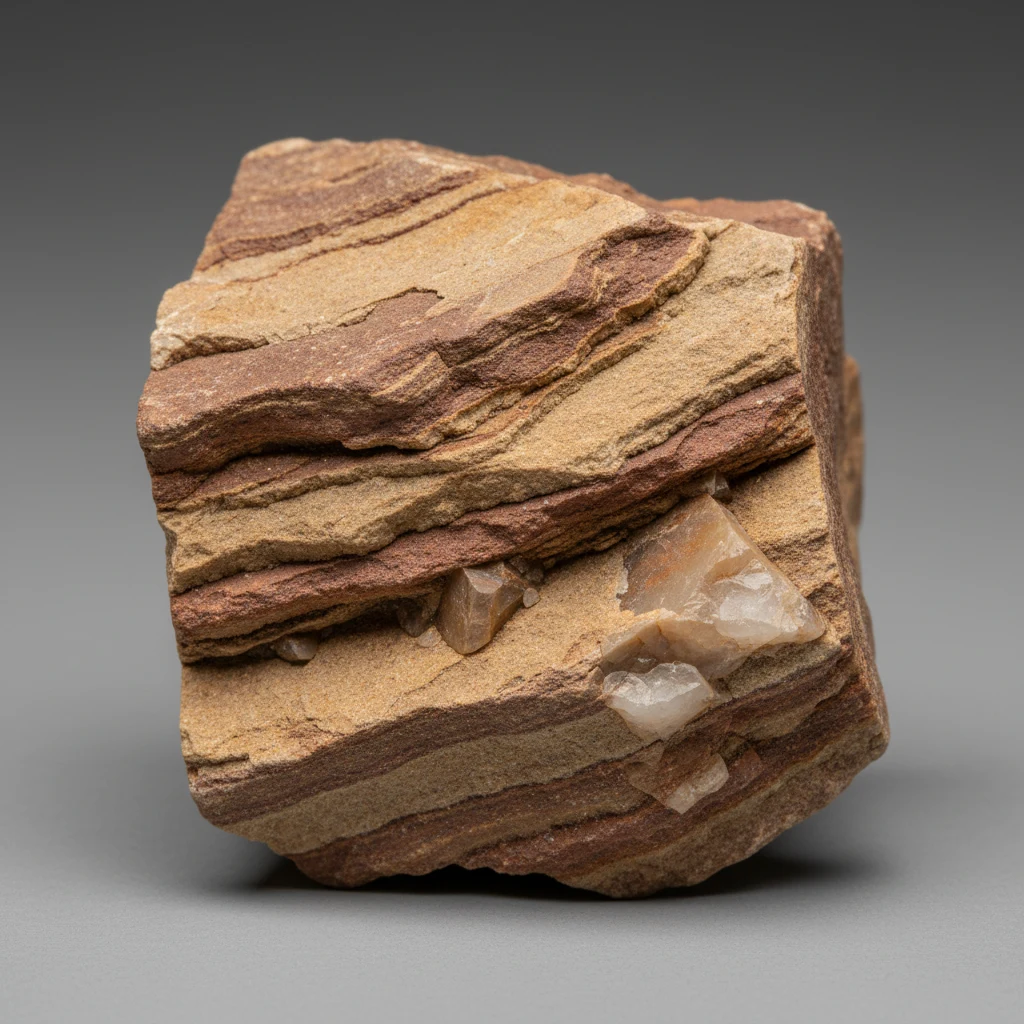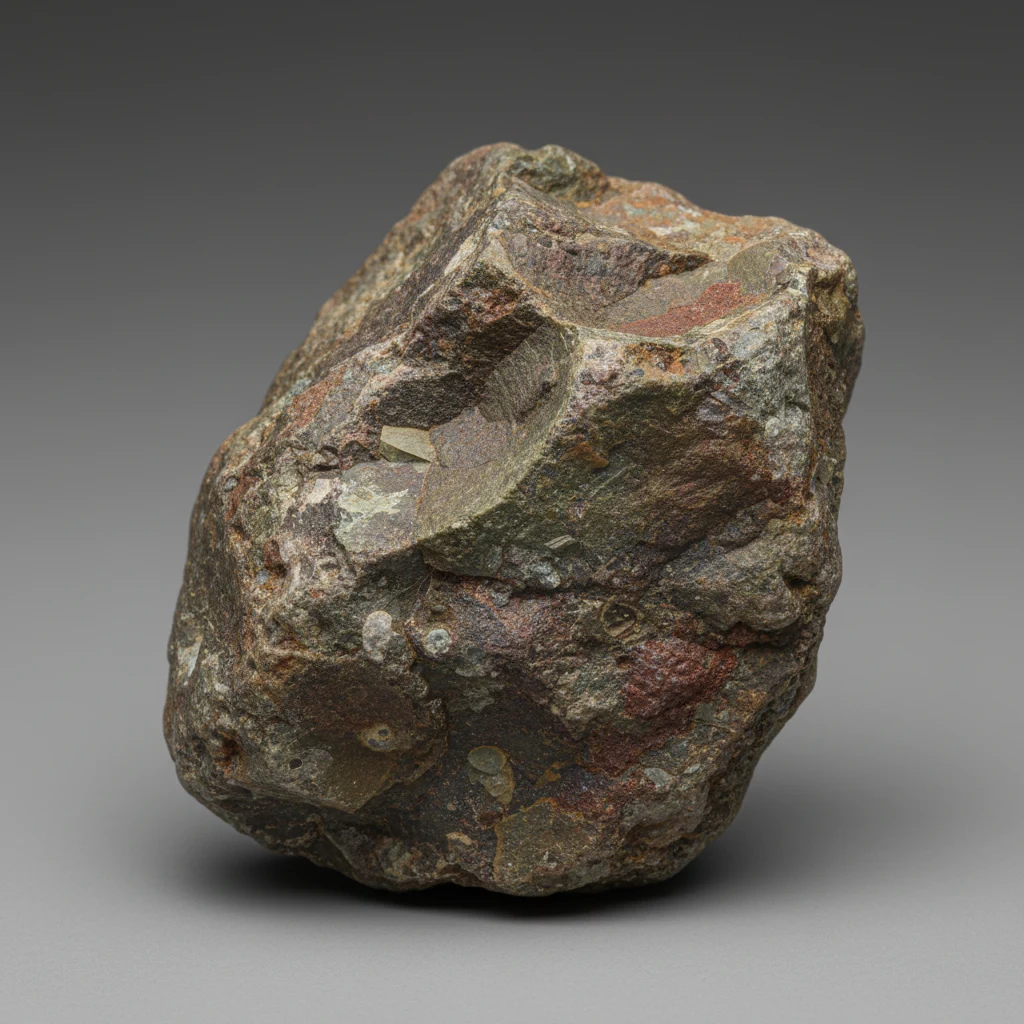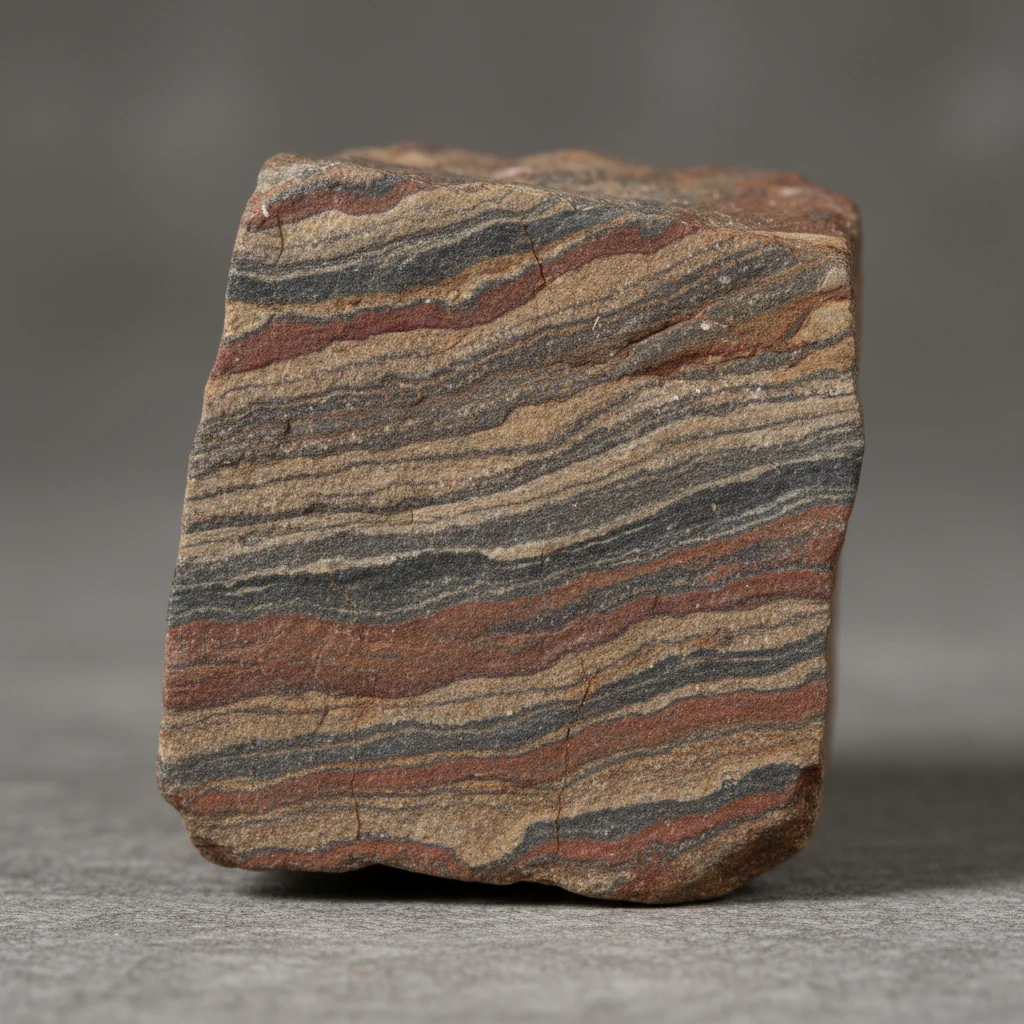
Siltstone


Quick answer: Siltstone is a fine-grained sedimentary rock made mostly of compacted silt-sized particles. It often looks like a smoother, slightly gritty version of shale or sandstone and is commonly gray, tan, brown, red, or greenish.
AI Rock ID can help compare a siltstone photo with visually similar rocks such as shale, mudstone, sandstone, and limestone. RockIdentifier.io is most useful when the photo includes a fresh broken surface, scale, and notes about texture, layering, and where the sample was found.
Good fit
- Collectors who want a common sedimentary rock for comparison sets
- Students learning the difference between mudstone, shale, siltstone, and sandstone
- Field users documenting river, delta, lake, or shallow marine sedimentary layers
- People who prefer natural, earthy-looking rock specimens
Not a good fit
- Collectors seeking a rare mineral specimen or gem material
- Jewelry use where high polish, bright color, or durability is required
- Situations that need a water-resistant decorative stone
- Identification based only on color, since many sedimentary rocks share similar colors
Most commonly confused with
- Shale: Shale is usually finer grained and tends to split into thin sheets more readily than siltstone.
- Mudstone: Mudstone is made of clay- and silt-sized particles but typically lacks the slight gritty feel of siltstone.
- Sandstone: Sandstone has larger sand-sized grains that are easier to see or feel with the fingertips.
- Limestone: Limestone is carbonate-rich and may fizz with dilute acid, while siltstone generally does not unless it contains carbonate cement.
Siltstone vs. Similar Sedimentary Rocks
| Rock | Typical grain size | Common field clue | Splitting habit |
|---|---|---|---|
| Siltstone | Silt-sized | Slightly gritty but grains are hard to see | May break in blocks or thin beds |
| Shale | Clay to very fine silt | Smooth feel and thin laminations | Splits into sheets |
| Mudstone | Clay and silt | Dull, smooth to slightly gritty surface | Usually massive or blocky |
| Sandstone | Sand-sized | Visible or easily felt grains | Usually blocky or bedded |
| Limestone | Variable carbonate grains | May react with dilute acid | Usually blocky or bedded |
AI identification confidence
AI identification of siltstone is usually moderate because its appearance overlaps with shale, mudstone, fine sandstone, and limestone. Confidence improves when the image shows grain texture, a fresh break, bedding, a scale reference, and location context.
When AI gets it wrong
- A weathered surface hides the slight gritty texture that distinguishes siltstone from mudstone or shale.
- The photo is too close, too dark, or lacks scale, making grain size difficult to judge.
- Fine sandstone is photographed from a distance and its sand-sized grains are not visible.
- Carbonate-cemented siltstone is mistaken for limestone without an acid reaction test.
Final recommendation
For field identification, treat siltstone as a texture-based rock name rather than a color-based one. Use grain feel, bedding style, break pattern, and simple tests such as a scratch test or dilute acid reaction when appropriate.
How to Identify Siltstone in the Field
A fresh piece of siltstone usually feels slightly gritty when rubbed, but individual grains are difficult to see without magnification. It is commonly harder and less flaky than shale, but finer grained than sandstone. Bedding, muted colors, and association with other sedimentary layers can support the identification.
Buying and Authenticity Tips
Siltstone is common, so most specimens are sold for educational, decorative, or local geology interest rather than rarity. A useful listing should include the collection locality, approximate size, and whether the surface is natural, cut, or polished. Be cautious of vague labels such as “healing stone” or “ancient river stone” when no geological description is provided.
Where Siltstone Is Commonly Found
Siltstone often forms in environments where water or wind can carry fine sediment, including river floodplains, deltas, lakes, tidal flats, and shallow marine settings. It may occur in layers with shale, mudstone, sandstone, coal, or limestone. Fossils, ripple marks, mud cracks, or laminations may appear in some beds depending on the original depositional environment.
What Is Siltstone?
Siltstone is a common sedimentary rock made mainly of silt-sized particles. In the hand, it feels fine-grained rather than sandy, with a dull surface that may look slightly shiny on fresh breaks. Its usual colors include gray, brown, red, and sometimes yellow, and it is opaque rather than glassy or translucent.
As a rock specimen, siltstone is more about texture, bedding, and locality than sparkle. It has a listed Mohs hardness of 4-6, a density of 2.0-2.5 g/cm3, uneven fracture, and a white to light gray streak. Its chemical description is SiO2 with varying amounts of clay and other minerals, with iron and calcium noted as common impurities.
Origin & History
The name siltstone directly describes what the rock is: stone formed from silt. The term has been used since the early 20th century for this fine-grained sedimentary rock, and it comes from “silt,” the particle-size word that separates it from coarser sandstone and finer related sedimentary rocks.
For collectors, the historical value of siltstone is usually tied to its formation setting and locality label rather than rarity. A specimen from a named basin or formation can be more interesting than a loose, unmarked piece. Locality and occurrence notes for rocks and minerals can be cross-checked with mindat.org when documenting a collection.
Where Is Siltstone Found?
Siltstone is commonly found in sedimentary basins. Reported countries include the USA, China, and India, with notable localities such as the Siltstone Formation in Colorado, the Basin and Range Province in Nevada, and Mawsyngkneng in Meghalaya, India.
Formation
Siltstone forms when silt-sized particles are compacted and turned into rock. This commonly happens in river or delta environments, where silty sediment can settle, accumulate, and later lithify into a fine-grained sedimentary rock.
The result is a rock that sits between very sandy and very muddy textures in hand-sample terms. Its layered breakage, dull luster, and muted gray, brown, red, or yellow colors reflect the compacted sediment and the varying clay and mineral content included with the SiO2-rich material.
How to Identify Siltstone
Identify siltstone by its fine-grained texture, dull to slightly shiny appearance, and tendency to break into thin layers. It is typically gray, brown, red, or yellow, opaque, non-magnetic, and may show an uneven fracture rather than a bright crystalline face.
A simple hardness comparison can help because siltstone is generally softer than harder rocks, with a listed Mohs range of 4-6. Its streak is white to light gray, and it lacks a crystal system listing because it is a sedimentary rock rather than a single crystal mineral. Handle thin pieces carefully, as they can be fragile.
Properties of Siltstone
Physical Properties
| Crystal System | N/A |
| Hardness (Mohs) | 4-6 (Medium (4-6)) |
| Density | 2.0-2.5 g/cm3 |
| Luster | Dull |
| Diaphaneity | Opaque |
| Fracture | Uneven |
| Streak | White to light gray |
| Magnetism | Non-magnetic |
| Colors | Gray, Brown, Red |
Chemical Properties
| Classification | Silicate |
| Formula | SiO2 with varying amounts of clay and other minerals |
| Elements | Si, O |
| Common Impurities | Fe, Ca |
Optical Properties
| Refractive Index | N/A |
| Birefringence | None |
| Pleochroism | None |
| Optical Character | Isotropic |
Siltstone Health & Safety
Siltstone poses no significant health risks.
Siltstone Value & Price
Price Range
Rough/Tumbled: $10 - $30 per specimen
Cut/Polished:
Price can vary based on locality and uniqueness.
Durability
Moderate — Scratch resistance: Fair, Toughness: Fair
Siltstone is relatively stable but can be fragile when thin.
How to Care for Siltstone
Use & Storage
Store in a dry place to avoid moisture damage.
Cleaning
Clean with a damp cloth and mild soap. Avoid harsh chemicals.
Cleanse & Charge
Place under sunlight or moonlight for cleansing.
Placement
Can be displayed in any area as a decorative rock.
Caution
Handle with care to avoid breakage.
Works Well With
Siltstone Meaning & Healing Properties
In crystal-healing use, siltstone is thought to promote grounding, stability, and connection with the Earth. Its appeal is quiet and tactile: a plain, fine-grained stone that feels settled rather than flashy. Many users place it with Root chakra work when they want a steady, earthy focus for meditation or reflection.
Siltstone is associated with Taurus and Virgo, the Earth element, and the qualities of grounding, calming, trust, relaxation, and emotional healing. It pairs well with quartz, jasper, and agate in a simple display or practice layout. These meanings are cultural and spiritual uses, not medical claims.
Identify Siltstone from a photo
Compare Siltstone traits, care tips, value clues, and common lookalikes with a clear photo.
Common mistakes
- Identifying siltstone by color alone instead of grain size and texture.
- Calling any flat, layered gray rock shale without checking whether it splits into thin sheets.
- Confusing very fine sandstone with siltstone when sand grains are not visible in a photo.
- Assuming every acid-reactive sample is pure limestone; some siltstone contains carbonate cement.
- Using a polished surface for identification without also checking a fresh broken surface.
- Treating siltstone as a mineral, even though it is a rock made of multiple mineral grains.