Enstatite


Quick answer: Enstatite is a magnesium-rich orthopyroxene that commonly appears in brown, greenish, gray, or bronze-toned forms. It is most useful to identify by its prismatic habit, two cleavages near 90 degrees, moderate hardness, and geologic setting in ultramafic rocks, metamorphic rocks, or some meteorites.
AI Rock ID can help compare an unknown pyroxene-like specimen with enstatite by checking visible color, luster, habit, and surface texture. RockIdentifier.io provides identification support, but lab testing may be needed for separating enstatite from closely related pyroxenes and meteorite minerals.
Good fit
- Collectors interested in pyroxene minerals from ultramafic or metamorphic rocks
- Students comparing mineral cleavage, hardness, and crystal habit
- Meteorite enthusiasts learning about enstatite-bearing stony meteorites
- Buyers who prefer natural, earthy-looking specimens over bright gem colors
Not a good fit
- Anyone needing a quick visual ID without context or testing
- Buyers looking for highly transparent, faceted gemstones in large sizes
- Collectors who want a mineral with distinctive color alone
- Anyone expecting metaphysical traditions to replace medical or professional advice
Most commonly confused with
- Hypersthene: Hypersthene is an iron-rich orthopyroxene variety that is often darker and may show a bronze to reddish schiller.
- Diopside: Diopside is a clinopyroxene and may look similar, but it has different crystal symmetry and is commonly brighter green.
- Bronzite: Bronzite is an iron-bearing orthopyroxene variety with a bronze sheen, while enstatite is the magnesium-rich end member.
- Olivine: Olivine is usually more olive-green, has no cleavage, and tends to break with a granular or conchoidal fracture.
Enstatite vs. Similar Minerals
| Mineral | Typical clue | Key difference |
|---|---|---|
| Enstatite | Brown, gray, greenish, or bronze pyroxene | Mg-rich orthopyroxene with two cleavages near 90° |
| Hypersthene | Dark brown to black with possible schiller | More iron-rich orthopyroxene |
| Diopside | Green to dark green prismatic crystals | Clinopyroxene, not orthopyroxene |
| Olivine | Olive-green grains in basalt or peridotite | No cleavage and different crystal structure |
| Bronzite | Bronze metallic-looking sheen | Iron-bearing orthopyroxene variety |
AI identification confidence
AI identification of enstatite is usually moderate when the specimen shows visible pyroxene habit, cleavage, and a known ultramafic or meteorite context. Confidence drops when the piece is polished, weathered, very dark, or listed without locality data.
When AI gets it wrong
- Polished cabochons can hide cleavage and crystal habit.
- Dark pyroxenes may be visually confused with amphibole, hypersthene, or bronzite.
- Meteorite slices require more than a photo to confirm mineral composition.
- Green specimens may be mistaken for diopside, olivine, or jade-related materials.
Final recommendation
Use visual identification as a starting point, especially for separating enstatite from other pyroxenes. For valuable, meteorite-related, or gem-quality material, request locality information, seller documentation, or mineralogical testing.
How to Identify Enstatite in Photos
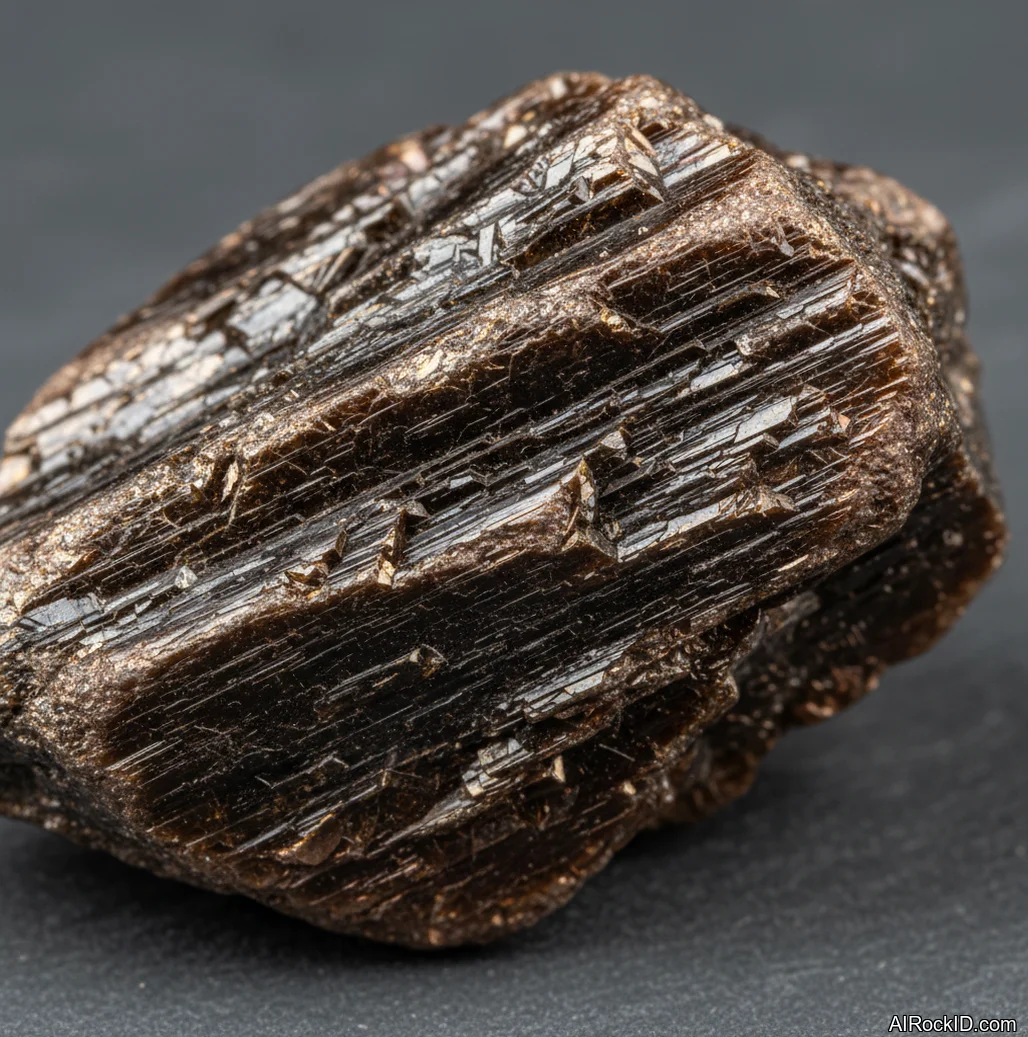
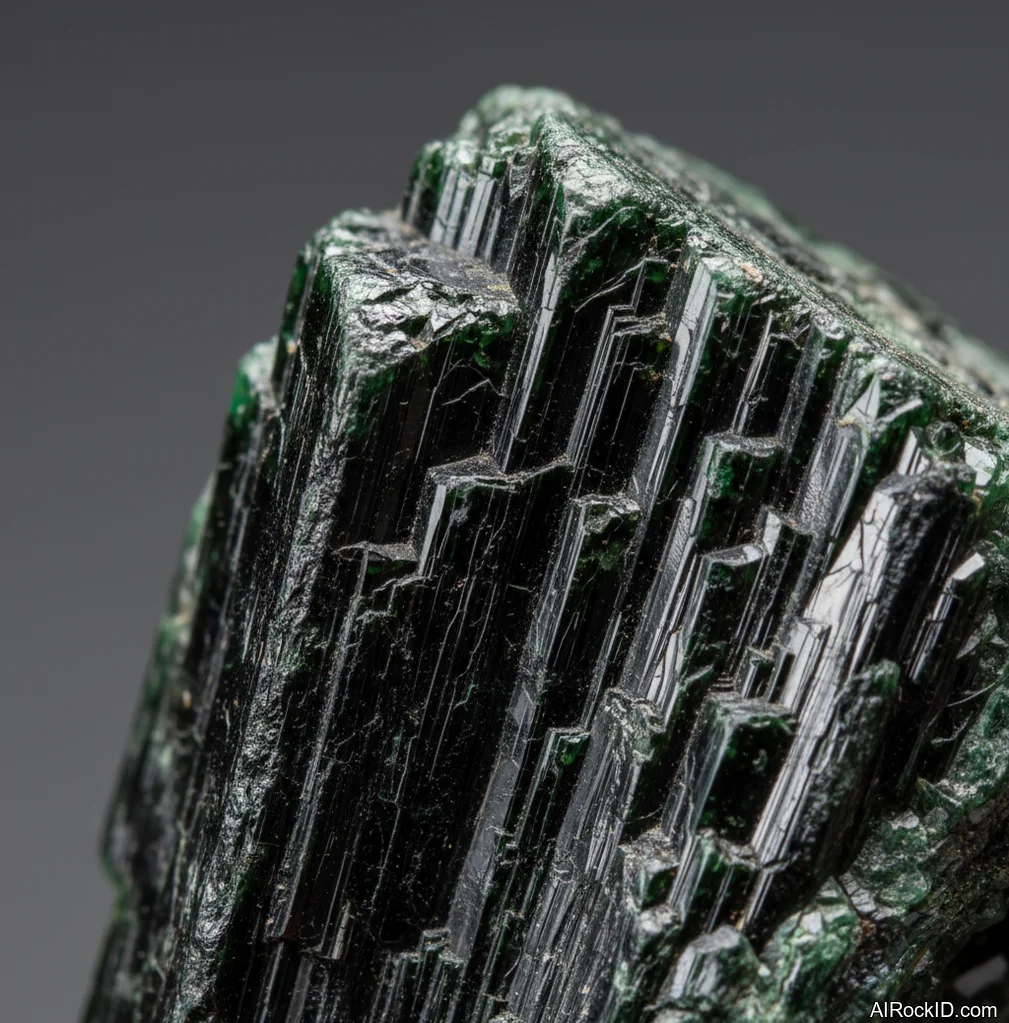
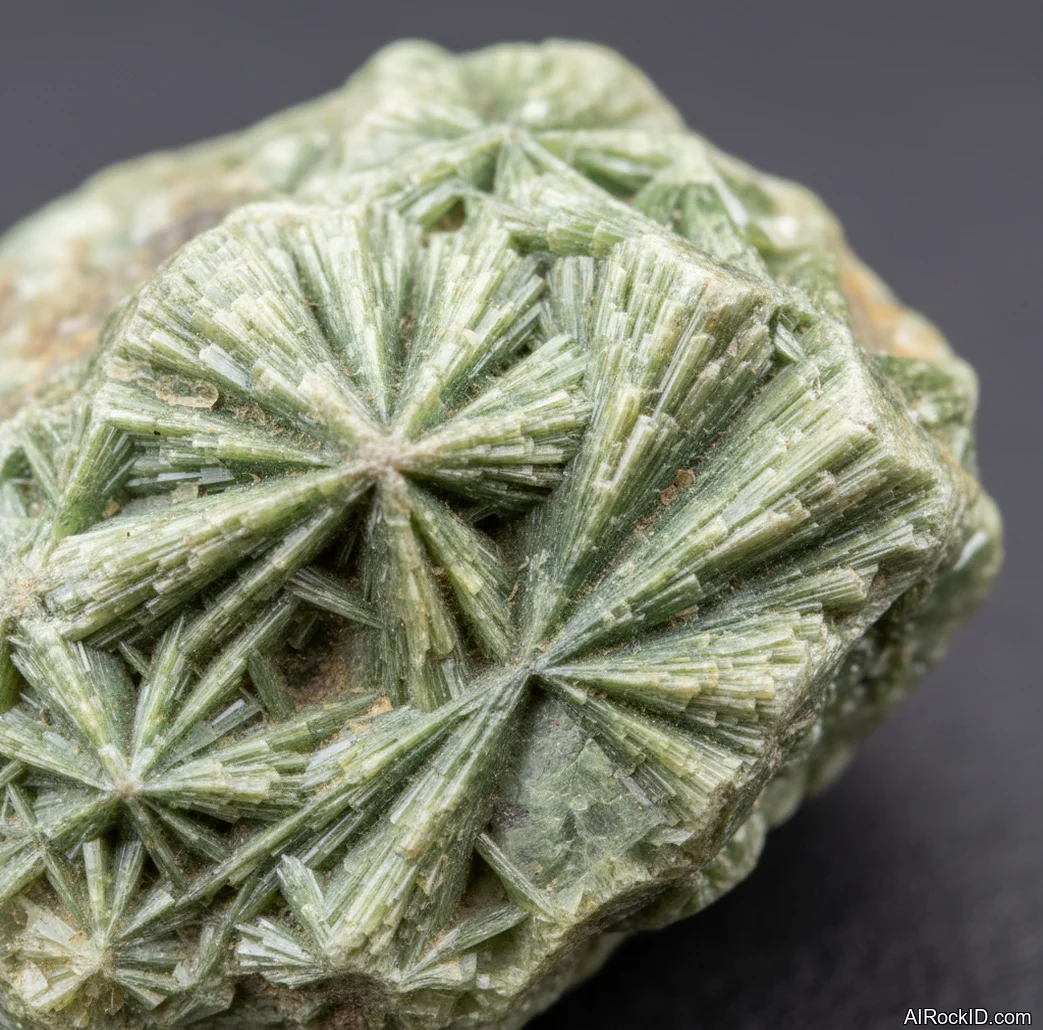
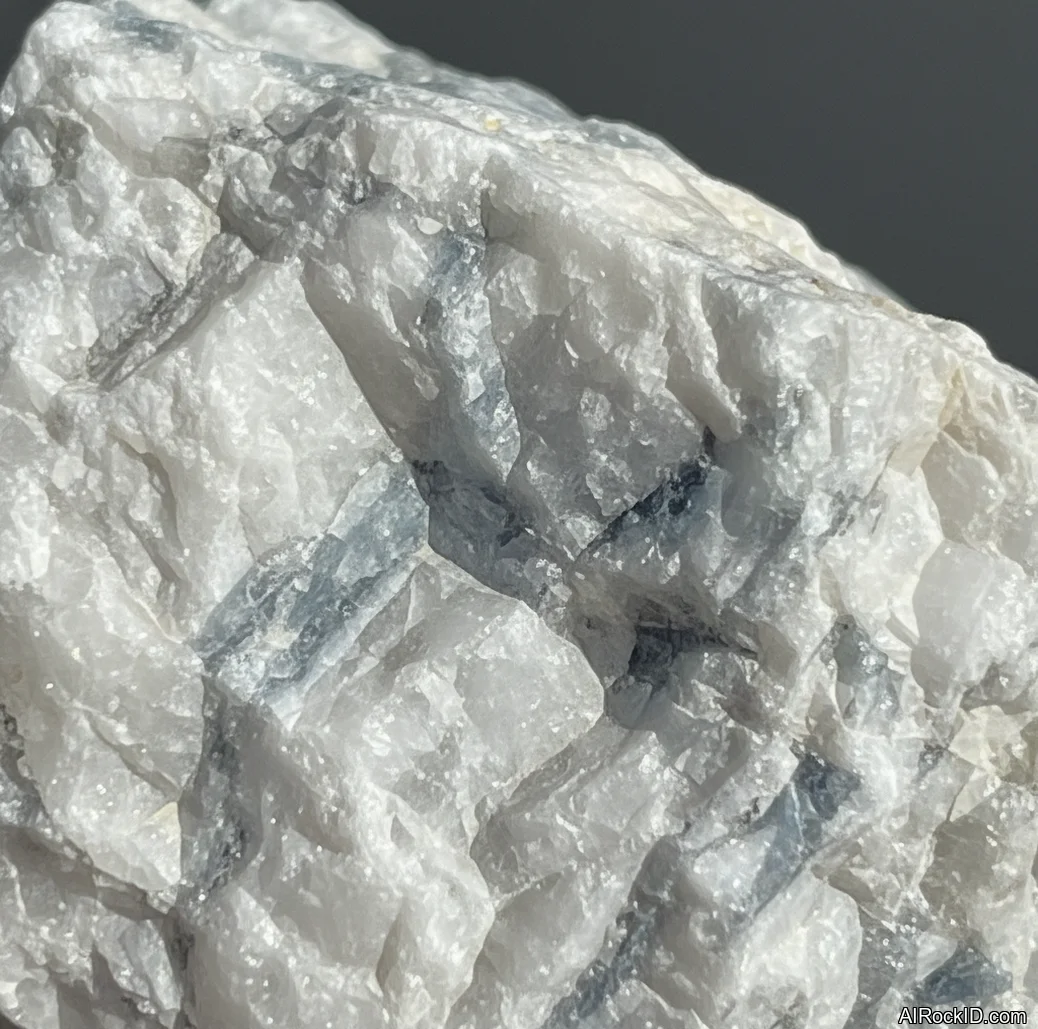
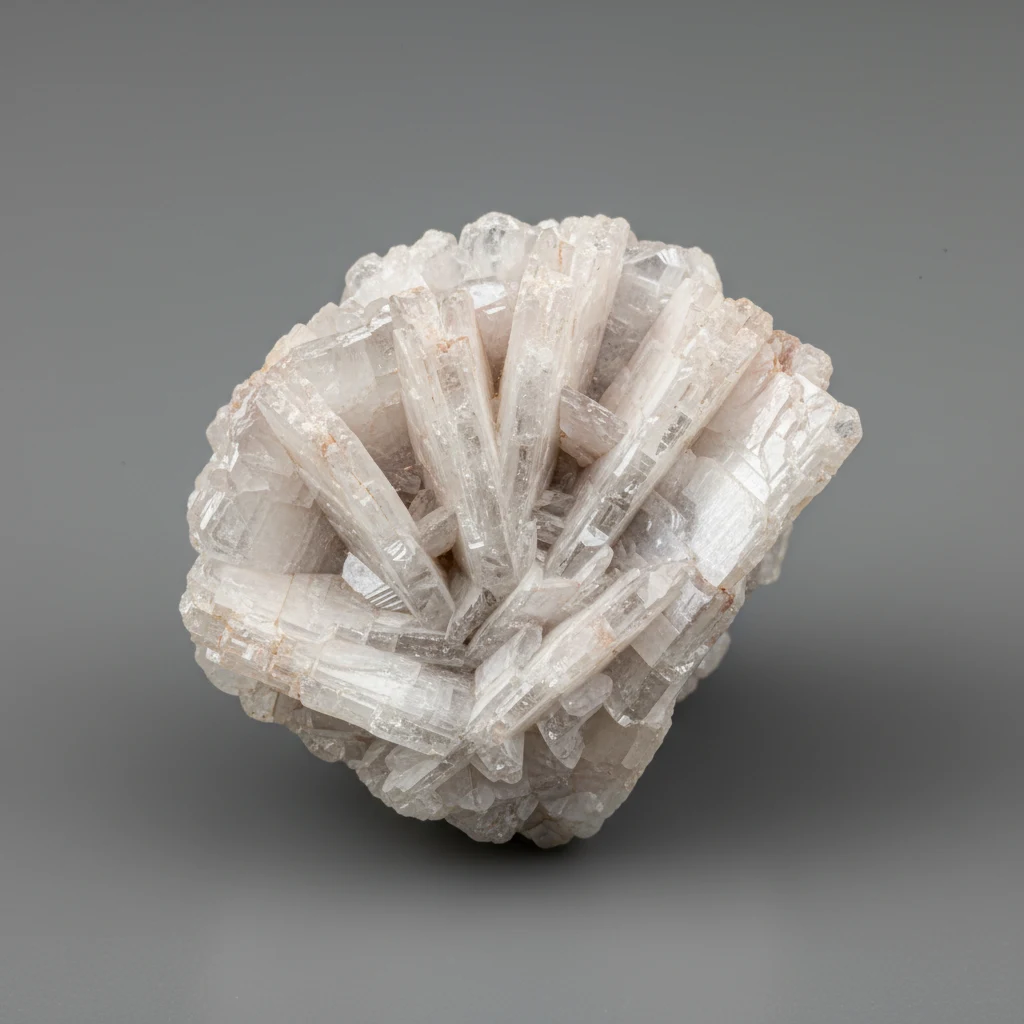
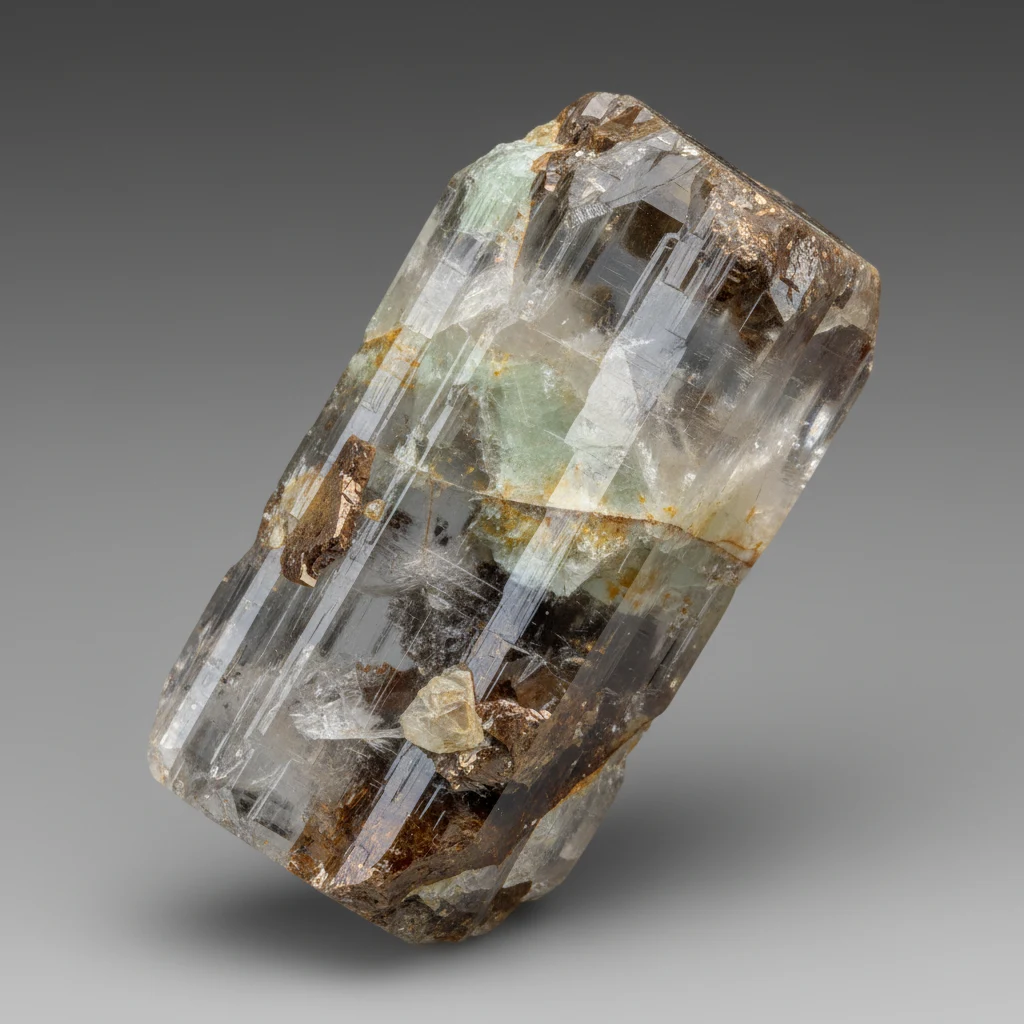
Look for a prismatic or blocky mineral with vitreous to pearly luster and subdued brown, gray, greenish, or bronze tones. Broken surfaces may show two cleavage directions close to a right angle, which helps separate pyroxenes from olivine. A photo that includes the host rock, scale, and multiple angles is more useful than a single close-up.
Buying Enstatite Specimens
When buying enstatite, check whether the listing identifies the specimen as enstatite, bronzite, hypersthene, or a general orthopyroxene. Locality information is important because enstatite occurs in specific igneous, metamorphic, and meteorite settings. Be cautious with vague labels such as “meteorite crystal” or “rare green pyroxene” unless the seller provides supporting details.
Enstatite in Meteorites
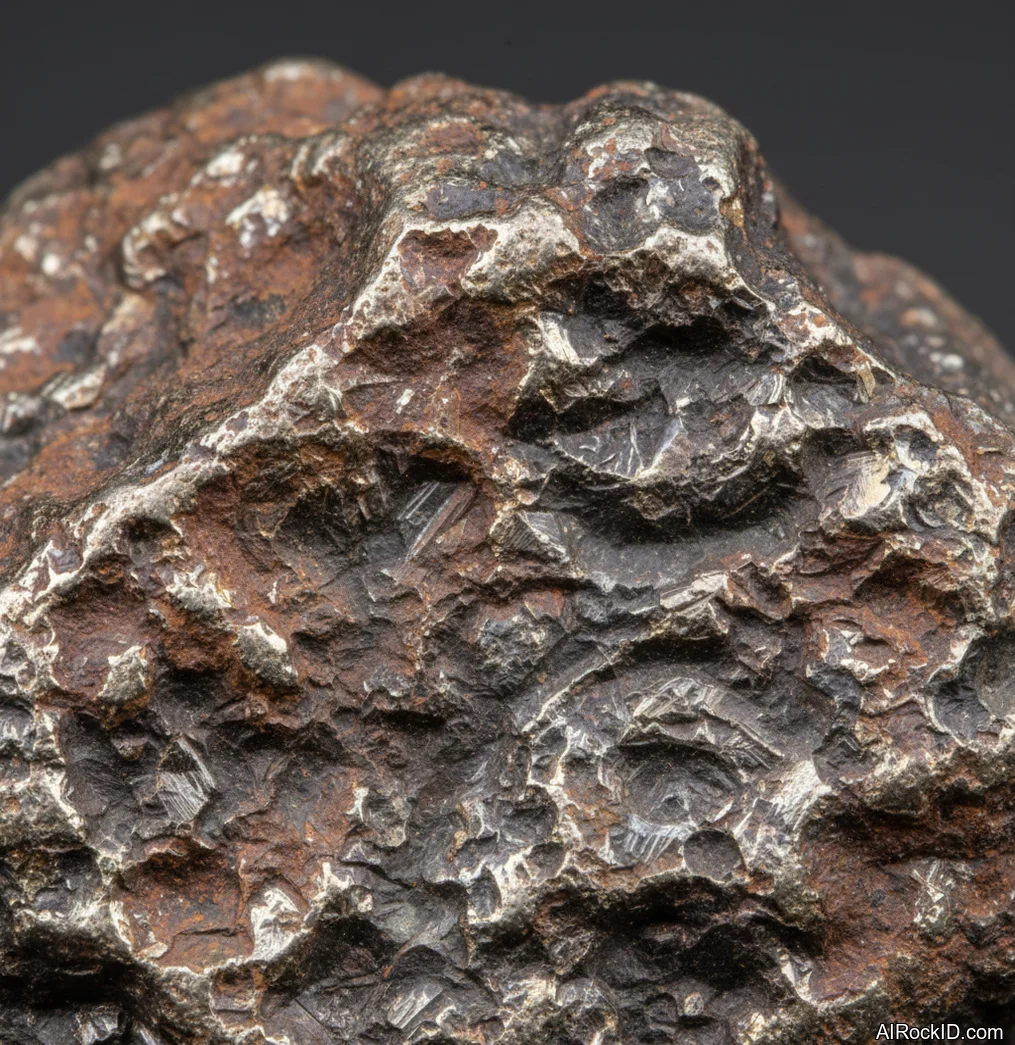
Enstatite occurs in some stony meteorites, especially enstatite chondrites and certain achondrites. Visual appearance alone cannot confirm that an enstatite-bearing specimen is meteoritic because terrestrial rocks can contain similar pyroxenes. Meteorite claims are best supported by classification data, provenance, or laboratory analysis.
What Is Enstatite?
Enstatite is a magnesium-rich orthopyroxene mineral with the ideal composition MgSiO3, also written as Mg2Si2O6 in pyroxene notation. In the hand, ordinary enstatite is often a quiet-looking gray, white, pale green, yellowish brown, or brown mineral, but iron-bearing pieces may show the warm bronze sheen collectors know as bronzite.
This is a common rock-forming mineral rather than a flashy rarity. It belongs in the ultramafic and mafic world: peridotite, pyroxenite, norite, some basaltic rocks, and magnesium-rich metamorphic rocks. Enstatite also matters beyond Earth collecting, because it is an important mineral in many stony meteorites, especially enstatite chondrites and aubrites.
Origin & History
The name enstatite was introduced in the 19th century and comes from a Greek word meaning an opponent or resistor. The name points to the mineral’s refractory behavior, especially its resistance to melting before the blowpipe, a practical detail that early mineralogists would have noticed at the workbench.
Mineralogically, enstatite is the magnesium end member of the enstatite-ferrosilite orthopyroxene series. As iron substitutes for magnesium, compositions move toward ferrosilite, and some iron-bearing material develops the bronzy look collectors separate as bronzite. For locality and specimen-label checking, mindat.org is a useful reference alongside direct analytical data.
Where Is Enstatite Found?
Enstatite is found widely in mafic and ultramafic igneous provinces, metamorphosed magnesium-rich rocks, mantle-derived rocks, and meteorites. Reported countries include Norway, the United States, Canada, Brazil, Sri Lanka, Myanmar, India, Tanzania, South Africa, Austria, Germany, Australia, and Japan.
Formation
Enstatite forms mainly at high temperature as a low-calcium pyroxene in magnesium-rich, silica-bearing settings. In igneous rocks, it crystallizes from mafic and ultramafic magmas, so a fresh broken surface may sit among other dense, dark rock-forming minerals rather than in a clean pocket of crystals.
It also occurs in mantle rocks such as peridotite and may form during high-grade metamorphism of magnesium-rich rocks. In meteorites, enstatite can form under highly reducing early-solar-system conditions, especially in enstatite chondrites and aubrites, which is why a labeled meteorite association can add scientific and collector interest.
How to Identify Enstatite
To identify enstatite, start with pyroxene habits and cleavage: two good cleavages intersecting close to 90 degrees, a white to pale gray streak, and moderate Mohs hardness of about 5-6. Fresh faces are vitreous, cleavage faces may look pearly, and bronzite-like material can flash a submetallic bronze schiller.
Color alone is not enough, because enstatite overlaps visually with augite, diopside, actinolite, and other dark silicate minerals. A field call is strongest when the specimen comes from mafic or ultramafic rock, but confident separation of low-calcium orthopyroxene is best made by optical testing, X-ray diffraction, or chemical analysis.
Properties of Enstatite
Physical Properties
| Crystal System | Orthorhombic |
| Hardness (Mohs) | 5-6 (Moderate) |
| Density | 3.20-3.30 g/cm³, increasing with iron content |
| Luster | Vitreous to pearly; sometimes submetallic-looking in bronzite |
| Diaphaneity | Transparent to opaque |
| Fracture | Uneven to subconchoidal; two good pyroxene cleavages near 90° are typical |
| Streak | White to pale gray |
| Magnetism | Usually nonmagnetic; iron-rich material may be very weakly magnetic |
| Colors | colorless, white, gray, pale green, yellowish brown, brown, bronze |
Chemical Properties
| Classification | Inosilicate, pyroxene group, orthopyroxene subgroup |
| Formula | MgSiO3, commonly represented as Mg2Si2O6 |
| Elements | magnesium, silicon, oxygen |
| Common Impurities | iron, calcium, aluminum, chromium, manganese, titanium, nickel |
Optical Properties
| Refractive Index | nα about 1.650-1.668, nβ about 1.652-1.673, nγ about 1.658-1.679; values rise with iron content |
| Birefringence | Low, typically about 0.008-0.011 |
| Pleochroism | None to weak; iron-bearing material may show weak greenish, yellowish, or brownish pleochroism |
| Optical Character | Biaxial positive, commonly with moderate to large 2V |
Enstatite Health & Safety
Enstatite is not considered toxic for normal handling. The main practical hazard is inhaling fine mineral dust when cutting, grinding, or polishing.
Enstatite Value & Price
Price Range
Rough/Tumbled: Common rough or rock specimens are usually inexpensive, often about $2-$30. Well-formed crystals, attractive bronzite/enstatite specimens, or documented meteorite-associated material may range from about $20 to several hundred dollars depending on size, provenance, and quality.
Cut/Polished:
Value depends on crystal form, transparency, color, provenance, association with meteorites or notable ultramafic localities, and whether the specimen is a common rock-forming grain or a display-quality crystal. Transparent gem enstatite is uncommon and valued more highly than ordinary massive material.
Durability
Moderate — Scratch resistance: Harder than glass in many cases but softer than quartz, so it can still scratch or abrade during wear or storage with harder minerals., Toughness: Generally fair to brittle; cleavage can make crystals vulnerable to chipping.
Stable under normal indoor conditions. Avoid sharp impacts, strong acids, and prolonged harsh cleaning methods. Some bronzy or altered material may have surface features that can be dulled by abrasion.
How to Care for Enstatite
Use & Storage
Store enstatite separately from harder minerals such as quartz, topaz, and corundum to prevent scratches. Wrap crystals or keep them in a padded specimen box if they have visible cleavage or fragile edges.
Cleaning
Clean with lukewarm water, mild soap, and a soft brush. Rinse and dry thoroughly. Avoid ultrasonic cleaners, steam cleaning, and acids, especially for fractured, altered, or included specimens.
Cleanse & Charge
For non-scientific spiritual use, cleanse gently with smoke, sound, or brief moonlight rather than saltwater or abrasive methods. These practices are cultural and symbolic, not mineralogical requirements.
Placement
Display away from high-traffic edges where the specimen may be knocked over. Bronzite-like pieces look best under directional light that highlights their sheen.
Caution
Do not rely on color alone for identification; enstatite overlaps visually with other pyroxenes and amphiboles. Avoid creating or inhaling dust.
Works Well With
Enstatite Meaning & Healing Properties
In modern crystal-healing traditions, enstatite is used as a grounding and steadiness stone, especially when it appears as bronzy bronzite-like material. Practitioners often associate it with resilience, focus, self-discipline, and calm decision-making, but these meanings are cultural and metaphysical rather than scientifically proven.
For symbolic work, enstatite is commonly linked with the root and solar plexus chakras, the zodiac signs Leo and Capricorn, the planets Earth and Saturn, and the elements Earth and Fire. Physically, treat it as a moderate-durability mineral: store it away from harder stones, avoid impacts along cleavage, and clean with mild soap, lukewarm water, and a soft brush.
Identify Enstatite from a photo
Compare Enstatite traits, care tips, value clues, and common lookalikes with a clear photo.
Common mistakes
- Identifying every brown pyroxene as enstatite without checking iron-rich varieties.
- Assuming a bronze sheen automatically means the specimen is pure enstatite.
- Calling a polished stone enstatite based only on color.
- Confusing pyroxene cleavage with amphibole cleavage in dark specimens.
- Accepting meteorite-related claims without provenance or testing.
- Using hardness alone to separate enstatite from similar silicate minerals.