Campo Del Cielo Meteorite


Quick answer: Campo Del Cielo meteorite is an iron-nickel meteorite from Argentina, typically recognized by its dense weight, metallic gray-brown surface, attraction to magnets, and irregular thumbprint-like regmaglypts. It is often sold as natural fragments, but buyers should watch for rust, coatings, altered surfaces, and mislabeled industrial iron.
AI Rock ID can help screen Campo Del Cielo meteorite by checking visual traits such as metallic texture, irregular surface pits, oxidation, and overall shape. RockIdentifier.io provides identification support, but meteorites should still be verified with density, magnetism, nickel testing, or a reputable meteorite dealer when authenticity matters.
Good fit
- Collectors who want a recognizable iron meteorite locality
- Buyers who prefer heavy, magnetic metallic specimens
- Display pieces with natural regmaglypts and weathered surfaces
- Educational collections comparing terrestrial rocks with meteorites
- People interested in historical meteorite falls from South America
Not a good fit
- Jewelry worn daily, because iron meteorites can rust with sweat and moisture
- Humid display areas without desiccant or protective storage
- Buyers expecting a polished gemstone appearance
- Anyone needing a nonmagnetic mineral specimen
Why people search for this
People often search for Campo Del Cielo meteorite to learn whether a heavy magnetic fragment is real, how to compare it with slag or iron ore, and what signs affect authenticity. It is also searched by collectors looking for natural Argentine iron meteorite pieces with visible regmaglypts.
Most commonly confused with
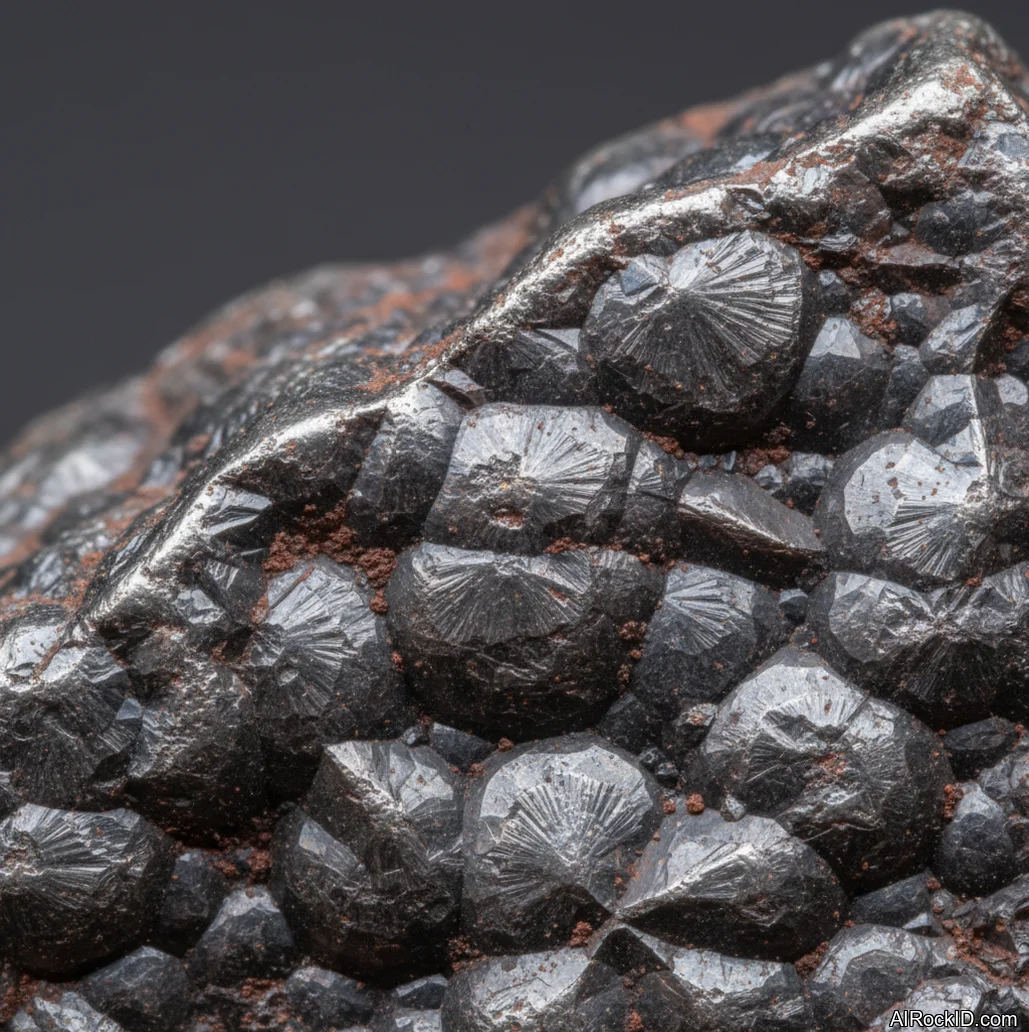
- Hematite: Hematite is an iron oxide mineral that may feel heavy but usually has a red-brown streak and does not show meteorite regmaglypts.
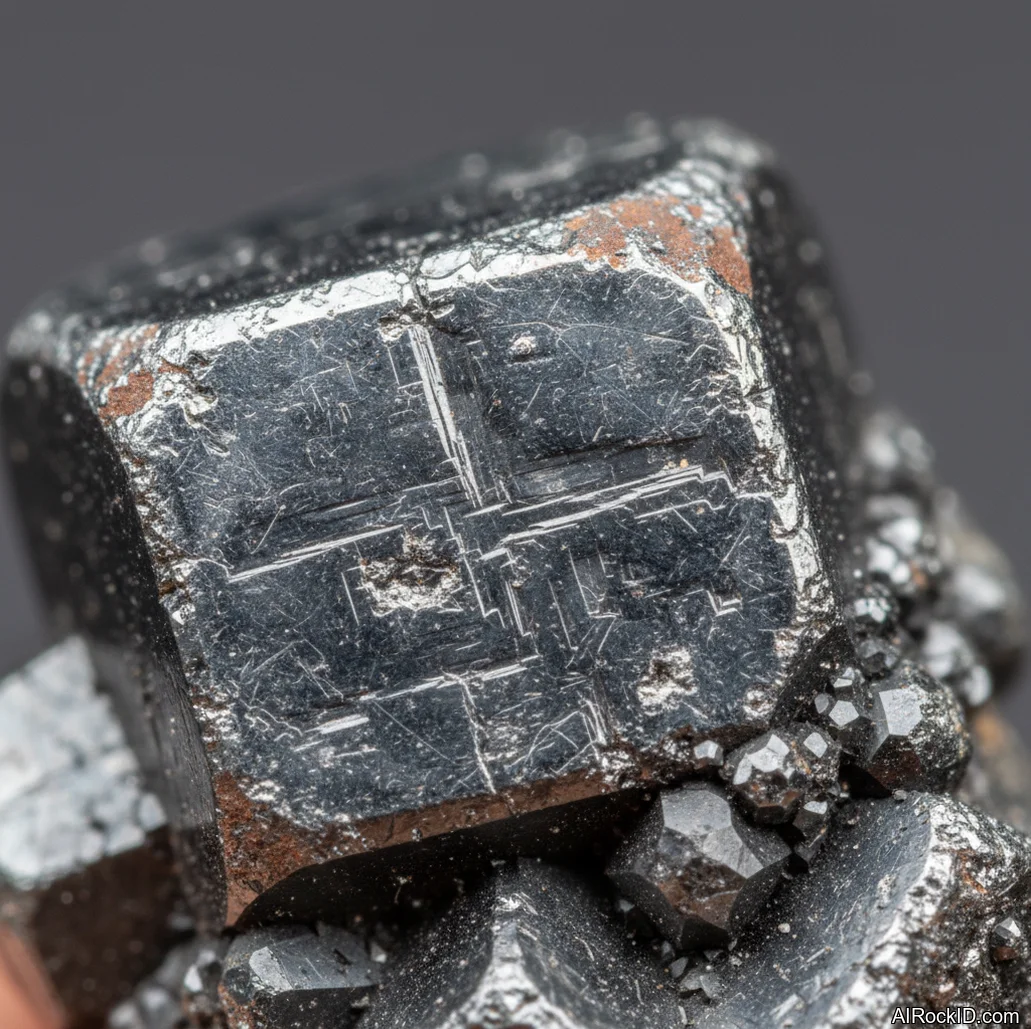
- Magnetite: Magnetite is strongly magnetic and black, but it is an Earth mineral rather than an iron-nickel meteorite.
- Industrial Slag: Slag can be metallic or bubbly, but vesicles and glassy textures are not typical of Campo Del Cielo meteorite.
- Muong Nong Tektite: Tektites are natural glass and may look dark and pitted, but they are much lighter and not strongly magnetic.
Campo Del Cielo Meteorite vs. Common Lookalikes
| Material | Magnetism | Typical Clue | Key Difference |
|---|---|---|---|
| Campo Del Cielo meteorite | Strong | Dense iron-nickel fragment with regmaglypts | Natural meteorite from Argentina |
| Hematite | Weak to none | Red-brown streak | Iron oxide mineral, not metallic Fe-Ni |
| Magnetite | Strong | Black mineral with natural crystal or massive form | Earth mineral with no nickel-iron meteorite structure |
| Industrial slag | Variable | Bubbles, glassy patches, or fused waste texture | Man-made or smelting byproduct |
| Tektite | None to very weak | Dark glassy surface, lighter weight | Natural glass, not iron metal |
AI identification confidence
AI identification confidence for Campo Del Cielo meteorite is moderate from clear photos when the specimen shows metallic iron texture, weathered brown oxidation, regmaglypts, and a known scale reference. Confidence drops when the piece is polished, heavily rusted, coated, photographed in poor lighting, or visually similar to slag or magnetite.
When AI gets it wrong
- Strongly magnetic industrial metal or slag may be mistaken for an iron meteorite.
- Magnetite can resemble dark meteorite fragments in photos without a streak test or density check.
- Polished or etched meteorite slices may be confused with other iron meteorites from different localities.
- Coatings, oiling, or artificial patina can hide surface details needed for visual identification.
Final recommendation
Choose Campo Del Cielo meteorite from sellers who provide clear photos, weight, size, locality information, and a straightforward return policy. For higher-value pieces, ask for provenance or independent verification rather than relying only on magnetism.
How to Check Campo Del Cielo Authenticity
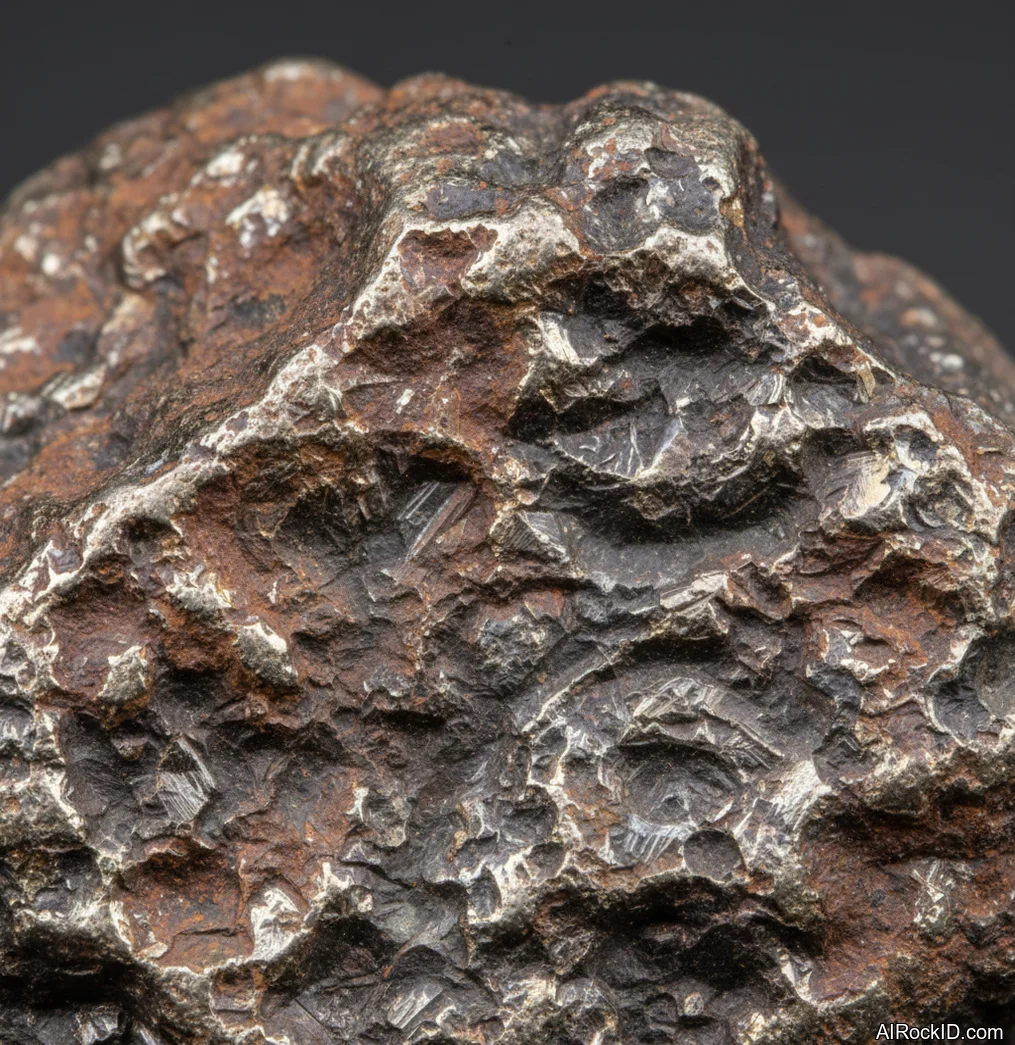
A genuine Campo Del Cielo specimen should feel unusually heavy for its size and respond strongly to a magnet because it is an iron-nickel meteorite. Natural fragments often show irregular thumbprint-like depressions, weathered brown oxidation, and metallic areas where the surface is worn. Magnetism alone is not proof, so serious verification may include a nickel test, density check, or review by a meteorite specialist.
What to Ask Before Buying Campo Del Cielo Meteorite
Ask whether the piece is natural, cleaned, stabilized, coated, polished, or repaired, because surface treatment can affect appearance and long-term care. Request measurements and weight so density can be judged, and compare photos from multiple angles for regmaglypts, rust, cracks, or filler. A seller should be able to state the Campo Del Cielo locality and provide basic provenance for collector-grade specimens.
Natural Fragment, Slice, or Etched Piece
Natural fragments preserve the weathered exterior and are commonly chosen for their sculptural shape and regmaglypts. Slices expose the metallic interior and may be etched to reveal Widmanstätten patterns, but they can require more careful rust prevention. Etched or polished surfaces may show structure clearly, while rough fragments are usually easier to compare with typical field-collected pieces.
What Is Campo Del Cielo Meteorite?
Campo Del Cielo Meteorite is an iron meteorite from the Campo del Cielo strewn field in Chaco and Santiago del Estero, Argentina.
Pick up a piece and the first thing that hits you is the weight. It just drops into your hand. Even a small slice feels like someone snuck a lead sinker inside, which isn’t how most Earth rocks behave at all.
On the outside, it’s usually dark brown to black. Sometimes you’ll catch rusty patches, especially if it’s been hanging around humid air. Look, if you stare at natural fragments up close, you can often spot those shallow thumbprint dents (regmaglypts). Cut and etched slices are a totally different feel. They show the classic Widmanstätten pattern. But the market’s packed with “meteorite-looking” metal too, so it helps to know how real Campo feels and acts in person.
Origin & History
Spanish explorers and missionaries were talking about iron masses out in the Gran Chaco region centuries ago. But the first written account people keep pointing back to shows up in 1576, when the Spanish described local people using meteoritic iron.
“Campo del Cielo” translates to “Field of the Sky.” And yeah, that’s pretty much literal: it’s a wide scatter of impact fragments spread across the area, not one neat, single rock you stumble over.
In the 1700s, the huge “Mesón de Fierro” (“Table of Iron”) basically stole the spotlight. So later on, scientists did the work and connected the whole field to one single fall. Modern classification puts Campo del Cielo in the iron meteorites group, specifically octahedrites, and most collectors run into it as small individuals, rough chunks with that heavy, dark skin, or etched slices.
Where Is Campo Del Cielo Meteorite Found?
It’s found in northern Argentina in the Campo del Cielo strewn field, mainly across parts of Chaco and Santiago del Estero.
Formation
Out in space, this stuff grew inside an asteroid that differentiated, meaning it split into a metal core with rocky outer layers. The metal cooled so slowly it’s almost hard to picture, and that crawl of a cooldown is exactly what lets kamacite and taenite form that interlocking pattern you see once you etch it (the lines pop out right away).
Then it came down to Earth. People usually date the fall to a few thousand years ago, and the impact didn’t leave one neat lump, it shattered the body into lots of pieces scattered across the ground. Most specimens you run into have sat in soil for ages, so oxidation comes with the territory. That’s normal. But it’s also why storage matters way more than folks expect, even when it looks “fine” at first.
How to Identify Campo Del Cielo Meteorite
Color: Most pieces are dark gray to black on the outside with brown rust staining; fresh cut surfaces are silvery metallic. Etched slices show a gray-silver pattern with brighter nickel-rich bands.
Luster: Metallic luster on fresh or polished surfaces; weathered crust can look dull to submetallic.
Pick up a similar sized rock and compare. Campo is weirdly heavy, and that’s the first honest clue. The real test is a magnet: it should grab hard, not just weakly attract. And if you’ve got an etched slice, tilt it under a desk lamp. The Widmanstätten lines don’t look printed on, they shift slightly with the light because you’re seeing real metal structure, not paint.
Common Look-Alikes
Campo Del Cielo Meteorite is sometimes confused with these materials:
- Sikhote-Alin meteorite (iron meteorite)
- Nantan meteorite (iron meteorite, often rusted)
- Hematite (especially polished, can mimic metallic luster)
- Magnetite (heavy, metallic, but less dense)
- Cast iron slag (industrial waste, sometimes sold as meteorite)
- Dyed or metallic-coated river rocks (forged to look like meteorites)
Market Cautions & Treatments
When AI Can Get This Wrong
AI often mistakes Campo del Cielo for Sikhote-Alin or Nantan meteorites in photos, since they’re all chunky iron with dark crusts. It can also confuse polished hematite or even magnetite nodules, especially if the scale isn’t clear. The real test is weight—Campo’s way heavier than any look-alike, and regmaglypts feel uneven and deep, not smooth like tumbled stones.
Properties of Campo Del Cielo Meteorite
Physical Properties
| Crystal System | Cubic |
| Hardness (Mohs) | 4-5 (Medium (4-6)) |
| Density | 7.3-7.9 g/cm3 |
| Luster | Metallic |
| Diaphaneity | Opaque |
| Fracture | Hackly |
| Streak | gray |
| Magnetism | Magnetic |
| Colors | iron gray, silver, black, brown, rust red |
Chemical Properties
| Classification | Native elements (meteoritic iron alloy) |
| Formula | Fe-Ni (dominantly Fe with ~5–10% Ni; minor Co) |
| Elements | Fe, Ni, Co |
| Common Impurities | P, S, C |
Optical Properties
| Refractive Index | None |
| Birefringence | None |
| Pleochroism | None |
| Optical Character | Isotropic |
Campo Del Cielo Meteorite Health & Safety
Handling it is usually safe. But if you leave it where it can get splashed or sit in humid air, it’ll rust a lot faster. And if you’re cutting or sanding it, watch out for that super-fine metal dust (the stuff that hangs in the air and ends up in your nose). Don’t breathe it in.
Safety Tips
If you’re going to cut it, grind it, or sand it, put on proper eye protection and a respirator first, then deal with the dust afterward. And keep the specimens dry, nowhere near salty air.
Campo Del Cielo Meteorite Value & Price
Price Range
Rough/Tumbled: $10 - $150 per piece
Price goes up when the etched pattern is clean, the source is actually documented, and there’s barely any rust. Big natural individuals usually run higher, and it’s mostly because shipping and supply are a headache (heavy, awkward, hard to pack), not because the material is impossibly scarce.
Durability
Durable — Scratch resistance: Fair, Toughness: Good
It’s mechanically tough, but it can rust fast in humidity, especially if it’s been etched or has active oxidation pits.
How to Care for Campo Del Cielo Meteorite
Use & Storage
Keep it dry. I store mine in a small box with silica gel packs, and I don’t leave etched slices sitting out in a steamy room.
Cleaning
1) Wipe with a dry microfiber cloth to remove fingerprints. 2) If there’s light surface grime, use a slightly damp cloth and immediately dry it completely. 3) Apply a very thin coat of microcrystalline wax (or a light mineral oil film) to slow oxidation, especially on etched slices.
Cleanse & Charge
Skip water cleansing. If you want a simple routine, use smoke, sound, or set it on a dry selenite plate for a bit.
Placement
A shelf is fine, but avoid bathrooms and windowsills that collect condensation. If it’s a slice, a stand that keeps air moving around it helps.
Caution
Don’t soak it. Don’t use salt water. And definitely don’t toss it into a damp leather pouch and forget about it. Active rust will stain wood and fabric (I’ve seen those ugly orange smears that don’t want to come out). And once rust sneaks under a polish, it’s a pain to fix.
Works Well With
Campo Del Cielo Meteorite Meaning & Healing Properties
Compared to most crystals, Campo del Cielo just feels… blunt. Physical. It hits cold the second you pick it up, then it takes its time warming in your palm, and that heavy-in-the-hand weight snaps people out of their thoughts and back into their body. When I pass a piece across a table at a show, I swear almost everyone does the same tiny pause, like their brain has to redo the math on what they’re holding.
In metaphysical circles people link it to grounding, protection, mental focus, all that. And yeah, I get it. It’s literally iron. It’s dense. It grabs onto a magnet like it’s not kidding. But look, none of that is medical care. If you use stones as reminders or as a meditation prop (the kind you actually reach for), Campo fits that “stay steady, do the work” mood really well.
Thing is, meteorites have this reputation like they should feel like magic lightning. Real Campo usually doesn’t. It’s more like an anchor. Quiet. A little stern, honestly. And if you’re the type who gets spun up and wants something to keep you on track while you’re journaling or mapping out plans, a small slice on your desk can do that job better than most of the sparkly stuff. Just watch for rust blooms, because nothing kills the vibe like that orange powder creeping across your display stand.
Common mistakes
- Assuming every magnetic rock is a meteorite.
- Ignoring bubbles or glassy textures, which often point to slag rather than meteorite material.
- Buying a heavily rusted piece without checking whether the corrosion is active.
- Cleaning with water, acids, or abrasive tools that can accelerate rust or damage the surface.
- Relying only on online photos when purchasing an expensive specimen.
- Confusing Campo Del Cielo locality material with other iron meteorites that have different origins and market values.
Identify Campo Del Cielo Meteorite from a photo
Compare Campo Del Cielo Meteorite traits, care tips, value clues, and common lookalikes with a clear photo.