Nwa 4420 Meteorite


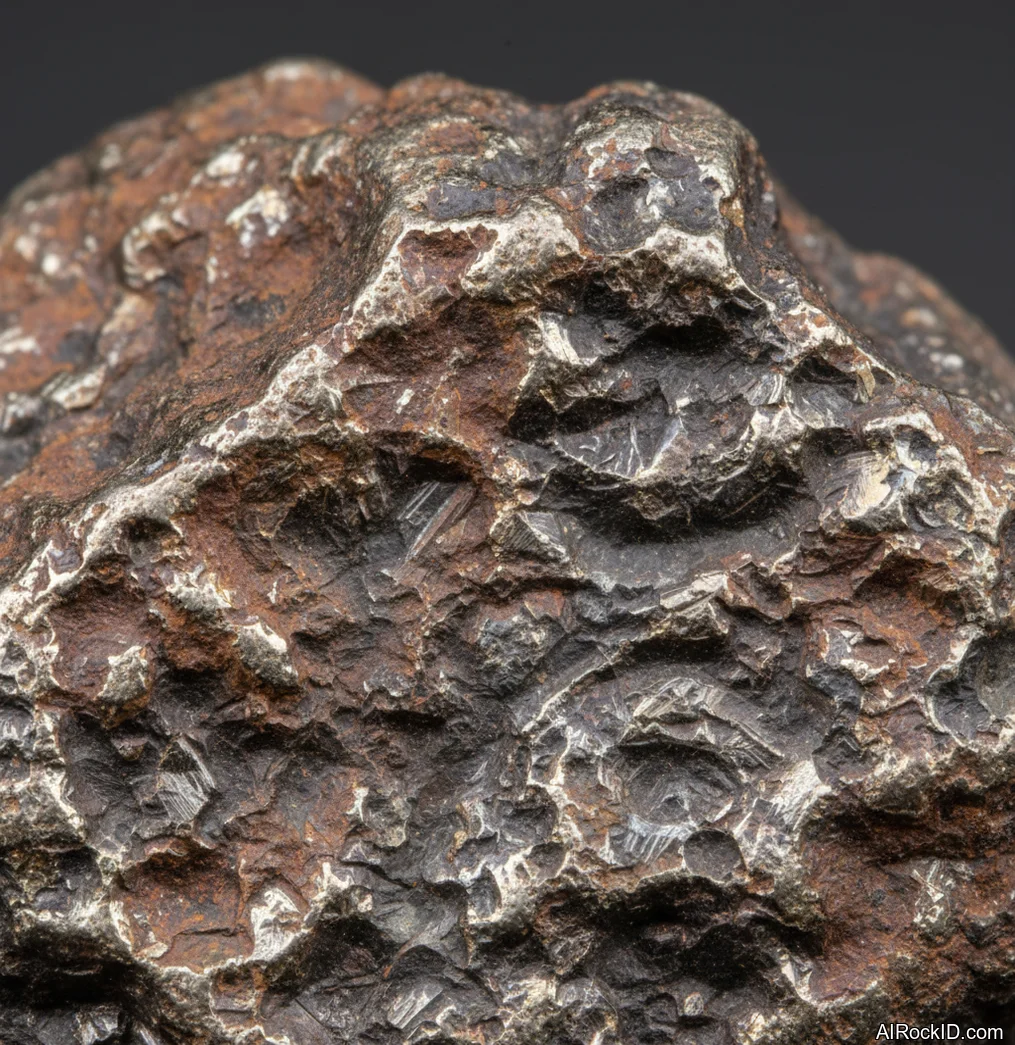
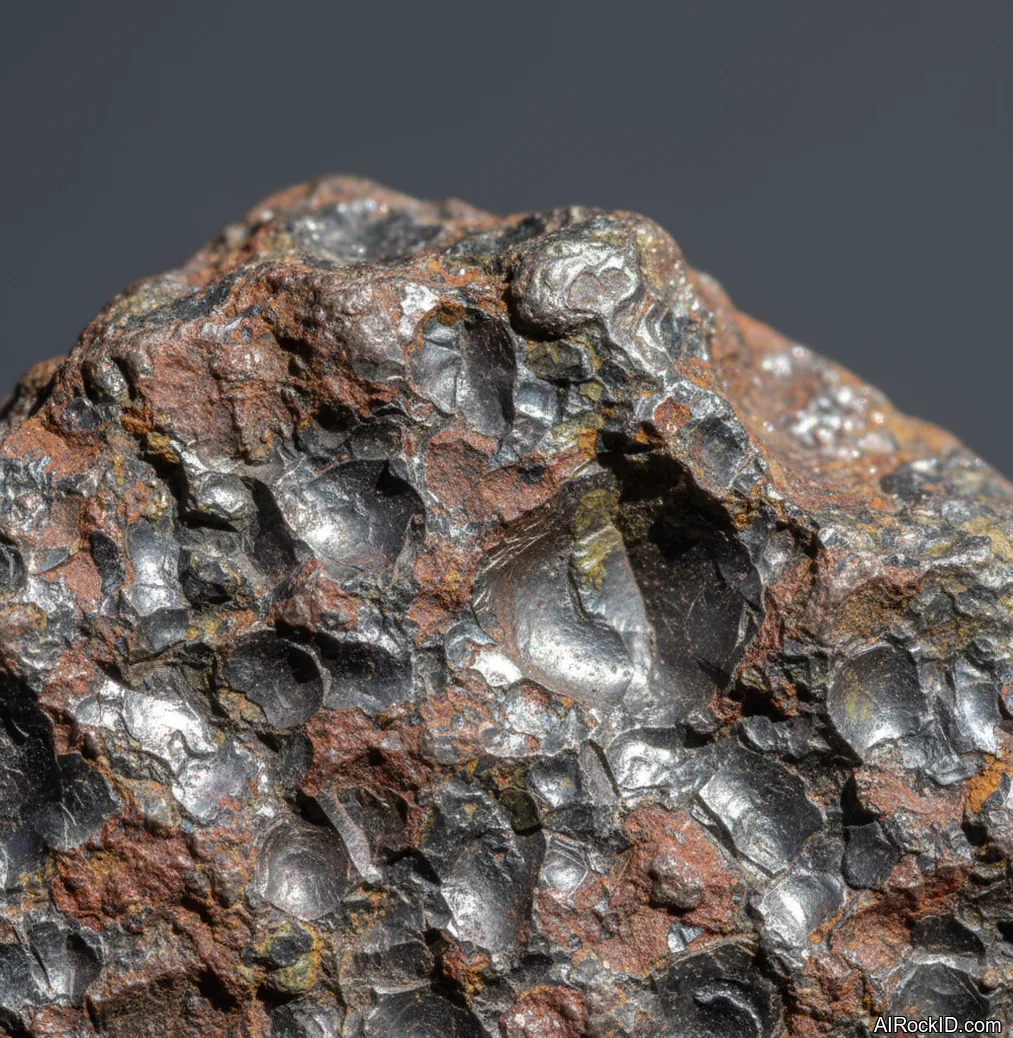
NWA 4420 is an H-type ordinary chondrite, a stony meteorite recovered in Northwest Africa. Its most useful identifying trait is a gray-brown matrix holding rounded chondrules and scattered iron-nickel metal flecks, with noticeable weight for its size. Crystal traditions link it to the Root and Third Eye Chakras.
Most commonly confused with
- Basalt: Basalt can look dark and dense, but it lacks chondrules and iron-nickel metal grains typical of H-chondrites.
- Magnetite: Magnetite is strongly magnetic and metallic-looking, while NWA 4420 is a stony meteorite with scattered metal grains.
- Hematite: Hematite often leaves a reddish-brown streak; meteorites usually do not show that streak and may contain nickel-bearing metal.
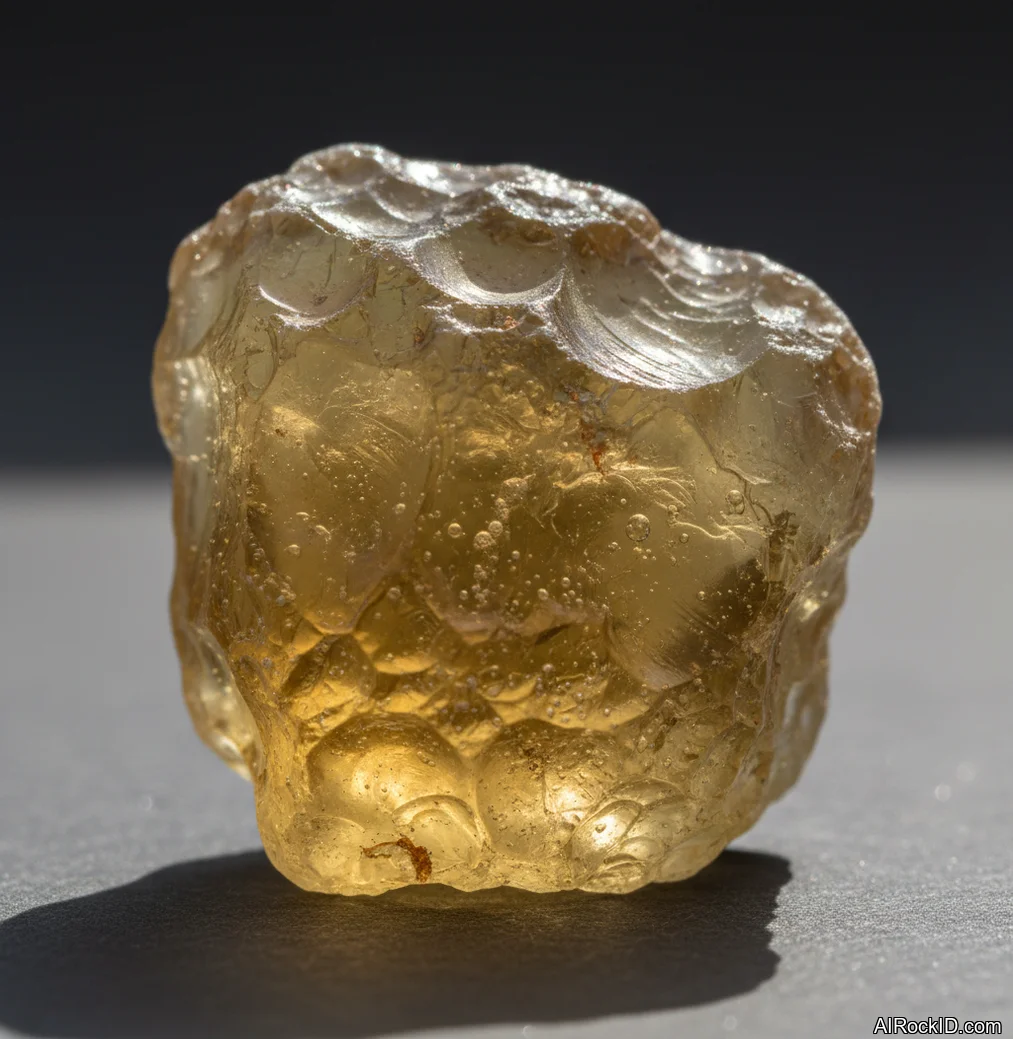
- Industrial Slag: Slag may have bubbles, glassy surfaces, or flow textures, unlike the more compact chondritic structure of a meteorite.
NWA 4420 vs. Common Lookalikes
| Specimen | Typical Magnetism | Key Visual Clue | Streak |
|---|---|---|---|
| NWA 4420 Meteorite | Weak to moderate | Stony matrix with metal grains and possible fusion crust | Usually none to gray |
| Basalt | Weak to none | Volcanic rock texture, no metal flecks | Gray to dark |
| Magnetite | Strong | Dense black mineral, often more uniformly metallic | Black |
| Hematite | Weak to none | Earthy or metallic iron oxide appearance | Reddish brown |
| Industrial Slag | Variable | Bubbles, glassy patches, or frothy texture | Variable |
How to Check NWA 4420 Authenticity
A reliable NWA 4420 listing should identify the meteorite name, classification as an H chondrite, specimen weight, and seller source. A cut face showing metal grains and chondritic texture is more useful than an exterior-only photo. For higher-value pieces, ask whether the seller can provide provenance, a collection card, or a reference to the official classification record.
Photo Tips for Meteorite Identification
Use sharp photos in natural light with a ruler, coin, or scale for size. Include the exterior surface, any cut or broken face, and close-ups of shiny metal grains or rounded chondrules if visible. Avoid wetting the specimen for photos because water can darken the surface and increase oxidation risk.
Ethical and Legal Buying Notes
Meteorite laws vary by country and land ownership, so collectors should buy from sellers who can explain the specimen’s source. Northwest Africa meteorites are often traded through commercial networks, making documentation especially important for named material. Avoid listings that use vague labels such as “meteorite-like stone” while implying a specific classification.
What Is Nwa 4420 Meteorite?
NWA 4420 is a Northwest Africa ordinary chondrite, specifically an H-chondrite. It’s a stony meteorite made mostly of silicate minerals, with scattered iron-nickel metal mixed through it.
Grab a decent chunk and the first thing you clock is the heft. It just sits heavier in your palm than an Earth rock of the same size, and on a fresh cut face you can spot tiny metal pinpoints that wink when you tilt it under a desk lamp. At a quick glance it can pass as a plain gray-brown rock. But the surface texture gives it away fast.
The rounded chondrules are visible on the surface, and the metal appears as fine pepper-like flecks in the matrix. These two features are the main identifying traits.
Most available material is a small end-cut, a thin slice or a rough fragment with some desert weathering. Some pieces look plain, with chalky edges and a dull skin. A piece with a clean cut and tightly packed chondrules is the most striking, and its extraterrestrial origin is what many collectors value most.
Origin & History
NWA 4420 got its meteorite status the usual way: someone picked it up in Northwest Africa, then it was sent off to a lab to get confirmed and officially named under the standard NWA numbering system. The “NWA” label is basically a catch-all used for stones coming out of the Sahara trade routes when nobody’s publicly nailed down the exact strewn field spot (and good luck getting that pinned down sometimes).
On the collector side, you’ll see it listed as an H ordinary chondrite, so it’s on the higher-iron end of the common stony meteorites. Dealers typically price it by the gram. And the documentation almost always points back to the classification entry, not some dramatic, witnessed fall with a big story attached.
Where Is Nwa 4420 Meteorite Found?
NWA 4420 was recovered in the Sahara region of Northwest Africa and entered the market through Moroccan dealer networks and labs that handle classification.
Formation
In the early solar system, ordinary chondrites formed as primitive asteroid material that never fully melted into a differentiated planet. They consist mostly of silicates such as olivine and pyroxene, with iron-nickel metal mixed in and a small amount of sulfide.
If you take a sliced face and tilt it under a light, you can usually spot the chondrules as tiny rounded grains locked in place. They’re older than any Earth rock you’ll ever hold. But there’s a catch. Weathering. Desert finds, in particular, often show rusty staining where the metal has started oxidizing, especially if the stone sat out there for ages before someone finally picked it up (you can sometimes feel a slightly rougher, gritty patch where the staining is heaviest).
How to Identify Nwa 4420 Meteorite
Color: Typical color is gray to brownish-gray in the interior, with darker speckling and bright metallic flecks on fresh cuts. Weathered exteriors often go tan to rusty brown.
Luster: Cut faces are mostly dull to submetallic with bright metallic points where metal grains are exposed.
Pick up a small magnet and see if you get a weak pull. It usually won’t slam to the magnet like a big iron meteorite, but you should feel it tug. Look for tiny shiny metal grains on a fresh surface, not glittery mica sparkle. The real test is a hand lens: chondrules and a fine-grained matrix are what you’re paying for, and a lot of “meteorwrong” rocks just don’t have that texture.
Common Look-Alikes
Nwa 4420 Meteorite is sometimes confused with these materials:
- Industrial iron slag (vesicular, often with glassy skin and flow textures)
- Hematite or magnetite-rich terrestrial rocks (heavy, strongly magnetic, no metal flecks on a fresh cut)
- Basalt or desert-varnished lava rock (dark gray-brown surface, but lighter in hand and no nickel-iron specks)
- Weathered ironstone / limonite concretions (rusty brown rind, earthy fracture, usually no bright metal pinpoints inside)
- Painted or stained “meteorite” souvenir rocks (blackened surface coating, color pooling in pits and cracks)
- Man-made black glass or resin fakes sold as meteorites (too uniform, often warm-feeling, and the weight is wrong for the size)
Market Cautions & Treatments
Properties of Nwa 4420 Meteorite
Physical Properties
| Crystal System | Amorphous |
| Hardness (Mohs) | 5.5-6.5 (Hard (6-7.5)) |
| Density | 3.3-3.7 g/cm3 |
| Luster | Dull |
| Diaphaneity | Opaque |
| Fracture | Uneven |
| Streak | gray |
| Magnetism | Weakly Magnetic |
| Colors | gray, brownish-gray, tan, rusty brown, black |
Chemical Properties
| Classification | Silicates (stony meteorite mixture) |
| Formula | Mixture; major phases include (Mg,Fe)2SiO4 and (Mg,Fe)SiO3 with Fe-Ni metal |
| Elements | O, Si, Mg, Fe, Ni, S |
| Common Impurities | Co, Ca, Al |
Optical Properties
| Refractive Index | None |
| Birefringence | None |
| Pleochroism | None |
| Optical Character | Isotropic |
Nwa 4420 Meteorite Health & Safety
Normal handling is pretty low risk. But if you start cutting or grinding it, you can kick up dust and you’re also exposing fresh metal. That new surface can oxidize later (you’ll sometimes see it dull out after a bit). So, if you’re doing lapidary work, just treat it like any other rock dust. Wear the right protection.
Safety Tips
If you’re going to saw it or grind it, put on a respirator and do it wet so the dust doesn’t go everywhere (that fine, clingy powder gets in your nose fast). And when you’re done, stash it somewhere dry to slow down rusting.
Nwa 4420 Meteorite Value & Price
Price Range
Rough/Tumbled: $1 - $6 per gram
Price mostly comes down to grams, freshness, and how pretty the cut looks in your hand. Clean slices, the kind where you can actually see the metal and the chondrules right there in the face, go for more. But weathered pieces, the rusty-looking fragments with that tired outer crust, they usually sell for less.
Durability
Moderate — Scratch resistance: Good, Toughness: Fair
It’s stable on a shelf, but the metal can rust if you keep it damp or store it with wet display materials.
How to Care for Nwa 4420 Meteorite
Use & Storage
Keep it dry and avoid storing it in foam that holds moisture. A small display box with a desiccant packet suits pieces with a lot of exposed metal.
Cleaning
1) Dust with a soft dry brush. 2) If needed, wipe with a barely damp microfiber cloth and dry it immediately. 3) On slices, a very small amount of mineral oil can even out the appearance, but use it sparingly and wipe off the excess.
Cleanse & Charge
For energy-style cleansing, smoke, sound or a dry selenite plate are the suitable methods. Salt bowls and long water soaks are best avoided because they can cause rust on the metal grains.
Placement
A stable shelf away from humid windowsills works best. If you’ve got a slice, angling it under a light makes the metal flecks pop without needing a mirror polish.
Caution
Don’t leave a collectible sitting in damp air for long, and don’t hit it with harsh acids or rust removers. If you start seeing those little orange rust freckles popping up, deal with it sooner instead of waiting, and keep the piece dry.
Works Well With
Symbolism and Uses of NWA 4420
Meteorites are often valued as physical evidence of the early solar system. Ordinary chondrites such as NWA 4420 are fragments of asteroids that never fully melted, so collectors treat them as samples of primitive material. Many sellers add cosmic storytelling to meteorite sales, and that marketing language is separate from the measurable properties of the stone.
In crystal traditions, NWA 4420 is associated with the Root and Third Eye Chakras and with the zodiac signs Capricorn and Aquarius. Practitioners link it to grounding, perspective and long-term planning, and some keep a piece on a desk as a reminder of scale. Others simply collect slices and end-cuts for display or study. These are cultural beliefs, not proven effects, and a crystal does not replace professional medical or mental health care.
Common mistakes
- Assuming any magnetic black rock is a meteorite.
- Relying on a single exterior photo instead of checking a cut or broken face.
- Confusing rust stains with proof of iron-nickel meteorite metal.
- Buying a named meteorite without a label, weight, or provenance record.
- Cleaning the specimen with water, vinegar, or abrasive tools that can damage the surface.
- Expecting every NWA 4420 fragment to show obvious chondrules to the naked eye.
Identify Nwa 4420 Meteorite from a photo
Compare Nwa 4420 Meteorite traits, care tips, value clues, and common lookalikes with a clear photo.