Libyan Desert Glass


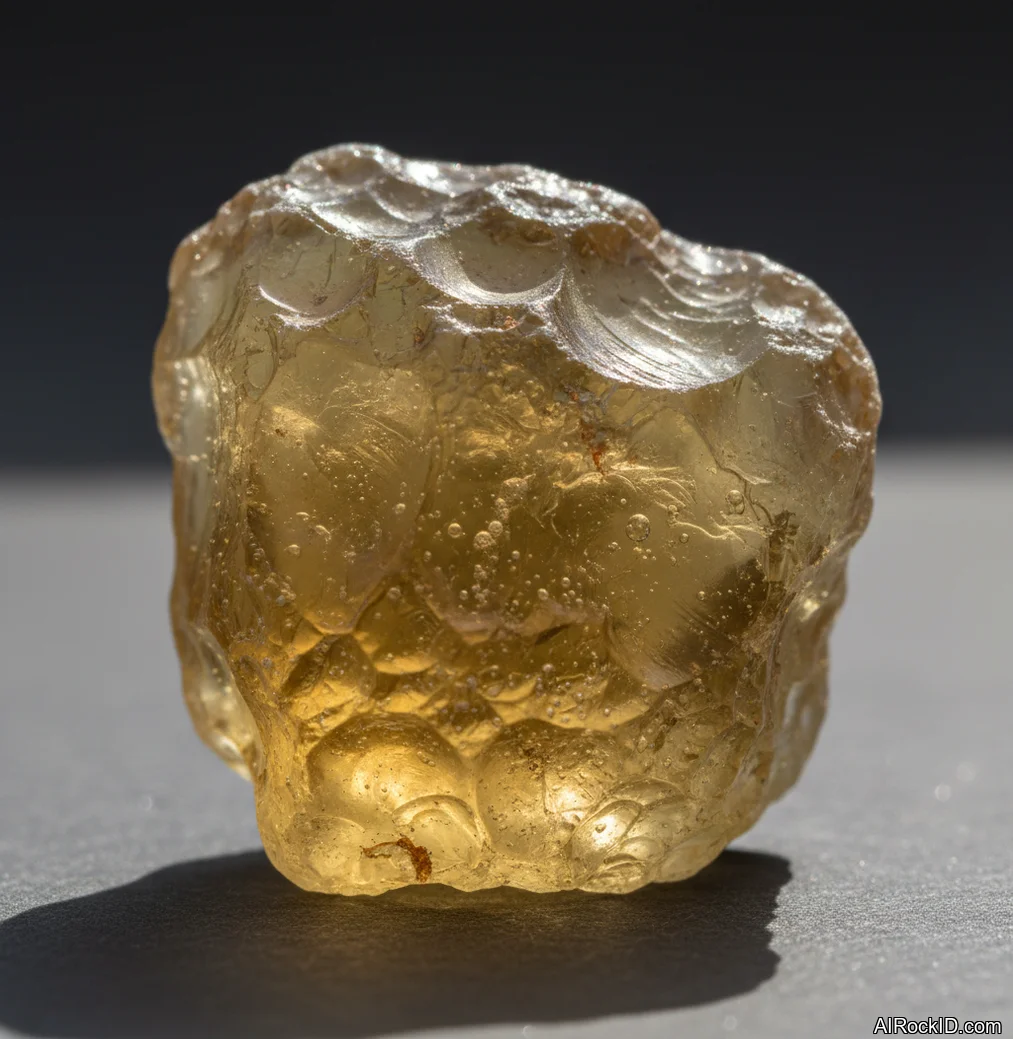
Quick answer: Libyan Desert Glass is a natural impact-related silica glass found in the Great Sand Sea of western Egypt near the Libya border. It is most recognized by its pale yellow to yellow-green color, glassy luster, and relatively clean appearance compared with many volcanic glasses.
AI Rock ID can help compare a photo of Libyan Desert Glass against lookalikes such as citrine, yellow glass, amber, and moldavite-like tektites. RockIdentifier.io provides visual identification support, but origin, seller documentation, and basic physical checks are important for confirming authenticity.
Good fit
- Collectors who want a natural desert glass with a distinctive yellow color
- Jewelry buyers looking for lightweight, translucent silica glass
- People comparing impact glasses, tektites, and natural glass specimens
- Beginners who want a recognizable material with a fairly specific geographic source
Not a good fit
- Buyers who need a faceted gemstone with high scratch resistance
- Collectors who require precise scientific proof of impact origin for every piece
- Anyone seeking a mineral species, because Libyan Desert Glass is natural glass rather than a crystal
Most commonly confused with
- Citrine: Citrine is crystalline quartz with a crystal structure, while Libyan Desert Glass is amorphous silica glass.
- Amber: Amber is fossilized tree resin and is much softer and lighter than silica glass.
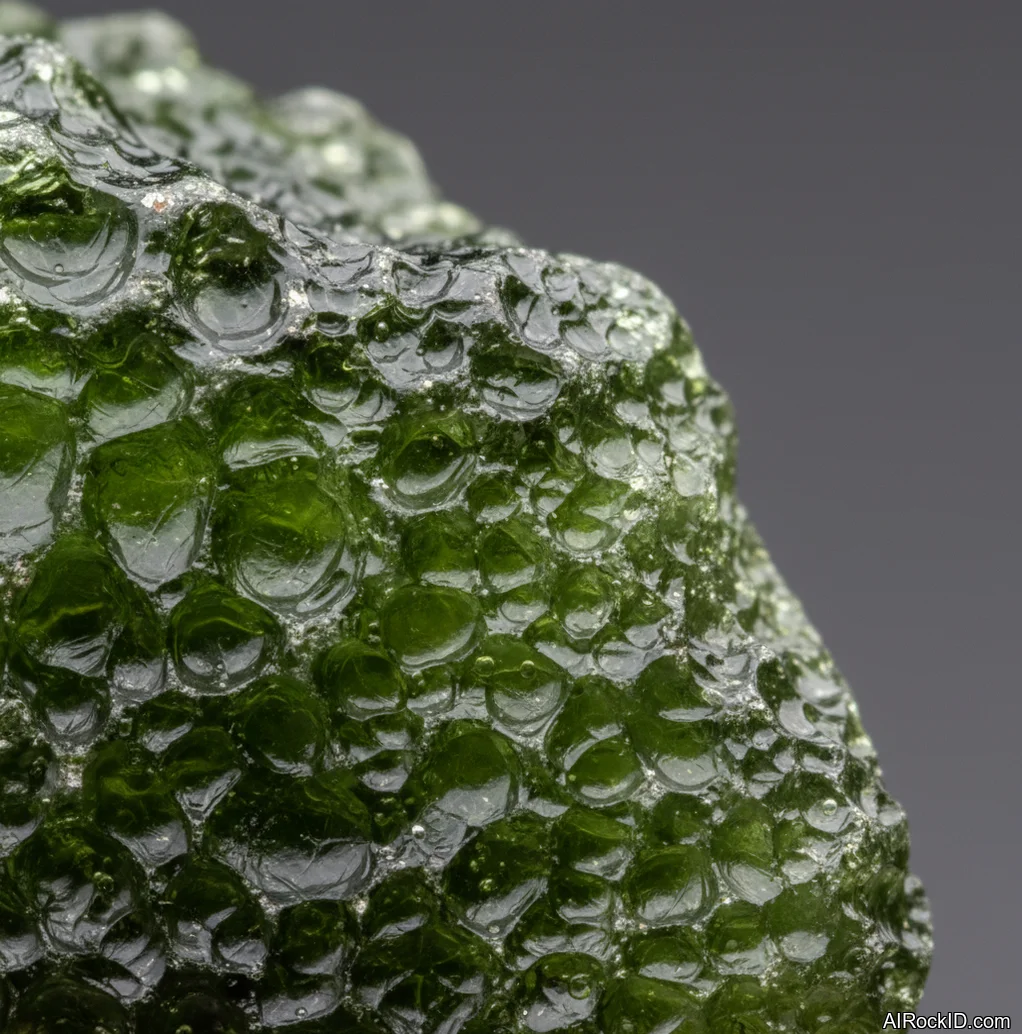
- Moldavite: Moldavite is usually green and from Central Europe, while Libyan Desert Glass is typically pale yellow and from Egypt’s Western Desert.
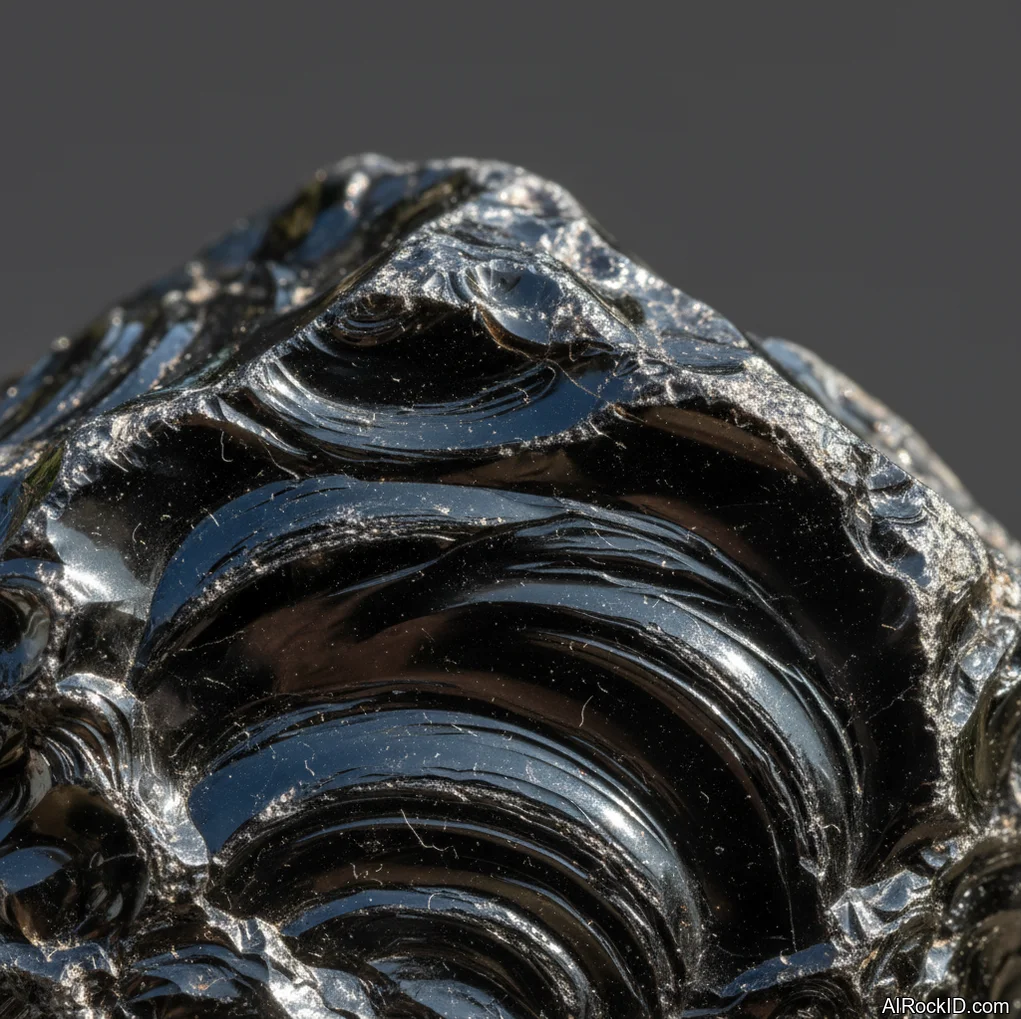
- Obsidian: Obsidian is volcanic glass, commonly black or dark colored, while Libyan Desert Glass is a high-silica desert glass linked to an impact event.
Libyan Desert Glass vs. Common Lookalikes
| Material | Typical Color | Key Difference | Common Check |
|---|---|---|---|
| Libyan Desert Glass | Pale yellow to yellow-green | Natural high-silica glass from Egypt’s Western Desert | Ask for source history and inspect for natural surface texture |
| Citrine | Yellow to orange quartz | Crystalline mineral, not glass | Look for quartz crystal habit or gem cutting features |
| Amber | Honey yellow to brown | Organic resin, not silica | Much softer and often warmer-feeling in hand |
| Moldavite | Olive to forest green | Central European tektite | Color and locality should not match Libyan Desert Glass |
| Man-made glass | Any yellow shade | Manufactured rather than naturally weathered | Watch for mold seams, repeated shapes, or seller uncertainty |
AI identification confidence
AI identification is often moderately confident when a specimen shows the typical pale yellow color, glassy luster, and irregular natural form. Confidence drops when the piece is faceted, heavily polished, photographed under warm lighting, or lacks scale and surface detail.
When AI gets it wrong
- A polished yellow quartz or citrine cabochon may look like glass in photos.
- Amber can appear similar in color when backlit or photographed on a white background.
- Modern yellow glass may be difficult to separate from natural glass without provenance or physical testing.
- Overexposed photos can make greenish moldavite or bottle glass appear pale yellow.
Final recommendation
Choose Libyan Desert Glass from sellers who clearly state the material, source region, weight, and whether the piece is natural, polished, carved, or set in jewelry. For higher-value pieces, request clear daylight photos, close-ups of the surface, and any available provenance rather than relying on color alone.
How to Check Libyan Desert Glass Authenticity
Authentic Libyan Desert Glass is usually sold as rough fragments, tumbled pieces, carvings, beads, or jewelry, and credible listings should describe its Egyptian Western Desert source. Natural pieces often show irregular shapes, soft surface wear, small chips, and uneven transparency rather than perfectly repeated forms. Color alone is not enough for authentication because yellow glass, citrine, amber, and resin imitations can look similar in photos.
Buying Tips for Libyan Desert Glass Jewelry
Libyan Desert Glass jewelry should be inspected for secure settings because glass can chip along exposed edges. Beads and cabochons may be natural, polished, or reworked from rough fragments, so the listing should state the treatment and form clearly. Avoid assuming that darker color, larger size, or dramatic stories automatically prove higher quality or authenticity.
Legal and Ethical Sourcing Notes
Libyan Desert Glass comes from a restricted desert environment, and collecting access may be limited by local laws, conservation concerns, and border-region safety issues. Buyers should favor transparent sellers who provide source information without encouraging unauthorized collecting. Older collection material and documented dealer stock are often easier to evaluate than vague listings with no location history.
What Is Libyan Desert Glass?
Libyan Desert Glass is a natural, pale yellow silica glass that formed in the Sahara after an ancient, high-energy impact event. If all you’ve seen is the polished jewelry material online, the first time you actually hold a raw chunk can throw you a bit. It’s lighter than you’d guess for its size. And the surface has that wind-worn sea-glass feel, only drier, with a few sharper spots that’ll catch on your fingertip if you rub it the wrong way.
Grab a piece and tilt it under a lamp. You’ll spot swirly flow lines, and in some pieces there are tiny bubbles (pinprick little things) trapped inside. Other pieces look almost freakishly clean for natural glass. The color usually sits in that warm straw-yellow to champagne range, but it can slide into honey, greenish-yellow, or go nearly clear along thin edges. And yeah, it scratches like glass because it is glass. But it doesn’t feel like quartz in your hand. No crystal faces. No cleavage. Just that smooth, curved break when a corner chips. Classic glass.
Most dealers sell it tumbled or as preforms, so people assume it’s always glossy and kind of “gemmy.” Raw material isn’t always like that. It can be frosted, pitted, or even a little crusty from desert weathering. That rough skin is part of what makes it nice to look at. It also hides little bruises, so if you’re paying for a bigger display piece, check the edges closely. Seriously, why risk it?
Origin & History
Western scientists didn’t start putting Libyan Desert Glass into journals until the early 1930s, after samples were picked up and studied in Egypt’s Western Desert, close to the Libyan border. The name is almost stubbornly straightforward. It really is glass from the Libyan Desert region, even though the main strewn field sits on the Egyptian side.
But the material itself had a human life long before anyone filed reports about it. Prehistoric people out in the Sahara worked pieces of it, the kind of stuff you can picture catching light like warm honey when you turn it in your fingers. And, yes, the example everyone trots out is still the best one: the carved scarab in Tutankhamun’s pectoral, set with a yellow glass that matches LDG beautifully. Is every yellow ancient inlay automatically LDG? Nope. Still, that one artifact is a solid, concrete sign of just how early this stuff was valued and moved around through trade.
Where Is Libyan Desert Glass Found?
It’s found in the Great Sand Sea of Egypt’s Western Desert, close to the Libyan border, as scattered fragments weathered out of sand and gravel plains.
Formation
Out in the Sahara, what you’re seeing isn’t some volcanic lava flow that cooled into obsidian. It’s silica glass, made when a big impact event blasted the sand and surface rocks with ridiculous heat, melted them in a hurry, then quenched everything so fast it locked up as glass. That’s why it’s mostly SiO2. That’s why it snaps with that conchoidal break. And that’s why you can spot flow textures and little trapped bubbles, the same kind of tells you get in other natural glasses.
At shows, the debate you’ll still hear is “meteorite impact or airburst.” Pick either. The point is the same: desert sand melts quickly, then cools quickly. Then the Sahara finishes it off. Wind abrasion frosts the surface, knocks down some edges, and leaves that dry, matte, etched look that’s weirdly hard to fake unless someone’s really putting in the time (and who does that?).
How to Identify Libyan Desert Glass
Color: Most pieces are pale yellow to straw or champagne, sometimes honey-yellow, and thin edges can look almost clear. Color is usually even, but you can see gentle zoning or smoky patches in some chunks.
Luster: Vitreous on fresh breaks, often dull to waxy on wind-frosted surfaces.
Look closely for natural pitting and that desert-frosted skin. When I tap two pieces lightly, real LDG has that glassy clink, and the broken edge feels sharp and smooth, like bottle glass, not gritty like quartz. The problem with a lot of “LDG” online is dyed glass. If the color looks neon-lemon or perfectly uniform through thick and thin sections, be skeptical and ask for a backlit photo.
Common Look-Alikes
Libyan Desert Glass is sometimes confused with these materials:
- Yellow bottle glass or cast glass sold as "Libyan Desert Glass" (often too clear, too uniform, and feels heavier for the size)
- Czech/Chinese molded glass "tektites" (repeating surface texture, little to no natural pitting, same shape showing up in multiple listings)
- Hyalite/opal glass (man-made opalescent glass; can look milky-champagne in photos, especially when backlit)
- Yellow chalcedony or "honey" agate (waxy look, takes a higher polish, doesn’t have the dry, wind-etched skin LDG gets)
- Citrine quartz (especially pale citrine points; quartz has crystal faces and feels harder under a steel point than LDG)
- Dyed quartz or dyed chalcedony sold as "golden tektite" (watch for color concentrating in tiny cracks and drill holes)
Market Cautions & Treatments
When AI Can Get This Wrong
At first glance in photos, AI mixes Libyan Desert Glass up with citrine, yellow chalcedony, and plain yellow glass because all three read as "see-through yellow" under studio lights. The wind-worn pitting and that dry, frosted rind are the tells, but they disappear in polished jewelry shots. The real test is a quick hardness reality check and feel: LDG scratches around 5.5-6 and raw pieces feel oddly light and slightly grippy compared to slick, heavier man-made glass.
Properties of Libyan Desert Glass
Physical Properties
| Crystal System | Amorphous |
| Hardness (Mohs) | 5.5-6 (Medium (4-6)) |
| Density | 2.20-2.25 g/cm3 |
| Luster | Vitreous |
| Diaphaneity | Transparent to translucent |
| Fracture | Conchoidal |
| Streak | white |
| Magnetism | Non-magnetic |
| Colors | pale yellow, straw yellow, champagne, honey yellow, yellow-green, colorless |
Chemical Properties
| Classification | Oxides (silica glass) |
| Formula | SiO2 |
| Elements | Si, O |
| Common Impurities | Al, Fe, Ti, Ca, Na, K |
Optical Properties
| Refractive Index | 1.46-1.47 |
| Birefringence | None |
| Pleochroism | None |
| Optical Character | Isotropic |
Libyan Desert Glass Health & Safety
Handling is pretty low risk. But the edges can be nasty, the kind that’ll slice you just like broken glass does if you grab it wrong. Regular contact with water is fine.
Safety Tips
If you need to trim it or polish it, put on eye protection and a respirator, and keep the work wet the whole time so the glass dust doesn’t get everywhere.
Libyan Desert Glass Value & Price
Price Range
Rough/Tumbled: $25 - $250 per piece
Cut/Polished: $5 - $25 per carat
Big pieces get expensive in a hurry, especially when they’re clean, evenly colored, and the edges aren’t chipped up. Thing is, most dealers will tack on extra for provenanced material, and they’ll also pay up for chunks with that classic frosted desert skin you can feel with your thumb, not the sharp, freshly snapped shards.
Durability
Moderate — Scratch resistance: Fair, Toughness: Fair
It’s stable like most glass, but it can chip on corners and will show scratches if it rides in a pocket with keys.
How to Care for Libyan Desert Glass
Use & Storage
Store it like you’d store any glassy specimen. Wrap it or keep it in a compartment box so it doesn’t knock against harder stones and pick up scuffs.
Cleaning
1) Rinse with lukewarm water to lift sand and grit. 2) Wash with a drop of mild soap using your fingers or a very soft brush. 3) Rinse well and pat dry, then let it air-dry before putting it away.
Cleanse & Charge
If you do energy cleansing, smoke cleanse or sound works well and won’t mess with the surface. I avoid salt scrubs because they can leave tiny scratches on the frosted skin.
Placement
Backlight it on a shelf if you want the color to show, but don’t set it where it can get bumped onto tile. A small acrylic stand is your friend.
Caution
Some edges are sharp, and they can chip if you knock them. So when you’re dealing with bigger pieces, do it over a table so you’re not juggling it in midair. And skip ultrasonic cleaners or anything really abrasive, especially if it’s polished jewelry, because that shine scratches up fast.
Works Well With
Libyan Desert Glass Meaning & Healing Properties
At first glance, a lot of people toss Libyan Desert Glass in the same bucket as moldavite. Both are tied to impacts, and they get discussed in the same crystal circles, so the comparison is kind of inevitable. But the feel isn’t the same for me.
LDG comes off steadier. When I’ve got a palm-size chunk in my hand, it’s quiet, almost like holding a warm little lamp that’s been on for a while. No sharp, buzzy edge like some folks swear they get from green tektites. And yeah, that’s just my take, not a lab result.
Dealers love to sell it as “solar” energy or “willpower” energy because of the color, and I get the logic. When I use it during meditation, I treat it like a focus stone. Nothing fancy. Hold it, stick with one question, and don’t try to squeeze a total life reset out of a ten-minute sit. Thing is, it’s still glass, and your mind is doing a lot of the work (maybe most of it).
And here’s the hard limit: if you’re dealing with anxiety, sleep problems, or anything medical, this isn’t a substitute for actual care. Not even close.
So pay attention to how you react to it over time. Some people feel absolutely nothing, and that’s fine. Other people like pairing it with grounding stones, since LDG can tug your attention “up” and outward. When I put it next to smoky quartz on my desk, I’m less scattered. Is it placebo? Is it just the ritual of slowing down for a second and touching something smooth and cool? Could be. But either way, that’s the practical use I’ve seen actually stick.
Common mistakes
- Calling Libyan Desert Glass a crystal, even though it is amorphous natural glass.
- Assuming every yellow translucent stone is Libyan Desert Glass.
- Confusing a polished or faceted piece with proof of gem quality or authenticity.
- Relying only on seller claims such as “meteorite glass” without checking provenance.
- Expecting every specimen to contain visible bubbles, inclusions, or impact features.
- Using harsh ultrasonic cleaning or hard knocks on jewelry pieces, which can chip glass.
Identify Libyan Desert Glass from a photo
Compare Libyan Desert Glass traits, care tips, value clues, and common lookalikes with a clear photo.