Opalite


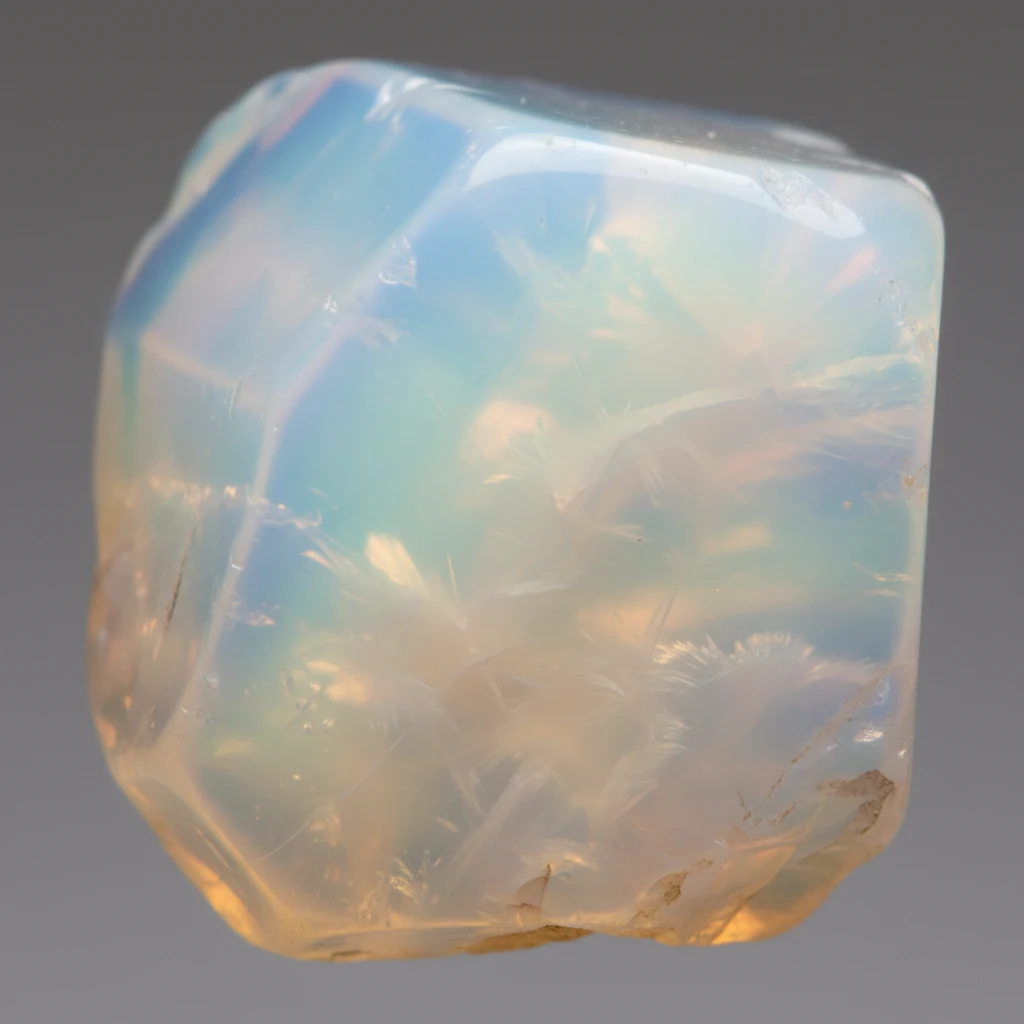
Quick answer: Opalite is a man-made opalescent glass, not a natural opal. It is commonly recognized by its milky blue-white body color, warm peach or orange glow against light, and smooth glassy surface.
AI Rock ID can help screen opalite by comparing its color, translucence, luster, and visual patterns with common lookalikes. RockIdentifier.io treats opalite as a manufactured crystal material, so identification results should be interpreted with that context rather than as proof of natural opal.
Good fit
- People who want an affordable opal-like display stone
- Beginners learning to tell natural and man-made materials apart
- Jewelry buyers who prefer a soft blue-white translucent appearance
- Collectors who label specimens by material type rather than only trade name
Not a good fit
- Buyers seeking natural precious opal
- Rings or high-wear jewelry that may be scratched or chipped easily
- Collectors who only want untreated natural minerals
- Situations where laboratory verification is required for resale
Most commonly confused with
- Opal: Natural opal may show true play-of-color and has a different origin than man-made opalite glass.
- Moonstone: Moonstone is a feldspar with adularescence, while opalite is glass with an opalescent glow.
- Chalcedony: Chalcedony is natural microcrystalline quartz and usually lacks opalite's warm transmitted orange glow.
- Glass: Opalite is a type of decorative glass, so plain glass can overlap in hardness, fracture, and luster.
Opalite vs. Common Lookalikes
| Feature | Opalite | Natural Opal | Moonstone |
|---|---|---|---|
| Origin | Man-made glass | Natural hydrated silica | Natural feldspar |
| Typical effect | Milky blue-white sheen; orange glow in transmitted light | May show play-of-color flashes | Soft floating adularescence |
| Pattern | Usually uniform and clean | Often irregular color patches, potch, or matrix | May show cleavage, layers, or internal structures |
| Hardness | About Mohs 5.5–6 | About Mohs 5.5–6.5 | About Mohs 6–6.5 |
| Buyer clue | Should be sold as man-made or glass | Should be described by opal type and origin when known | Should not be sold as opal |
AI identification confidence
AI identification of opalite is often moderate to high when the photo clearly shows its milky translucence, blue-white surface color, and warm glow through an edge. Confidence drops when the specimen is overexposed, photographed on a colored background, or cut into beads that resemble other glass or moonstone-like materials.
When AI gets it wrong
- Backlit photos may make opalite look like natural opal or chalcedony.
- Small beads can lack enough visible detail for a reliable material call.
- Strong blue lighting can exaggerate the color and hide the glassy character.
- Photos without scale, edge translucence, or surface detail may lead to broad results such as glass or quartz.
Final recommendation
Choose opalite when the listing clearly states that it is man-made glass and the appearance matches the expected milky, opalescent look. Avoid listings that imply opalite is rare natural opal unless independent gemological evidence is provided.
How to Check an Opalite Listing
A reliable opalite listing should describe the material as man-made, synthetic, or glass rather than natural opal. Phrases such as “natural opalite,” “rare opalite opal,” or “genuine moonstone opalite” can be ambiguous and should prompt closer inspection. Clear photos against a neutral background are useful because opalite usually shows a consistent milky body with a warm glow near thin edges.
Opalite in Jewelry Settings
Opalite is suitable for earrings, pendants, beads, and occasional-wear jewelry. It is less ideal for everyday rings because glass can scratch, chip, or fracture when struck. Protective bezels and smooth cabochon cuts reduce exposed edges and help limit damage during wear.
Labels and Trade Names
The name opalite is a trade name most often used for opalescent glass, but it has also been used historically for some natural opal-like materials in limited contexts. For modern retail jewelry and tumbled stones, opalite usually means manufactured glass. A precise label should separate the appearance name from the material identity.
What Is Opalite?
Opalite is a man-made glass made to mimic the soft glow of opal. In the hand, it usually reads as pale blue, milky white, or cream, with a smooth translucent body and an opalescent sheen that shifts gently as the piece turns in the light.
Collectors value Opalite more for its clean look and accessibility than for rarity. It is common, stable under normal conditions, non-magnetic, and has a Mohs hardness of 5.5-6, so it feels practical for display pieces, beads, and polished specimens but should still be protected from harder materials.
Origin & History
Opalite takes its name from its resemblance to opal. It was first described in the late 20th century, and the modern collector should treat it as a synthetic opal-like glass rather than as a naturally occurring opal specimen.
A good label matters with this material: “Opalite” describes the look and trade identity, not a rare natural find. For comparison of mineral terms and opal-related naming, collectors often check mindat.org, while this page describes the supplied Opalite as a synthetic, amorphous silicate material.
Where Is Opalite Found?
Opalite is most commonly found in the market as synthetically produced material from China. The supplied localities include Zhejiang, China; California, USA; and Minas Gerais, Brazil, with China noted as the most common production source.
Formation
Opalite forms synthetically by melting and cooling silica and other materials. The result is an amorphous, translucent silicate glass with a vitreous to pearly surface glow and the soft blue-white appearance that makes it popular in decorative and metaphysical collections.
This artificial formation gives Opalite its consistent body color, smooth polish, and isotropic optical character. Its listed refractive index is 1.46, with no birefringence and no pleochroism, so its visual appeal comes from sheen, translucence, and craftsmanship rather than natural crystal growth.
How to Identify Opalite
Identify Opalite by its pale blue to milky white color, translucent body, and distinctive opalescent sheen. A polished piece usually feels smooth and glassy, with a vitreous luster that can look pearly when light rolls across the surface.
Its structure is amorphous, with conchoidal fracture, white streak, density around 2.2 g/cm3, and Mohs hardness of 5.5-6. It is often lightweight compared with natural stones, non-magnetic, and consistent in appearance, which helps separate it from more variable natural opal-like specimens.
Properties of Opalite
Physical Properties
| Crystal System | Amorphous |
| Hardness (Mohs) | 5.5-6 (Medium (4-6)) |
| Density | 2.2 g/cm3 |
| Luster | Vitreous |
| Diaphaneity | Translucent |
| Fracture | Conchoidal |
| Streak | White |
| Magnetism | Non-magnetic |
| Colors | Blue, White, Cream |
Chemical Properties
| Classification | Silicate |
| Formula | SiO2·nH2O |
| Elements | Si, O |
| Common Impurities | Na, Ca |
Optical Properties
| Refractive Index | 1.46 |
| Birefringence | None |
| Pleochroism | None |
| Optical Character | Isotropic |
Opalite Health & Safety
Opalite poses no significant health risks.
Opalite Value & Price
Price Range
Rough/Tumbled: $5 - $20 per specimen
Cut/Polished: $10 - $30 per carat
Price is affected by color, clarity, and craftsmanship.
Durability
Moderate — Scratch resistance: Fair, Toughness: Good
It is stable under normal conditions but can be scratched by harder materials.
How to Care for Opalite
Use & Storage
Store in a soft pouch or box to prevent scratches.
Cleaning
Clean with warm soapy water and a soft cloth. Avoid harsh chemicals.
Cleanse & Charge
It can be charged under moonlight or with clear quartz.
Placement
Place in a location with gentle light to enhance its appearance.
Caution
Avoid exposing it to extreme temperatures.
Works Well With
Opalite Meaning & Healing Properties
Opalite is believed to support communication, calm, and emotional expression. In crystal practice, it is commonly associated with the Throat Chakra, the Moon, the Water element, and the zodiac signs Cancer and Libra; these meanings are spiritual associations, not medical treatment.
For daily work, many users place Opalite where gentle light can enhance its glow or pair it with rose quartz, amethyst, or clear quartz. Clean it with warm soapy water and a soft cloth, store it in a soft pouch or box, and avoid harsh chemicals and extreme temperatures.
Identify Opalite from a photo
Compare Opalite traits, care tips, value clues, and common lookalikes with a clear photo.
Common mistakes
- Assuming opalite is a natural variety of opal.
- Using rainbow flashes alone to identify natural opal; lighting and coatings can create misleading effects.
- Buying “natural opalite” without asking whether the material is glass.
- Testing hardness on a finished stone and causing visible scratches.
- Confusing opalite's warm transmitted glow with moonstone adularescence.