Chalcedony


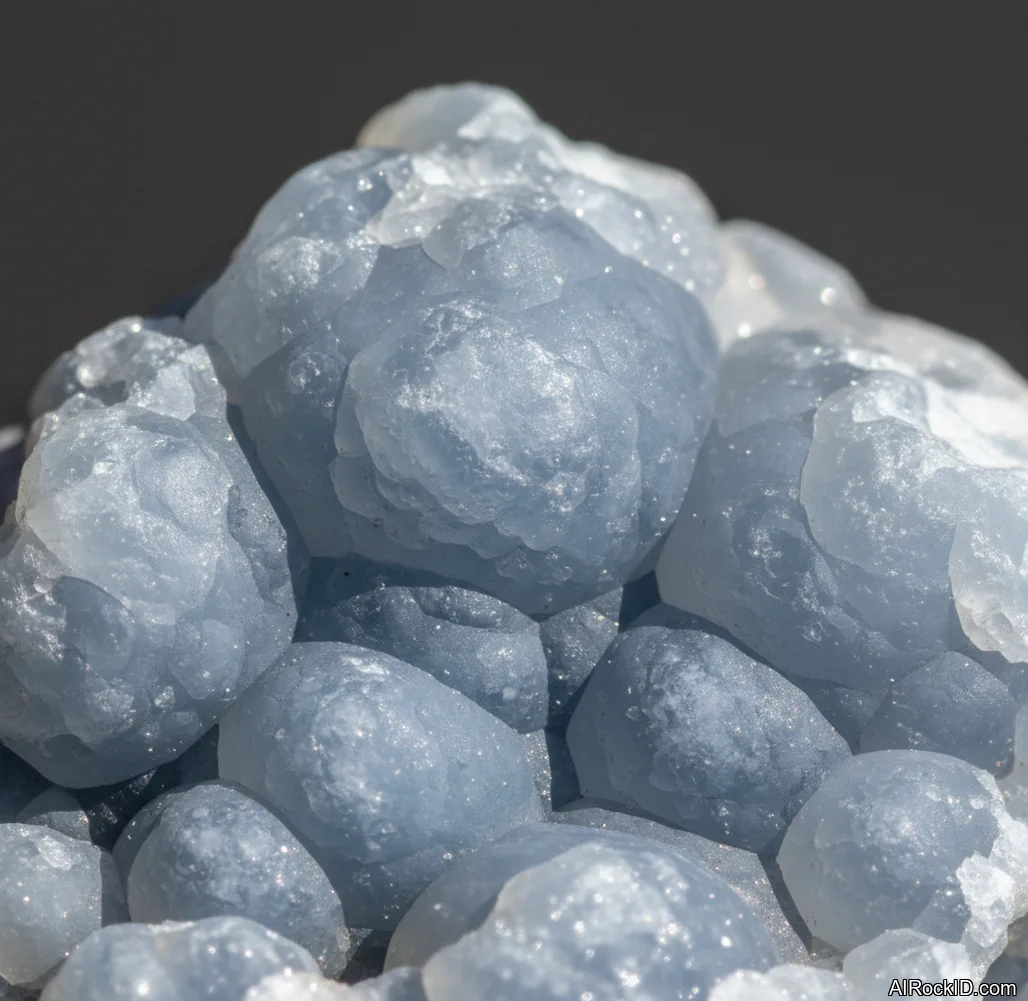
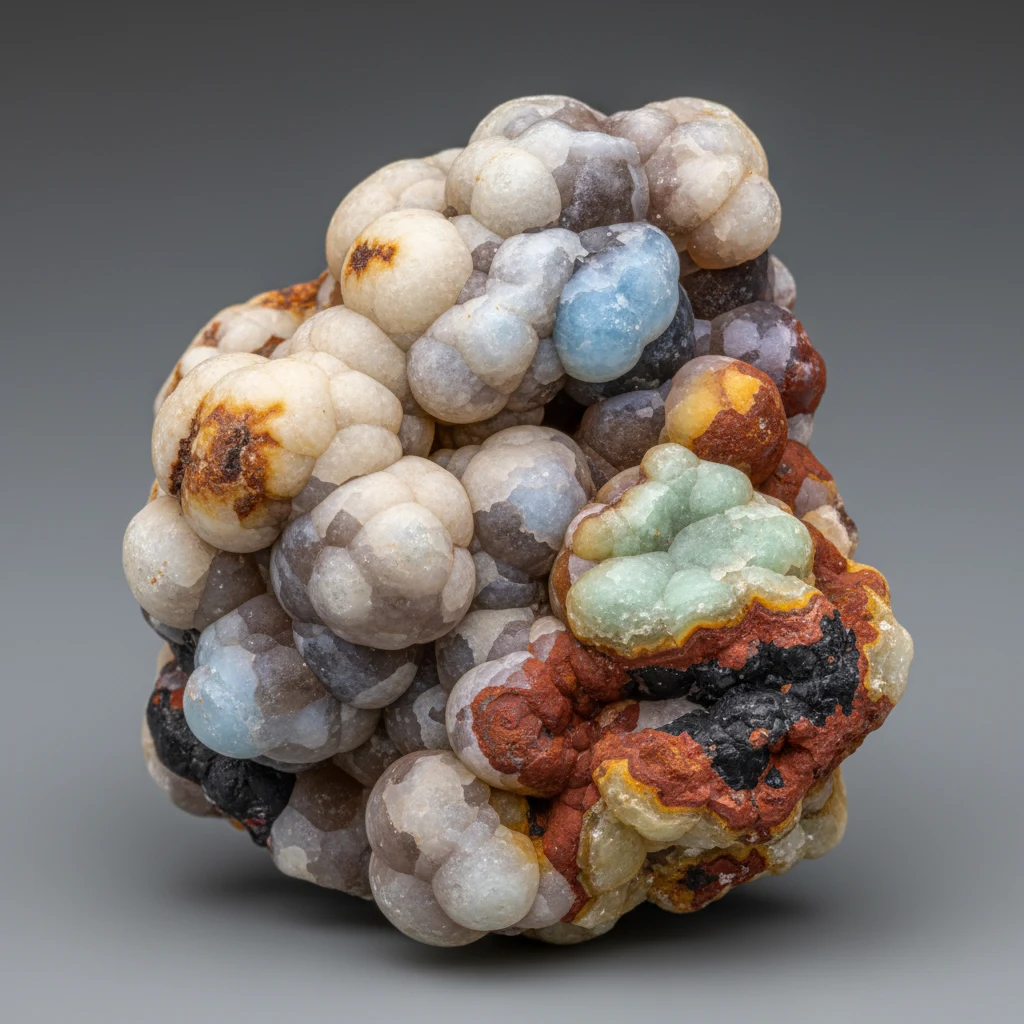
Quick answer: Chalcedony is a microcrystalline form of quartz that commonly appears translucent to opaque with a waxy or dull luster. It is often identified by its fine texture, lack of visible large crystals, and overlap with varieties such as agate, onyx, carnelian, and jasper.
AI Rock ID can help compare chalcedony against visually similar quartz, glass, calcite, and dyed stone by analyzing color, luster, translucency, and texture from a photo. RockIdentifier.io provides identification support, but final confirmation may require simple physical tests or a gemologist when color treatment or trade naming is involved.
Good fit
- Collectors who want a durable quartz-family stone for handling or display
- Beginners learning to distinguish agate, jasper, carnelian, and other chalcedony varieties
- Jewelry buyers looking for a hard, everyday-wear material when properly set
- People comparing natural, dyed, and heat-treated decorative stones
Not a good fit
- Anyone who needs a single color or pattern, since chalcedony varies widely by variety
- Buyers who want untreated material unless the seller clearly discloses treatments
- Identification based only on color, because many chalcedony varieties and imitations overlap visually
Most commonly confused with
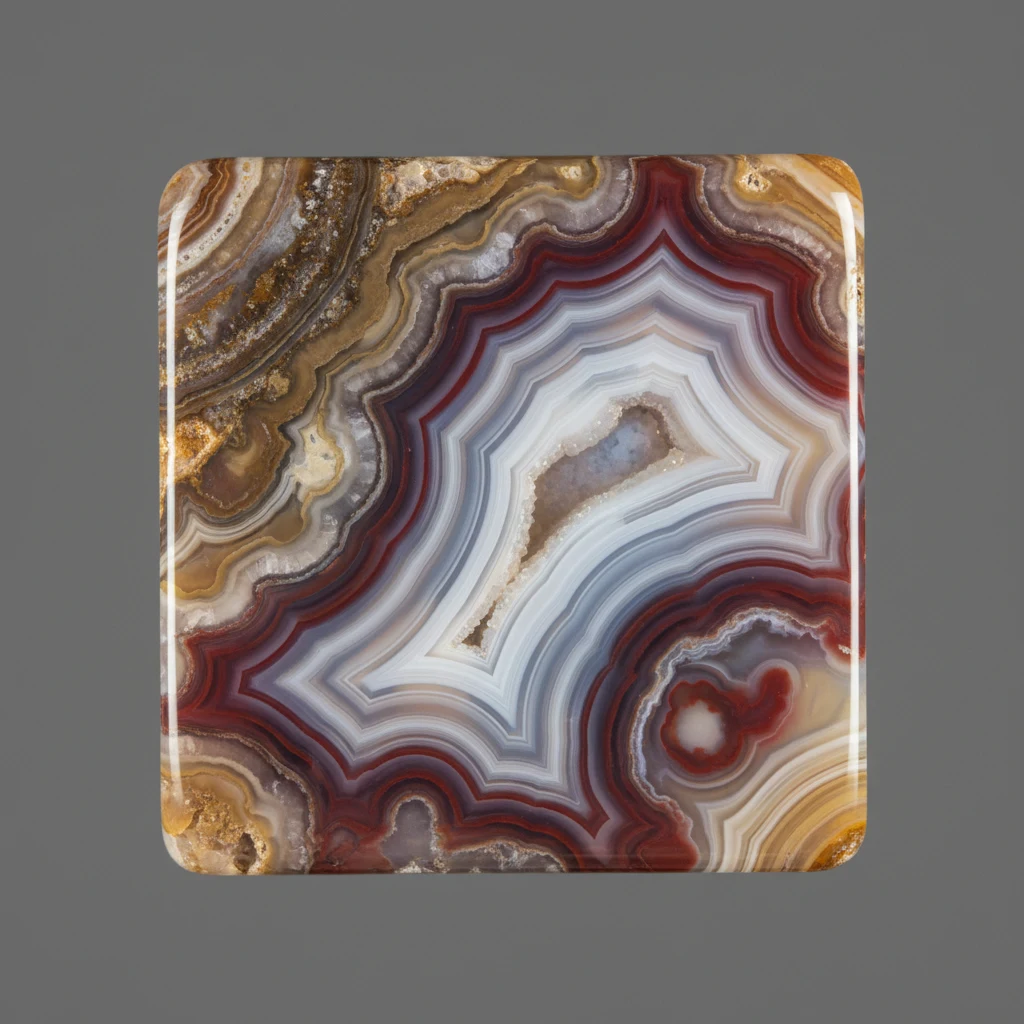
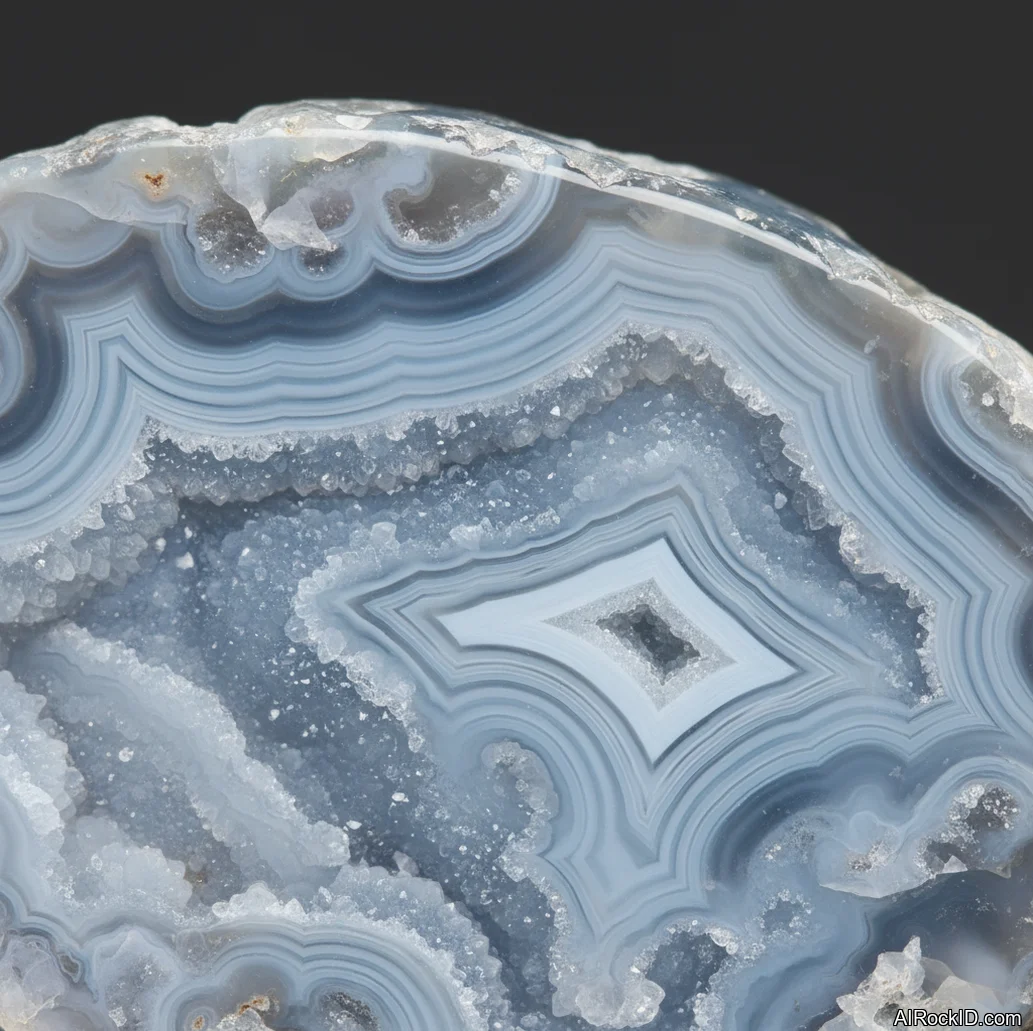
- Agate: Agate is a banded variety of chalcedony rather than a separate mineral species.
- Jasper: Jasper is usually opaque chalcedony with more impurities and a duller appearance.
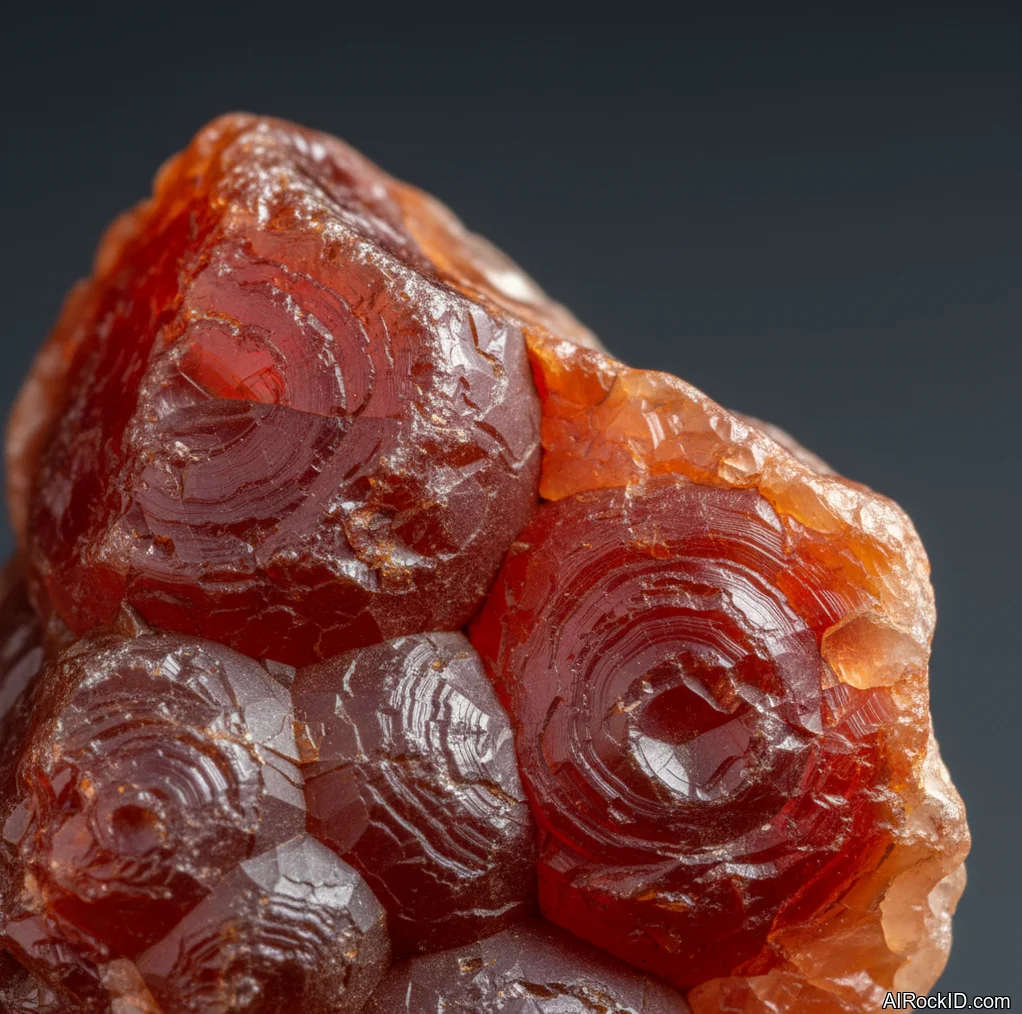
- Carnelian: Carnelian is orange to reddish chalcedony, often colored naturally or by heat treatment.
- Calcite: Calcite is softer, usually reacts to acid, and has lower hardness than chalcedony.
Chalcedony Lookalike Comparison
| Material | Typical Clue | Key Difference |
|---|---|---|
| Chalcedony | Waxy luster, fine-grained quartz texture | Mohs 6.5–7 and no visible large crystals |
| Agate | Distinct curved or parallel banding | A banded variety of chalcedony |
| Jasper | Opaque, earthy colors or patterns | Usually more impure and less translucent |
| Calcite | Softer, may show cleavage | Scratches more easily and reacts to dilute acid |
| Glass | Possible bubbles or molded shapes | Artificial material with different internal features |
AI identification confidence
AI identification confidence for chalcedony is usually moderate when the photo clearly shows waxy luster, translucency, banding, or fine-grained texture. Confidence is lower for plain white, gray, black, or heavily dyed pieces because chalcedony, glass, calcite, and other quartz varieties can look similar in photos.
When AI gets it wrong
- Photos are taken under colored lighting or heavy filters that distort the stone’s true color
- The specimen is dyed, heat-treated, or coated and the surface color hides natural features
- The stone is a tumbled piece with no visible banding, fracture pattern, or texture
- The photo lacks scale, making glass, plastic, or softer minerals harder to rule out
Final recommendation
Use color, translucency, luster, hardness, and any banding together when evaluating chalcedony. For purchases, ask whether the stone is natural, dyed, heat-treated, stabilized, or sold under a variety name such as agate, onyx, carnelian, or jasper.
How to Check Chalcedony Authenticity
Authentic chalcedony should feel relatively hard and resist scratching from common metal objects, though destructive scratch tests are not recommended for finished jewelry. Look for natural variation, fine texture, and believable patterning; perfectly uniform bright colors may suggest dyeing. A loupe can help reveal surface-reaching dye concentrations in cracks, pits, or porous zones.
Dyed and Treated Chalcedony
Many chalcedony varieties in the gem and bead trade are dyed, heat-treated, or otherwise enhanced to create stronger colors. Blue, green, pink, black, and vivid banded pieces should be evaluated carefully if natural color matters. Treatment is not automatically a defect, but it should be disclosed by the seller.
Buying Chalcedony by Variety Name
Chalcedony is often sold under variety names rather than simply as chalcedony. Agate usually refers to banded material, onyx to parallel-banded material, carnelian to orange-red material, and jasper to opaque patterned material. Trade names can vary, so photos, treatment disclosure, and return policies are important when buying online.
What Is Chalcedony?
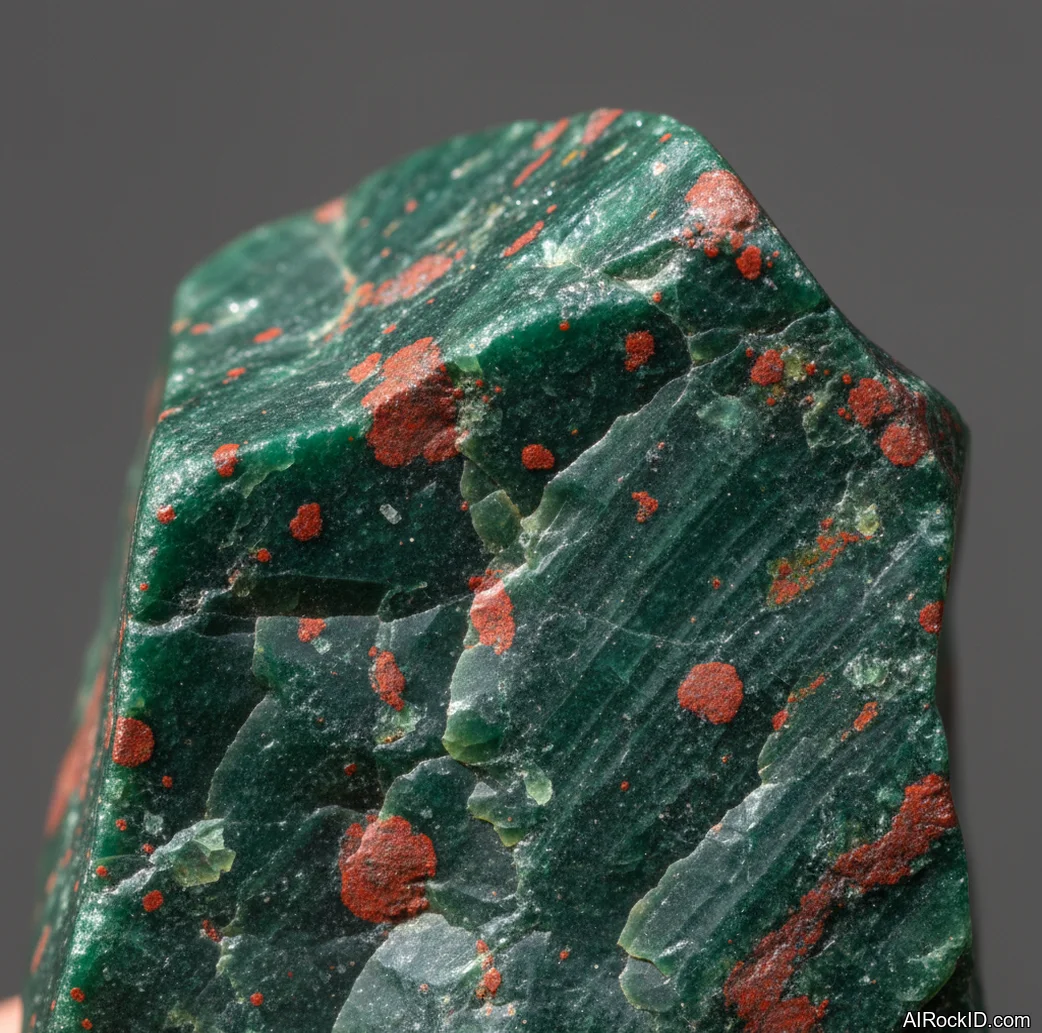
Chalcedony is a compact, microcrystalline form of silica, made mostly of quartz with variable moganite. In the hand, it usually feels dense, smooth, and fine-grained rather than sparkly or visibly crystalline. It is the broad mineral material behind many lapidary favorites, including agate, onyx, carnelian, chrysoprase, sard, jasper, and bloodstone.
For collectors, chalcedony is a dependable hard stone with Mohs hardness about 6.5 to 7, a white streak, and conchoidal to uneven fracture with no true cleavage. Fresh broken surfaces often look waxy, dull-vitreous, or slightly greasy; polished pieces can take a glassier face while still keeping that soft, compact chalcedony look.
Origin & History
The name chalcedony is traditionally linked to Chalcedon, an ancient Greek port near modern Kadıköy, Istanbul, Turkey. Historical use of the name has shifted over time, so old labels can be broad or imprecise; when working with labeled specimens, collectors often compare locality wording with modern references such as mindat.org.
Chalcedony has been carved, engraved, and worn since antiquity because it is durable, takes a good polish, and occurs in many colors and patterns. Its tight texture made it useful for seals, beads, cameos, ornaments, and cabochons, especially where banding, translucency, or warm color could be shown off by polishing.
Where Is Chalcedony Found?
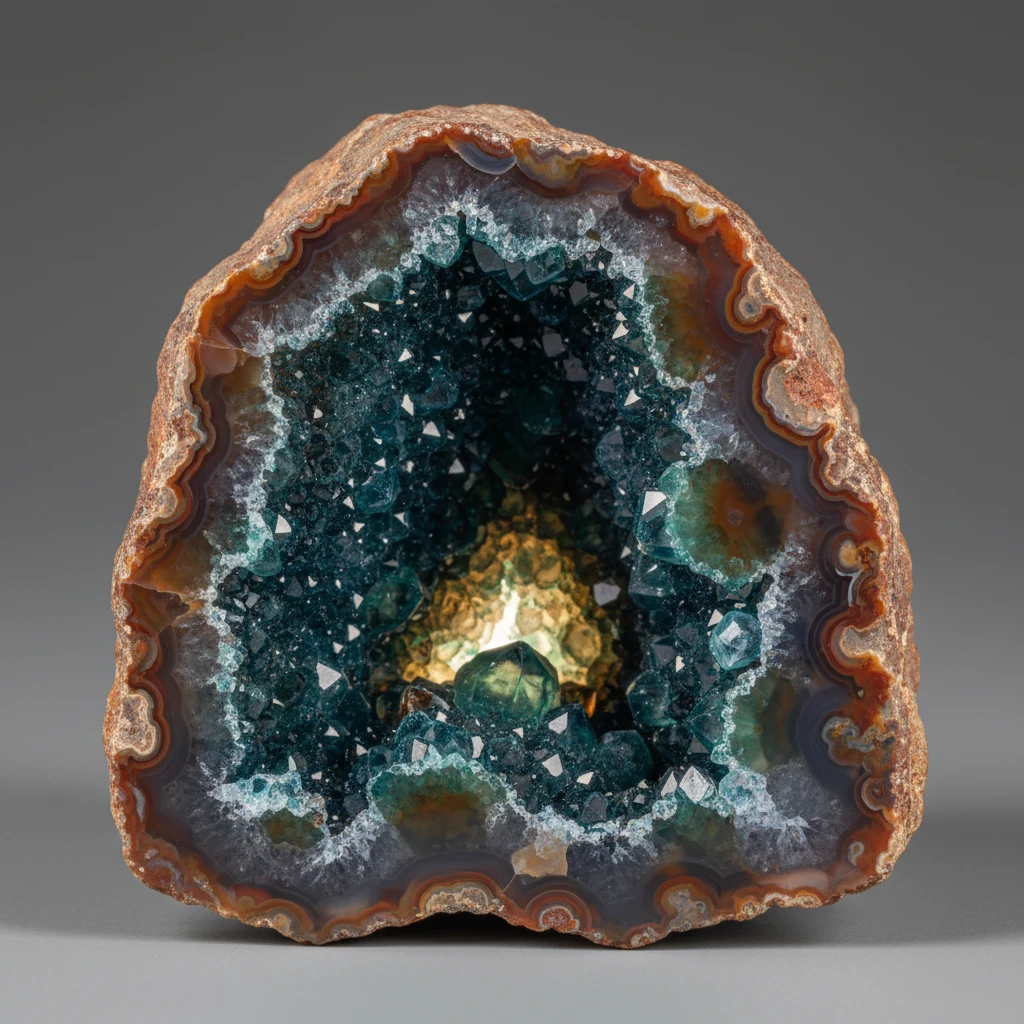
Chalcedony is found worldwide, especially in volcanic rocks, sedimentary nodules, geodes, veins, and weathered silica-rich environments. Major source countries include Brazil, Uruguay, India, Madagascar, the United States, Mexico, Turkey, Germany, Namibia, and Australia.
Formation
Chalcedony forms when silica-rich fluids precipitate microscopic fibers and grains of quartz and moganite at low to moderate temperatures. Instead of growing as open, pointed quartz crystals, the silica settles into dense cryptocrystalline masses, linings, layers, and fillings.
In the field, chalcedony commonly appears lining cavities in volcanic rocks, filling fractures and veins, forming nodules in sedimentary rocks, replacing fossils or wood, and building banded layers as fluid chemistry changes over time. Those shifting layers are why an agate nodule can show crisp bands, while a jasper piece may look opaque, earthy, and inclusion-rich.
How to Identify Chalcedony
Identify chalcedony by its hard, compact feel, waxy to vitreous luster, white streak, and conchoidal fracture. It has Mohs hardness about 6.5 to 7, so it will usually scratch glass, and it is non-magnetic. It should not show the visible crystal faces expected on ordinary quartz points.
Color alone is not enough: chalcedony can be white, gray, blue, brown, red, orange, yellow, green, black, or multicolored. Banded material is commonly agate, opaque impure material is often jasper, and parallel-banded black-and-white material may be onyx. Many brightly colored agates and onyx materials are dyed, so judge color with caution.
Properties of Chalcedony
Physical Properties
| Crystal System | Trigonal for quartz component; chalcedony occurs as cryptocrystalline fibrous to granular aggregates |
| Hardness (Mohs) | 6.5-7 (Hard) |
| Density | Approximately 2.58-2.64 g/cm³ |
| Luster | Waxy, dull-vitreous to vitreous when polished |
| Diaphaneity | Translucent to opaque; rarely nearly transparent in thin edges |
| Fracture | Conchoidal to uneven; no true cleavage |
| Streak | White |
| Magnetism | Non-magnetic |
| Colors | white, gray, blue, brown, red, orange, yellow, green, black, multicolored |
Chemical Properties
| Classification | Oxide; tectosilicate silica mineral aggregate |
| Formula | SiO2 |
| Elements | silicon, oxygen |
| Common Impurities | iron oxides, manganese oxides, nickel, chromium, aluminum, titanium, organic inclusions, water in pores or inclusions |
Optical Properties
| Refractive Index | About 1.530-1.540 |
| Birefringence | Low, commonly about 0.004 or less in aggregates |
| Pleochroism | None |
| Optical Character | Aggregate; quartz component is uniaxial positive, but chalcedony commonly shows aggregate or anomalous optical behavior |
Chalcedony Health & Safety
Solid chalcedony is safe to handle, but cutting, grinding, drilling, or sanding can create respirable crystalline silica dust, which is hazardous if inhaled.
Chalcedony Value & Price
Price Range
Rough/Tumbled: Common rough chalcedony is often inexpensive, from a few dollars per pound for ordinary material to higher prices for attractive agate nodules, blue chalcedony, chrysoprase, fine carnelian, or unusual patterns. Exceptional collectible specimens, large geodes, and high-grade lapidary rough can range from tens to hundreds of dollars or more.
Cut/Polished:
Value depends on color saturation, translucency, pattern, size, polish quality, lack of fractures, variety name, locality, and whether the material is natural or dyed. Strongly colored blue chalcedony, fine chrysoprase, vivid carnelian, crisp agate banding, and historically important localities usually command higher prices.
Durability
Good — Scratch resistance: Good scratch resistance for jewelry and carvings because hardness is near quartz, though it can still be scratched by topaz, corundum, diamond, and abrasive grit., Toughness: Generally good due to its compact microcrystalline texture, but thin edges, geodes, and fractured pieces can chip.
Chalcedony is stable under normal display and wear conditions. Some dyed, heated, or treated pieces may fade or change with strong sunlight, harsh chemicals, or prolonged soaking.
How to Care for Chalcedony
Use & Storage
Store chalcedony separately from softer stones to prevent scratching them, and protect polished pieces from hard impacts. Small carvings and cabochons are best kept in a pouch, tray, or lined box.
Cleaning
Clean with warm water, mild soap, and a soft brush or cloth. Rinse and dry thoroughly. Avoid bleach, strong acids, aggressive chemical cleaners, and ultrasonic cleaning for fractured, dyed, porous, or assembled pieces.
Cleanse & Charge
For metaphysical practice, chalcedony is commonly cleansed with running water, moonlight, smoke, or sound. Avoid saltwater for dyed, drilled, or metal-mounted pieces.
Placement
Place specimens where their color and translucency can be seen, but keep dyed or unusually vivid pieces away from prolonged direct sunlight to reduce fading risk.
Caution
Do not assume every brightly colored chalcedony is natural; many agates and onyx materials are dyed. Avoid inhaling dust during cutting or polishing.
Works Well With
Chalcedony Meaning & Healing Properties
In crystal-healing traditions, chalcedony is associated with calm communication, emotional balance, harmony, protection, and gentle grounding. These meanings are cultural and spiritual beliefs, not scientifically proven medical effects, but many practitioners choose chalcedony when they want a steady, quiet stone rather than a flashy one.
Chalcedony is commonly connected with the throat, heart, and root chakras, and with Cancer, Sagittarius, and Gemini. Practitioners also link it with the Moon and Mercury, plus Water and Earth energy. For metaphysical care, it is often cleansed with running water, moonlight, smoke, or sound; avoid saltwater for dyed, drilled, or metal-mounted pieces.
Identify Chalcedony from a photo
Compare Chalcedony traits, care tips, value clues, and common lookalikes with a clear photo.
Common mistakes
- Assuming every brightly colored chalcedony is naturally colored
- Using color alone to separate chalcedony from agate, jasper, or carnelian
- Calling all banded chalcedony onyx when many pieces are agate
- Mistaking soft calcite or dyed marble for chalcedony without checking hardness
- Assuming tumbled glass is chalcedony because it has a smooth, waxy-looking surface