Pink Glitter Resin


Quick answer: Pink Glitter Resin is a man-made decorative material, not a naturally formed crystal. Its pink base color, resinous shine, and suspended glitter make it easy to recognize, but it can be mistaken for dyed stone, glass, or sparkly natural minerals in small photos.
AI Rock ID can help flag Pink Glitter Resin by checking for uniform color, embedded glitter, and plastic-like luster from a photo. RockIdentifier.io treats it as a synthetic material, so identification should focus on material type rather than natural mineral species.
Good fit
- Collectors who want a clearly synthetic pink decorative piece
- Craft, jewelry, or display uses where low weight is helpful
- Beginners learning to separate resin, glass, and natural minerals
- People who prefer inexpensive sparkle over mineral rarity
Not a good fit
- Collectors seeking a natural crystal specimen
- High-wear rings or bracelets that may scratch easily
- Buyers who need heat-resistant or solvent-resistant material
- Anyone expecting natural inclusions or geological formation features
Most commonly confused with
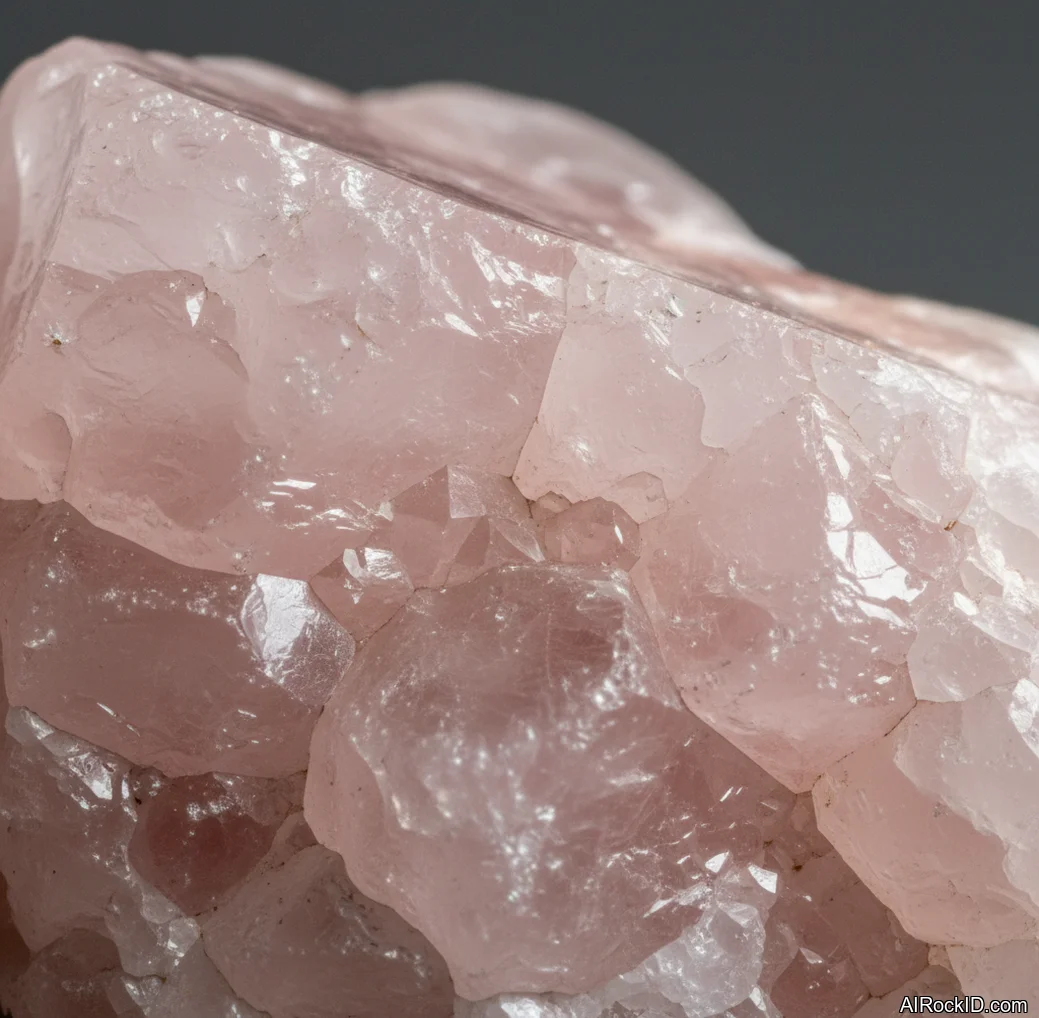
- Rose Quartz: Rose quartz is a natural quartz variety with a harder Mohs 7 surface and no loose glitter flecks.
- Goldstone: Goldstone is man-made glass with metallic sparkle, usually heavier and harder than resin.
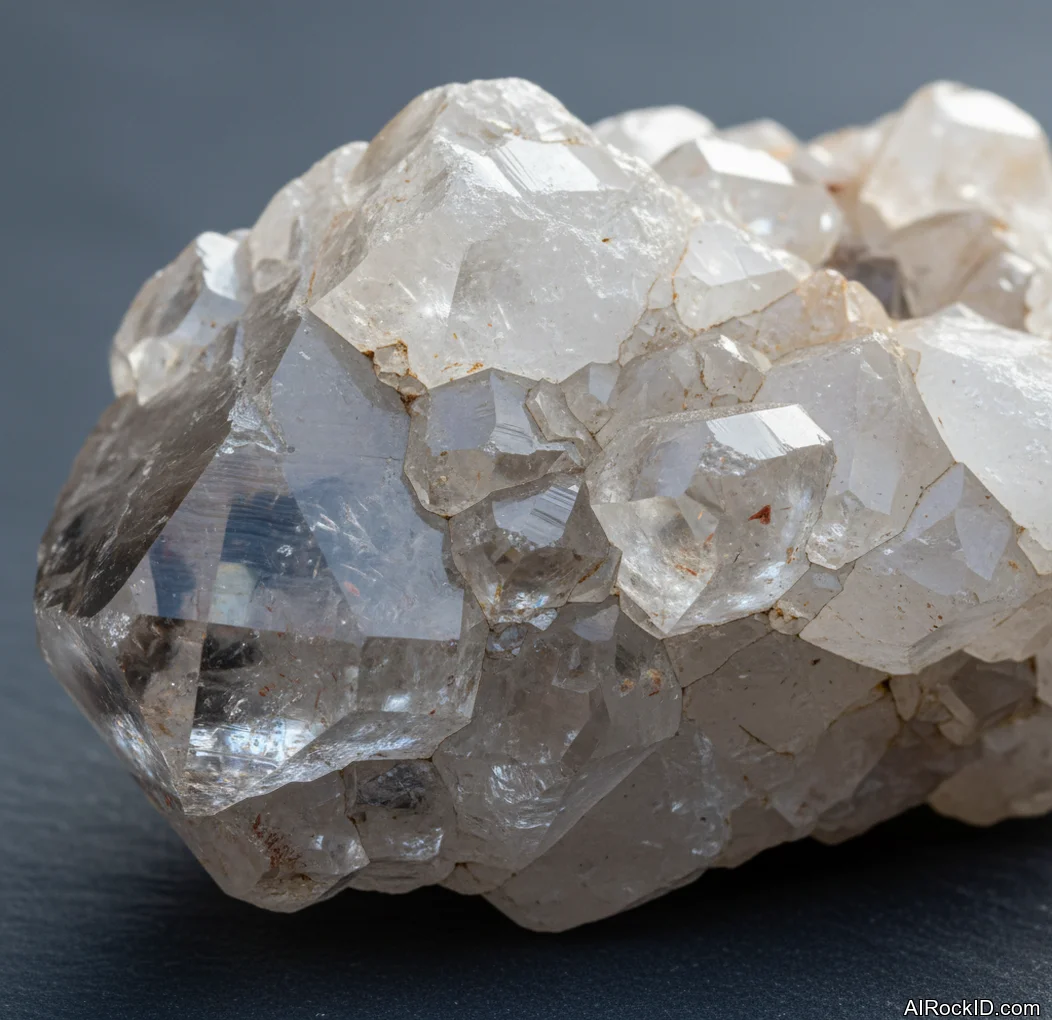
- Dyed Quartz: Dyed quartz is natural quartz with artificial color, but its glassy hardness and crystal structure differ from resin.
- Pink Opalite: Opalite is usually synthetic glass with an opalescent glow rather than suspended craft glitter.
Pink Glitter Resin vs. Common Lookalikes
| Material | Typical ID Clue | Hardness / Feel | Origin |
|---|---|---|---|
| Pink Glitter Resin | Suspended glitter in a plastic-like pink base | Mohs 2-3; lightweight and easily scratched | Synthetic polymer |
| Rose Quartz | Cloudy to translucent pink with no glitter | Mohs 7; cool, hard stone feel | Natural mineral |
| Goldstone | Dense metallic sparkle in glass | About Mohs 5.5-6; glassy feel | Synthetic glass |
| Dyed Quartz | Color may collect in cracks or surface zones | Mohs 7; resists steel scratches | Natural quartz with treatment |
| Pink Opalite | Milky glow or color shift, not visible glitter flakes | About Mohs 5.5-6; glassy feel | Usually synthetic glass |
AI identification confidence
AI identification confidence is usually moderate to high when photos clearly show glitter suspended inside a smooth pink resin body. Confidence drops when the surface is overexposed, heavily polished, or photographed from too far away to show whether the sparkle is glitter, mica, or metallic glass inclusions.
When AI gets it wrong
- Bright reflections can make plain resin look like glitter resin.
- Goldstone and other glittery glass can be mislabeled as resin in low-resolution images.
- Dyed quartz beads may appear resin-like if the photo does not show hardness, weight, or fracture details.
- Surface glitter coating can look like embedded glitter unless the edge or cross-section is visible.
Final recommendation
Choose Pink Glitter Resin when the goal is a lightweight, decorative pink material with obvious sparkle rather than a natural mineral specimen. For a natural pink stone, compare it with rose quartz, rhodonite, or other verified minerals before buying.
How to Tell If Pink Glitter Resin Is Synthetic
Pink Glitter Resin often shows evenly suspended glitter flakes, a warm plastic feel, and a lower weight than glass or stone of the same size. Mold lines, tiny air bubbles, and a faint plastic smell when warmed slightly are also common clues. A cautious scratch test on an inconspicuous spot may show damage from materials that would not scratch quartz.
Buying Tips for Pink Glitter Resin
Listings should describe the item as resin, polymer, or synthetic rather than natural crystal. Clear photos should show the surface, edges, and glitter distribution so buyers can distinguish embedded glitter from a surface coating. Be cautious with listings that use mineral names such as quartz, opal, or crystal without explaining that the piece is resin.
Best Uses for Pink Glitter Resin
Pink Glitter Resin is suited to pendants, charms, display pieces, keychains, and craft components where low cost and bright color are priorities. It is less suitable for surfaces exposed to abrasion, heat, harsh cleaners, or long-term direct sunlight. Protective settings and gentle handling help preserve its polish and glitter effect.
What Is Pink Glitter Resin?
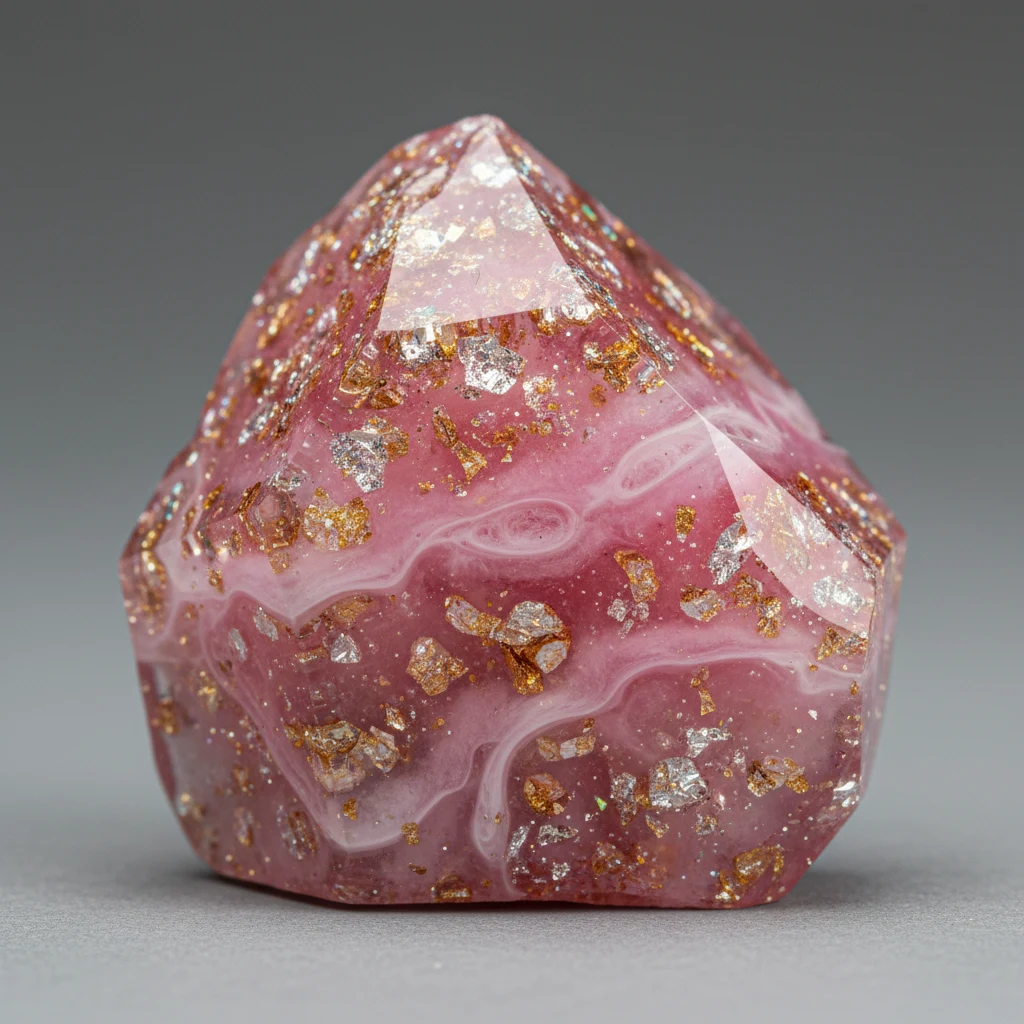
Pink Glitter Resin is a synthetic resin material with a pink body color and sparkling glitter flecks set into the surface and interior. In the hand, it reads more like a polished craft piece than a natural crystal: smooth, shiny, opaque, and decorative, with a resinous luster that catches light from the embedded gold and silver tones.
Collectors usually choose Pink Glitter Resin for appearance, jewelry, display, and craft use rather than rarity. It is common, soft at Mohs 2-3, non-magnetic, and amorphous rather than crystalline. Its value is generally modest, with specimens listed in the $5-$20 range depending on size and overall quality.
Origin & History
The name Pink Glitter Resin is direct and descriptive: it reflects the pink color, synthetic resin base, and glittery effect. Its first uses in crafts date to the late 20th century, when decorative resin pieces became popular for jewelry, small objects, and colorful handmade display items.
Because Pink Glitter Resin is manufactured rather than mined as a natural crystal species, its “origin” is tied to production and craft history, not a geologic discovery locality. Reference note: mindat.org is commonly used for natural mineral locality context, while this material is best understood from the supplied synthetic polymer and production facts.
Where Is Pink Glitter Resin Found?
Pink Glitter Resin is not found in the ground as a natural mineral deposit; it is widely produced for decorative purposes. The listed producing countries include the USA, China, and India, with notable production localities given as California, USA; Guangdong, China; and Maharashtra, India.
Formation
Pink Glitter Resin forms by polymerization of synthetic materials, with glitter incorporated during the process. The result is an amorphous synthetic polymer rather than a crystal with a repeating mineral structure, and its formula is variable, represented as C_xH_y depending on formulation.
The embedded glitter is part of the visual build, so a good piece should show a pleasing distribution of sparkle through the pink resin. Its density is listed at 1.1-1.5 g/cm3, its refractive index at 1.50-1.55, and its optical behavior is isotropic, with no birefringence or pleochroism.
How to Identify Pink Glitter Resin
Identify Pink Glitter Resin by its pink color, opaque body, resinous shiny luster, and visible glitter flecks, often in gold or silver tones. It should feel smooth if finished well, and the glitter should appear intentionally distributed rather than occurring as natural inclusions or crystal growth.
Its physical clues are those of a soft synthetic resin: Mohs hardness 2-3, white streak, non-magnetic response, amorphous structure, and possible conchoidal fracture. Check for a uniform glitter pattern, a polished surface, and the absence of crystal faces; those features help separate it from natural pink minerals or glassy decorative stones.
Properties of Pink Glitter Resin
Physical Properties
| Crystal System | Amorphous |
| Hardness (Mohs) | 2-3 (Soft (2-4)) |
| Density | 1.1-1.5 g/cm3 |
| Luster | Resinous |
| Diaphaneity | Opaque |
| Fracture | Conchoidal |
| Streak | white |
| Magnetism | Non-magnetic |
| Colors | Pink, Gold, Silver |
Chemical Properties
| Classification | Synthetic polymer |
| Formula | C_xH_y (varies by formulation) |
| Elements | C, H |
| Common Impurities |
Optical Properties
| Refractive Index | 1.50-1.55 |
| Birefringence | None |
| Pleochroism | None |
| Optical Character | Isotropic |
Pink Glitter Resin Health & Safety
No major health risks are associated with handling Pink Glitter Resin.
Pink Glitter Resin Value & Price
Price Range
Rough/Tumbled: $5 - $20 per specimen
Cut/Polished:
Price is influenced by quality and size of the piece.
Durability
Moderate — Scratch resistance: Fair, Toughness: Good
It can be sensitive to heat and UV exposure.
How to Care for Pink Glitter Resin
Use & Storage
Store in a cool, dry place away from direct sunlight.
Cleaning
Clean with a damp cloth and mild soap. Avoid abrasive cleaners.
Cleanse & Charge
Place in sunlight for a few hours to cleanse.
Placement
Display in areas where it won't be knocked over easily.
Caution
Avoid high temperatures to prevent deformation.
Works Well With
Pink Glitter Resin Meaning & Healing Properties
In crystal-healing use, Pink Glitter Resin is traditionally chosen for creativity, joy, and self-expression. It is associated with the Heart chakra, Venus, the Earth element, and the zodiac signs Taurus and Libra, giving it a soft, affectionate, beauty-focused symbolism in meditation or display.
Practitioners often place it where its sparkle can brighten a desk, altar, or craft space, especially when the intention is love, inner peace, confidence, or emotional healing. These uses are cultural and symbolic only; Pink Glitter Resin is not a substitute for medical treatment.
Identify Pink Glitter Resin from a photo
Compare Pink Glitter Resin traits, care tips, value clues, and common lookalikes with a clear photo.
Common mistakes
- Assuming the word “crystal” means the piece is a natural mineral.
- Identifying glitter as natural mineral inclusions without checking whether the base is resin or glass.
- Using price alone to judge authenticity, since both resin and inexpensive natural stones can be low cost.
- Testing with heat or flame, which can damage resin and release unpleasant fumes.
- Cleaning with alcohol, acetone, or strong solvents that may cloud or soften the surface.