Scallop Shell


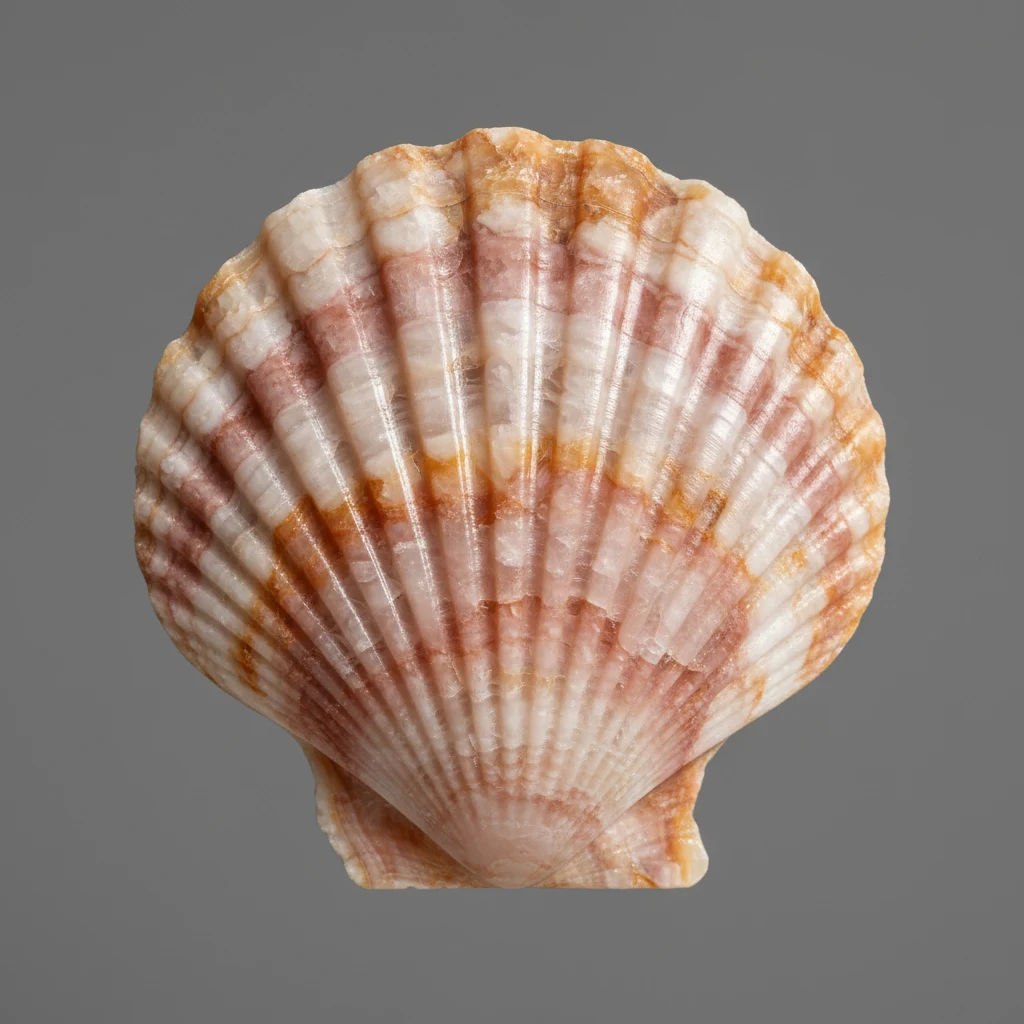
Quick answer: Scallop Shell is a calcium carbonate biological material from marine bivalves, recognized by its fan-like outline and radiating ribs. It is softer than most silicate minerals, so identification should focus on shape, growth texture, weight, and signs of natural shell layering.
AI Rock ID can help compare a Scallop Shell photo with visually similar shells, carvings, and shell-like stones by analyzing shape, ribbing, color, and surface texture. RockIdentifier.io provides reference information to support visual identification, but physical checks such as hardness, layering, and provenance are still useful.
Good fit
- Collectors documenting beach finds or coastal natural history specimens
- Beginners learning to distinguish organic gems from mineral crystals
- People comparing shell material with mother-of-pearl, coral, or imitation pieces
- Jewelry buyers checking whether a shell component is natural, dyed, or molded
Not a good fit
- Rings or bracelets exposed to frequent impact or abrasion
- Acid testing, vinegar cleaning, or harsh chemical use
- Specimens needing high water resistance or long outdoor exposure
Most commonly confused with
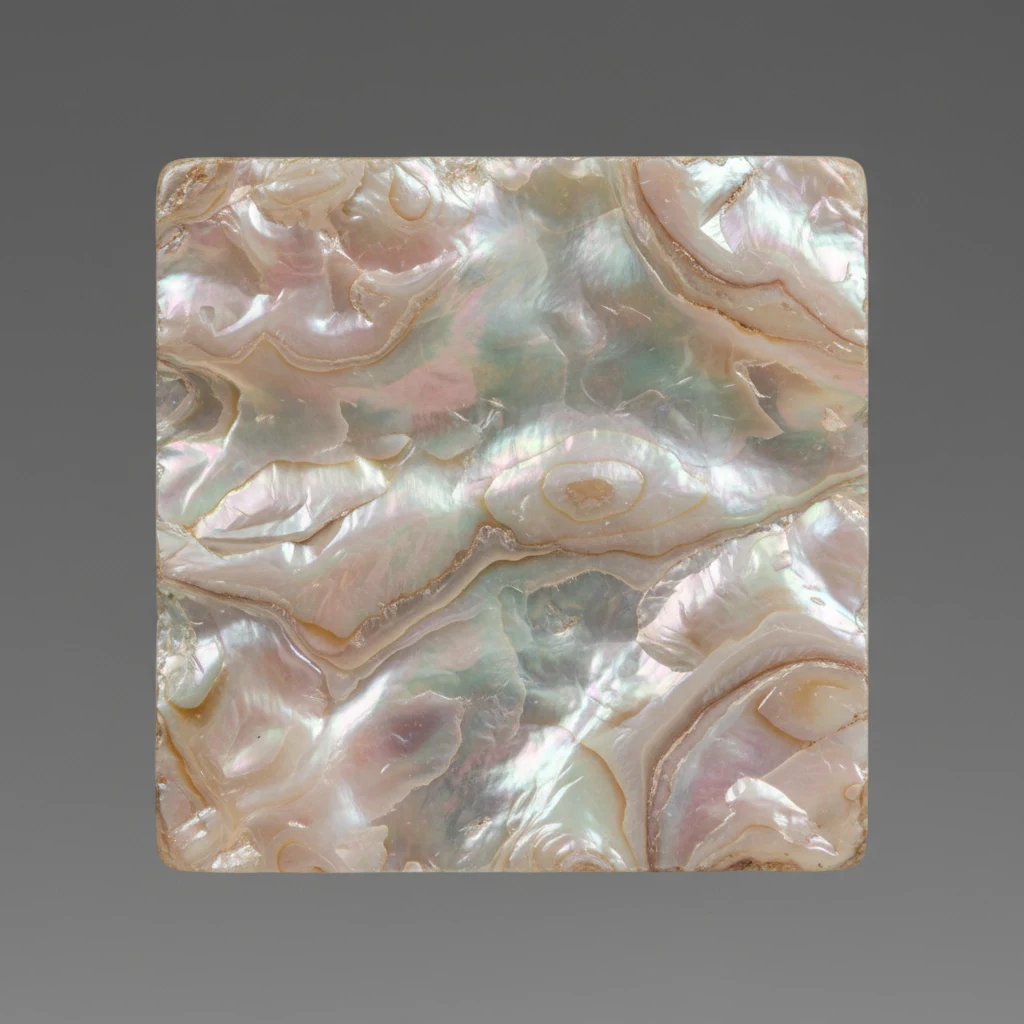
- Mother of Pearl: Mother of Pearl is the nacreous inner shell layer with strong iridescence, while Scallop Shell is usually identified by its whole-shell fan shape and external ribs.
- Coral: Coral often shows porous or branching skeletal structure, while Scallop Shell has layered calcium carbonate with radial ribs.
- Conch Shell: Conch Shell typically has a spiral form, while Scallop Shell has a broad fan or semicircular outline.
- Aragonite: Aragonite is a mineral form of calcium carbonate that may form crystals or masses, while Scallop Shell is an organic shell structure.
Scallop Shell vs. Similar Materials
| Material | Typical Form | Key Difference | Mohs Hardness |
|---|---|---|---|
| Scallop Shell | Fan-shaped shell with radial ribs | Organic calcium carbonate shell with visible growth layers | 3-4 |
| Mother of Pearl | Iridescent shell lining or inlay | Nacre layer with pearly color play rather than whole fan shape | 2.5-4.5 |
| Coral | Branching, porous, or compact skeletal material | Often has small pores or biological canal patterns | 3-4 |
| Conch Shell | Spiral shell or carved shell pieces | Curved spiral growth form instead of radiating fan ribs | 3-4 |
| Aragonite | Crystals, bands, or massive mineral pieces | Mineral specimen, not a recognizable shell body | 3.5-4 |
AI identification confidence
AI identification confidence is usually higher when the photo clearly shows the full fan outline, hinge area, and ribbed exterior. Confidence may drop for polished fragments, jewelry inlays, dyed pieces, or close-up photos without scale.
When AI gets it wrong
- A cropped photo shows only ribbed texture and not the complete shell shape
- The piece is polished, carved, or dyed so natural growth features are obscured
- Lighting makes mother-of-pearl iridescence or shell layering hard to see
- The object is a molded resin imitation with a shell-like pattern
Final recommendation
Choose Scallop Shell when the goal is a lightweight organic gem or coastal specimen with visible natural texture. For daily-wear jewelry, use protective settings and confirm whether the piece is natural, dyed, stabilized, or imitation.
How to Check Scallop Shell Authenticity
Natural Scallop Shell usually shows uneven growth lines, subtle color variation, and layered edges. Molded plastic imitations may feel warmer, lighter, or too uniform, and seams or repeated patterns can indicate casting. A genuine shell may react poorly to acids, so destructive acid testing is not recommended for collectible or jewelry pieces.
Buying Tips for Scallop Shell Jewelry and Specimens
Ask whether the shell is natural, dyed, bleached, coated, or stabilized before buying. In jewelry, inspect drill holes and edges for cracks because shell can chip under pressure. For beach-collected specimens, local collecting rules and habitat protections should be checked before removal.
Photo Tips for Identifying Scallop Shell
Use a photo that shows the full outline, hinge area, ribbed surface, and edge thickness. A second close-up of the surface can help distinguish natural growth texture from molded plastic or carved stone. Including a coin or ruler helps show scale and improves visual comparison.
What Is Scallop Shell?
Scallop Shell is a common organic gem made of calcium carbonate, recognized by its fan shape and ribbed surface. In the hand, it feels light, smooth, and slightly fragile, with a natural shell gloss rather than the dense feel of a hard crystal. Its Mohs hardness is 3-4, so it has fair scratch resistance but should not be treated like a tough mineral specimen.
Collectors value Scallop Shell for its clean coastal character: white, pink, orange, or brown tones, a vitreous surface luster, and a broad bivalve form that is easy to identify at a glance. It is opaque, non-magnetic, and has a white streak. Chemically, it is CaCO3, a carbonate material containing calcium, carbon, and oxygen.
Origin & History
The word “scallop” comes from the Old French “escalope,” a term first described in literature in the 12th century. The name fits the object well: a scallop shell has a natural fan outline, with repeated ribs that radiate across the surface like a handheld coastal relic.
As a collector’s material, Scallop Shell sits between natural history and gem collecting. It is cataloged as an organic gem rather than a conventional crystal, because it is the protective outer layer of a mollusk. For broader reference terminology when comparing carbonate materials, collectors often consult mindat.org.
Where Is Scallop Shell Found?
Scallop Shell is commonly found in coastal marine environments. Reported countries include the United States, Italy, and Japan, with notable localities including New England in the USA, the Mediterranean Sea in Italy, and the Pacific Ocean around Japan.
Formation
Scallop Shell forms when a scallop mollusk secretes calcium carbonate to build its protective outer layer. That growth produces the familiar fan-shaped shell, with ribs across the exterior and a smooth, shiny surface that can catch light in a glassy, vitreous way.
Its listed structure is amorphous, and its formula is CaCO3. The shell’s physical behavior matches a moderate-durability specimen: it can show conchoidal fracture, has fair toughness, and should be kept away from harsh treatment. For carbonate classification and CaCO3 comparison, USGS and mindat.org are useful plain-text reference points.
How to Identify Scallop Shell
Identify Scallop Shell first by shape: it is a bivalve mollusk shell with a distinctive fan form and ribbed exterior. Most specimens are white, pink, orange, or brown, and the surface is typically shiny and smooth. The combination of fan outline and radiating ribs is the fastest field clue.
For closer checking, note its carbonate composition, Mohs hardness of 3-4, opaque diaphaneity, vitreous luster, white streak, and non-magnetic response. Its density is listed as 2.71 g/cm3, with refractive index 1.66, no birefringence, no pleochroism, and isotropic optical character. Handle it carefully, because scallop shells can be fragile.
Properties of Scallop Shell
Physical Properties
| Crystal System | Amorphous |
| Hardness (Mohs) | 3-4 (Medium) |
| Density | 2.71 g/cm3 |
| Luster | Vitreous |
| Diaphaneity | Opaque |
| Fracture | Conchoidal |
| Streak | White |
| Magnetism | Non-magnetic |
| Colors | White, Pink, Orange |
Chemical Properties
| Classification | Carbonate |
| Formula | CaCO3 |
| Elements | Ca, C, O |
| Common Impurities |
Optical Properties
| Refractive Index | 1.66 |
| Birefringence | None |
| Pleochroism | None |
| Optical Character | Isotropic |
Scallop Shell Health & Safety
There are no significant health risks associated with handling scallop shells.
Scallop Shell Value & Price
Price Range
Rough/Tumbled: $1 - $10 per specimen
Cut/Polished:
Price is influenced by size, color, and condition.
Durability
Moderate — Scratch resistance: Fair, Toughness: Fair
Scallop shells can be fragile and should be handled with care.
How to Care for Scallop Shell
Use & Storage
Store in a dry place to avoid moisture damage.
Cleaning
Clean gently with a damp cloth. Avoid harsh chemicals.
Cleanse & Charge
Place in sunlight for a few hours to cleanse.
Placement
Display in a stable location to prevent breakage.
Caution
Avoid exposing to extreme temperatures.
Works Well With
Scallop Shell Meaning & Healing Properties
In crystal and shell traditions, Scallop Shell is associated with emotional healing, protection, and calming energy. Practitioners often use it as a quiet water-element piece: smooth in the palm, coastal in mood, and suited to meditation, relaxation, inner peace, intuition, joy, self-discovery, and growth.
Scallop Shell is linked with the Sacral and Root chakras, the Moon, and the zodiac signs Cancer and Pisces. It is safe to handle and safe in water, with no significant health risks listed, but it is not a substitute for medical treatment. For care, clean gently with a damp cloth, avoid harsh chemicals and extreme temperatures, store dry, and place it where it will not break.
Identify Scallop Shell from a photo
Compare Scallop Shell traits, care tips, value clues, and common lookalikes with a clear photo.
Common mistakes
- Calling every iridescent shell piece Scallop Shell when it may be Mother of Pearl
- Assuming bright color is natural without checking for dye in cracks or edges
- Using vinegar or acid to test shell, which can damage calcium carbonate
- Mistaking molded resin decorations for natural shell because they copy ribbed texture
- Wearing thin shell pieces in high-impact jewelry without protective settings