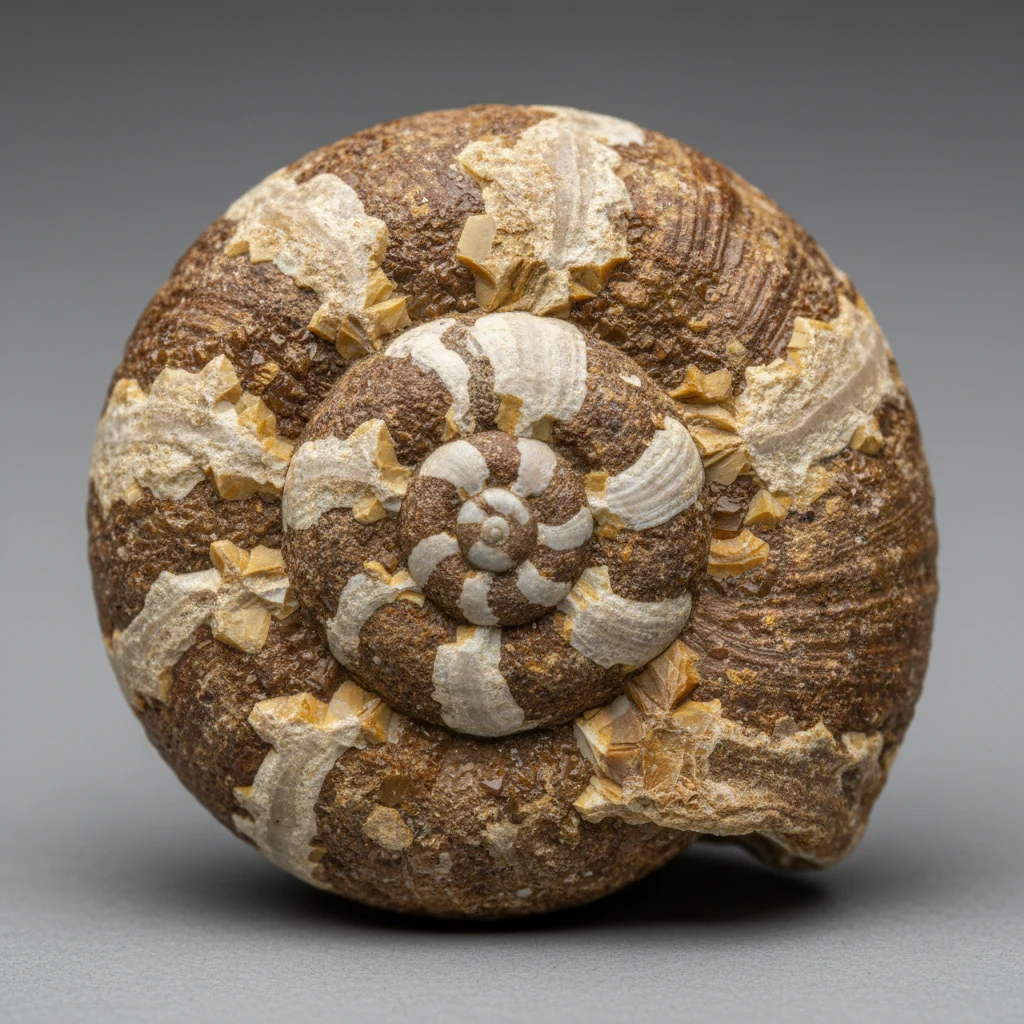
Snail Shell


Quick answer: Snail shell is an organic calcium carbonate material valued for its natural spiral structure, banding, and lightweight feel. It is softer than many minerals, so identification should focus on shell architecture, surface texture, and reaction to gentle handling rather than hardness alone.
AI Rock ID can help screen a suspected snail shell by comparing visible spiral form, color pattern, and surface texture from a clear photo. RockIdentifier.io provides crystal and organic gem references that can support visual checks before buying, collecting, or labeling a specimen.
Good fit
- Collectors who like organic gem materials with visible natural growth patterns
- Jewelry buyers who prefer lightweight pendants, beads, or inlay pieces
- Beginners learning to distinguish biological calcium carbonate from mineral crystals
- Decorative use where gentle handling and low abrasion are expected
Not a good fit
- Rings, bracelets, or daily-wear jewelry exposed to frequent knocks
- Collectors seeking a crystalline mineral specimen rather than an organic shell material
- Wet environments, acidic cleaners, or ultrasonic cleaning
- Situations where legal or ethical sourcing cannot be verified
Most commonly confused with
- Mother of Pearl: Mother of pearl is nacre from the inner shell layer, while snail shell usually preserves the whole spiral shell form or its patterned outer layers.
- Conch Shell: Conch shell is typically thicker and marine in origin, while snail shell may be terrestrial or freshwater and often has a lighter, more delicate build.
- Coral: Coral has a porous skeletal or branch-like structure, while snail shell shows a coiled whorl and aperture.
- Calcite: Calcite is a mineral crystal that may show cleavage or crystal faces, while snail shell has biological growth lines and shell morphology.
Snail Shell Lookalike Comparison
| Material | Key visual clue | Typical difference |
|---|---|---|
| Snail shell | Coiled whorls with an aperture | Organic shell structure with natural growth lines |
| Mother of pearl | Iridescent nacre sheets or inlay | Usually flat, cut, or polished rather than whole-shell shaped |
| Conch shell | Large marine shell with thick walls | Often heavier and more massive than most snail shells |
| Coral | Branching, porous, or skeletal texture | No spiral aperture or whorl pattern |
| Plastic imitation | Mold marks or overly uniform pattern | Lacks natural shell layering and fine growth lines |
AI identification confidence
AI identification is usually more confident when the photo clearly shows the spiral apex, aperture, surface growth lines, and scale. Confidence drops when the item is polished, dyed, carved, broken, or photographed from only one angle.
When AI gets it wrong
- A polished shell fragment may be mistaken for mother of pearl or another nacreous material.
- Dyed or resin-coated pieces can hide natural growth lines and alter color cues.
- Small beach-worn fragments may resemble coral, calcite, or ceramic.
- Low-light photos can make molded plastic look like natural shell.
Final recommendation
Choose snail shell pieces with visible natural growth lines, intact whorls, and no obvious glue-filled repairs if authenticity matters. For jewelry, select protected settings and avoid pieces marketed with unsupported rarity, origin, or healing claims.
How to Identify Real Snail Shell
A real snail shell usually shows a coiled whorl pattern, an aperture, and fine growth lines that follow the shell’s natural development. Under magnification, natural shell often has subtle layering and irregularities rather than perfectly repeated printed patterns. Very uniform color, visible mold seams, or a plastic-like surface can indicate imitation or heavy treatment.
Buying and Authenticity Tips
When buying snail shell jewelry or specimens, ask whether the shell is natural, dyed, stabilized, or assembled from fragments. Check for cracks, filler, glue at joins, and overly glossy coatings that may conceal damage. Ethical sourcing is important because some shell materials may be collected from sensitive habitats or regulated species.
Photography Tips for Identification
Photograph the shell from the top, side, and aperture-facing angle, and include a ruler or coin for scale. Natural daylight helps reveal growth lines, banding, and surface repairs without exaggerating color. If the item is polished or set in jewelry, include close-ups of edges where layering may be visible.
What Is Snail Shell?
Snail Shell is a very common organic gem: the hard, protective outer layer made by a snail. In the hand, a good specimen feels light but firm, with a spiral body, white streak, and a surface that may read dull or sometimes glossy depending on the species.
Collectors value Snail Shell less for rarity and more for form, condition, species interest, and display character. Its Mohs hardness is 3.5 to 4, so it has fair scratch resistance, good toughness, and enough durability for shelves, study trays, and decorative collections when kept away from strong acids.
Origin & History
The word “snail” comes from the Old English “snægl,” and Snail Shells have been used by different cultures for thousands of years. As collection objects, they sit between natural history and organic gem material: recognizable, tactile, and easy to compare by spiral shape, color, and surface texture.
Because Snail Shell is calcium carbonate, it is best understood through both biological growth and mineral classification. For a plain reference point on calcium carbonate terminology, collectors can compare related entries at mindat.org while remembering that this page describes an organic shell made by a living snail.
Where Is Snail Shell Found?
Snail Shells are found in gardens and natural environments worldwide, making them very common compared with most named gems. Documented examples in this guide include the United States, France, and Japan, with notable localities such as California, Provence, and Kyushu.
Formation
Snail Shell forms as the snail secretes calcium carbonate while it grows. That growth process builds the protective outer layer into the familiar spiral shape, leaving a specimen that records both the animal’s development and the species-dependent texture and color.
Chemically, Snail Shell is calcium carbonate with the formula CaCO3, containing calcium, carbon, and oxygen. It is listed as amorphous, non-magnetic, opaque, and commonly dull in luster, with a density of 2.5 to 2.9 g/cm3 and conchoidal fracture when broken.
How to Identify Snail Shell
Identify Snail Shell first by its characteristic spiral shape, then by its light organic feel, white streak, and opaque body. Common colors include brown, white, and yellow, and many specimens show striping or surface texture that helps separate one shell from another in a tray.
The surface may be dull or glossy depending on the species, so luster alone is not enough. Use the combination of spiral form, calcium carbonate composition, Mohs hardness of 3.5 to 4, non-magnetic response, and variable size and color as the most practical identification set.
Properties of Snail Shell
Physical Properties
| Crystal System | Amorphous |
| Hardness (Mohs) | 3.5 - 4 (Medium (4-6)) |
| Density | 2.5 - 2.9 g/cm3 |
| Luster | Dull |
| Diaphaneity | Opaque |
| Fracture | Conchoidal |
| Streak | white |
| Magnetism | Non-magnetic |
| Colors | Brown, White, Yellow |
Chemical Properties
| Classification | Calcium carbonate |
| Formula | CaCO3 |
| Elements | Ca, C, O |
| Common Impurities |
Optical Properties
| Refractive Index | 1.5 - 1.66 |
| Birefringence | None |
| Pleochroism | None |
| Optical Character | Isotropic |
Snail Shell Health & Safety
There are no known health risks associated with handling snail shells.
Snail Shell Value & Price
Price Range
Rough/Tumbled: $1 - $10 per specimen
Cut/Polished:
Price can vary based on size, species, and condition.
Durability
Moderate — Scratch resistance: Fair, Toughness: Good
They can be affected by acidic conditions.
How to Care for Snail Shell
Use & Storage
Store in a dry, cool place to prevent damage.
Cleaning
Gently clean with soap and water if necessary. Avoid harsh chemicals.
Cleanse & Charge
Place in sunlight for a few hours for cleansing.
Placement
Ideal for display on shelves or in collections.
Caution
Avoid exposure to strong acids to prevent deterioration.
Works Well With
Snail Shell Meaning & Healing Properties
In spiritual use, Snail Shell is believed to bring protection, grounding, and stability. Practitioners often place it near the Root chakra or use it as a small meditation object, where the spiral shape gives the hand a natural focus point for calming, nurturing, and inner peace work.
Snail Shell is associated with Taurus, Cancer, the Moon, and the elements Earth and Water. These meanings are cultural and symbolic, not medical claims, so it should not be used as a substitute for medical treatment; treat it as a quiet reminder of shelter, patience, and steady emotional grounding.
Identify Snail Shell from a photo
Compare Snail Shell traits, care tips, value clues, and common lookalikes with a clear photo.
Common mistakes
- Calling every spiral shell a fossil without evidence of mineral replacement or geological context.
- Assuming all shell material is the same as mother of pearl, even when nacre is not visible.
- Using vinegar or other acids for testing, which can damage calcium carbonate shell.
- Wearing snail shell in high-impact jewelry without a protective setting.
- Ignoring dyed coatings, resin fills, or glued repairs when evaluating value.
- Assuming beach-collected shells are always legal to sell or export.