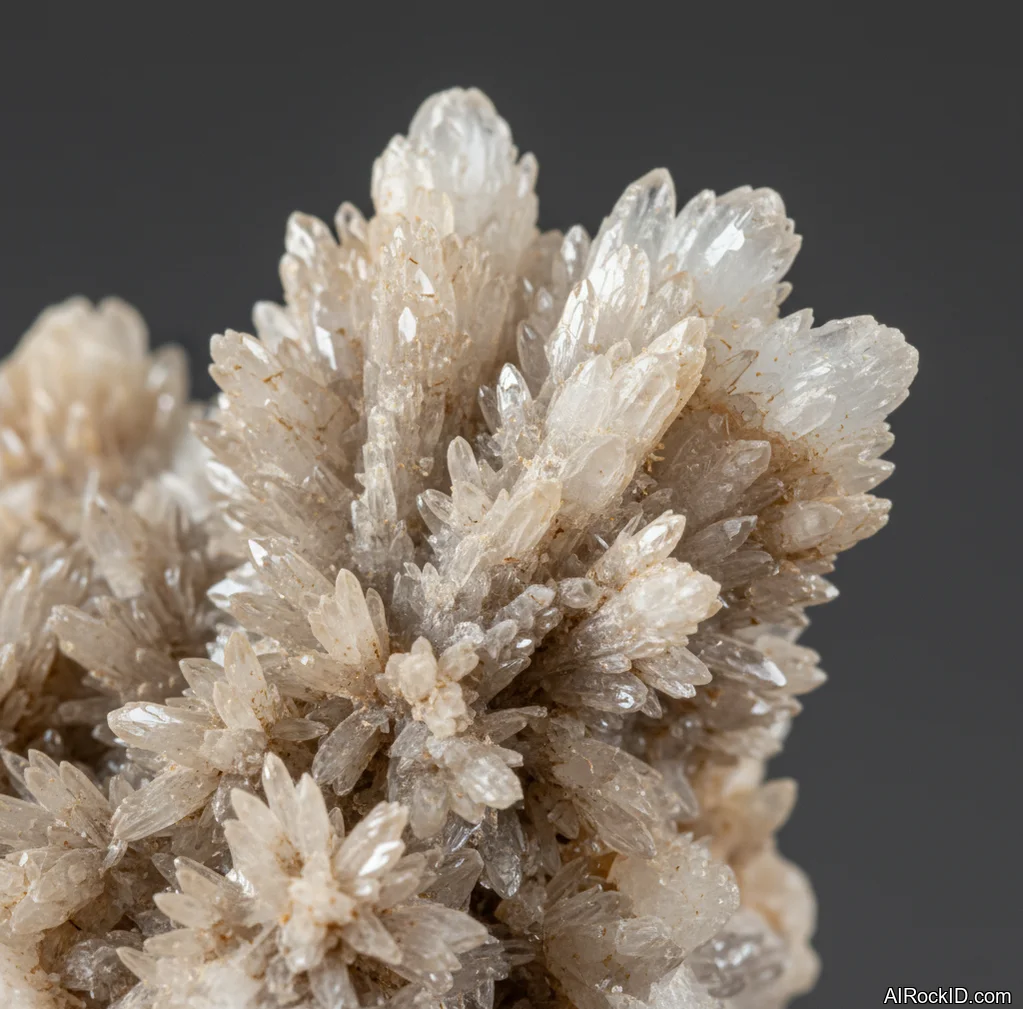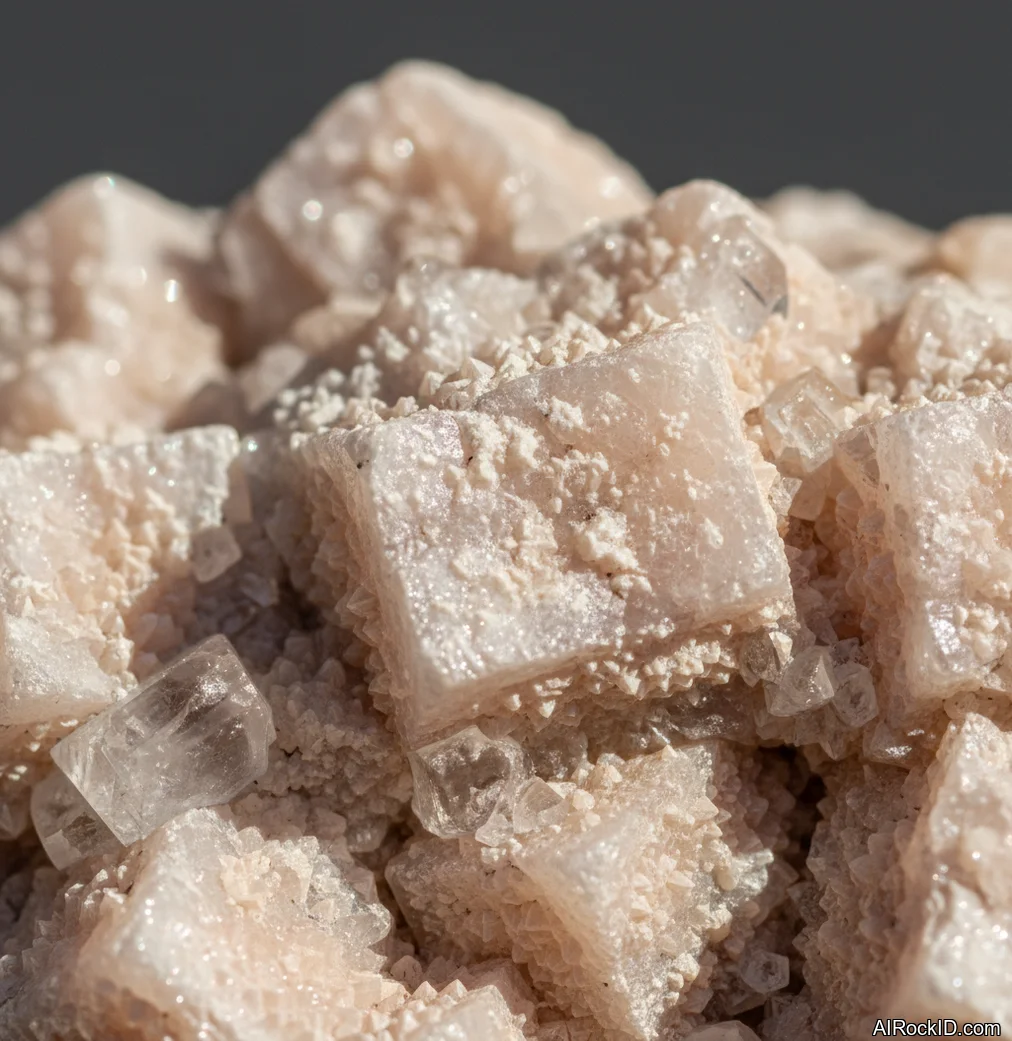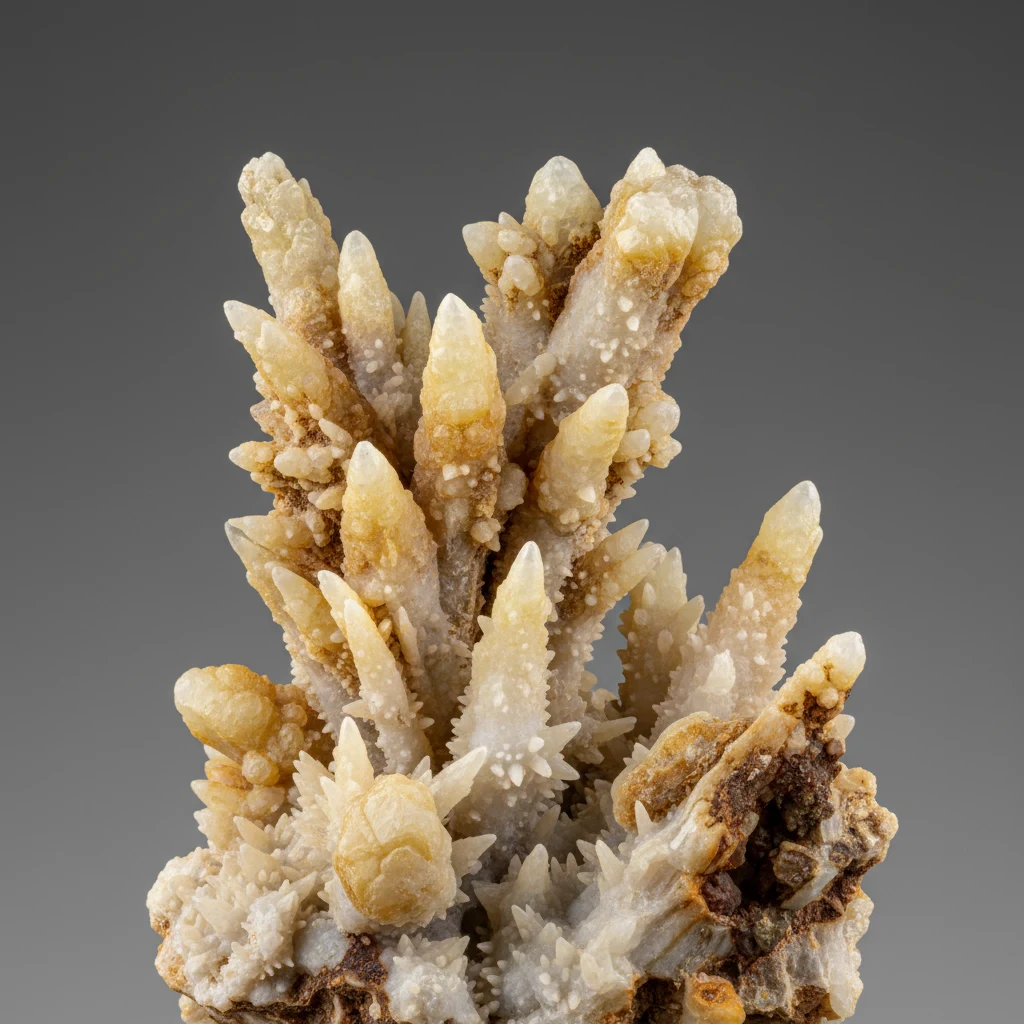
Calcite (specifically, stalactitic calcite)


Quick answer: Stalactitic calcite is a tubular or icicle-like form of calcite that commonly forms from mineral-rich dripping water in caves and cavities. It is best recognized by its layered growth, relatively soft Mohs hardness of 3, and reaction with dilute acid.
AI Rock ID can help screen stalactitic calcite from a clear photo by comparing its shape, color, luster, and surface texture with known mineral patterns. RockIdentifier.io provides crystal and mineral references that can support visual identification, but physical tests such as hardness and acid reaction are still useful for confirmation.
Good fit
- Collectors who like natural cave-formed or dripstone textures
- Beginners learning to identify calcite habits and carbonate minerals
- Display specimens kept away from abrasion, acids, and moisture damage
- People comparing white, cream, yellow, or brown tubular mineral specimens
Not a good fit
- Jewelry or pocket carry where a soft mineral may scratch easily
- Collections stored near vinegar, acidic cleaners, or other acids
- Buyers who need legally documented cave provenance for every specimen
- Outdoor display where humidity, dirt, or impact can damage delicate forms
Most commonly confused with
- Aragonite: Aragonite is also calcium carbonate but is usually slightly harder and may show needle-like or radiating forms rather than calcite cleavage.
- Selenite: Selenite is softer, can be scratched with a fingernail, and does not fizz with dilute acid like calcite.
- Quartz: Quartz is much harder at Mohs 7 and will not effervesce with dilute acid.
- Travertine: Travertine is a rock composed mainly of calcium carbonate and may look banded or porous, but it is not a single calcite crystal habit.
Stalactitic Calcite vs. Common Lookalikes
| Specimen | Hardness | Key ID Clue | Acid Reaction |
|---|---|---|---|
| Stalactitic calcite | Mohs 3 | Tubular dripstone form; often banded or layered | Fizzes with dilute acid |
| Aragonite | Mohs 3.5-4 | Often radiating, fibrous, or needle-like | Fizzes with dilute acid |
| Selenite | Mohs 2 | Very soft; pearly to silky gypsum surface | No typical fizz |
| Quartz | Mohs 7 | Scratches glass; no calcite cleavage | No fizz |
| Chalcedony | Mohs 6.5-7 | Waxy luster; tough microcrystalline texture | No fizz |
AI identification confidence
AI identification confidence is usually moderate for stalactitic calcite when the specimen shows clear tubular growth, layered color, and a vitreous to pearly surface. Confidence drops when photos lack scale, show only broken interiors, or include polished pieces that hide natural dripstone structure.
When AI gets it wrong
- A photo shows only a white or cream fragment without the tubular outer form.
- The specimen is polished, coated, or dyed, making luster and texture less reliable.
- The sample is actually aragonite or another carbonate that also reacts with acid.
- Lighting makes gypsum, calcite, and pale quartz look similarly translucent.
Final recommendation
Choose stalactitic calcite when you want a natural-looking carbonate specimen with visible dripstone growth rather than a hard or jewelry-grade mineral. For buying, prioritize clear photos of the form, size, any broken surfaces, and the stated source or collection history.
How to Check Authenticity When Buying Stalactitic Calcite
Authentic stalactitic calcite commonly shows concentric or layered growth around a central tube or drip path. Ask for close-up photos of broken ends, the outer surface, and the base, because molded resin, coated fragments, or unrelated carbonate pieces may be sold with vague cave-style descriptions. A seller should be able to state whether the specimen is natural, repaired, stabilized, or mounted.
Ethical and Legal Sourcing Notes
Cave formations can be protected by local laws, park rules, or conservation policies, and removing active stalactites from caves can damage slow-forming geological features. Older collection pieces and specimens from legal quarry, mine, or land-clearing contexts should be described with clear provenance when possible. Buyers should avoid pieces advertised as freshly removed from protected caves.
Simple Field Checks for Stalactitic Calcite
A steel knife or copper coin can help test relative softness, because calcite is easy to scratch compared with quartz. A tiny drop of dilute acid on an inconspicuous spot should produce fizzing, but this test can mark the specimen and should not be used on valuable or delicate pieces. Rinse and dry the test area promptly if an acid test is performed.
What Is Calcite (specifically, stalactitic calcite)?
Stalactitic calcite is a cave-formed variety of calcite recognized by its elongated, tubular dripstone shape. In hand, a specimen often reads as white, yellow, or brown, with a vitreous shine and transparent to translucent edges where the calcite is thinner.
Mineralogically, it is calcite: a carbonate mineral with the formula CaCO3, trigonal crystal system, white streak, and Mohs hardness of 3. It is common rather than rare, but well-shaped pieces are still appealing because each tube records dripping water, growth direction, and cave conditions in a very visible way.
Origin & History
The name calcite comes from the Latin calx, meaning lime, and calcite has been known since antiquity. Stalactitic calcite is the cave expression of that familiar mineral: calcium carbonate deposited drop by drop into hanging, cylindrical forms.
For collectors, its history is not only linguistic but tactile. A stalactitic piece looks grown rather than broken, with a directional, drip-fed habit that separates it from many blocky calcite specimens. Reference: mindat.org.
Where Is Calcite (specifically, stalactitic calcite) Found?
Stalactitic calcite is commonly found in limestone caves worldwide. Documented countries in the provided data include the USA, Mexico, and Italy, with notable localities such as Carlsbad Caverns in New Mexico, the Cave of the Crystals in Chihuahua, and Grotta Azzurra on Capri.
Formation
Stalactitic calcite forms by precipitation of calcium carbonate from dripping water in caves. As water moves through a limestone cave environment, calcite is deposited in an elongated, cylindrical habit, building the recognizable dripstone form over time.
That growth process is why specimens can feel architectural: the shape is the record. The chemistry remains CaCO3, while common impurities such as iron and manganese may be present and can accompany the white, yellow, or brown color range noted for this material.
How to Identify Calcite (specifically, stalactitic calcite)
Identify stalactitic calcite first by form: look for elongated, cylindrical or tubular shapes typical of cave dripstone. Then check the mineral clues—vitreous luster, white streak, transparent to translucent diaphaneity, and colors in the white, yellow, or brown range.
Its Mohs hardness is 3, so handle testing carefully and avoid damaging the specimen. The provided identification guidance notes testing hardness against a glass surface, along with observing the stalactitic shape. Calcite is non-magnetic, has conchoidal fracture, density of 2.71 g/cm3, and belongs to the trigonal crystal system.
Properties of Calcite (specifically, stalactitic calcite)
Physical Properties
| Crystal System | Trigonal |
| Hardness (Mohs) | 3 (Soft (2-4)) |
| Density | 2.71 g/cm3 |
| Luster | Vitreous |
| Diaphaneity | Transparent to translucent |
| Fracture | Conchoidal |
| Streak | White |
| Magnetism | Non-magnetic |
| Colors | White, Yellow, Brown |
Chemical Properties
| Classification | Carbonate |
| Formula | CaCO3 |
| Elements | Ca, C, O |
| Common Impurities | Fe, Mn |
Optical Properties
| Refractive Index | 1.658 - 1.686 |
| Birefringence | 0.172 |
| Pleochroism | None |
| Optical Character | Uniaxial |
Calcite (specifically, stalactitic calcite) Health & Safety
Calcite poses no significant health risks when handled properly.
Calcite (specifically, stalactitic calcite) Value & Price
Price Range
Rough/Tumbled: $10 - $50 per specimen
Cut/Polished:
Price is affected by size, color, and uniqueness of the stalactite.
Durability
Moderate — Scratch resistance: Fair, Toughness: Fair
It can be sensitive to acids and sudden temperature changes.
How to Care for Calcite (specifically, stalactitic calcite)
Use & Storage
Store in a dry place away from direct sunlight.
Cleaning
Clean with a soft, damp cloth. Avoid harsh chemicals.
Cleanse & Charge
Place in sunlight or moonlight for cleansing.
Placement
Can be placed in living spaces to enhance energy.
Caution
Avoid exposure to acidic substances.
Works Well With
Calcite (specifically, stalactitic calcite) Meaning & Healing Properties
In crystal-healing use, stalactitic calcite is believed to support emotional balance, clarity, healing, grounding, meditation, trust, transformation, inner peace, joy, insight, and courage. These meanings are cultural and spiritual associations, not a substitute for medical treatment.
It is associated with the Heart and Crown chakras, the zodiac signs Cancer and Capricorn, the planets Venus and Earth, and the elements Earth and Water. For care, store it dry and away from direct sunlight, clean it with a soft damp cloth, avoid harsh chemicals and acidic substances, and cleanse it in sunlight or moonlight.
Identify Calcite (specifically, stalactitic calcite) from a photo
Compare Calcite (specifically, stalactitic calcite) traits, care tips, value clues, and common lookalikes with a clear photo.
Common mistakes
- Assuming every cave-like white tube is calcite without checking hardness or acid reaction.
- Confusing stalactitic calcite with aragonite because both are calcium carbonate and can fizz with acid.
- Cleaning calcite with vinegar or acidic descalers, which can etch or dull the surface.
- Buying cave specimens without asking whether removal was legal or ethically sourced.
- Using glass-scratch tests too aggressively on fragile, hollow, or thin-walled pieces.
- Mistaking brown iron staining for dirt that should always be removed.