Travertine


Quick answer: Travertine is best recognized by its cream, tan, or brown carbonate layers, porous holes, and reaction with dilute acid. It is a soft limestone variety, so it can resemble marble or onyx but is usually more porous and less glassy.
AI Rock ID can help screen a travertine sample by checking visible texture, color banding, pores, and carbonate-like features from a photo. RockIdentifier.io can support visual identification, but acid reaction, hardness, and context are still useful for separating travertine from polished marble, calcite onyx, or concrete-like materials.
Good fit
- Collectors comparing porous carbonate rocks and decorative stone samples
- People identifying cream, tan, or banded stone with small holes
- Homeowners checking whether a tile or countertop may be travertine
- Beginners learning to distinguish limestone, marble, and calcite-rich stones
Not a good fit
- Projects requiring high scratch resistance or acid resistance
- Situations where a sealed, nonporous stone is needed without maintenance
- Identification based only on color, since many carbonate stones are beige or banded
Most commonly confused with
- Marble: Marble is metamorphosed limestone and is usually denser, more crystalline, and less porous than travertine.
- Onyx: Calcite onyx can show strong translucent banding, while travertine is typically more porous and less translucent.
- Limestone: Travertine is a type of limestone, but ordinary limestone may lack the open holes and spring-deposit banding typical of travertine.
- Dolomite: Dolomite is harder and reacts more weakly with cold dilute acid unless powdered, unlike calcite-rich travertine.
Travertine Lookalike Comparison
| Stone | Key visual clue | Simple test difference | Typical issue |
|---|---|---|---|
| Travertine | Porous holes with cream-tan banding | Fizzes with dilute acid; Mohs about 3 | Scratches and etches easily |
| Marble | Crystalline or veined surface | Fizzes with acid but usually has fewer open pores | Can be mistaken for filled travertine |
| Calcite onyx | Translucent, strongly banded calcite | Fizzes with acid and may transmit light at thin edges | Trade names may simply say “onyx” |
| Dolomite | Pale carbonate rock, often more granular | Weaker acid reaction on fresh surface | May be mislabeled as limestone |
| Sandstone | Visible sand grains or gritty texture | Little or no acid fizz unless carbonate-cemented | Tan color can resemble unpolished travertine |
AI identification confidence
AI identification confidence for travertine is usually moderate when the photo clearly shows porous holes, layered cream-tan color, and a natural broken edge. Confidence drops when the stone is polished, filled, sealed, or photographed as an installed tile without close-up texture.
When AI gets it wrong
- Filled travertine can look like marble because pores are hidden by resin or cement.
- Polished calcite onyx may be labeled as travertine when banding is the only visible clue.
- Concrete, ceramic tile, or printed stone patterns can imitate travertine in photos.
- Poor lighting can obscure pores and make beige limestone, dolomite, and travertine look similar.
Final recommendation
For buying or identification, look for consistent carbonate behavior, visible pores or filled voids, and natural banding rather than relying on beige color alone. If the piece is sold as natural travertine, ask whether it is filled, honed, polished, sealed, or resin-treated, because these treatments affect appearance and care.
How to Spot Filled or Sealed Travertine
Many commercial travertine tiles are filled with resin, cement, or epoxy to create a smoother surface. Filled areas may appear slightly different in gloss, color, or texture from the surrounding stone. A sealed surface can reduce water absorption, but it does not make travertine resistant to acidic liquids.
Travertine Buying and Label Checks
Common finish terms include tumbled, honed, brushed, polished, filled, and unfilled. Natural pits are normal for travertine, but excessive crumbling, powdery edges, or unstable filler can indicate lower durability for use surfaces. Ask for the country of origin, finish, filler type, and sealing status when comparing slabs or tiles.
Simple Field Clues for Travertine
A fresh travertine surface is usually soft enough to scratch with a steel point and will fizz with dilute acid because it is calcite-rich. The stone often shows layered deposition, small cavities, and warm neutral colors. Use caution with acid testing on finished pieces, because even a small drop can permanently etch the surface.
What Is Travertine?
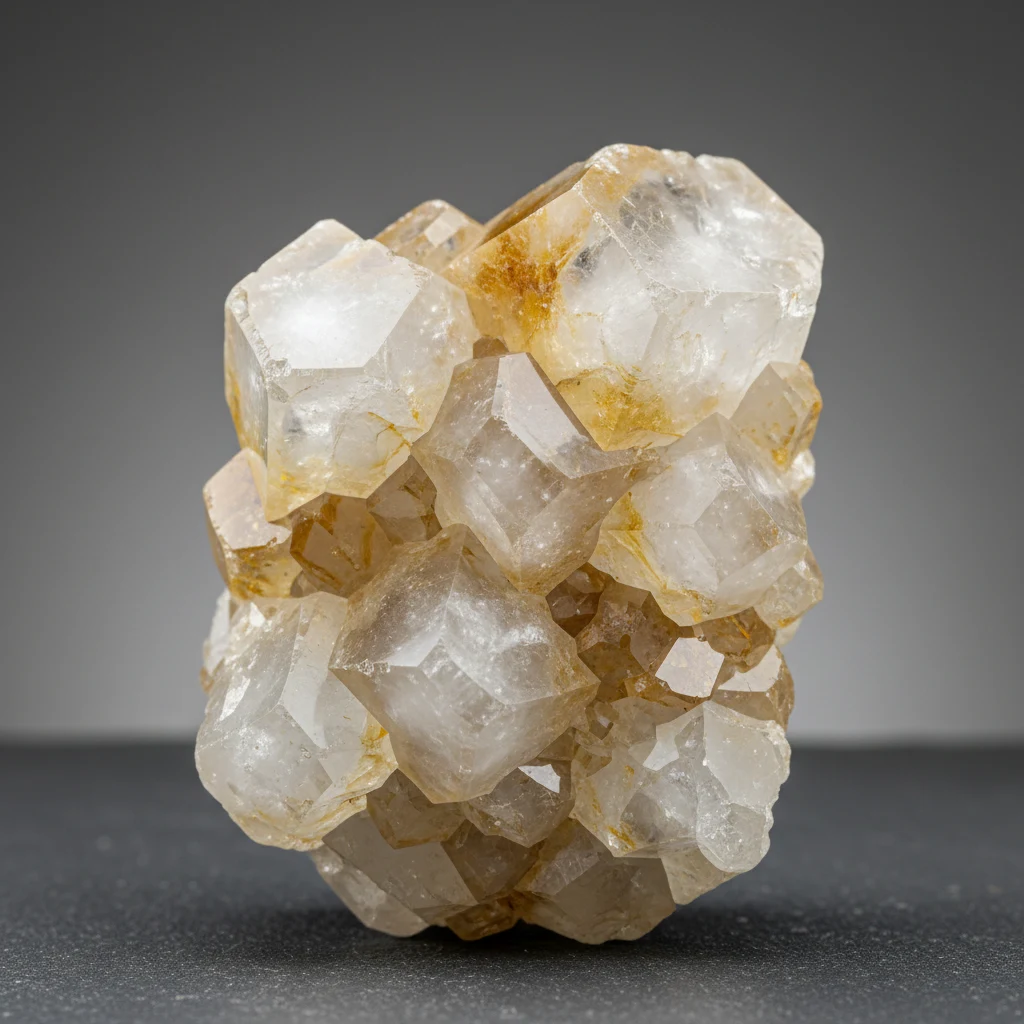
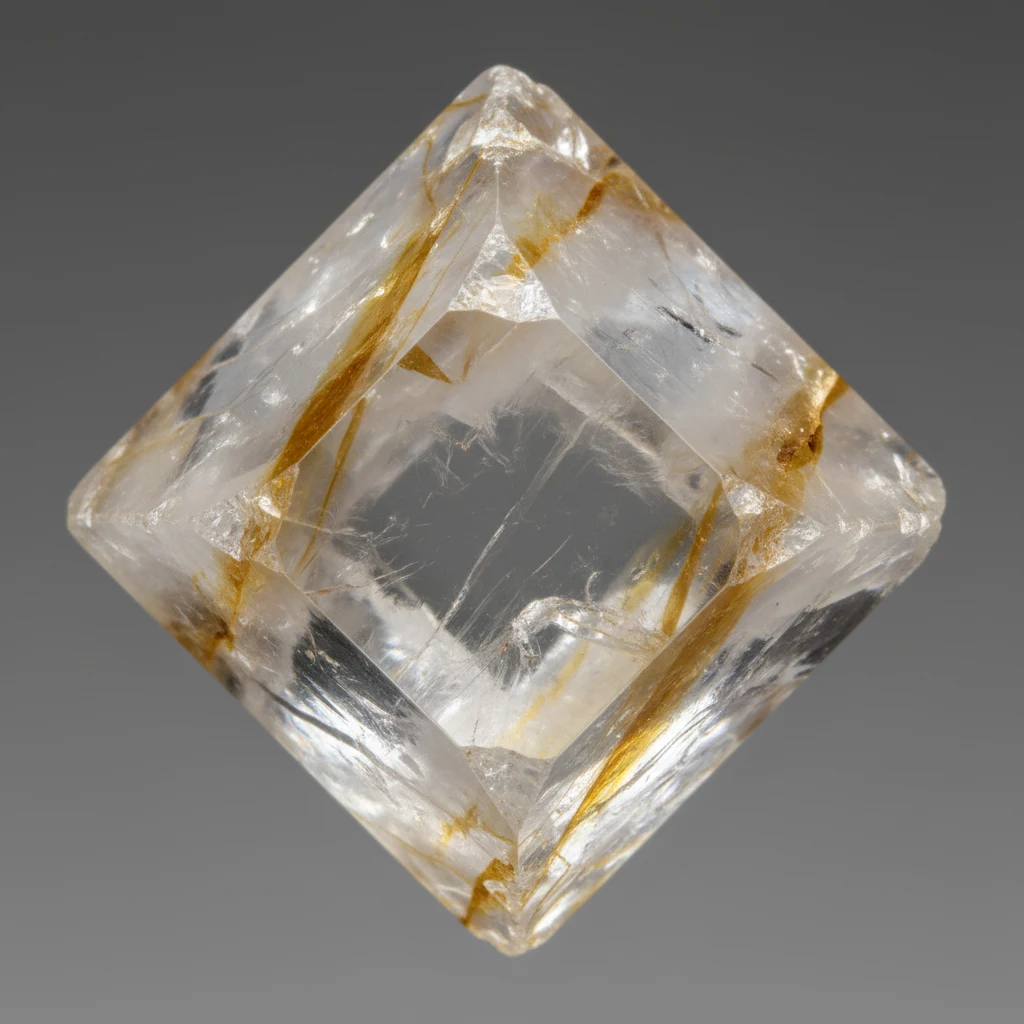
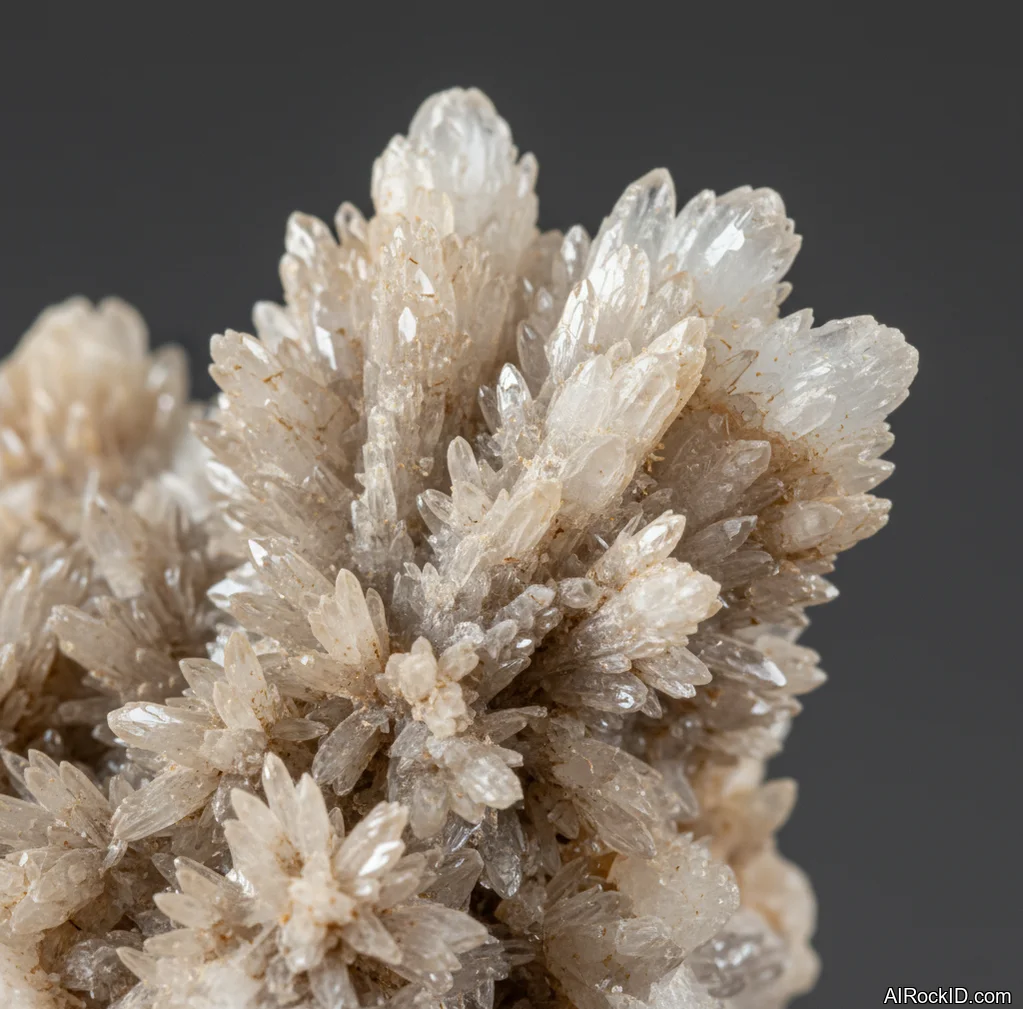
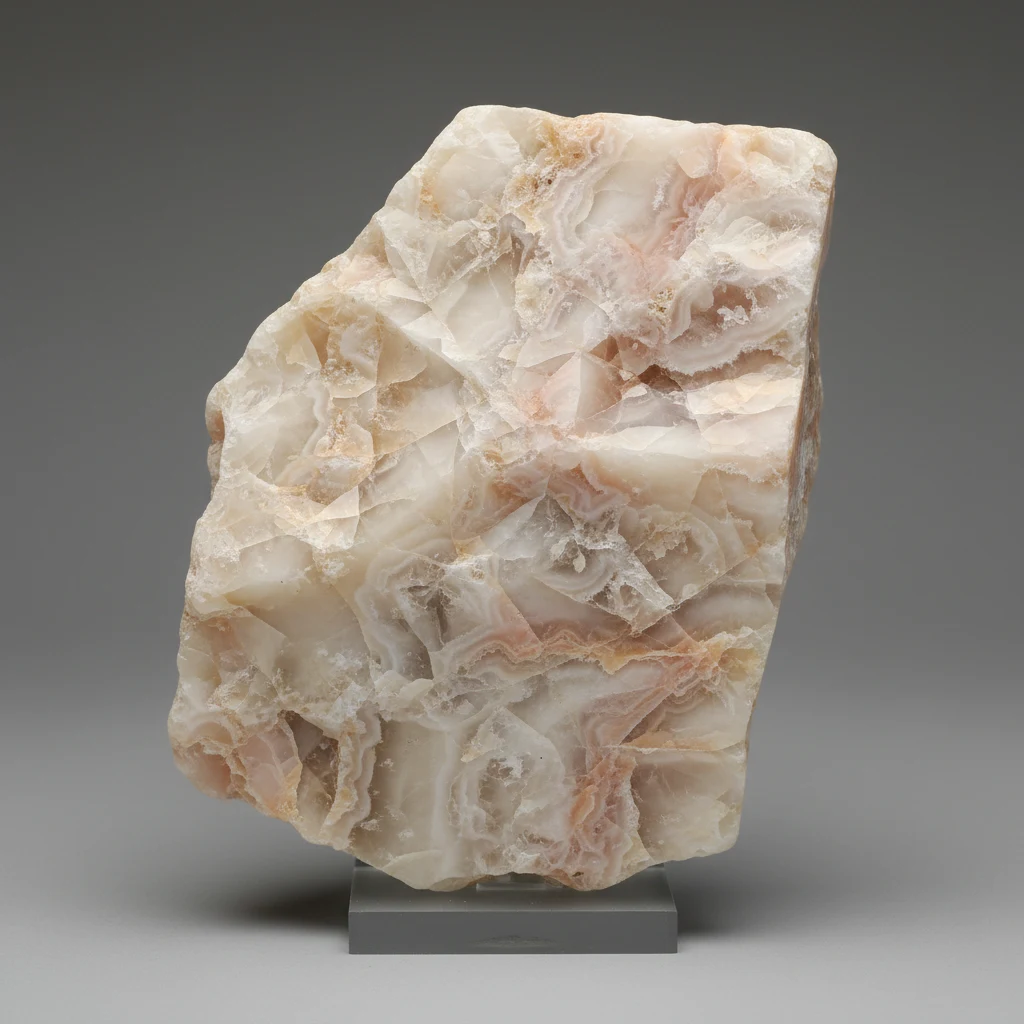
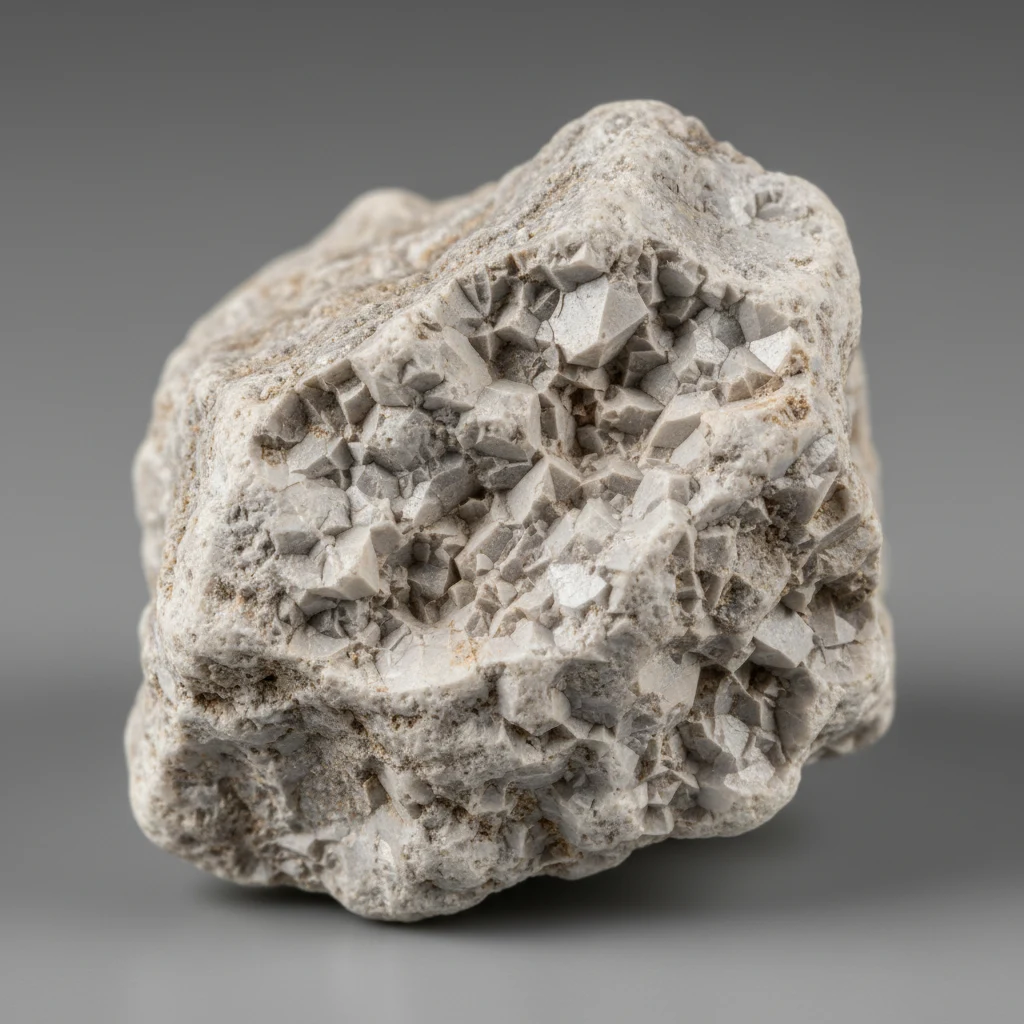
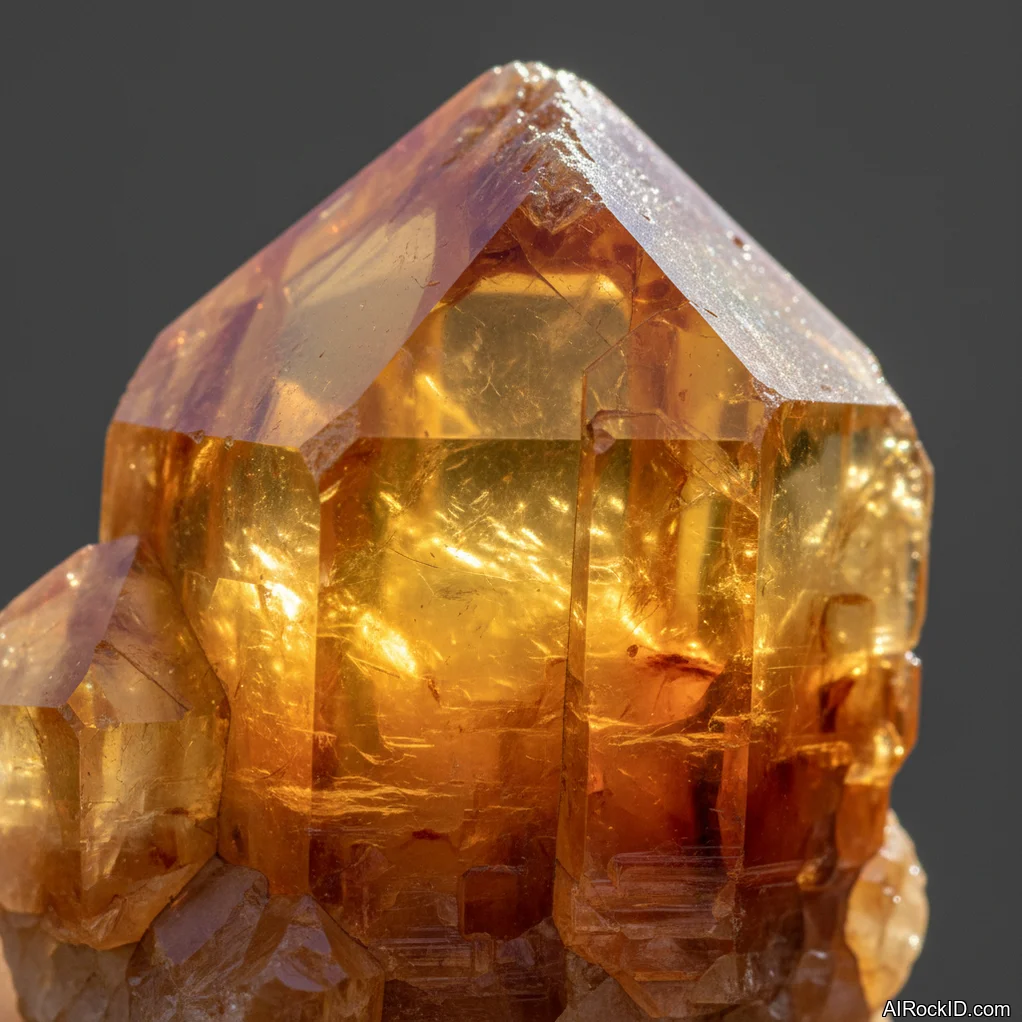
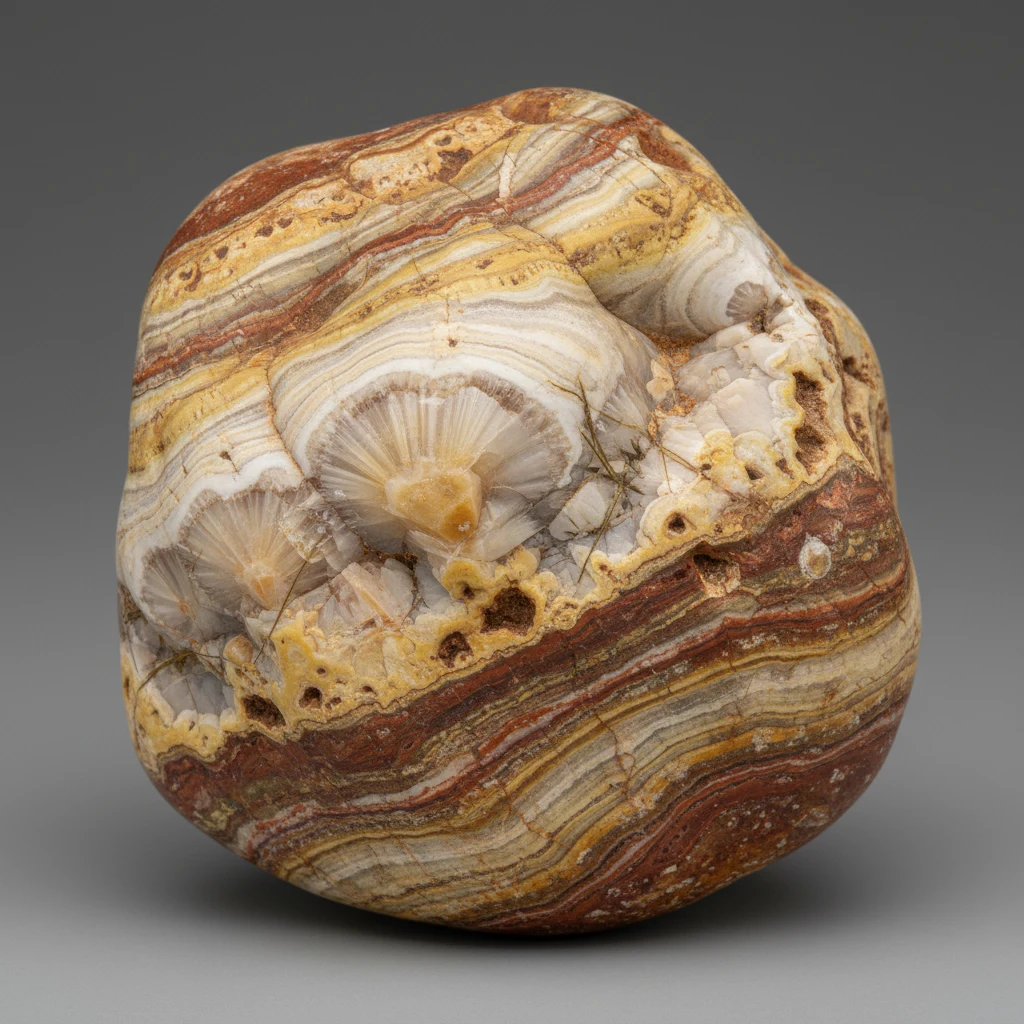
Travertine is a porous, banded limestone made chiefly of calcium carbonate, usually calcite with minor aragonite. In the hand, it often feels lighter and more open than dense marble, with small tubes, holes, and vugs breaking the surface. Typical colors are cream, ivory, beige, tan, honey, gray, rusty brown, orange, and red-brown, often arranged in wavy or parallel bands.
Collectors and stone workers recognize travertine by its soft calcite character: it is about Mohs 3, gives a white streak, and fizzes with dilute hydrochloric acid on a fresh surface. Polished pieces can show a soft satin to subvitreous sheen, while broken faces are usually dull, earthy, granular, or slightly waxy.
Origin & History
Travertine gets its name from Italian travertino, derived from Latin lapis tiburtinus, meaning stone of Tibur, the ancient name of Tivoli near Rome, Italy. That history still feels present in the stone: pale cream blocks from the Roman building tradition are closely tied to temples, aqueducts, pavements, and the Colosseum.
Today, travertine remains an important decorative and architectural stone for tiles, slabs, wall cladding, monuments, and landscaping. For locality context and specimen cross-checking, mindat.org is a useful plain-text reference for travertine occurrence records, especially when comparing named spring and quarry areas.
Where Is Travertine Found?
Travertine is common worldwide wherever carbonate-rich groundwater, hot springs, cold springs, cave waters, or seeps precipitate calcium carbonate. Well-known producing countries include Italy, Turkey, Iran, the United States, Mexico, Peru, China, Spain, Germany, and Hungary.
Formation
Travertine forms by chemical precipitation of calcium carbonate from groundwater or spring water. Water dissolves limestone underground and carries calcium and bicarbonate; when that water reaches the surface, enters a cave, warms, cools, evaporates, or loses carbon dioxide, calcite and sometimes aragonite are deposited in layers.
The stone’s texture records that moving water. Plants, algae, microbes, gas bubbles, and flowing channels can leave laminated bands, porous tubes, cavities, crusts, and open vugs. That is why a fresh travertine specimen often looks like a frozen spring deposit rather than a compact, evenly crystalline rock.
How to Identify Travertine
Identify travertine by looking first for cream, beige, tan, honey, gray, yellowish brown, or rusty banding with visible pores, tubes, and vugs. Iron oxides may add gold, orange, red-brown, or dark streaks, while clay and organic matter can contribute gray or brown bands.
In a field kit, travertine is soft enough to scratch with a steel knife and often with copper if you press with effort, because the main mineral is calcite at Mohs 3. A tiny drop of dilute hydrochloric acid on a fresh, inconspicuous surface should effervesce; vinegar may react more weakly. It is not glassy like quartzite, not granular like sandstone, and usually lacks the fossils seen in many ordinary limestones.
Properties of Travertine
Physical Properties
| Crystal System | Aggregate rock; constituent calcite is trigonal and aragonite is orthorhombic |
| Hardness (Mohs) | 3 on Mohs for calcite-rich material; locally variable with impurities and cementation (Soft) |
| Density | Approximately 2.3-2.7 g/cm³; bulk density may be lower in very porous pieces |
| Luster | Dull, earthy, waxy, or subvitreous when polished |
| Diaphaneity | Opaque; thin edges may be slightly translucent |
| Fracture | Uneven, granular, porous, or earthy; may break along laminations |
| Streak | White |
| Magnetism | Non-magnetic |
| Colors | white, cream, beige, tan, yellow, brown, gray, orange, red-brown |
Chemical Properties
| Classification | Carbonate sedimentary rock |
| Formula | Predominantly CaCO3 |
| Elements | Calcium, Carbon, Oxygen |
| Common Impurities | Iron oxides, Magnesium, Clay minerals, Silica, Organic matter, Manganese oxides |
Optical Properties
| Refractive Index | Not normally measured for the rock; calcite component nω 1.658, nε 1.486 |
| Birefringence | High for calcite, about 0.172; not diagnostic in hand specimen |
| Pleochroism | None to not observable in hand specimen |
| Optical Character | Aggregate; calcite is uniaxial negative |
Travertine Health & Safety
Travertine is generally safe to handle and is not considered toxic. The main hazard is dust from cutting, grinding, drilling, or polishing, which can irritate the lungs and eyes and may contain minor silica or other impurities depending on the source.
Travertine Value & Price
Price Range
Rough/Tumbled: Common rough pieces are usually inexpensive, about $1-10 per lb; decorative tiles commonly range from about $3-30 per sq ft, while higher-grade slabs may be much more depending on size, finish, and origin.
Cut/Polished:
Value depends on color consistency, banding, porosity, size, structural soundness, finish, origin, and suitability for cutting into tile or slab. Dense, well-banded, attractive cream or walnut-colored material is more desirable for architectural use, while very crumbly or highly pitted material is less valuable unless wanted for landscaping or aquarium-style decoration.
Durability
Fair — Scratch resistance: Low to moderate; travertine is calcite-rich and scratches more easily than quartz, feldspar, glass, or steel., Toughness: Variable; dense travertine can be serviceable as building stone, but porous or highly vuggy pieces can chip along holes and laminations.
Stable in normal indoor conditions, but it reacts with acids, can etch from vinegar or citrus, and may stain because of its porosity. Outdoor use is common, but freeze-thaw cycles, salts, and acidic rain can damage or pit the surface over time.
How to Care for Travertine
Use & Storage
Store dry and separate from harder stones that may scratch it. For display pieces, padded shelves or boxes help protect porous edges and polished surfaces.
Cleaning
Clean with warm water, a soft brush, and a pH-neutral stone cleaner. Avoid vinegar, lemon juice, acidic bathroom cleaners, and abrasive powders because they etch calcite.
Cleanse & Charge
If used for spiritual or decorative practice, cleanse gently with smoke, sound, or brief rinsing and dry immediately. Avoid saltwater or acidic liquids.
Placement
Suitable for shelves, specimen displays, architectural interiors, garden features, and low-traffic decorative surfaces. Seal tiles or countertops if stain resistance is important.
Caution
Travertine is porous and acid-sensitive. Do not use acid tests on polished or valuable surfaces, and do not soak decorative pieces for long periods if they contain fillers, sealants, or iron staining.
Works Well With
Travertine Meaning & Healing Properties
In modern crystal-healing traditions, travertine is used as a grounding stone associated with patience, stability, calm, earth connection, and steady transformation. These meanings are cultural and spiritual beliefs rather than scientifically verified effects, but the tactile character of the stone suits slow, grounded handling: porous, layered, and visibly shaped by water over time.
Travertine is commonly linked with the Root and Sacral chakras, the zodiac signs Taurus, Capricorn, and Virgo, and the Earth and Water elements. For gentle practice, place it on a shelf, hold it during quiet reflection, or pair it with calcite, aragonite, or alabaster. Cleanse with smoke, sound, or a brief rinse, then dry it; avoid saltwater and acidic liquids.
Identify Travertine from a photo
Compare Travertine traits, care tips, value clues, and common lookalikes with a clear photo.
Common mistakes
- Identifying any beige tile as travertine without checking texture or pores
- Confusing filled travertine with marble because the holes are not visible
- Assuming polished travertine is acid-resistant because it looks glossy
- Using vinegar or lemon juice as a cleaner and causing etching
- Calling calcite onyx and travertine the same stone because both can be banded
- Ignoring filler condition when evaluating older travertine floors or countertops