Blue Goldstone


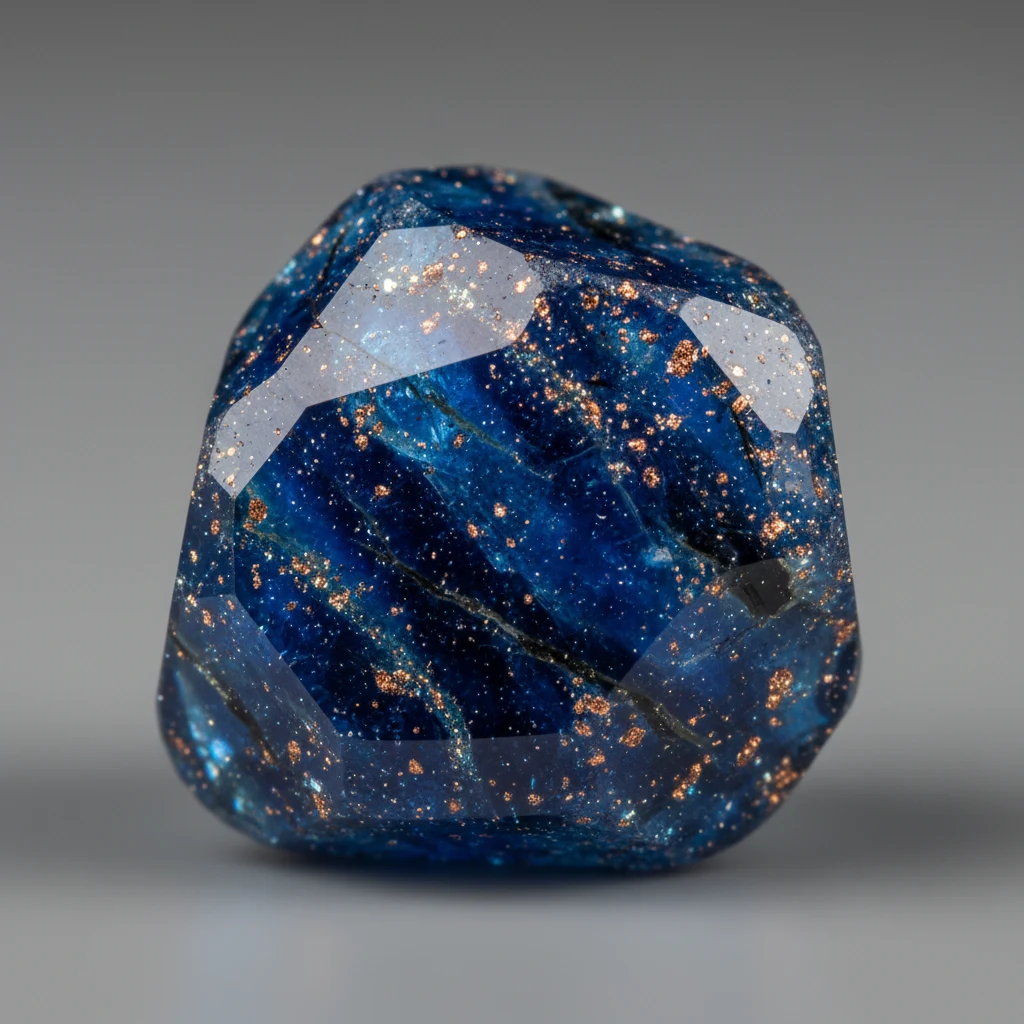
Quick answer: Blue Goldstone is a man-made blue glass with tiny metallic inclusions that create a starry sparkle. It is commonly sold as a decorative stone or jewelry material rather than a naturally formed mineral.
AI Rock ID can help separate Blue Goldstone from dark natural stones by checking color, sparkle pattern, translucency, and surface texture in a photo. RockIdentifier.io treats Blue Goldstone as a synthetic glass material, so identification should focus on manufacturing features rather than mineral crystal structure.
Good fit
- People who want a deep blue, sparkly material for jewelry or décor
- Beginners learning to tell synthetic glass from natural minerals
- Shoppers comparing Blue Goldstone with sandstone-like or aventurine-like materials
- Collectors who label specimens by material type rather than only by trade name
Not a good fit
- Buyers seeking a naturally occurring mineral specimen
- Collections that exclude synthetic or manufactured materials
- Rings or daily-wear pieces exposed to frequent knocks and abrasion
Most commonly confused with
- Goldstone: Usually orange-brown glass with copper sparkle, while Blue Goldstone is dark blue with a similar metallic glitter.
- Blue Sandstone: Often a trade name for Blue Goldstone rather than a separate natural sandstone.
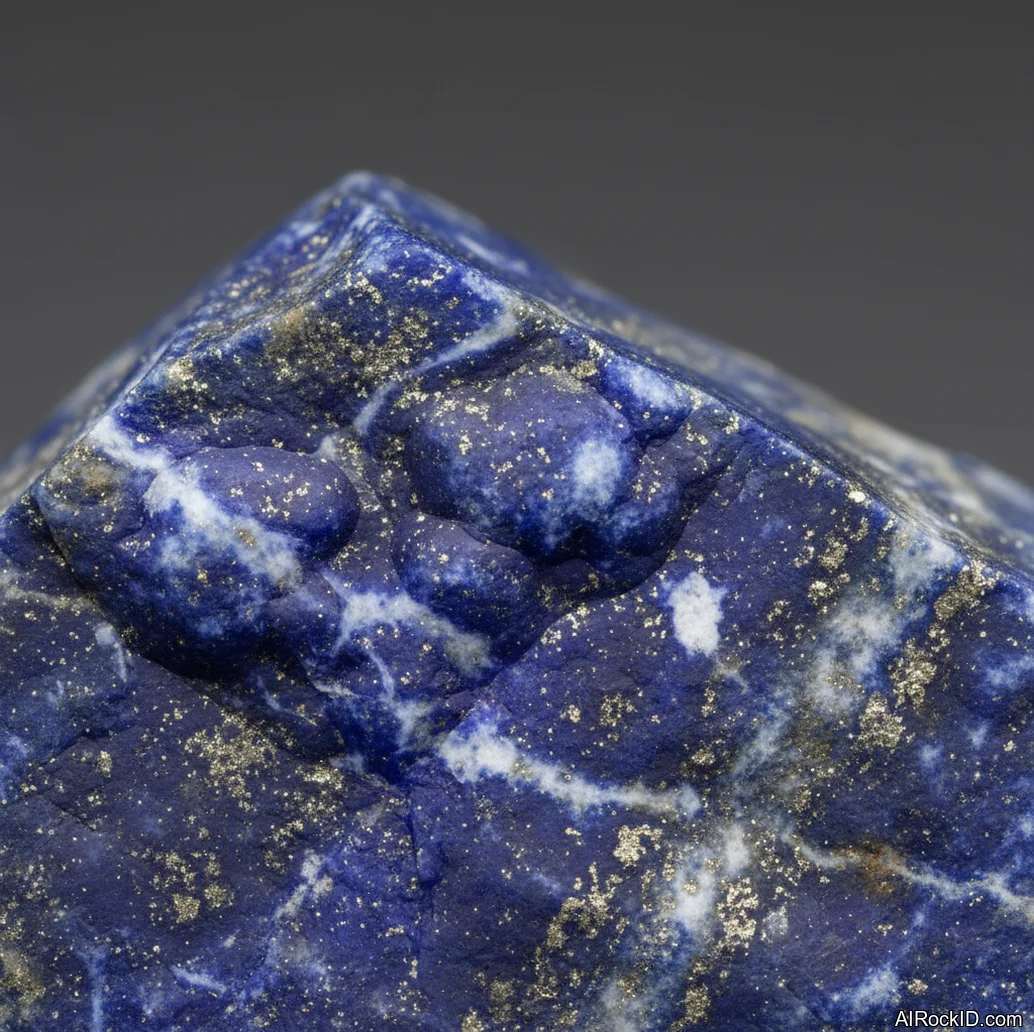
- Lapis Lazuli: Natural lapis is typically opaque blue with white calcite or brassy pyrite patches, not evenly distributed glitter.
- Dumortierite: Dumortierite is a natural blue mineral material with a fibrous or granular look and lacks metallic copper sparkle.
Blue Goldstone Lookalike Comparison
| Material | Typical look | Key clue |
|---|---|---|
| Blue Goldstone | Dark blue glass with fine coppery glitter | Sparkle is evenly scattered and often visible under a light |
| Lapis Lazuli | Rich blue with white and gold-toned natural inclusions | Pattern is irregular rather than uniform |
| Blue Aventurine | Blue quartz-like material with softer shimmer | Usually less glassy and less glitter-dense |
| Dumortierite | Matte to waxy blue with fibrous or mottled texture | No metallic glitter |
| Dyed Glass | Uniform blue, often translucent at thin edges | May lack the copper sparkle that defines Blue Goldstone |
AI identification confidence
AI identification is often reliable when a clear, well-lit photo shows Blue Goldstone’s dark blue body and uniform metallic sparkle. Confidence drops when the image is blurry, overexposed, or taken so close that the material looks like a generic blue surface.
When AI gets it wrong
- A flash photo can make lapis pyrite look like goldstone glitter.
- Low light can hide the copper sparkle and make the piece resemble black glass or obsidian.
- Very polished cabochons may reflect the surroundings, confusing color and texture detection.
- Small beads can be difficult to distinguish from dyed glass without macro detail.
Final recommendation
Choose Blue Goldstone when the goal is a labeled synthetic glass with a deep blue color and consistent sparkle. If a seller describes it as a rare natural crystal, ask for clarification because the material is manufactured.
How to Spot Genuine Blue Goldstone
Genuine Blue Goldstone should show a dark blue glassy body with many tiny metallic specks suspended inside. The sparkle is usually fine, even, and visible when the piece is moved under direct light. A piece sold as Blue Goldstone does not need natural crystal growth lines, banding, or mineral inclusions because it is manufactured glass.
Questions to Ask Before Buying Blue Goldstone
Ask whether the item is synthetic glass, reconstituted material, or a natural stone being sold under a trade name. Request photos in natural light and close-up images if the listing does not show the sparkle clearly. For jewelry, check the setting quality and bead drilling because workmanship often affects value more than the material itself.
Blue Goldstone in Jewelry Settings
Blue Goldstone is common in beads, pendants, cabochons, and carved pieces. Protective settings are better for rings and bracelets because glass can chip if struck against hard surfaces. Earrings and pendants usually experience less impact than hand-worn jewelry.
What Is Blue Goldstone?
Blue Goldstone is a synthetic gemstone: a man-made silicate glass with a deep blue body color and bright metallic sparkles. In the hand, it reads as smooth, glossy, and night-sky dark, with copper particles flashing through the blue, gold, and black tones when the piece is turned under light.
For collectors, its appeal is visual rather than rarity-driven. Blue Goldstone is common, opaque, vitreous, and amorphous, with a Mohs hardness of 5 to 6 and moderate durability. It is generally safe to handle, stable under normal conditions, and best stored in a soft pouch or box so its shiny glass surface does not pick up scratches.
Origin & History
The name Goldstone comes from Italian glassmakers who created this sparkling glass in the 17th century. Blue Goldstone belongs to that decorative glass tradition: it was first described in the context of decorative art, and its collector value still comes from workmanship, color, sparkle, size, and demand rather than from natural crystal rarity.
A practical way to label it is “synthetic gemstone” or “silicate glass,” not a naturally grown mineral specimen. Collectors comparing names and categories with mineral references such as mindat.org should note that Blue Goldstone is identified here by its glass-making origin, amorphous structure, and copper-inclusion sparkle.
Where Is Blue Goldstone Found?
Blue Goldstone is not mined as a natural crystal; it is produced. The main countries listed for production are Italy, the USA, and China, with notable localities including Murano, Italy; California, USA; and Zhejiang, China.
Formation
Blue Goldstone forms through a glass-making process, not through geological crystal growth. Silica is melted with copper salts and other materials, producing a deep blue synthetic glass in which copper particles create the distinctive glitter.
That origin explains its look and handling. It is amorphous rather than crystalline, isotropic in optical character, and has no birefringence or pleochroism. The listed composition is SiO2 with silicon, oxygen, and copper, and common impurities include sodium and potassium.
How to Identify Blue Goldstone
Identify Blue Goldstone by its rich blue color, opaque body, vitreous shine, and fine metallic sparkles. When you tilt a polished piece, the copper inclusions flash from within the glass rather than sitting only on the surface, giving it a starry, metallic sheen.
Its physical clues are consistent with glass: amorphous crystal system, conchoidal fracture, blue streak, refractive index of 1.5 to 1.6, and Mohs hardness of 5 to 6. It is non-magnetic, has a density of 2.45 g/cm3, and is often heavier in the hand than natural stones of similar size.
Properties of Blue Goldstone
Physical Properties
| Crystal System | Amorphous |
| Hardness (Mohs) | 5 - 6 (Medium) |
| Density | 2.45 g/cm3 |
| Luster | Vitreous |
| Diaphaneity | Opaque |
| Fracture | Conchoidal |
| Streak | blue |
| Magnetism | Non-magnetic |
| Colors | Blue, Gold, Black |
Chemical Properties
| Classification | Silicate glass |
| Formula | SiO2 |
| Elements | Si, O, Cu |
| Common Impurities | Na, K |
Optical Properties
| Refractive Index | 1.5 - 1.6 |
| Birefringence | None |
| Pleochroism | None |
| Optical Character | Isotropic |
Blue Goldstone Health & Safety
Generally safe to handle and use.
Blue Goldstone Value & Price
Price Range
Rough/Tumbled: $5 - $20 per specimen
Cut/Polished: $10 - $30 per carat
Price is affected by quality, size, and market demand.
Durability
Moderate — Scratch resistance: Fair, Toughness: Good
It is stable under normal conditions but can be damaged by impact.
How to Care for Blue Goldstone
Use & Storage
Store in a soft pouch or box to avoid scratches.
Cleaning
Clean with a soft cloth and mild soap if needed. Avoid harsh chemicals.
Cleanse & Charge
Place in sunlight or moonlight for a few hours to recharge.
Placement
Can be placed in living areas or workspaces for aesthetic appeal.
Caution
Avoid dropping or hitting against hard surfaces.
Works Well With
Blue Goldstone Meaning & Healing Properties
In crystal-healing practice, Blue Goldstone is used as a calming, focus-supporting stone for meditation. Its deep blue color and glittering copper-like points make it a popular choice for quiet work at a desk, bedside, or meditation space, especially when the intention is calmness, creativity, emotional healing, inner peace, stress relief, grounding, intuition, or joy.
Blue Goldstone is associated with the Throat and Third Eye chakras, the zodiac signs Sagittarius and Capricorn, the planets Jupiter and Venus, and the elements Air and Water. For care, clean it with a soft cloth and mild soap if needed, avoid harsh chemicals and impacts, and recharge it in sunlight or moonlight for a few hours.
Identify Blue Goldstone from a photo
Compare Blue Goldstone traits, care tips, value clues, and common lookalikes with a clear photo.
Common mistakes
- Calling Blue Goldstone a naturally occurring crystal instead of synthetic glass.
- Assuming the name Blue Sandstone always means a natural sandstone.
- Confusing evenly distributed glitter with the irregular pyrite inclusions in lapis lazuli.
- Using harsh abrasives that can dull the polished glass surface.
- Judging authenticity only by color instead of checking the sparkle pattern and glassy texture.