Blue Calcite


Quick answer: Blue calcite is a soft calcium carbonate mineral best recognized by its pale to medium blue color, rhombohedral cleavage, and low Mohs hardness of 3. It can resemble blue aragonite, celestite, dyed calcite, or pale fluorite, so identification should consider hardness, cleavage, weight, and surface texture together.
AI Rock ID can help compare a blue calcite photo against visually similar minerals by analyzing color, habit, luster, and visible surface features. RockIdentifier.io can support a first-pass identification, but physical checks such as hardness and cleavage are still important for confirming blue calcite.
Good fit
- Collectors who want an affordable blue carbonate mineral
- Beginners learning cleavage, hardness, and acid-reaction identification clues
- Display pieces kept away from moisture, acids, and rough handling
- People comparing blue calcite with celestite, fluorite, or blue aragonite
Not a good fit
- Rings, daily-wear jewelry, or items exposed to knocks and abrasion
- Aquariums, fountains, or wet environments where calcite may react or dissolve over time
- Collectors seeking a hard, scratch-resistant blue mineral
- Situations where color treatment must be ruled out without seller disclosure or testing
Most commonly confused with
- Blue Aragonite: Blue aragonite is also calcium carbonate but often shows fibrous, radiating, or botryoidal textures rather than calcite’s rhombohedral cleavage.
- Celestite: Celestite is usually heavier for its size and commonly forms tabular crystals with a more glassy luster.
- Fluorite: Fluorite is harder than calcite, has four-direction octahedral cleavage, and may appear more transparent or saturated.
- Dyed Calcite: Dyed calcite may show concentrated color in cracks, pores, or surface pits instead of an even natural blue tone.
Blue Calcite vs Similar Blue Minerals
| Material | Key ID Clue | Common Difference |
|---|---|---|
| Blue calcite | Mohs 3; strong rhombohedral cleavage | Soft carbonate, often waxy to vitreous |
| Blue aragonite | Fibrous or radiating structure | Same chemistry as calcite but different crystal form |
| Celestite | Higher density and glassy crystals | Feels heavier and often forms tabular crystals |
| Fluorite | Mohs 4; octahedral cleavage | Usually harder and may be more transparent |
| Dyed calcite | Color collects in fractures or pores | Uneven or overly vivid blue may indicate treatment |
AI identification confidence
AI identification of blue calcite is often moderate when photos show color, luster, fracture surfaces, and scale. Confidence is lower for polished pieces, pale blue specimens, and close-up images without hardness, weight, or cleavage information.
When AI gets it wrong
- A polished blue stone lacks visible cleavage or natural crystal texture
- Lighting makes white calcite, fluorite, or celestite appear blue
- The specimen is dyed and the color is not visible in cracks or edges
- The photo does not show scale, weight clues, or multiple angles
Final recommendation
Choose blue calcite when you want a soft, light-blue collector mineral and can protect it from scratches, acids, and moisture. For authenticity, favor sellers who disclose treatments, provide clear daylight photos, and allow inspection of color concentration in cracks or chipped edges.
How to Check Blue Calcite Authenticity
Natural blue calcite usually has a soft, uneven blue tone, visible cleavage planes, and a relatively light feel compared with denser blue minerals. Dyed material may show stronger color in cracks, pits, or along broken edges. A scratch test should be avoided on finished pieces, but calcite’s Mohs 3 hardness means it can be scratched by a copper coin or steel tool. Acid testing can damage calcite and should only be done on an inconspicuous spot by someone who understands the risk.
Buying Tips for Blue Calcite
Ask whether the specimen is natural color, dyed, stabilized, or coated, especially if the blue appears unusually bright or uniform. Clear photos in natural light are more useful than highly saturated images because blue calcite can look different under warm indoor lighting. For carved or polished pieces, inspect edges and surface pits for dye concentration. Larger blue calcite pieces are common, but sharp, undamaged cleavage surfaces and attractive even color can affect price.
Field ID Clues for Blue Calcite
Blue calcite may show rhombohedral cleavage, a waxy-to-vitreous luster, and a white streak. It is softer than fluorite and much softer than quartz, so it scratches easily and should not be tested roughly on display-quality specimens. Calcite reacts with dilute acid, producing bubbles, but this test can permanently mark the surface. A combination of softness, cleavage, and carbonate reaction is more reliable than color alone.
What Is Blue Calcite?
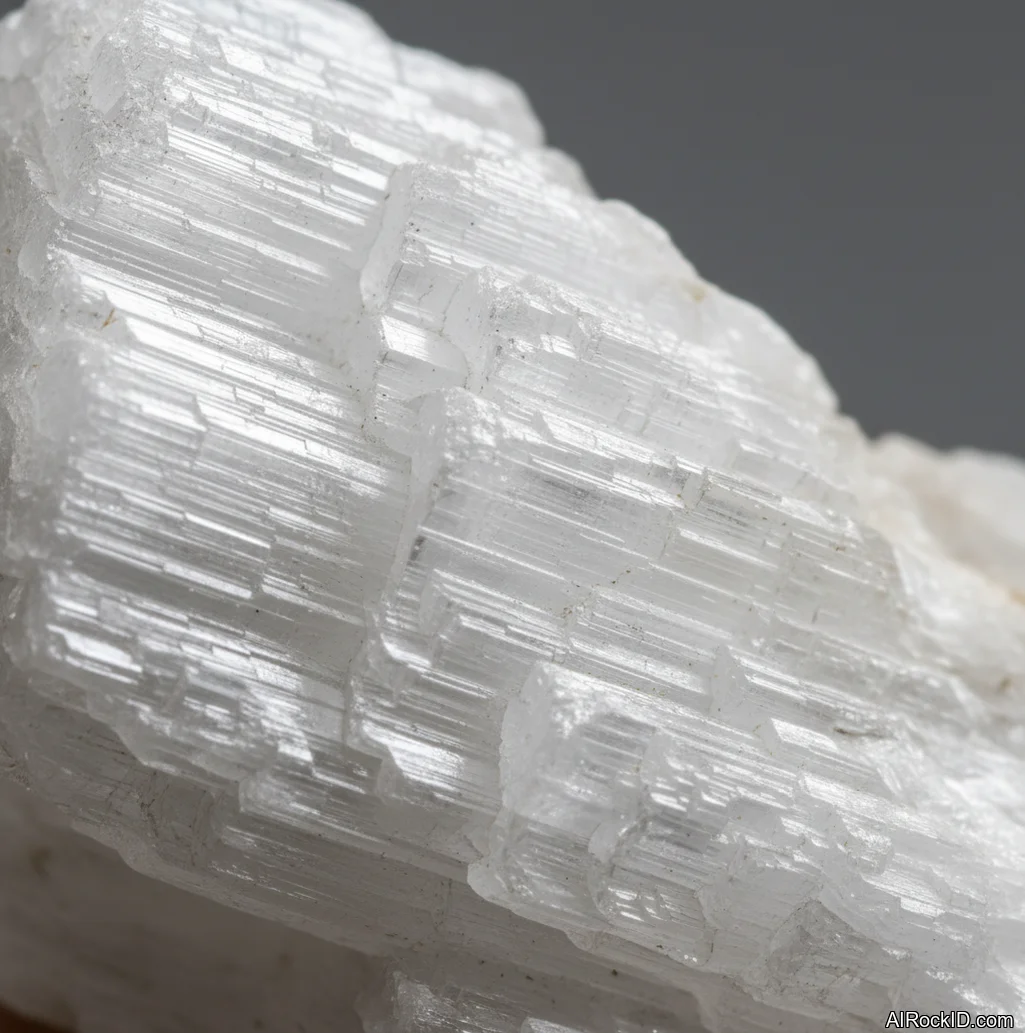
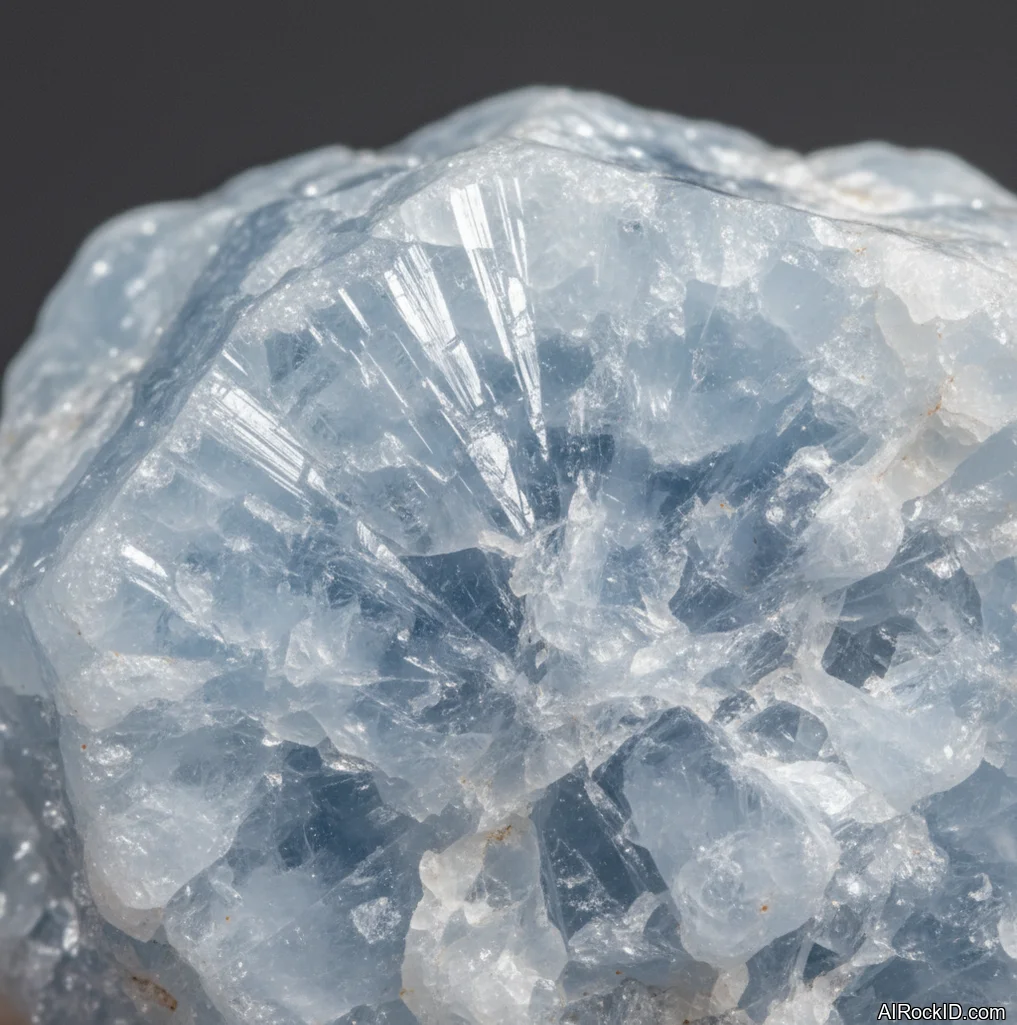
Blue Calcite is just calcite (calcium carbonate, CaCO3) that happens to be blue. Most of the pieces you’ll see for sale aren’t pointy crystals at all. They’re chunky chunks with obvious cleave lines, and they’ve got that soft, cloudy look that feels kind of “quiet” next to shinier stones.
Hold a piece and the first thing you clock is the temperature. It stays cool in your palm longer than glass does, and even when it’s polished the surface can feel a little waxy, like there’s a thin slickness to it. And if you tilt it under a shop light, you’ll see those flat flashes off the cleavage steps, like tiny stair-steps running through the stone. Hard not to keep turning it back and forth, right?
Put it next to blue quartz or blue chalcedony and the difference is obvious. Blue calcite looks milkier, and it bruises easier. But that’s not a defect, that’s just calcite doing what calcite does. Toss one loose in a pocket with keys and you’ll learn fast (ask me how I know).
Origin & History
Calcite got its official write-up in 1845, thanks to Wilhelm Karl von Haidinger. The word itself traces back to the Latin “calx,” which just means lime. Thing is, people were burning and using calcite way earlier for lime and cement, long before anyone bothered to lock in the modern mineral name. But the name we’re using now? That’s basically a 19th-century move.
And “blue calcite” isn’t some separate species with a dramatic origin story. It’s just a dealer label for calcite that happens to come out blue because of trace impurities and tiny inclusions. If you’ve ever handled old collection labels, you’ll know the vibe: “calcite, blue,” a locality scribbled underneath (sometimes in fading ink), and that’s it. Nothing fancy.
Where Is Blue Calcite Found?
Blue calcite turns up anywhere calcite does, but big clean masses and nice crystals are most often seen from Mexico and a handful of classic calcite districts worldwide.
Formation
Most blue calcite forms the same basic way regular calcite does. Calcium and carbonate rich fluids push through fractures and little open pockets in the rock, and then calcite drops out when the fluid chemistry shifts. Temperature, pressure, and whatever else is riding along in that fluid decide what you end up with: clear “optical calcite,” cloudy masses, or those chunky, blocky crystals collectors get picky about.
Look at a fresh break (the kind that leaves a sharp edge you can actually feel with your thumb) and it’s obvious why calcite cleaves so easily. It has perfect rhombohedral cleavage, and the blue material loves splitting into clean, flat planes that meet at those familiar angles. In vugs and veins you can find scalenohedrons or rhombs. But a lot of the blue stuff in shops is just vein fill that got cut into slabs, towers, and palms.
How to Identify Blue Calcite
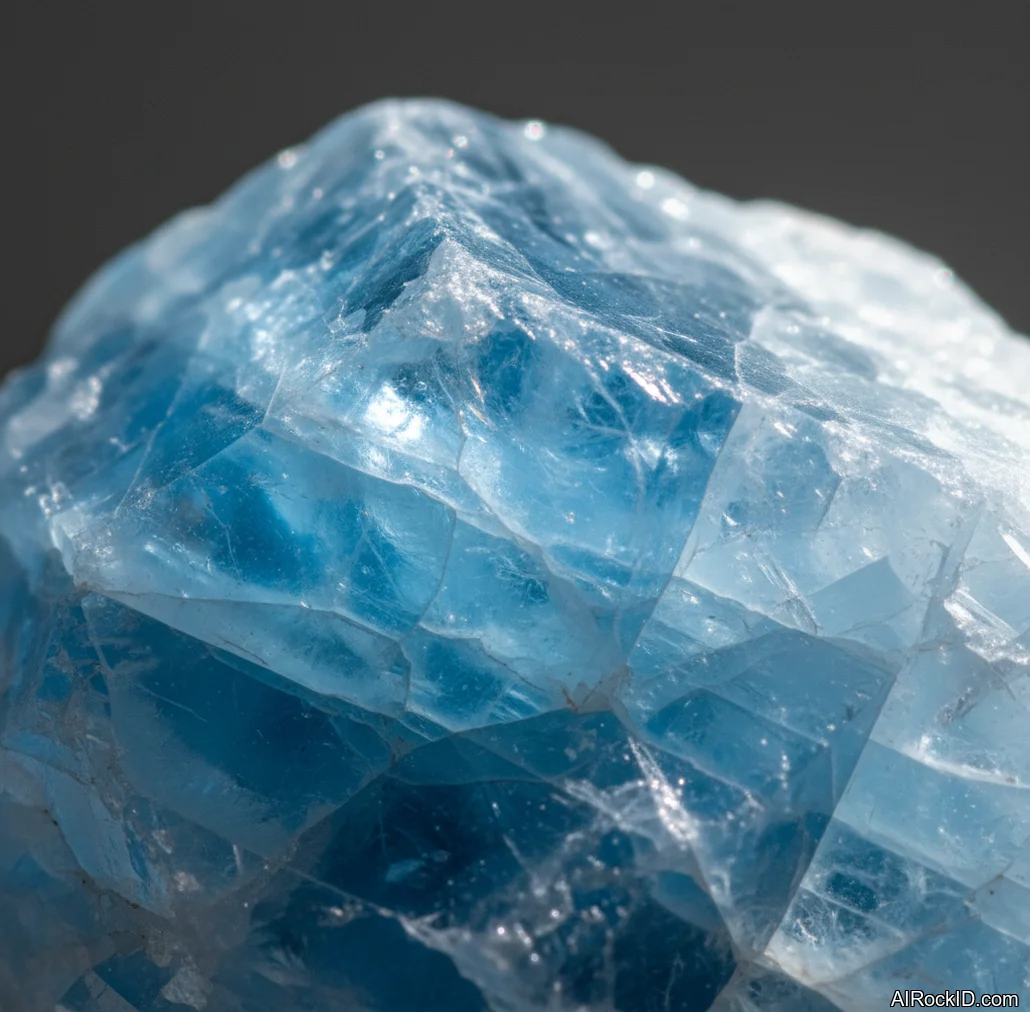
Color: Color runs from pale sky blue to blue-gray, usually with a milky or foggy body. Some pieces show white banding or patchy zones where the blue comes and goes.
Luster: Luster is vitreous on fresh cleavage and more waxy on polished surfaces.
If you scratch it with a copper penny, it’ll usually mark, and a steel nail will bite in fast. And the real giveaway is cleavage: snap a corner and you often get flat, repeated planes instead of a messy chip. The bubble test helps too, but carefully: a drop of dilute acid will fizz because it’s carbonate, while most blue glass and resin won’t.
Common Look-Alikes
Blue Calcite is sometimes confused with these materials:
- Blue aragonite (often sold as “Caribbean Calcite” when mixed with white calcite)
- Blue celestite (celestine) clusters
- Blue fluorite (especially pale, cloudy material)
- Blue chalcedony / “blue agate” (waxy polish, no calcite cleavage)
- Dyed calcite or dyed marble (calcite-based, color sits in cracks and pores)
- Blue glass slag / man-made glass (uniform color, rounded chips, bubbles)
Market Cautions & Treatments
When AI Can Get This Wrong
At first glance, photos of blue calcite get mislabeled as blue fluorite or blue chalcedony because they all do that soft, cloudy pastel thing under shop lights. AI also trips on “Caribbean calcite” listings and calls the whole mix blue calcite even when the blue part is aragonite. The real test is in-hand: calcite’s perfect rhomb cleavage flashes on flat faces when you tilt it, and at Mohs 3 it scratches with a copper coin or knife way easier than fluorite or chalcedony.
Properties of Blue Calcite
Physical Properties
| Crystal System | Trigonal |
| Hardness (Mohs) | 3 (Soft (2-4)) |
| Density | 2.71 g/cm3 |
| Luster | Vitreous |
| Diaphaneity | Translucent |
| Fracture | Uneven |
| Streak | White |
| Magnetism | Non-magnetic |
| Colors | Light blue, Blue-gray, Pale aqua, Whitish blue |
Chemical Properties
| Classification | Carbonates |
| Formula | CaCO3 |
| Elements | Ca, C, O |
| Common Impurities | Mg, Fe, Mn, Sr |
Optical Properties
| Refractive Index | 1.486-1.658 |
| Birefringence | 0.172 |
| Pleochroism | None |
| Optical Character | Uniaxial |
Blue Calcite Health & Safety
Blue calcite is safe to handle and it isn’t toxic. The only real “risk” is the physical stuff: if the stone’s already bruised, it can chip, and you’ll sometimes see tiny gritty grains shed off (the kind that end up stuck to your fingertips).
Safety Tips
If you have to cut or grind it, put on a respirator and eye protection, and run a little water over the spot to keep the dust down (that fine powder gets everywhere).
Blue Calcite Value & Price
Price Range
Rough/Tumbled: $5 - $60 per piece
Price mostly tracks color, honestly. The cleaner, bluer pieces cost more. Damage matters too, especially those little chips you see right on the edges and corners (the spots that always seem to take the first hit). Big chunks are easy to find. But big chunks that aren’t bruised, chalky, or scuffed up? That’s what dealers actually charge for.
Durability
Nondurable — Scratch resistance: Poor, Toughness: Fair
It’s stable in normal room conditions, but it scratches easily and the cleavage lets it chip if you knock it against harder stones.
How to Care for Blue Calcite
Use & Storage
Store it by itself or wrapped, because calcite gets scratched by stuff you wouldn’t expect. I keep mine away from quartz points and even away from harder tumbled stones in the same bowl.
Cleaning
1) Rinse quickly with lukewarm water. 2) Wipe with a soft cloth or a very soft toothbrush for crevices. 3) Dry right away and don’t soak it for hours.
Cleanse & Charge
If you do energetic cleansing, skip salt water and harsh chemicals. I’ve had good results with a quick smoke cleanse or just setting it on a shelf overnight.
Placement
Put it somewhere it won’t get bumped, like a nightstand corner or a desk shelf. Direct sun won’t instantly ruin it, but I wouldn’t leave it baking in a bright windowsill for months.
Caution
Skip acids and anything acid-based, because calcite will literally fizz on contact and it’ll etch the surface. And don’t run it through an ultrasonic or steam cleaner either. Also, don’t just drop it in your pocket with loose change, where coins can knock it around and leave little scuffs.
Works Well With
Blue Calcite Meaning & Healing Properties
At first glance, blue calcite looks like a straight-up “sleep stone,” and yeah, that’s how a lot of people end up using it. In my own pile, it’s one of the only pieces I’ll actually put in a fidgety customer’s hand at the counter. They’re usually death-gripping whatever they picked up, then they feel how this one’s softer and kind of slick (almost like it’s been lightly soaped), and you can watch their shoulders drop.
But here’s the limit. It’s still calcite. If you’re expecting some indestructible everyday carry you can rub like a worry stone nonstop, you’re going to end up with a chipped, dull little lump. I tell people to treat it more like a bedside stone, or a meditation stone you pick up gently, then put back where it belongs.
In the metaphysical world, blue calcite gets linked to calming, cooling, plus speaking clearly. That’s tradition and personal practice, not medicine. And I’ve noticed it works nicely with breath work because the color’s soft and the stone doesn’t sparkle back at you, so your eyes don’t keep chasing little flashes when you’re trying to settle down. Why make it harder than it needs to be?
Common mistakes
- Identifying any pale blue mineral as blue calcite based only on color
- Assuming a bright blue specimen is natural without checking for dye in cracks or pores
- Confusing blue calcite with celestite because both can be pale blue and glassy
- Using vinegar or acid on a polished specimen without expecting possible surface damage
- Wearing blue calcite in daily jewelry even though it scratches and cleaves easily
- Cleaning blue calcite with acidic cleaners, ultrasonic machines, or prolonged soaking
Identify Blue Calcite from a photo
Compare Blue Calcite traits, care tips, value clues, and common lookalikes with a clear photo.