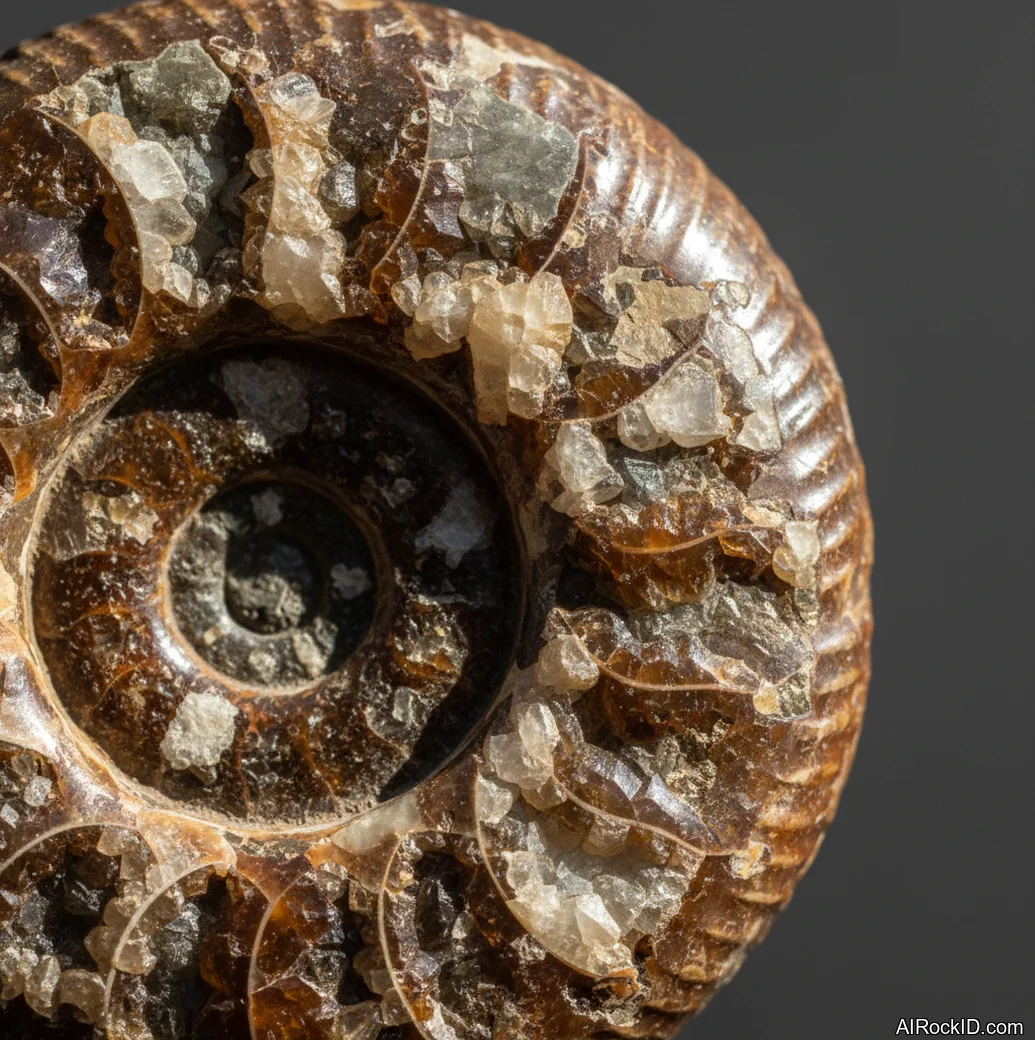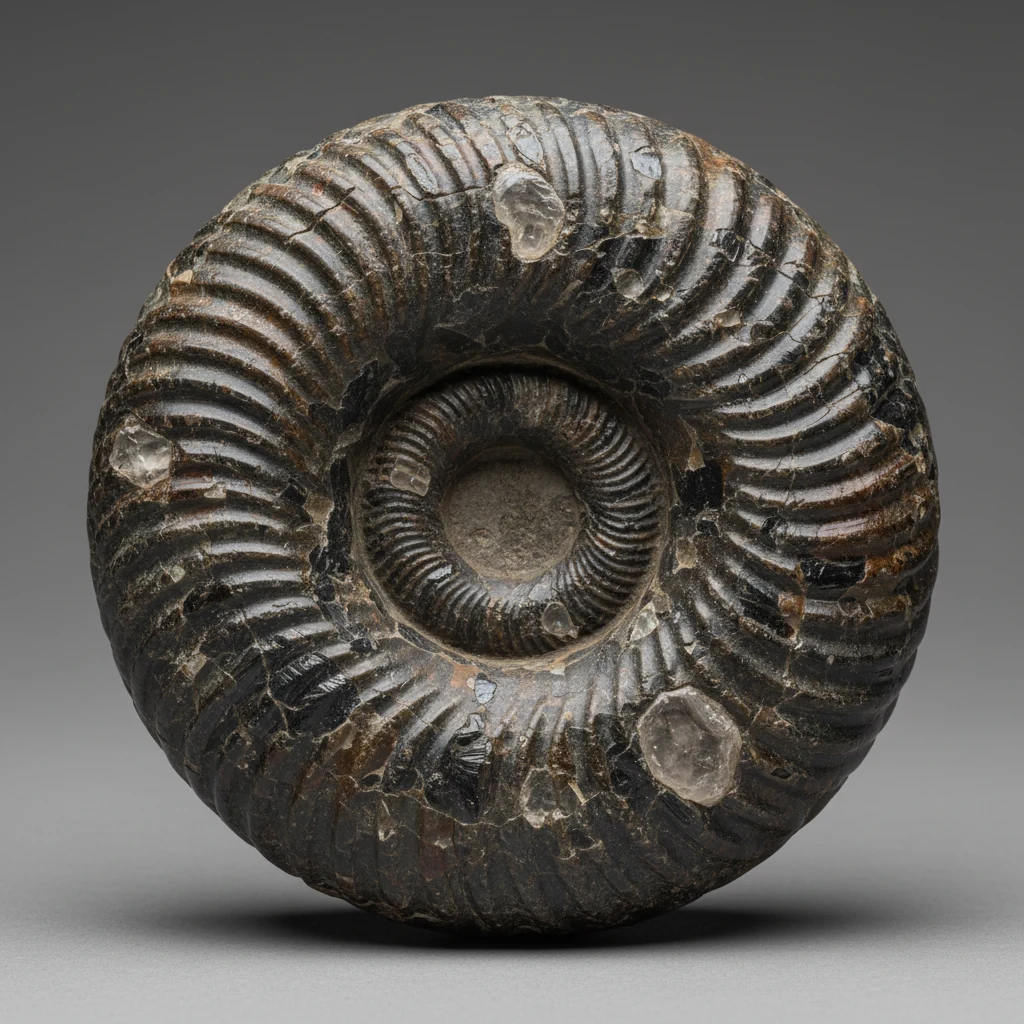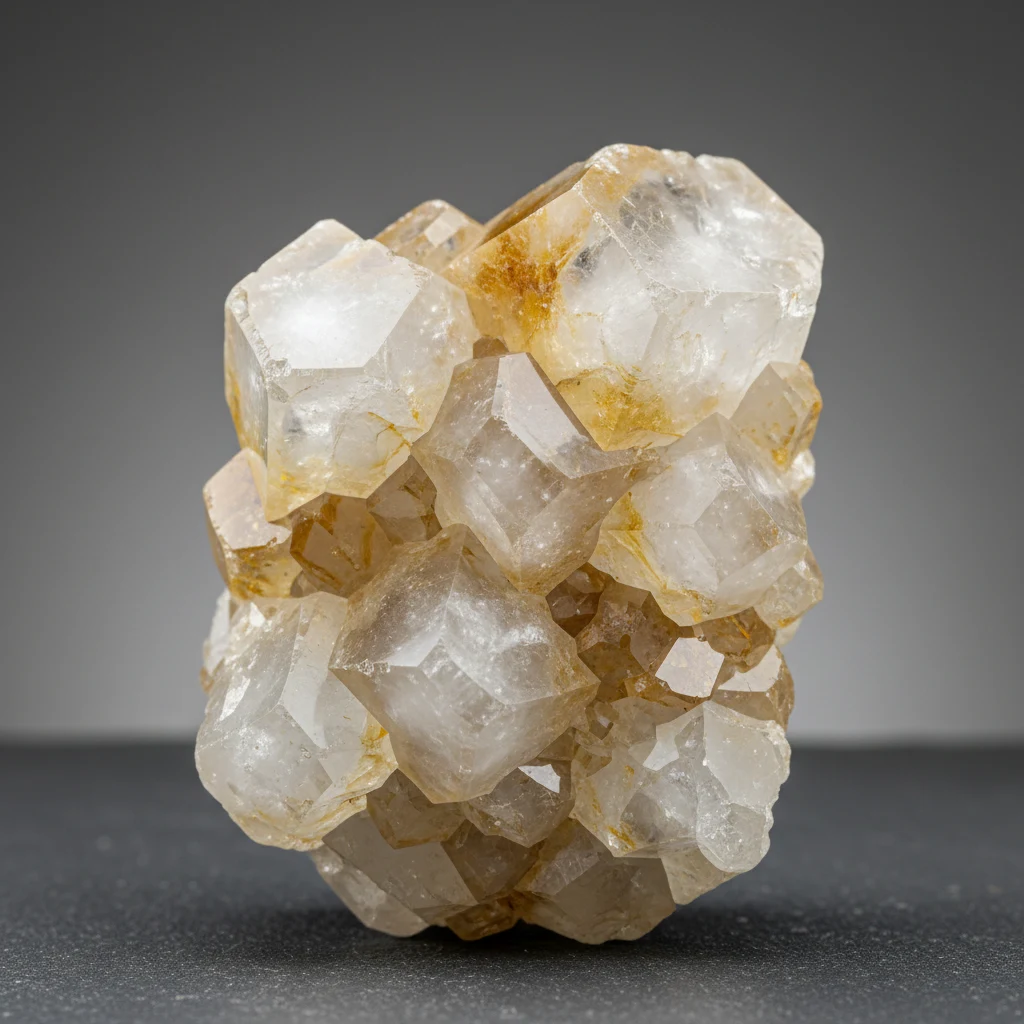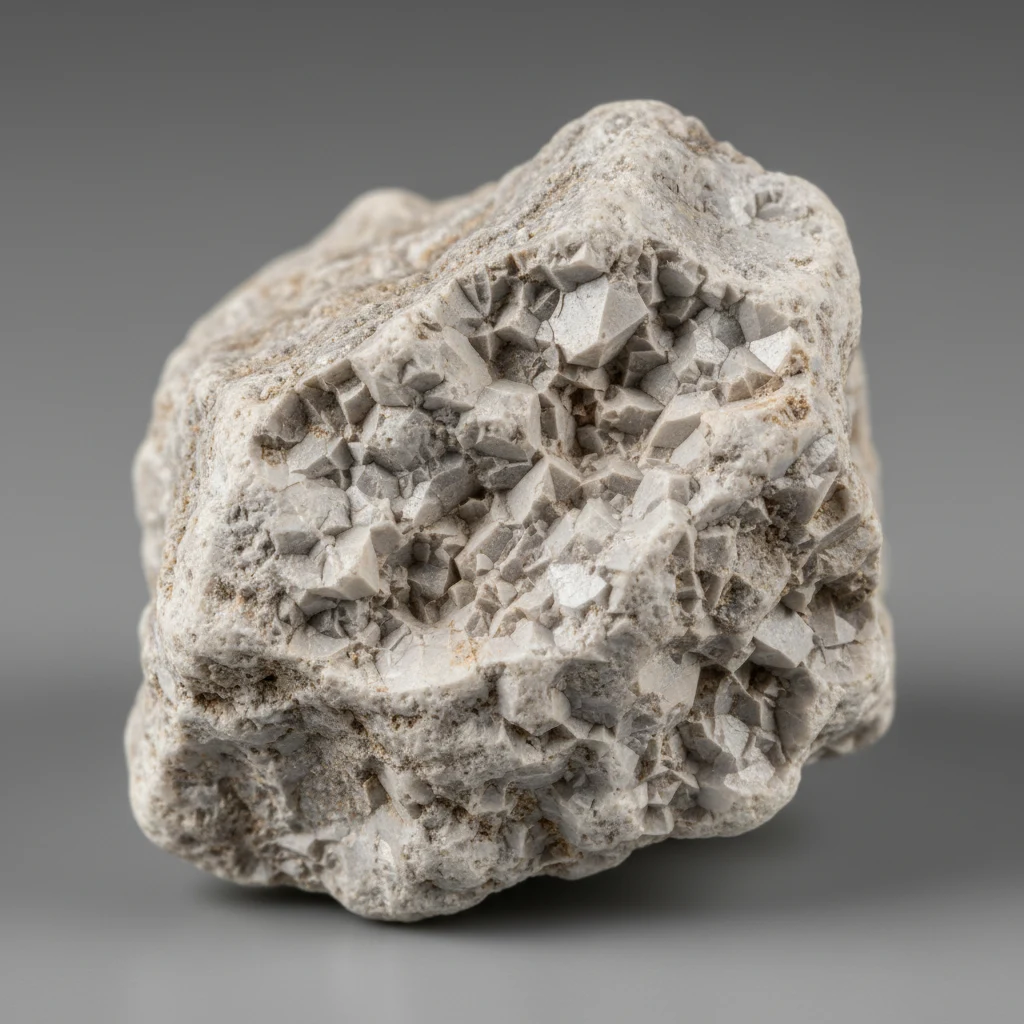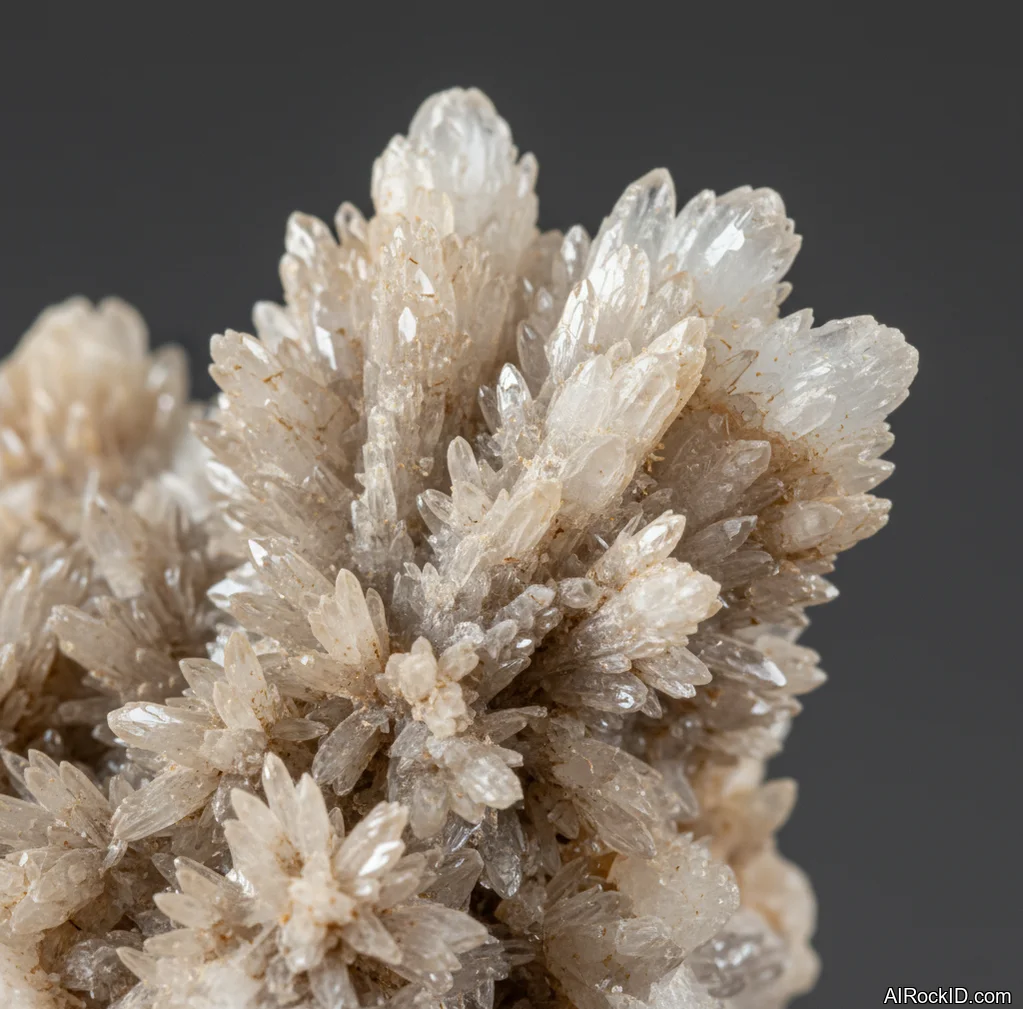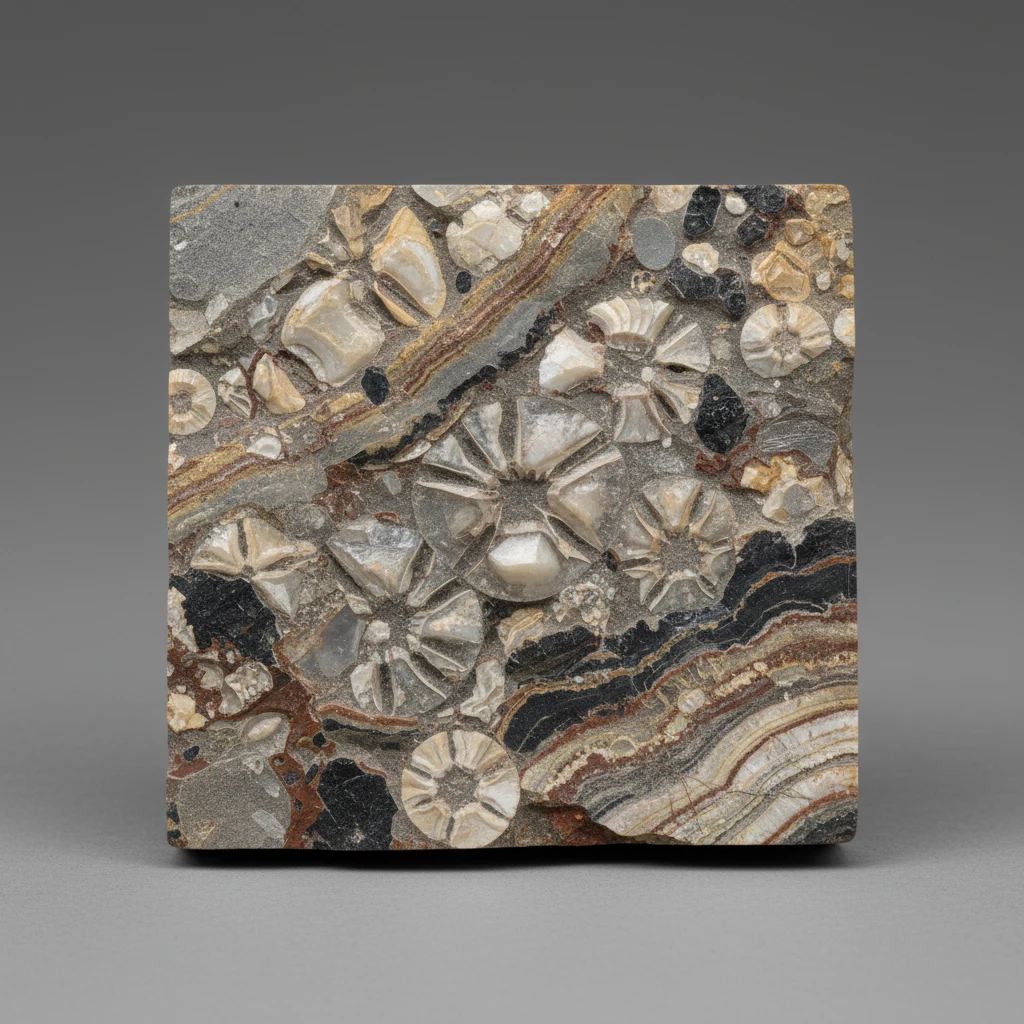
Crinoid Fossil


Quick answer: Crinoid fossil is the preserved remains of marine animals related to sea stars and sea urchins, most often seen as small round or bead-like stem segments in limestone. It is usually calcite-based, so it can be relatively soft, commonly around Mohs 3, and may react to acid like other calcite-rich fossils.
AI Rock ID can help flag crinoid-like circular stems, star-shaped canals, and fossiliferous limestone textures from a clear photo. RockIdentifier.io provides visual identification support, but fossil ID is more reliable when paired with location, matrix rock, scale, and close-up images.
Good fit
- Collectors who like recognizable marine fossils in limestone
- Beginners looking for an easy fossil to identify by repeated stem discs
- People interested in Paleozoic sea life and fossiliferous rocks
- Decorative stone buyers who want natural fossil patterns in slabs, cabochons, or tumbled pieces
Not a good fit
- Anyone needing a hard, scratch-resistant stone for everyday jewelry
- Buyers who require a rare fossil specimen, since crinoid fragments are common in many limestones
- Collectors seeking a complete crinoid crown, which is much less common than stem segments
- People who want a non-reactive mineral, because calcite-rich material can be etched by acids
Most commonly confused with
- Petoskey Stone: Petoskey stone shows coral-like hexagonal cell patterns, while crinoid fossils often show round stem discs or star-shaped central canals.
- Agatized Coral: Agatized coral is silica-replaced and usually harder, while many crinoid fossils remain calcite in limestone.
- Fossiliferous Limestone: Fossiliferous limestone is the host rock category; crinoid fossil refers specifically to the crinoid remains within it.
- Calcite: Calcite is the mineral material often forming the fossil or matrix, but crinoid fossil has biological shapes and repeated stem segments.
Crinoid Fossil Lookalike Comparison
| Specimen | Typical Pattern | Key Difference |
|---|---|---|
| Crinoid fossil | Round discs, bead-like stems, star or flower-shaped centers | Marine animal stem fragments, often in limestone |
| Petoskey stone | Honeycomb or hexagonal coral cells | Colonial coral pattern rather than stacked stem segments |
| Agatized coral | Coral cells replaced by silica | Usually harder than calcite-rich crinoid limestone |
| Fossiliferous limestone | Mixed shells, stems, and fossil debris | Rock type may contain many fossils, not only crinoids |
| Belemnite fossil | Tapered rods or bullet-like forms | Remains of cephalopods, not sea lily stems |
AI identification confidence
AI identification is often moderately confident when a photo shows repeated circular stem segments, star-shaped canals, and a limestone matrix. Confidence drops when the specimen is polished, weathered, very small, or shown without scale and location information.
When AI gets it wrong
- Polished fossil limestone can blur individual crinoid segments and resemble coral or shell hash.
- Single round cross sections may be mistaken for coral cells, ooids, or shell fragments.
- Acid-etched or weathered surfaces can hide the star-shaped canal that helps identify crinoid stems.
- Photos without a ruler, coin, or locality can make fossil size and context difficult to judge.
How to Spot an Authentic Crinoid Fossil
Authentic crinoid fossils usually show natural variation in size, spacing, and orientation rather than perfectly repeated printed patterns. Look for stem discs embedded in the stone, visible cross sections, and a matrix that continues around the fossil features. A hand lens can reveal raised or recessed fossil boundaries that are part of the rock, not a surface coating.
Buying Tips for Crinoid Fossil Specimens
Ask whether the piece is a loose fossil stem, a fossiliferous limestone sample, a polished decorative stone, or a prepared fossil plate. Complete crinoid crowns are much less common and should have clear provenance, while stem fragments are widely available and usually modestly priced. For slabs or cabochons, check for cracks, filled pits, dye, and whether the fossil pattern is natural throughout the stone.
Where Crinoid Fossils Are Commonly Found
Crinoid fossils are common in many ancient marine limestones, especially Paleozoic rocks from the Ordovician, Silurian, Devonian, Mississippian, and Pennsylvanian periods. Well-known collecting regions include parts of the American Midwest, the United Kingdom, and other areas that were once shallow seas. Local collecting rules vary, so public land, protected sites, and private quarries may require permission or permits.
What Is Crinoid Fossil?
A crinoid fossil is the preserved remains of a marine echinoderm related to sea stars and sea urchins. In the hand, the most familiar pieces are small round stem segments, called columnals, that look like tiny stone beads or stacked washers. Many show a central hole, and the best ones reveal a star, flower, or radial pattern around that canal.
Most collector specimens are calcite-rich fossils in limestone, shale, or chert, commonly gray, tan, cream, brown, white, black, reddish brown, or buff. Because calcite is typically about 3 on the Mohs scale, crinoid fossils can scratch more easily than quartz-rich stones. Dense limestone pieces feel sturdy, while shale-hosted or weathered pieces may split, flake, or shed small fragments.
Origin & History
Crinoid fossils record animals that first appeared in the Ordovician Period over 480 million years ago. Their name comes from Greek words meaning “lily-like,” a good description of living stalked crinoids, which can resemble flowers fixed to the sea floor. Collectors also know them as sea lily fossils, crinoid stem fossils, crinoid columnals, and sometimes Indian beads.
Crinoids became major reef and sea-floor animals during the Paleozoic Era, and their broken stems can make up large parts of fossiliferous limestone. Mississippian-age limestones of North America are especially famous for them, where storms and natural decay scattered stems, arms, and calyx plates into carbonate sediment. For checking locality context and specimen records, mindat.org is a practical reference.
Where Is Crinoid Fossil Found?
Crinoid fossils are found worldwide in marine sedimentary rocks, especially limestone from Ordovician through Mississippian age. Productive collecting regions include the United States, United Kingdom, Canada, Morocco, Germany, China, Australia, France, and Spain. In a field tray, they often appear as pale circular or oval cross-sections scattered through darker or buff limestone.
Formation
Crinoid fossils formed when ancient sea-floor crinoids died and their calcite skeletons broke apart. The stems, made of many disk-shaped plates, commonly disarticulated into small columnals. These fragments settled with carbonate mud, shell debris, and other marine sediment, then were buried as layers accumulated above them.
Over geologic time, compaction and cementation turned those sediments into limestone or shale, preserving the crinoid pieces as fossils. Most are calcite, CaCO3, but some deposits may be silicified, pyritized, or preserved in chert. That is why one specimen may show a pearly calcite surface, while another looks dull, earthy, or tightly locked into granular matrix.
How to Identify Crinoid Fossil
To identify a crinoid fossil, look first for shape: small round disks, short cylinders, bead-like pieces, or stacked columns like a pile of washers. A central hole is a strong clue, and many columnals show a star-shaped, flower-like, or radial pattern around it. Polished crinoid limestone may show many circular or oval fossil slices packed through the rock.
Fresh calcite-rich surfaces can look vitreous to pearly, while weathered fossils are often dull, matte, or earthy. Crinoids are commonly found with brachiopods, corals, bryozoans, and other marine fossils in limestone. A drop of dilute acid on a hidden spot may fizz if calcite is present, but acid can permanently damage the specimen, so collectors use that test cautiously.
Properties of Crinoid Fossil
Physical Properties
| Crystal System | Not applicable as a fossil; mineralized material is most commonly calcite, which is trigonal |
| Hardness (Mohs) | Typically about 3 on the Mohs scale if calcite; matrix and replacement minerals may vary (Soft to moderate) |
| Density | Approximately 2.6–2.8 g/cm³ for calcite-rich limestone; variable with matrix |
| Luster | Dull, earthy, vitreous, or pearly depending on preservation and polish |
| Diaphaneity | Opaque to translucent in thin calcite portions |
| Fracture | Uneven to granular in limestone matrix; calcite portions may show rhombohedral cleavage |
| Streak | White to pale gray for calcite-rich material |
| Magnetism | Not magnetic |
| Colors | Gray, Tan, Cream, White, Brown, Black, Reddish brown, Buff |
Chemical Properties
| Classification | Fossil, usually biogenic carbonate preserved as calcite in sedimentary rock |
| Formula | Primarily CaCO3 when calcite-preserved; may include SiO2, FeS2, clay minerals, or other matrix minerals |
| Elements | Calcium, Carbon, Oxygen, Silicon, Iron, Sulfur, Aluminum, Magnesium |
| Common Impurities | Clay, Quartz, Iron oxides, Pyrite, Dolomite, Organic carbon |
Optical Properties
| Refractive Index | Variable; calcite component approximately nω 1.658 and nε 1.486 |
| Birefringence | High in calcite, about 0.172; not usually measured on whole fossils |
| Pleochroism | None for calcite; not diagnostic in typical hand specimens |
| Optical Character | Calcite is uniaxial negative; whole fossil specimens are aggregate materials |
Crinoid Fossil Health & Safety
Crinoid fossils are generally safe to handle, but cutting, grinding, drilling, or sanding fossiliferous limestone or shale can produce irritating mineral dust and sometimes respirable silica from the matrix.
Crinoid Fossil Value & Price
Price Range
Rough/Tumbled: Common loose stem segments and small matrix pieces are often under $1–$10 USD; attractive plates, polished crinoid limestone, or well-preserved calyx specimens may range from about $20 to several hundred USD depending on quality and locality.
Cut/Polished:
Value depends on completeness, preservation quality, visible diagnostic features, size, preparation, locality, age, association with other fossils, and whether the specimen includes a rare intact crown or calyx rather than common broken stem pieces.
Durability
Moderate but matrix-dependent — Scratch resistance: Calcite-rich crinoid fossils scratch easily with steel and can be scratched by quartz or sand., Toughness: Variable; dense limestone pieces are fairly sturdy, while shale-hosted or weathered specimens can split, crumble, or shed small fragments.
Stable in dry indoor conditions. Calcite reacts with acids, and pyrite-bearing fossils may deteriorate in humid conditions. Avoid vinegar, strong cleaners, prolonged soaking, and freeze-thaw exposure.
How to Care for Crinoid Fossil
Use & Storage
Store in a dry display box, tray, or cabinet with padding if the matrix is fragile. Keep locality labels with the specimen because provenance greatly improves scientific and collecting value.
Cleaning
Use a soft brush, wooden pick, or gentle water rinse for sturdy limestone specimens. Avoid vinegar and acidic cleaners because calcite will fizz and dissolve. Shale-hosted fossils should be cleaned dry or by an experienced preparator.
Cleanse & Charge
For metaphysical use, cleanse by placing the specimen on a dry cloth, using sound, smoke, or moonlight rather than saltwater or acidic liquids.
Placement
Display away from high humidity, kitchen acids, outdoor weathering, and direct handling of delicate surfaces. Small crinoid stems look best in labeled fossil trays or magnified display boxes.
Caution
Do not soak fragile shale specimens or pyrite-bearing fossils. Avoid tumbling unprotected fossil pieces if you want to preserve fine surface detail.
Works Well With
Crinoid Fossil Meaning & Healing Properties
In modern crystal and fossil symbolism, crinoid fossils are used as grounding stones for patience, perspective, ancestral memory, and connection to ancient oceans. The feeling is less flashy than a bright crystal: a small crinoid columnal invites close looking, slow handling, and the mental shift that comes from holding evidence of deep time.
These meanings are cultural and spiritual interpretations, not scientific or medical claims. Crinoid fossil is commonly associated with the Root and Third Eye chakras, the zodiac signs Cancer, Capricorn, and Pisces, and the Earth and Water elements. For metaphysical care, use sound, smoke, moonlight, or a dry cloth instead of saltwater, vinegar, or acidic liquids.
Identify Crinoid Fossil from a photo
Compare Crinoid Fossil traits, care tips, value clues, and common lookalikes with a clear photo.
Common mistakes
- Assuming every round fossil pattern in limestone is crinoid; corals, ooids, and shell fragments can look similar.
- Using vinegar or other acids for cleaning without testing, which can etch calcite-rich fossils.
- Calling every crinoid piece a complete sea lily; most finds are isolated stem segments.
- Expecting high hardness because the specimen is a fossil; many crinoid fossils are still calcite-based and scratch easily.
- Buying polished decorative stone as a rare fossil without checking whether the pattern is common crinoid limestone.
- Relying on a single close-up photo without scale, matrix, or locality information for identification.