Tektite


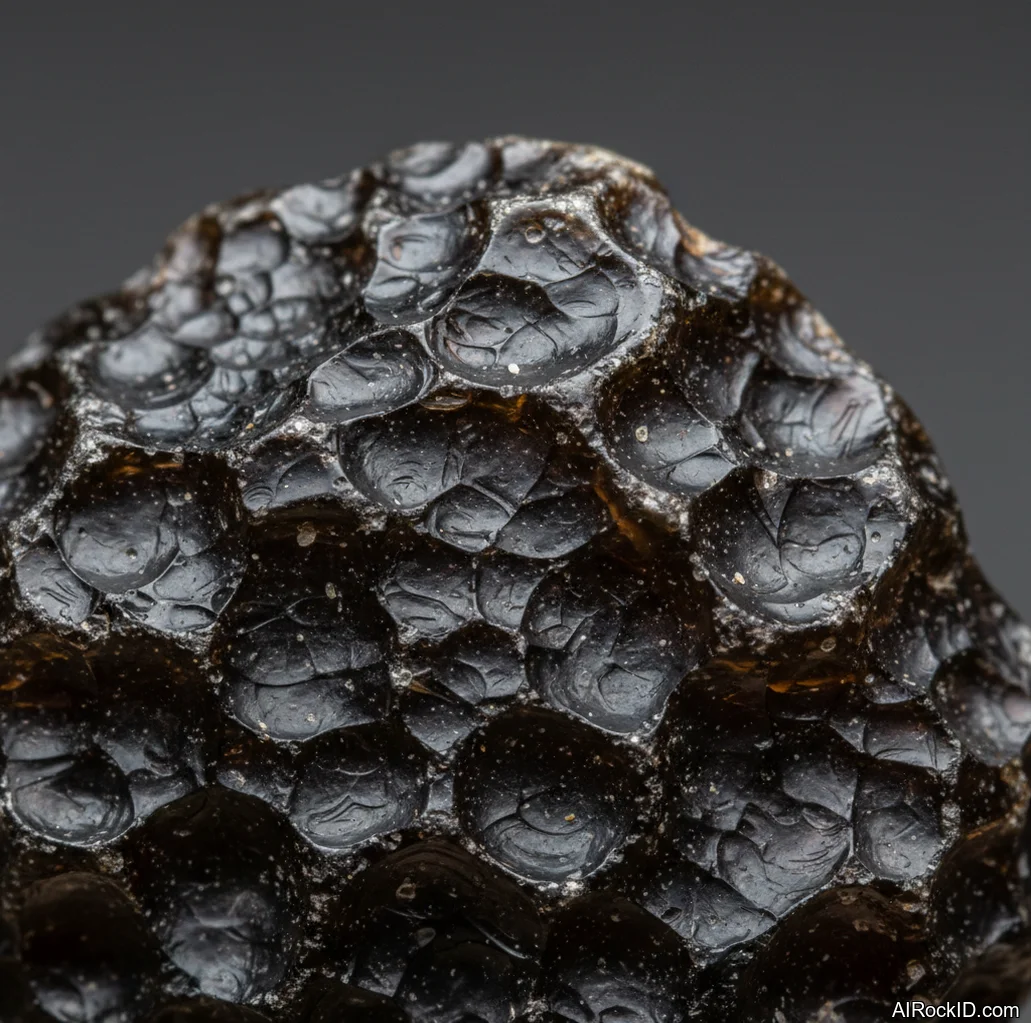
Quick answer: Tektite is a natural impact glass produced when meteorite impacts melt terrestrial material and eject it into the air. It is usually black, brown, gray, or greenish, with glassy luster, rounded shapes, flow lines, pits, and an amorphous structure rather than crystal faces.
AI Rock ID can help screen a suspected tektite by comparing color, surface texture, luster, shape, and visible inclusions against known impact-glass patterns. RockIdentifier.io provides educational identification support, but unusual or high-value pieces should be checked with provenance records or a qualified laboratory.
Good fit
- Collectors interested in meteorite-impact materials and natural glass
- Beginners who want a specimen with distinctive pitting, flow texture, and irregular shapes
- People comparing black glassy stones, slag, obsidian, and impactites
- Collections focused on geological events, craters, and extraterrestrial influence on Earth materials
Not a good fit
- Anyone expecting a crystalline mineral with cleavage, crystal faces, or a fixed chemical formula
- Buyers who need verified origin without documentation or locality information
- People looking for a highly scratch-resistant everyday jewelry stone
- Collectors who cannot tolerate lookalike risk from slag, obsidian, or manufactured glass
Most commonly confused with
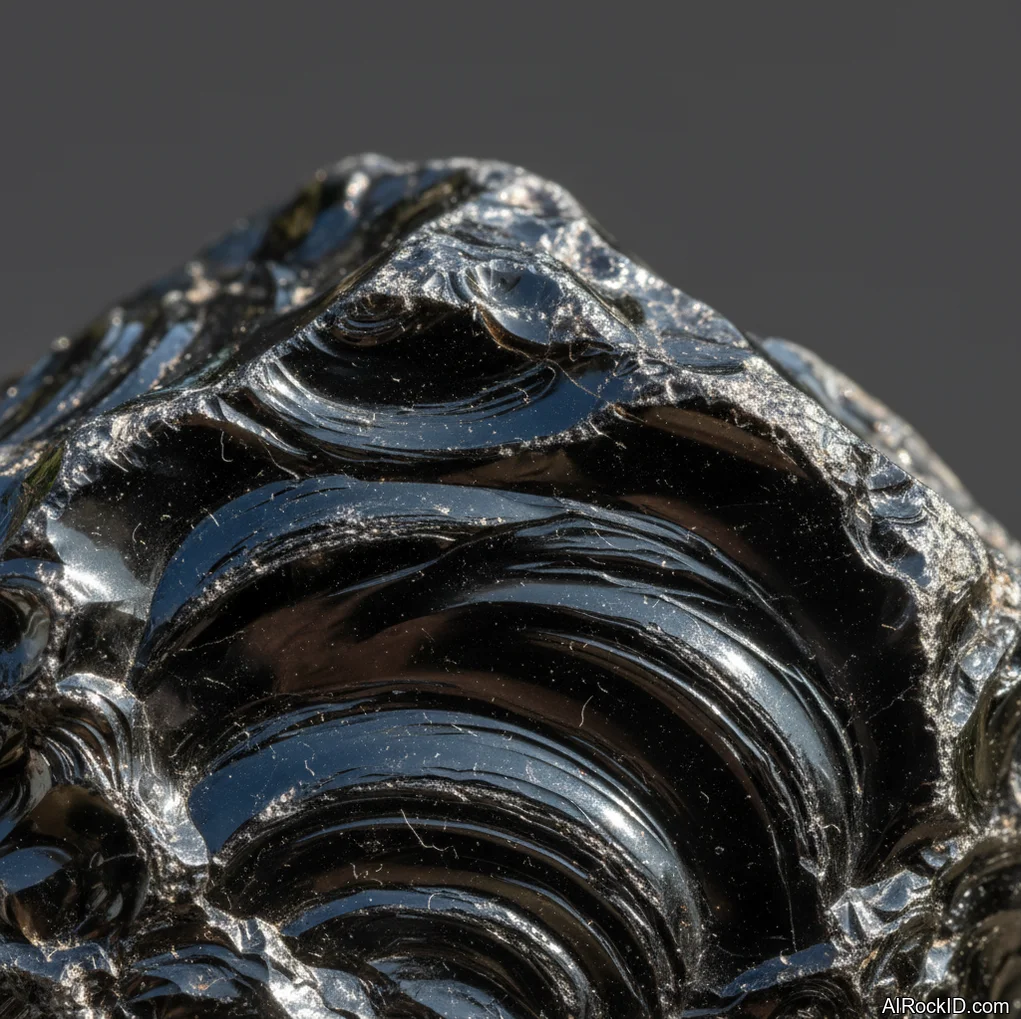
- Obsidian: Obsidian is volcanic glass, while tektite forms from terrestrial material melted and ejected during meteorite impacts.
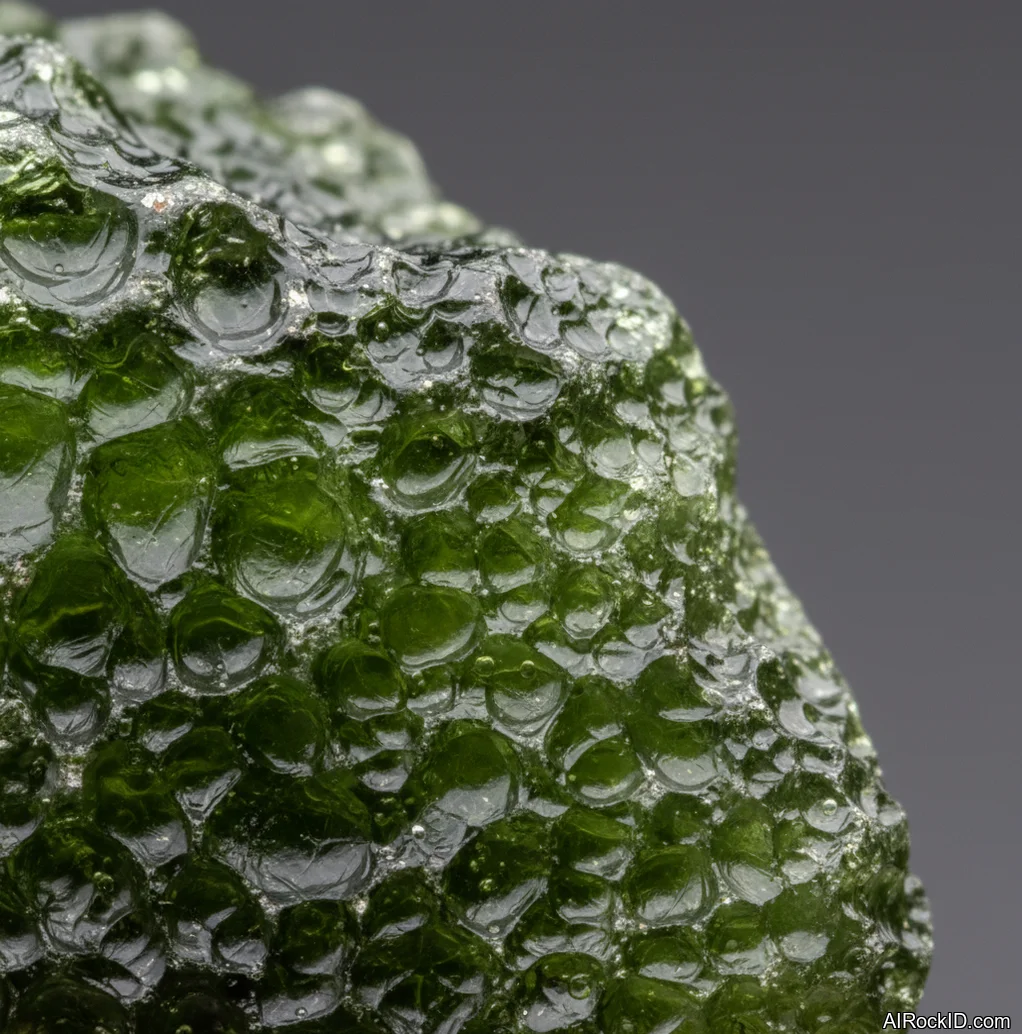
- Moldavite: Moldavite is a green Central European tektite variety; most tektites are darker brown to black.
- Slag Glass: Slag glass is an industrial byproduct and may show bubbles, metallic residue, or unnatural color banding.
- Libyan Desert Glass: Libyan Desert Glass is pale yellow impact glass, often more translucent and chemically distinct from many dark tektites.
Tektite vs Common Lookalikes
| Material | Typical Origin | Common Clues | Main Difference |
|---|---|---|---|
| Tektite | Meteorite impact ejecta | Dark glass, pits, flow texture, rounded or splash forms | Natural impact glass from melted terrestrial material |
| Obsidian | Volcanic lava | Glassy fracture, black to brown, may be translucent at edges | Volcanic rather than impact-related |
| Slag glass | Industrial smelting waste | Bubbles, metallic residue, unusual colors | Human-made byproduct, not a natural impact material |
| Moldavite | Meteorite impact ejecta | Olive to bottle-green, etched surface | A green tektite from a specific Central European strewn field |
| Libyan Desert Glass | Impact-related desert glass | Yellow to pale green, translucent to opaque | Lighter color and different locality association |
AI identification confidence
AI identification confidence for tektite is usually moderate when the specimen shows natural pitting, glassy luster, dark color, and irregular splash or rounded forms. Confidence drops when the photo lacks scale, shows only a polished surface, or cannot reveal bubbles, flow lines, fracture texture, or surface weathering.
When AI gets it wrong
- Polished black glass or obsidian can hide surface features needed for separation.
- Industrial slag may resemble tektite in color and glassy luster, especially in low-light photos.
- Small fragments without documented locality are difficult to distinguish from ordinary glass.
- Moldavite imitations and dyed glass may be misread if color and internal bubbles are not clearly visible.
Final recommendation
For buying or identification, prioritize specimens with credible locality information, natural surface texture, and clear photos from multiple angles. Treat vague labels such as “meteorite glass” or “space stone” cautiously unless the seller provides provenance or test evidence.
How to Check Tektite Authenticity
Authentic tektite usually has a natural glassy surface with pits, grooves, flow marks, or aerodynamic shaping rather than mold seams or uniform machine polishing. Provenance is important because many dark glass fragments can look similar in photos. Reliable listings often state a known strewn field or locality, such as Indochinite, Philippinite, Australites, or other recognized tektite groups.
Tektite Locality Names
Many tektites are sold under locality or strewn-field names rather than only as “tektite.” Examples include Indochinite from Southeast Asia, Philippinite from the Philippines, and Australites from Australia. Locality names are useful for collectors, but they should be supported by seller history, specimen appearance, and documentation when value is significant.
Buying Tektite Online
Online buyers should look for sharp, well-lit photos that show the full shape, surface texture, broken edges, and any translucency at thin areas. Be cautious with overly uniform beads, identical shapes, bright artificial colors, or listings that mix tektite with unrelated meteorite claims. For higher-priced pieces, request weight, dimensions, locality, and return terms before purchase.
What Is Tektite?
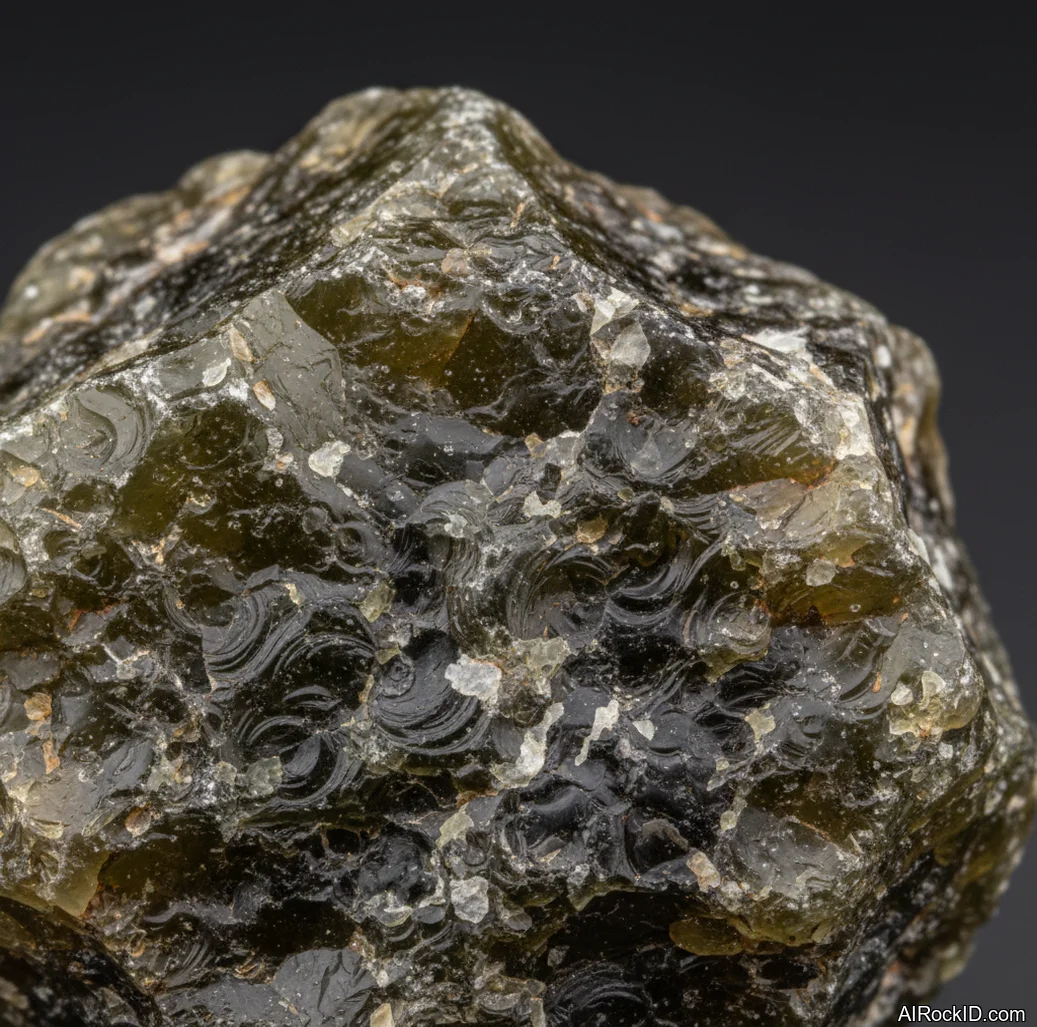
Tektite is natural glass that forms when a meteorite slams into Earth, melts the local rock, and blasts it out as droplets that cool while they’re still flying. Most pieces you’ll run into are black or really dark brown, and they’ve got that scorched, wrinkly skin that looks like it’s been sandblasted. They aren’t crystals, so don’t go hunting for faces or cleavage. You’re basically holding frozen splash.
Grab a tektite and the texture hits you immediately. It’s glassy, sure, but it’s not slick like a polished obsidian cab. Raw ones usually have tiny pits, shallow grooves, and those little flow lines that catch on your fingertips, kind of like a worn chunk of volcanic slag, only lighter and a bit sharper. I keep a few in a bowl and when they knock together you get that higher, glassy clink (not the dull thud you’d expect from stone). You can feel it in your hand. Even before you really look.
People mix tektite up with obsidian, basalt, or even industrial slag all the time. But the surface sculpture is the giveaway, especially on australite buttons and good Indochina material. And after you’ve handled enough of them, the “look” just clicks. It’s like comparing a beach pebble to a piece of melted bottle glass that got tumbled in the air instead of in water. Weird comparison, but it fits, right?
Origin & History
“Tektite” comes from the Greek *tektos*, meaning “molten.” And the word itself didn’t really get going until the early 1900s, when the Austrian geologist Franz Eduard Suess started using it.
Back then, the fight was pretty simple and pretty loud: were these glassy chunks volcanic, or did they come from space? But you’ll still see the old confusion hanging around, because some dealer catalogs from that era straight up labeled them “meteorites,” and that mistake still pops up at shows. Ever had someone try to sell you one with that pitch?
By the mid-20th century, the impact explanation won out as researchers mapped tektite strewn fields and connected some of them to known craters. So it’s a neat slice of science history, since tektites sit right on the border between geology and planetary science. They’re made from Earth material, but they form in an instant that’s all about space smacking into Earth.
Where Is Tektite Found?
Tektites occur in broad “strewn fields” tied to ancient impact events, with major material from SE Asia, Australia, and Central Europe (moldavite).
Formation
A big impact slams in, the rock flashes into vapor and melt, and some of that melt gets flung out on a ballistic arc. While it’s whipping through the air, it stretches into droplets, dumbbells, buttons, twisted little blobs, then it chills so fast it locks up as glass. So you end up with those aerodynamic forms on certain pieces, especially australite buttons that honestly look like somebody pushed a thumb into warm taffy.
The chemistry mostly comes down to whatever rock got hit, but most tektites are silica-rich, basically like melted sedimentary material. And they’re famously low in water compared to volcanic glass. The pitted, etched skin you see on a lot of them is from atmospheric ablation on the way down, then later weathering once they’ve been sitting in soil. Some show up out of rice paddies or laterite dirt looking kind of worn (a little chalky, like they’ve been dragged around), but a rinse and a soft brush usually brings the luster back.
How to Identify Tektite
Color: Most tektite is black to very dark brown; thinner edges can show a smoky brown translucence when backlit. Moldavite is the outlier, usually bottle-green to olive green.
Luster: Vitreous to slightly dull vitreous on weathered surfaces.
Look closely for natural flow lines, pits, and that “melted and sculpted” surface instead of flat fracture faces. The real test is backlighting a thin edge with your phone light: many black pieces glow brown at the rim, while basalt stays dead opaque. Cheap versions are often slag with bubbles and a greasy shine, and they feel weirdly warm in the hand compared to a cool, dense natural glass.
Common Look-Alikes
Tektite is sometimes confused with these materials:
- Obsidian (especially tumbled black obsidian sold as “tektite”)
- Industrial bottle glass / slag glass (melt glass chunks, sometimes sold as “meteorite glass”)
- Volcanic scoria (black cindery lava rock with vesicles)
- Basalt pebbles (river-worn black stones with a dull skin)
- Shungite (matte black carbon-rich rock, often marketed in the same bins)
- Moldavite fakes (colored glass cast to mimic etched tektite surfaces)
Market Cautions & Treatments
When AI Can Get This Wrong
At first glance, phone photos mix tektite up with obsidian, basalt, and random black glass because all of them read as “shiny dark rock” under indoor lighting. The real test is in-hand: tektite’s wrinkly, sandblasted-looking skin and non-uniform pitting show up better when you rake a flashlight across it at a low angle. If you can, check for repeated bubble patterns (glass fake) and compare heft and texture against a known obsidian tumble, since obsidian usually looks slicker and more uniformly glossy.
Properties of Tektite
Physical Properties
| Crystal System | Amorphous |
| Hardness (Mohs) | 5-6 (Medium (4-6)) |
| Density | 2.3-2.5 g/cm3 |
| Luster | Vitreous |
| Diaphaneity | Opaque |
| Fracture | Conchoidal |
| Streak | white |
| Magnetism | Non-magnetic |
| Colors | black, dark brown, brown, gray-black, green (moldavite) |
Chemical Properties
| Classification | Oxides (silica-rich natural glass) |
| Formula | SiO2 (dominant, variable composition) |
| Elements | Si, O, Al, Fe, Ca, Mg, K, Na |
| Common Impurities | Fe, Ti, Mn |
Optical Properties
| Refractive Index | 1.48-1.52 |
| Birefringence | None |
| Pleochroism | None |
| Optical Character | Isotropic |
Tektite Health & Safety
Tektite is usually safe to pick up and handle, and it isn’t considered toxic. But it’s still glass, so if it’s chipped or broken, those edges can get razor-sharp fast (the kind that’ll nick you before you even notice).
Safety Tips
If you snap a piece off or grind it down, handle it the way you’d handle glass. Don’t breathe in the dust. Wipe everything up and then rinse the surfaces after (it clings more than you’d expect).
Tektite Value & Price
Price Range
Rough/Tumbled: $5 - $80 per piece
Cut/Polished: $5 - $60 per carat
Price mostly comes down to the strewn field, the shape, and how well the surface has held up. Moldavite and those nicely formed australite buttons usually run higher than the standard black Indochina rough. And yeah, the edges count a lot: if they’re clean and not chipped up, you’ll pay more.
Durability
Moderate — Scratch resistance: Fair, Toughness: Fair
It’s stable like most glass, but sharp knocks can chip edges and conchoidal fractures can run if you drop it on tile.
How to Care for Tektite
Use & Storage
Store tektite so it doesn’t knock against harder stones or other glassy pieces. I keep mine in small trays or gem jars because chips on the rim happen fast.
Cleaning
1) Rinse with lukewarm water to remove grit. 2) Use a soft toothbrush with a drop of mild soap for the pits and grooves. 3) Rinse well and pat dry; skip harsh abrasives that can frost the surface.
Cleanse & Charge
If you do energy-style cleansing, smoke, sound, or a quick rinse works fine for tektite. Avoid salt scrubs because they can dull the surface over time.
Placement
Set it where you can pick it up and fidget with it, since the texture is half the fun. Keep it off sunny windowsills if you’ve got a thin, lighter piece and you’re worried about surface dulling from heat and dust buildup.
Caution
Don’t use an ultrasonic cleaner. And don’t just drop it loose in your pocket next to your keys, either. The edges can get razor-chippy fast, and once glass fractures, it doesn’t really forgive you.
Works Well With
Tektite Meaning & Healing Properties
A lot of folks who pick up tektite for metaphysical reasons are basically chasing that “impact” feeling. It’s a stone that comes with a story already baked in. Sudden change. Heat. Motion. And when I hand someone a raw chunk in the shop, they almost always flip it over slow, like they’re reading the surface with their thumb, catching on the little pits and glassy bumps.
For grounding, tektite sits in a different lane than hematite or smoky quartz. It’s lighter in the hand than you expect (surprising the first time), but it still feels steady. I’ve used a palm-sized piece during meditation when my mind was racing, mostly because the texture gives you something physical to come back to when you start drifting. Real talk though, that’s a focus tool, not medical care.
But there’s a trade-off. Some people get a little spun up with moldavite and then lump all tektites into the same bucket. In my experience, the black and brown tektites feel calmer, more neutral. If you’re trying to sleep, I wouldn’t start by shoving a jagged piece under your pillow anyway. Put it on the nightstand first, see how you respond, and treat any “results” as personal and subjective.
Common mistakes
- Assuming every black glassy stone is tektite without checking for volcanic or industrial origins.
- Calling tektite a meteorite, even though it is terrestrial material melted by an impact event.
- Using color alone to identify a specimen instead of checking texture, shape, inclusions, and provenance.
- Treating all green glass as moldavite without considering imitations or other glass materials.
- Ignoring locality information when comparing prices or authenticity.
- Expecting tektite to show crystal faces, cleavage, or mineral-like growth patterns.
Identify Tektite from a photo
Compare Tektite traits, care tips, value clues, and common lookalikes with a clear photo.