Peanut Obsidian


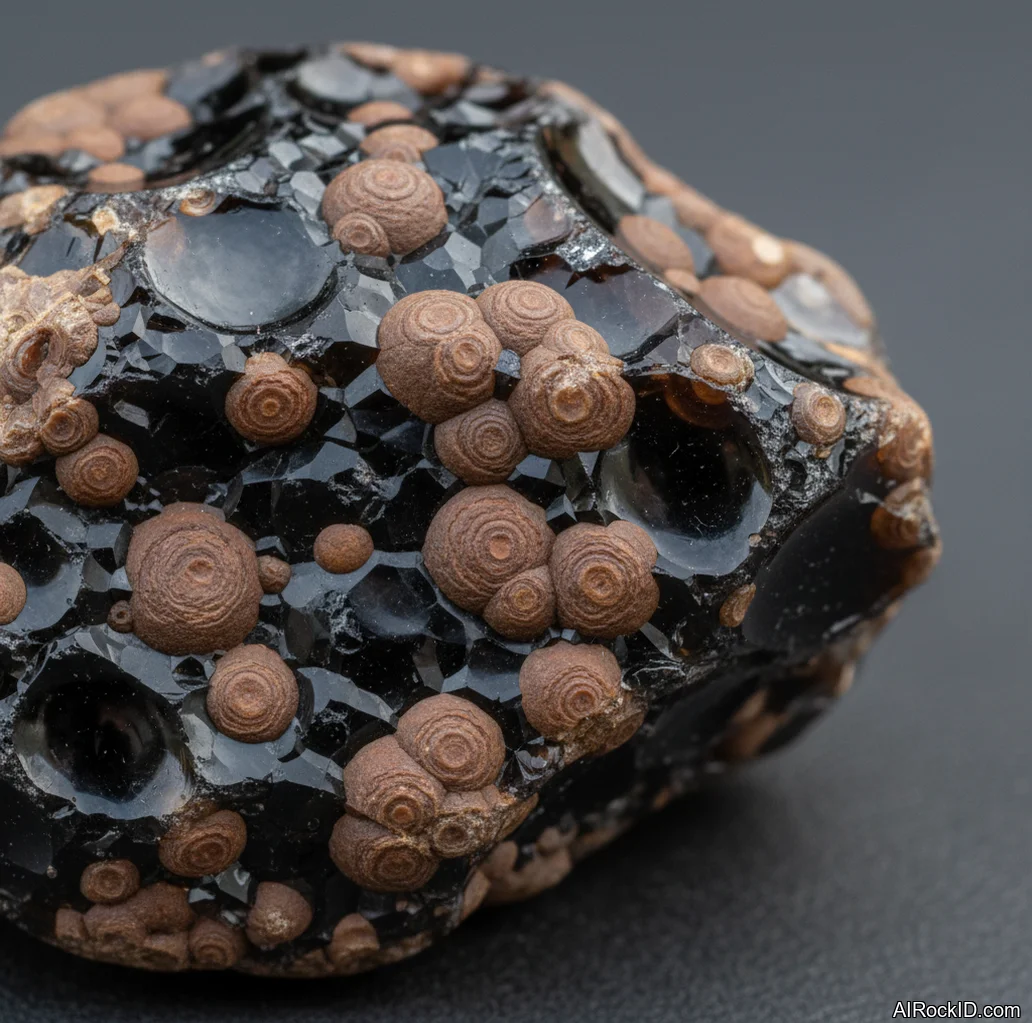
Quick answer: Peanut Obsidian is a patterned variety of obsidian known for brown to black volcanic glass with cream, tan, or beige spots that can resemble peanut shapes. It is typically identified by its glassy luster, conchoidal fracture, opaque to slightly translucent edges, and distinctive spot pattern.
AI Rock ID can help compare Peanut Obsidian against other dark, glassy stones by analyzing color pattern, luster, fracture, and surface texture from a clear photo. RockIdentifier.io provides visual identification support, but unusual pieces, dyed material, or polished specimens may still need hands-on confirmation.
Good fit
- Collectors who like patterned volcanic glass with earthy brown and cream contrast
- Beginners looking for a visually distinctive obsidian variety
- Jewelry buyers who understand obsidian can chip or scratch with rough wear
- People comparing natural-looking spotted obsidian with dyed or imitation stones
Not a good fit
- Anyone needing a very hard daily-wear gemstone
- Buyers who want transparent crystal structure rather than volcanic glass
- People seeking a stone that can be identified by color alone
- Specimens with perfect repeated spots or plastic-like luster without further verification
Most commonly confused with
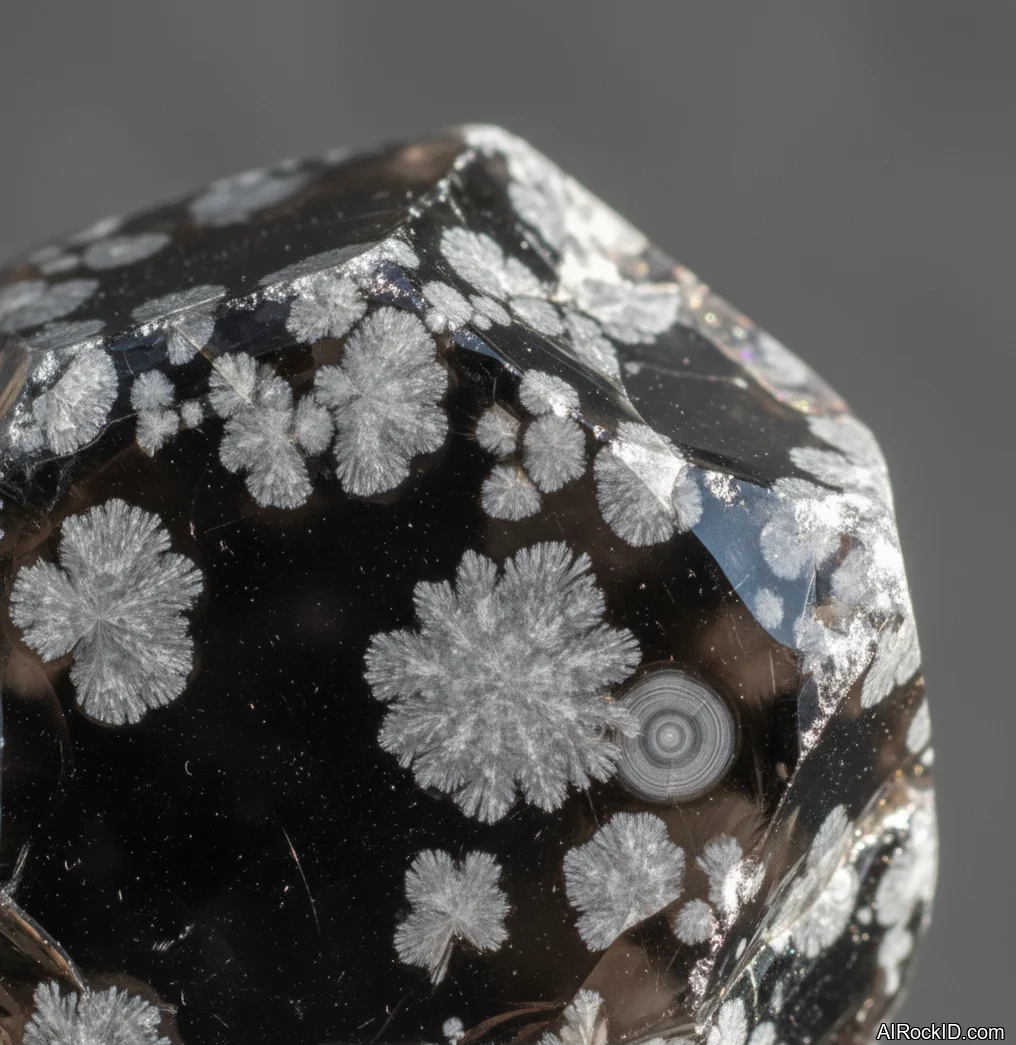
- Snowflake Obsidian: Snowflake Obsidian usually has gray-white cristobalite patches on black glass, while Peanut Obsidian has warmer tan to cream spots on brown or dark glass.
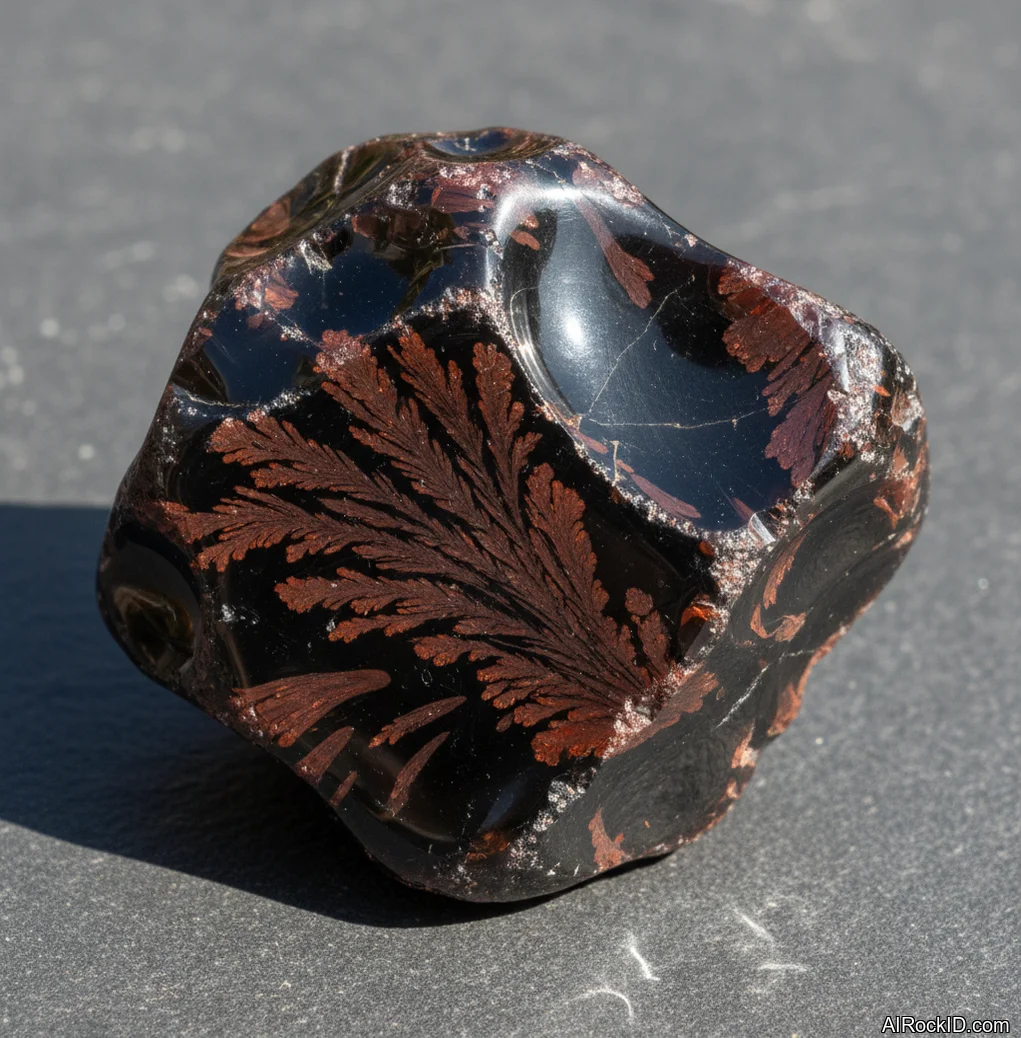
- Mahogany Obsidian: Mahogany Obsidian shows reddish-brown and black flowing patches, not small cream peanut-like inclusions.
- Apache Tears: Apache Tears are rounded black obsidian nodules that are usually translucent at thin edges and lack the spotted peanut pattern.
- Dalmatian Jasper: Dalmatian Jasper has a speckled cream-and-black igneous texture but is not volcanic glass and has a more granular surface.
Peanut Obsidian vs Similar Stones
| Material | Typical Look | Key Difference |
|---|---|---|
| Peanut Obsidian | Brown to dark volcanic glass with tan or cream spots | Glassy fracture and peanut-like spot pattern |
| Snowflake Obsidian | Black glass with gray-white snowflake patches | Cooler white-gray patches rather than tan cream spots |
| Mahogany Obsidian | Black and reddish-brown swirls or patches | Flowing color zones rather than rounded cream inclusions |
| Dalmatian Jasper | Cream to beige base with black speckles | Granular rock texture, not glassy obsidian |
| Artificial Glass | Variable colors, sometimes patterned | May show bubbles, molded edges, or uniform manufactured patterning |
AI identification confidence
AI identification confidence is usually moderate when a photo clearly shows the glassy luster and tan-to-cream spotted pattern. Confidence drops when the piece is heavily polished, photographed under warm lighting, or shown without scale and edge detail.
When AI gets it wrong
- A polished surface hides the conchoidal fracture that helps confirm obsidian.
- Warm lighting makes white or gray snowflake patches appear cream-colored.
- Dyed glass or resin has a convincing pattern but lacks natural fracture and texture clues.
- A close-up photo without scale makes granular jasper look smoother than it is.
Final recommendation
Choose Peanut Obsidian when the specimen shows a natural glassy surface, irregular cream-to-tan spotting, and no signs of surface dye or molded glass. For higher-confidence buying, compare it with Snowflake Obsidian, Mahogany Obsidian, and Dalmatian Jasper before relying on the trade name alone.
How to Check Peanut Obsidian Authenticity
Authentic Peanut Obsidian should look like volcanic glass, with a smooth to glassy luster and possible conchoidal chips or curved fracture marks. The cream or tan markings should appear embedded in the material rather than painted on the surface. Be cautious with pieces that have repeated identical spots, visible air bubbles, plastic-like shine, or color that rubs off on a damp cloth.
Photo Tips for Identifying Peanut Obsidian
Use natural indirect light and photograph both the patterned face and a chipped or thin edge if available. A coin or ruler helps show scale, while a side-angle photo can reveal whether the surface is glassy, waxy, or granular. Avoid strong yellow lighting because it can make Snowflake Obsidian or other pale inclusions look more tan than they are.
Peanut Obsidian in Jewelry and Decor
Peanut Obsidian is often cut into cabochons, beads, palm stones, and display pieces because the spotted pattern is most visible on polished surfaces. In rings or bracelets, it should be protected from impacts because obsidian is natural glass and can chip along sharp edges. Pendants, earrings, and collector stones are usually lower-risk uses than high-contact jewelry.
What Is Peanut Obsidian?
Peanut Obsidian is just a trade name for brown obsidian with tan to cream spherulitic mottling, and yeah, it really can look like tiny peanut shapes sprinkled through the glass.
Grab a palm stone and you feel it immediately. Glassy-slick. Not that fake plastic slick, either. It stays cool in your hand longer than most dyed material, especially if you’ve been walking around with it in your pocket. The pattern is the whole reason people pick it up in the first place: pale blobs and little patches sitting in a darker base, like someone dripped cream into coffee and it got frozen halfway through the swirl.
People often assume it’s “painted” at first because the contrast can be so crisp. But angle a polished piece under a shop light and you can see the mottling is inside the stone, not sitting on top. And if you’ve handled snowflake obsidian before, it’s a similar vibe, just warmer and more earthy in color.
Origin & History
“Peanut obsidian” isn’t a formal geologic term. It’s just a market name that showed up because of the pattern, plain and simple. Dealers toss it around the same way they use “snowflake obsidian” or “mahogany obsidian,” basically as quick visual shorthand for a look customers recognize at a glance.
Obsidian itself has been described and studied since early geology, but the pattern in this stuff comes from devitrification features, those spherulites. Collectors have been pointing those out forever. And in my experience, you hear “peanut obsidian” most at gem shows, usually on tumbled stones, palm stones, or those little freeforms that sit in a tray and feel slightly waxy in your hand, not so much on rough chunks with a locality tag.
Where Is Peanut Obsidian Found?
Peanut-pattern material is sold from several volcanic regions, especially the western USA and Mexico, wherever brown obsidian shows strong spherulitic devitrification.
Formation
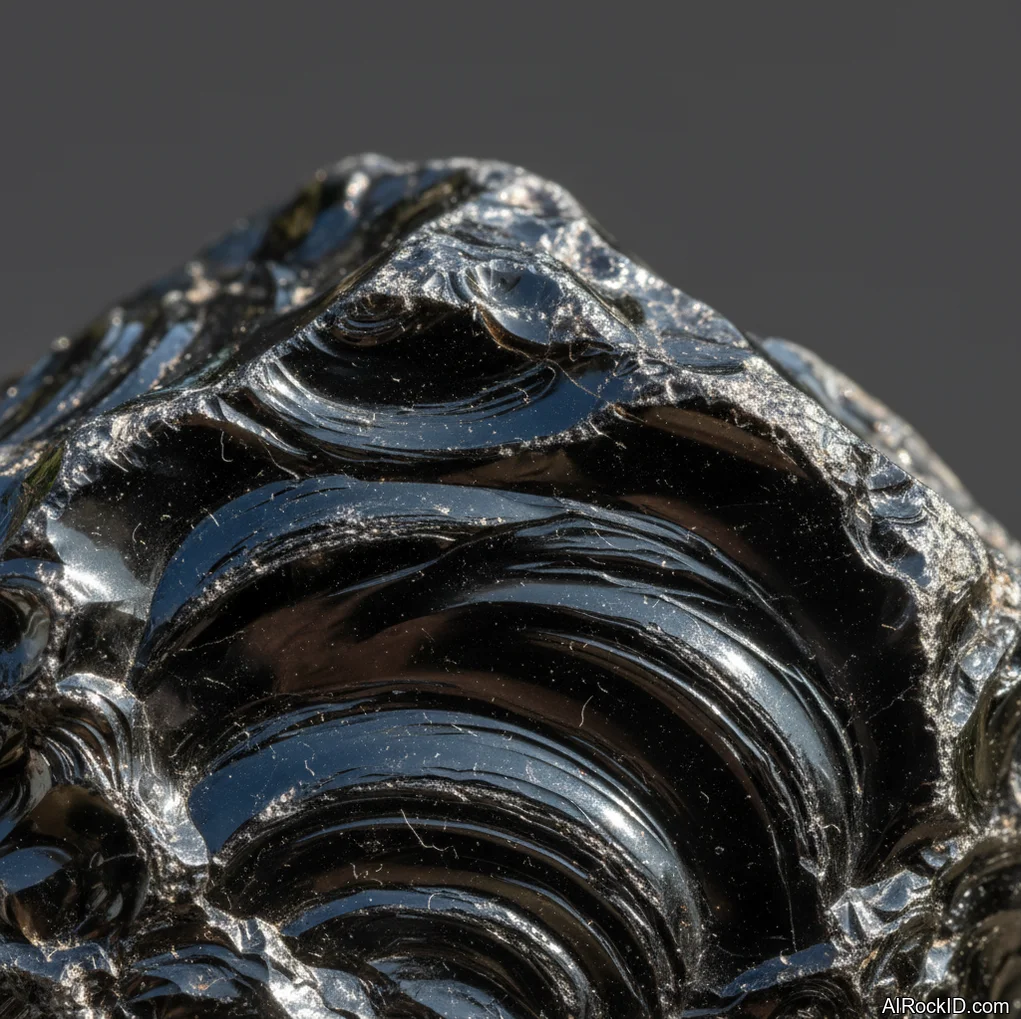
Obsidian happens when silica-rich lava cools so fast the atoms don’t get a chance to line up into crystals. So what you’re holding is volcanic glass, not a true mineral with a crystal system. That’s why it snaps and conchoidally fractures like a bottle, and why a fresh chip can be stupid sharp (the kind that’ll grab your fingertip before you even notice).
Those little “peanut” spots are usually spherulites or devitrified patches. Basically, they’re places where the glass started to reorganize into tiny radial bundles of crystals, often cristobalite plus feldspar microlites, either as it cooled or from later reheating. If you’ve got a loupe and decent light, you can sometimes catch a faint radial texture in the pale zones, especially on a high polish where the surface feels slick and mirror-like. But most of the time? It just looks like creamy blobs sitting on a brown base.
How to Identify Peanut Obsidian
Color: Chocolate-brown to espresso-brown body color with tan, beige, or cream mottling that can be round, bean-shaped, or blotchy. The contrast can be subtle in rough and bold in polish.
Luster: Vitreous, like glass, especially on fresh breaks and good polish.
Pick up a piece and rub your thumb across the polish. Real obsidian feels slick and glassy, not waxy like some dyed chalcedony. If you scratch it with a steel blade, it’ll mark easier than quartz, and the scratch tends to look like a thin, pale line. The real test is the fracture: a tiny chipped edge shows classic conchoidal curves, and that’s hard to fake without it actually being glass.
Common Look-Alikes
Peanut Obsidian is sometimes confused with these materials:
- Mahogany Obsidian
- Leopard Skin Jasper (dyed varieties)
- Polychrome Jasper
- Banded Agate (dyed brown)
- Glass with painted patterns
- Mookaite
Market Cautions & Treatments
When AI Can Get This Wrong
AI photo ID often confuses Peanut Obsidian with mahogany obsidian or jasper, especially if the pattern is faint or the photo is overexposed. Leopard skin jasper with tan spots is another common mix-up. The sure test is the glassy feel and how the pattern floats inside the stone, not just on the surface.
Properties of Peanut Obsidian
Physical Properties
| Crystal System | Amorphous |
| Hardness (Mohs) | 5.0-5.5 (Medium (4-6)) |
| Density | 2.35-2.60 |
| Luster | Vitreous |
| Diaphaneity | Opaque |
| Fracture | Conchoidal |
| Streak | White |
| Magnetism | Non-magnetic |
| Colors | Brown, Tan, Cream, Beige, Black-brown |
Chemical Properties
| Classification | Silicates |
| Formula | SiO2 (amorphous, with variable minor oxides) |
| Elements | Si, O |
| Common Impurities | Fe, Mg, Ca, Na, K, Al, Ti, Mn |
Optical Properties
| Refractive Index | 1.48-1.51 |
| Birefringence | None |
| Pleochroism | None |
| Optical Character | Isotropic |
Peanut Obsidian Health & Safety
It’s safe to handle and safe in water in normal use. But if it breaks, treat those edges like broken glass. Sharp chips can slice you, so don’t grab them with bare fingers.
Safety Tips
If you’re going to shape or grind it, put on safety glasses and a respirator, and keep things wet with water so you’re not breathing in glass and silica dust (that stuff hangs in the air way longer than you think).
Peanut Obsidian Value & Price
Price Range
Rough/Tumbled: $5 - $30 per piece
Price mostly comes down to pattern contrast, how good the polish actually is, and size. The clean, high-contrast stuff with that deep brown base and really “peanutty” mottling moves quick, but the muddy brown pieces with just a faint cream tint tend to sit around.
Durability
Moderate — Scratch resistance: Fair, Toughness: Poor
It’s chemically stable in normal conditions, but it chips easily and edges can bruise if it rattles around with harder stones.
How to Care for Peanut Obsidian
Use & Storage
Keep it in a pouch or a divided box slot so it doesn’t clack against quartz or corundum. And don’t toss it loose in a pocket with keys, it’ll get bruised edges.
Cleaning
1) Rinse with lukewarm water. 2) Use a mild soap and your fingers or a soft cloth to remove skin oils. 3) Dry fully and buff with a microfiber cloth to bring back the glassy shine.
Cleanse & Charge
If you do energetic upkeep, a quick rinse and a wipe works fine, or leave it on a shelf overnight. Avoid salt scrubs if the piece has tiny pits that can trap grains.
Placement
I like it on a desk or near the front door because the pattern is easy to enjoy up close. Bright, angled light shows the mottling best.
Caution
Don’t put it in an ultrasonic cleaner, and don’t heat it up. Obsidian can crack from thermal shock, and if it chips, those edges get scary sharp. Razor sharp.
Works Well With
Peanut Obsidian Meaning & Healing Properties
Next to jet-black obsidian, this one just comes off softer when you’re handling it, and I think it’s because the color looks warmer and not so intense. I’ve watched customers pick one up at my table, flip it in their palm a couple times, and go, “Huh, this feels steady,” without it feeling like a brick. That comment? I hear it a lot.
If you’re into using stones for meditation or grounding, peanut obsidian usually gets lumped in with the protective, boundary-setting obsidians. I keep that in the personal-practice lane, not the medical lane. Fact is, it’s glass made from fast-cooled lava, and I keep my take on it pretty simple: it works well as something you can physically anchor to. It’s smooth, it stays cool in your hand for a while, and it’s easy to lock your focus onto when your brain’s running hot.
But here’s the thing. People assume it’s tough because it’s dark and, well, “obsidian” sounds like it should be bulletproof. It’s not. Drop a palm stone on tile and yeah, you can chip it, and then you’ve got that little sharp spot your thumb finds every single time. So if you’re the kind of person who fidgets with a worry stone all day, grab one that’s nicely rounded (no weird points), and take a quick look at the edges now and then. Why learn the hard way?
Common mistakes
- Identifying any cream-spotted black stone as Peanut Obsidian without checking for glassy texture
- Confusing Snowflake Obsidian with Peanut Obsidian under warm indoor light
- Assuming all patterned obsidian trade names are standardized across sellers
- Overlooking air bubbles or molded edges that may indicate artificial glass
- Using only color to separate Peanut Obsidian from Dalmatian Jasper or other speckled rocks
Identify Peanut Obsidian from a photo
Compare Peanut Obsidian traits, care tips, value clues, and common lookalikes with a clear photo.