Mahogany Obsidian


Quick answer: Mahogany obsidian is a natural volcanic glass with black areas and reddish-brown patches caused mainly by iron-bearing inclusions. It is best identified by its glassy luster, conchoidal fracture, and irregular mahogany-colored patterning rather than by crystal faces.
AI Rock ID can help compare mahogany obsidian against similar dark volcanic glasses and iron-rich stones using color, luster, fracture, and pattern clues. RockIdentifier.io provides visual identification support, but physical tests such as hardness, streak, and fracture observation are useful for higher confidence.
Good fit
- Collectors who want a recognizable black-and-red volcanic glass
- Beginners practicing identification of glassy rocks and conchoidal fracture
- Jewelry wearers who prefer earthy red-brown and black patterns
- Lapidary users looking for material that takes a glossy polish
- People interested in stones traditionally associated with grounding practices
Not a good fit
- Rings or bracelets expected to withstand heavy daily impact
- Anyone seeking a mineral with visible crystal structure
- Buyers who need a rare or high-investment gemstone
- Households where sharp broken edges could be a safety concern
Most commonly confused with
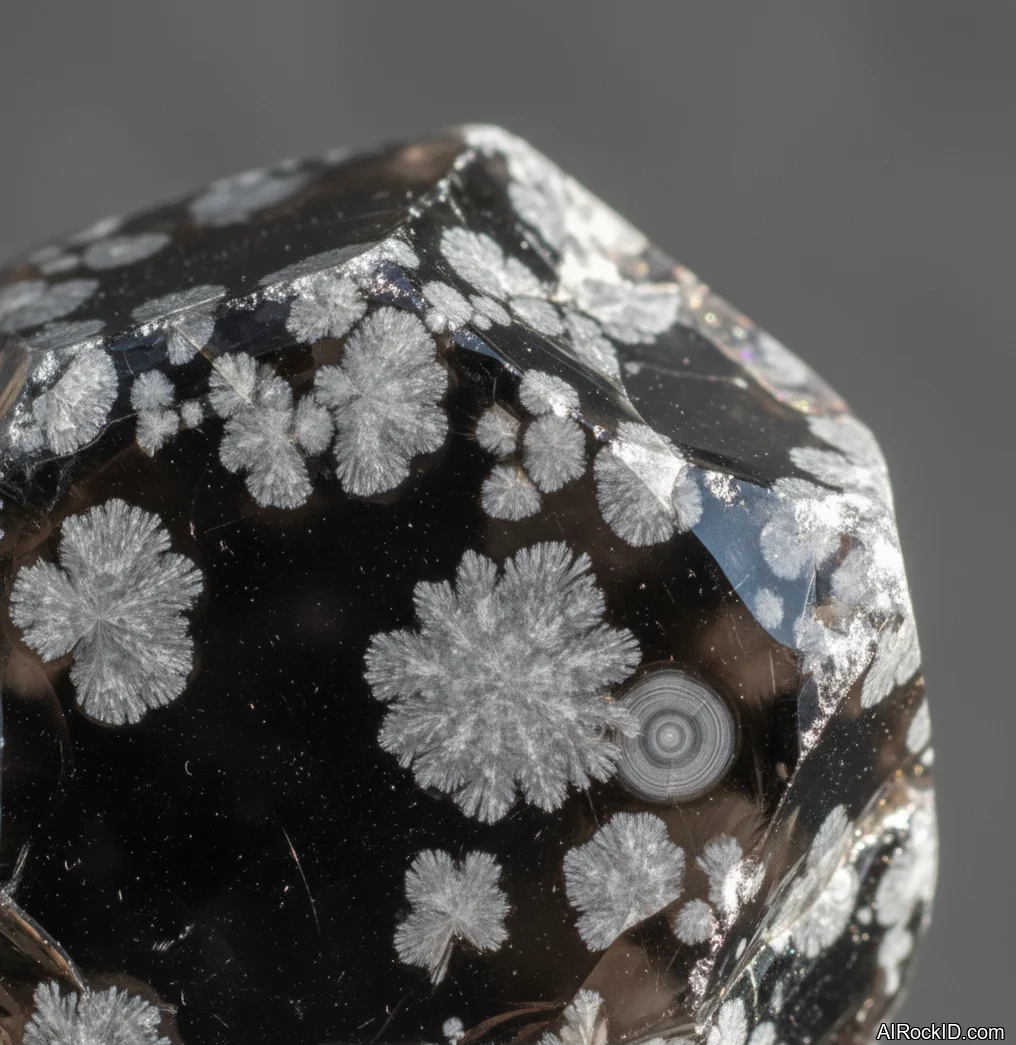
- Black Obsidian: Black obsidian is usually uniformly dark, while mahogany obsidian has reddish-brown iron-rich patches.
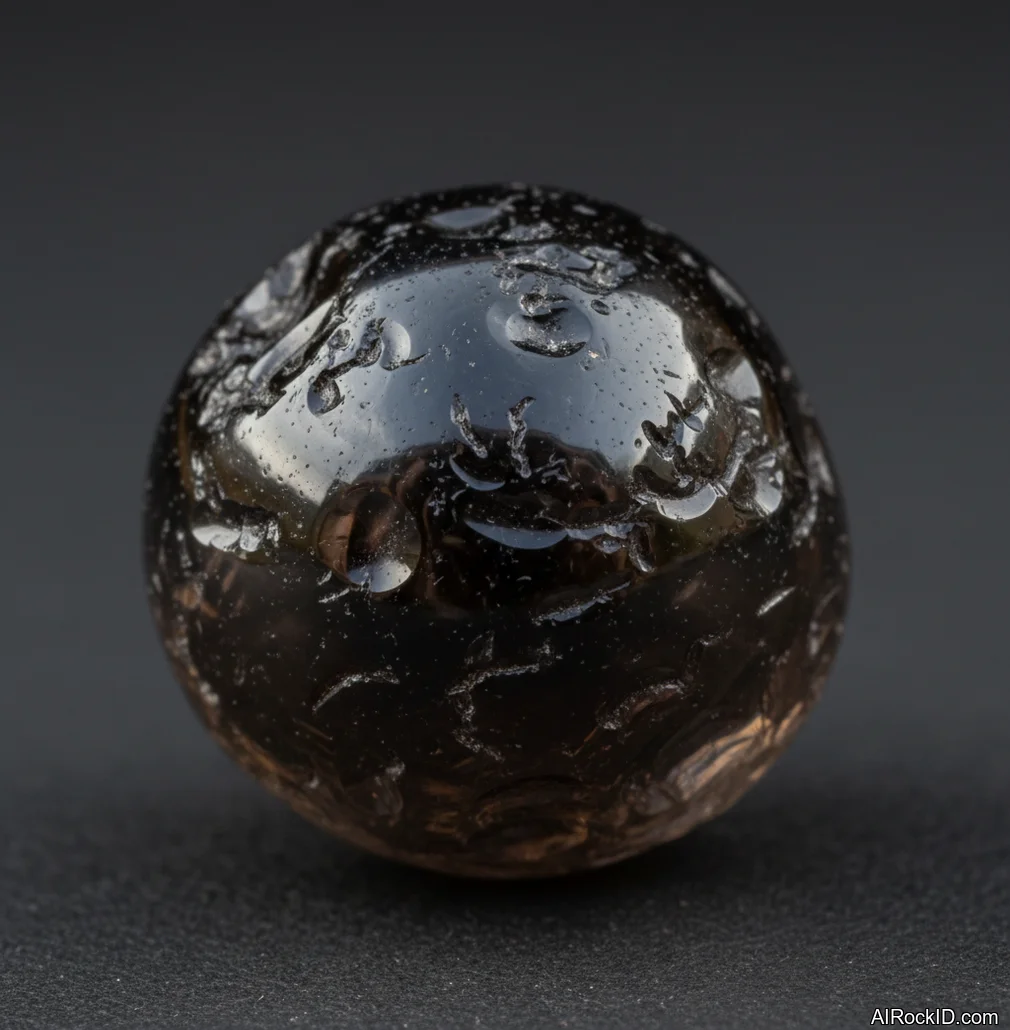
- Apache Tears: Apache tears are rounded nodules of obsidian, often translucent at thin edges, rather than patterned red-brown and black masses.
- Red Jasper: Red jasper is opaque microcrystalline quartz with a duller, waxy to earthy look and does not show glass-like conchoidal fracture as strongly.
- Hematite: Hematite is metallic to submetallic and gives a reddish-brown streak, unlike the glassy surface of obsidian.
Mahogany Obsidian vs. Common Lookalikes
| Stone | Typical Appearance | Key Difference |
|---|---|---|
| Mahogany obsidian | Glassy black with reddish-brown patches | Iron-rich mahogany areas in natural volcanic glass |
| Black obsidian | Uniform black glass | Little to no red-brown mottling |
| Red jasper | Opaque red to brick-red stone | Waxy or duller luster; harder quartz material |
| Hematite | Metallic gray, black, or reddish | Heavy feel and red-brown streak |
| Dyed glass | Bright or unusually even coloring | May show bubbles, uniform dye concentration, or artificial patterning |
AI identification confidence
AI identification confidence for mahogany obsidian is usually moderate to high when the image clearly shows glassy luster, black body color, and reddish-brown patches. Confidence drops when the stone is tumbled, poorly lit, heavily polished, or photographed without scale and multiple angles.
When AI gets it wrong
- The photo has glare that hides the glassy surface or makes colors look artificial.
- The specimen is a small tumbled piece with no visible fracture or edge texture.
- Red jasper, dyed glass, or dark slag glass has a similar color pattern in the image.
- The stone is photographed under warm lighting that exaggerates red-brown tones.
Final recommendation
Choose mahogany obsidian if you want an affordable volcanic glass with natural black and reddish-brown contrast. For better authenticity, look for irregular patterning, glassy luster, conchoidal fracture, and seller information that identifies it as natural obsidian rather than generic colored glass.
How to Check Mahogany Obsidian Authenticity
Natural mahogany obsidian usually has irregular reddish-brown patches within a black glassy base rather than perfectly repeated patterns. Broken or chipped edges should show conchoidal, shell-like fracture, and thin edges may appear slightly translucent. Be cautious with pieces described only as colored glass, dyed stone, or imitation obsidian without origin details.
Buying Tips for Mahogany Obsidian
Color contrast, polish quality, size, and carving workmanship affect the price more than rarity. Small tumbled stones are usually inexpensive, while large spheres, carvings, and clean cabochons cost more because of labor and material loss. Ask whether the item is natural, dyed, or glass imitation when color looks unusually uniform or overly vivid.
Field Identification Clues
Mahogany obsidian is found in volcanic settings where silica-rich lava cooled quickly into glass. In rough form, it may show sharp edges, curved fracture surfaces, and a vitreous luster. It lacks cleavage and does not form visible crystal faces, which helps separate it from many crystalline minerals.
What Is Mahogany Obsidian?
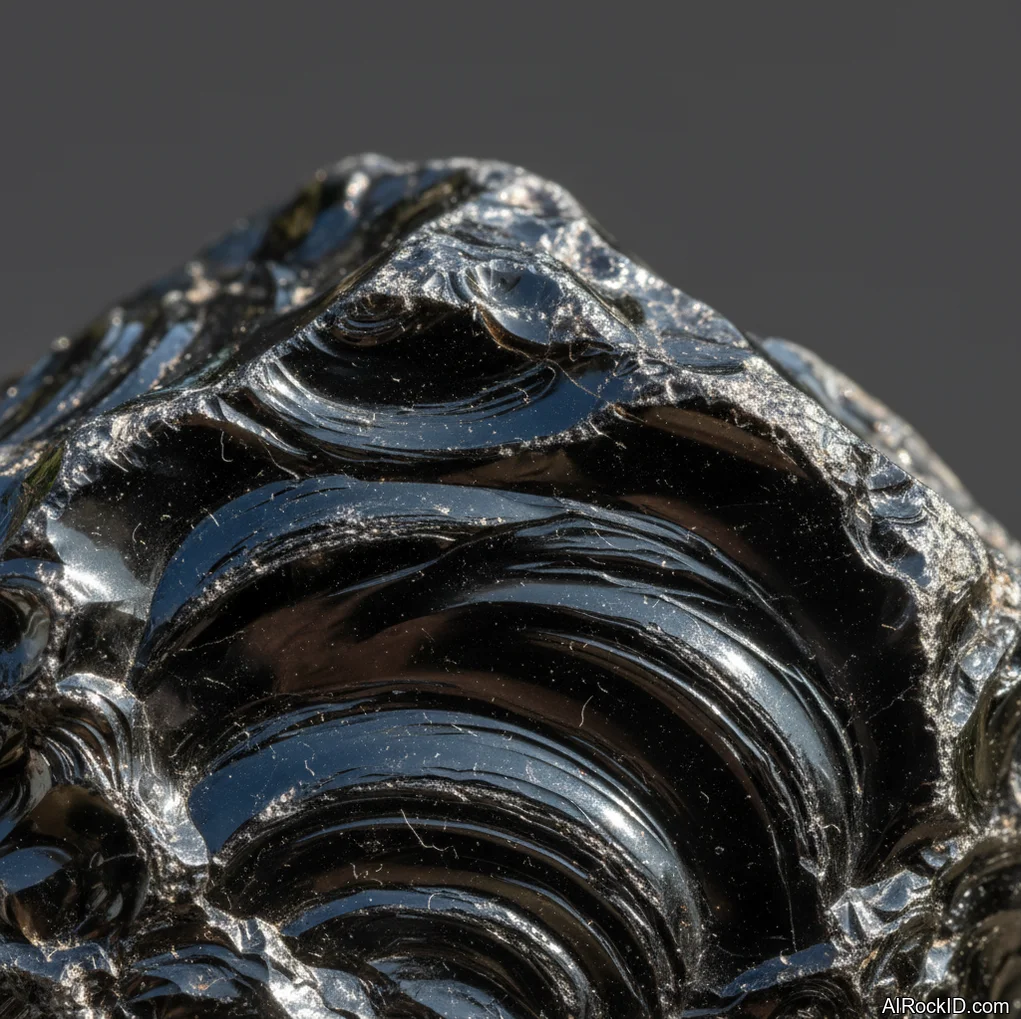
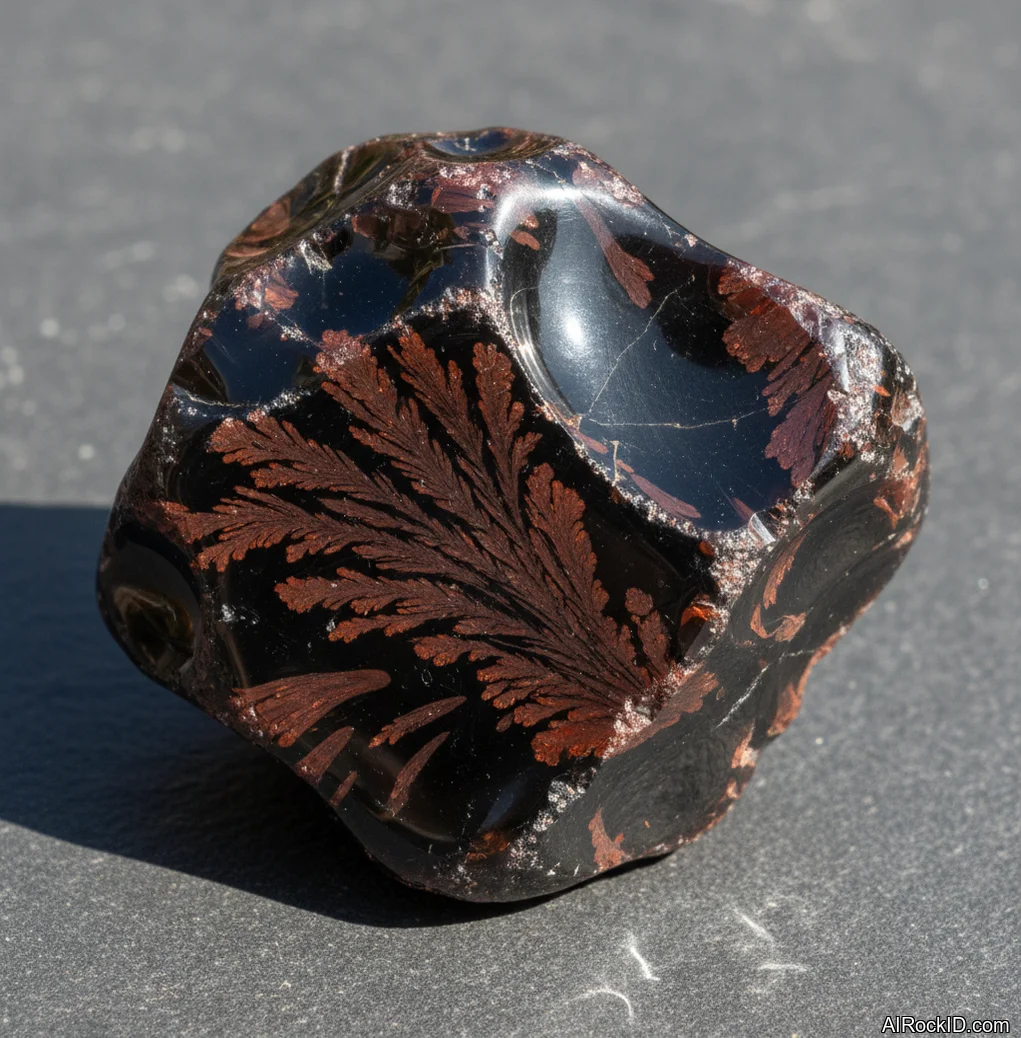
Mahogany Obsidian is a naturally occurring volcanic glass. Most of the time it’s black, with red-brown to mahogany mottling that comes from iron-rich material in the melt.
Pick up a piece and you feel it immediately. It’s glassy-smooth, a little cooler than your skin for the first second, and when you tap it against another stone you get that dense little “click” that doesn’t sound like anything else. And the pattern is really the main event: rusty-brown blotches or bands floating inside a black base, like coffee spilled into ink. Under bright shop lights, the polished pieces can look almost wet, like someone just wiped them down.
But don’t go in expecting crystal behavior. No clean crystal faces, nothing to “admire” in that way, and the rough chunks can look kind of blah on the outside with a dull, dusty rind (almost like a thin coating you want to rub off). When it breaks or chips, you get the classic shell-like conchoidal fracture, and the edges can come out scary sharp. I’ve pulled tumbled pieces out of my pocket at a show and realized they’d scratched up softer stones just from rolling around all day. Who expects that from something that looks so smooth?
Origin & History
“Obsidian” is an old word. People usually trace it back to the Roman writer Pliny the Elder, who wrote about a glassy stone called *obsidianus*, said to come from Ethiopia and tied to someone named Obsidius. The backstory’s kind of tangled (who was Obsidius, and was it really Ethiopia?), but the name stuck and now it’s basically the label for volcanic glass.
“Mahogany” is just a trade name, and it’s about appearance, not a separate species. Sellers leaned on it because the red-brown patches honestly do look like mahogany wood grain once the stone’s been polished into palm stones or spheres, with that glossy, almost wet-looking shine you get when you rub it under a bright light. Obsidian in general has a massive human track record since it snaps into sharp blades and points, but mahogany obsidian is mostly a modern lapidary and collector’s material, not an archaeological “type.”
Where Is Mahogany Obsidian Found?
Mahogany-pattern obsidian shows up in volcanic regions where obsidian forms, with a lot of the commercial material coming from the western United States and Mexico.
Formation
Obsidian happens when silica-rich lava chills so quickly the atoms never get a chance to lock into a crystal lattice. Fast. Like, blink-and-it’s-done fast. Picture rhyolitic lava in flows, in domes, or right out along the margins where the melt gets quenched in a hurry. So you don’t end up with crystals at all. You get an amorphous structure, basically natural glass.
That mahogany tone comes down to iron-bearing inclusions or the oxidation state of iron in parts of the melt. Thing is, in a hand sample those brown zones often show up as cloudy smudges instead of neat, tidy bands. And if you’ve ever taken a saw to a chunk (wet blade, that gritty glassy smell, black slurry everywhere), you notice something right away: the look can flip completely from slice to slice. One cut is all dramatic swirls, and the next face? Almost plain black. How’s that for consistency.
How to Identify Mahogany Obsidian
Color: Black volcanic glass with red-brown to mahogany patches, blotches, or banding; the brown areas are often opaque and earthy-looking compared to the black glass.
Luster: Vitreous, especially on fresh breaks or polished surfaces.
Look closely at a fresh chip or a broken edge. Real obsidian has a sharp, curved conchoidal fracture and a glassy edge that catches light like a bottle shard. If it feels oddly light or “plasticky” and warms up fast in your hand, be suspicious, since resin and dyed glass imitations do exist in gift shops. The real test is the sound and feel: two pieces tapped together give a crisp glass click, and a good palm stone stays cool longer than most plastics.
Common Look-Alikes
Mahogany Obsidian is sometimes confused with these materials:
- Red jasper (especially polished pieces with black patches)
- Rhyolite (rainforest jasper) with brown-and-black mottling
- Banded iron formation / jasper-hematite mix sold as "mahogany" something
- Smoky quartz (very dark, tumbled) misread as black with brown zones
- Man-made black glass with brown swirls (lampwork or cast "obsidian")
- Dyed black chalcedony/agate with reddish-brown dye in fractures
Market Cautions & Treatments
When AI Can Get This Wrong
In photos, AI mixes mahogany obsidian up with red jasper and rhyolite all the time because the brown blotches read the same once the surface is polished. The real test is in-hand: obsidian feels slick like bottle glass, shows conchoidal chips with razor-curved edges, and a steel pin will skate instead of biting like it can on some jaspers. Look closely with a flashlight at the edge, too. Obsidian often has a slightly translucent smoky-brown rim on thin spots, while most jasper stays dead opaque.
Properties of Mahogany Obsidian
Physical Properties
| Crystal System | Amorphous |
| Hardness (Mohs) | 5.0-5.5 (Medium (4-6)) |
| Density | 2.35-2.60 |
| Luster | Vitreous |
| Diaphaneity | Opaque |
| Fracture | Conchoidal |
| Streak | White |
| Magnetism | Non-magnetic |
| Colors | Black, Reddish-brown, Mahogany brown, Dark brown |
Chemical Properties
| Classification | Silicates |
| Formula | SiO2 (amorphous, variable composition) |
| Elements | Si, O |
| Common Impurities | Fe, Mg, Ca, Na, K, Al, Mn |
Optical Properties
| Refractive Index | 1.48-1.51 |
| Birefringence | None |
| Pleochroism | None |
| Optical Character | Isotropic |
Mahogany Obsidian Health & Safety
Handling it is safe. But if you start cutting, grinding, or dry sanding, you can kick up fine silica dust, and you’ll also end up with shards that are razor-sharp (the kind that’ll nick you before you even notice).
Safety Tips
Use wet grinding or wet cutting when you can. Wear eye protection. And if you’re creating dust, put on a properly fitted respirator (one that actually seals to your face, not the loose kind that fogs your glasses).
Mahogany Obsidian Value & Price
Price Range
Rough/Tumbled: $2 - $20 per palm stone or tumble
Cut/Polished: $1 - $8 per carat
Price mostly comes down to the pattern contrast, how clean the polish is, and the size. The pieces that move quickest are the ones with a slick, high-gloss finish (the kind that feels like glass under your fingertips), bold mahogany patches, and hardly any pits. But if it looks dull and it’s riddled with pits, it tends to sit around a lot longer.
Durability
Moderate — Scratch resistance: Fair, Toughness: Fair
It’s chemically stable for normal display, but it can chip easily and the edges can spall if it bangs around with harder stones.
How to Care for Mahogany Obsidian
Use & Storage
Store it in a soft pouch or a divided box slot, because it chips if it rattles against quartz, agate, or metal. If you keep it on a desk, set it on cloth, not bare stone.
Cleaning
1) Rinse with lukewarm water and a drop of mild soap. 2) Wipe with a soft microfiber cloth, getting into any little pits. 3) Dry fully, then buff lightly to bring back the glassy shine.
Cleanse & Charge
For a metaphysical-style cleanse, use running water, smoke, or sound. If you use sunlight, keep it brief since the polish can look tired if it sits in harsh window light for months.
Placement
Put it where it won’t get knocked off a shelf, and where you’ll actually touch it. It’s one of those stones that makes sense as a pocket piece, as long as it’s not sharing space with harder minerals.
Caution
Fresh breaks can be scary sharp, like the kind of edge that’ll nick you before you even notice. So don’t hand broken pieces to kids, and don’t toss sharp little chips loose into a bag where they can poke through or slice a finger while you’re fishing around. And skip the ultrasonic cleaner, because that vibration can work its way into tiny fractures and pits and make the damage worse.
Works Well With
Mahogany Obsidian Meaning & Healing Properties
Most folks grab mahogany obsidian when they’re after “grounding,” and yeah, I understand the impulse. It’s got this surprising heft for a little chunk of glass. And the color feels like dirt and bark even though, technically, it’s volcanic glass.
When I’m at a show doing the tray shuffle, hands a little dry from handling stones all day, brain totally cooked, I’ll keep a mahogany obsidian palm stone in my fist. Not for some big mystical fireworks. Just because it’s smooth, slightly cool at first touch, and it gives me something solid to lock onto while everything else feels noisy.
Next to jet-black obsidian, those brown patches change the whole mood for a lot of people. Black obsidian can come off intense, almost too sharp when you’re trying to meditate. Mahogany reads warmer. But look, here’s the honest bit: if you’re waiting for an instant, dramatic mood flip, you might walk away unimpressed. What it does well is steady. Consistent. It’s a tactile anchor, and the pattern gives your eyes a place to rest (which is underrated, honestly).
People tie it to protection and boundary work too, mostly because obsidian has that long-standing association with blades and sharp edges. So I’d put it like this: it’s great for personal rituals, journaling, or just sitting quietly with yourself. But it’s not medical care. If you’re dealing with anxiety, pain, or trauma, treat crystals like a comfort object, a little reminder in your pocket, and still do the real support work alongside it.
Common mistakes
- Assuming every black-and-red polished stone is mahogany obsidian without checking luster and fracture.
- Confusing red jasper with mahogany obsidian because both can show earthy red-brown tones.
- Using color alone for identification when lighting and photo editing can change the appearance.
- Expecting mahogany obsidian to be highly scratch-resistant because it is used in jewelry.
- Ignoring sharp edges on broken pieces, which can cut skin like glass.
- Treating metaphysical traditions as medical evidence rather than cultural or personal beliefs.
Identify Mahogany Obsidian from a photo
Compare Mahogany Obsidian traits, care tips, value clues, and common lookalikes with a clear photo.