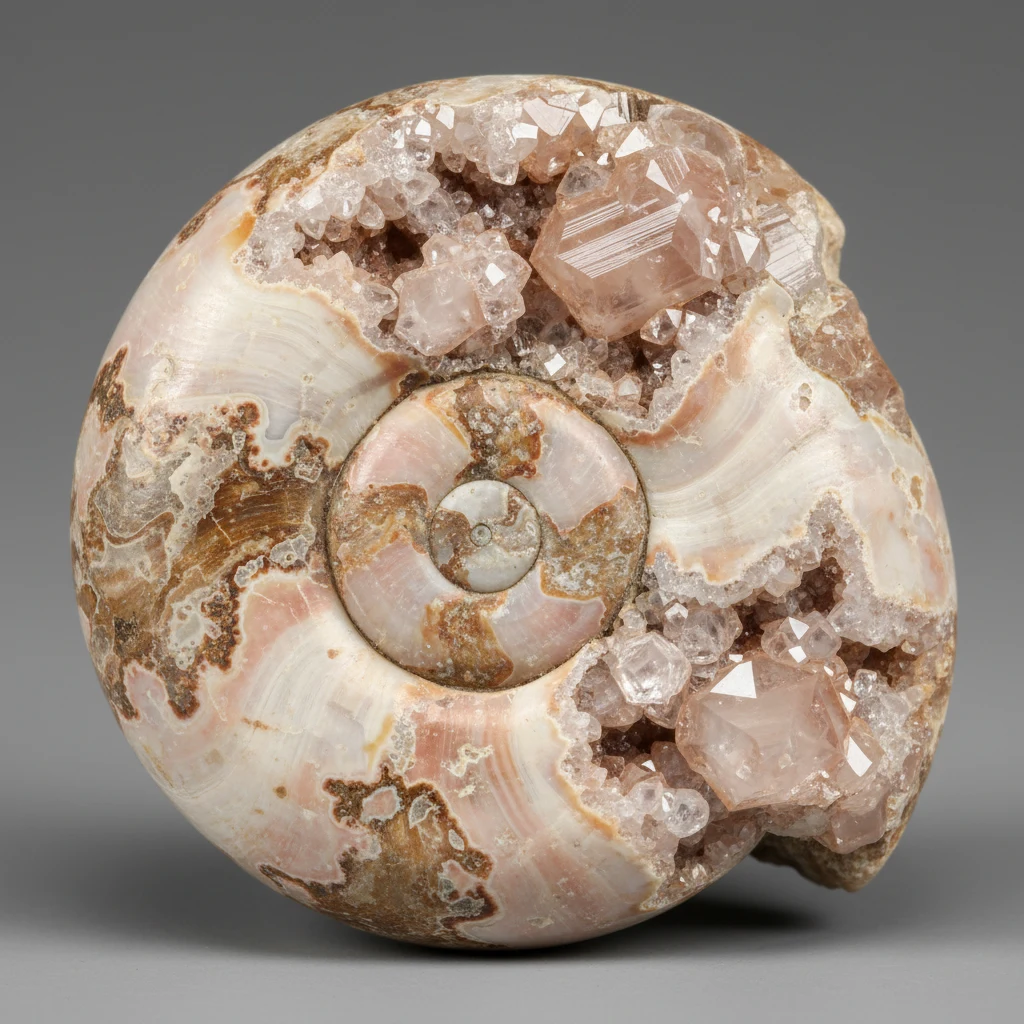
Seashell


Quick answer: Seashell is an organic calcium carbonate material produced by mollusks, often collected for its pearly, white, cream, brown, orange, or pink appearance. It is relatively soft at about Mohs 3–4, so identification should consider texture, layered structure, and possible dyes or coatings.
AI Rock ID can help compare a seashell specimen with visually similar materials by analyzing color, shape, surface texture, and growth patterns from a photo. RockIdentifier.io provides reference information for seashell and related organic gem materials, including practical identification and care context.
Good fit
- Collectors interested in organic gem materials rather than minerals formed in rock
- People comparing beach-collected shells with mother-of-pearl, coral, or imitation shell
- Jewelry buyers checking whether shell beads, cameos, or inlays are natural, dyed, or coated
- Beginners who want a recognizable material with visible natural growth patterns
Not a good fit
- High-wear rings or bracelets that need strong scratch resistance
- Testing with acids, harsh cleaners, or ultrasonic machines
- Buyers who require a mineral specimen with a fixed crystal structure
- Situations where exact species identification is required from appearance alone
Most commonly confused with
- Mother of Pearl: Mother of pearl is nacre from the inner shell layer and usually shows a smoother, stronger iridescent sheen.
- Coral: Coral commonly has a branching or porous skeletal texture, while seashell often shows curved growth bands or layered shell structure.
- Pearl: Pearl forms as a rounded nacreous object inside a mollusk, while seashell is the mollusk’s outer protective structure.
- Conch Shell: Conch shell is a specific type of seashell, often valued for pink-to-orange material used in carvings and cameos.
Seashell vs Similar Organic Materials
| Material | Typical Look | Key Difference | Common Use |
|---|---|---|---|
| Seashell | Curved, layered, sometimes ridged or banded | Outer mollusk shell; may be matte, glossy, or pearly | Specimens, beads, carvings, inlay |
| Mother of Pearl | Smooth white to gray with iridescence | Inner nacre layer with stronger pearly play of color | Inlay, buttons, jewelry |
| Coral | Branching, porous, red, pink, white, or orange | Marine skeleton with different growth texture | Beads, carvings, vintage jewelry |
| Pearl | Rounded, lustrous bead-like form | Nacreous body formed inside a mollusk | Jewelry |
| Plastic Imitation | Uniform color or repeated pattern | Synthetic material, often lighter and warmer to touch | Costume jewelry, décor |
AI identification confidence
AI identification of seashell is often moderate to high when the photo clearly shows natural curvature, growth lines, ridges, or a pearly interior. Confidence may drop when the piece is polished, dyed, carved, highly worn, or photographed without scale and multiple angles.
When AI gets it wrong
- A polished cabochon shows only color and no shell structure
- Dyed shell resembles coral, turquoise, or another colored gem material
- Plastic or resin imitation has realistic printed banding
- A close-up photo lacks scale, edge view, or visible layers
Final recommendation
For buying, look for visible layering, natural growth variation, and honest disclosure of dye, coating, or stabilization. For identification, compare several photos under neutral light and avoid relying on color alone.
How to Check Seashell Authenticity
Authentic seashell usually shows natural growth lines, curved structure, and slight variation in color or thickness. Edges may reveal layered calcium carbonate rather than a single uniform plastic body. A warm needle or destructive scratch test is not recommended for jewelry or collectible pieces; visual inspection and seller disclosure are safer first steps.
Dyed and Treated Seashell
Seashell is commonly dyed, bleached, polished, sealed, or coated for jewelry and décor. Bright blue, green, purple, or very even pink colors may indicate treatment rather than natural coloration. Treated shell can still be decorative, but the treatment should be disclosed when it affects value or care.
Buying Seashell Jewelry and Inlay
Seashell in jewelry is best suited for earrings, pendants, brooches, and inlay pieces that avoid heavy abrasion. Check whether the material is solid shell, a thin veneer, reconstructed shell, or shell-patterned imitation. Secure settings and smooth edges matter because shell can chip or delaminate if struck.
What Is Seashell?
Seashell is a very common organic gem: the hard, protective outer case made by marine animals. In the hand, a good specimen feels light but firm, with a pearly surface that can show white, brown, or pink color and a clean opening or hinge depending on the shell form.
As a collector material, Seashell is valued less for rarity and more for condition, shape, color, and surface pattern. It is calcium carbonate, CaCO3, with a Mohs hardness of 3-4, white streak, pearly luster, opaque diaphaneity, and a listed density of 2.5-2.9 g/cm3.
Origin & History
The term “seashell” refers to shells of mollusks, and it has been used since ancient times. These pieces have been collected and studied for centuries, so even a common beach shell can carry a long human history of looking, sorting, naming, and keeping.
For a practical collection label, note Seashell as an organic gem rather than a typical mined crystal specimen. When comparing mineral terminology and calcium carbonate materials, collectors may cross-check broader reference language at mindat.org while keeping the shell’s biological origin clear.
Where Is Seashell Found?
Seashells are commonly found on beaches worldwide. The provided localities include Florida and California in the USA, coastal Mexico, and Okinawa, Japan, all places where beach-collected shells may turn up in many shapes, colors, and conditions.
Formation
Seashell forms when marine organisms secrete calcium carbonate. The shell grows as the animal matures, building a hard outer case that protects the living animal and later may wash onto beaches as a collectible organic gem.
Chemically, Seashell is CaCO3 and may include listed impurities such as Mg and Fe. Its properties are recorded here as amorphous, non-magnetic, opaque, and pearly, with conchoidal fracture; that combination gives the specimen a firm but sometimes chip-prone feel.
How to Identify Seashell
Identify Seashell by its organic shell form first: varied shapes, surface patterns, and the presence of a hinge or opening are key clues. Common colors include white, brown, and pink, often with a shiny or pearly luster rather than a glassy mineral shine.
A Seashell has white streak, Mohs hardness 3-4, and is non-magnetic. It is opaque, has conchoidal fracture, and is listed with an isotropic optical character, refractive index of 1.65-1.68, no birefringence, and no pleochroism.
Properties of Seashell
Physical Properties
| Crystal System | Amorphous |
| Hardness (Mohs) | 3-4 (Mohs) (Medium (4-6)) |
| Density | 2.5-2.9 g/cm3 |
| Luster | Pearly |
| Diaphaneity | Opaque |
| Fracture | Conchoidal |
| Streak | White |
| Magnetism | Non-magnetic |
| Colors | White, Brown, Pink |
Chemical Properties
| Classification | Biomineral |
| Formula | CaCO3 |
| Elements | Ca, C, O |
| Common Impurities | Mg, Fe |
Optical Properties
| Refractive Index | 1.65-1.68 |
| Birefringence | None |
| Pleochroism | None |
| Optical Character | Isotropic |
Seashell Health & Safety
Seashells are generally safe to handle.
Seashell Value & Price
Price Range
Rough/Tumbled: $1 - $50 per specimen
Cut/Polished:
Price varies based on rarity and condition.
Durability
Moderate — Scratch resistance: Fair, Toughness: Good
Seashells can be fragile and are best kept dry.
How to Care for Seashell
Use & Storage
Store in a cool, dry place to prevent damage.
Cleaning
Rinse gently with water and a soft brush to remove dirt. Avoid harsh chemicals.
Cleanse & Charge
Place in sunlight or moonlight for cleansing.
Placement
Display in a location away from direct sunlight to avoid fading.
Caution
Handle with care as they can chip easily.
Works Well With
Seashell Meaning & Healing Properties
In crystal-healing practice, Seashell is used for emotional healing, calming, nurturing, intuition, meditation, relaxation, creativity, growth, trust, and love. Its associations are Sacral and Heart chakras, Cancer and Pisces, the Moon, and the Water element.
Hold or place a Seashell where its curved form and pearly surface feel soothing, but treat these uses as cultural and meditative rather than medical. Seashells are not a substitute for medical treatment, and physically they are best handled gently because they can chip easily.
Identify Seashell from a photo
Compare Seashell traits, care tips, value clues, and common lookalikes with a clear photo.
Common mistakes
- Assuming every pearly shell piece is mother of pearl
- Identifying seashell by color alone without checking layers or growth lines
- Using vinegar or acid tests, which can damage calcium carbonate materials
- Putting shell jewelry in ultrasonic or steam cleaners
- Assuming bright color is natural without asking about dye or coating
- Mistaking molded plastic shell beads for carved natural shell