Sedimentary Rock


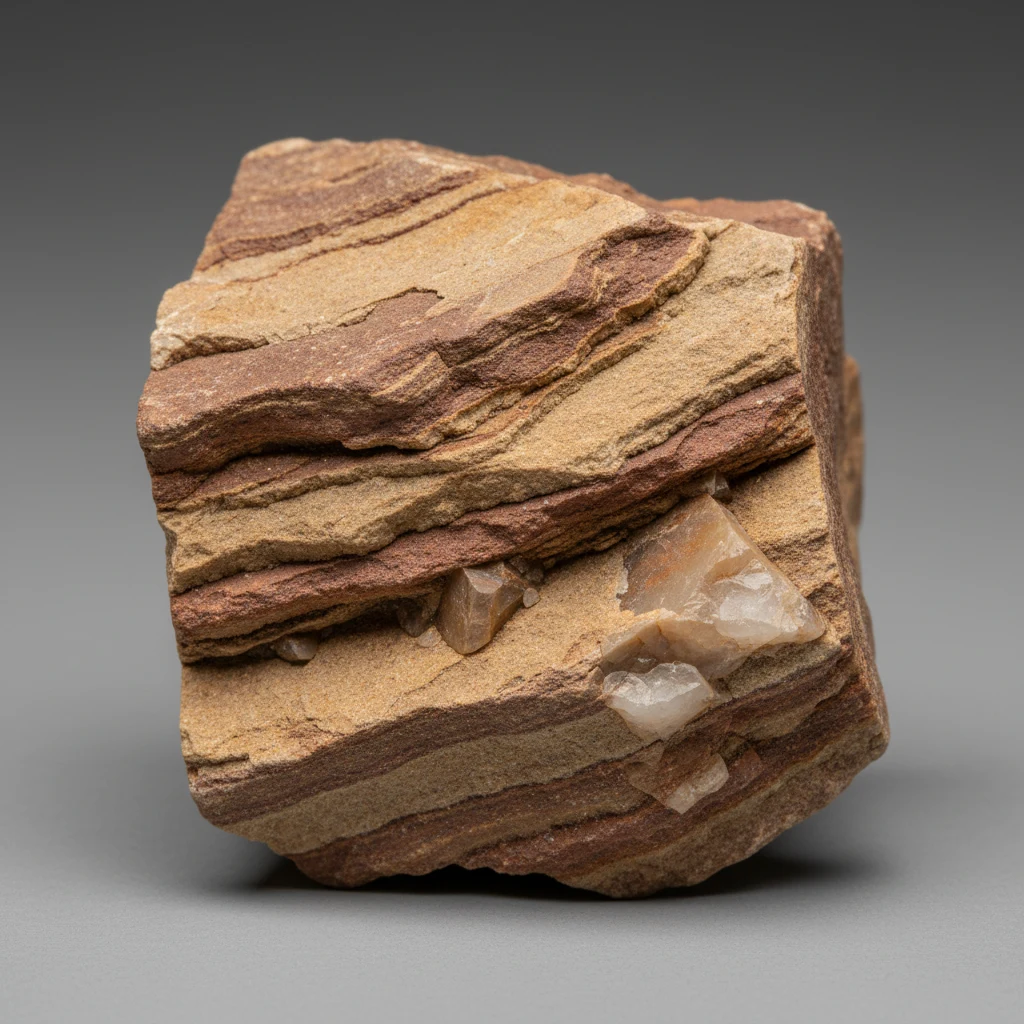
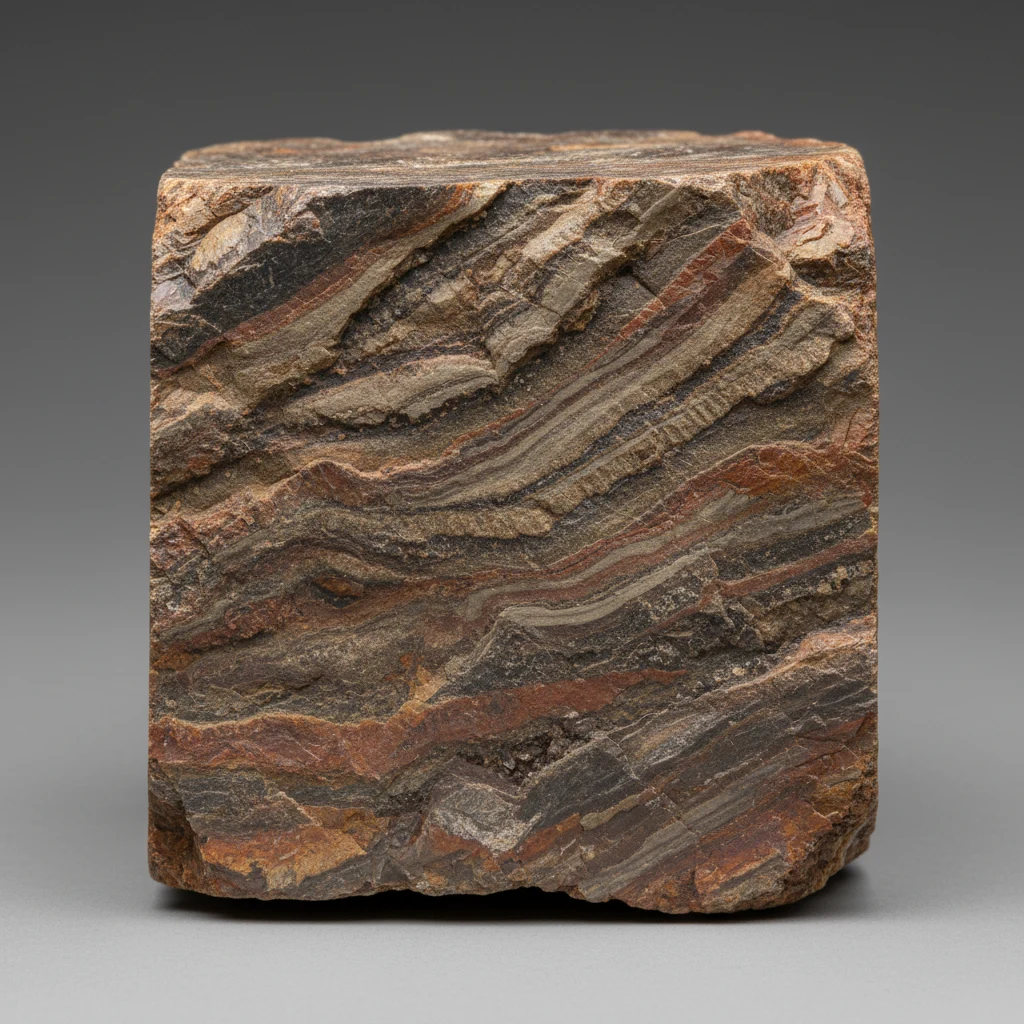
Quick answer: Sedimentary rock is a broad rock category made from mineral grains, organic material, or chemical precipitates that accumulate and harden over time. It is commonly identified by layering, grainy texture, fossils, or cemented fragments, but appearance varies widely by rock type.
AI Rock ID can help screen sedimentary rock specimens by comparing visible traits such as layering, grain size, color, and fossil content. RockIdentifier.io provides reference information that can support visual identification, but field context and simple tests are often needed for confidence.
Good fit
- Collectors who want examples of layered, fossil-bearing, or grainy rocks
- Students learning the difference between sedimentary, igneous, and metamorphic rocks
- People identifying landscaping stones, beach finds, or river rocks
- Fossil enthusiasts checking whether a rock type is likely to preserve fossils
Not a good fit
- Anyone seeking a single mineral with one fixed hardness or crystal form
- Collectors who need gem-grade transparency or faceted material
- Situations where professional geologic, construction, or environmental testing is required
Most commonly confused with
- Limestone: Limestone is a specific sedimentary rock that often reacts with dilute acid because it is rich in calcite.
- Sandstone: Sandstone is a sedimentary rock made mostly of sand-sized grains, usually with a gritty feel.
- Shale: Shale is fine-grained sedimentary rock that commonly splits into thin sheets.
- Marble: Marble is metamorphosed limestone and usually shows recrystallized texture rather than original sedimentary layers.
Sedimentary Rock vs Common Lookalikes
| Feature | Sedimentary Rock | Common Lookalike |
|---|---|---|
| Layering | Often shows beds, laminae, or compacted layers | Igneous rocks usually lack bedding; metamorphic rocks may show foliation |
| Texture | May be gritty, crumbly, fossiliferous, or made of cemented fragments | Crystalline rocks often show interlocking mineral grains |
| Fossils | Possible in limestone, shale, and some sandstones | Rare in igneous and most metamorphic rocks |
| Acid reaction | Some types, especially limestone, fizz with dilute acid | Quartz-rich sandstone and basalt usually do not fizz |
| Breakage | May split along bedding or crumble along grains | Massive igneous rocks often break more uniformly |
AI identification confidence
AI identification is usually more reliable when the rock shows clear bedding, fossils, grain size, or a fresh broken surface. Confidence is lower for weathered, stained, polished, or highly metamorphosed specimens because surface appearance can hide original sedimentary features.
When AI gets it wrong
- Weathered basalt, concrete, and slag can resemble dark sedimentary stones in photos.
- Marble and quartzite may be mistaken for limestone or sandstone after metamorphism changes the texture.
- Polished decorative stones can lose visible bedding and grain clues.
- A single close-up without scale can make shale, slate, and fine-grained limestone difficult to separate.
Final recommendation
For identification, photograph a fresh surface, include a scale, and note where the specimen was found. If the rock may be used for construction, aquarium placement, or environmental decisions, confirm the identification with appropriate testing or a qualified professional.
How to Check Authenticity When Buying Sedimentary Rock
Authentic sedimentary rock specimens should have a clear rock-type label, locality information when available, and visible traits that match the description, such as bedding, fossils, shell fragments, or sand-sized grains. Be cautious with vague labels like “natural healing stone” if the listing does not state whether the material is limestone, sandstone, shale, conglomerate, or another specific rock type.
Field Clues That Improve Identification
Useful field notes include the location, surrounding rock layers, whether the specimen was found loose or in an outcrop, and whether layers continue across the stone. A hand lens can reveal grain size, shell fragments, cement, or tiny mineral crystals that are not obvious in a standard photo.
Simple Tests to Separate Similar Rocks
A scratch test can help distinguish soft carbonate-rich rocks from harder quartz-rich rocks, while a vinegar or dilute acid test may indicate calcite in limestone. These tests should be done on an inconspicuous area, and acid testing should be avoided on valuable, polished, or culturally significant specimens.
What Is Sedimentary Rock?
Sedimentary rock is a common rock type formed from accumulated sediment, often recognized by visible layers and occasional fossils. In hand, it usually feels earthy rather than glassy, with browns, reds, and grays that can look like compressed landscape history. Its luster is typically dull to earthy, and its diaphaneity is opaque.
For collectors, sedimentary rock is less about sparkle and more about texture, structure, and story. Hardness is usually low to moderate but listed across a broad Mohs range of 3-7, so one specimen may chip more easily than another. It is non-magnetic, commonly shows uneven fracture, and has a white streak.
Origin & History
The word sedimentary comes from the Latin sedimentum, meaning settling. That origin fits the material perfectly: these rocks are built from particles that accumulate over time, then become compacted or cemented into a stable rock. They have been observed since ancient times, with formal description beginning in the 18th century.
In a collection tray, sedimentary rock often reads like a record of place rather than a single mineral species. A piece may include mineral and organic particles, and some examples preserve fossils. For broader geologic terminology and public earth-science context, consult USGS resources.
Where Is Sedimentary Rock Found?
Sedimentary rock is commonly found in riverbeds, lakes, and ocean floors. Documented countries include the United States, Canada, and Australia, and notable localities include the Grand Canyon in Arizona, the Great Barrier Reef in Australia, and the Basin and Range of the United States.
Formation
Sedimentary rock forms through the compaction and cementation of mineral and organic particles over time. It can also form when water evaporates, leaving material behind that later becomes rock. This is why many pieces show bedding, layered structures, or fossil traces.
The chemistry varies by type rather than following one fixed formula; limestone, for example, is listed as CaCO3. Elements listed for sedimentary rock include Si, O, and Ca, with common impurities such as Fe and Al. That variable makeup is part of why color, density, and hardness can differ so much from specimen to specimen.
How to Identify Sedimentary Rock
Identify sedimentary rock by looking first for layers, an earthy surface, and possible fossils. The colors can vary widely, especially brown, red, and gray. It is typically opaque with an earthy luster, a white streak, uneven fracture, and non-magnetic behavior.
As a rock category, its crystal system is listed as amorphous, and the formula varies by type. Density ranges from 1.5-3.0 g/cm3, while hardness spans Mohs 3-7, so scratch response alone is not enough. In practice, structure is the strongest clue: bedding, dull texture, and fossil content are the features to check first.
Properties of Sedimentary Rock
Physical Properties
| Crystal System | Amorphous |
| Hardness (Mohs) | 3-7 (Medium) |
| Density | 1.5-3.0 g/cm3 |
| Luster | Earthy |
| Diaphaneity | Opaque |
| Fracture | Uneven |
| Streak | White |
| Magnetism | Non-magnetic |
| Colors | Brown, Gray, Red |
Chemical Properties
| Classification | Sedimentary |
| Formula | Varies by type (e.g. limestone: CaCO3) |
| Elements | Si, O, Ca |
| Common Impurities | Fe, Al |
Optical Properties
| Refractive Index | Variable |
| Birefringence | None |
| Pleochroism | None |
| Optical Character | Isotropic |
Sedimentary Rock Health & Safety
There are no significant health risks associated with handling sedimentary rock.
Sedimentary Rock Value & Price
Price Range
Rough/Tumbled: $1 - $50 per specimen
Cut/Polished:
Price is affected by rarity, size, and fossil content.
Durability
Moderate — Scratch resistance: Fair, Toughness: Good
Generally stable unless exposed to harsh conditions.
How to Care for Sedimentary Rock
Use & Storage
Store in a dry place to prevent deterioration.
Cleaning
Clean with a damp cloth; avoid harsh chemicals. If necessary, use a soft brush for dirt.
Cleanse & Charge
Place under sunlight or moonlight for cleansing.
Placement
Display in a stable location away from direct sunlight.
Caution
Handle with care to avoid chipping.
Works Well With
Sedimentary Rock Meaning & Healing Properties
Sedimentary rock is traditionally associated with grounding, stability, and connection. In a tactile practice, its layered, earthy feel makes it a natural stone to hold when focusing on steadiness and emotional calm. It is linked with the Root chakra, the Earth element, and the planet Earth.
Its cultural associations include protection, calming, inner peace, emotional healing, nurturing, focus, trust, and transformation. Zodiac links given for sedimentary rock are Taurus, Virgo, and Capricorn. These meanings are spiritual or symbolic only and are not a substitute for medical treatment.
Identify Sedimentary Rock from a photo
Compare Sedimentary Rock traits, care tips, value clues, and common lookalikes with a clear photo.
Common mistakes
- Calling every layered rock sandstone, even when the grains are clay-sized or carbonate-rich.
- Assuming all sedimentary rocks contain fossils; many do not preserve visible fossils.
- Mistaking concrete, brick, or man-made aggregate for natural conglomerate or breccia.
- Identifying a rock from color alone instead of texture, grain size, and layering.
- Using one hardness value for all sedimentary rocks, even though the category includes many different compositions.